Author Archive

Mary Lawlor’s first report to the Third Committee of General Assembly

November 16, 2020

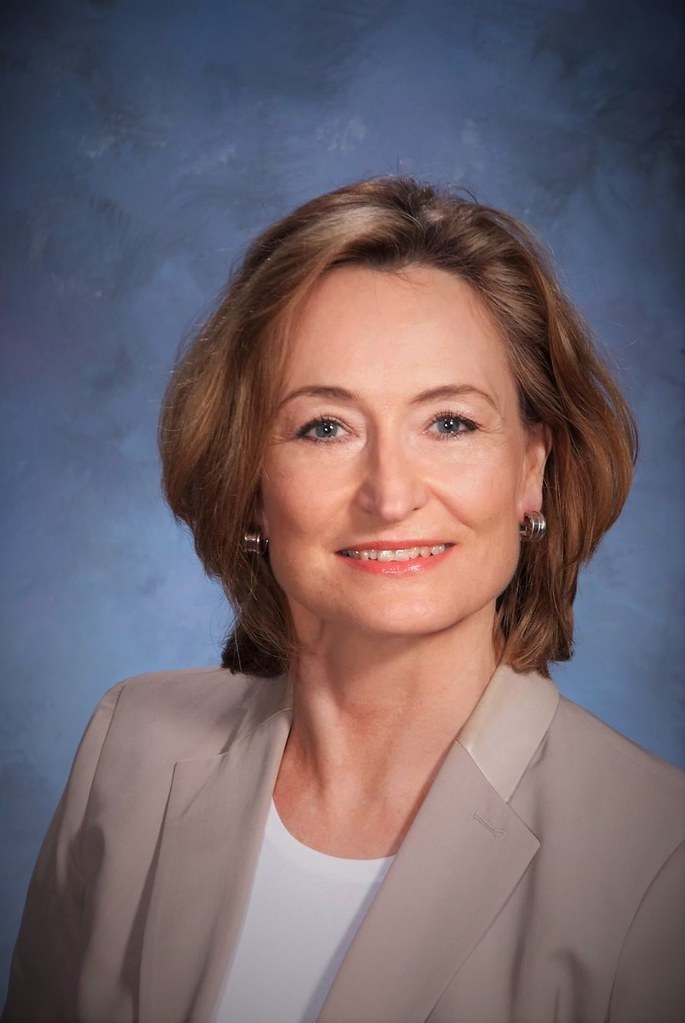
On 20 October 2020 (sorry for the delay) the ISHR reported on the new Special Rapporteur on Human Rights Defenders, Mary Lawlor, presenting her first report to the General Assembly’s Third Committee. [see: https://humanrightsdefenders.blog/2020/05/07/mary-lawlor-takes-up-post-as-un-special-rapporteur-for-human-rights-defenders/].

The Special Rapporteur appealed to States to help stop the killing of human rights defenders, which she identified as the mandate’s core priority. Defenders, she said, are ‘ordinary people doing extraordinary things to make all of our lives better‘ and shared her hope that all would work together to find ways to protect them. 

The Special Rapporteur’s report outlined how she intends to approach and develop the subject of her mandate in the coming years. Her priorities include: those defenders most exposed to killings and other violent attacks, with attention paid to the most marginalised and vulnerable, among them women defenders, those defending the rights of LGBTI persons, defenders who are children, defenders with disabilities, defenders working on the rights of migrants, the climate crisis, defenders working in isolated and remote areas, defenders serving long terms in prison, reprisals against defenders who cooperate with the UN, the issue of impunity for those who attack defenders, the role of businesses and financial institutions in both harming and protecting the work of defenders, and strengthening follow-up to individual cases brought to her attention. 

As the Third Committee continues to grapple with the difficulties of moving its work online, the dialogue was plagued by a number of IT issues, including not being webcast for the first 35 minutes, and several statements remained muted in the archived video made available later. 

A large number of States took the floor to welcome the Special Rapporteur’s report and echo her concerns and priorities. Many of the States that spoke touched on the need to address the worrying deterioration of civic space brought on by the COVID 19 pandemic. The UK delivered a joint statement on reprisals on behalf of 75 States, following up on its initiative last year when it delivered the first ever such statement.

The US raised a number of individual cases and country situations: Nasrin Sotoudeh in Iran; China’s systematic persecution and imprisonment of human rights defenders, including those from Xinjiang, Tibet, and Hong Kong, naming Ilham Tohti and Joshua Wong in particular; in Zimbabwe, opposition leader Job Sikhala, parliamentarian Joana Mamombe and activists Cecilia Chimbiri and Netsai Marova. China used its time to question the notion of a human rights defender arguing there is no accepted definition of the term and that defenders are not ‘above the law’. China also accused the US of suppressing civil society during the pandemic. 

In her concluding remarks, the Special Rapporteur touched on the need for the UN’s human rights work to be properly funded and for States to cooperate fully with Special Procedures through standing invitations and positive responses to requests for visits. She emphasised her desire to cooperate with States, to have an open dialogue, and cited recent talks with Bahrain, Burundi and Iran in that regard. She indicated she hoped these talks would result in releases of defenders soon. The Special Rapporteur also emphasised that her approach would include specifically highlighting positive changes in each of her reports.  
https://www.ishr.ch/news/unga75-un-expert-urges-protection-defenders-ordinary-people-doing-extraordinary-things?fbclid=IwAR1j9EqgUZ4RKAcMH7nWp7AIAZUL3HqrAq_k8M9epUtlF_ECrNAaLCrbrJ0

New Assistant Secretary General wants to improve civil society participation in the General Assembly

November 16, 2020

In her first interaction with the Third Committee of the General Assembly, Ilze Brands Kehris, the new Assistant Secretary-General for Human Rights and Head of the Office of the High Commissioner for Human Rights (OHCHR) in New York,  emphasised the importance of  civil society participation as well as preventing reprisals and attacks against human rights defenders who engage with the UN.

On 5 November 2020 the ISHR reported on her participation in an interactive dialogue with the Third Committee of the General Assembly on 2 November. In light of what the EU called a ‘disconcerting trend’ of increasing reprisals, attacks and killings of human rights defenders, it welcomed the Secretary General’s Report on Reprisals (A/HRC/45/36) as well as the UN’s commitment to a system wide strategy to protect civil society space. The EU also condemned the practice by some States in the ECOSOC Committee on NGOs of blocking accreditation for NGOs without justification. Furthermore, the EU asked the ASG how civil society participation in key UN meetings could be improved, including the Third Committee. 

In her responses, the ASG reaffirmed the UN’s commitment to enhance civil society participation at all levels including in New York at the Third Committee, and encouraged discussions on this. She emphasised that furthering the inclusion of civil society participation is a specific priority in the Secretary General’s “Call to action for Human Rights” and that the UN has followed this with endorsement at a UN-wide level with a particular focus on the 3 ‘Ps’ – Protection, Promotion and Participation of civil society. She indicated that there was a plan to implement this focus with specific guidance in the future. 

In response to a question by Latvia on challenges that her office faces, the ASG emphasised the challenges surrounding the looming budgetary discussions. While reiterating that human rights is one of the three key pillars, the ASG lamented that only 3.7% of the overall budget is devoted to human rights. She urged support for human rights in the budget  so that the crucial functions could continue to be performed.

https://www.ishr.ch/news/unga75-assistant-secretary-general-encourages-discussions-improving-civil-society-participation

https://www.un.org/sg/en/content/profiles/ilze-brands-kehris

Andorra should drop charges against woman human rights defender Vanessa Mendoza

November 16, 2020

It is not often that Andorra figures in this blog but on 6 November 2020 the International Service for Human Rights (ISHR) refers to the case of Vanessa Mendoza, the president of Associació Stop Violències, who demands that all women in Andorra are able to enjoy their rights to sexual and reproductive health, in particular the decriminalisation of abortion. Due to her advocacy including with the UN Committee for the Elimination of Discrimination against Women (CEDAW), she is facing intimidation, judicial harassment and defamation.

Vanessa Mendoza, President of Associació Stop Violències, is facing at least two judicial proceedings related to her activism. In one case where she received formal notification, she is facing charges of slander against the government, defamation against the co-princes and crimes against the State institutions due to statements she made to the media and her engagement with CEDAW. These charges carry up to four years imprisonment. In a separate case in relation to organising a protest in September 2019 calling for decriminalising abortion, she was brought before the police to testify in November 2019, but has not yet received a formal notification of the charges she is facing

During the Universal Periodic Review (UPR) of Andorra, which took place on 5 November 2020, the State delegation of Andorra said that Mendoza ‘is not risking in any case a jail sentence’. ISHR urges Andorra to drop all charges against Mendoza, provide assurances that she will no longer face any intimidation, threats or judicial harassment, and guarantee her right to an effective remedy for the reprisals that she was subjected to.

ISHR welcomes the Netherlands’ statement at the UPR raising concerns about the reprisals against Mendoza for her engagement with CEDAW, and recommending that the Andorran government ‘stop the judicial harassment, the reprisals and intimidation against human rights defenders in relation to the exercise of human rights and fundamental freedoms and engagement with the UN’.

The UN Secretary-General, in his 2020 annual report on reprisals, documented that the Andorra Government is taking ‘disproportionate measures’ against Stop Violències and its President for their participation with the CEDAW.

https://www.ishr.ch/news/andorra-drop-charges-against-vanessa-mendoza-and-guarantee-safe-and-enabling-environment-women

Article 19 seeks Programme Officer – Media and Protection

November 16, 2020

For its office in Nairobi, Kenya, Article 19  seeks a Senior Programme Officer for Media and Protection. The Senior Programme will work to enhance the safety and security of individuals and organizations working to protect and promote freedom of expression and information, as reflected in our strategy, bringing strong project management skills, serving as the primary focal point on our “Media and Protection” thematic areas across the organization. 

In collaboration with relevant teams, this Senior Programme Officer will identify new strategic areas for ARTICLE 19 Eastern Africa’s consolidation and growth as a leading advocate organization for free expression, effective protection of activists and organizations, particularly journalists, bloggers, whistleblowers, social communicators and human rights defenders. 

Leading in advancing media and protection standards at global and regional fora, in collaboration with relevant teams, the Senior Programme Officer will be a primary force in ensuring effective coordination externally with key INGOs working on media and protection of FoE/I and internally within the organization. This Senior Programme Officer will facilitate programmatic work in the Eastern Africa regional office and programmes, with a particular focus on supporting the monitoring of attacks on communicators and human rights defenders.

Requirements:

  • Masters Degree level or equivalent with post-graduate qualification in human rights, law, African studies, international relations, political science, media, communication, or other relevant field being an added advantage.
  • At least 7 years experience in policy work, monitoring, advocacy and/or campaigning work in the human rights sector;
  • At least 2 years experience of managing budgets and projects;
  • Experience of working with partner organisations;
  • Experience of working in a cross-cultural environment.

See also: https://humanrightsdefenders.blog/2019/12/23/are-you-with-me-the-life-of-kevin-boyle/ and

https://humanrightsdefenders.blog/2019/06/17/social-media-councils-an-answer-to-problems-of-content-moderation-and-distribution/

  • Application deadline is 29th November 2020. 

https://article.peoplehr.net/Pages/JobBoard/Opening.aspx?v=49d9a552-cea6-4fab-a961-b204504c1b3f

4 December 2020: seminar on Norwegian support to human rights defenders.

November 13, 2020

The Norwegian Center for Human Rights and the Norwegian Human Rights Fund invite you to a seminar addressing the Norwegian and international support to human rights defenders.

This seminar will focus on the role of human rights defenders in creating sustainable, peaceful and just societies, in accordance with the Sustainable Development Goal 16. It will look at the role and support of the Norwegian government, Oslo Municipality, the University of Oslo and Norwegian civil society in the protection of individuals and organisations working for human rights and peaceful and just societies. How can these institutions collectively – and individually – meet the needs of the day, both during and after COVID-19?

Program

13:00-13:10: Welcome by the Rector of the University of Oslo, Svein Stølen.

Welcome by the organizers: NHRF (Executive Director Sandra Petersen) and NCHR (Head of Department Gentian Zyberi).

Short introduction of the panels by the facilitators.

13:10-14:25: Panel 1: The current situation of Human Rights Defenders and protection work.

Key speakers:

Asha Kowtal, Dalit Human Rights Defender, India

Idil Eser, “Scholars at Risk” and former Director of Amnesty International Turkey [see: https://humanrightsdefenders.blog/2020/07/06/istanbul-court-jails-four-human-rights-defenders-on-terror-charges-seven-acquitted/]

Luciana Peri, Coordinator of Shelter Initiatives, ProtectDefenders.eu

John Peder Egenæs, Director of Amnesty International Norway

Moderator:Nora Sveaass, Professor Emeritus (University of Oslo), member of the UN Subcommittee on Prevention of Torture (SPT) and member of NHRF’s Advisory Board.

14:25 – 14:45: BREAK.

14:45 – 16:00: Panel 2: The role of international, national and local support to Human Rights Defenders

Short video messages from human rights defenders from different countries with recommendations to Norwegian and international actors supporting human rights defenders.

Key note: Mary Lawlor, UN Special Rapporteur on the Situation of Human Rights Defenders (digital participation)

Panel:

Ine Eriksen Søreide, Norway’s Minister of Foreign Affairs

Raymond Johansen, Governing Mayor of Oslo

Mary Lawlor, UN Special Rapporteur on the Situation of Human Rights Defenders

Moderator: Sandra Petersen, Executive Director of the NHRF.

Concluding remarks by the NCHR.

The seminar will be streamed.

https://nhrf.no/event/norwegian-and-international-support-to-human-rights-defenders-under-and-after-covid-19

Action for the #IBelong Campaign in South Africa

November 13, 2020

A group of eminent personalities in South Africa, among whom Arnold Tsunga, Chairperson of the Southern Africa Human Rights Defenders Network have addressed an open letter to the nation saying “Every child needs a birth certificate“:

Dear South Africans,

More than a million children are born in our country each year and are issued birth certificates.  But estimates are that another 100 000 children are not registered at birth in South Africa, setting them up for a lifetime of exclusion, disadvantage, and de facto statelessness.  

Our progressive constitution provides the right to a name and nationality from birth for every child. It also ensures the right to primary education, to healthcare and other social services, to protection from exploitation and abuse — among numerous other important human rights.  A birth certificate is key to a nationality, identity, and to the opportunities and obligations that will be part of what it means to be South African for the rest of their lives.  We can take pride in these provisions for our children, and the steps and progress made by our leaders to put them in place. 

Without a birth certificate, a child is at risk of being stateless, which means no country will recognize him/her as a citizen. Often, such children are excluded from accessing the fundamental rights and opportunities we take for granted, and stateless children may be joining a long line of family members before them.  Because their parents and grandparents lacked identity documents, they are unable to prove their child’s right to a birth certificate, and with it, a nationality. 

As supporters of UNHCR’s #IBelong Campaign to End Statelessness, we call on our leaders and communities to remove barriers for these children.  Let us streamline and simplify birth registration processes.  Let us make sure that cost or distance from civil registration centres are not factors that condemn a child to be marginalised, and ultimately stateless.

Let us make sure that all parents understand their children’s rights and are supported to complete the steps needed to register their birth, regardless of their documentation status.

Let us ensure that safeguards against statelessness are in place to protect orphans and children found abandoned in South Africa.  Above all, let’s fulfil the promise to all children throughout this country that is laid out in our constitution.

South Africa’s future prospects lie with its children, and how well we prepare them for tomorrow.  By making sure that every child’s birth is registered, we can give them the best start in life: to seek health care, to be educated, to work legally, to pursue justice under the law, to vote, to marry, to provide for a family, and one day to register the birth of their own child. 

By doing so, we make it possible for them to play for their national sports team, to lead a municipality, a congregation, or a nation.  To become scientists, artists, writers, teachers, journalists or performers, with the potential to influence thought, or to shape our country’s history for the better, and ultimately that of our continent and the world.

Through birth registration, we have the opportunity to end one of the causes of statelessness forever.  Together, let’s do so.

See also: https://humanrightsdefenders.blog/2019/07/10/about-the-struggle-against-statelessness/

https://mg.co.za/special-reports/2020-11-13-every-child-needs-a-birth-certificate/

Libyan human rights defender Hanan al-Barassi gunned down in Benghazi

November 12, 2020

International media (here CNN) reported on 11 November 2020 on the killing of prominent Libyan lawyer and women’s rights activist Hanan al-Barassi, who was gunned down by armed men Tuesday in the eastern city of Benghazi. Her killing in Benghazi, which falls under the control of the Libyan National Army (LNA), came just a day after she shared comments on social media criticizing the son of renegade military general and LNA leader Khalifa Haftar. “The assassination of human rights defenders and opinion-holders and the silencing of voices is a heinous crime and a disgraceful form of tyranny and a desperate attempt to destroy hope for the establishment of a civil and democratic state,” Libya’s Interior Minister, Fathi Bashagha, tweeted Tuesday.

According to the United Nations Support Mission in Libya (UNSMIL), al-Barassi — whom the mission describes as a “vocal critic of corruption, abuse of power and human rights violations” — was shot “in broad daylight” by unidentified armed men. “Her tragic death illustrates the threats faced by Libyan women as they dare to speak out,” UNSMIL added. In videos posted publicly on her Facebook page, al-Barassi expressed criticism of figures loyal to the LNA. In a livestream shared on Monday, just a day before her killing, al-Barassi said she would not be silenced by threats. “I won’t surrender, only with bullets will I ever surrender — if I die, so be it. Only in death will I be silenced. Tomorrow I will have several surprises [to share], several surprises,” she told viewers. The LNA has not yet responded to a CNN request for comment on al-Barassi’s death.

Elham Saudi, the director of Lawyers for Justice in Libya, an organization which seeks to defend and promote human rights in the conflict-ridden country, called the attack an “appalling and painful reminder of the reality on the ground” for women in Libya. “With no accountability, violators will continue to get away with literal murder in broad daylight,” she added.Al-Barassi’s killing follows a series of attacks against those critical of forces aligned to the LNA.

In 2019, one of Libya’s most prominent female politicians and a vocal critic of Haftar, Seham Sergewa, was abducted from her home in Benghazi by a militia group loyal to the LNA; while an investigation was launched into her abduction, she has yet to be found. [see also: https://humanrightsdefenders.blog/2016/06/28/two-years-after-murder-of-salwa-bugaighis-in-libya-still-no-investigation/]

“The killing of an outspoken lawyer in broad daylight in Benghazi will send chills through activists across the region,” said Hanan Salah, senior Libya researcher at Human Rights Watch. “This brutal killing smacks of a cold-blooded execution. The only way to end this cycle of violence is if authorities hold criminals to account for these terrible acts.

https://edition.cnn.com/2020/11/11/africa/libya-lawyer-rights-activist-killed-intl/index.html

https://www.hrw.org/news/2020/11/11/libya-outspoken-benghazi-lawyer-murdered

Rahile Dawut recipient of Courage to Think Award 2020

November 11, 2020

Dr. Rahile Dawut, photo by Lisa Ross

On 10 November 2020 Scholars at Risk (SAR) announced that Dr. Rahile Dawut is the recipient of its Courage to Think Award for 2020. Dr. Dawut is being recognized for her own work, as well as that of all the scholars and students of the Xinjiang Uyghur Autonomous Region, who together struggle for academic freedom and freedom of opinion, expression, belief, association, and movement.

The award, which will be presented at SAR’s virtual conference Free to Think 2020: Responding to Attacks on Higher Education, will be accepted by Dr. Dawut’s daughter, Akeda Pulati. For more on the Courage to Think Award see: https://www.trueheroesfilms.org/thedigest/award/165B4CC5-0BC2-4A77-B3B4-E26937BA553C.

Dr. Dawut is an Associate Professor in the Human Science Institute of Xinjiang University and founder of the Minorities Folklore Research Center in Xinjiang University. In December 2017, Dr. Dawut told a relative of her plans to travel from Urumqi to Beijing. Shortly thereafter, her family and friends lost contact with her. Professor Dawut’s disappearance was made public in August 2018. It is suspected that she is held by state authorities at an undisclosed location.

“My mother is a scholar, not a criminal,” said Akeda Pulati. “She studies the folklore and cultural traditions of minority populations. That is not a threat to the government, other institutions, or the people of China.”

The imprisonment of Dr. Dawut, an internationally recognized scholar of Uyghur culture, reveals the Chinese government’s blatant repression of voices and ideas it finds displeasing,” said Rob Quinn, executive director of SAR. “This constricts academic activity and public expression, threatening minority traditions, histories, and languages. The disappearance of Dr. Dawut, along with many thousands of others, is an atrocity we should all strive to end.”

See also: https://humanrightsdefenders.blog/2018/04/16/turkeys-academics-for-peace-to-receive-2018-courage-to-think-defender-award/

The 2020 Courage to Think award will be presented during SAR’s virtual conference Free to Think 2020: Responding to Attacks on Higher Education on Thursday, November 19 at 11:00 am ET (3:00 pm GMT). There is no charge to attend. Register here.

In 3 months the Escazú Agreement should come into force

November 11, 2020

On 9 November 2020, a very large group of UN human rights experts welcomed the impending entry into force of the first environmental human rights treaty in Latin America and the Caribbean, known as the Escazú Agreement, lauding it as a ground-breaking pact to fight pollution and secure a healthy environment. [see: https://humanrightsdefenders.blog/2019/12/23/escazu-agreement-to-protect-environmental-human-rights-in-latin-america-stalling/]

In the face of proliferating environmental conflicts and persistent intimidation, harassment and detention of environmental human rights defenders, the Escazú Agreement offers hope to the countless individuals and communities in the region that suffer from pollution and the negative impacts of extractive industries,’ said the UN Special Rapporteur on toxics and human rights, Marcos Orellana.

The Escazú Agreement includes strong protections for indigenous peoples and environmental human rights defenders, at a time when they are subject to unprecedented levels of violence.

The experts expressed hope that the treaty could serve as a model for other regions to improve cooperation and mobilise efforts for better governance of natural resources and environmental protection through transparency, accountability and community engagement. By ensuring people’s rights to information, participation, and access to justice, the Agreement affirms a strong rights-based approach to environmental governance.

The experts also voiced concern over disinformation campaigns that have obfuscated public debate in certain countries of the region.

‘We urge those countries who have yet to ratify or adhere, to join regional efforts and demonstrate best practice for a more just and sustainable region,’ the experts said.

The Escazú Agreement will enter into force 90 days following the 11th ratification. The experts commended the 11 countries that ratified the agreement: Antigua and Barbuda, Argentina, Bolivia, Ecuador, Guyana, Nicaragua, Mexico, Panama, Saint Vincent and the Grenadines, Saint Kitts & Nevis, and Uruguay.

‘The remaining nations in the Latin America and Caribbean region should move quickly towards ratifying the Escazú Agreement in order to maximise the treaty’s effectiveness in protecting human rights in the face of today’s interconnected climate, biodiversity, and pollution crises,’ the experts said.

https://www.marketscreener.com/news/latest/UN-Experts-Hail-Landmark-Environmental-Treaty-in-Latin-America-and-the-Caribbean–31739025

What limits for NGOs in the decentralisation of human rights infrastructure?

November 11, 2020

Ravindran Daniel, in Open Global Rights of 10 November 2020 published a piece that should interest anybody who wrestles with the issue of how to ‘decentralise’ the international human rights movement. In “What are the implications of International Human Rights NGOs moving to the South?” Daniel – who is a human rights lawyer from India, served as director of the Human Rights Division with the UN peacekeeping missions in East Timor, Libya and the Sudan and established the Asian Forum for Human Rights and Development – takes the recent closure of AI India as the starting point for a wider discussion of the structural problems that come up in trying to realise the ‘democratization of the global human rights movement”. [see also: https://humanrightsdefenders.blog/2020/09/29/amnesty-feels-forced-to-shut-sown-its-india-office-amidst-govenment-pressure/]


..The closure of Amnesty International’s India office raises questions about AI’s global strategy and the democratization of the global human rights movement. AI’s India office was part of the AI’s 2010 Global Transition Program (GTP) which aimed at restructuring the organization by reducing its London office operations and transferring them to regional hubs in various parts of the world. New forms of national offices were set up in India, Brazil, South Africa, Kenya, Nigeria, and Indonesia. The aim was also to make AI a truly global movement and raise funds from the Global South and not depend entirely on funds from the Global North. Donors such as the Ford Foundation and the Open Society Foundation funded AI’s move to the South which was seen as strengthening mobilization from local to international levels and increased contact with human rights defenders and civil society actors.

However, it also raised some questions for both AI and the global human rights movement.

When opening its office in India in 2012, AI may not have foreseen the assumption of power by an illiberal government in 2014; although it must have known the risks involved in other countries. When AI rolled out its GTP program in 2010, was it unrealistically optimistic, particularly when the global support for human rights  in the West was rapidly declining? The optimism about emerging powers such as India, Brazil, and South Africa had waned and several illiberal governments had become powerful in the global system. It could not have waited for an opportune time since governments of various hues always challenge human rights organizations to function freely. The fact remains that human rights offices, national or international, face reprisals by governments and AI should have foreseen it when it established its India office under the GTP program. The question remains: was the cost including the consequences for those associated with AI India worth the risk?

However, the question is: given its tradition of safeguarding its members from bias and reprisals, what steps did it take to prevent reprisals for its members and supporters of national offices? Since 2001, AI abandoned its “own country rule” under which AI members were barred from working on cases in their own countries. It was a self-imposed limitation to safeguard members against potential problems from their own governments but also to stress the importance of solidarity in human rights work.

The closure of the Indian office raises the value of “own country rule” which would have possibly prevented the Indian government from taking the extraordinary step of closing the AI’s office. The Indian Government is alleging money laundering, which would entail conducting investigations against all those who contributed to AI India putting a large number of its supporters at risk.

Was the cost including the consequences for those associated with AI India worth the risk?

Moreover, the aim of the “own country rule” was to prevent AI’s local chapters from becoming just another local human rights organization with international links. In the case of the AI India office, its links to its parent organization seemed to have impeded its functioning. For example, in November 2019, Indian police raided the AI India office after the parent organization testified before the US Congress on the situation in Jammu and Kashmir.

The closure of the AI’s India office has implications for the global human rights movement as well. An evaluation of the Ford Foundation’s Strengthening Human Rights Worldwide Global Initiative (SHRW), under which the foundation funded AI to move to the South, raised the following issues: how to differentiate between the roles played by national and international NGOs; if these roles could be construed as the imperial expansion of Northern-based groups?; if such moves help or reduce the voice of local groups and communities;and if international NGOs have an advantage over national NGOs in garnering a larger share of resources due to a concentration of “cultural capital” (“knowledge and access to global governance institutions”) among NGOs based in the North?

The ecology of the human rights movement began changing in the 80s and the SHRW review captures it. In this changed context, AI’s efforts to be closer to the ground happened at an ill-advised time when strong NGOs had emerged in the South and were increasingly challenging the traditional human rights ecology. While based in the North, AI was functioning as a global movement with some of the corresponding limitations, such as authoritarian governments accusing it of being a Western organization. AI, instead of building from its strength, seemed to have pursued a naïve goal of expanding in the field at a wrong time for the wrong reasons.

Nevertheless, the global human rights movement must condemn the Indian government’s actions against the AI India office. It must campaign for withdrawing all the cases and restoring the office. It should also examine the lessons learned from democratizing the movement in the last two decades, including strengthening the role and voices of NGOs in the South. AI on its part should re-examine its GTP’s assumptions considering the developments of the last two decades. A 2017 evaluation of the GTP commissioned by AI recommended the need for a “new narrative” that “…goes beyond moving closer to the ground, beyond the distribution of Amnesty International Secretariat (IS) and to the distribution of Amnesty as a movement… (making all) regions vibrant communities for public campaigning”.


https://www.openglobalrights.org/what-are-the-implications-of-international-human-rights-ngos-moving-to-the-south/