Author Archive

Turkey: arrests and backsliding on femicide

March 22, 2021

Living close to Turkey, I follow the situation there perhaps with more worry than others. And nothing good seems to happen:

Turkish police detained three district heads of the pro-Kurdish Peoples’ Democratic Party (HDP) and seven others in Istanbul on Friday over alleged links to militants, police said, two days after a court case began over banning the party.

Separately, Turkey’s Human Rights Association (IHD) co-chairman Ozturk Turkdogan was arrested by police at his home, IHD said, prompting human rights groups to call for his release. Turkdogan was then released on Friday evening, the association said.

Responding to the arrest today of Öztürk Türkdoğan, the president of Turkey’s Human Rights Organisation, Esther Major, Amnesty International’s Senior Research Adviser for Europe, said:

“The detention of Öztürk Türkdoğan is outrageous. With ink barely dry on the Human Rights Action Plan announced by President Erdoğan two weeks ago, his arrest reveals that this document is not worth the paper it is written on.

After over three years in jail without a conviction, one of Turkey’s highest-profile detainees, Osman Kavala, is “not optimistic” that President Tayyip Erdogan’s planned reforms can change a judiciary he says is being used to silence dissidents.
A philanthropist, 63-year-old Kavala told Reuters that after decades of watching Turkey’s judiciary seeking to restrict human rights, it was now engaged in “eliminating” perceived political opponents of Erdogan’s government.
Kavala was providing written responses via his lawyers to Reuters’ questions days after Erdogan outlined a “Human Rights Action Plan” that was said will strengthen rights to a free trial and freedom of expression. See: https://humanrightsdefenders.blog/2020/09/16/osman-kavala-and-mozn-hassan-receive-2020-international-hrant-dink-award/ and

Not surprisingly this is leading to reactions, such as a bipartisan letter penned by 170 members of the US Congress to Secretary of State Antony Blinken, in which the lawmakers have urged President Joe Biden’s administration to consider the “troubling human rights abuses” in Turkey.  “President Recep Tayyip Erdogan and his Justice and Development Party have used their nearly two decades in power to weaken Turkey’s judiciary, install political allies in key military and intelligence positions, crack down on free speech and (the) free press,” the letter said. Dated 26 February but made public on 1 March, the letter asks Washington to formulate its policy regarding Turkey considering human rights, saying that the Erdogan administration has strained the bilateral relationship. 

On top of this Turkey has pulled out of the world’s first binding treaty to prevent and combat violence against women by presidential decree, in the latest victory for conservatives in President Recep Tayyip Erdogan’s ruling party. The 2011 “Istanbul Convention| [SIC], signed by 45 countries and the European Union, requires governments to adopt legislation prosecuting domestic violence and similar abuse as well as marital rape and female genital mutilation. Conservatives had claimed the charter damages family unity, encourages divorce and that its references to equality were being used by the LGBT community to gain broader acceptance in society. The publication of the decree in the official gazette early Saturday sparked anger among rights groups and calls for protests in Istanbul. Women have taken to the streets in cities across Turkey calling on the government to keep to the 2011 Istanbul Convention.

Gokce Gokcen, deputy chairperson of the main opposition CHP party said abandoning the treaty meant “keeping women second class citizens and letting them be killed.” “Despite you and your evil, we will stay alive and bring back the convention,” she said on Twitter. Last year, 300 women were murdered according to the rights group We Will Stop Femicide Platform.
The platform called for a “collective fight against those who dropped the Istanbul convention,” in a message on Twitter.
The Istanbul convention was not signed at your command and it will not leave our lives on your command,” its secretary general Fidan Ataselim tweeted.

Kerem Altiparmak, an academic and lawyer specializing in human rights law, likened the government’s shredding of the convention to the 1980 military coup. “What’s abolished tonight is not only the Istanbul convention but the parliament’s will and legislative power,” he commented.

https://www.arabnews.com/node/1822001/middle-east

https://www.amnesty.org.uk/press-releases/turkey-outrageous-arrest-lawyer-makes-mockery-erdogans-human-rights-reforms

https://www.arabnews.com/node/1828581/middle-east

https://www.usnews.com/news/world/articles/2021-03-19/turkish-police-detain-pro-kurdish-party-officials-anadolu

https://www.arabnews.com/node/1818641/middle-east

https://www.hrw.org/news/2021/03/24/turkey-erdogans-onslaught-rights-and-democracy
25 March: IACHR Hearing on Internet Content Moderation

March 22, 2021

The Inter-American Commission on Human Rights (IACHR) is in the middle of its 179th Period of Sessions, which is being held again in an all-virtual format.  The IACHR has called a hearing on its own initiative (an ex officio hearing) on the important topic of content moderation: “Internet content moderation and freedom of expression in the Americas”, scheduled for Thursday 25 March 2021, from 2-3:30pm ET.

For some of my earlier posts on this topic, see: https://humanrightsdefenders.blog/tag/content-moderation/

To register to watch the virtual hearing on Internet Content Moderation, visit: https://cidh-org.zoom.us/j/85942567179?pwd=SWY1cTVTOUp6MmhyTjR6bFNPZTV1Zz09

Event: IACHR Hearing on Internet Content Moderation and the Freedom of Expression in the Americas

Nigerien President Issoufou gets 2020 Mo Ibrahim Prize

March 22, 2021

Nigerien President Mahamadou Issoufou, set to step down after two terms in office, was last week awarded the Ibrahim Prize for Achievement in African Leadership. [see:https://www.trueheroesfilms.org/thedigest/awards/a4b07020-ced4-11e7-8d59-7dc11e986512 ].

The chair of the Mo Ibrahim Prize Committee, Festus Mogae, a former president of Botswana and himself a recipient of the prize, said that Issoufou had “led his people on a path of progress.” The committee noted that Issoufou had faced “severe political and economic issues.” Niger in the best of times is one of the poorest countries in the world, facing recurrent, severe drought. It has been buffeted by jihadi terrorism, a host of economic issues, and COVID-19. Unlike many other African presidents, Issoufou did not try to remain in office beyond his constitutionally mandated two terms by amending the constitution or pursuing other extralegal means. Since its inception in 2007 the Ibrahim Foundation has granted the award to only seven other presidents. On eight occasions it found no eligible candidate. [see also: https://humanrightsdefenders.blog/2018/02/12/mo-ibrahim-prize-2017-to-ellen-johnson-sirleaf/]

However, there is some criticism of this choice. e.g. from Sebastian Elischer, Associate Professor of Political Science, University of Florida, who writes that:

During his time in office, his regime has had a heavy-handed reaction to dissent. It also hasn’t upheld the law. In 2017 students protesting for better living and studying conditions were arrested and injured; there were even some deaths. The same is true for broader protests denouncing corruption and calling for improved living conditions. Hundreds of civil society activists found themselves in prison without due process…

In addition, Amnesty International identified a recent surge in human rights violations in Niger. For instance, journalists reporting critically on the government’s war against Boko Haram or on corruption within the state bureaucracy frequently faced expulsion or arbitrary arrest. When Issoufou took office in 2011, the World Press Freedom Index ranked Niger 29th worldwide. In 2020 Niger occupies position 57. This constitutes a significant decline.

https://www.cfr.org/blog/nigers-mahamadou-issoufou-awarded-mo-ibrahim-prize-excellence-african-leadership

https://theconversation.com/why-its-a-big-surprise-that-the-african-leadership-prize-went-to-nigers-issoufou-157291

Sandra Aceng, profile of a woman human rights defender from Uganda

March 19, 2021

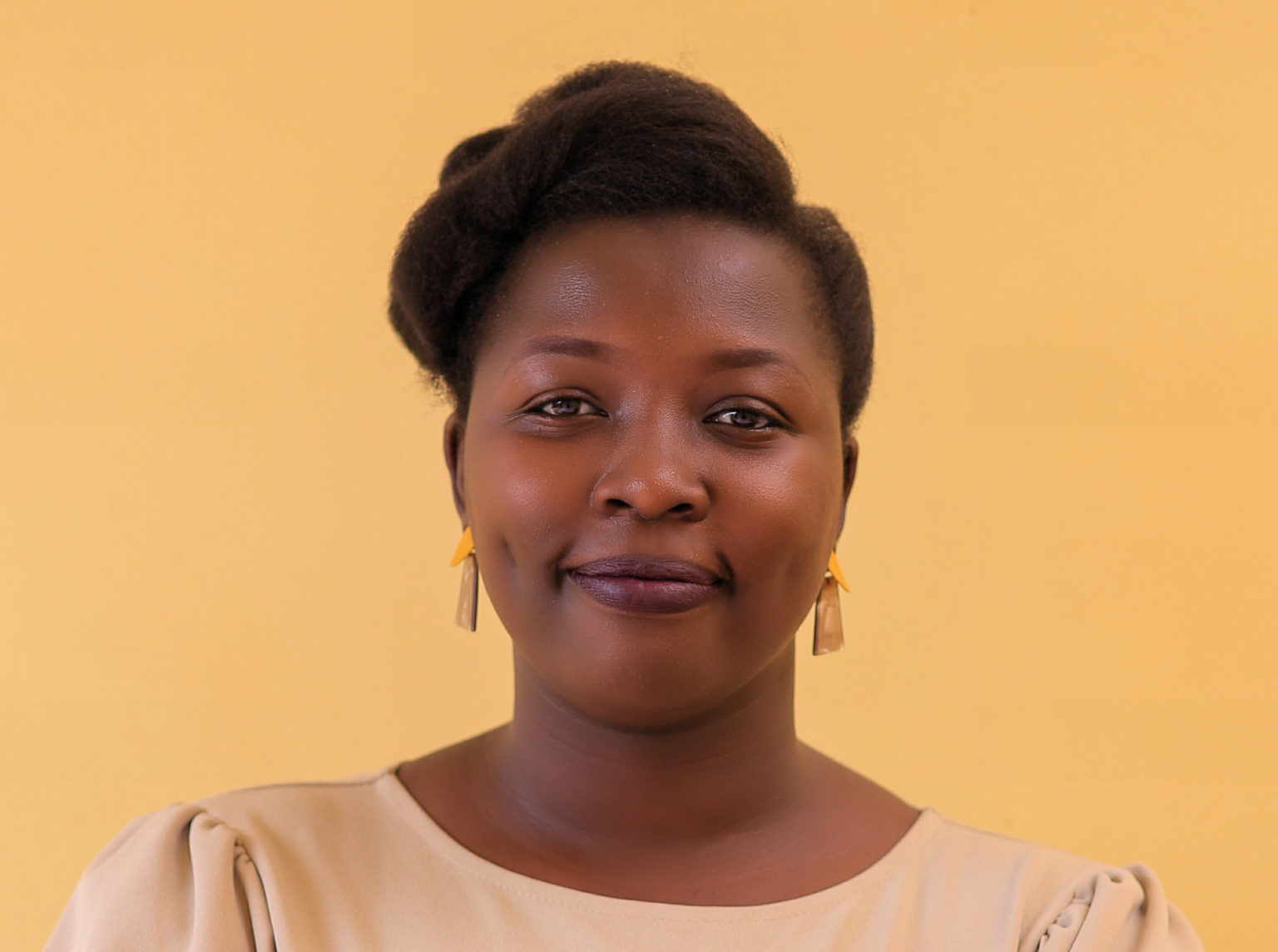
In February 2021 Defenddefenders announced Sandra Aceng as Human Rights Defender of the Month Sandra Aceng is an outspoken and energetic woman human rights defender (WHRD). She is a gender and ICT researcher and policy analyst for Women of Uganda Network (WOUGNET) where she coordinates the Women ICT Advocacy Group, advocating for internet access for all. In addition, she writes on various platforms such as Global Voices, Freedom House, and Impakter Magazine. Her regular contributions to Wikimedia Uganda often focus on profiling WHRDs, female politicians, and journalists. “After Uganda’s January [2021] elections, many female politicians joined parliament. We want to increase their online visibility. For example, most of the profiles on Wikipedia  are on men, so we need to close the gender digital divide,” Sandra says.

After Uganda’s January [2021] elections, many female politicians joined parliament. We want to increase their online visibility. For example, most of the profiles on Wikipedia are on men, so we need to close the gender digital divide.

Having grown up in the digital age, the 27-year-old is a digital native and mainly focuses on defending women’s rights online. Her employer WOUGNET empowers women through the use of ICT for sustainable development. Their three main pillars are information sharing and networking, gender and ICT policy advocacy, and providing technical support to WOUGNET staff, beneficiaries, and members. As a Programme Manager, Sandra analyses internet and ICT policies to ensure that they are gender inclusive. She has noticed that oppressive patriarchal structures are shifting and perpetuating online. Part of her work is to document women’s rights violations and gather evidence, but she has also learned that it’s not enough to just talk about statistics. To truly understand the problems, it is important to talk to the victims and listen to find out what they face, she says.

Having experienced some forms of online gender-based violence (GBV) herself, she knows how stressful and draining it can be. On top of receiving non-consensual content, she also felt pressure to keep quiet, women are not supposed to complain, she says. As a WHRD, she is used to the subtle pressure that women not abiding by patriarchal gender norms experience. A continuous trickling of seemingly small questions can be rather stressful: “Why are you so loud and outspoken as a woman? When will you get married? How will you take care of your family if the authorities come for you? These kinds of questions make me feel uncomfortable, they make me wonder if I am doing the right thing,” Sandra shares, “but if we want online GBV to end we also need to end these harmful gender stereotypes. Establishing women’s rights is a slow process and keeping quiet won’t speed it up.”

Why are you so loud and outspoken as a woman? When will you get married? How will you take care of your family if the authorities come for you? These kinds of questions make me feel uncomfortable, they make me wonder if I am doing the right thing.

There is still a lot of work ahead of Sandra and her fellow Ugandan women’s rights activists. She recently researched digital rights violations during the COVID-19 pandemic and struggled to find female interviewees. Female journalists reporting on politically sensitive topics experienced reprisals like rape, but due to stigma and worries how this will affect their future, they were not willing to speak out. While male journalists on the other hand expressed themselves freely: men are often perceived as bold and brave, making it easier to speak out on reprisals and rights violations they endured.

But the more women speak out, the easier it gets, Sandra is convinced. “It really motivates me when I see that other women have faced the same kind of challenges with online violence, and they have dealt with it. Whatever I go through, it’s not the end of life. Hearing other stories helps me to keep working hard, to be a better version of myself and to go beyond the difficulties.” Fighting the digital gender divide is Sandra’s way to make sure that it gets easier for women to speak out and be loud.

https://defenddefenders.org/human-rights-defender-of-the-month-sandra-aceng/

Massive new database of victims of North Korea

March 18, 2021

A new database project is memorializing the “footprints” of people taken by North Korea

With support from HURIDOCS, the Transitional Justice Working Group (TJWG) and its partners recently launched Footprints, an open archive that documents arbitrary detentions, abductions and enforced disappearances committed in and by North Korea. The database, which was created in Uwazi with HURIDOCS support, features files on nearly 20,000 cases since the 1950s. The collaboration is profiled in a newly published blog post: <https://5if28.r.a.d.sendibm1.com/mk/cl/f

Will UK Government cut their human rights support by 80%?

March 18, 2021

On 17 March 202 Ben McInerny of the international Observatory for Human Rights drew attention to the distressing news that “the British government plans to continue slashing overseas aid, with spending on the newly formed Open Societies and Human Rights directorate set to fall by as much as 80%.”.

Speaking in the House of Commons yesterday, the leader of the SNP Iain Blackford MP condemned the proposals, calling for greater bipartisan oversight of the reduction in aid spending: “Only this morning, it has emerged that the UK Government also plan to cut their human rights support and anti-corruption measures by a staggering 80%. If the Prime Minister is prepared to stand up for such callous cuts, is he also prepared to guarantee that he will allow for a straight vote on them in the House of Commons?”

One of the projects reportedly threatened by these cutbacks is a £16m initiative aimed at advancing press freedom across the Middle East and North Africa – a region which has seen a “decline in freedom of expression, media freedom and civic space”, according to participants of the 2020 Global Conference for Media Freedom.

The UK took a global role with the launch of the media freedom initiative by the Foreign, Commonwealth and Development Office (FCDO) under the previous Foreign Secretary, Jeremy Hunt. The UK also co-hosted the 2019 Global Conference for Media Freedom in London. However, though Dominic Raab has been supportive, he has had no direct involvement and this may be reflected in the budget cuts.

Despite the UK government’s attempts to depict post-Brexit Britain as a global “force for good”, these cutbacks come as part of a precipitous contraction of overseas aid spending. 

Earlier this month, leaked Foreign Office internal documents revealed proposed aid cutbacks of more than 50%, with Syria and Libya seeing a reduction in funding of 67% and 63% respectively..

David Miliband, president of the International Rescue Committee, said the changes would undermine Britain’s “global reputation”, stating that:

 “The phrase ‘global Britain’ rings hollow. As the UK prepares to host the G7, the reduction of assistance to Yemen is a stark warning of what is to come as the government delivers on widespread cuts across the entire UK aid portfolio”

Andrew Mitchell, Former Shadow Secretary of State for International Development, said reducing the aid budget to less than 0.7% of gross domestic income (GDI) remains unlawful without a change to legislation, adding that:

“To grow the budget to 0.7% from 0.5% took four years, but the equivalent cut is being undertaken in a matter of weeks”

Boris Johnson has said the decision to cut aid budgets is justified by the current Covid-19 crisis, stating that “current straitened circumstances” make reductions necessary, although no other G7 country is cutting its aid programme to the same extent.

It is imperative that funding, crucial to the provision of humanitarian assistance to some of the world’s most vulnerable groups, be at least 0.7% of GDI. The Covid-19 crisis should not be an excuse to reduce aid spending, but rather a reason to increase it.

Profile of Muay: A Laotian Woman Human Rights Defender

March 18, 2021

On 17 a blog post in hrcessex by Sarah Mui profiles Muay: “A Fierce Woman Human Rights Defender”

Houayheung (“Muay”) Xayabouly is not only a mother, small business owner and the primary breadwinner of her family, but shehas also been breaking down stereotypical gender roles by being a fierce human rights defender and environmental activist in Laos.She is viewed as a public figure among her community because of her work to shed light onto the countless human rights violations that she and fellow Lao people have endured at the hands of the national government. In 2019, the Lao government decided to make an example out of Muay and unjustly sentenced her to five years in prison, for which she was stripped of all fair trial guarantees. In honor of International Women’s Day and Women’s History Month, I urge all who read this to remember her name, learn her fight and spread awareness to demand that all charges be dropped and Muay be set free.

Photo courtesy of Manushya Foundatio

In 2017, Muay began raising awareness on social media over the excessive tolls that she along with other people in her community were being charged when crossing a bridge on the border of Laos and Thailand. The cost of the toll was equivalent to several meals, but Lao people relied on it to travel to and from work each day, including Muay herself. It turned out that the Lao government had given the private international company, Duangdee, the concession to charge the toll when it constructed the bridge in the first place. This concession left her community in an impossible situation where they were perpetually indebted to this private company who took advantage of the bridge’s necessity. Muay’s video about the toll deeply resonated with the Lao people, who agreed that the government benefited from the financial relationship with Duangdee. This made Muay realize the importance of using her voice to speak up for Lao people, and it was then that she made the decision to dedicate her life to fighting for them.   

The Lao government did nothing in response to their people’s outcry over the excessive tolls, but rather chose to focus attention on finding ways to intimidate Muay. Soon after the video went viral, the police were sent to her location to warn her to not criticize it.

In 2018, Muay challenged the Lao government over the corrupt hiring practices of public sector and governmental positions in that they were being appointed on the condition of bribes instead of through proper hiring procedures. This was quite personal for Muay because her own brother had been deeply impacted by this practice. He had always aspired to become a police officer but was cheated out of money and the position of his dreams due to these dishonorable practices. Muay’s video discussing the topic received over 320,000 views as of July last year. 

Soon after Muay’s widely viewed video, she was fired from her job as a tour guide for “unknown” reasons other than the fact her employer had been mysteriously pressured to do so. 

Muay was not going to let the government deter her from helping Lao people. Later that year, she decided to create a school for Lao children to address the dire inequalities that they faced in accessing education. The current practice was for parents to pay a bribe to secure a spot for their children, otherwise they could not provide them an education. She started multiple fundraisers to accomplish this goal, including selling shirts that said, “I don’t want to buy government positions,” referencing the Lao government’s corrupt hiring practices in addition to holding a concert featuring a number of local performers. 

Again, instead of actually listening to the suffering of its people, the government chose to continue to try to intimidate Muay by shutting down the fundraising concert and prohibiting the selling of shirts. 

The year 2018 was also troubling because that summer a dam collapsed in Attapeu Province, which led to numerous deaths, disappearances and displacements of Lao people. The government purportedly underreported the impact of the collapse and restricted access to the scene by the media and independent aid organizations. Muay decided to take matters into her own hands and post her own videos of the disaster and its significant effect on the community. 

In response to the shocking video, Muay was called to the police station and was told to cease all criticism of the Lao government. 

Around the same time, Muay had learned that donations for the impacted families of the dam collapse were being sold by Lao police for their own monetary gain. She could not allow her community to suffer so she started collecting donations for them herself. She documented and shared this all on social media.

Within a few days, the Lao government issued a press statement advising the public against reading “unofficial news” about the collapse. 

In the autumn of 2019, the Lao people who lived close to the dam were again harmed after a tropical storm caused major flooding, leaving over 100,000 displaced from their homes. Again, disturbed by the Lao government’s indifference towards its people, Muay posted another video calling the government out for its slow response and its lack of preventative measures which could have mitigated the storm’s impact.  

Around the same time, the Lao government sent police to arrest Muay without a warrant while she was dining at a restaurant. She tried to post a video about what had happened, but she was forced to delete it. She was then placed in pre-trial detention long before her hearing and was denied an impartial lawyer and the ability to challenge her detention. She was subject to repeated long interrogations where she was coerced to confess to “spreading propaganda against the Lao government.” She was subsequently sentenced to five years in prison, for which she visitation has been limited and closely monitored. She has not been able to see her young daughter but a handful of times and international NGOs have been completely barred.

Photo courtesy of Manushya Foundation

The Lao Government is Using Muay as an Example to Silence Dissent 

Muay is a strong and dedicated woman human rights defender and environmental activist who has fought endlessly for her community. Instead of taking accountability and listening to the suffering of its people, the Lao government has instead chosen to turn a blind eye to its human rights obligations and punish Muay for her significant contributions to her country. Until now, Muay’s story has only been made available by a few NGOs working hard to shed light onto her fervent advocacy and now wrongful detention. To spread the word about her fight, please share this blog, follow #FreeMuay and visit this link to demand that Muay be set free!

About the Author: Sarah Mui is an American human rights lawyer currently in the LLM for International Human Rights Law program at the University of Essex. She is also a research assistant with the Manushya Foundation located in Bangkok. Sarah hopes to work in the field women’s rights upon graduation. 

https://hrcessex.wordpress.com/2021/03/17/muay-a-fierce-woman-human-rights-defender/

Facebook launches a human rights policy and fund for human rights defenders

March 17, 2021

According to Reuters on 17 March 2021 Facebook said it was launching a corporate human rights policy and a fund aimed at supporting human rights defenders facing online threats.

Facebook has – belatedly, according to some – released a global corporate human rights policy, along with a fund supporting those defending human rights. Rather than introducing any new rules on content, the new policy essentially codifies and regulates the company’s existing practices and introduces more transparency. [see also: https://humanrightsdefenders.blog/2020/06/03/more-on-facebook-and-twitter-and-content-moderation/]

This new policy sets out the human rights standards we will strive to respect as defined in international law including the United Nations Guiding Principles on Business and Human Rights (UNGPs),” says Facebook’s director of human rights, Miranda Sissons, in a blog post.

“And it sets out how we will apply these standards to our apps and products, policies, programming, and overall approach to our business.”

The most critical human rights issues, such as risks to freedom of expression, will be reported to the company’s board of directors. Meanwhile, Facebook will release an annual public report on how it’s addressing human rights concerns stemming from its products, policies or business practices.

And a new fund – the amount’s undisclosed – will give offline support to those defending human rights under threat, starting in Asia later this year. This is expected to involve offering security to activists and journalists.

“We’ll also build on our existing work to protect defenders’ accounts — efforts that include combating malicious actors who are targeting them, protecting them from incorrect content removals using Cross Check, offering advanced security options, taking steps to thwart unauthorized access to the accounts of defenders who are arrested or detained, and partnering with human rights organizations on outreach and training,” says Sissons.

https://www.forbes.com/sites/emmawoollacott/2021/03/17/facebook-promises-more-support-for-human-rights/?sh=fad8f837353a

https://www.reuters.com/article/us-facebook-human-rights/facebook-launches-fund-for-human-rights-defenders-facing-threat-idUSKBN2B8305?il=0

Where is Somchai? A brave wife’s 17-year quest for the truth

March 17, 2021

Where is Somchai? A brave wife's 17-year quest for the truth

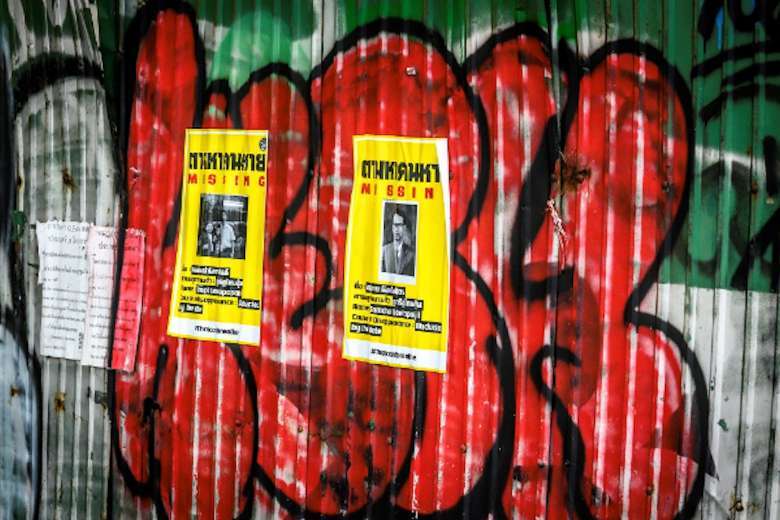
Posters of missing Thai activists are pasted on a wall in Bangkok in June 2020. (Photo: Mladen Antonov/AFP)

Mary Aileen D. Bacalso, from Manila wrote on 12 March, 2021:

I was taking a train in Manila in March 2004 when I received a call from Munir Said Thalib, then chairperson of my former organization, the Asian Federation Against Involuntary Disappearances. Munir requested me to issue a statement on the enforced disappearance of Thai lawyer Somchai Neelaphaijit on March 12, 2004. It has been exactly 17 years since Somchai involuntarily disappeared.  Somchai, a prominent Muslim lawyer who was seen being dragged into a car in Bangkok, had filed a case of torture against the police in southern Thailand on behalf of five men who were in its custody.

Five policemen who were charged with pulling Somchai away from his car were released. Police major Ngern Thongsuk was convicted by the Court of First Instance in 2006. Five years later, the Supreme Court overturned the decision. All the accused were acquitted. 

I witnessed one of the first hearings of the Somchai case in 2004. It was then that I met his wife Angkhana, a nurse, who vowed never to leave any stone unturned to uncover the hidden truth about her husband’s disappearance….

Angkhana is as determined and as indefatigable as Argentina’s members of the Madres de Plaza de Mayo-Linea Fundadora. She has learned to wholeheartedly embrace the issue of enforced disappearance as her own. She became one of Thailand’s commissioners on the National Commission on Human Rights but had to resign over issues of independence. Angkhana is one of the family members of the disappeared who transcended their state of victimization and chose to become human rights defenders. [

With them and with the innumerable victims of enforced disappearances, she finds the real meaning of solidarity. She forges lasting friendships with people who, like her, envision a world without desaparecidos. By virtue of her crusade to search for truth and justice for her husband and for the countless other victims in her country and in the rest of the world, she has garnered prestigious human rights awards, which include, among many, the Gwangju Prize for Human Rights and the Ramon Magsaysay Award. See: https://www.trueheroesfilms.org/thedigest/laureates/0D5DED3E-F79F-4AB4-8261-F6A19486F062]

Unknown to many, Thailand is smeared with many other cases of enforced disappearance and human rights violations, including the unresolved case of the 1992 Black May massacre. The Democracy Monument immortalizes the 1992 victims of enforced disappearance and other rights violations and is a manifestation of the Thai people’s continuing struggle for democracy. 

Anathema to democracy, enforced disappearance is one of the cruelest forms of human rights violations. The 17-year old unresolved case of Somchai Neelaphaijit is in stark contrast to Thailand’s beautiful image as the “Land of the Free.”

Where is Somchai? For 17 years, Angkhana, in solidarity with the human rights community in her country and the rest of the world, has been asking this nagging question. See also https://humanrightsdefenders.blog/2011/04/13/unjust-film-about-women-rights-defenders-receives-award-at-movies-that-matter-film-festival/

Mary Aileen D. Bacalso is the president of the International Coalition Against Enforced Disappearances (ICAED).

https://www.ucanews.com/news/where-is-somchai-a-brave-wifes-17-year-quest-for-the-truth/91728

Winners of the 2021 Cao Shunli Memorial Award for Human Rights Defenders

March 17, 2021

On 12 March 2021 the NGO ‘Chinese Human Rights Defenders‘ announced that human rights defenders Li Yufeng and Li Qiaochu are recipients of the seventh Cao Shunli Memorial Award for Human Rights Defenders. The decision to give this year’s award to both Ms. Li Yufeng and Ms. Li Qiaochu recognizes their long-standing civil society activism to promote protection of human rights in China. Both recipients are currently detained in China for their human rights activism.

The annual award is announced prior to March 14, 2021, which marks the seventh anniversary of Cao Shunli’s death in police custody in Beijing {see also: https://humanrightsdefenders.blog/2016/02/12/cao-shunli-a-profile-and-new-award-in-her-name/].

Cao Shunli died on March 14, 2014, after police denied her adequate medical treatment. Police detained Cao Shunli to prevent her from attending a session of the UN Human Rights Council and an international human rights training in Geneva. Last year on the fifth anniversary of Cao Shunli’s death, several UN independent human rights experts renewed their call for an independent investigation. In calling for justice for Cao, the experts said, “Cao Shunli’s case is emblematic of the struggle that many human rights defenders in China face.” Chinese President Xi Jinping has repeatedly underlined China’s efforts to “safeguard the international system with the UN at its core” and yet the tragic death of Cao Shunli highlights the extraordinary lengths the Chinese government has gone into to stop its own citizens from freely cooperating with the UN human rights operations.

Meet the honorees 

Li Yufeng, 63, human rights defender, is currently detained by the Chinese government for her rights advocacy.  Li began petitioning in the early 2000s, seeking legal accountability for the forced eviction and demolition of her home by government backed developers. The obstacles she encountered and the punishments she experienced over the years led her to join and support actions with other victims and activists to seek justice. Li actively campaigned for the abolition of “re-education through labor”, a  now-defunct system of administrative detention. Li has annually memorialized the victims of the 1989 Tiananmen Massacre.

Li Yufeng was seized by police in October 2015 and criminally detained on suspicion of “gathering a crowd to disrupt order of a public place” and subsequently arrested in a clear act of reprisal for her human rights advocacy work. Li was tried in closed-door proceedings and sentenced to 4-year in January 2017. Li was released in February 2019. But soon after, in July 2019, police detained Li again at Jiaozuo Detention Center in Henan Province to punish her for carrying on rights advocacy.                                    

Li Qiaochu, 30, has long been a human rights advocate against gender-based violence, an advocate for labour rights, and for the building of civil society more broadly. Ms. Li graduated from Renmin University, and earned a master’s degree in public policy from the University of York in England in 2015. She went back to China to work as a research assistant at Tsinghua University. 

Li Qiaochu is currently detained at the Linyi City Detention Center in Shandong, after police took her into custody on February 6, 2021. Li Qiaochu had posted many tweets to expose details of torture of detained legal advocate Xu Zhiyong and lawyer Ding Jiaxi. Li Qiaochu is likely targeted in retaliation for her engagement with UN human rights mechanisms.

In 2017, Li Qiaochu volunteered to provide information and resources to affected migrant workers when Beijing authorities forcibly removed them from the city. Li increased visibility of China’s #MeToo movement by compiling data on sexual harassment, garnered greater publicity to combat the exploitative “966” work culture. Li sought to support family members of China’s detained and persecuted prisoners of conscience by speaking out publicly about their plight. When COVID-19 broke out, she participated in online efforts to provide much-needed PPE to sanitation workers in Beijing. On 31 December 2019, Li was summoned by police, and she was subsequently held incommunicado from 16 February 2020 to 19 June 2020.

see also: https://humanrightsdefenders.blog/2019/03/16/human-rights-defender-ji-sizun-in-jail-awarded-5th-cao-shunli-memorial-award-for-human-rights-defenders/

https://www.nchrd.org/2021/03/winners-named-for-the-2021-cao-shunli-memorial-award-for-human-rights-defenders/?utm_source=rss&amp;utm_medium=rss&amp;utm_campaign=winners-named-for-the-2021-cao-shunli-memorial-award-for-human-rights-defenders

https://www.rfa.org/english/news/china/prize-03122021091102.html