Posts Tagged ‘women human rights defenders’

On 14 September 3 women Nobel Laureates speak at panel at Quinnipiac University

September 12, 2016

Three women Nobel Prize laureates will discuss peace, gender issues and human rights when they participate in a panel discussion on 14 September 2016 at Quinnipiac University, Connecticut, USA.

Nobel Laureates Hold Human Rights Panel at Quinnipiac University


Shirin Ebadi, the first female judge in Iran, Leymah Gbowee, a leader in Libya’s movement towards democracy and interfaith understanding, and Tawakkol Karman, a journalist who was a leader in Yemen’s movement toward democracy, will take part in the discussion which takes place at 7:30 p.m. on Wednesday, 14 September at Burt Kahn Court at Quinnipiac University, 275 Mount Carmel Ave. The event is free and open to the public.

Source: Nobel Laureates Hold Human Rights Panel at Quinnipiac University – Hamden, CT Patch

UN Commission on Status of Women misses again opportunity to tackle plight of Women Human Rights Defenders

June 16, 2016

The Commission on the Status of Women (CSW) is the principal global intergovernmental body exclusively dedicated to the promotion of gender equality and women’s rights. Its 60th session this year focused on women’s empowerment and its link to sustainable development. Despite mounting evidence of targeted violence against women human rights defenders (WHRDs), particularly those working on development issues, the Commission on the Status of Women failed at ensuring their adequate protection says the International Service for Human Rights (ISHR) in a report of 12 May 2016. ISHR-logo-colour-high

The role and contribution of WHRDs around the world in human rights and development policies and programmes must be a guarantee by all States,’ said Ms Pooja Patel, programme manager at ISHR. ‘It is disappointing that the Agreed Conclusions did not go further to call for a safe and enabling environment explicitly for women defenders, and that the text was adopted without any acknowledgement of the particular risks faced by women human rights defenders’.

The UN General Assembly resolution 68/181, adopted in 2013, outlines a series of steps for States to better protect women defenders. This was echoed by CSW in 2014, however, negotiations in subsequent years have seen such references taken out.

Noelene Nabulivou, who spoke on a panel on the role of women human rights defenders held during CSW noted, ‘The 60th Commission on the Status of Women missed another opportunity to adequately support and defend women human rights defenders, despite increased public calls and momentum this year,’

She added that..’Women human rights defenders are targeted, imprisoned and killed for their work every day. Soft language and fence sitting do not help. Governments must publicly stand with those at the dangerous front-lines of gender equality, women’s human rights, and economic, ecological and social justice, and clearly reject those rolling back decades-long gains. Where there is violation of the human rights of WHRDs there must be clear political response – from south, north and all between.’

Just days before the Commission on the Status of Women (CSW) met in New York, the murder of Honduran activist, Berta Caceras, made evident the high risks involved in protecting land and environment rights while confronting corporations.[https://thoolen.wordpress.com/2016/03/07/exceptional-response-from-ngo-world-on-killing-of-berta-caceres/]

Source: CSW: Progress urgently needed to recognise WHRDs and SOGI | ISHR

US State Department gives out International Women of Courage Awards 2016

April 8, 2016
Missing in action: Wheelchair-bound human rights advocate Ni Yulan failed to attend the awarding ceremony in the U.S. She told the BBC that her passport was withheld.Photo U.S. Department of State/Flickr

Human rights lawyer and activist Ni Yulan became one of the 2016 recipients of the International Women of Courage Awards conferred by the U.S. Department of State on 29 March. The wheelchair-bound human rights lawyer Ni Yulan from China was not present; she he told the BBC that her passport was withheld.  Yulan Ni won the Dutch Human Rights Tulip in 2011.[https://thoolen.wordpress.com/2013/10/06/chinese-human-rights-defender-ni-yulan-freed/]

She shares the 2016 recognition from the USA with 13 other women: Read the rest of this entry »

Southeast Asia: women on the frontlines of climate justice

January 21, 2016

Nathalie Margi writes in Open Democracy of 6 December 2015 that throughout Southeast Asia, hundreds of women environmental human rights defenders have been jailed, attacked and defamed as threats to “national security”. They remain without adequate resources, protection and funding for their work. In the piece entitled “Defending land and community: women on the frontlines of climate justice”, she says inter alia:  Read the rest of this entry »

The Dangerous Job of a Human Rights Defender, by Deeyah Khan

December 22, 2015

…over the years, I have come to realize that being a lawyer, journalist, artist or trade unionist can be a job with more risk of physical injury than working in a mine or construction site—if those legal, literary or organizational skills are directed at securing human rights…

Endless methods are applied to attempt dissuading human rights defenders from raising their voice against injustice, discrimination and oppression. These women are not just fighting for their own rights to freedom and equality in dignity and rights, but they are also fighting for me and all women and girls around the world.

If these women put their own safety on the line for all of us, then what are we doing for them? What can we do for them? I believe solidarity is key. When I participated in a panel conversation at the United Nations (UN) in Geneva for Human Rights Day 2013, I met one of my heroines, Pakistani activist Hina Jilani, who mentioned that the life of a human rights defender can be a very lonely and isolated one. Her comment shows the importance of solidarity. That’s the least we can do for our sisters on the frontlines of the struggle for women’s emancipation from discrimination, violence and injustice.

…According to the Women Human Rights Defenders International Coalition, female activists “face the same types of risks faced by all human rights defenders but because of their gender they are also the target of gender-based violence and gender-specific risks.”

In Iran, for example, women’s rights defenders have faced imprisonment, which may include torture, for crimes as trivial as attending peaceful demonstrations. Nasrin Sotoudeh, an Iranian lawyer and winner of the European Parliament’s 2012 Sakharov Prize for Freedom of Thought, was given a sentence of six years for her defense of children facing the death penalty. The charges against her included not wearing a headscarf in a video and “acting against national security,” as well as spreading anti-regime propaganda…

Violence against human rights defenders does not only come from the state, but can also come from the family. Laxmi Bohara, a Nepalese activist, was allegedly murdered by her husband and his mother in 2008. Her husband and his family saw her activism as tantamount to adultery and unsuitable for a “good” Hindu woman. Those of her friends and colleagues who campaigned for justice in her case were themselves targeted with threats and violence.

There is a dizzying amount of evidence for the persecution of female human rights defenders. Wabiwa Kabisuba ran a center for victims of sexual violence in the Democratic Republic of Congo. She was dragged from her home by eight uniformed men and shot dead. Kabisuba is only one of many women threatened and attacked in the DRC.

Lorena Cabnal was one of many women opposing the exploitation of mineral resources upon land claimed by the indigenous Xinka people of Guatemala, and supporting women’s rights. She has received death threats for her work from 2004.

Hina Jilani, who served as special representative of the UN secretary general on the situation of human rights defenders from 2000-08, is unequivocal about the value of protecting human rights defenders, which she identifies as “central to the promotion of human rights.”

It is in all our interests to take every possible step to reduce the hazards of standing up for the victims of human rights abuses. These courageous and compassionate women are making the world a better place for the coming generations. I acknowledge their sacrifices and contributions for human dignity and equality, and my heart is filled with gratitude and respect for them. I stand in support and solidarity with the very best expression of humanity and courage—these remarkable champions of human rights—I stand with them in respect and solidarity.

*[Joanne Payton assisted with research and rewrites for this article.]

for more of my posts on women human rights defenders, see: https://thoolen.wordpress.com/tag/women-human-rights-defenders/


Source: The Dangerous Job of a Human Rights Defender – Fair Observer

El Salvador and Honduras remain rotten places for (women) human rights defenders

December 21, 2015

Two cases of women human rights defenders in Central America as reported by Front Line Defenders.Frontline NEWlogo-2 full version - cropped

El Salvador  Read the rest of this entry »

DETERMINED: the voices of 20 women human rights defenders

December 21, 2015

In order to match moral obligation with political declarations, the Global Fund for Women launched a new online campaign in October 2015 called Determined. Featuring the voices and stories of 20 courageous women human rights defenders from around the world, Determined raises awareness of global situations — from forced marriage and domestic violence to the denial of girls to receive education and the exclusion of women from political processes. The campaign recognizes the crucial role defenders play in effectively eliminating what continues to be the most acceptable human rights violation, the violence that prevents women from having fully realized and fully dignified lives.

On the occasion of international human rights day, Samina Ali (www.twitter.com/GroundbreakHers) in the Huffington Post of 11 December 2015 highlighted four of the 20 women human rights defenders in the campaign:

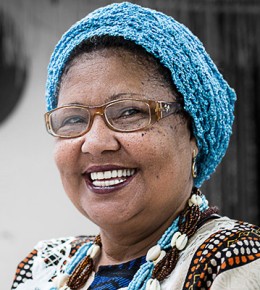
1. Nilce Naira Nascimento, Brazil
Article 23 of UDHR: Everyone, without any discrimination, has the right to equal pay for equal work.

2015-12-10-1449719648-2069767-Nilce.jpg

Nilce responds to Brazil’s strong racial divide and inequality through her work with CRIOLA, a women’s rights organization led by black women who work with other Afro-Brazilian women and girls in the poorest areas of Rio de Janeiro to empower them to combat this rampant racism and improve the living standards for the Afro-Brazilian community.

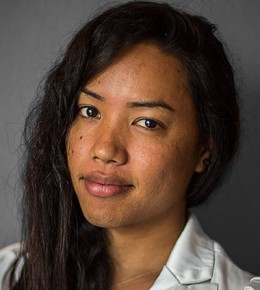
2. Swastika TamaNg, Nepal
Article 3: Everyone has the right to life, liberty and security of person.

2015-12-10-1449719720-2122292-Swastika.jpg

When Swastika came out as a transgender woman five years ago, her father disowned her and she had to leave home. With little education, she had no job prospects so she turned to being a sex worker. Through her involvement with Mitini Nepal, an LGBTQI support and advocacy group, she was able to understand her gender identity and is now working to achieve human rights for LGBTQI people in Nepal, where existing laws protecting LGBTQI’s rights are rarely enforced.

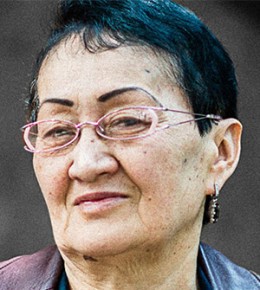
3. Asipa Musaeva, Kyrgyzstan
Article 2: Everyone is entitled to all the rights and freedoms set forth in this Declaration, without distinction of any kind, such as race, color, sex, language, religion, political or other opinion, national or social origin, property, birth or other status.

2015-12-10-1449719804-2914822-Asipa.jpg

At the young age of 17, Asipa was in an accident that severely injured her hip, leaving her permanently disabled. She found that perceptions around her disability made it difficult for her to find a job, or to be treated with dignity by those around her. She founded the Republican Independent Association of Women with Disabilities of Kyrgyzstan. In the face of tremendous obstacles, including her arrest, she and her group advocated for public spaces to be accessible for people with disabilities. The law was ultimately adopted, and today Asipa and her organization continue to advocate on behalf of people with disabilities

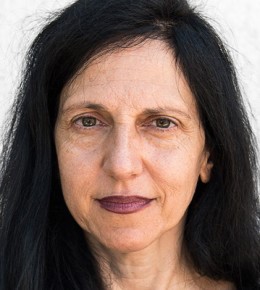
4. Nela Pamukovic, Croatia
Article 5: No one shall be subjected to torture or to cruel, inhuman or degrading treatment or punishment.

2015-12-10-1449719900-9095078-Nela.jpg

In 1992, Nela co-founded the Centre for Women War Victims (ROSA) during the Bosnian war, when rape was used as a weapon to terrorize communities and intimidate women. Now, more than 20 years later, women survivors of rape are still healing from the trauma and stigma of their experience. ROSA provides women with a safe space to share their stories, and their advocacy led the Croatian parliament to pass the first law in the country recognizing rape as a war crime.

see also: https://thoolen.wordpress.com/tag/women-human-rights-defenders/

Source: This Human Rights Day, Fight for Human Rights in New Ways | Samina Ali

A Documentation Manual for and about Women Human Rights Defenders

December 3, 2015

A new publication “Gendering Documentation: A Manual for and about Women Human Rights Defenders” (http://www.omct.org/files/2015/12/23505/gen_doc_manual_final.pdf) has come out to mark International Women Human Rights Defender Day (29 November) and International Human Rights Day (10 December). It has been produced by the Women Human Rights Defenders International Coalition. The manual will be posted in pdf format in coming days on the website of the Women Human Rights Defenders International Coalition: www.defendingwomen-defendingrights.orgwomen human rights defenders

Gendering Documentation: A Manual For and About Women Human Rights Defenders is designed for use by those who document Read the rest of this entry »

On-line Tribute to Women Human Rights Defenders updated

November 26, 2015

AWID is an international, feminist, membership organisation committed to achieving gender equality, sustainable development and women’s human rights.  AWID honors feminists and Women Human Rights Defenders (WHRDs) who have died and whose contributions to the advancement of human rights are very much missed. This tribute takes the form of an online photo exhibition featuring photographs and biographies of women’s rights leaders from around the world – was first launched at AWID’s 12th International Forum on Women’s Rights in Development, held in April 2012 in Istanbul, Turkey, and is updated every year as part of the 16 Days Campaign Against Gender Based Violence women human rights defenders(November 25 – December 10).

for last year: https://thoolen.wordpress.com/2015/09/12/call-for-submissions-contribute-to-awids-tribute-to-women-human-rights-defenders-awid/

Source: WHRD Tribute | AWID

16 days of Activism: Stop Violence against SRHR defenders

November 24, 2015
The Women’s Global Network for Reproductive Rights (WGNRR) calls for an end to the violence directed at SRHR defenders, as well as their recognition and protection as Women Human Rights Defenders (WHRDs). For those who are not familiar with the term: SRHR stand for Sexual and Reproductive Health and Rights.The 16-day campaign encourages all to share stories and experiences on social media using the hashtags #SRHRvoices #SRHRheroes, speak out for the recognition of SRHR defenders as Women Human Rights Defenders and demand their protection.

The 16 Days of Activism Campaign links two international days of action: 25 November, International Day of Action for Elimination of Violence against Women, and 10 December, International Human Rights Day. In between falls 29 November, International Women’s Human Rights Defenders Day.

WHRDs who work on sexual and reproductive rights issues have been recognized at particular risk of grave consequences because of their work, as they are often perceived to be “challenging accepted socio-cultural norms, traditions, perceptions and stereotypes about femininity, […] and the role and status of women in society“. Not only are the advocacy efforts of SRHR activists often shunned, ignored or feared by broader society, but they often find their own lives and well-being at risk.

Read the rest of this entry »