Posts Tagged ‘Victor Orban’

Some governments are ‘weaponising’ Trump language to attack NGOs

April 3, 2025

On 2 April 2025 AFP reported that language used by President Donald Trump and his government to slash US-funded foreign aid is being adopted by other governments to attack NGOs and independent media.

Civil society groups in parts of Eastern Europe and beyond — long targeted by discredit-and-defund campaigns because of the light they shone on corruption and lack of transparency — are now also dealing with Trumpian rhetoric, human rights groups said.

Trump administration statements “are being weaponised in real-time by autocrats and dictators across Eastern and Southeastern Europe to justify and deepen their crackdown on independent media, NGOs, and human rights defenders,” Dave Elseroad, of the Human Rights House Foundation, told AFP.

From Hungary to Serbia, to Georgia and Bosnia, non-governmental organisations and independent media outlets working to bolster democratic norms are hearing officials borrow White House phrases to justify officials’ stances against them.

© Kayla Bartkowski / GETTY IMAGES NORTH AMERICA/AFP/File

It includes Trump’s claim that the US Agency for International Development (USAID) was “run by radical lunatics”, and his billionaire advisor Elon Musk’s calling the agency a “criminal organisation” that needed to be put “through the woodchipper”.

Such terms are “seriously encouraging language used in Budapest or in Belgrade or in Bratislava or Banja Luka,” said Miklos Ligeti, head of legal affairs at Transparency International’s Hungary chapter.

In some countries, the verbal ammunition comes on top of a sudden funding gap wrought by the dismantling of USAID, which is hitting the NGO sector hard. USAID had been providing funding to a vast array of independent organisations in countries like Hungary where such groups have been “financially suffocated domestically,” Ligeti told AFP.

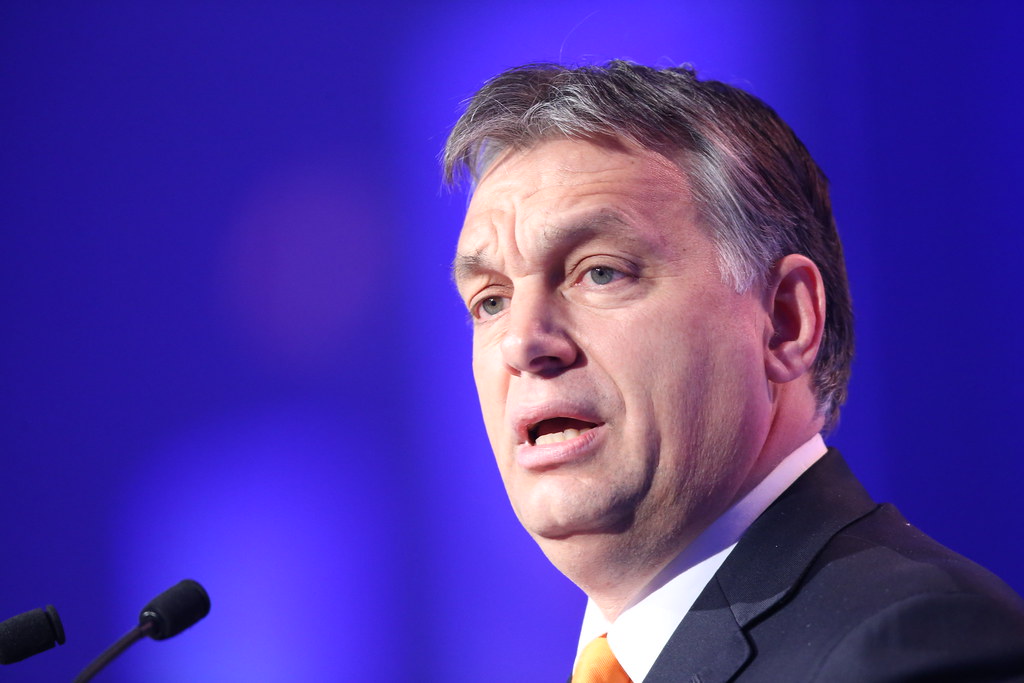
Hungarian Prime Minister Viktor Orban has hailed the crackdown on USAID by his ally Trump as a “cleansing wind”. Orban has vowed to “eliminate the entire shadow army” he says is made up of his political enemies, judges, the media and NGOs.

The UN rights office in Geneva slammed “escalating attempts worldwide to weaken and harm domestic and international human rights systems, including defunding and delegitimising civil society”. It said that “it is all the more worrying to see these trends also emerging in established democracies”.

In some countries there is a direct line between utterances in Washington and action to undermine civil society. In Georgia, for example, the ruling Georgian Dream party last month called for the country to adopt its own version of the US Foreign Agents Registration Act (FARA) — which observers warn could be turned against NGOs receiving foreign funding.

And in Serbia, which has been rocked by months of protests over government corruption, authorities referred to statements made by Trump and other top US officials to justify raiding a number of NGOs. The Serbian government saw the Trump administration’s labelling of USAID as a “criminal organisation” as “a fantastic opportunity to basically punish civil society”, said Rasa Nedeljkov, programme director at the Center for Research, Transparency and Accountability (CRTA).

CRTA’s offices were raided in February by heavily armed police. The operation took 28 hours because prosecutors had CRTA staff manually copy documents related to USAID-funded projects to hand to them, rather than accepting digital versions.

Serbian authorities have explicitly referred to statements by Trump and other US officials to justify raids on a number of NGOs.

Pavol Szalai, head of the EU-Balkans desk at Reporters Without Borders (RSF), said leaders in a string of countries were using “the suspension of USAID by Trump to attack media which had received USAID funds”. He said such groups were being doubly punished: they “lost their funding from one day to the next” while also increasingly being “targeted by intimidation”…

He warned that, “as these media retreat.. they will be replaced by propaganda”.
https://www.france24.com/en/live-news/20250402-other-governments-weaponising-trump-language-to-attack-ngos-rights-groups

Human Rights Defenders in Europe fear George Soros retreat

September 1, 2023

Philip Oltermann on 19 August 2023 reports that ΗRDs fear the billionaire’s legacy will be lost as his Open Society Foundations curbs its activities across the EU

Soros survived the Nazi occupation of his native Hungary, made a fortune on Wall Street and became one of the most steadfast backers of democracy and human rights in the eastern bloc. But human rights activists and independent media fear the legacy of billionaire philanthropist George Soros, 93, could be about to be undone in his homelands, as his donor network announced it will curb its activities across the EU from 2024.

Several beneficiaries of Soros’s Open Society Foundations (OSF), chaired since the start of this year by his son Alex, told the Observer they would struggle without its support amid an authoritarian rollback.

When the Open Society Foundations left Budapest under severe political pressure in 2018, they said they would lose their physical presence but not their focus on the region,” said Márta Pardavi, co-chair of the Hungarian Helsinki Committee, a Budapest human rights NGO supported by the foundations. But she added: “Has there really been such a positive shift in Europe over the last five years that that promise has become less relevant?”

In a July email to staff, the OSF management announced a “radical redesign to help us deliver more effectively on our mission”. “Ultimately, the new approved strategic direction provides for withdrawal and termination of large parts of our current work within the European Union, shifting our focus and allocation of resources to other parts of the world,” it said.

While 40% of the charity’s global staff will be laid off, cuts will be severest in Europe, with the 180 headcount at its Berlin headquarters cut by 80%. Staff remaining in the German capital will mainly administer the foundation’s funds in Switzerland.

Its Brussels offices will be downsized, while a branch in Barcelona will be closed by the end of the year. Of an erstwhile seven branches in the post-Soviet area only three remain in Kyrgyzstan, Ukraine and Moldova.

Many European NGOs, think tanks and research groups working on issues ranging from media freedom and migrants’ rights to state surveillance and digital regulation rely on the foundations, which spent $1.5bn on philanthropic causes in 2021.

As traditional European media outlets have struggled to live up to their role amid a drop in advertising revenue, OSF has stepped in to support independent news projects including the Organized Crime and Corruption Reporting Project (OCCRP), London-based Bureau of Investigative Journalism and Forbidden Stories, an encrypted online platform that allows threatened journalists to securely upload their work and be continued by others.

Alex Soros, who grew up and was educated in the US, said: “The Open Society Foundations is changing the way we work, but my family and OSF have long supported, and remain steadfastly committed to the European project.”

The foundations say they will continue support for European Roma communities. Even critical employees expressed confidence the foundations could commit more to longer-term projects, just fewer of them.

Yet while a profound change to the structure of the organisation has long been signalled by Soros senior, the decision to achieve this via drastically reducing its headcount seems to have only emerged has been a priority under its new board of directors. Once jokingly referred to by employees as Soros’s “reading group”, the board has been slimmed down to a tighter unit dominated by family members since the baton was passed to Soros junior.

“The OSF is one of the few bodies that hand out unrestricted core funding,” said one grantee, who asked to remain anonymous amid uncertainty over the foundation’s future strategy. “It’s what keeps the light on for human rights defenders in Europe.”

Berlin has been the hub of the foundations’ European operations after the 2018 closure of the Budapest branch under pressure from the government of strongman Viktor Orbán, once a recipient of Soros’s support.

Last week the Hungarian prime minister’s political director Balázs Orbán (no relation) posted a message on social network X, formerly known as Twitter, in which he called the Open Society Foundation “the Soros empire”. “We only truly believe that the occupying troops are leaving the continent when the last Soros soldier has left Europe and Hungary,” he said.

“If you invest in democracy, you can never expect it to yield quick returns,” Márta Pardavi said. “The need for democracy-building never really goes away. And I think George Soros knew that.”

https://www.theguardian.com/business/2023/aug/19/george-soross-retreat-from-europe-could-turn-off-the-lights-for-human-rights

Good example of authoritarian abuse of COVID-19 emergency: Hungary

April 7, 2020

Hungary has defied calls by human rights defenders to respect human rights standards in tackling the COVID-19 outbreak.  Monday 30 March 2020, Hungary’s parliament passed a controversial Law on Protection against the Coronavirus, allowing Prime Minister Viktor Orban to rule by decree for an indefinite period [!], and to jail anybody deemed to be publishing ‘fake news’ by up to five years. In the days prior, Civil Rights Defenders condemned the bill on the grounds that it is an attack on the rule of law and democracy, and presents numerous threats to human rights in the country (see https://crd.org/2020/03/24/hungary-state-of-emergency-is-no-excuse-for-undermining-rule-of-law/).

In one of its first moves, the government tabled a bill outlawing legal gender recognition which is a serious and permanent attack on the rights of Trans people. The following day, on Tuesday, it hinted it would use emergency powers to push educational reform by perusing an appalling new curriculum that will rewrite history books by promoting national pride, and making anti-Semitic authors compulsory reading. Coupled with the restrictions on media freedoms, the freedom of expression and the indefinite emergency rule, these measures are a clear overreach of emergency powers and a grave threat to democracy.

20 EU Member States have reacted in a joint-statement that they are “deeply concerned about the risk of violations of the principles of rule of law, democracy and fundamental rights arising from the adoption of certain emergency measures”. However, the statement’s authors did not call out countries by name, thus creating a loophole for Hungary to shamelessly became a signatory itself [SIC and SICK].

https://crd.org/2020/04/07/hungary-ignores-calls-for-respect-of-human-rights/

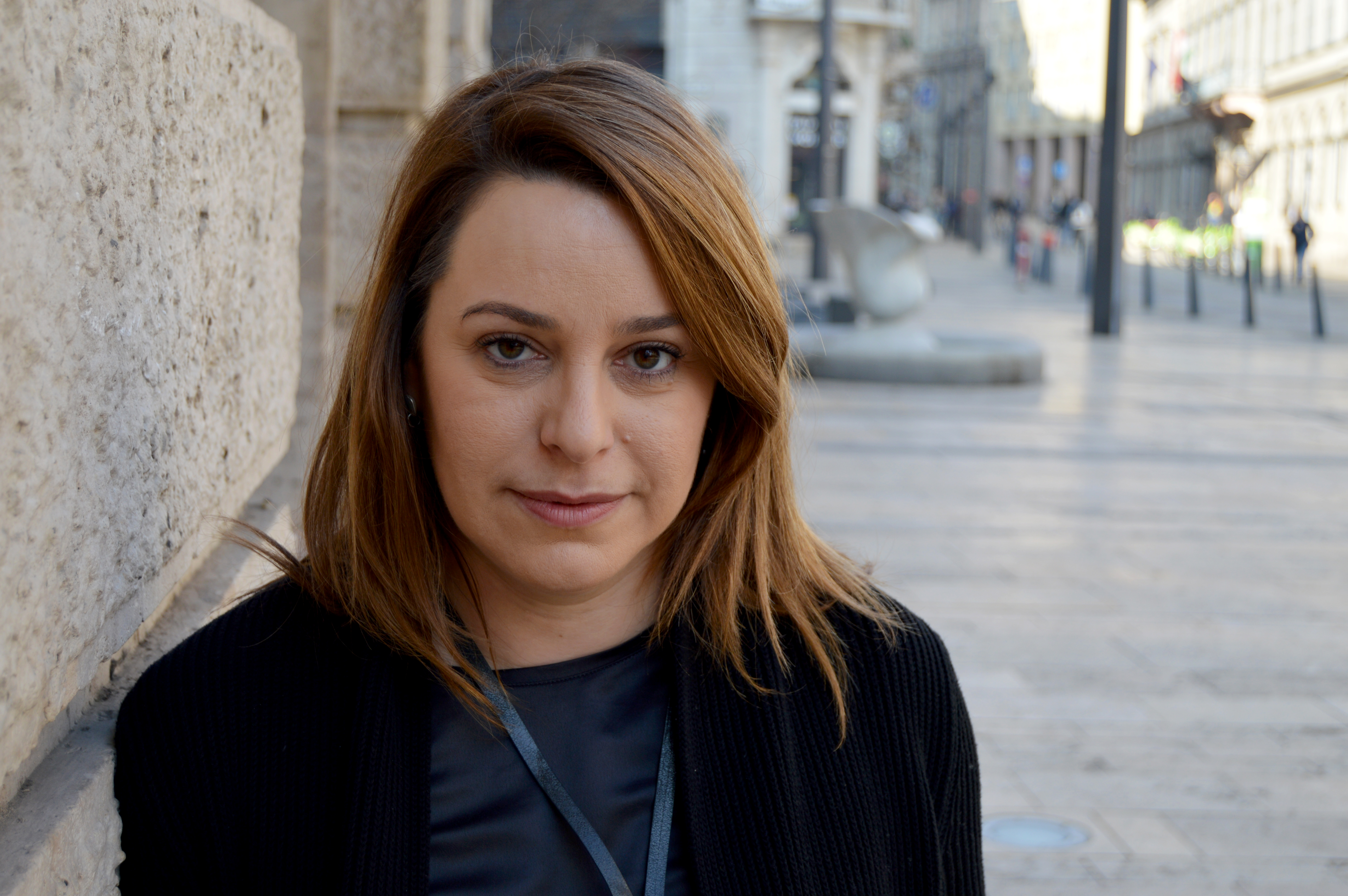
Civil Rights Defender of the Year Award 2019 goes to Hungarian Márta Pardavi

April 5, 2019

Hungarian human rights lawyer Márta Pardavi has been awarded the Civil Rights Defender of the Year Award 2019. As an outspoken critic of the Hungarian government and its policies, Márta is often smeared and her work discredited. The award is a recognition of her work of many years, fighting against the attempts to systematically dismantle democracy, normalisation of xenophobia and hate crimes in Hungary.

Márta Pardavi is the Co-chair of the Hungarian Helsinki Committee, one of Hungary’s leading human rights organisations. The Hungarian Helsinki Committee is a watchdog organisation that protects human dignity and the rule of law through legal and public advocacy methods. Being both vocal and successful in its activities, and particularly because of their work to support asylum seekers, the organisation has become a prime target of the government’s toxic campaigns.

“Democracy is under threat all over the world and now we see what authoritarians do when they get to power. They target critics, human rights defenders and treat marginalised groups as threats to society. We see this happening in Hungary, but also in other countries such as Poland. This award sends a very strong message, that our work is recognised, and that we as civil society organisations will continue to defend democratic values”, said Márta Pardavi.

Márta Pardavi, Civil Rights Defender of The Year 2019

“For many years, human rights lawyer Márta Pardavi has courageously defended civil and political rights in Hungary. She is leading the Hungarian Helsinki Committee’s work in the field of refugee protection, and with dignity and professionalism, confronts those who attempt to systematically dismantle civil society and normalise xenophobia and hate crimes. For her dedication and exceptional contribution to resist inhumane treatment of the most vulnerable, Márta is awarded the Civil Rights Defender of the Year 2019”, , said the Board of Civil Rights Defenders in its motivation.

During the first two decades of Hungary’s post-communist history, the country was a young but stable democracy, and a role-model of successful transition from authoritarianism to democracy. Today, Prime Minister Viktor Orbán has been in power almost a decade, a period during which Hungary has undergone dramatic changes. Too many posts in this blog have been devoted to this, see e.g.: https://humanrightsdefenders.blog/tag/hungary/.

….But despite this climate, human rights defenders and human rights organisations continue to challenge state policies and propaganda, and the public support for their activities is growing.

“Many civil society organisations are working to address this and while it was probably both unwanted and unintended, the Hungarian government’s pressure has made us better at working together, making us stronger. And the same is true for the government’s anti-NGO campaigns – we have seen that civil society support is growing as an unintended consequence of the state propaganda”, said Márta Pardavi.

For  more on the Civil Rights Defender of the Year Award, see: http://www.trueheroesfilms.org/thedigest/awards/civil-rights-defender-of-the-year-award

https://crd.org/2019/04/04/civil-rights-defender-of-the-year-2019-marta-pardavi/


Excellent background piece to Hungary’s Stop-Soros mania

May 18, 2018

published a long, interesting article entitled “The Open Society Foundations — and their enemies“. It is very much linked to the anti-Soros drive earlier reported [https://humanrightsdefenders.blog/2018/05/09/urgently-seeking-professors-to-stop-the-anti-soros-bill-in-hungary/] but digs deeper and looks at the various dilemmas facing the Open Society Fund and similar donors in authoritarian/populist settings. The relocation of the Budapest office provides a timely backdrop.

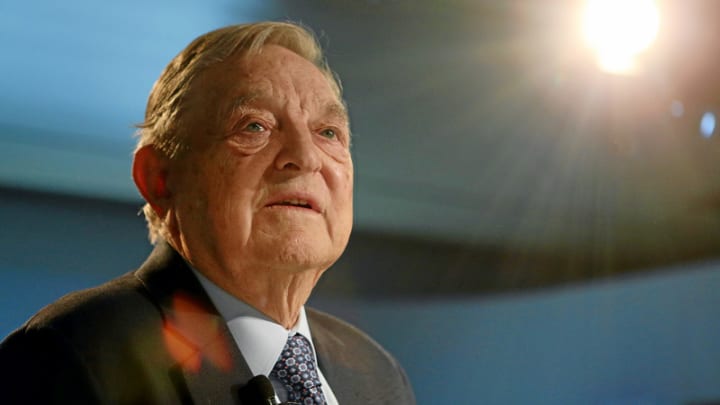
George Soros founded the Open Society Foundations. Photo by: Mirko Ries / World Economic Forum / CC BY-NC-SA

Here some interesting quotes but the whole article is worth reading:

The risk that Open Society weighs is not the potential for its activities to create controversy, but for that controversy to prevent the foundation from being able to carry out its activities. “We don’t exist to defend ourselves. We exist to make change out there,” .. “If we only existed to protect ourselves, then that would be their victory….That is a classical philanthropic reaction — let’s not go anywhere near that, because that’s controversial. If you do that, if you allow controversy … to stop you from doing things, then an authoritarian government or a reactionary player in society … have a very easy task.” — Jordi Vaquer, Open Society Foundations’ regional director for Europe

..Hungary’s Prime Minister Viktor Orban is not alone in flinging those accusations — Soros is a favorite boogeyman for pro-Brexit voters in the United Kingdom, populists across Eastern Europe, and even Republicans in the United States. But in Hungary, the anti-Soros campaign has moved to the very center of political life. Orban’s party and supporters invoke Soros’ name and image to paint an apocalyptic vision of what might happen if the Hungarian-American financier, his foundation, and the NGOs they support are allowed to carry out their alleged “globalist” agenda.

Devex spoke to Gabor Gyulai, director of the Refugee Programme at the Hungarian Helsinki Committee, and another NGO Power of Humanity.

“In countries where millions of people are actively working in solidarity with refugees, or with LGBTI people, or with victims of domestic violence, civil society organizations have something they can build on to shape a message that will attract broader support. In a society where the vast majority believes that what you are standing up for is not a valid cause, there is much less to build on, said Gyulai, an expert on refugee issues who is also working with the United Nations to build a global network of open access courses on asylum law. The problem gets even more difficult when the state is actively working to prevent that kind of coalition from forming.”  Less than a week after Devex met with him, Gyulai’s name appeared on the list of “Soros mercenaries.”

…..

The risk that Open Society weighs is not the potential for its activities to create controversy, but for that controversy to prevent the foundation from being able to carry out its activities. “We don’t exist to defend ourselves. We exist to make change out there,” Vaquer said. “If we only existed to protect ourselves, then that would be their victory….That is a classical philanthropic reaction — let’s not go anywhere near that, because that’s controversial. If you do that, if you allow controversy … to stop you from doing things, then an authoritarian government or a reactionary player in society … have a very easy task.” — Jordi Vaquer, Open Society Foundations’ regional director for Europe

….

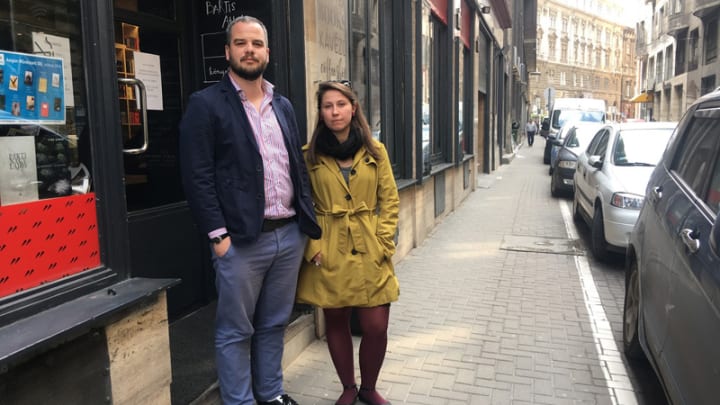
Zoltan Mester (left) and Vilja Arato, employees of the With the Power of Humanity Foundation. Michael Igoe/Devex
Among With the Power of Humanity’s staff, the debate over what is and is not an encroachment into party politics plays out constantly, Mester said. “Every day it’s a big fight … because especially in this time and especially in Hungary, everybody thinks that political is something bad … In Hungary if you say ‘political,’ you think about … party politicians.”…

“George Soros could have done many other things with his fortune, but that was the vision from the start — that those two were going to be the pillars of the ways in which he would then seek to define open society,” Vaquer said. “If you look at our budget 30 years later, that’s still what we are doing overwhelmingly. We’re still supporting civil society organizations and individuals. We haven’t changed that.”

The Open Society Foundations office in Budapest, Hungary. Devex/Michael Igoe

Faced with a constant barrage of accusations that they are part of George Soros’ secret plan to meddle in national politics, some of Open Society’s grantees find themselves responding to the obligatory questions that follow…..In accusing the foundation of orchestrating a global campaign to transform Europe and erode countries’ national sovereignty, OSF’s enemies ascribe much more power and reach to the organization than its employees and grantees would ever claim to have. It is tempting to do the same thing when asking if Open Society has been successful in achieving its goals. The declines in democratic freedom currently underway in many countries where Open Society operates might raise questions about whether the foundation and its benefactor have been operating with the right theory of change.

….

With the erosion of the values and norms it promotes, Open Society is not necessarily thinking differently about how the foundation measures its impact, but its leaders are coming to terms with a more realistic view of what is possible. “I think it has made us extremely aware of the limitations of what can be achieved with cross-border philanthropic activity,” Vaquer said. “It was perhaps a product of the exceptional time that was the 1990s that OSF had such a disproportionate impact on some places, in terms of being part of their political transformation, but that was probably exceptional.”

Igoe michael 1

[Michael Igoe is a Senior Reporter with Devex, based in Washington, D.C. He covers U.S. foreign aid, global health, climate change, and development finance. Prior to joining Devex, Michael researched water management and climate change adaptation in post-Soviet Central Asia, where he also wrote for EurasiaNet. Michael earned his bachelor’s degree from Bowdoin College, where he majored in Russian, and his master’s degree from the University of Montana, where he studied international conservation and development.]
….


Urgently seeking professors to stop the Anti-Soros bill in Hungary

May 9, 2018

On 9 May 2018, Hungary’s (remaining) civil society issued the Professors Solidarity Call below, signed by 77 professor until now and asking for more signatories. It concerns the so-called “Stop Soros” bill, to be voted by the Hungarian parliament very soon, which will have a devastating impact on both Hungarian civil society and the asylum seekers and refugees that are already in a dire state. That Victor Orban is behind an ‘anti-Soros bill’ is the more remarkable as he himself was the beneficiary of a Soros scholarship [in 1988 a dissident Hungarian university graduate wrote a letter to George Soros, a billionaire philanthropist, asking for help obtaining a scholarship to Oxford University. In the letter, which has recently resurfaced, the young Viktor Orban said he wanted to study the “rebirth of civil society”. He got the scholarship.– the Economist 7 April 2018].

(see also my earlier: https://humanrightsdefenders.blog/2018/02/20/250-ngos-address-letter-to-hungarian-parliament-regarding-restriction-on-the-work-of-human-rights-defenders/ and https://humanrightsdefenders.blog/2018/03/19/ahmed-h-personifies-the-real-danger-of-populist-anti-terror-measures/)

PROFESSORS’ SOLIDARITY DECLARATION AND CALL FOR ACTION IN DEFENCE OF THE HUNGARIAN HELSINKI COMMITTEE AND THE HUNGARIAN CIVIL SOCIETY

We, 77 university professors and academics from 28 countries around the world, express our solidarity with the Hungarian Helsinki Committee and the independent Hungarian civil society, which currently faces an imminent existential threat.

The so-called “Stop Soros” bill, to be voted by the Hungarian Parliament in mid-May 2018, will have a devastating impact on both Hungarian civil society and those vulnerable human beings that cannot count on anyone else’s support. The new legislation will allow the government to simply ban the activities of organizations assisting refugees and migrants in a fast and arbitrary process. Activities such as legal aid to asylum-seekers, reporting to the UN or the EU, holding university lectures about refugee law or recruiting volunteers will be rendered illegal, if these are performed by civil society actors who dare to criticise government practices. Practices, which are equally condemned by the EU and the international community.

The Hungarian Helsinki Committee (HHC) is an outstanding human rights organization, well-known and respected for its professionalism around the world, not only by civil society, but by academia, state authorities and the judiciary as well. The HHC has massively contributed to the promotion of refugee law education and legal clinics on various continents. We all personally know and highly respect their work. States should be proud of such NGOs, instead of aiming to silence them.

Strong and independent civil society organisations are as indispensable for democracy and the rule of law as strong and independent universities. If NGOs such as the Hungarian Helsinki Committee are threatened, democracy is threatened. If a prestigious organization, winner of various international human rights awards, can simply be banned from providing legal aid to refugees, if a globally reputed voice of human rights can be silenced with an administrative measure in an EU member state, then further dramatic anti-democracy measures are likely to follow. There is a real risk that the Hungarian example will be increasingly copied elsewhere, and soon it may be too late to stop the domino effect.

We call on our governments to express, without delay, their vivid discontent with Hungary’s legislation aiming at annihilating independent civil society. We call on universities around the world to do the same and actively demonstrate their solidarity with the Hungarian Helsinki Committee and the entire threatened Hungarian civil sector. We call on the European Union to prove to the world its credibility as a guardian and global promoter of fundamental rights, and immediately take action to prevent this flagrant human rights violation from happening on its own territory.

Signatures (in alphabetical order) at the end of the document: https://www.helsinki.hu/wp-content/uploads/Professors-solidarity-call-HHC-HU-NGOs-2018.pdf

https://www.economist.com/news/europe/21739968-election-april-8th-hungarys-prime-minister-looks-unbeatable-viktor-orban-set