Jasmin Lorch in an article of 25 June 2025 argues that European support to human rights NGOs, critical civil society and free media is not merely a “nice-to-have“. Instead, it directly serves European interests due to the important information function that these civil society actors perform.
USAID funding cuts have dealt a heavy blow to human rights defenders, critical Non-Governmental Organizations (NGOs) and independent media outlets around the globe. While the damage is hard to quantify exactly, it is clearly huge. For instance, the Centre for Human Rights and Democracy at People in Need estimates that the human rights and media organizations it supports have seen their budgets shrink by 40 to 100% because of the cuts. Based on a USAID fact sheet, meanwhile taken offline, Reporters without Borders (RSF) informed that the dismantling of USAID had affected support to 6,200 journalists, 707 non-state media outlets and 279 civil society organizations (CSOs) working to support free media. The impacts on local civil society are especially pronounced in closed authoritarian contexts where CSOs are both restricted and donor-dependent. In Cambodia, ADHOC, one of the few remaining local human rights organizations, lost 74 percent of its budget and had to close 16 out of its 22 provincial offices.
As critical CSOs and independent media outlets struggle to find alternative sources of funding, they face another threat to their survival: Major European donors, including Sweden, have cut down on foreign funding as well, citing their own national needs, including the necessity to invest more in defence. Germany, the biggest bilateral donor since the dismantling of USAID, has recently pledged to better integrate its foreign, defence, and development policy and to more closely align development cooperation with its security and economic interests. Accordingly, there is a significant risk that European donors will (further) cut down on funding for critical CSOs and free media as well.
However, European donors should consider that continuing to support human rights defenders, critical NGOs and independent media outlets is in their own interest.
Notably, these civil society actors serve an important information function. By furnishing insights into human rights abuses, governance deficits and patterns of corruption, they provide European (as well as other) governments with a better understanding of political developments, power relations and regime dynamics in their partner countries, thereby enhancing the predictability of security and economic partnerships. Authoritarian governments. in particular, restrict the free flow of information, while, concurrently, engaging in propaganda and, at times, strategic disinformation. Consequently, European foreign, economic and security policy towards these governments routinely suffers from severe information deficits, including the existence of numerous “unknown unknowns”. To compensate for this weakness, country assessments and expert opinions used by foreign, development, and defence ministries in Europe to devise policy approaches towards non-democratic partner countries often include information provided by independent media outlets, human rights or anti-corruption NGOs. Similarly, European embassies in authoritarian countries frequently draw on the reports and documentations accomplished by local human rights NGOs.
In some cases, the information provided by critical NGOs, human rights defenders and independent media outlets – both local and transnational – is highly economically and security relevant, for instance when it serves to unearth patterns of transnational crime. The Organized Crime and Corruption Reporting Project (OCCRP), an investigative journalist network, which also has a media development branch and was heavily affected by the USAID funding cuts, for instance, contributed to the Panama Papers that disclosed the secretive use of offshore tax havens. A recent report named Policies and Patterns. State-Abetted Transnational Crime in Cambodia as a Global Security Threat draws on interviews with journalists and civil society representatives. While expressing disappointment with the ineffectiveness of large parts of the aid community and big counter-trafficking NGOs in addressing the problem, it emphasizes that
“the ‘local civil society’ community — grassroots volunteer response networks, human rights defenders, and independent media —have been and remain the lynchpin of an embattled response. These heavily repressed and poorly funded groups have been and remain the primary source of available evidence on the lead perpetrators, their networks, and their modes of operation” (quote on p.3).
Last but not least, establishing partnerships with human rights defenders and critical NGOs also allows European countries to expand their social and political alliances in their partner countries, a diversification that can be highly useful in times of political uncertainty and change. ..
Support to human rights NGOs, other critical CSOs and free media constitutes an important contribution to democracy and pluralism. However, it also benefits European economic and security interests by enhancing the knowledge base on which European governments can draw when constructing their international alliances. European governments already use the information provided by these civil society actors in various ways, so they should continue providing diplomatic support, solidarity, and resources to them. Moreover, partnerships with human rights, media, and other civil society representatives provide European governments with an important possibility to diversify their international partnerships.
Against this backdrop, European support to these civil society actors is not a “nice-to-have” that can easily be dispensed with when funding gets more scarce. It is an important element in ensuring the predictability and reliability of European foreign relations.
4 July 202: China’s government accepted – wholly or partially – 298 of the 428 (70%) recommendations the country received from UN member states during its fourth UPR on 23 January 2024. This represents a 12% drop in the proportion of recommendations the government accepted compared to the previous UPR in 2018.
In a worrying sign of the government’s outright refusal to heed the mounting international concern over key human rights issues, of the 130 recommendations Beijing did not accept, an unprecedented number – 98 – were categorised as “rejected” and 32 were “noted.
China’s government used the United Nations (UN)-backed review of its human rights record to rebuff international concern over serious abuses, issue blanket denials, and make blatantly false statements, the International Federation for Human Rights (FIDH), Human Rights in China (HRIC), the International Campaign for Tibet (ICT), the Taiwan Association for Human Rights (TAHR), and the Database Center for North Korean Human Rights (NKDB) said after the adoption of the outcome of China’s Universal Periodic Review (UPR) in Geneva, Switzerland.
Despite well-documented evidence to the contrary, the government claimed that many of the recommendations it accepted were being implemented or had already been implemented. Such was the case regarding the accepted recommendations related to human rights in Hong Kong, Tibet, and Xinjiang, and the situation of human rights defenders, lawyers, civil society, media, and journalists. The government also made the false claim that it protected “freedom of speech, association and assembly” and “the lawful rights of all citizens as equals“.
FIDH, HRIC, ICT, TAHR, and NKDB urge China’s government to reverse course and use the fourth UPR to address the concerns voiced by numerous UN member states without delay by implementing all the recommendations that are consistent with its obligations under international human rights law.
Below is an analysis of the government’s response to the UPR recommendations on selected human rights issues.
Human rights situation in Hong Kong, Tibet, and Xinjiang
The government received 57 recommendations on human right issues in Hong Kong, Tibet, and Xinjiang and accepted only 19 (33%) of them. With regard to Hong Kong, the rejected recommendations were overwhelmingly related to the National Security Law and its negative impacts. Rejected recommendations concerning the situation of the Uyghurs in Xinjiang included those that called for the implementation of the 2022 UN Office of the High Commissioner for Human Rights (OHCHR) assessment on Xinjiang which China’s government called “illegal“. China rejected 70% of the unprecedented number of Tibet-specific recommendations it received – notably the ones calling for an end of the boarding school system for Tibetan children – often claiming they were based on “false information” despite many verified reports, including by UN experts. Other recommendations concerning the respect of cultural and religious rights in Tibet were listed as “accepted and already implemented” in a blunt misrepresentation of the reality on the ground. Many of the recommendations received by China’s government concerning the situation in Tibet echoed those contained in the joint submission made by FIDH and the International Campaign for Tibet (ICT) for China’s fourth UPR.
Human rights defenders, lawyers, and civil society
The government accepted only 10 of the 25 recommendations it received on human rights defenders, lawyers, and civil society. It rejected recommendations that called on China’s authorities to end the harassment and arbitrary detention of human rights defenders and lawyers and to cease the restrictions on civil society. A submission by HRIC highlights how online rights and internet freedoms in Hong Kong have significantly deteriorated in the post-COVID era, especially after the promulgation of the National Security Law, and that women have been disproportionately affected, as evidenced by the online gender-based violence they experienced.
Media and journalists
The government rejected 10 of the 14 recommendations it received concerning the protection of media and journalists, claiming the authorities protect the right to freedom of speech.
Death penalty
The government rejected all 20 recommendations it received concerning the death penalty. It stated that the death penalty “should be retained with its application strictly and prudently limited” – a statement that clashes with the reality of a country that has consistently ranked as the world’s most prolific executioner.
ILGA World (https://ilga.org/) published a comprehensive index of deadlines facilitating engagement with UN human rights mechanisms. This invaluable resource is crafted to serve as a guiding beacon for human rights defenders (HRDs) dedicated to advancing the rights of individuals within the realms of sexual orientation, gender identity, gender expression, and sex characteristics (SOGIESC). The active involvement of HRDs in UN mechanisms is paramount, acting as a catalyst for transformative global change. The Guide is equally useful for non-SOGIESC submissions.
For those aspiring to witness targeted recommendations on SOGIESC issues directed at their respective countries, active participation in the Universal Periodic Review (UPR) holds utmost importance.
Similarly, collaboration with the Treaty Bodies provides a unique platform wherein a panel of experts rigorously evaluates a nation’s adherence to international human rights treaties, illuminating crucial intersections with the challenges faced by the LGBTI community.
This index serves as a vital compass, delineating pivotal deadlines and milestones, empowering HRDs to navigate the intricate UN mechanisms strategically, thus making substantial contributions to promoting and protecting human rights on a global scale.
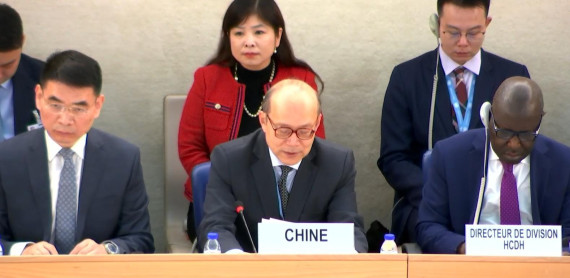
Last week, on 23 January 2024, the UN Human Rights Council reviewed the human rights record of China during its fourth Universal Periodic Review (UPR). The International Service for Human Rights reporst back on its successful campaign: Following ISHR campaign and your messages to UN member States, sixcountries, including France, Luxembourg, the UK, the US, Sweden, and Australia urged Beijing to put an end to the practice of ‘Residential Surveillance at a Designated Location’ (RSDL) – which UN experts have branded a form of enforced disappearance. This would not have been possible without you!
Following this session, the Chinese government must review the recommendations and decide whether to accept or simply note them, and report back to the Human Rights Council at its 56th session (June 2024). ISHR will closely monitor this and keep you informed. Our call to raise the case of Cao Shunli got unanswered. Cao was detained by Chinese police in September 2013 in retaliation for her work to seek meaningful civil society participation in China’s second UPR cycle. Ten years ago, on 14 March 2014, Cao died of multiple organ failure following continued denial of medical treatment in custody. Despite the emblematic nature of her case Cao’s name was not once cited by UN member States. Nevertheless, at least four States recommended to China to end reprisals against human rights defenders seeking to engage with the United Nations. We’re ramping up efforts for honouring the memory of Cao Shunli and calling for accountability in her case. We are preparing a small event on 14 March 2024 in Geneva. Stay tuned for more very soon!
On 4 January 2024 ISHR published a massive, complete compilation of all recommendations issued by UN human rights bodies – including the UN Special Rapporteurs and Working Groups, the UN Treaty Bodies, and the Office of the High Commissioner for Human Rights – on the human rights situation in China since 2018. Recommendations are sorted by topic and community affected.
This repository compiles all recommendations issued by UN human rights bodies to the Government of the People’s Republic of China since 2018, the year of its third Universal Periodic Review (UPR).
This includes recommendations in: Concluding Observations issued by UN Treaty Bodies following reviews of China in 2022 (Committee on the Rights of Persons with Disabilities (CRPD)) and 2023 (Committee on Economic, Social and Cultural Rights (CESCR), Committee on the Elimination of Discrimination Against Women (CEDAW)), as well as in Decision 1 (108) on the Xinjiang Uyghur Autonomous Region (XUAR) by the Committee on the Elimination of Racial Discrimination (CERD) under its Early Warning and Urgent Action Procedure; communications and press releases by UN Special Procedures (Special Rapporteurs and Working Groups), including Opinions by the Working Group on Arbitrary Detention; press releases by the Office of the High Commissioner for Human Rights (OHCHR) as well as the OHCHR’s assessment of human rights in the XUAR.
These UN bodies are composed of independent, impartial experts, from all geographic regions.
The recommendations are categorised by key topic or community affected. Yet, this repository does not cover all topics, nor does it include all recommendations issued by the above-mentioned UN bodies.
This repository maintains the original language of the recommendation issued by a given UN body, with minor formatting changes. For the appropriate links please go to the original document.
This repository does not include recommendations to the Governments of Hong Kong and of Macao. Please click here for the repository of recommendations on Hong Kong, and here for the repository of recommendations on Macao.
The topics include very useful ones such as:
Chinese human rights defenders, lawyers and civil society organisations in mainland China
Uyghur region
Tibet
National security legal framework, judicial independence and due process
Surveillance, censorship and free expression
Reprisals, meaningful cooperation with the UN, and unrestricted access to the country for UN experts
Transnational repression
LGBTI rights
Business and human rights, including business activities overseas
The New-Zealand-based Human Rights Measurement Initiative tracks the human rights progress of countries, producing robust data that anyone can use to push for improvements in how governments treat people. They are independent and non-profit.
What gets measured gets improved: if something isn’t being systematically measured, it can be more easily overlooked and undervalued. HRMI data make it easier for decision-makers to monitor their progress, and prioritise human rights. Advocacy based on sound information is one of the key drivers of change.
Eventually, HRMI aims to measure all human rights as defined in international law but they have begun with two core sets of data measuring five economic and social rights and eight civil and political rights. The scores are published annually on the Rights Tracker. see: https://rightstracker.org.
In this world, all governments seek advice not just on how to grow their economies and increase their GDPs, but also on how to improve people’s lives by better respecting, protecting, and fulfilling their human rights obligations. The main use is in the context of the Universal Periodic Review (UPR) of the UN.
HRMI’s mission: is to produce world-changing human rights data tools that track the human rights performance of countries.
Protection of human rights defenders The mandate of the UN Special Rapporteur on the situation of human rights defenders is to be renewed at the HRC’s March session through a resolution led by Norway.
Reprisals
ISHR remains deeply concerned about reprisals against civil society actors who engage or seek to engage with UN bodies and mechanisms. We call on all States and on the Council to do more to address the situation. General Debate Item 5 is a key opportunity for States to raise concerns about specific cases of reprisals and demand that Governments provide an update on any investigation or action taken toward accountability. An increasing number of States have raised concerns in recent Council sessions about individual cases of reprisals, including at HRC sessions 39, 41, 42, 43, 45, and 51.
ISHR believe that States raising cases is an important aspect of seeking accountability and ending impunity for acts of reprisal and intimidation against defenders engaging with the UN. In September 2022, ISHR ran a campaign regarding five specific cases of reprisals (#EndReprisals). We continue to urge perpetrator States to resolve these cases and other States to raise these cases in their statements: Ibrahim Metwally Hegazy (Egypt), the co-founder and coordinator of the Association of the Families of the Disappeared. Jiang Tianyong (China), a lawyer and legal rights activist working at grassroots level to defend land and housing rights, promote the rights of vulnerable social groups and expose root causes of systemic rights abuses. The Human Rights Center ‘Viasna’ (Belarus), which works towards the development of civil society and the promotion of human rights in Belarus and provides legal aid to people in defending their rights and public interests. Comité de Familiares de Víctimas del Caracazo (COFAVIC); Observatorio Venezolano de Conflictividad Social (OVCS); Centro de Justicia y Paz (CEPAZ); Control Ciudadano (and its director Ms. Rocío San Miguel); and Espacio Público (and its director Mr. Carlos Correa) (Venezuela): a group of five NGOs and two individuals working for the promotion of human rights in Venezuela and who have a history of cooperating with the UN, including the Fact-Finding Mission on Venezuela. Human rights lawyers and defenders Armel Niyongere,Dieudonné Bashirahishize, Vital Nshimirimana and Lambert Nigarura (Burundi), four prominent and well-respected figures within Burundian civil society and their local communities. In addition, we urge States to raise individual cases of reprisals in the country-specific debates taking place at this session: Nicaragua, Sudan, Israel and occupied Palestine, Myanmar, Iran, Venezuela, Belarus, Democratic Republic of the Congo. Further information on these cases can be found here or by contacting the ISHR team at s.hosseiny@ishr.ch.
Other thematic debates At this 52nd session, the Council will discuss a range of economic, social and cultural rights in depth through dedicated debates with: The Special Rapporteur on the right to food The Independent Expert on the effects of foreign debt The Special Rapporteur on the right to adequate housing The Special Rapporteur in the field of cultural rights The Council will discuss a range of civil and political rights through dedicated debates with: The Special Rapporteur on freedom of religion or belief The Special Rapporteur on torture The Special Rapporteur on the right to privacy In addition, the Council will hold dedicated debates on the rights of specific groups including: The Special Rapporteur on the sale and sexual exploitation of children The Special Representative of the Secretary-General on violence against children and the Special Representative of the Secretary-General on children and armed conflict The Special Rapporteur on the rights of persons with disabilities The Special Rapporteur on minority issues The Independent Expert on the enjoyment of human rights of persons with albinism The Council will hold dedicated debates on the interrelation of human rights and thematic issues including: The Special Rapporteur on the promotion and protection of human rights while countering terrorism The Special Rapporteur on human rights and the environment The High Commissioner’s report on access to COVID-19 vaccines
Country-specific developments
Afghanistan: The mandate of the Special Rapporteur on Afghanistan is a crucial mechanism for ongoing monitoring and documentation of the situation in the country, as well as enabling discussion and dialogue amongst States on its findings. It remains an important channel for communication between human rights defenders and survivors inside Afghanistan with the intergovernmental decision-making spaces. However, it falls short due to the overwhelming evidence of gross violations and abuses in Afghanistan. The HRC must respond to the calls from Afghan human rights defenders, especially women human rights defenders, and civil society and establish an independent accountability mechanism with a mandate and resources to investigate the full scope of violations abuses that continue to be committed in Afghanistan by all parties and to preserve evidence of these violations for future accountability. The Council will hold an interactive dialogue with the Special Rapporteur on 6 March.
China On 24 November 2022, the CERD issued an Urgent Action decision on Xinjiang stressing the ‘scale and nature’ of the repression of Uyghurs and Muslim minorities, as evidenced by the Xinjiang Police Files leaks. The Committee urged China to release all those arbitrarily detained, stop harassing Uyghurs abroad, and fully review its national security framework. For the first time ever, the Committee referred the matter to the Special Adviser of the Secretary-General on the Responsibility to Protect, while reminding ‘all States of their responsibility to cooperate to bring to an end through lawful means any serious breach of human rights obligations.’ States should ensure sustained visibility on the broader human rights situation across China, raising root causes of violations that commonly affect Uyghurs, Tibetans, Hong Kongers and mainland Chinese human rights defenders, including the abuse of national security as documented by the OHCHR’s Xinjiang report and Special Procedures, and ask for the prompt release of human rights defenders, including feminist activists Huang Xueqin and Li Qiaochu, human rights lawyers Chang Weiping and Ding Jiaxi, legal scholar Xu Zhiyong, Uyghur doctor Gulshan Abbas, Hong Kong lawyer Chow Hang-tung, and Tibetan climate activist A-nya Sengdra.
Mali. In 2020, Mali finally adopted its implementation decree for the HRD law. While it was a long awaited achievement, especially as it establishes the defenders protection mechanism within the National Human Rights Institution, the text also provides that in order to be recognised as such, any defender must carry a card or badge issued in advance by the Minister responsible for human rights. This provision was later reinforced by the decision adopted by the Malian government in September 2020, which establishes the characteristics and procedures for granting and withdrawing the professional card of human rights defenders. During the last presentation of the report of the independent expert on the human rights situation in Mali, ISHR delivered a statement asking the independent expert what support he planned to give to the Malian government to ensure the full implementation of the defenders law and its protection mechanism. The HRC must keep the scrutiny on Mali to ensure that defenders in the country are protected in line with the UN Declaration and not restricted by the limitation imposed by a card defining the status of defenders. The Council will hold an interactive dialogue with the independent expert on 30 March.
DRC The DRC has noticeably improved the protection of human rights in the Kasaï region but progress remains slow and action is still needed towards transitional justice and the protection of defenders in this region. In December 2022, the national assembly of the DRC adopted the draft law for the protection and promotion of defenders. The last step is for the text to be adopted by the Senate, which would strengthen the protection of defenders at the national level after the adoption in February 2016 of an edict for the protection of human rights defenders and journalists in the South Kivu province and a similar text adopted in November 2019 on the Protection of Human Rights Defenders in the North Kivu Province. The United Nations Joint Human Rights Office (UNJHRO) must support the calls of civil society and ensure the protection and promotion of defenders is part of its support to the government of the DRC. The Council will consider oral updates and hold an enhanced interactive dialogue with the High Commissioner and the team of international experts on the DRC on 30 March.
Egypt Notwithstanding the launch of a national human rights strategy, the fundamental purpose of which is to deflect international scrutiny rather than advance human rights, there has been no significant improvement in the human rights situation in Egypt since the joint statement delivered by States in March 2021. Since that time no consequential follow-up has occurred at the HRC, while the situation has further deteriorated on the ground. As witnessed by the world during COP27, the brutal crackdown on civil society in Egypt continues to intensify. Sustained, coordinated action on Egypt at the Council is more necessary than ever. Egypt continues to carry out widespread and systematic violations of human rights, including freedom of expression and freedom of assembly and association. The Egyptian authorities have for years employed draconian laws, including laws on counterterrorism, cybercrimes, and civil society in order to subdue the civilian populations and stifle all forms of peaceful dissent and mobilisation. Under the current government, Egypt ranks among the worst three countries in the world in the numbers of jailed journalists and almost all independent media has been forced to shut down or threatened into silence. Hundreds of websites continue to be banned. Scores of civil society and media representatives continue to be disappeared, tortured and arbitrarily detained under the pretense of counter-terrorism and national security.
While the release of a few select arbitrarily-detained activists is a sign that international pressure works, the number of releases pales in comparison to the vast numbers of individuals newly detained by the National Security Prosecution, or whose arbitrary detention was renewed in 2022. Between the reactivation of the Presidential Pardons Committee in April 2022 and the end of 2022, the authorities released around 900 people held for political reasons, but almost triple that number of suspected critics and opponents were interrogated by prosecutors and arbitrarily detained. ISHR reiterates the calls of more than 100 NGOs from around the world urging the HRC to create a monitoring and reporting mechanism on the ever-deteriorating human rights situation in Egypt.
Israel / OPT This session will consider a number of resolutions associated with the human rights situation in Israel and the Occupied Palestinian Territories, including with respect to the right of Palestinian’s to self-determination, as well as expanding and illegal Israeli settlements. Israeli policies and practices against Palestinian people have been found to constitute acts of apartheid by UN experts as well as by both international and national NGOs, while a HRC-mandated commission of inquiry has found that Israel’s permanent occupation and de facto annexation of Palestinian territory is likely unlawful. ISHR calls on all States to engage with these resolutions on their human rights merits, applying objective criteria in a principled and consistent way which upholds the right of self-determination as well as freedom from violence and discrimination. The Council will hold an interactive dialogue with the High Commissioner on ensuring accountability and justice in the Occupied Palestinian Territory, including East Jerusalem on 3 March.
Nicaragua A year after the adoption of resolution 49/3, the UN system has continued to document a steady deterioration of the country’s multi-pronged human rights crisis: UN and IACHR documentation compiled by the Colectivo 46/2 point to the absence of any step taken to implement any of the 14 recommendations from resolution 49/3. Instead, the ruling party has seized absolute control over the country’s 153 municipalities in a 2022 electoral process characterised by ‘repression of dissenting voices and undue restriction of political rights and civil liberties,’ according to the OHCHR; canceled the legal status of more than 2500 civil society organisations; detained political prisoners in inhumane conditions; and allowed for the continuation of widespread attacks, including 32 killings since 2018, by armed settlers against indigenous peoples of the Northern Caribbean Coast. The Nicaraguan government has confirmed its diplomatic isolation by refusing to cooperate with six UN Treaty Bodies within a year prompting an unprecedented public condemnation by the UN’s two anti-torture committees. It has also retaliated against EMRIP member and Nicaraguan citizen Anexa Cunningham, by denying her entry into the country on July 9. We urge the Human Rights council to renew, for a period of two years, resolution 49/3 establishing the mandate of the Group of Human Rights Experts on Nicaragua, and the monitoring mandate of the OHCHR. We call on all governments to support such a resolution and reinforce its intersectional approach, by bringing particular attention to the situation of indigenous peoples and afro-descendants, migrants and forcibly displaced persons, those detained for political reasons and the families of victims.
Saudi Arabia According to ALQST‘s 2022 annual report, the Saudi authorities’ unleashed a new wave of repression in 2022. Familiar patterns of abuse continued, including arbitrary arrests, enforced disappearances and harsh restrictions on prisoners of conscience released from prison, including travel bans. However from mid-year onwards in particular, the Saudi courts started imposing jail sentences of unprecedented severity for peaceful, legitimate activity on social media, further deepening the climate of fear in the kingdom. Use of the death penalty increased sharply after a lull during the COVID period, with the biggest mass execution in recent times (of 81 men in a single day), and executions for non-violent drugs-related offences made a dramatic comeback. This intensification of repression went hand in hand with the progressive diplomatic rehabilitation of Saudi Arabia’s crown prince and de facto ruler, Mohammed bin Salman. We call on the HRC to respond to the calls of NGOs from around the world to create monitoring and reporting mechanism on the ever-deteriorating human rights situation in Saudi Arabia.
Sudan The Sudanese military and some political parties and civic groups signed a framework agreement to pave the way for a power transition to civilian forces in December 2022. But the agreement was not widely welcomed by local resistance movements, including resistance committees and some women’s groups. The protests continued across the country demanding a comprehensive transitional process that respects the people’s demands for accountability, peace, and justice. In the meantime, the security forces crackdown on protests is sustained, while the violations of freedoms of assembly, expression, and association continues. Following the political framework agreement, attacks on women human rights defenders (WHRDs) and women groups continued as the violence in conflict areas escalated. The HRC must ensure continued reporting on Sudan and to urge the international community to prioritise justice and accountability in any upcoming political solution. The Council will consider an oral update and hold an interactive dialogue with the High Commissioner and designated Expert on 3 March.
Ukraine In the face of overwhelming evidence of war crimes and crimes against humanity associated with Russia’s war of aggression against Ukraine, ISHR calls on the HRC to renew the mandate of the Commission of Inquiry on human rights in Ukraine associated with Russia’s war of aggression, including the mandate of the Commission to examine the root causes of the conflict such as the repression and criminalisation of human rights defenders and independent journalists in Russia. The Council will hold an interactive dialogue with the Commission of Inquiry on 20 March. The Council will also hold an interactive dialogue on the OHCHR report on Ukraine on 31 March.
Venezuela ISHR joins Venezuelan and international organisations in urging states to speak out against the NGO bill currently passing through the National Assembly in Venezuela. The ‘Law of Supervision, Regularization, Performance and Financing of Non-Governmental and Related Organizations’ seeks to criminalise and further restrict the work of NGOs in the country. During the HRC session, there will be two agenda items specifically focusing on Venezuela: the update from the High Commissioner on 21 March, and an oral update by the UN fact-finding mission on 23 March, which will be their first since their mandate was renewed by the Council, last September. The High Commissioner’s update will no doubt include impressions and recommendations drawn from his recently concluded first visit to Venezuela. These updates will take place at a time of ongoing political flux in the country, upcoming elections and – critically – further threats to civic space. During the interactive dialogues on Venezuela, States must continue to express concern at ongoing human rights and humanitarian crises in the country, at the introduction of the NGO bill and call for the release of the arbitrarily detained including human rights defender Javier Tarazona who has now been held for almost 600 days, wholly without justification.
Yemen ISHR joins civil society organisations from Yemen and around the world in urging the HRC to establish an independent international criminally focused investigative mechanism on Yemen. Before its untimely dissolution in 2021, the UN Group of Eminent Experts (GEE), established by the HRC in 2017, recommended that UN member States refer the situation in Yemen to the International Criminal Court (ICC), support the establishment of an international criminally focused investigative mechanism, and stressed the need to realise victims’ right to reparation. In late 2021, HRC members narrowly rejected a resolution that would have renewed the GEE’s mandate following lobbying by Saudi Arabia and the UAE. In September 2022, Saudi Arabia and Yemen rejected attempts by States to ensure continued discussion at the HRC of the ongoing human rights crises in Yemen. The international community should not stand by and allow the vote to disband the GEE to be the HRC’s last word on the situation, nor should they allow warring parties to continue to block formal discussions of large-scale human rights abuses, war crimes and the urgent need for accountability. A new, HRC-mandated mechanism is required to ensure that potential avenues of criminal accountability and reparative justice are effectively explored for Yemen and may be pursued now and in the future to address impunity and provide effective redress to victims.
Guatemala Guatemala’s recent UPR put a spotlight on the fast deterioration of democratic spaces in the country. Over twenty States raised attacks against indigenous, environmental, and other human rights defenders, and journalists. There has been a steady increase in attacks, with a record high of 1000 attacks by 2021 according to local groups. The government, meanwhile, made no reference to the issue during the review. States also shared concern about the erosion of judicial independence, an issue repeatedly highlighted by UN experts and officials. Over the past years, UN experts have exposed interference or blocking in the appointment of high level court judges. High Commissioner Volker Türk recently condemned a 70% increase in cases of intimidation and criminal charges against justice officials fighting impunity and corruption. A growing number of judges and legal professionals have fled the country since the government closed the UN’s International Commission Against Impunity in Guatemala (CICIG) in 2019. In 2021, UN and OAS experts denounced a ‘choking’ law that gave the government ‘wide scope to control NGOs’. In this context, space for Guatemalan civil society to safely advocate for human rights and expose violations, and for the judicial authorities to respond to abuses and uphold the rule of law has become dangerously narrow. These patterns create serious risks of further deterioration – in a trend that is also seen in neighbouring Central American countries – in the lead-up to the June 2023 presidential elections. High Commissioner Türk’s presentation of his Office’s report on Guatemala to the HRC in March will provide a critical window of opportunity for States to collectively urge Guatemala to engage with the OHCHR to meaningfully address and put an end to attacks against human rights defenders and justice officials, ensure judicial independence, and review laws and policies that restrict civil society space.
Other country situations
The High Commissioner will provide an oral update to the Council on 7 March. The Council will consider updates, reports and is expected to consider resolutions addressing a range of country situations, in some instances involving the renewal of the relevant expert mandates. These include: Enhanced interactive dialogue with the Special Rapporteur on Eritrea Oral briefing and interactive dialogue with the International Commission of Human Rights Experts on Ethiopia ID with the Special Rapporteur on the Democratic People’s Republic of Korea and a presentation of the report of the High Commissioner Interactive Dialogue with the High Commissioner on Belarus Interactive dialogue with the High Commissioner, and interactive dialogue with the Special Rapporteur on Myanmar Interactive Dialogue with the Special Rapporteur on Iran Interactive Dialogue with the Commission of Inquiry on Syria Enhanced interactive dialogue with the Commission on Human Rights in South Sudan with the participation of the High Commissioner, and an interactive Dialogue on the OHCHR report on South Sudan High-level Dialogue with the Independent Expert on the Central African Republic Interactive dialogue with the Fact-Finding Mission on Libya #HRC52 | Council programme, appointments and resolutions During the organisational meeting for the 52nd session, held on 13 February, the President of the Human Rights Council presented the programme of work. It includes 7 panel discussions. States also announced at least 39 proposed resolutions.
Adoption of Universal Periodic Review (UPR) reports
During this session, the Council will adopt the UPR working group reports on Bahrain, Ecuador, Tunisia, Morocco, Indonesia, Finland, the United Kingdom, India, Algeria, Philippines, Brazil, Poland, the Netherlands, and South Africa.
Panel Discussions:
During each Council session, panel discussions are held to provide member States and NGOs with opportunities to hear from subject-matter experts and raise questions. 7 panel discussions are scheduled for this upcoming session: Biennial high-level panel discussion on the question of the death penalty. Theme: Human rights violations relating to the use of the death penalty, in particular with respect to limiting the death penalty to the most serious crimes High-level meeting commemorating the thirty-fifth anniversary of the Declaration on the Right to DevelopmentHigh-level panel discussion on UPR Voluntary Funds: achievements, good practices and lessons learned over the past 15 years and optimized support to States in the implementation of recommendations emanating from the fourth cycle Annual full-day meeting on the rights of the child [two accessible meetings]. Theme: Rights of the child and the digital environment Annual interactive debate on the rights of persons with disabilities. Theme: Support systems to ensure community inclusion of persons with disabilities, including as a means of building forward better after the COVID-19 pandemic Debate in commemoration of the International Day for the Elimination of Racial Discrimination. Theme: The urgency of combating racism and racial discrimination 75 years after the adoption of the Universal Declaration of Human Rights Annual high-level panel discussion on human rights mainstreaming. Theme: A reflection on five years of the United Nations Youth Strategy (Youth 2030): mapping a blueprint for the next steps Read here the three-year programme of work of the Council with supplementary information.
Read here ISHR’s recommendations on the key issues that are or should be on the agenda of the UN Human Rights Council in 2023.
“We try to defend happiness from a principle of reality” – Donovan Ortega, Human Rights Defender. Donovan Ortega is a human rights defender from Mexico who participated in the 2021 online edition of ISHR’s Human Rights Defender Advocacy Programme (HRDAP). Donovan is responsible for the international advocacy agenda at the Fray Francisco de Vitoria Human Rights Center in Mexico, and had the opportunity to do advocacy activities at the Human Rights Council in the framework of Mexico’s Universal Periodic Review (UPR).
In this short video, he explains how his work will help to achieve his objectives and vision in the future.
Verafiles of 6 July 2020 carries the personal impression of human rights defender Mary Aileen D. Bacalso who attended the 44th seesion of the UN Human Rights Council where the Philippines was on the agenda.
Participation to the 44th session of the UN Human Rights Council was mostly online. Inset photo on the left is UN High Commissioner of Human Rights Michelle Bachelet. Inset photo on the right is Philippine Justice Secretary Menardo Guevarra.
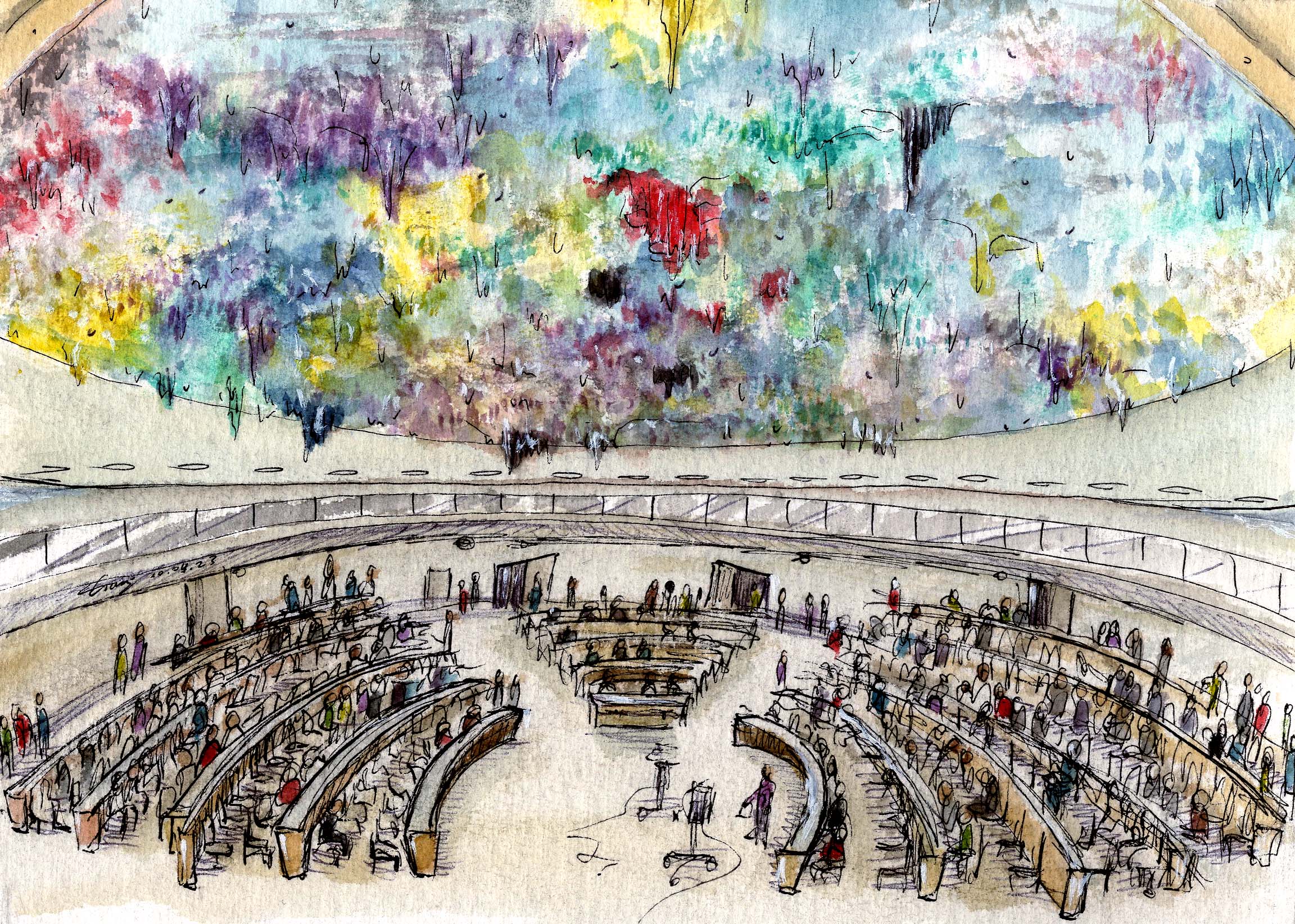
During the last two and a half decades, ..I would never have believed that I should see the UN session hall almost empty as it was during the 44th session of the UN Human Rights Council, which opened on 30th June 2020. Participation was online due to the COVID-19 pandemic.
The Republic of the Philippines, one of the founding members of the United Nations, was yet again subjected to international scrutiny at the outset of the 44th session. The UN High Commissioner of Human Rights said that according to her office’s report the Philippine situation is “near impunity.” This from the first female Chilean president, Michelle Bachelet, a woman who survived torture during the Pinochet dictatorship: she was referring to Philippine laws and policies directed at the drugs business and threats to national security, whose implementation has led to the killing of 248 human rights defenders – lawyers, journalists, trade unionists – between 2015 and 2019.
….Yet barely a week after the start of the UNHRC session, the bill has already been signed into law, on 3 July 2020. This draconian law, which introduces warrantless arrests among other curtailments of fundamental freedoms, is vehemently opposed by civil society….
At the 44th session, members of the European Union, part of the Western European and Other Groups, expressed profound concern about the direction of the Philippines, emphasizing the consequences for human rights of the Duterte administration’s “war on drugs” and censuring its failure to implement recommendations made during the Philippines’ Third Cycle of the Universal Periodic Review.
ASEAN on the other hand, and other members of the Asia and the Pacific Group, as well as some states in other regions such as Venezuela, Cuba and Belarus, expressed their unequivocal support for the Philippines, noting in particular its collaboration with the UNHRC, its robust NGO community and its efforts in reducing poverty. China conspicuously praised the Philippines’ progress in human rights……
Philippine non-government organizations (NGOs) condemned their country’s withdrawal from the International Criminal Court; the arrest and detention of Maria Ressa; the endless implementation of extrajudicial executions; the shutdown of the largest television network, ABS-CBN; continuing enforced disappearances and torture; the red-tagging of Sister Mary John Mananzan OSB and of a number of NGOs; the shoot-to-kill order against COVID-19 lockdown violators; and the then-imminent enactment of what is now the 2020 Anti-Terror Law.
Towing President Duterte’s line, Justice Secretary Menardo Guevarra responded that transparency and constructive cooperation characterized the country’s engagement with the UN, while the Philippine Commission on Human Rights, which Duterte tried to eliminate in 2018 by giving it a budget of PhP 1,000 ($20), asserted the vital importance of accountability. Commissioner Karen Dumpit said that the past failure to protect human rights had directly led to the current climate of impunity, and there was an obligation on the Government to pursue social justice and uphold human rights.
The Philippines prides itself as a founding member of the community of nations, though to become a model of human rights promotion and defense remains a distant hope.
Mary Aileen D. Bacalso is former secretary-general of the Asian Federation Against Involuntary Disappearances. For her work against enforced disappearances, the Argentinian Government conferred on her the Emilio F. Mignone International Human Rights Prize in 2013, and she was awarded the 2019 Franco-German Ministerial Prize for Human Rights and the Rule of Law.
The ISHR published on 24 June its usual and irreplacable “HRC44 – Key issues on agenda of June 2020 session”
As usual I have lifted out of this the issues that would seem to affect most directly Human Rights Defenders. To stay up-to-date on all issues: follow @ISHRglobal and #HRC44 on Twitter, and look out for its Human Rights Council Monitor.
The UN Human Rights Council (the Council) will hold its 44th regular session at Palais des Nations in Geneva from 30 June to 21 July 2020.
Modalities for participation in HRC44
State delegations not wishing to enter the plenary room physically will be able to deliver their statements by pre-recorded video-message, as provided for under HRC decision 19/119. Similarly, NGOs in consultative status with ECOSOC will be given the opportunity to do the same insofar as interactive dialogues, panels and UPR adoptions are concerned. It won’t be possible to hold “official” side events during the 44th session (online or in-person). Any events happening on the sidelines of the session will be considered independent events and won’t be publicised in the Bulletin of Informal meetings by the Secretariat. Read here the information note by the Secretariat which is updated according to the latest information, and an additional explainer by HRC-net.
Human Rights implications of COVID-19
The High Commissioner will present an oral update on the human rights impact of COVID-19 at the 44th session, as mandated by the presidential statement adopted by the Council in May 2020. The presidential statement also calls on the High Commissioner to produce a report on the impact of the COVID-19 pandemic on the enjoyment of human rights around the world to be presented at the 46th session in March 2021. In addition to their previously mandated reports, some mandateholders will present additional reports to address the impact of COVID-19 as related to their mandate, including the Special rapporteur on freedom of opinion and expression, David Kaye. [for some of my earlier posts on covid and human rights see: https://humanrightsdefenders.blog/tag/covid-19/]
Here are some highlights of the session’s thematic discussions:
Business and human rights
At this session, the Working Group on Business and Human Rights is expected to present reports on their activities over 2019, including a country visit to Honduras and on the theme of anti-corruption and the UN Guiding Principles (UNGPs). They are also meant to present groundbreaking guidance on human rights defenders and the role of business. ISHR expects that such guidance should provide companies with concrete suggestions for how to engage human rights defenders in the development and implementation of their human rights policies. It is important that the guidance explains why this is not simply good practice, but is also aligned with the Guiding Principles’ word and spirit – and thus should be widely mainstreamed for any company committed to the UNGPs. There will tentatively be a resolution presented to renew the mandate of the UN Working Group on Business and Human Rights, as well as to welcome the thematic reporting.
Reports of cases of intimidation and reprisal against those cooperating or seeking to cooperate with the UN not only continue, but grow. Intimidation and reprisals violate the rights of the individuals concerned, they constitute violations of international human rights law, and undermine the UN human rights system. [agains for earlier posts see: https://humanrightsdefenders.blog/tag/reprisals/]
During the 42nd session, the Council adopted a resolution which listed key trends such as the patterns of reprisals, increasing self-censorship, as well as the use of national security arguments and counter-terrorism strategies by States as justification for blocking access to the UN. The resolution acknowledged the specific risks to individuals in vulnerable situations or belonging to marginalised groups, and called on the UN to implement gender-responsive policies to end reprisals. The Council called on States to combat impunity and to report back to it on how they are preventing reprisals, both online and offline.
Item 5 of the Human Rights Council’s agenda provides a key opportunity for States to raise concerns about reprisals, and for governments involved in existing cases to provide an update to the Council on any investigation or action taken toward accountability to be carried out.
Other thematic reports :
At this 44th session, the Council will discuss a range of civil, political, economic, social and cultural rights through dedicated debates with the mandate holders, including interactive dialogues with:
The Working Group on the issue of human rights and transnational corporations and other business enterprises (includes recommendations from 2019 visit to Peru)
The Special Rapporteur on contemporary forms of racism, racial discrimination, xenophobia and related intolerance
The Special Rapporteur on extrajudicial, summary or arbitrary executions
The Special Rapporteur on the rights to freedom of peaceful assembly and of association
The Special Rapporteur on the promotion and protection of the right to freedom of opinion and expression
In addition, the Council will hold dedicated debates on the rights of specific groups including:
The Special Rapporteur on trafficking in persons, especially women and children
The Special Rapporteur on the independence of judges and lawyers
The Special Rapporteur on the human rights of migrants
The Working Group on discrimination against women and girls
The Special Rapporteur on the human rights of internally displaced persons
The Special Rapporteur on violence against women, its causes and consequences
The Independent Expert on protection against violence and discrimination based on sexual orientation and gender identity
#HRC44 | Country-specific developments
China (Hong Kong and Uyghur regions)
Violations in China, especially those linked to freedom of association, were made even more clear during the government’s efforts to respond to the COVID-19 epidemic. …..States should ensure continued calls for access to UN human rights experts, in line with last year’s joint letter condemning China’s suppression of minorities. Finally, following nearly a year of protests – largely of peaceful civilians – the central government in Beijing launched an initiative to draft and pass National Security Legislation in Hong Kong. This alarming development was foreshadowed by increasing police violence and use of chemical weapons; the arrest and political prosecution of more than a dozen pro-democracy leaders; and further restrictions on the free press. Many activists, and the European Parliament, are calling for UN Secretary-General António Guterres to appoint an envoy, rightly recognising that China’s actions violate international agreements aimed at ensuring peace and security.
United States of America
Last week, the Council held an urgent debate and adopted a resolution in reaction to systemic racism and police violence in the US and elsewhere. The UN Special Rapporteur on contemporary forms of racism and the UN Working Group on Experts on People of African Descent had also voiced their support for an international commission of inquiry. They have urged the Human Rights Council to ensure the following outcomes from the debate: (1) the creation of an international commission of inquiry to investigate systemic racism in law enforcement in the United States; and (2) the creation of a thematic international commission of inquiry to investigate systemic racism in law enforcement globally, with a focus on systemic racism rooted in legacies of colonialism and transatlantic slavery. They stressed that “both measures described above are necessary and cannot be substituted for one another”.
Saudi Arabia
Women human rights defenders (WHRDs) have been in prison for over two years, only because they demanded that women be treated equally as men, and no one has been held accountable for their torture. While the Council has sustained pressure on Saudi Arabia in 2019, it is essential that this scrutiny continues as the situation on the ground has not improved. ISHR calls on all States to jointly call on Saudi Arabia to immediately and unconditionally release the WHRDs and drop the charges against them; and implement the bench-marks set out in the two joint statements delivered by Iceland and Australia in 2019, underlining that should these benchmarks not be met, more formal Council action would follow.
Saudi Arabia is running for Human Rights Council election in October 2020 and hosting the G20 in November 2020. These all provide windows of opportunity to push for the immediate and unconditional release of the women human rights defenders and all those detained for exercising their rights.
Nicaragua
The COVID-19 crisis has not prevented the Nicaraguan government from making further use of repressive methods to continue targeting released political prisoners, human rights defenders, as well as indigenous people and other social groups, and their relatives. In a rapidly-deteriorating human rights situation, the authorities’ dangerous denial and inaction in the face of the pandemic have additionally fueled an alarming health crisis.
It is in this context that Council Members renewed a resolution on Nicaragua this week at the resumed 43rd session of the Human Rights Council. ISHR joined Race and Equality and a number of national and international organisations in urging the Council to ensure strong support for the resolution on the human rights situation in Nicaragua. To ensure the international community is fully informed of the worsening national situation, the resolution requests the High Commissioner to prepare a report and two oral updates, the first of which should be presented at the Council’s 44th session.
Honduras
The Working Group on Business and Human Rights will present the report on its official visit to Honduras (carried out between the 19 and 28 August 2019). …According to the end of mission statement, a significant number of human rights defenders who work for the respect and protection of human rights in the context of business activity have been arbitrarily arrested, intimidated, stigmatised, criminalised, threatened and some killed.
This was particularly evident in reference to those working in the field of extractive and hydro-electric industries. The murder of leading land,environment and indigenous peoples´ rights defender Berta Cáceres, who had been campaigning against the construction of the Agua Zarca dam, is one case cited where impunity is ongoing. Individuals responsible for the killing have been tried and jailed. However, those suspected of planning the crime, including senior management from the company building the dam (DESA) according to the independent mission of experts GAIPE, have not been investigated or prosecuted. [see also: https://humanrightsdefenders.blog/2020/06/10/nina-lakhanis-who-killed-berta-caceres-reviewed/]. Another Special Procedure expert – the Special Rapporteur on the independence of judges and lawyers – will also be presenting a report on its official visit to Honduras in August 2019. After completion of the visit, he called on Honduras to take urgent action to end corruption and guarantee an independent judiciary, stressing that ‘the justice system, as well as the political class’ are being ‘called strongly into question by the citizens’.
Burundi
The Commission of Inquiry on Burundi will present its oral briefing during the 44th session of the HRC. ISHR continues to remain highly concerned about the human rights situation in Burundi and its refusal to cooperate with the Council’s mechanisms.
Egypt
Seven UN experts have expressed concern about the collective and corrosive effects of Egypt’s counter-terrorism laws and practices on the promotion and protection of human rights. They stated that “Despite repeated communications by UN experts over arbitrary detention of individuals, human rights defenders and activists, the Egyptian Government has not changed its laws of practice”. The ‘Terrorism Circuit courts’ in Egypt, are enabling pre-trial detention as a form of punishment including against human rights defenders and journalists, such as Ibrahim Metwally, Mohamed El-Baqer and Esraa Abdel Fattah, Ramy Kamel, Alaa Abdel-Fattah, Patrick Zaky, Ramy Shaat, Eman Al-Helw, Solafa Magdy and Hossam El-Sayed. All of the individuals that the Special Procedures and the High Commissioner have written about since September 2019 are still in pre-trial detention by these courts. Once the terrorism courts resumed after they were suspended due to COVID-19, they renewed their detention retroactively.
The government’s response to the UPR in March 2020 demonstrated its lack of political will to address key concerns raised by States and to engage constructively with the Council. For example, the government refused to acknowledge the systematic and widespread attacks against defenders, the practice of torture and ill-treatment in detention centres, and to receive visits by Special Rapporteurs on torture and human rights defenders. The government claimed that no one is detained for exercising their rights, despite the fact that the UN Working Group on Arbitrary Detention found that arbitrary detention is a systematic problem in Egypt and could constitute a crime against humanity.
ISHR urges States to call on Egypt to immediately and unconditionally release all those detained for exercising their human rights, to stop using pre-trial detention as a punishment, and to take immediate measures to guarantee their rights to contact their families on a regular and continuous basis and to ease sending and receiving letters, food and medical supplies to them.
Philippines
The OHCHR issued its report (A/HRC/44/22) on the human rights situation in the Philippines, drawing on extensive engagement with and information provided by civil society in the country, the region and globally. The report refers to the killing of 208 human rights defenders, journalists and trade unionists, including 30 women, between January 2015 and December 2019. Confirming practices of vilification, criminalisation, restrictions of fundamental rights, as well as the continuing attacks including ‘red-tagging,’ the report notes existing impunity and the failure of domestic mechanisms to ensure accountability. The presentation of this report provides an important opportunity for debate on the key findings, and to consider options for how to advance recommendations to address the government’s violations of human rights overall, and restrictions on human rights defenders in particular.
The Council will hold an interactive dialogue on the High Commissioner’s annual report on 2 July 2020. The Council will consider reports on and is expected to consider resolutions addressing a range of country situations, in some instances involving the renewal of the relevant expert mandates. These include:
Interactive Dialogue with the High Commissioner on the human rights situation of Rohingya people
Enhanced Interactive Dialogue with the High Commissioner on the situation of human rights in the Philippines
Interactive Dialogue with the SR on the situation of human rights in Eritrea
Oral update by the High Commissioner on the situation of human rights in Nicaragua
Interactive Dialogue with the SR on the situation of human rights in Belarus
Interactive Dialogue with the High Commissioner on the situation of human rights in the Bolivarian Republic of Venezuela
Interactive Dialogue with the Commission of Inquiry on Burundi
Interactive Dialogue with the SR on the situation of human rights in Myanmar
Interactive Dialogue with the Commission of Inquiry on the Syrian Arab Republic
Interactive Dialogue with the SR on the situation of human rights in the Palestinian Territories occupied since 1967
Enhanced ID on the oral reports of the Government of the Sudan and OHCHR on progress towards the opening of a country office
Oral update of the High Commissioner on cooperation with Georgia
Adoption of Universal Periodic Review (UPR) reports
During this session, the Council will adopt the UPR working group reports on Armenia, Grenada, Guinea, Guinea-Bissau, Guyana, Kenya, Kiribati, Kuwait, Kyrgyzstan, Lao People’s Democratic Republic, Lesotho, Spain, Sweden, and Turkey.
ISHR supports human rights defenders in their interaction with the UPR. We publish and submit briefing papers regarding the situation facing human rights defenders in some States under review and advocate for the UPR to be used as a mechanism to support and protect human rights defenders on the ground. This session of the Council will provide an opportunity for Turkey, Kuwait and Guinea to accept recommendations made in relation to human rights defenders, as proposed in ISHR’s briefing papers.
#HRC44 | Council programme, appointments and resolutions
During the organisational meeting for the 44th session held on 12 and 15 June 2020, the President of the Human Rights Council presented the programme of work. It includes five panels of discussion and 81 reports. States also announced at least 17 resolutions.
Appointment of mandate holders
The President of the Human Rights Council has proposed candidates for inter alia the Special Rapporteur on freedom of opinion and expression and the Special Rapporteur on trafficking.
Resolutions to be presented to the Council’s 44th session
At the organisational meeting the following resolutions were announced (States leading the resolution in brackets) especially relevant:
Elimination of discrimination against women (Colombia, Mexico)
Human rights situation in Eritrea (Australia, Austria, Belgium, France, Germany, Netherlands) mandate renewal
Business and human rights (Norway, Russian Federation, Ghana, Argentina) Working Group + Accountability and Remedy project mandate renewals
Extrajudicial, summary or arbitrary executions (Sweden) mandate renewal
Human rights and climate change (Bangladesh, Philippines, Viet Nam)
Independence and impartiality of the judiciary, jurors and assessors, and the independence of lawyers (Hungary, Australia, Botswana, Maldives, Mexico, Thailand) + mandate renewal
Trafficking in persons, especially women and children (Germany, Argentina, Philippines) + mandate renewal
Freedom of opinion and expression: access to information (Canada, Namibia, Brazil, Fiji, Netherlands, Sweden)
Rights of persons with disabilities (Mexico, New Zealand) mandate renewal
The human rights situation in Belarus (EU)
The right to peaceful protest (Switzerland, Costa Rica)
Panel discussions
During each Council session, panel discussions are held to provide member States and NGOs with opportunities to hear from subject-matter experts and raise questions. All panel discussions are broadcast live and archived on http://webtv.un.org. Five panel discussions are scheduled for this upcoming session:
Annual full-day meeting on the rights of the child (two panels, theme: “Realizing the rights of the child through a healthy environment”)
Annual full-day discussion on the human rights of women
Panel discussion on the impacts, opportunities and challenges of new and emerging digital technologies with regard to the promotion and protection of human rights; including an oral update of the Advisory Committee on its report on new and emerging digital technologies
Panel discussion on promoting and protecting the rights of persons with disabilities in the context of climate change
Annual thematic panel discussion on technical cooperation in the promotion and protection of human rights (theme: “Upholding the human rights of prisoners, including women prisoners and offenders: enhancing technical cooperation and capacity-building in the implementation of the Nelson Mandela Rules and the Bangkok Rules”)



 Hans Thoolen on Human Rights Defenders and their awards