‘Making a movement: The history and future of human rights“. To mark the 75th anniversary of the Universal Declaration of Human Rights, The Carr Center for Human Rights Policy asked 90 Harvard faculty and affiliates to offer thoughts on a document that changed the world.
“THE CREATION OF SUCH A DOCUMENT— its mere existence—must count among the greatest achievements in human history.” That is how Mathias Risse, the Berthold Beitz Professor in Human Rights, Global Affairs and Philosophy, and faculty director of the Carr Center for Human Rights Policy at HKS, describes the impact of the Universal Declaration of Human Rights (UDHR), which turns 75 this year. Yet Risse and other human rights defenders say the UDHR has done much more than exist—it paved the way for more than 70 enforceable human rights treaties around the globe and marked the first time the world had a documental agreement that all humans were equal and free. That global standard is vital even if the world community continues to fall short of achieving the UDHR’s promise, Risse says. “The human rights movement will always register shortfalls much more than achievements and would miss its purpose otherwise,” he says. “Regardless, the change that these decades of developments have brought is very real.”
To honor the UDHR, the Carr Center commissioned short essays from 90 scholars, fellows, and affiliates across HKS, Harvard, and beyond to explore the past, present, and future of the human rights movement it inspired. A selection of excerpts follows below. The complete collection of essays in their entirety can be found on the Carr Center website.
On 27 January 2024, Olivia Biliunaand Madison Whittemore in the Davis Vanguard produced a useful summary of the 2024 Human Rights Watch Report
After reflecting on the formidable human rights challenges of 2023, it has become evident that changes in how human rights are approached will be needed in 2024 to prevent the atrocious suppression and human rights crises that have been prominent in the past year, according to Human’s Rights Watch’s “World Report 2024: Our annual review of human rights around the globe.” [see: https://www.hrw.org/world-report/2024]
However, despite the human rights atrocities seen in 2023, the group added that there appears to be some hope for upholding human rights in 2024 through enforcing principles of international human rights law.
Looking back on 2023, the 2024 World Report reflects on renewed conflicts between Israel and Hamas that resulted in the abuse of many and a tragic loss of life, and other countries such as Ukraine and Myanmar that continue to struggle with their own intense conflicts.
Human Rights Watch notes that in accordance with the aforementioned conflicts, “Economic inequality rose around the world, as did anger about the policy decisions that have left many people struggling to survive.”
However, while many are quick to blame the government for being complicit in these human rights crises, the report maintains action is needed outside of just government action alone to help diminish these threats, since they “often transcend borders and cannot be solved by governments acting alone.”
In fact, the report notes the often forgotten importance of universal principles of international human rights and the rule of law which are more critical now than ever.
The 2024 World Report argues governments have the ability to help improve human rights and that they have double standards in “applying the human rights framework,” as stated in the 2024 World Report, and “chips away at trust in the institutions responsible for enforcing and protecting rights.”
The legitimate laws and universality of human rights are weakened when governments that are vocal about denouncing the Israeli government war crimes against Gaza citizens do not speak up about the crimes against humanity in Xinjiang, China, according to the 2024 World Report.
Governments have found it is easier to disregard international human rights matters because internationally there is no challenge to human rights nationally, writes Tirana Hassan, the executive director.
Hassan also noted that autocrats across regions have taken away both the independence of key institutions to protect human rights and the freedom of dissent, as stated by the 2024 World Report, “with the same endgame in mind: to exercise power without constraint.”
Hassan explains that with campaigning of civil rights groups and years of diplomatic negotiations, 83 countries were able to protect their citizens by adopting a political declaration that provided protection from explosive weapons in populated areas.
The international pledge to recognize the “long-standing practice of warring parties to use aerial bombing, artillery, rockets, and missiles in villages, towns, and cities” is the first to address this issue as the 2024 World Report states.
Some countries are addressing long-marginalized communities. With years of pressure, the Japanese government parliament has passed its first law to protect LGBT people from “unfair discrimination,” the 2024 World Report states.
With the humanitarian crises there has been questioning on the effectiveness of the human rights framework in the realm of protection, notes the 2024 World Report, adding, “especially in the face of selective government outrage, transactional diplomacy seeking short-term gain, growing transnational repression, and the willingness of autocratic leaders to sacrifice rights to consolidate their power.”
With that, the 2024 World Report also suggests the human rights framework will continue to be the plan to build “thriving, inclusive societies” and governments need to be persistent and, with urgency, defend human rights to handle the global and existential threats to humanity.
As also highlighted by Hassan in the report, the assault on Israel by Hamas-led fighters on Oct. 7 that deliberately killed hundreds of vulnerable civilians led to swift condemnation from many countries around the world.
In retaliation to the Oct. 7 attack, the Israeli government ceased all running water and electricity in the Gaza strip, “blocking the entry of all but a trickle of fuel, food, and humanitarian aid – a form of collective punishment that is a war crime,” the 2024 World Report noted.
The Israeli government and military continue frequently bombing the Gaza strip. Following these attacks, countries were outraged after they found out that Israel used a chemical called white phosphorus during the indiscriminate attacks on Gaza, with many countries even highlighting the attacks as “apparent war crimes,” stated by Human Rights Watch.
However, despite world-wide outrage after Israel’s war crimes on Gaza, countries have failed to publicly call the Israeli government out on its war crimes resulting in severe human rights abuses, the report detailed, noting even the U.S. and the European Union have acknowledged Israel’s human rights abuses on Gaza citizens, yet have continued to be complicit in the “ongoing crimes against humanity of apartheid and persecution against Palestinians.”
The report asserted the repercussions of governments failing to intervene undermine the legitimacy of the rules system designed 75 years ago to safeguard all citizen’s rights. In response to the inconsistencies, Hassan cites that governments like Russia and China aim to take advantage of the shaky legitimacy by attempting to infringe on human rights and take advantage of the system that is supposed to punish both countries.
Another example used by the 2024 World Report that displays these inconsistencies is the power battle between two influential generals in Sudan, Gen. Abdelfattah al-Burhan and Gen. Mohamed Hamdan Dagalo.
This conflict resulted in civilians facing deadly abuses and human rights infringements in the Darfur region—with numerous countries listed in the 2024 world report allegedly ignoring the horrendous abuses and abstaining from intervening.
Despite nations such as Gabon, Ghana, and Mozambique being on the Security Council, “the UN, under pressure from the Sudanese government, shuttered its political mission in Sudan.” the 2024 World Report stated, also concluding that “This marked the conclusion of the UN’s limited capacity in the country to safeguard civilians and openly address the human rights situation.”
Regardless of African governments refusing to hold the Sudanese government accountable, the report highlights that many have been strong advocates for resolving the human rights issues in other places like Palestine, even leading a full-fledged effort to investigate its human rights abuses last November and recently asserting that “Israel violated its obligations under the 1948 Genocide Convention in its military operations in Gaza.”
Domestic policies and foreign policies should hold value in human rights and their rules of laws at the forefront of governments, charged the 2024 World Report.
Even rights-respecting governments hold these principles as “optional, seeking short-term, politically expedient “solutions” at the expense of building the institutions that would be beneficial for security, trade, energy, and migration in the long term,” according to the 2024 World Report, adding transactional diplomacy carries a human cost that extends past borders, the group adds.
The 2024 Report writes that without awareness while making transactional diplomacy, risks are created. Removing human rights and the rule of law from a sensible direction creates leverage for right-violating governments too, the 2024 World Report adds, arguing, “It can also contribute to further human rights violations, including transnational repression,” which governments do when they commit human rights abuses against their nationals abroad or to those families living at home, the report continues.
According to the World Report of 2024, India, a democracy, under its Prime Minister Narenda Modi has moved toward an autocracy “with authorities targeting minorities, tightening repression, and dismantling independent institutions, including federal investigative agencies.”
Additionally, as cited in The Report, the US, Australia, the UK, and France chose trade and security over raising human rights concerns.
As reported by Executive Director Hassan, the Modi government’s repressive tactics went past borders and were empowered to do so from the Indian government’s “silence on the Indian government’s worsening rights record…including to intimidate diaspora activists and academics or restrict their entry into India.”
Rwandan’s government has had three decades of no punishment for their repression of civil and political rights at home, the 2024 World Report states, writing “to stifle dissent beyond its borders,” and noting, Rwanda, despite having risen on the international stage, has failed to recognize its problematic human rights violations.
Similarly, Chinese government abuses in Beijing escalate its repression against both Chinese and non-Chinese with failure of resistance from other countries, according to the 2024 World Report, explaining a Laos lawyer and human rights defender, Lu Siwei, received pressure from the Chinese government to return and authorities pushed out warrants.
The 2024 World Report claims nowhere is safe if repressive governments can get away with “strong approaches to silence human rights defenders, exiled politicians, journalists, and critics beyond their borders.”
As reported by the Human Rights 2024 World Report, with almost half of the global population being eligible to vote in 2024, both citizens and independent institutions need to participate in order to effectively have leaders who defend human rights, regardless of society and many institutions having “become renewed battlegrounds for autocratic leaders around the world looking to eliminate scrutiny of their decisions and actions.”
According to Hassan, the nations of Guatemala and Nicaragua are two stories of autocratic leaders consolidating power and failing to prioritize civil society.
For example, after Guatemala’s President-elect Bernardo Arévalo ran on an anti-corruption platform, a corrupt judiciary attempted to overturn Arévalo’s election triumph.
Similarly, the report refers to Nicaragua, where corrupt and authoritarian President Daniel Ortega uses “abusive legislation to shut down over 3,500 nongovernmental organizations” in order to dominate the political landscape and wield unchecked power.
The Human Rights report insists these “vital” checks and balances continue to be eroded, it poses great harm to human rights.
Judicial independence has also been drastically sabotaged in Poland, the report alleges, with the Polish government suppressing civil society groups through law enforcement and incarceration. Polish freedom and independence are extremely threatened, with the Law and Justice party most notably encroaching on women’s reproductive rights and essentially banning abortion, Hassan suggested in the report.
“In May 2023, an abortion rights activist was convicted of helping a woman to get abortion pills and was sentenced to eight months of community service – the first known prosecution of its kind in the EU,” the 2024 World Report noted.
On an environmental note, with the impending issue of global warming, the 2024 report highlights activists being shot by governments across the globe who want to “deter the climate movement.”
In another example, the report cites how one of the largest oil producers, the United Arab Emirates (UAE), continues to expand its production of fossil fuels; however, people are discouraged from exposing the UAE unless they are willing to face grave punishment.
Apart from punishing dissent, governments are using technology and social media platforms to “silence critics and censor dissent,” the 2024 World Report notes, citing a 54-year-old retired Saudi Arabian teacher named Muhammad al-Ghamdi, who received the death penalty after he expressed his opinions on X and Youtube and allegedly went against the country’s counterterrorism law.
Despite everything that occurred in 2023, there were also positive moments for human rights where institutions and movements succeeded, the 2024 World Report states, arguing, “Indeed, these successes illustrate why self-serving politicians and repressive governments work so hard to curtail them – and why all governments should recognize and support these fragile successes.”
Additionally, according to the Executive Director Hassan, the ICC issued warrants for Russia’s President Vladimir Putin and his children’s rights commissioner for war crimes related to deporting and transferring children and a court ruled that South Africa had a commitment to arrest Putin.
According to the 2024 World Report, the Xokleng Indigenous people succeeded when the Brazil Supreme Court, as noted by the 2024 World Report, “upheld all Indigenous peoples’ rights to their traditional lands,” despite efforts by the Santa Catarina state.
The 2024 World Report said, “These victories highlight the tremendous power of independent, rights-respecting, and inclusive institutions and of civil society to challenge those who wield political power to serve the public interest and chart a rights-respecting path forward” and that “all governments, in their bilateral relations and at the multilateral level, should redouble efforts to uplift key institutions and protect civic space wherever it is under threat.”
The human rights crisis highlights the importance for “mutually agreed principles of international human rights law everywhere,” the 2024 World Report notes.
It also points out that through governments centering their human rights obligations through moral governing, it will provide a diligent change to those affected.
The 2024 World Report concludes that consistently upholding human rights, “across the board, no matter who the victims are or where the rights violations are being committed, is the only way to build the world we want to live in.”
The occasion of UDHR@75 has let to many articles on its relevance to today’s world, which sees such a ‘heightened risk’ of mass atrocities due to global inaction and a diminished UN ‘responsibility to protect’ principle and ambition to prevent genocides, as stated by Julian Borger in the Guardian of 8 December 2023. These warnings come on the 75th anniversaries this weekend of the Genocide Convention and the Universal Declaration of Human Rights, both signed in the aftermath of the Holocaust in the hope that the world would act in concert to prevent a repeat of such mass slaughter.
Borger describes also in some detail how the USA’s ambition to stop atrocity crimes had “diminished in terms of its saliency within the administration as a guiding principle”
Two pieces in Geneva Solutions look at the UDHR closer:
One is by Pip Cook: “Universal Declaration of Human Rights: fit for the 21st century?” and the other by Marc Limon “After 75 years, what is the UN human rights system’s theory of change?”
The first starts with a good overview of the birth of the UDHR and then states: …”With the world facing human rights challenges on so many fronts, some might be tempted to dismiss the declaration as idealistic or unrealistic – a non-legally binding document that nations may claim to adhere to on the international stage but disregard entirely depending on their own political agendas. However, defenders of the UDHR argue that to judge it on how often it is violated is to miss its point altogether.
“I’m not sure how much the document can be judged on whether it’s always adhered to or not,” said Felix Kirchmeier, executive director of the Geneva Human Rights Platform. “That question comes up in human rights all the time, but it comes up much less in other domains. Nobody would ask whether health policy was still valuable now that we have the pandemic.”
“I think the declaration might be even more needed now than ever because it allows us to really see these core values and the universal approach to them,” he added. “The proof of its relevance is the fact that despite all violations of human rights and despite all the attacks to the universal validity of human rights, the document itself is not being disputed in any serious way,” he continued. “So I think that’s also proof of its strength.”
….Ultimately, perhaps the greatest value of the declaration is that it gave universal human rights a language. Known as the most translated document in the world, available in 500 different languages, it provides a rhetoric that people from all corners of the world still use to this day..
Pip closes with the words of Eleanor Roosevelt in her speech to the UN to mark the tenth anniversary of the declaration in 1958. Her words captured the reason why human rights are for every one of us, in all parts of our daily lives, as well as the world as a whole. “Where, after all, do universal human rights begin?” she began. “In small places, close to home – so close and so small that they cannot be seen on any maps of the world. Yet they are the world of the individual person; the neighbourhood he lives in; the school or college he attends; the factory, farm or office where he works.
The second piece by Limon – executive director of the Universal Rights Group - asks: …”Yet two equally – if not more – crucial questions linger: what was the Universal Declaration’s theory of change, meaning how did its authors intend for it to improve the situation of human rights for all “the Peoples” of the UN, and has the UN succeeded in translating the universal norms into local reality?”
Different actors have developed markedly different theories of what the UN human rights system is, what it is supposed to do, and how it is supposed to improve the situation of human rights at the national level.
For some, the system is mainly for the benefit of developing countries, and its principal utility is to respond to serious human rights violations and hold abusing states accountable. Its main purpose, in other words, is to protect human rights.
For others, it is a universal system in which all states should be treated equally. It is there to engage with them through cooperation and dialogue to gradually improve human rights laws, policies and practices over time, including through the delivery of international capacity-building support. The system’s main objective here is, in other words, to promote human rights.
For some, human rights norms should be in a constant state of progressive development, even in sensitive issues such as sexual orientation and gender identity, or sexual and reproductive health and rights, and should be imposed by the UN. Where states resist, it is because they are not committed to human rights and should be called out and forced to catch up.
For others, the UN is there to provide a platform where states can reach a common understanding of universal human rights norms. This is what happened in the case of the UN’s recognition of the right to a healthy environment. After that, it can provide capacity-building and technical support to help those countries making insufficient progress…
So, who is right? There is some truth to both views. For example, the mandate of the Human Rights Council explicitly includes both the protection and promotion dimensions of human rights. And therein lies the answer – the international human rights system, built from the foundations of the Universal Declaration, embodies different – yet complementary – theories of change.
The simple truth is that human rights change cannot be imposed from the outside, by certain states or even by the international community as a whole, without the consent of the state concerned. Bottom-up demands for change, for example, led by local civil society, can and frequently do succeed in securing improvements in the enjoyment of human rights, especially in democracies.
However, in many countries, the power imbalance between civil society and governments means that NGOs and local communities, acting alone, can be easily ignored or even suppressed.
Over a decade of the Universal Rights Group’s research shows that a winning approach, instead, is to combine top-down pressure for improvement with bottom-up calls for change within a framework that is accepted by the state or government and of which it feels a sense of ownership…
While the international human rights system, therefore, encapsulates different and complementary theories of change (think “carrot and stick”), for a vast majority of states, the vast majority of the time, the former theory of change is the most relevant.
As we celebrate the 75th anniversary of the Universal Declaration of Human Rights, there are increasing signs, from states (both developed and developing), civil society, the secretary general, the high commissioner, UN resident coordinators and others, of a shift towards a common understanding of this predominant theory of change. Building on that shared understanding and thereby effectively translating universal rights into local reality would truly be the best way to mark the adoption of this historic document.
On 5 December 2023, Natalie Samarasinghe – global director for advocacy at the Open Society Foundations. – wrote about strengthening human rights based on David Griffiths’ paper, Barometer in Context: Strengthening the Human Rights System.
….But this is not the whole story. The Open Society Barometer, a poll of over 36,000 people in a representative group of countries, found that most people believe in the value of human rights. Over 70 percent said that human rights “reflect the values I believe in” and are “a force for good” in the world.
Actors such as human rights lawyers, NGOs, and international organizations continue to provide hope, support, and redress to those seeking justice and protection. And they are joined by a growing cohort of others, from rural communities to indigenous peoples, political and social movements. They may not use the language of rights but their work is grounded in them. They cannot afford to have theoretical debates about the relevance of the UDHR. They need support and solutions.
To mark the UDHR’s anniversary, Open Society commissioned a paper on what those solutions might look like, written by David Griffiths, an advocate and policy expert with more than two decades of diverse experience across the human rights movement. His paper, Barometer in Context: Strengthening the Human Rights System, sets out a series of proposals for how to make this moment count, including prioritizing economic inequality and climate change, exposing the failure of authoritarians to deliver, defending civic space, rethinking migration, widening accountability, and strengthening the human rights system.
Drawing on 18 months of research and material from at least 65 interviews with people from all parts of the world, as well as the Open Society Barometer, these proposals provide inspiration for those of us approaching this anniversary with a heavy heart. It is vital that we avoid paralysis and gloom, which only plays into the hands of abusers and authoritarians.
We must become more creative in how we support those defending rights, whether they are in the courtroom or community center, or on the streets marching for debt relief and climate justice. We must invest in the leaders and tools of tomorrow, instead of playing catch-up with authoritarians, while doubling down on our backing for traditional actors and approaches that continue to deliver results.
And now more than ever, we must nurture a global movement—of the sort that was not possible in 1948—to reaffirm the simple truth that lies at the heart of the Declaration: that all human beings are equal, that every life has value.
On 9 April 2021, the Advisory Council on International Affairs (AIV) received from the Dutch government a request for advice on human rights in a changing world. The basic premise of the request was that the multilateral system, as it has developed since the Second World War, is increasingly under pressure. In the government’s view, autocratic tendencies are eroding the multilateral system from within, and this is having a clear impact on human rights. The request for advice draws attention to several troubling developments. The basic principles enshrined in the Universal Declaration of Human Rights (human dignity, universality, equality/non- discrimination and indivisibility) are being challenged more and more frequently, not only outside the EU but also within it. Due to the rapidly growing influence of autocratically governed states, the preconditions defined by the Netherlands for pursuing an effective international human rights policy, such as space for civil society, cooperation with like-minded partners and the proper functioning of multilateral instruments, are under pressure.
Summary: ….In this advisory report of 28 June 2022, the AIV aims to set out a path – in both conceptional and operational terms – for Dutch human rights policy abroad. To this end, it is important to have a good understanding of how the human rights system came into being and how it has come under pressure in recent decades. ….Historical analysis shows that the relevance of the human rights system has increased in recent decades. Although the universality and legitimacy of the ideas in question are a source of constant debate, empirical research demonstrates to what extent – and under what circumstances – human rights make a difference. The AIV believes that the universality of human rights should be the central focus but it cannot be equated with uniformity in the implementation of those rights. [see also: https://humanrightsdefenders.blog/2019/11/17/rescuing-human-rights-another-way-of-re-assessing-human-rights/]For many states, cultural and historical differences have helped shape their varying approaches to human rights. In fact, universality in the sense of universal acceptance of human rights is actually enhanced and promoted when cultural diversity is acknowledged. Despite all these achievements, the multilateral human rights system is under serious pressure. The beginning of the 21st century was a turning point in this regard. During this period, various events and developments concurred to undermine and erode the multilateral system and the human rights system that had developed over the previous fifty years. These events and developments include 9/11 and the ‘war on terror’, the success and subsequent stagnation of democratic developments and the resulting pressure on civil society, new geopolitical relations, the impact of globalisation and challenges within the human rights system itself. After 11 September 2001, the war on terror in Afghanistan and later in Iraq gave rise to practices that were sometimes at odds with international law. As a result, the West in particular was accused of applying double standards. In addition, while pro-democracy movements in the Arab world and elsewhere achieved successes (thanks in part to social media), they also prompted regimes to respond with repression against civil society and human rights defenders. Alongside a rapid rise in China’s economic, military and political power and self-assurance, the United States’ international involvement was foundering (a trend which intensified later under President Trump) and the Russian Federation became increasingly repressive. In the midst of these geopolitical developments, the EU proved unable to play a significant enough role to prevent the decline of the human rights acquis. Furthermore, the wave of neoliberal globalisation, which was initially regarded as having a positive economic and social impact, also turned out to have negative effects. Both externally and beyond doubt internally, the West was increasingly confronted with rising income and wealth inequality at national level, the growing power of multinational corporations, and the intractable misuse of social media by governments, organisations and individuals. In addition, the human rights system itself faced considerable obstacles: the indivisibility of political, civil, social, economic and cultural rights was not adequately guaranteed and new positive developments, such as the adoption of the Sustainable Development Goals, did not make their human rights component explicit enough. Human rights instruments were further undermined by overextension and insufficient funding, which negatively impacted their effectiveness. Due in part to these developments, the unanimously accepted principle of the universality of human rights was put in jeopardy, partly because states increasingly expressed reservations about the principle and partly because a growing number of autocratic, repressive states appeared to have little or no interest in the human rights acquis. Nevertheless, there have also been some positive developments. New and in some cases global non- governmental movements made up of non-traditional actors, often including young participants, are standing up for social justice and human rights. Businesses are taking a more active approach to showing respect for and promoting human rights, on their own initiative or as a result of external pressure. Professional associations and networks are increasingly cooperating at global level to protect human rights. The EU’s human rights instruments are becoming stronger and more sophisticated in response to external threats and internal negative tendencies in countries such as Hungary and Poland. Finally, a new approach to human rights has taken hold at national and local level, for example in the form of national human rights institutes. In contrast to the aforementioned political and social changes and threats, these developments create new opportunities for the realisation of human rights around the world. However, the question is how the Dutch government should take advantage of these opportunities. How can the Netherlands actively promote human rights around the world while also continuing to respect them at national level? A robust and effective human rights policy requires a strong foreign policy narrative. In this revamped message, human rights are the crucial link between the Netherlands’ core values and policy goals at national and international level. Human rights can be more solidly anchored if they are explicitly incorporated into other global policy areas and narratives, such as the Sustainable Development Goals, climate, the environment and migration. Coalitions with like-minded countries and partnerships with civil society within and outside Europe are essential in this regard. The Netherlands must focus on developing new international and EU instruments to protect human rights and tackle human rights violations, such as the human rights clauses in EU trade, partnership and association agreements. The AIV calls on the government to prioritise human rights. As far as foreign policy is concerned, this requires the Netherlands to take an effective and explicit moral stance in a complex environment characterised by realpolitik and tense international relations. A more integrated approach, new partnerships and the provision of an effective counterweight, based on an understanding of the cultural context in other countries, are key building blocks in this regard. Human rights are not just a worthy ideal but also a clear matter of enlightened self-interest, in that they form a vital link between democracy and the rule of law, on the one hand, and international security, on the other. Idealism need not be shunned, and every effort must be made to preserve the international human rights acquis. In order to achieve this goal, however, a much more pragmatic and realistic approach that recognises today’s realities, including shifts in geopolitical relations, is required. Such an approach has both a foreign and a domestic dimension. In addition to prioritising human rights internationally, the Netherlands also ought to do so at home. This approach requires an appreciation of other viewpoints, but a robust response when internationally accepted, fundamental boundaries are crossed. Only in this way can the Netherlands more effectively protect and promote human rights as a core interest in a changing constellation of political forces.
Hannum argues the case for a hard-headed reassessment of what human rights are and what they can achieve, done with the aim of preventing unrealistic expansion or overreach that undermines their legitimacy and universal acceptance.
Hannum expresses a firm conviction in the durable value of human rights. He brings to Rescuing Human Rights a lifetime of rich and diverse experiences as an observer, teacher and practitioner of human rights in numerous capacities and settings. While conservative, Hannum’s thesis does not hark back to a golden age of human rights. He recognises that human rights law has evolved and will continue to evolve. He also accepts that “pushing the envelope of human rights norms may sometimes be a legitimate [advocacy] tactic.”
Hannum’s principal concern is with human rights ‘overreach’ – efforts to resolve contentious political issues by trying to make them into technical human rights matters that they are not. He is not a fan of a widespread inclination to advocate for human rights of the next good cause.
“Attempting to regulate ever more narrow slices of life under ever more diverse circumstances through promoting new human rights runs a serious risk of undermining both the legitimacy of human rights and their universality. The result may be to simply expand the number of rights that are routinely ignored rather than to bring real help to those whose rights, no matter how narrowly construed, are already being violated.” (p. 79)
He perceives that human rights activism based on an expansive concept of rights as the primary means to effect domestic social and political change is feeding a global backlash against human rights. He is concerned that this will undermine the legitimacy and effectiveness of human rights advocacy to protect universally recognised rights, which “facilitate the development and influence of other socio-economic-political-moral change agents in ways that are likely to respond to the needs of most people of the world.” (p. 10) While acknowledging that human rights are inherently political, as they constrain government behaviour, Hannum suggests that the more that human rights advocacy approximates politics, the less rights will be able to effectively set the boundaries for the open, inclusive, democratic politics required to effectively address major contemporary social, political and economic issues by ensuring that political decision-making takes account of the needs and preferences of all relevant parts of society.
“This book is an appeal for radical moderation, which values and promotes human rights norms without distorting or deifying them. … Underlying many of the book’s arguments is the belief that human rights cannot provide dispositive answers to all of the world’s problems, although they may be a necessary precondition for resolving many of them.” (p. 157)
Rescuing Human Rights focusses on human rights as universal legal norms embodied in public international law, particularly universal and regional treaties. Hannum assumes a universal consensus over the core content and legitimacy of most human rights. He distinguishes human rights from moral and political standards, while acknowledging their complementarity as forces that shape societies.
While Rescuing Human Rights discusses human rights primarily as they are shaped and invoked at the international level, Hannum emphasises that they are applied in national contexts where the relationship of the State and rights-holders is played out. Human rights promotion and protection are essentially a national project that is shaped and constrained by national governments’ voluntary acceptance of universal legally binding human rights standards. An important chapter is devoted to arguing for flexibility in the application and prioritisation of human rights norms on the grounds that universality is not uniformity. This recognition points to the need for further examination of Hannum’s thesis in specific national contexts. Are the dangers of human rights expansion and overreach at the international level mirrored by developments at the national level in individual countries?
Rescuing Human Rights focusses largely on what human rights are not and should not be made out to be. Hannum’s thesis would also benefit from further exploration of how human rights can be used better to contribute to efforts to address major contemporary social, economic and political issues at the international and national levels. If one accepts that human rights cannot determine the outcomes for issues such as development, climate change and corruption, then what are the contributions that specific rights make in specific contexts to political, economic, cultural, moral and technological efforts to meet those and other challenges? Any recalibrating of human rights promotion and advocacy in accordance with the approach Hannum proposes would benefit from robust exploration of the important contributions that human rights do and can make, such as ensuring that climate change policies are developed in consultation with representatives of all persons whose rights might be affected and have regard to their human rights impacts, including for the most marginalised communities and groups.
Today, while human rights are increasingly invoked in connection with efforts to address a growing range of global and national challenges, they are also increasingly flouted or questioned in many parts of the world. This includes in some countries where until recently human rights appeared largely beyond challenge. Many governments are demonstrating a renewed brazenness in violating their international human rights obligations. In many countries, there is widespread apathy, popular disillusionment and even hostility for human rights. This current state of human rights has led to calls from civil society organisations, academics, governments and inter-governmental organisations for urgent stocktaking about what is to be done to defend and reinforce the post-1945 human rights achievement. Some call into question the human rights project, and others call for its reinvention. Some appeal to humanity’s better angels, and others buckle down on business as usual. Some pursue novel organisational approaches to human rights advocacy, and others look to human rights to provide solutions for ever more matters of concern.
The way forward is not clear. However, Hannum’s lucid argument for greater focus and humility in recourse to human rights and his call for the recalibration of the scope of human rights advocacy should form part of any discussion about the future of human rights. Rescuing Human Rights merits reading and reflection by all who study, defend or promote human rights.
Peter Splinter is an international human rights consultant and was Amnesty International’s Representative in Geneva from 2004 to 2016. Follow him on Twitter at @pgsplinter.
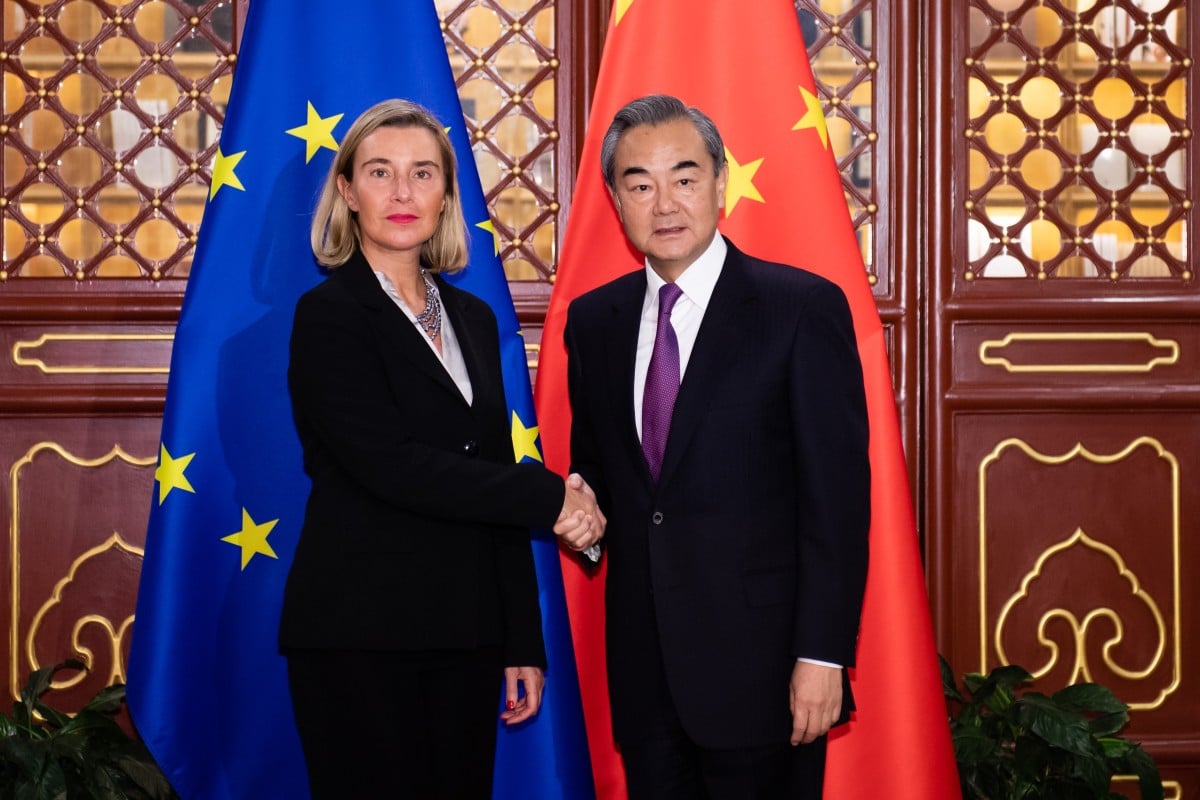
Chinese Foreign Minister Wang Yi met his EU counterpart Federica Mogherini in Beijing on Tuesday. Photo: Xinhua
Keegan Elmer in the South China Morning Post of 25/26 October 2019 reports that Chinese officials have told their European counterparts that human rights should be measured by the people’s well-being and rejected the EU’s support for the “universal” values enshrined in the United Nations Charter. The statements issued by both sides after a meeting between the EU’s foreign affairs chief and Chinese foreign minister Wang Yi underlined their disagreements on human rights by recording their discussions on the topic in markedly different ways. While the Europeans focused on Mogherini’s support for “universality”, the Chinese statement emphasised her call for mutual respect and comments that there were “different approaches” to the issue.
According China, Mogherini had acknowledged that there are “different approaches to safeguarding and promoting human rights” and accepted that there were “problems with the human rights situation in European countries”. It continued that she had agreed to continue cooperation and exchanges with China “on the basis of mutual respect”, adding: “The EU does not intend to act as the ‘teacher’ of other countries on human rights issues.”
But the EU’s account of the meeting did not refer to Wang’s comments and said Mogherini had “underlined to the Chinese leadership that the EU will continue to stand up for the universality, interdependence and indivisibility of human rights based on the UN Charter and standards”.
China extraordinary sensitivity to ‘interference’ of any level into what it considers its domestic affairs is well-known. I touched upon this ‘hot’ topic’in my own 2011 article “The international human rights movement: not perfect, but a lot better than many governments think” in the book ‘NGOs in China and Europe’(exceptionally also published in Chinese!): Yuwen Li (ed), Ashgate, 2011, pp 287-304 (ISBN: 978-1-4094-1959-4).
On the same day that the pair met in Beijing, the European Parliament awarded its 2019 Sakharov Human Rights Prize to human rights defender Ilham Tohti, who is serving a life sentence. The statement announcing the award called for his immediate release and said “for over two decades, he has worked tirelessly to foster dialogue and understanding between Uygurs and other Chinese people”. [see: https://humanrightsdefenders.blog/2019/10/24/lham-tohti-now-also-awarded-the-2019-sakharov-prize/]. Predictably, during a press conference on Friday, Chinese foreign ministry spokesman Hua Chunying said the parliament had “given a prize to a criminal”. “I don’t know how much meaning, value or influence [the prize] has,” said Hua. “I only know Tohti is a criminal that has been sentenced by a Chinese court.”
Neither the Chinese nor the EU have said whether Tohti’s case or the situation in Xinjiang – where Beijing is accused of detaining a million mainly Uygur Muslims in re-education camps – had been discussed.
In a opinion piece in Foreign Policy of 6 September 2019 entitled “When Everything Is a Human Right, Nothing Is” Seth Kaplan– a Lecturer in the Paul H. Nitze School of Advanced International Studies at Johns Hopkins University, Senior Adviser for the Institute for Integrated Transitions – shows he belongs to the latter category albeit with a strong dose of return to basics (return to the UDHR) and a whiff of cultural relativism:
.. given the myriad challenges to human rights today, rethinking some widely accepted human rights assumptions seems timely. …
Some disagreements over human rights come from repressive regimes or communal leaders, and such complaints are easy to dismiss. But when critiques come from people who are sympathetic to the cause of human rights, they reflect something more fundamentally troubling. How did an idea once powerful enough to unify a vast range of people in struggles against totalitarianism and apartheid become so impotent? A major factor, ironically, was the overweening dual ambition born of those successes. Human rights advocates have broadened the scope of issues covered by human rights while narrowing the room for differences in bringing those rights to life. In so doing, they misconstrue the original goals of human rights, most clearly embodied in the Universal Declaration of Human Rights, the foundation for much of the post-1945 rights project. Even as their ambitions rise, human rights activists have failed to take into account how expansive new programs might aggravate suspicion of human rights in today’s multipolar world. And attempts to enforce a uniform conception of rights might reduce the space for local actors to formulate their own pathways, fueling skepticism about the rights themselves. For example, attempts by Western countries to promote gay rights in Africa triggered deep-rooted resentment about how the West treats Africa; the results are tougher laws, stronger rhetoric, more funding of anti-gay rights organizations, and even greater harassment of activists. As the New York Timesreported, “More Africans came to believe that gay rights were a Western imposition.”
Non-Western countries do not necessarily disagree with basic human rights goals. Rather, as the Brazilian academic Oliver Stuenkel argues in his book Post-Western World, they contest the “operationalization of liberal norms” and “the implicit and explicit hierarchies of international institutions” that privilege Western countries. U.S. retrenchment in the Middle East and the rise of authoritarian states like China reduce the effective reach of ideas that are stretched too thin or that are not credibly universal, in the sense of being deeply grounded in all the world’s major philosophical and religious systems. And curtailing overly expansionist and revisionist aspirations, as Jennifer Lind and William C. Wohlforth recently wrote in Foreign Affairs, is essential to preserving the post-World War II liberal international order.
If advocates for human rights wish to overcome the current challenges, they would do well to learn from the course of the human rights project from ideal to reality in the wake of World War II. The framers of the Universal Declaration learned that the best way to build a system of rights with a strong claim to legitimacy across different cultures and ideologies was to stick to basics. Today, only a modest and flexible approach can restore the moral authority that gave the universal human rights idea its greatest successes.
The 1948 Universal Declaration was a product of intense debate, negotiation, and compromise, all done with the understanding that its principles could be brought to life differently in dissimilar parts of the world. Today’s human rights discourse, however, is pervaded by Western normative assumptions that are controversial even in the West. Westerners play an extraordinarily large role as funders and conveners of human rights organizations and scholarly debates, directly and indirectly shaping agendas, frameworks of analysis, and evaluation methods in the process. As a result, human rights have become, as the New York University professor Sally Engle Merry writes in Human Rights and Gender Violence, “part of a distinctive modernist vision of the good and just society that emphasizes autonomy, choice, equality, secularism, and protection of the body,” converting cultural norms from one part of the world into universal rights.
Consequently, nonindividualistic values—such as those promoting communal duties or those tied to religious belief—have been de-emphasized. Arguments that there are other means of promoting and ensuring human dignity are dismissed as unrealistic or ignored. African, Asian, and other non-Western human rights institutions and laws are marginalized.
Meanwhile, the number of rights, and rights claims, has risen steeply as various well-meaning special interest groups have sought to harness the moral authority of the human rights idea to their causes. The international legal infrastructure has been enlarged, producing institutions such as the International Criminal Court (ICC) and doctrines such as the “Responsibility to Protect,” but these focus mainly on geopolitically weak or unimportant—10 of the 11 situations under investigation at the ICC are African—countries, while governments such as Syria’s commit atrocities with little fear of prosecution or intervention because Russia, one of its two main international backers, undermines any attempt to hold the country’s leaders accountable.
The human rights field’s ambitions not only have produced unnecessary clashes over human rights, but they have also diminished the core rights that were meant to, above all else, uphold human dignity.
In Europe, for example, advocates for abolishing circumcision have argued that a child’s bodily integrity is a human right while attempting to reduce religious freedom to a mere right to worship. This has led government ombudspersons to call for a ban, pediatric societies to call the practice “mutilation,” the Parliamentary Assembly of the Council of Europe to pass a resolution against the practice, political parties to lobby for legislation outlawing the practice, and a court in Germany to rule that the act of circumcision should be considered a prosecutable physical assault. For devout Jews and Muslims, these developments feel like direct attacks on a ritual integral to their faiths.
In Asia, instead of welcoming the 2012 Human Rights Declaration by the Association of Southeast Asian Nations (ASEAN) as representing some important steps forward, organizations such as Amnesty International, the International Commission of Jurists, the Office of the U.N. High Commissioner for Human Rights, and the U.S. State Department criticized the document for differing from their preferred emphases. Even though it included all the civil and political rights that similar documents elsewhere have—as well as innovative provisions related to those with AIDS, childbearing mothers, human trafficking, vulnerable groups, and children—these groups objected to the declaration’s emphasis that rights must be balanced with duties and that realization of rights has to take into account the local political and cultural context. But it is precisely the regional flavor that is most likely to increase the ASEAN declaration’s legitimacy—and thus the chance that it will be embraced locally.
In Africa, select issues that concern Western countries are often promoted in ways that pay little heed to local conditions, provoking a backlash. In Kenya, international attempts to prosecute Uhuru Kenyatta for fueling ethnic violence after the 2007 election ignored how this would boost his popularity among his supporters—helping him to eventual victory in the 2013 elections.
The mindset currently prevailing among many human rights actors thus makes it extremely difficult to realize the aim of the Universal Declaration’s framers to promote the implementation of fundamental human rights principles under a variety of circumstances and cultures. The result has been to reduce both the effectiveness and appeal of those principles. Human rights organizations are less able to embed themselves within local cultures and gain legitimacy in the eyes of local people. Greater flexibility in implementation would enable human rights supporters to focus on the importance of political dynamics and incentives to promoting change within countries. For example, the end of white rule in South Africa was brought about not by threatening apartheid leaders with international justice but by first sanctioning and then offering incentives for leaders to transfer power. Reconciliation and truth commissions played prominent roles; retribution was limited. The country crafted a new, inclusive national identity and developed a constitution around existing institutions, a stark contrast to efforts in Iraq and Libya that tried to replace institutions and exclude members of the previous regime.
The human rights movement should refocus on the principles of the Universal Declaration—a document more praised than understood. Its drafters developed a framework for human rights that was both universal and flexible. Their aim was to establish a “common standard of achievement,” based on the “inherent dignity” and “equal and inalienable rights of all members of the human family.”
This would entail recognizing that in a world of great cultural and political diversity, human rights cannot be universal unless kept to a small core of rights so fundamental that almost no country would openly oppose them.
In the original Universal Declaration, only a handful were drafted in such a way as to leave little room for flexibility in implementation. These include protections for religion and conscience, as well as prohibitions against genocide; slavery; torture; cruel, inhuman, or degrading treatment or punishment; retroactive penal measures; deportation or forcible transfer of population; and discrimination based on race, color, sex, language, religion, nationality, or social origin. Today, many human rights treaties make these rights nonderogable—i.e., there are no circumstances under which they can be lifted or suspended. Where other rights are concerned, the framers of the Universal Declaration were clear that universality does not mean homogeneity in implementation. They expected states to experiment with different modes of implementation—to allow “different kinds of music” to be “played on the same keyboard,” as the French philosopher Jacques Maritain, who supported the U.N. process, put it. Indeed, Eleanor Roosevelt made clear in 1948 during one of the debates over the Universal Declaration that methods for implementing many rights “would necessarily vary from one country to another and such variations should be considered not only inevitable but salutary.” For example, individuals everywhere have the right to be free of torture, but different countries may legitimately come to different conclusions about when private property may be taken for public use.
Moreover, in resolving tensions among rights, no fundamental right should be completely ignored. By specifying that all rights must be exercised with due respect for the rights of others, the framers intended that clashes should be occasions to figure out how to give each right as much protection as possible while never subordinating any right completely to another. Ultimately, a culture of human rights can only be built from the bottom up. Focusing on the gravest violations of human dignity while understanding that other rights can be protected in a legitimate variety of ways is the best way to achieve this.
The Graduate Institute of Geneva is organizing a potentially interesting Lunch Briefing on Tuesday 1 March 2016, 12h30 – 13h00, in the Maison de la Paix.
Stavros Lambrinidis, the EU’s Special Representative for Human Rights, will explore the role of human rights in EU foreign policy and major challenges in ensuring effective human rights promotion around the world, including the question of the universality of human rights, the shrinking space of civil society, and the issues of coherence and effectiveness that the EU faces today.
Stavros Lambrinidis (former Minister of Foreign Affairs of Greece)

 “THE CREATION OF SUCH A DOCUMENT— its mere existence—must count among the greatest achievements in human history.” That is how Mathias Risse, the Berthold Beitz Professor in Human Rights, Global Affairs and Philosophy, and faculty director of the Carr Center for Human Rights Policy at HKS, describes the impact of the Universal Declaration of Human Rights (UDHR), which turns 75 this year. Yet Risse and other human rights defenders say the UDHR has done much more than exist—it paved the way for more than 70 enforceable human rights treaties around the globe and marked the first time the world had a documental agreement that all humans were equal and free. That global standard is vital even if the world community continues to fall short of achieving the UDHR’s promise, Risse says. “The human rights movement will always register shortfalls much more than achievements and would miss its purpose otherwise,” he says. “Regardless, the change that these decades of developments have brought is very real.”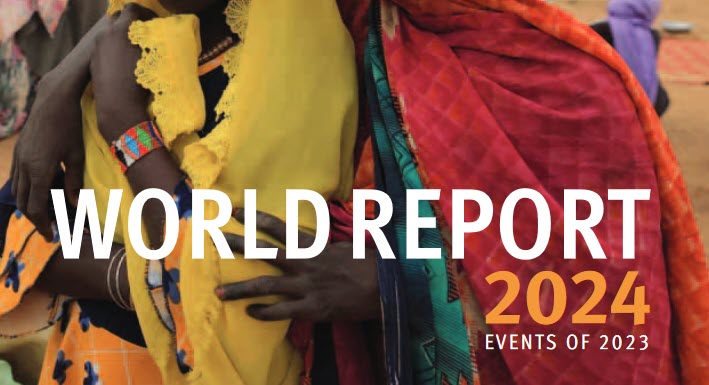


 Stavros Lambrinidis (former Minister of Foreign Affairs of Greece)
 Hans Thoolen on Human Rights Defenders and their awards
