Having just posted a report on the prolifiration of intergovernmental responses to the Corona virus pandemic [https://wp.me/pQKto-4ob], it perhaps good to point to the webinar that Business & human rights is organising on 4 June 2020 on Risks and Protection of Human Rights Defenders.
This webinar will have a focus on the risks and protection of HRDs, particularly labour rights and land/environmental defenders and ensuring their participation in the post-pandemic recovery.
It will have two parts: a closed and an open session. The closed session – happening on Jitsi – will be a safe space for civil society organisations, human rights defenders, including labour rights and land and environmental defenders, labour unions, and journalists to jointly define practical recommendations on what governments and companies can do to address human rights situation, particularly of labour, land, environmental defenders and civic freedoms, in the context of COVID-19. This part of the webinar is invite-only.
The second part – happening on Zoom – will be an open session, will be an opportunity for civil society, defenders, and journalists to interact with government and business representatives and discuss how companies, governments and civil society can work together to ensure all stakeholders are able to shape recovery efforts, and make sure they are human rights compliant. Anyone is free to join us in the public session by RSVP-ing below.
Event details
Event type
Webinar
Location
Online (Jitsi & Zoom)
Organisation
The Asian Forum for Human Rights and Development & Business & Human Rights Resource Centre
On 22 May 2020 Lisa Reinsberg in “Just Security” [see: https://www.justsecurity.org/about-us/) published a post ” Mapping the Proliferation of Human Rights Bodies’ Guidance on COVID-19 Mitigation“. It is in some ways rather critical of the response by intergovernmental bodies in the human rights area when it comes to the COVID-19 pandemic. It starts by pointing out that they have collectively put out more than 150 statements on respecting human rights during the pandemic since late February. ..To help those interested in keeping track of the many statements, the International Justice Resource Center (IJRC) has published a webpage – COVID-19 Guidance from Supranational Human Rights Bodies – listing and linking to all relevant press releases and other guidance. This article serves to provide an overview of – and initial response to – the nature, scope, and sources of human rights advice available to States in the context of the pandemic. Having myself contributed with my blog to the proliferation of policy repsonse by NGOs and IGOs, I feel that this piece deserves full citation:
The commemoration on 17 May comes as the world continues to battle the COVID-19 pandemic which has increased the vulnerability of lesbian, gay, bisexual, transgender and intersex (LGBTI) people. On the eve of the International Day Against Homophobia, Transphobia and Biphobia (IDAHOBIT) a large group of United Nations and international human rights experts (for names see the link below) call on States and other stakeholders to urgently take into account the impact of COVID-19 on lesbian, gay, bisexual, transgender and gender diverse (LGBT) persons when designing, implementing and evaluating the measures to combat the pandemic.
….. COVID-19, and the measures taken to address it, exacerbate inequalities and discrimination. The existence of criminalization laws, for example, makes LGBT persons more vulnerable to police abuse and arbitrary arrest and detention in the context of movement restrictions and curfews. While contributing to the fight against the pandemic by staying at home, LGBT children, youths and elders are forced to endure prolonged exposure to unaccepting family members, which exacerbates rates of domestic violence and physical and emotional abuse, as well as damage to mental health. In many jurisdictions, LGBT persons, particularly those most impoverished or without proper documentation, rely overwhelmingly on informal economies made impossible by COVID-19 restrictions. The socio-economic consequences of the pandemic and the loss of income might also increase the vulnerabilities of LGBT persons to human trafficking and sexual exploitation. The reallocation of health resources has also created or exacerbated shortages of antiretrovirals for those living with HIV, while also impacting the ability of trans men and women to receive hormonal therapy or gender-affirming care. Gender-based curfew laws and policies have reportedly condemned gender-diverse persons to permanent seclusion while making trans individuals targets for humiliation and violence when going out.
The pandemic has also created a context conducive to increased persecution. Some States have enacted measures which intentionally target LGBT persons under the guise of public health, including proposing legislation to deny transgender and gender diverse persons of their legal recognition. Hate speech explicitly or implicitly inciting violence against LGBT persons has been on the rise, including discourse by prominent political or religious leaders blaming the pandemic on the existence of LGBT persons in the community. Surveillance and other digital technologies enacted to track COVID-19 carriers increase risks of infringing privacy and exacerbating stigma.
………We therefore urge States and other stakeholders, on the eve of this 17 May 2020 and in times of COVID-19, to give visibility to and protect LGBT persons in the context of the pandemic. We call on States to pursue all means necessary – including conducting research, adopting legislation, public policy, and ensuring access to justice mechanisms – to ensure that this public health emergency will neither exacerbate existing misconceptions, prejudices, inequalities or structural barriers, nor lead to increased violence and discrimination against persons with diverse sexual orientations and gender identities. We urge all stakeholders, particularly States, to urgently implement lines of action designed to sustain and ensure the continuity of the work of civil society and human rights defenders – the capacities existing within this sector must not be put in peril. And, to effectively meet these objectives, we urge States to engage with LGBT persons, organizations and communities in the design, implementation and evaluation of the measures adopted to respond to the pandemic.The history of LGBT persons, like others subjected to discrimination and violence, has been one of suffering, endurance and hope – a vital struggle for freedom and equality in the face of singular adversity. During the COVID-19 pandemic, we call upon State authorities to listen to the particular concerns of LGBT persons, respect their expertise over their own lives and communities, and accept their solidarity in the construction of new realities of freedom and equality for humankind.
“Already facing bias, attacks and murder simply for who they are or whom they love, many LGBTI people are experiencing heightened stigma as a result of the virus, as well as new obstacles when seeking health care,” added UN SG Guterres. “There are also reports of COVID-19 directives being misused by police to target LGBTI individuals and organizations.”
“LGBTI people are often exposed to additional stigma, discrimination and violence, including when seeking medical services – and perhaps saddest of all, within their own families during lock-downs. They are also in some places being treated as scapegoats for the spread of the virus,” UN High Commissioner for Human Rights, Michelle Bacheletsaid. Referencing the theme for the international day, Ms. Bachelet urged everyone to stand up against hate and ‘break the silence’ surrounding the discrimination and violence suffered by LGBTI people.
Ms. Claudia MAHLER (Austria) is the new Independent Expert on the enjoyment of all human rights by older persons. This mandate gained in importance with the Corona virus pandemic.
Mr. Balakrishnan RAJAGOPAL (United States of America) is the new Special Rapporteur on adequate housing as a component of the right to an adequate standard of living, and on the right to non-discrimination in this context.
Mr. Tomoya OBOKATA (Japan) is the new Special Rapporteur on contemporary forms of slavery, including its causes and its consequences.
Mr. Olivier DE SCHUTTER (Belgium) is the new Special Rapporteur on extreme poverty and human rights.
Ms. Alena DOUHAN (Belarus) is the new Special Rapporteur on the negative impact of unilateral coercive measures on the enjoyment of human rights.
Mr. Michael FAKHRI (Lebanon) is the new Special Rapporteur on the right to food
Mr. José Francisco CALÍ TZAY (Guatemala) is the new Special Rapporteur on the rights of indigenous peoples.
Ms. Mama Fatima SINGHATEH (Gambia) is the new Special Rapporteur on the sale and sexual exploitation of children.
Ms. Mary LAWLOR (Ireland) is the new Special Rapporteur on the situation of human rights defenders.
Mr. Thomas H. ANDREWS (United States of America) is the new Special Rapporteur on the situation of human rights in Myanmar.
Ms. Isha DYFAN (Sierra Leone) is the new Independent Expert on the situation of human rights in Somalia.
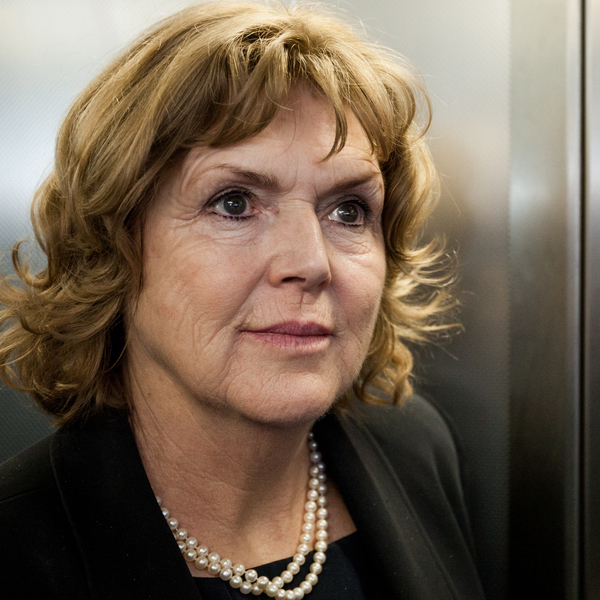
Mary Lawlor takes up her post as UN special rapporteur for human rights defenders, reportes the Irish Legal on 6 May 2020 [see also: https://humanrightsdefenders.blog/2020/03/16/good-breaking-news-mary-lawlor-the-new-un-special-rapporteur-for-human-rights-defenders/]. In spite of all the (sometimes understandable) criticism of the UN and its procedures, I would like to put on record that in my view the UN has made excellent appointments when it comes the big majority of special rapporteurs and espescially with regard to this mandate for human rights defenders which originated in 2000.
Mary Lawlor
Ms Lawlor has decades of experience in human rights, having helped to grow Irish-based NGOs as a previous director of Amnesty International in Ireland and a founder of Front Line Defenders (FLD). She led FLD from 2001 until her retirement in 2016, overseeing its growth to become a global organisation providing resources for the protection and security of human rights defenders (HRDs) at risk. Ms Lawlor helped spearhead civil society efforts to bring the EU Guidelines on Human Rights Defenders into effect and became a recognised leader in focusing on attention on the unique protection needs of HRDs. Congratulating Ms Lawlor on her appointment, Tánaiste and Foreign Affairs Minister Simon Coveney said: “Mary has been a tireless advocate for human rights for over 40 years both in Ireland and overseas. “This appointment is deserving recognition of her work and that of the organisation she founded – Front Line Defenders – supporting human rights defenders at risk around the world.
Dated 27 February 2020, the UN has released the letter after 2 months. Qayoom was moved to Agra Central Jail, Uttar Pradesh, on 8 August and was kept in solitary confinement, as per the letter, adding that he is suffering from multiple health issues — including a scheduled open heart surgery at the time of his detention. On 29 January, the letter states, Qayoom suffered a heart attack. Next day, he was taken back to the jail’s dispensary. On 1 February 2020, he was transferred from Agra Central Jail to the All India Institute of Medical Science (AIIMS) in New Delhi, for a medical check-up. “He was then transferred to Tihar Jail, New Delhi,” the letter added.
The Special Rapporteurs also claimed in the letter that Qayoom is being denied “the right to a fair trial… and the right of everyone to hold opinions and to freedom of expression.”
“We also express concern that Mr. Qayoom’s deprivation of liberty appears to be a reprisal for his opinions, the legitimate and peaceful exercise of his freedom to express them and his human rights work,” the letter added, citing various previous cases and relevant articles of ICCPR that entitles anyone who is deprived of liberty by arrest or detention to take proceedings before a court. “Arrest or detention as punishment for the legitimate exercise of other rights, as guaranteed by the ICCPR, is arbitrary, including the right to freedom of opinion and expression,” it mentioned.
The Special Rapporteurs stated:
“Please provide detailed information about the factual and legal grounds for the arrest and detention of Mr. Qayoom, including the charges brought against him. Please explain how his arrest and continued detention are in conformity with India’s international human rights obligations under the conventions it has acceded to.
Please provide detailed information on the treatment by the court of the habeas corpus petition initiated by Mr. Qayoom. Please explain how the absence of a decision on his petition more than six months after it was made is compatible with the requirement that the lawfulness of his detention’s petitioner is adjudicated as expeditiously as possible, and with India’s obligations under ICCPR.
Please provide detailed information on the present medical situation of Mr. Qayoom and explain how his medical concerns have been duly taken into account and addressed since he was arrested and placed in detention. Please explain what measures are being taken to ensure Mr. Qayoom’s access to appropriate medical care on a reliable and regular basis.
Please indicate what measures have been taken to ensure that human rights defenders in India are able to carry out their legitimate work in a safe and enabling environment without fear of threats or acts of intimidation and harassment of any sort.
Please provide detailed information, included disaggregated data to the extent possible, as to the number of persons from Jammu and Kashmir who have been detained under the Public Security Act since August 2019.”
Ding Jiaxi was disbarred and previously jailed for protesting against official corruption. (Twitter pic/L4L_INT)
A group of UN special rapporteurs said on Monday 23 March 2020 that they were “gravely concerned” about the welfare of three human rights lawyers “forcibly disappeared” by Chinese authorities shortly after their arrests last December. Ding Jiaxi, a prominent Beijing-based disbarred lawyer, previously jailed for protesting against official corruption, and lawyers Zhang Zhongshun and Dai Zhenya have been held since late last year in so-called “residential surveillance in a designated location” (RSDL – see: https://humanrightsdefenders.blog/2018/01/10/more-on-residential-surveillance-in-a-designated-location-rsdl-in-china/). The three were among more than a dozen lawyers and activists who were detained or went missing in the final days of 2019 in what rights groups have said was a crackdown on participants of a private democracy gathering.
Nine other lawyers and activists who attended the informal weekend gathering in the city of Xiamen “have also been summoned for questioning or detained in what has been a cross-provincial operation led by a special taskforce of Yantai City police,” the experts pointed out.
The experts acknowledged that there are provisions in international law that allow exceptional measures to be taken to protect public order and national security. But they insisted that “enforced disappearance is a grave and flagrant violation of human rights and is unacceptable in all circumstances” .“We are dismayed that national security provisions are used to target human rights defenders who meet peacefully and exercise their right to free speech, even if such speech is critical of the state,” they said.The experts also cautioned that the arrest and detention of the three lawyers could have a “chilling effect” on the defence of human rights in China. “When the authorities in any country systemically charge human rights defenders with ‘subversion of state power’ or other terror-related charges without clearly communicating the factual basis for such accusations, we worry that these defenders are just being persecuted for the exercise of their most basic human rights,” they said. Earlier this month, activists revealed that Xu Zhiyong, an outspoken Chinese rights activist who called for President Xi Jinping to step down over the coronavirus outbreak, had been charged with “inciting state subversion” and had been placed in RSDL since mid-February. [see also: https://humanrightsdefenders.blog/2014/03/06/2013-turned-into-nightmare-for-human-rights-defenders/]
Following on the heels of the joint statement on the Corona virus by the two High Commissioners [see: https://humanrightsdefenders.blog/2020/03/17/two-high-commissioners-issue-rare-joint-statement-re-covid-19/], more than a dozen U.N. experts on issues including on the rights to freedom of expression, peaceful assembly, health, education, and religious belief, along with the U.N. working group on arbitrary detention signed a statement urging Governments in crisis mode not to use the emergency measures to suppress human rights.
The rights experts, who are appointed by the United Nations Human Rigbhts Council but who do not speak on behalf of the world body, said they recognized “the severity of the current health crisis and acknowledge that the use of emergency powers is allowed by international law in response to significant threats” but they went on to “urgently remind states that any emergency responses to the coronavirus must be proportionate, necessary and non-discriminatory.”
The experts stressed that the use of emergency powers should be declared publicly and the U.N. treaty bodies should be notified if fundamental rights, including movement, family life, and assembly were being significantly limited. “Moreover, emergency declarations based on the COVID-19 outbreak should not be used as a basis to target particular groups, minorities, or individuals,” they insisted. The emergency, the experts said, “should not function as a cover for repressive action under the guise of protecting health nor should it be used to silence the work of human rights defenders.”
They warned that some states might find the use of emergency powers “attractive because it offers shortcuts.” “To prevent such excessive powers to become hardwired into legal and political systems, restrictions should be narrowly tailored and should be the least intrusive means to protect public health,” they said.
Lisa Schlein reported on 3 March 2020, for the VOA from Geneva, that the United Nations has canceled hundreds of human rights events because of coronavirus concerns in accord with the Swiss government’s decision to ban all public gatherings of more than 1,000 people. In announcing the decision, the president of the U.N. Human Rights Council, Elisabeth Tichy-Fisslberger, tells delegates she has received an urgent letter from the U.N. director-general in Geneva, spelling out measures that have to be taken in light of the coronavirus situation. “The director-general specified that that would entail canceling all side events and encouraging representatives to refrain from traveling to Geneva for the rest of the session,” said Tichy-Fisslberger. She also suggested that those special procedure mandate holders who are not already in Geneva could be encouraged to participate in the session via video conferencing.
Human Rights spokesman Rolando Gomez says 200 side events will be canceled until the end of this council session on March 20. He says that is an unfortunate, but responsible measure to take in order to prevent the coronavirus from spreading. He tells VOA the meetings generally attract on average 4,000 to 6,000 participants during the course of the session. He says those side events are very important.
“I should point out just as a technical note they are not official council side events,” said Gomez. “They take place in parallel and they are important as they inform the discussions in the formal proceedings. Of course, those lobbying efforts will continue unabated, which are important.” Side events are organized by non-governmental organizations and states. The Office of the U.N. High Commissioner for Human Rights also has spent a lot of time and effort in organizing several gatherings aimed at exploring particular aspects of human rights that demand a more comprehensive hearing and analysis. They will not be held.
At the 43rd session of the Human Rights Council, States will consider a resolution extending for three years the mandate of the Special Rapporteur on the situation of Human Rights Defenders. Civil society organisations from across the world are calling on all States to support the consensus renewal of the mandate, and to resist any attempt to undermine the mandate and States’ obligations. This is a key opportunity for States and the Council to demonstrate their support and recognition for the indispensable role defenders play to ensure that all people enjoy freedom, dignity, justice and equality. Despite their vital contribution, both some governments and non-State actors are still seeking to silence defenders as they expose injustices and demand accountability for all.
The mandate of the Special Rapporteur on the situation of human rights defenders is integral to their protection and recognition, globally. It gathers and responds to information on the situation of defenders around the world, engages constructively with governments and non-State actors and provides expert recommendations to promote the effective implementation of the Declaration on human rights defenders (‘the Declaration’). See also: https://humanrightsdefenders.blog/2019/09/11/what-should-michael-forsts-successor-as-rapporteur-on-hrds-look-like/
In 2019, the Human Rights Council and the General Assembly supported the vital work of defenders. The Human Rights Council recognised the critical role of environmental human rights defenders in protecting natural ecosystems, addressing climate change, attaining the sustainable development goals (SDGs). The General Assembly passed by consensus a resolution focusing on implementation of the Declaration and some key elements of protection policy; the resolution also attracted a record number of co-sponsors.
More than 50 Civil society organisations from across the world are calling on all States to support the extension of the mandate of the Special Rapporteur by:
Participating positively in the negotiations on the resolution,
Presenting early co-sponsorship of the text,
Resisting any attempts to dilute the mandate or State obligations, and


 Ding Jiaxi was disbarred and previously jailed for protesting against official corruption. (Twitter pic/L4L_INT)
 Hans Thoolen on Human Rights Defenders and their awards