Posts Tagged ‘UN Special Rapporteur on Human Rights Defenders’
Good breaking news: Mary Lawlor the new UN special rapporteur for human rights defenders
March 16, 2020Special Rapporteur Forst launches campaign: “TOGETHER WE DEFEND HUMAN RIGHTS”
May 8, 2019“We all can be human rights defenders, as long as we peacefully stand up for other people or speak out against injustice or discrimination” says Michael Forst – the UN Special Rapporteur on human rights defenders – in launching his new campaign #TogetherWeDefend. The campaign promotes human rights defenders worldwide by fully recognising the good they do.
Follow the link https://togetherwedefend.org to find out more, subscribe and join the campaign.
For some of my earlier posts on Forst see: https://humanrightsdefenders.blog/tag/michel-forst/
Michel Forst addressed the International Civil Society Week 2019
May 3, 2019
They are ordinary people – mothers, fathers, sisters, sons, daughters, brothers, friends. But for me they are extraordinary people – the ones who have the courage to stand up for everyone else’s rights. They are the human rights defenders. Last year, according to reliable sources, 321 of them were killed, in 27 countries. Their murders were directly caused by the work they do to ensure the rest of us enjoy the rights we claim as purely because we are human. Countless others were tortured, raped and threatened, also for the work they do protecting their, and others’ human rights.
In fact, 2018 was deadliest year for human rights defenders since the UN began monitoring the challenges they face through the establishment of a mandate for a Special Rapporteur on the situation of human rights defenders. It shouldn’t be like this.
Last year we marked 70 years since the Universal Declaration of Human Rights and 20 since the UN Declaration on Human Rights Defenders. The latter Declaration provides for the practical support and protection of human rights defenders as they go about their work. It is addressed not just to states and to human rights defenders, but to everyone. It tells us that we all have a role to fulfil as human rights defenders and emphasises that there is a global human rights movement that involves us all. This is a task we are not performing well.
Human rights should not need defenders, and human rights defenders should not need protection from the might of oppressive governments, corrupt multinationals and crooked legal systems. But this is an imperfect, human world.
Since 2000, when we UN Special Rapporteurs on the situation of human rights defenders began our monitoring work, much progress has been made. There has been extensive discussion on how these courageous people should be protected, and there is a Protection Mechanism for Human Rights Defenders and Journalists in a limited number of countries. Sadly, it is often not properly implemented, or funded. It is impossible to canvass each defender’s particular treatment or mistreatment by the authorities they face, or even that of communities of defenders. There are, however, trends.
- On 23 October last year, Julián Carrillo, an indigenous rights defender from Mexico’s state of Chihuahua told a friend by phone that he believed he was being watched and that he was going into hiding. On the evening of 25 October, his body was found. He had been shot several times.
- On 22 August last year, Annaliza Dinopol Gallardo, a Filipina land rights defender known to her community as “Ate Liza”, was shot dead outside Sultan Kudarat State University in Tacurong City. She had four children.
Mr Carillo’s murder is indicative of the largest trend. More than two-thirds – a full 77% – of the total number of defenders killed were defending land, environmental or indigenous peoples’ rights, often in the context of extractive industries and state-aligned mega-projects.
Ms Gallardo’s murder represents another trend – the number of attacks on women and girls who are defenders is increasing. In the recent report that I have presented to the UN Human Rights Council I have highlighted that, in addition to the threats experienced by their male colleagues, women human rights defenders face gendered and sexualised attacks from both state and non-state actors, as well as from within their own human rights movements.
This includes smear campaigns questioning their commitment to their families; sexual assault and rape; militarised violence; and the harassment and targeting of their children.
Changing all this is our task for the future. Protection Mechanisms for Human Rights Defenders and Journalists need to be properly implemented and funded, at national level.
We need to empower defenders and increase the abilities of those who are responsible for their protection to keep them safe. We also need to improve the accountability mechanisms these officials operate under.
To properly defend the defenders, we also need to recognise their diversity, and that each one of them faces challenges particular to their individual circumstances. There is no one-size-fits-all answer to ensuring each defender is able to do their work unfettered.
We need to acknowledge that defenders, just like all of us, live in this modern, interconnected world.
Protecting them means covering all aspects of their safety: physical, psychological and digital. It means doing so with flexibility. It also means that our protection needs to extend to their families, and the groups and organisations they belong to. We need to speak to them about what they need to feel safe.
In recent years the world has taken a worrying turn away from respect for human rights. Increasingly, groups are becoming inward-looking, and nations nationalistic. We need human rights defenders now more than ever. They also need us.
See also: https://humanrightsdefenders.blog/tag/2019-international-civil-society-week/
http://www.ipsnews.net/2019/04/human-rights-defenders-need-defended-much-defend-rights/
Latest report by Special Rapporteur on (women) human rights defenders is now available
February 17, 2019“My report on women human rights defenders is out and will be officially presented on 28/02! All over the world women fight so human rights can be a reality for all of us. As a result, they face attacks. Leaders must recognize and protect them....”said UN Special Rapporteur on Human Rights Defenders Michel Forst on Twitter on 11 February 2019
Human Rights Council 40th session
25 February–22 March 2019 Agenda item 3
A/HRC/40/60 – Report of the Special Rapporteur on the situation of human rights defenders
Situation of women human rights defenders
Summary: In the present report, the Special Rapporteur on the situation of human rights defenders, Michel Forst, reviews the situation of women human rights defenders, covering the period since the issuance, in 2011, of the last report by the mandate holder on this topic (A/HRC/16/44 and Corr.1). He focuses in particular on the additional gendered risks and obstacles women human rights defenders face and recognizes their important role in the promotion and protection of human rights. The Special Rapporteur refers to the relevant normative framework for the work of women human rights defenders, describes the challenging environments in which they operate and analyses the impact of patriarchy and heteronormativity, gender ideology, fundamentalisms, militarization, globalization and neoliberal policies on the rights of such defenders. He also refers to the situation of specific groups of women human rights defenders.
The report contains recommendations and examples of good practices to support the building of diverse, inclusive and strong movements of women human rights defenders, and recommendations addressed to all stakeholders to ensure that women defenders are supported and strengthened to promote and protect human rights.
https://documents-dds-ny.un.org/doc/UNDOC/GEN/G19/004/97/PDF/G1900497.pdf?OpenElement
For some of my other posts on women human rights defenders see: https://humanrightsdefenders.blog/tag/women-human-rights-defenders/page/5/
General Assembly 2018: Human Rights Defenders were a main dish on 23 October
November 7, 2018On 26 October 2018, the ISHR reported on how the General Assembly addressed the 20th anniversary of the Declaration on Human Rights Defenders. Special Rapporteur Michel Forst delivered a detailed reflection and assessment of global protection efforts in his report to the General Assembly this week.
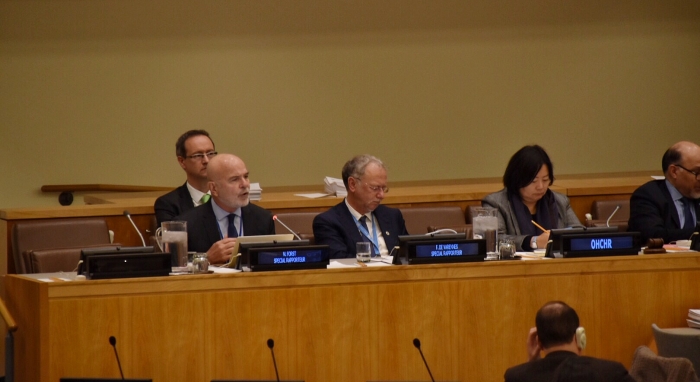
On 23/24 October, the Special Rapporteur on the situation of human rights defenders, Michel Forst, called the international community to action, urging open and frank dialogue and solidarity to address oppression. He addressed the UN General Assembly’s Third Committee and engaged in a dialogue on his report to the General Assembly.
In light of the 20th anniversary of the Declaration on Human Rights Defenders, his report focused on effective implementation strategies, incorporating both a reflection of progress made over the past two decades and an overview of recommendations on how to improve systems and mechanisms moving forward. ‘The past 20 years have been an era of struggle for human rights. Victories have been hard fought and challenges have proliferated,’ the Special Rapporteur said in his report. ‘The celebration of this milestone must be tempered by a recognition of the sacrifices of human rights defenders, their families and their communities.’
After surveying 140 States, the Special Rapporteur addressed the following key matters: the evolution of the use of the term ‘human rights defenders’, mechanisms and practices to support them and legal/ administrative frameworks to protect them. “20 years ago, the Declaration laid the groundwork for the protection of human rights defenders and amplified the importance of their inclusion as a stakeholder in human rights initiatives, but there is still work to be done,” said ISHR’s Legal Counsel Tess McEvoy.
Several States voiced their support for the report and the mandate, including Spain, Iceland, Canada, Australia, EU, Poland, Ireland, Switzerland, Mexico, Liechtenstein, Estonia, Czech Republic, Colombia, France, Slovenia, Norway, US, Belgium and the United Arab Emirates.
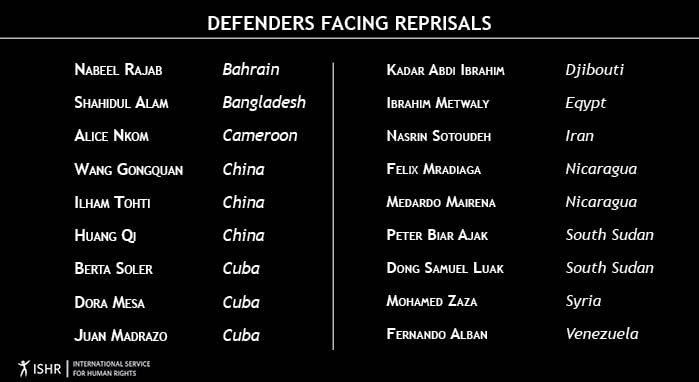
The United States referenced the Secretary General’s report on reprisals highlighting attacks and intimidation against defenders in more than 38 countries, saying they are ‘alarmed and monitoring all allegations.’ The US then proceeded to list over 20 specific names of individuals from 14 different countries who are victims of such reprisals. These include:
Both China and Iran criticised the report on the basis that defenders, activists and social leaders do not deserve ‘special treatment’ regardless of the risks these individuals face. Cuba rejected any attempts to paint political prisoners as human rights defenders. The Russian Federation challenged the notion of ‘State obligation’ on the basis that the Declaration of Human Rights Defenders is a non-binding document. In response to the Russian Federation’s point on the non-obligatory nature of the Declaration of Human Rights, the Special Rapporteur swiftly reminded States that while the Declaration is non-binding it reaffirms other legally binding human rights obligations.
The Special Rapporteur concluded with a call to action at the upcoming Human Rights Defenders World Summit in Paris, where a statement will be prepared, including for presentation at the upcoming high-level event on defenders at the General Assembly.
The Special Rapporteur also referenced a document—outlining the results of his global survey on defenders in 140 countries—which he hoped would be published on the OHCHR website without further delay. He invited supporters of the mandate to inform OHCHR of the need to disseminate the report via the OHCHR website.
The Special Rapporteur referenced the study being prepared by the UN Secretary-General in efforts to protect global defenders. The report of this study will be shared with States in the coming weeks. The Special Rapporteur also voiced concern about the lack of NGO access to the UN and asked members of the Committee on NGOs to invite him in to engage with the Committee.
The Special Rapporteur concluded by saying that his report to the Human Rights Council in March 2019 will focus on the situation of women defenders.
For earlier posts on the anniversary: https://humanrightsdefenders.blog/tag/20th-anniversary-un-declaration-on-hrds/
Forst in UN New York: ‘more concerned than ever for human rights defenders’
October 25, 2018Michel Forst, the UN Special Rapporteur on the situation of human rights defenders, expressed in New York “grave concern” on Tuesday 23 October 2018 regarding the treatment of human rights defenders, as more than 1,000 have been killed between 2015 and 2017. See also the latest report on the situation of human rights defenders issued earlier this year (http://undocs.org/en/A/73/215 – 23 July 2018).
2018 marks the twentieth anniversary of the UN mandate of the Special Rapporteur on Human Rights Defenders. In a speech made to the UN General Assembly, Forst explained how the program’s very existence is in jeopardy but the anniversary presents an “opportunity not only to review the situation of human rights defenders but also to set out a vision for the human rights movement for the coming years.”
Forst praised the work that has been done but fears for the safety of human rights defenders. “The Declaration has become a milestone in the human rights project and resources have been provided for the promotion and protection of human rights defenders. However, I am more concerned than ever. … We are facing an alarming panorama for human rights defenders. Their situation is deteriorating all over the world despite States’ obligations to ensure the protection of human rights defenders.”
In honor of the anniversary, a number of events are scheduled in the upcoming months intended to draw attention to the issue of human rights defenders: From October 29-31, the second Human Rights Defenders World Summit will take place in Paris [see: https://humanrightsdefenders.blog/2018/07/24/announcement-of-the-human-rights-defenders-world-summit-in-paris-october-2018/ ]. A UN “high-level plenary meeting” in New York will take place in mid-December tasked with addressing good practices and new opportunities in the Declaration’s implementation.
Further plea to Nobel foundation to recognize the HRDs of the world
October 5, 2018It would be foolish to think that defending human rights is just an issue for people in faraway countries
Every night Juana Ramirez Santiago would deliver her husband’s dinner to the hardware store he worked as a watchman. One evening in late September she called him to tell him she was on her way. She never arrived. Neighbours heard four gun shots then found her lying dead on the street. Juana – who helped found a group to challenge violence against women – was just one of hundreds of human rights defenders brutally assassinated so far this year. 2018 is on course to set a grisly record.
Tomorrow, the Nobel committee will announce the winner of the 2018 Peace Prize. This year the prize should be awarded not to a person or an organisation but – for the first time ever – to a community: a collective award for human rights defenders like Juana Ramirez all around the world.
Each day, these brave people stand up and speak out for nothing more than the rights which everyone should be entitled. And as a result, each day, many are silenced – thrown in jail, attacked or even murdered.
Yet how many of us have heard their names? They are hidden heroes. Too often they have to stand alone, courageous individuals and small grassroots communities forced to face down crooked legal systems, corrupt multinationals and oppressive governments. That’s why the role of UN special rapporteur for human rights defenders was developed. It’s why organisations like Peace Brigades International – who provide crucial life-saving support to defenders on the ground – exist.
The prize would shine a global spotlight on their struggle in a year when we mark the 20th anniversary of the UN Declaration on Human Rights Defenders which outlined how defending human rights is a right in and of itself, not a crime.
The award could not come at a more urgent time. Not just because they deserve recognition, but because in the words of the late Kofi Anna, “We need to be vigilant in the protection of human rights defenders, for when the defenders’ rights are violated, all our rights are injured.”
Defenders are an example to us all. They show us that our rights are not only granted by law but upheld and protected by communities and individuals. They demonstrate that we all need to be human rights defenders. Particularly now that there’s a growing backlash against human rights.
It would be foolish to think that this is just an issue for people in faraway countries. Threats to hard won rights are advancing across the West, even in the United States. Just look at women’s rights. Access to abortion is being tightened in states like Iowa, Louisiana and Mississippi.
On LGBT rights it’s still legal to fire someone for being gay in most places in the United States. There are real fears about a rollback of rights from the Supreme Court.
When even leaders of even the oldest democracies brand the media as an enemy of the people or say that “it’s embarrassing for the country to allow protesters” it’s time to recognise that the struggle of distant human rights defenders is a struggle everyone must face. That is, if we want to continue living in healthy, free and democratic societies.
Make no mistake, the tide has shifted – freedom and democracy are on the defensive. Authoritarianism is on the rise worldwide. That’s why we need to stand shoulder to shoulder with defenders across the globe. And that’s why they should win the Nobel Prize. Worldwide, a narrative is spreading that human rights defenders are criminals.
The Nobel Prize is the loudest stage we have to challenge the growing discourse that discourse that dismisses and delegitimises non-violent activists as terrorists, anti-patriots, or threats to security and development.
It would send a clear message: to human rights defenders both home and abroad – you are not alone. To those who would harm them – the eyes of the world are watching and your actions will have consequences. And to the rest of us? The rights we don’t defend are the rights we can so easily lose.
Michel Forst is the United Nations Special Rapporteur for Human Rights defenders and Susi Bascon is the director of the Peace Brigades UK
———-
First quantitative analysis of 16 years outgoing ‘communications’ by Special Rapporteurs on Human Rights Defenders
January 26, 2018On 24 January 2018 an important study was made public about the work of the UN Rapporteurs on Human Rights Defenders. It concerns the study “Chasing Shadows: A Quantitative Analysis of the Scope and Impact of UN Communications on Human Rights Defenders (2000–2016)” by Janika Spannagel and published by the Global Public Policy Institute. At the bottom of this post there is link to downloading the full report. [see also: https://humanrightsdefenders.blog/2017/12/11/good-introduction-to-the-anniversary-of-the-un-declaration-on-hrds-in-2018/].
Based on extensive empirical research, this policy paper provides the first systematic analysis of all communications sent out to date. It finds credible indications that outgoing communications have a positive impact, but also demonstrates that there is room for improvement. In particular, a more deliberate prioritization of cases is required to ensure that the mandate can serve its protective purpose more effectively under the constraints of very limited resources.
The policy paper advocates an approach that aims to maximize the potential impact on the individual defender while systematically striving for a balanced documentation of cases. It makes an evidence-based argument for a number of adjustments and offers actionable recommendations to the mandate as well as to the Office of the High Commissioner for Human Rights, to states, and to civil society actors regarding how to enhance the effectiveness of UN efforts to protect threatened human rights defenders around the world.
Among others, the paper recommends that the use of joint special procedures communications should be the exception rather than the rule, that states’ replies to cases should be systematically monitored and the respective data publicly released, and that more concerted international action should be taken with regards to ‘softer’ forms of repression.


see also: https://humanrightsdefenders.blog/2017/06/08/news-from-the-hrc34-mandate-of-the-special-rapporteur-on-human-rights-defenders-extended/
http://www.gppi.net/publications/human-rights/article/chasing-shadows/
Pakistani human rights defender Hina Jilani is the new President of OMCT
November 30, 2016On 29 November 2016 OMCT announced that Hina Jilani, a prominent Pakistani human rights defender, is the newly elected President of the World Organisation Against Torture (OMCT).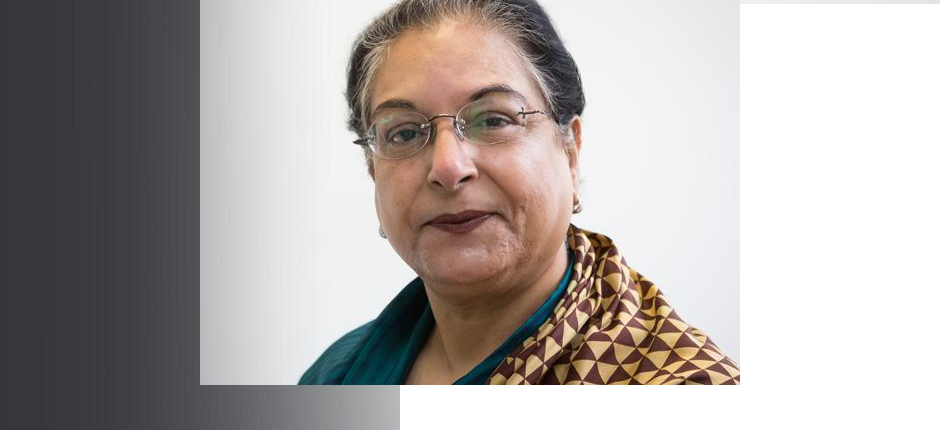
Ms. Jilani was elected to a four-year term on Saturday 26 November at the organization’s General Assembly meeting held every four years. Addressing OMCT partners and members of its SOS-Torture network of more than 200 non-governmental organizations around the world, she said she would focus on boosting its cohesion to make its voice louder. “We can’t just condemn points of view; we have to convince people,” she said. “We have to show them that these values did not come out of nothing, that they are worth being preserved. We have to show that undermining these values is not in the best interest of humanity.”
Hina Jilani created Pakistan’s first all-women law firm and co-founded Pakistan’s first legal aid centre in 1986. In 1991 helped set up a shelter for women fleeing violence and abuse and presented one of the first cases of domestic violence in the country. Ms. Jilani was also one of the founders of the Human Rights Commission of Pakistan, an NGO promoting human rights in Pakistan. She also created Pakistan’s Women Action Forum, a prominent women’s rights group whose campaigns have been at the heart of the democracy movement in the country. Ms. Jilani has been a lawyer at the Supreme Court of Pakistan since 1992.
At the international level, she was the first United Nations Special Representative of the Secretary-General on the situation of Human Rights Defenders from 2000 to 2008. She was appointed in 2006 and 2009, respectively, to the UN International Fact-Finding Commissions on Darfur and on the Gaza Conflict.
Her expertise and lifelong dedication to human rights has earned her international recognition. In 2013, she joined The Elders, a group of statesmen, peace activists and human rights advocates, brought together by Nelson Mandela. In 2000 she was honoured with the Amnesty International Ginetta Sagan Award for Women’s Rights, just a year after she was awarded the Human Rights Award by the Lawyers Committee for Human Rights. In 2008 she received the human rights award of the American Bar Association.
For more posts on Hina see: (https://thoolen.wordpress.com/tag/hina-jilani/) 
She spoke after a two-day forum organized on the occasion of the 30th anniversary of OMCT and its SOS-Torture network, along with UN Human Rights Commissioner Zeid Ra’ad Al-Hussein, who shared concern that many countries were “returning to authoritarianism”, human rights defenders around the world were under “enormous pressure”, and that reprisals and arbitrary detentions were increasingly done under the pretext of fighting terrorist activities. The High Commissioner said he feared that declarations such as United States President-elect Donald Trump’s campaign declarations (condoning ill treatment such as “waterboarding”, for instance) might inspire other Governments to resume resorting to torture, hence exacerbating the practice around the world.
She also seemed undeterred by the consequent risks of wavering support of multilateral institutions, since the US election and the British “Brexit” vote triggered a wave of speculation as to a possible shift in funding priorities away from international aid, and since the withdrawal by several States such as South Africa, Burundi, Gambia and Russia from the International Criminal Court, triggered concerns over the deconstruction of a system built up to protect victims of serious human rights violations. “This is not an easy time for human rights defenders, but when has it been for us? We keep our determination despite all the challenges,” she told activists. “The global donors must understand that if there is hesitation in supporting these human rights defenders and their networks it will only reduce our outreach. But we did it before we had money. We have no reason to believe that this is a favour to any one organization or community.”
Ms. Jilani said that OMCT was one of the organizations best placed to uphold human rights and combat torture, adding: “It has the experience, the capacity, and the knowledge to take this challenge forward.”
Azerbaijan: constitutional referendum on 26 September will surely pass but not the human rights muster
September 24, 2016
Michel Forst (right), the UN special rapporteur on the situation of human rights defenders (right), addressing reporters in Baku on 22 September 2016.
Michel Forst, the UN’s special rapporteur on the situation of human rights defenders, said on 22 September 2016 that Azerbaijani authorities have applied crippling pressure to journalists and rights activists critical of the government, and made it virtually impossible for nongovernmental organizations to operate. “Civil society has been paralyzed as a result of such intense pressure,” Forst said as he wrapped up a nine-day visit to the South Caucasus nation to assess the situation. Observing that most of the recommendations by the international and regional human rights mechanisms have yet to be implemented by the Government of Azerbaijan, Mr Forst strongly called for establishing a mechanism that would result in a plan of action to implement those outstanding recommendations. He urged the Government to “to build bridges with civil society organizations, and to establish a regular and meaningful dialogue with human rights defenders, ensuring broad and inclusive participation. I believe such dialogue and partnership is ultimately in the interest of the Azerbaijani State”. [for the full end of mission statement see: http://www.ohchr.org/EN/NewsEvents/Pages/DisplayNews.aspx?NewsID=20544&LangID=E
“Human rights defenders have been accused by public officials to be a fifth column of the Western governments, or foreign agents, which has led to misperception in the population of the truly valuable role played by civil society,” Forst added.
He was served immediately by Azerbaijani MP and editor-in-chief of the New Azerbaijan newspaper, Hikmat Babaoghlu, who told APA that “the Western imperialism has launched an attack on Azerbaijan with its entire network, which includes radical opposition groups, numerous local and international “civil society instructions” and “human rights defenders”. All these are taking place before the eyes of the Azerbaijani people, who are well aware of what is happening. Therefore, the destructive plan of imperialist centers will never succeed in Azerbaijan” The main goal of the upcoming referendum is to better ensure the national security and the transition of development to a qualitatively new stage, he added. (Even more scathing is a piece written by Elmira Tariverdiyeva, the head of Trend Agency’s Russian news service – see link below.)
Forst’s report indeed comes just days ahead of a referendum (26 September) on changes to Azerbaijan’s constitution that critics say will tighten Aliyev’s grip on power, which he has held since 2003. The proposed amendments to the Constitution would further strengthen the already powerful president, including a longer presidential term, the authority to declare early presidential elections at will and dissolve parliament. The amendments will also lead to violations of the right to freedom of association. While in practice, public assemblies have already been prohibited in central Baku, the proposed amendments will grant the government even more power to interfere with the freedom of assembly in violation of international standards. The Council of Europe experts said on September 20 that the proposed changes would severely upset the balance of power and give “unprecedented” control to the president. (The head of the legal department in Aliyev’s administration called that assessment “hasty” and “politically driven.”)

