On 17 April 2023, ISHR sent its annual submission to the report of the UN Secretary-General on reprisals and intimidation against defenders engaging or seeking to engage with the UN and its human rights mechanisms. The submission presents a disturbing pattern of intimidation and reprisals in 23 countries.
ISHR’s annual submission to the report of the UN Secretary-General on reprisals demonstrates the need for the UN and States to do more to prevent and ensure accountability for intimidation and reprisals against human rights defenders and others cooperating or seeking to cooperate with the UN and its human rights mechanisms. ISHR’s submission outlines developments in the international human rights system, and documents a number of new cases, as well as follow-up on previously submitted cases.
“In order for the international human rights system to function to its fullest potential, human rights defenders must be able to share crucial information and perspectives, safely and unhindered. However, many defenders still face unacceptable risks and are unable to cooperate safely with the UN.” Madeleine Sinclair, New York Office Co-Director and Legal Counsel. “The vast majority of cases remain unresolved year after year. More must be done to ensure the efforts to document and address reprisals cases also include sustained and consistent follow up. Otherwise, the cost of carrying out reprisals remains too low, impunity reigns and perpetrators are further emboldened“.
The submission presents a disturbing pattern of intimidation and reprisals in 23 countries, with the addition this year of Algeria and France. Cases of reprisals featured in the submission range from States defaming and stigmatising defenders, to criminalising their work, but also to arbitrarily detaining, arresting and killing them.
In Israel, Palestinian defenders face ongoing intimidation and repression as reprisals for their cooperation with UN human rights mechanisms.
In Bahrain, the situation still shows no signs of improving, with human rights defenders continuing to be arbitrarily detained and denied timely and adequate medical treatment by the government.
In Algeria, Andorra, Cameroon and India defenders continue to be criminalised.
In China defenders are still facing online surveillance, harassment and enforced disappearance.
In Egypt, the United Arab Emirates, Venezuela and Yemen many more defenders face arbitrary detention, ill-treatment and criminalisation.
Other cases of reprisals include threats, harassment, hate speech, surveillance, property damage, disbarment, death threats, travel bans, enforced disappearances, unjustified raids, dissolution of associations, judicial harassment, smear campaigns, forced deportations, confiscation of travel documents, red tagging, denial of healthcare and family visits as well as accusations of terrorism, among others. Other countries cited in the report include cases in the Andorra, Bahamas, Bangladesh, Burundi, Djibouti, Equatorial Guinea, France, The Maldives, Morocco, Nicaragua, The Philippines, Russia, and Thailand.
ISHR also submitted follow-up information on a large number of cases, demonstrating that incidents of reprisals and intimidation are very rarely, if ever, adequately resolved.
This year, ISHR is running again its #EndReprisals campaign. The campaign will raise the profile of 6 cases (all included in the submission) and seek to achieve a more sustained attention on the issue of reprisals and follow-up of the cases throughout the UN system. In particular, we want the UN Secretary General to include all the reprisal and intimidation cases in his upcoming report and UN member States to use the opportunity of the interactive dialogue at the Human Rights Council on the Secretary-General’s report in September, as well as Item 5 debates at all sessions, to raise specific cases and hold their peers accountable.
Patrick Wintour, Diplomatic editor of the Guardian, reported on Monday 20 March 2023 that the he UN rapporteur on Iran, Javaid Rehman, has said the scale and gravity of Iran’s violations of human rights amount to a crime against humanity. Javaid Rehman, a special rapporteur on Iran, told the United Nations Human Rights Council on Monday the country was experiencing the most serious violations in four decades.
Rehman warned Iran was experiencing the most serious violations in four decades. He also claimed the death in police custody of Mahsa Amini, a young Kurdish woman, in September 2022 resulted from beatings by the “morality police”. Iran has said she died from a pre-existing neurological disorder, but Rahman said reliable medical sources pointed to state culpability. He said Iran had refused to conduct an impartial or transparent inquiry into her death, including the allegations that she was beaten up and tortured.
“The scale and gravity of the violations committed by Iranian authorities, especially since the death of Ms Amini, points to the possible commission of international crimes, notably the crimes against humanity of murder, imprisonment, enforced disappearances, torture, rape and sexual violence, and persecution,” he said.
Drawing on evidence, including eyewitness testimony and comments from reliable medical sources, the report said it was clear she had died on 16 September “as a result of beatings by the state “morality police”.
“I would like to stress that her death was not an isolated event but the latest in a long series of extreme violence against women and girls committed by the Iranian authorities,” Rehman said. He said “the responsibility of top senior officials in instigating this violence can … not be ignored.”
“Protesters including children were beaten to death,” Rehman said, adding that “at least 527 people, including 71 children were killed, and hundreds of protesters severely injured.”He also said dozens of protesters “have lost their eyes because of direct shots to the head”, while Iranian doctors had reported that women and girls participating in the demonstrations “were targeted with shotgun fire to their faces, breasts and genitals”.
He said: “Children released have described sexual abuses, threats of rape, floggings, administration of electric shocks and how their heads were maintained underwater, how they were suspended from their arms or from scarves wrapped around their necks.”
The EU says it has now imposed sanctions on 204 individuals and 34 entities in six waves of sanctions. The UK announced it was putting sanctions on five members of the board of directors of the IRGC Co-operative Foundation. This organisation funnels money into the Iranian regime’s repression, the UK Foreign Office said.
He voiced outrage at the executions of at least four people associated with the protests “after arbitrary, summary, and sham trials marred by torture allegations”. He added: “These summary executions are the symbols of a state ready to use all means to instil fear and quash protests,” pointing out that at least 17 other protesters have so far been sentenced to death and more than 100 others face charges that carry the death penalty.
UN secretary general Antonio Guterres with Chinese president Xi Jinping during an official visit to Geneva on 18 January 2017. (UN Photo/Jean-Marc Ferré)
In parallel, ISHR hosted a panel discussion on the topic with former member of the UN Committee against Torture (CAT) Felice Gaer, William Nee of the Network of Chinese Human Rights Defenders, Peter Irwin from the Uyghur Human Rights Project, and ISHR’s Director of Treaty Body advocacy, Vincent Ploton. ISHR Programme Director Sarah Brooks moderated the discussions.
“The incidents recounted, while qualitative in nature, provide compelling evidence of China’s ability to effectively and unrelentingly restrict civil society engagement with [UN treaty bodies] in the context of specific reviews, and deter independent sources from speaking up,” the report states.
The report adds to growing suspicion of Beijing’s sway over the UN human rights office, after it led a successful campaign last year to delay for months the publication of a report concluding that mass detention of Uyghurs and other religious minorities in Xinjiang could amount to crimes against humanity.
“When treaty bodies do their work well, they document violations and that can lead to serious actions such as the establishment of commissions of inquiry at the Human Rights Council, or even refereeing situations to the International Criminal Court, which can then lead up to indictment of national leaders or heads of state,” Vincent Ploton, co-author of the report, told Geneva Solutions. “So the consequences can be far reaching.”
China, which is party to six out of the ten treaties, has consistently sponsored candidates that have previously worked for the government and that work in institutions or organisations with close ties to the government, Sarah Brooks, co-author of the report, explained. At least one of them, Xia Jie currently sitting in the Committee on the Elimination of Discrimination Against Women (CEDAW), has formal ties to the Chinese communist party.
The authors recount how in 2015 during China’s evaluation by the Committee Against Torture (CAT), the Chinese committee member was kicked out by the chair for taking photos of the activists present, an intimidation tactic that China but also other countries have been known to use against campaigners who come to Geneva.
Seven Chinese activists were also reportedly prevented from travelling to Geneva to participate in the evaluation through threats and even detention. Felice Gaer, CAT chair at that time, recalled the event at a panel organised to launch the report.
This “creates a chilling effect”, leading “those who might be facing particular risks of reprisals to walk back their interest in participating in the process”, Brooks told Geneva Solutions.
The Chinese government has particularly targeted Uyghur and Tibetan groups, telling the office not to publish their reports on the UN human rights website under the pretext that they are “splitists” and therefore their input is misinformation, Gaer recalled at the panel. See also: https://humanrightsdefenders.blog/2022/09/01/finally-the-long-awaited-un-report-on-china/
Ploton said this external pressure exerted on UN staff is even “more worrying”, but said. At the same time, reports submitted by what civil society groups call Gongos, meaning government organised NGOs, that pose as civil society while promoting state interests, have been flooding the reviews, making it hard for the experts to know which sources to trust.
Speaking at the panel, William Nee of the Network of Chinese Human Rights Defenders warned that avenues for expression in China, from press to social media to academia, had been closing in recent years, making the UN system all the more important for Chinese rights activists.
China is set to be evaluated by the Committee on Social, Economic and Cultural Rights (CESCR) in February, followed by the CEDAW in May.
In an email response to Geneva Solutions, the Chinese permanent mission to the UN in Geneva rejected the report, calling the accusations “groundless and unjustified”.s
China is far from being the only country trying to influence the treaty bodies. The report also mentions Saudi Arabia and Russia. An analysis by the Geneva Academy from 2018 found that 44 per cent of treaty body expert members had experience working for the executive branch in their respective countries, as opposed to independent civil society groups or academia.
Ploton explained that this was allowed by countries practising “horse trading”, meaning that they agree to vote for a candidate in exchange for a vote for theirs.
Treaty bodies members adopted in 2012 the Addis Ababa guidelines, which spell out what independence and impartiality means for them, but the authors say Geneva Academy’s findings show there has been little progress since then. A major review of the treaty bodies system took place in 2020 for which civil society “had high hopes”, Ploton said. But in the end, “the process was a failure”, he said, describing the issue of reforming treaty bodies as a “hot potato” no state or UN official wanted to hold. “This is not a new phenomenon,” he said. “What is unique about China is how systematic it is.”
China has also been pushing for reforms to keep the expert groups in check, for example keeping them from doing follow-ups after a review or even banning NGOs that are not accredited by the UN Economic and Social Council, which had been blocking for years certain NGOs from being approved until recently.
A few countries including the Nordics and the United Kingdom have taken steps of their own to make sure that candidates are independent. “But the number of countries that take the process seriously is too narrow,” Ploton said.
The ISHR calls in the report for the creation of an independent vetting process, in the image of the International Criminal Court and the Inter-American Court of Human Rights, which have independent expert panels to monitor member elections. Both were NGO-led initiatives, as were the treaty bodies, Ploton said. “Perhaps it’s on us to make that change happen,” he added.
Just before the United Nations Human Rights Council will hold a special session on ongoing human rights violations in Iran on 24 November, Human Rights Watch urge it to establish an independent fact-finding mission to investigate Iran’s deadly crackdown on widespread protests as a first step toward accountability, Human Rights Watch said today.
The demonstrations began on September 16, 2022, following the death of Mahsa (Jina) Amini, a 22-year-old Kurdish-Iranian woman, in the custody of the “morality police.” As of November 22, human rights groups are investigating the deaths of 434 people including 60 children. Human Rights Watch has documented a pattern of Iranian authorities using excessive and unlawful lethal force against protesters in dozens of instances in several cities including Sanandaj, Saghez, Mahabad, Rasht, Amol, Shiraz, Mashhad, and Zahedan.
“Iranian authorities seem determined to unleash brutal force to crush protests and have ignored calls to investigate the mountains of evidence of serious rights violations,” said Tara Sepehri Far, senior Iran researcher at Human Rights Watch. “The UN Human Rights Council should shine a spotlight on the deepening repression and create an independent mechanism to investigate Iranian government abuses and hold those responsible accountable.”
Since mid-November, Iranian authorities have dramatically escalated their crackdown against protests in several Kurdish cities, with at least 39 people killed, according to the Kurdistan Human Rights Network. The group reported that from November 15 to 18, at least 25 Kurdish-Iranian residents were killed in Kurdish cities during three days of protests and strikes to commemorate the victims of the government’s bloody crackdown on protests in November 2019.
The authorities have pressured families of recent victims to bury their loved ones without public gatherings, but several funerals have become the scene of new protests. The group said that at least 14 people were killed in Javanrood, Piranshahr, Sanandaj, Dehgan, and Bookan from November 19 to 21, 2022. Radio Zamaneh said the victims included Ghader Shakri, 16, killed in Piranshahr on November 19, and Bahaedin Veisi, 16, killed in Javanrood on November 20.
A 32-year-old Sanandaj resident told Human Rights Watch that the security forces fatally shot Shaho Bahmani and Aram Rahimi on November 17 and forcibly removed their bodies from the Kowsar Hospital in Sanandaj, and threatened the two men’s families outside the hospital.
Jalal Mahmoudzadeh, a parliament member from Mahabad, toldShargh Daily on November 21 that between October 27 and 29, security forces killed seven protesters in the city Mahabad. Mahmoudzadeh said security forces also damaged people’s houses; one woman was killed in her home outside of the protests. He said that since then, another man had been killed, and three more had been shot and killed during his funeral, bringing the total number killed in Mahabad, since October 27, to 11.
Videos circulated on social media show that authorities have deployed special forces and Islamic Revolutionary Guard Corps units armed with military assault rifles, vehicle-mounted DShK 12.7mm heavy machine guns, and armored vehicles.
On October 24, Masoud Setayeshi, the judiciary spokesperson, told media that authorities have started prosecuting thousands of protesters. These trials, which are often publicized through state media, fall grossly short of international human rights standards, with courts regularly using coerced confessions and defendants not having access to the lawyer of their choice. As of November 21, trial courts have handed down death sentences to at least six protesters on the charges of corruption on earth and enmity against God. The acts judicial authorities have cited to bring charges against the defendants, including “incineration of a government building” or “using a “cold weapon” to “spread terror among the public.” Amnesty International said that at least 21 people are facing charges in connection to the protests that can carry the death penalty.
Since the protests began in September, the authorities have arrested thousands of people during protests as well as hundreds of students, human rights defenders, journalists, and lawyers outside the protests. Detainees are kept in overcrowded settings and are subjected to torture and other ill-treatment, including sexual harassment, Human Rights Watch said.
Two women who were arrested during the first week of protests in Sanandaj told Human Rights Watch that the authorities brutally beat them, sexually harassed them, and threatened them during their arrests and later while they were detained at a police station. One of these women said she had several severe injuries, including internal bleeding and fractures.
Over the past four years, Iran has experienced several waves of widespread protests. Authorities have responded with excessive and unlawful lethal force and the arbitrary arrests of thousands of protesters. In one of the most brutal crackdowns, in November 2019, security forces used unlawful force against massive protests across the country, killing at least 321 people. Iranian authorities have failed to conduct any credible and transparent investigations into the security forces’ serious abuses over the past years.
Iranian authorities have also used partial or total internet shutdowns during widespread protests to restrict access to information and prohibit dissemination of information, in particular videos of the protests, Human Rights Watch said. They have blocked several social media platforms, including WhatsApp messaging application and Instagram, since September 21, 2022, by an order of Iran’s National Security Council.
“On November 24, UN Human Rights Council members should vote to establish an independent mechanism to document serious human rights violations in Iran and advance on the path to accountability,” Sepehri Far said.
Each year the Secretary-General prepares a report that documents acts of intimidation and reprisals aimed at creating fear or blocking access to the United Nations of people who defend human rights. With ISHR’s #EndReprisals Database, users can more easily navigate the information contained in those reports, and research, analyse, and take action on the cases or situations so that together we can #EndReprisals. The webinar will introduce users to the database and its functionalities.
Register now for Webinar on 13 July 2022 15:00-16.00 pm CEST
It was big news that Russia was stripped of its seat in the Un human Rights Council.
In March 2014 in one of my first blog posts I argued for making better use of the possibility to suspend member states (be it in the context of reprisals): “The resolution establishing the new Human Rights Council – replacing the previous Commission – states that “members elected to the Council shall uphold the highest standards in the promotion and protection of human rights.” And one of the novelties touted was that the General Assembly, via a two-thirds majority, can suspend the rights and privileges of any Council member that it decides has persistently committed gross and systematic violations of human rights during its term of membership.
The chilling effect that reprisals can have – especially when met with impunity – is potentially extremely damaging for the whole UN system of human rights procedures and will undo the slow but steady process of the last decades. Taken together with the above-mentioned seriousness of the aggravating character of reprisals, a powerful coalition of international and regional NGOs could well start public hearings with the purpose of demanding that States that commit reprisal be suspended.
UN members voted on Thursday 7 April to strip Russia from its seat at the Human Rights Council, over alleged civilian killings in the region around Kyiv, Ukraine. The proposal, presented at a UN General Assembly emergency session in New York, was backed by 93 countries. Russia, China, Belarus, Syria and Iran were among the 24 countries to vote against, while 58 countries, including India, Brazil and South Africa abstained.
Introducing the US-led resolution, Ukrainian ambassador to the UN, Sergiy Kyslytsya, told fellow members that suspending Russia’s right to sit on the Council, was “not an option, but a duty”.
This is the first time a permanent member of the UN Security Council has been removed from any UN body.
Countries react
Taking the floor, China, Iran, Syria, North Korea, Venezuela and Cuba, echoed Russia’s comments and said the move was politically driven. Belarus dubbed it an attempt to “demonise” Russia. Warning that they would abstain, several countries including India, Egypt, Senegal, Brazil, Mexico, Saudi Arabia and the United Arab Emirates, argued it was too soon to vote on such a proposal and that investigations into the allegations should be conducted beforehand.
In a statement published on its website, Russia’s permanent mission in Geneva called the decision “an unlawful and politically motivated step, the sole purpose of which – to exert pressure on a sovereign state that pursues an independent domestic and foreign policy”.
Russia’s deputy ambassador, Gennady Kuzmin, said after the vote that Russia had already withdrawn from the council before the assembly took action, apparently in expectation of the result. By withdrawing, council spokesman Rolando Gomez said Russia avoided being deprived of observer status at the rights body.
The Human Rights Council on 11 March held an interactive dialogue with the Special Rapporteur on the situation of human rights defenders. With thanks to Reliefweb, here an extract:
Mary Lawlor, Special Rapporteur on the situation of human rights defenders, said last year she had presented a report detailing the shocking scale of killings of human rights defenders across the world – in almost a third of the Member States of the United Nations. Words of support had been heard from States at her presentation, saying they would work with her to stop this scourge – to date, she had received no invitations from any States as to ways to discuss how to stop these killings, and she had received more communications on killings. Human rights defenders who worked against corruption were often attacked for exposing or researching abuse of power, graft, bribery, fraud and other related malpractices, and these attacks took many forms. Governments and business targeted anti-corruption fighters as they feared exposure. Corruption was deeply rooted in some societies and could not be rooted out overnight, but States needed to publicly recognise the work of human rights defenders, and openly combat attacks against them.
In the ensuing dialogue, speakers said the international community should work to better support human rights defenders and protect them from retaliation. Human rights defenders played a vital role all across the globe. States should end impunity for those seeking to stifle the voices of human rights defenders, and work better to protect them, amplifying their voices in the United Nations system. Human rights defenders protected and fought for the core values of the international community; they should be given an enabling environment. Corruption was, as the Special Rapporteur’s report said, a human rights issue, and national legislators were obliged to defend those investigating it. Work needed to continue to create an environment where human rights defenders and all civil society workers could operate without fear of violence and reprisals, which would further reinforce democratic and legislative institutions.
Speaking in the dialogue with the Special Rapporteur on the situation of human rights defenders were European Union, Lithuania (on behalf of a group of countries), Australia (on behalf of a group of countries), Liechtenstein, Germany, Paraguay, Philippines, Egypt, UN Women, Norway (on behalf of a group of countries), Sierra Leone, Montenegro, Slovenia, Iraq, Cuba, France, Venezuela, Luxembourg, China, Burkina Faso, India, Namibia, Marshall Islands, Lesotho, Armenia, Netherlands, Switzerland, Russian Federation, Cambodia, Indonesia, Peru, Morocco, Algeria, Togo, Ireland, Belarus and Uruguay. Tunisia, United States, Belgium, Afghanistan, Bahrain, Côte d’Ivoire, United Kingdom, Niger, Czech Republic, Albania, Botswana, Malta, Vanuatu, Italy, Georgia, Mauritania, Kazakhstan, Colombia, Republic of Moldova, Saudi Arabia, Viet Nam, Iran and Pakistan.
Also speaking were SUHAKAM, Morocco National Human Rights Institution, Helsinki Foundation for Human Rights, American Association of Jurists, Sociedade Maranhense de Direitos Humanos, International Service for Human Rights, Dominicans for Justice and Peace – Order of Preachers, World Organisation Against Torture, Oidhaco, Bureau International des Droits Humains – Action Colombie, Families of Victims of Involuntary Disappearance (FIND), Peace Brigades International, and Il Cenacolo.
Speaking in right of reply were Armenia, Israel, Lithuania, China, Indonesia, Cambodia, Cuba, Azerbaijan and Bahrain.
The United Nations Human Rights Council’s 49th session, which begins on February 28 in Geneva, presents an opportunity to send a powerful message to the Ortega-Murillo government that these human rights violations will not be tolerated. Governments should support a strong resolution on Nicaragua, demanding the release of all detainees subjected to arbitrary detention and prosecutions and establishing an independent mechanism to investigate rights violations.
Tamara Taraciuk Broner, Acting Director, Americas Division of HRW, describes the latest in the Nicaraguan Government’s Attempts to Tighten its Authoritarian Grip:
Nicaragua’s courts are scheduled to hold a sham trial of seven government critics and opposition leaders, all arbitrarily imprisoned since June 2021. It’s the latest in a slew of trials of people detained on absurd charges months on end.
This week’s trial epitomizes Nicaragua’s mockery of justice: A joint trial, with no due process, on charges of “conspiracy to undermine national integrity,” in most cases based solely on the defendants’ exercise of their right to free expression, that will most likely result in swift convictions for all.
Since February 1, at least 14 detainees have been found guilty of “undermining national integrity” during closed-door trials at “El Chipote” prison, rather than at public courthouses, as Nicaraguan law requires. Each trial has lasted just a few hours and has resulted in swift convictions and sentences of several years in prison.
Announcing the trials on January 31, the Attorney General’s Office called the detainees “criminals and thieves.” Authorities had suspended the trials in October 2021 without offering a clear reason.
Between May and November 2021, the government unleashed a wave of arbitrary arrests to pave the way for President Daniel Ortega’s reelection to a fourth consecutive term. Nicaraguan authorities arrested at least 40 critics, including student and business leaders, campesino representatives, defense lawyers, journalists, activists, and seven presidential candidates. More than 130 others were detained earlier and remain in detention.
Criminal proceedings have lacked basic due process. In many cases, detainees were held incommunicado for weeks or months at El Chipote, some in prolonged solitary confinement. When allowed visits, families described abusive conditions, including repeated interrogations and insufficient food.
On February 12, Hugo Torres died in detention. Torres a 73-year-old former companion of Nicaraguan President Daniel Ortega, had been arbitrarily arrested in early June and accused of “treason.”
Prosecutors have based serious accusations solely on claims that the accused had given interviews to media outlets, shared WhatsApp messages, participated in meetings, or signed letters calling for free elections, demanding international condemnation of government abuses, or expressing support for sanctions against Nicaraguan officials.
These trials contribute to President Ortega’s mounting record of abuse. Given the lack of judicial independence of Nicaraguan courts, this would provide victims the possibility of being heard by an independent body with a chance to holding perpetrators accountable.
Other inmates also are in dire straits, according to family members and rights defenders, who say the prisoners are malnourished, losing weight, teeth and memory, and getting weaker by the day.
“Many are facing a serious risk to health and life,” the former president of the Inter-American Commission on Human Rights (IACHR), Antonia Urrejola, said on Twitter.
Ortega, who secured a fourth consecutive term in November elections, has faced widespread criticism from rights groups, opposition figures and international observers who decried the vote as “a sham”.
On Monday, the European Union’s external affairs spokesman, Peter Stano, sent “deep condolences” to Torres’s family and called for an independent investigation into his death. “We reiterate our call for the immediate and unconditional release of all political prisoners … subjected to inhumane detention conditions” in Nicaragua, Stano tweeted.
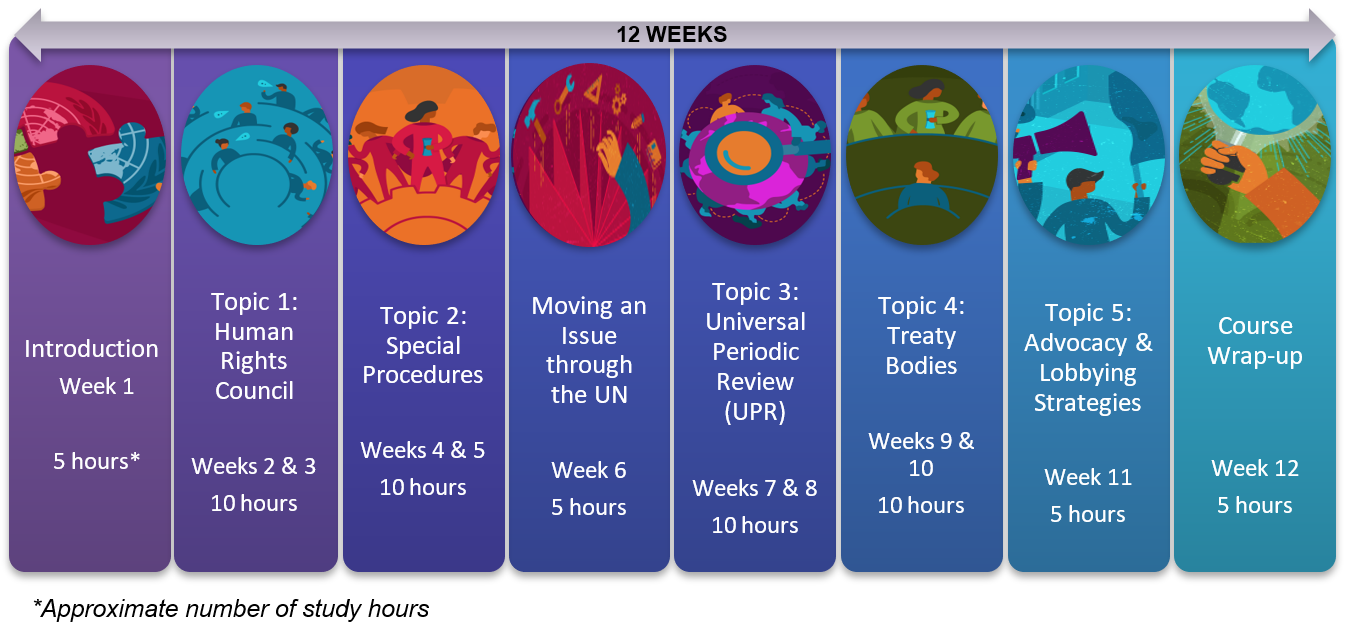
If you are you a human rights defender keen to use the UN you would do well to apply to the 2022 edition of ISHR’s flagship training the Human Rights Defender Advocacy Programme (HRDAP).
The course equips human rights defenders with the knowledge and skills to integrate the UN human rights system into their existing work at the national level in a strategic manner, and provides an opportunity for participants to prepare for and engage in lobbying and advocacy activities at the UN with the aim to effect change back home.
Applications for HRDAP22 will remain open until Monday 3 January 2022.
The 12-week course allows defenders to continue their vital work on the ground, while diving into the inner workings of each key UN human rights mechanism, and gaining first-hand experience from advocates and UN staff on how civil society can strategically engage in the international human rights space.
By participating in HRDAP, defenders:
Gain knowledge and tools, which they can use to ensure their voice is central in international human rights decision-making
Explore and compare the benefits of engagement with the Human Rights Council, the Special Procedures, the OHCHR, the UPR and the Treaty Bodies, and examine how they can use them to bolster their work at the national level
Develop strategies and lobbying techniques to increase the potential of their national and regional advocacy work
During the last training, 19 human rights defenders from 17 countries took part in the programme. At the end of the training, 100% of those surveyed were satisfied with the programme, with 82% indicating they were “very satisfied”. Find out more about what they learnt here.
This programme is directed at experienced human rights defenders in non-governmental organisations, with existing advocacy experience at the national level and some prior knowledge of the international human rights system. ISHR supports, and promotes solidarity with and between, defenders working in the following areas or contexts, which we recognise as intersectional and interdependent:
Equality, dignity and non-discrimination
Environmental justice and sustainability
International accountability for the repression of human rights defenders
On 11 October 2021 ReliefWeb published the open letter signed by 166 civil society organizations and individuals calling upon world leaders to put human rights at the centre of environmental policy (for signatories see link below).
“Respecting and protecting human rights and protecting the environment are inextricably linked. Yet while Heads of State from 88 countries have called to end siloed thinking in the Leaders Pledge for Nature, environmental policy-making still too often excludes or sidelines human rights.
Today we, the undersigned — a broad range of indigenous peoples’ organisations, civil society groups — including human rights, land and environmental defender organisations — academics and [UN] experts from the Global South and North — call on the world’s leaders to bring together human rights, environmental and climate in policy-making in order to secure a just, equitable and ecologically healthy world for all.
The reciprocal relationship between nature and people has existed since time immemorial, but it is now unbalanced. There are countless examples in all parts of the world of how forests, savannas, fresh water sources, oceans, and even the air itself, are being privatised, polluted and destroyed by industries such as agriculture, timber, pulp and paper, mining and oil and gas extraction. These and many other industries not only wreak destruction on Mother Earth, but they also have direct and devastating impacts on human rights. Indigenous peoples and local communities living in close proximity to the production, extraction and processing of raw materials suffer dispossession of their lands, impoverishment, deterioration of their health, and destructive impacts on their culture, among many other abuses. In turn, human rights, land and environmental defenders who seek to prevent these violations suffer threats, criminalisation and violent attacks, and increasingly, killings.
The costs of both environmental destruction and measures to address this often fall disproportionately on those already in precarious positions — such as indigenous peoples, afro-descendants, local communities, women, children and youths, and poorly-paid workers, particularly in the Global South but also in the Global North — while the profits of the largest and most environmentally-damaging industries, and the wealth of their owners and financers, continues to grow. It is unforgivable that polluting industries profit at the expense of the health and human rights of marginalised communities. And, ultimately, this environmental destruction has indirect human rights impacts on us all.
Just this month the Human Rights Council adopted a resolution recognising the Right to a Healthy Environment. Yet while there is evidence that the protection of human rights can lead to better environmental outcomes, calls for recognition of the holistic and indivisible nature of human rights and the environment often go unheeded in global, regional and national environmental and climate policy forums.
This must change. As a global community we face multiple, intersecting crises: increasing human rights abuses and environmental harms by companies, land grabs, the loss of food and water sovereignty, increasing poverty and inequality, increased attacks and killings of defenders, climate change-induced disasters and migration, the diminishing health of the oceans and critical biodiversity loss. Resolving these crises demands a holistic approach to environmental policy that embeds human rights and tackles systemic problems, including historically rooted social injustice, ecological destruction, state capture by corporations, corruption and impunity, as well as and social and economic inequality.
We urge world leaders to ensure that all policymaking related to the environment — including the climate and biodiversity crises, ownership and use of land, water and resources, ecosystem degradation, corporate accountability and trade, among others — address human rights and the environment in an integrated manner. This would help to catalyse the transformative action that is urgently required.
Respect for, protection, promotion and fulfilment of human rights, and the protection of those who defend them, must be an essential and non-negotiable part of measures adopted in upcoming negotiations at the UN Convention of Biological Diversity, COP15, and the UN Framework Convention on Climate Change, COP26. Human rights must also be central to regional and national level climate and environmental policies, such as proposed deforestation legislation in the UK, the EU and the USA, which must be further strengthened.
The time to act is now: we call on you to unite human rights, climate and the environment once and for all. In doing so, you can help us and our future generations to thrive by living in harmony with nature. And in doing so, you can affirm that both nature and people have intrinsic worth and that governments are serious in living up to their duty both to protect Mother Earth and to respect, protect and fulfil human rights.”