Today the foreign affairs committee voted its annual report on Turkey, drafted by Socialists & Democrats MEP Kati Piri, in which European Parliamentarians called on the member states to formally suspend the accession negotiation with Ankara, due to a stark regression in the area of the rule of law and human rights in the country during the last few years. Kati Piri is also the European Parliament’s rapporteur on Turkey.
The latest European Parliament report on Turkey set a clear red line: if the constitutional reform package, including the expansion of the president’s powers were to be implemented unchanged, then Turkey’s EU accession talks should be suspended without delay. The procedure for suspending EU accession negotiations, sets out in Article 5 of the Negotiating Framework for Turkey stipulates that “in the case of a serious and persistent breach in Turkey of the principles of liberty, democracy, respect for human rights and fundamental freedoms and the rule of law on which the Union is founded, the Commission will, on its own initiative or on the request of one third of the Member States, recommend the suspension of negotiations and propose the conditions for eventual resumption.”
“The rapid decline of the rule of law in Turkey, is also reflected in the European Parliament’s position on the accession process. With all the flagrant human rights violations, the lack of judicial independence and the implementation of a new constitution missing crucial checks and balances, it makes no sense to continue talks on EU membership with the current government. When a candidate country crosses key red lines, there should also be political consequences,” said Kati Piri.
(note that the report also expresses the will to keep bridges with the citizens of Turkey and continue to provide support to civil society)
On 6 February 2019 is became known that a public prosecutor has sought the maximum prison sentence of 15 years for each of 33 lawyers on charges of membership in a terrorist organization due to their alleged links to the faith-based civic Gülen movement, the T24 news website reported on Tuesday. On Tuesday the trial of 53 defendants, 52 of whom are lawyers, continued at the Ankara 22nd High Criminal Court.
[Following the coup attempt, the Turkish government launched a massive crackdown as a result of which more than 150,000 people were removed from state jobs while in excess of 50,000 others were jailed and some 600,000 people have been investigated on allegations of terrorism.]
According to data compiled by independent monitoring site The Arrested Lawyers’ Initiative, 555 lawyers have been arrested since July 15, 2016 and 1,546 were under prosecution as of January 24, 2019. Two hundred sixteen lawyers have been sentenced to a total of 1,361 years in prison. Some of the arrested lawyers were reportedly subjected to torture and ill treatment. Fourteen of the detained or arrested lawyers are presidents or former presidents of provincial bar associations.
And it is not limited to lawyers. A Turkish court sentenced a judge who previously won an award for human rights to 10 years in prison over links to the network Ankara says orchestrated an attempted coup in 2016, the state-owned Anadolu news agency said on Friday. Murat Arslan, who has been detained for 22 months, was convicted of membership in an armed terrorist organisation, after prosecutors charged him with use of the encrypted messaging app ByLock, Anadolu said. Arslan has denied the charges and said any evidence that he had used the app was “fabricated”, Anadolu said.
The government says the outlawed app was widely used by followers of the U.S.-based cleric Fethullah Gulen, whom it blames for the attempted coup that saw rogue soldiers commandeer tanks and aircraft, attacking parliament and killing some 250 unarmed civilians. The Council of Europe human rights body in 2017 gave Arslan, who was detained at the time, the Vaclav Havel Human Rights Prize, a decision that prompted Turkey to say it would cut back its funding to the body. [https://humanrightsdefenders.blog/2017/10/18/turkey-angry-after-pace-havel-prize-is-awarded-to-jailed-judge/]
Korur Fincancı was one of more than 1,000 Turkish academics who signed a 2016 petition calling for peace after a two-year ceasefire between the government and the Kurdistan Workers’ Party (PKK) broke down and security forces used tanks and artillery to crush attempts by the militants to seize towns and cities across the mainly Kurdish southeast. Now the head of Turkey’s Human Rights Foundation has been sentenced to 30 months in prison for signing the petition and for her contribution to a report prepared by her foundation on the Turkish military’s activities in the southeastern town of Cizre.
……The figures show an alarming trend that Korur Fincancı said pointed to systematic rights violations. “In the year 2017, more than 5,000 people across Turkey applied for legal aid from the Human Rights Association on the basis that they’d been tortured. More than 500 applied to representatives of the Human Rights Foundation of Turkey to be diagnosed … for torture,” she said. The number of applicants remained high in 2018, with more than 2,600 people who said they had been tortured applying for legal aid and 558 applying for treatment in the first 11 months of the year.
….Korur Fincancı she said the fight against torture must extend beyong medical treatment to preventative measures, and that means educating the public.
…Meanwhile, security forces have opened 26,000 cases against suspects they say resisted arrest. “After police launch cases against them, people become hesitant to open (torture) cases … or the withdraw them. Thus the judiciary protects the police, the use of torture with legal repercussions becomes more entrenched, and the police believe they are doing their duty under this protection,” said the doctor.
With the introduction of emergency rule after the coup, the purge and arrest of public officials has come to be counted as part of a struggle against terrorism, providing another layer of protection for security officers who commit torture and other infractions. “And this arrangement applies to civilians – it’s the same as telling security officers we are in a state of civil war and their actions will be ignored,” Korur Fincancı said. “And that’s a very dangerous situation.”
State of emergency
Anyway, ending the state of emergency in Turkey has not ended repressive rule under President Recep Tayyip Erdoğan, Human Rights Watch observed on 17 January 2019 in its World Report 2019. Prolonged and arbitrary jailing of critics on bogus terrorism charges has become the norm in Turkey. Turkey’s parliamentary and presidential elections in June 2018 took place in a climate of media censorship and with some members of parliament and one presidential candidate jailed. Erdogan’s ruling Justice and Development Party (AKP) retained control of a weakened parliament through a coalition. And with the election, in which Erdoğan was reelected, Turkey’s presidential system of governance, approved in a 2017 constitutional referendum, entered fully into force. “Any hope that the end of the state of emergency six month ago would mark a return to respect for human rights has been dashed,” said Hugh Williamson, Europe and Central Asia director at Human Rights Watch. “The Erdoğan government’s hounding of its critics and opponents has dismantled Turkey’s rule of law framework and turned justice on its head.”
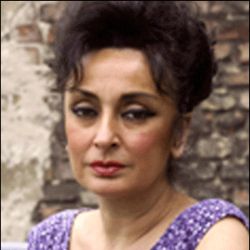
Turkey‘s anti-democratic mentality has not changed since its foundation, but it has never been as oppressive as today, said Turkish human rights defender Eren Keskin. Over the years, Keskin played a vital role in strengthening civil society awareness in Turkey. She became involved with the Human Rights Association (IHD) three years after its 1986 founding and headed its Istanbul branch for years. She has been arrested and imprisoned numerous times, accused of terrorist ties for defending Kurdish rights, and won several awards including the Aachen Peace Award, the Theodore Haecker Prize, the 2018 Helsinki Civil Society Award, the 2018 Anna Lindh Prize, and the 2017 Hrant Dink Award. A new travel ban is likely to stop her from coming to the Martin Ennals Award ceremony on 13 February 2019.
“Turkey’s undemocratic mentality has not changed since its foundation,” said Keskin. “There is no change in the mind or understanding of the state. I have been part of the struggle for human rights for nearly 30 years. I have not experienced a period in which freedom of thought and freedom of expression have been contravened this much. Turkey is more oppressive today than ever.
Keskin said she had been brought before the courts more than 100 times and convicted on numerous occasions.
“I see the struggle for the defence of human rights as respect for those who have died. It is out of respect for them that I am part of the struggle for human rights,” she said. “We experienced a lot of pressure, but our friends were killed. They were killed fighting for human dignity. I am lucky to be alive…I was assaulted twice with firearms, imprisoned and threatened with death, but never gave up.”
…Keskin became the editor-in-chief of the Kurdish Özgür Gündem newspaper from 2013 to 2016 as part of a solidarity campaign after Turkish authorities arrested its journalists. She was prosecuted for a number of articles that appeared in the newspaper as, under Turkish law, editors-in-chief can be indicted when the authors cannot be held to account. Keskin said 143 criminal cases had been brought against her for her time working at Özgür Gündem. “I have already been sentenced to 12-and-a-half years in prison, a 450,000 lira ($85,000) fine and travel ban,” she said. A court in October lifted the ban on Keskin travelling abroad, but last week she realised she had been given another one when authorities refused to issue her a passport. She had been nominated for the Martin Ennals Award for Human Rights Defenders and was planning to attend the award ceremony in Switzerland. [see: https://humanrightsdefenders.blog/2018/10/24/breaking-news-ennals-award-announces-its-3-finalists-for-2019/]
“People ask, ‘How do you live? How do you endure it?’” Keskin said. “For me, the job we do is a way of life and I have never regretted it.”
Earlier on Thursday, Turkish Foreign Minister Mevlut Cavusoglu said it was time for an international investigation and that President Erdogan had ordered preparations to be made. “I will be heading an independent international inquiry into the killing of Saudi journalist Mr. Jamal Khashoggi, commencing with a visit to Turkey from 28 January to 3 February 2019,” UN Special Rapporteur on extrajudicial, summary or arbitrary executions Agnes Callamard said in an email reply to Reuters in Geneva.
“My findings and recommendations will be reported to the U.N. Human Rights Council at the June 2019 session,” she said.
[Callamard, a French academic who is director of the Columbia Global Freedom of Expression initiative at Columbia University in New York, reports to the U.N. Human Rights Council in Geneva and has a global mandate to investigate executions. See also: https://humanrightsdefenders.blog/tag/agnes-callamard/]
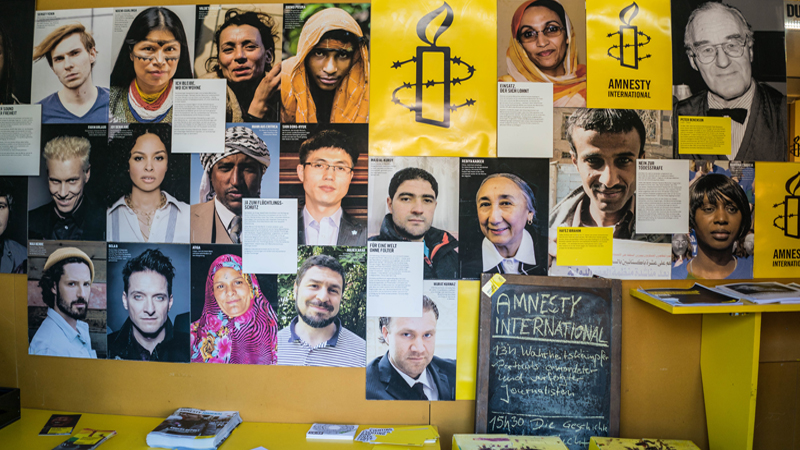
The German NGO Wahrheitskämper (TruthFighters) and Amnesty International set up a bus stall at the International Frankfurt book fair every year to educate people about threats to freedom of expression. Different sketch artists pay tribute to courageous human rights defenders.
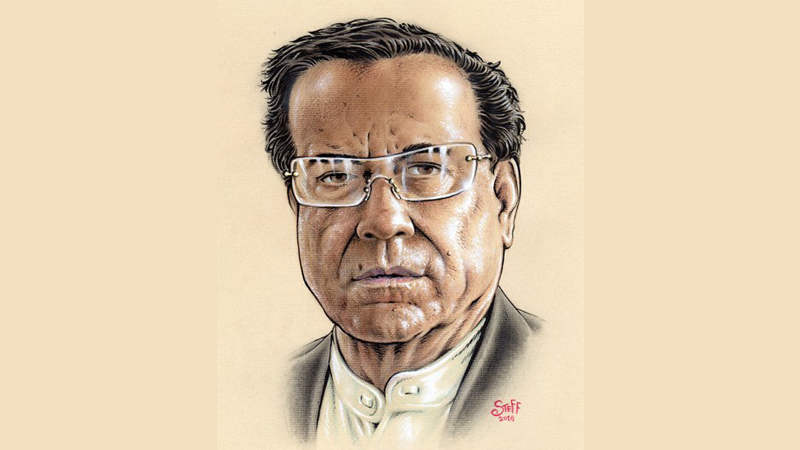
In 2018 the stall included portraits of Shaheed Salmaan Taseer, the late publisher of Daily Times of Pakistan, made by the German artist Steff Murschetz. Illustrator from Oberursel Christine Krahe painted the portrait of the Turkish author Ahmet Altan, who is imprisoned since 2016. Susanne Köhler, a Frankfurt based illustrator and initiator of the memorial project Wahrheitskämpfer – Fighters for Truth – drew the portrait of the Journalist Kyaw Soe Oo who is imprisoned in Myanmar. Christian Scharfenberg also made a portrait of slain US journalist John McNamara, who was killed in a mass shooting at The Capital Gazette newspaper in June 2018. Deniz Yucel was imprisoned by Turkish government in February 2017 for almost a year while serving as a correspondent for Germany’s Die WeltN24 media group in Turkey.
Artist Steff Murschetz from U-Comix-Magazin drew a sketch of Salmaan Taseer Shaheed
Speaking to Daily Times, Steff Murschetz said that Salmaan Taseer’s sketch was his way of conveying his love and respect for the visionary man who gave up his life while protecting Pakistani society from intolerance and injustice. Known German lawyer of Pakistani origin Advocate Muzaffar Chaudhry also joined the Amnesty International event and told Daily Times that the Supreme Court’s decision in Aasia Bibi’s case was a recognition of Salmaan Taseer’s clarity of vision.
Şebnem Korur Fincancı, a Turkish human rights defender and forensic doctor, was on Friday awarded the Hessian Peace Prize, given each year to an individual who rendered outstanding service to furthering mutual understanding among countries and peace. Korur Fincancı was granted the award for her efforts for the rehabilitation of torture victims as well as for the research and documentation of torture, a statement from the award committee said.
Korur Fincancı is chairwoman of the Human Rights Foundation of Turkey (TİHV), one of the first human rights organizations established in the country following the 1980 military coup. She is also a leading international expert on torture documentation and a former member of the executive committee of the International Rehabilitation Council for Torture Victims (IRCT). She is also co-writer of “Istanbul Protocol,” a universal work on standardizing investigation and documentation of traces of torture.
Turkish authorities on June 20, 2016, arrested her on charges of disseminating propaganda for a terrorist organization, along with the Reporters Without Borders (RSF) representative Erol Önderoğlu and author Ahmet Nesin. The three had joined a solidarity campaign defending the editorial independence of Özgür Gündem, a paper aligned with Turkey’s Kurdish minority and frequently critical of the Turkish government. Korur Fincancı and Önderoğlu were released after 10 days. [https://humanrightsdefenders.blog/2016/07/03/two-of-three-turkish-human-rights-defenders-released-awaiting-trial/]
Korur Fincancı was earlier awarded the “Human Rights Prize” of the Physicians for Human Rights (PHR) in 2017 and the Hrant Dink Prize in 2014.
The following three Human Rights Defenders have been selected as Finalists for the 2019 Martin Ennals Award:
Eren Keskin (Turkey)
Eren Keskin is a lawyer and human rights activist. For more than thirty years, she has struggled for fundamental rights and freedoms in Turkey, especially for the Kurds, women and the LGBTI+ community.Within the context of the worsening human rights situation in Turkey, Keskin is once again at the centre of intimidation attempts. As part of a solidarity campaign to support the Özgür Gündem newspaper, Keskin held the title of “editor-in-chief” of the newspaper from 2013 to 2016, when it was closed by the authorities.On 30 March 2018, she was convicted and sentenced to 12.5 years in jail for having published articles deemed to have “degraded” the Turkish nation and “insulted” the Turkish president. She is currently free while the case is appealed. She stated: “To defend human rights is not easy in our territory. I am being prosecuted with 143 charges for my solidarity with an opposition newspaper in the context of freedom of expression. International awards and solidarity have “protective” characteristics and reassure those of us in repressive societies. It also it gives us a morale boost and helps our motivation for the struggle. Thank you for not forgetting us. Your solidarity and protection mean so much. [see also: https://humanrightsdefenders.blog/2018/05/26/eren-keskin-human-rights-defender-from-turkey-receives-2018-anna-lindh-prize/]
Marino Cordoba Berrio (Colombia)
A member of the Afro-Colombian ethnic group, he led his community as they faced the loss of their land to powerful commercial interests, notably in logging and mining. After successfully working towards the legal recognition of their community’s land rights, much of his community was driven out by force in 1996. Constant threats and attacks drove him to seek asylum in the United States in 2002 where he built a network of supporters. He returned to Colombia in 2012 and worked to ensure a role for ethnic communities in the peace agreement, notably as a member of “Ethnic Commission for Peace and the Defense of Territorial Rights ” that provides input as the peace agreement is implemented. He has regularly received death threats and is under constant armed guard. He stated, “We have historically been excluded politically, socially and economically, also affected by war, providing measures of overcoming is a primary responsibility of the State. I believe in the power of my mind and my hands as a determinant to do what is right, therefore the justice that is applied to my people is crucial for their survival. It is also in our hands to promote those changes so this effort involves exposing my own life.”
Abdul Aziz Muhamat (Papua New Guinea/Australia)
Abdul Aziz Muhamat (Aziz), from Sudan, is a compelling and tireless advocate for refugee rights. Seeking asylum,he has been held in Australian immigration detention on Manus Island, Papua New Guinea since October 2013, when his boat was intercepted by the Australian authorities. Aziz has seen friends die. He has been shot at by local police. He was also sent to a local prison for refusing to eat in protest at the cruelty and suffering being inflicted on others. Aziz is one of the primary public voices among the men held on Manus Island. Despite the isolated location, he has exposed the harsh conditions there through podcasts and media interviews. He has paid a price for this as he is seen as a “ring leader” by both the PNG and Australian authorities. He stated: “My work to expose this cruel system helps preserve my self-respect and inherent human dignity. It helps me fight for the rights of every refugee around the universe, which I’ll do until my last breath. It is not always easy when living under conditions of fear and persecution. Yet even under the most crushing state machinery, courage rises up again and again, for fear is not the natural state and I will do everything to keep going.”
The Martin Ennals Award for Human Rights Defenders (MEA) is a unique collaboration among ten of the world’s leading human rights organizations to give protection to human rights defenders worldwide:
The nominees for the 2018 Sakharov Prize for Freedom of Thoughthave been announced on 27 September (Nominations can be made by political groups and groups of at least 40 MEPs – remarkable is the more active role played by right-wing groups in the EP, see the last two nominees):
Oleg Sentsov, a Ukrainian film director, convicted to 20 years in prison for “plotting terrorist acts” against the Russian “de facto” rule in Crimea. Amnesty International has described the court process as “an unfair trial before a military court”. He has become a symbol for the approximately 70 Ukrainian citizens illegally arrested and convicted to long prison sentences by the Russian occupation forces in the Crimean peninsula. He has been on hunger strike since May 2018. Nominated by EPP.
NGOs protecting human rights and saving migrant lives across the Mediterranean Sea. Since 2015, NGOs from across the EU have launched search and rescue operations in the Mediterranean to try and save the lives of refugees struggling to reach EU shores. The NGOs are: Boat Refugee Foundation, Jugend Rettet, Lifeline Rescue Boat, Médecins Sans Frontières International, MOAS, Proactiva Open Arms, PROEM-AID, Save the Children, Sea Eye, Sea Watch, and SOS Mediterranée. Nominated by S&D and the Greens/EFA.
Seyran Ateş, a German lawyer of Turkish origin, fighting against political and religious extremism and the oppression of women. She was behind the establishment of the Ibn Rushd Goethe Mosque in Berlin, where men and women can pray together and has received numerous death threats and has to have round the clock protection. She was nominated by ECR, Hans-Olaf Henkel and 40 other MEPs for her “commitment to the protection of human rights and her devotion to a modern and open Islam”.
Caesaris the code name of a former Syrian military photographer who smuggled more than 55,000 pictures out of Syria exposing the war atrocities. Their authenticity is confirmed by the Human Rights Watch. Caesar’s photographs will play a vital role in building criminal and civil cases against those responsible for the crimes documented. Nominated by ALDE.
Nasser Zefzafiis the leader of Hirak, a mass protest movement in the Rif region, Morocco, fighting corruption, oppression and abuse of power. He was arrested in May 2017 and sentenced to 20 years in prison for “conspiracy against the security of the state”. On August 2018, King Mohammed VI pardoned 188 Hirak activists, but Zefzafi was not among them. At the end of August he went on hunger strike to denounce his conditions of detention. Nominated by GUE, Kati Piri, Judith Sargentini, Marie-Christine Vergiat and 39 other MEPs for his fight “against oppression and abuse of power”.
Dewayne Johnson is a former groundskeeper from the US who has just won a landmark case against Monsanto. He was the first person to take Monsanto to trial over allegations that the chemicals sold by the company under the herbicide brand Roundup cause cancer. At the end of the process Dewayne had just months to live, yet he took the stand and described his pain and suffering. Nominated by EFDD as an inspiration “for those afraid to go to court and defend their rights”.
AfriForum is an NGO that aims to protect the rights of minorities in South Africa, with a specific focus on the rights of Afrikaners. It focuses on raising national and international awareness about farm attacks, murders and the expropriation of farm land without compensation, which threatens property rights, food supply and food security. Nominated by ENF.
Mary Wagner is a Canadian activist who has been arrested on multiple occasions and accused of “disturbing the business” of an abortion clinic in Toronto. She remained in prison for not complying with a probation order to stay away from abortion clinics. She was nominated by Marek Jurek and 41 other MEPs for her work “safeguarding the rights of those who cannot speak for themselves”.
The Swedish-based Anna Lindh Memorial Fundhas named pro-Kurdish human rights lawyer from Turkey Eren Keskin as the recipient of the 2018 Anna Lindh Prize. “She has worked tirelessly to help … girls and women as well as LGTBQ people and [displaced] Syrians in Turkey,” said Lena Hjelm-Wallén, chairman of the memorial fund’s board. “Even when her work led to imprisonment, she still stood up for human rights without regard to political or religious background. Keskin’s brave voice is needed today more than ever and is a work entirely in Anna Lindh’s spirit.
The prize will be awarded at a ceremony in Stockholm on June 19.
The prize is awarded in memory of slain Swedish politician Anna Lindh since 2004 and aims “to encourage primarily women and youth who, in Anna Lindh’s spirit, show the courage to work against indifference, prejudice, oppression and injustice in order to stimulate a society where human rights are respected.” See also: https://humanrightsdefenders.blog/2014/10/27/the-anna-lindh-lecture-2014-focused-on-human-rights-defenders/
“The defenders we’re honouring today work in some of the most dangerous areas of the world, sacrificing their own security to peacefully demand justice and human rights for their communities,” said Andrew Anderson, Executive Director of Front Line Defenders, as he announced the winners in Dublin.
—-
Nurcan Baysal, Turkey – Regional Winner for Europe & Central Asia & Global Laureate
Nurcan is a Kurdish journalist and human rights defender based in Diyarbakir. When the government launched a military offensive in the south-east in 2016, Nurcan spent months visiting Kurdish villages under bombardment, documenting human rights violations, and stopping to help families who’d lost everything in the conflict. Her writings are known for their critical focus on voice women living under the bombardment. When the authorities launched a military operation in Afrin, Nurcan took to social media to demand peace and condemn the violent assault. She was detained for speaking against the violence, and although later released she now faces up to 3 years in jail in a separate case related to her writing. Nurcan, according to authorities’ absurd claims, had “spread propaganda for armed terrorist organizations … and a call for provocative actions.” In addition to her reporting, Nurcan has also co-founded several NGOs, set up a camp to help Yazidi women fleeing the Islamic State, and been a key voice in countless reconciliation programs in the region. [see also: http://bianet.org/english/human-rights/197288-kurdish-journalist-baysal-wins-frontline-defenders-human-rights-prize]
Soni Sori, India – Regional Winner for Asia
Soni Sori is an indigenous and women’s rights defender in the militarised Bastar region of Chattisghar, India, where state-backed paramilitary forces are waging a violent campaign against local Adivasi tribes in the name of combating an armed Maoist insurgency. Soni documents and advocates against violence perpetrated by the paramilitary and police forces, which includes razing villages, burning homes, raping local women, and torturing and sexually assaulting tribes people detained without cause. Soni has also defended a number of educational centres from destruction by Maoist groups. In retaliation for her work, security forces detained and tortured Soni, pushing stones inside of her body and assaulting her for hours. Years later, men attacked her with acid and threatened to do the same to her daughter if she did not cease her advocacy on behalf of tribeswomen raped by the security forces. She has refused to stop her work, and continues to travel into the Maoist regions to speak with survivors of the ongoing conflict. [see also: https://feminisminindia.com/2018/05/18/soni-sori-wins-front-line-defenders-award/] and https://humanrightsdefenders.blog/2016/02/23/human-rights-defenders-in-india-democracy-is-not-enough/
Peaceful Resistance of the Micro-Region of Ixquisis, Guatemala – Regional Winner for the Americas
La Resistencia Pacífica de la Microregión de Ixquisis formed in response to grave rights violations committed in the name of economic advancement in Guatemala. The government has authorised destructive mining and hydroelectric mega-projects in the region despite the widespread opposite from the 59 villages and 7 communities in the municipality. HRDs in the Peaceful Resistance risk their lives to defend the territory. In 2016 alone, there were more than 75 reported attacks against HRDs in the Peaceful Resistance including killings, shootings, harassment, and defamation campaigns.
LUCHA, DRC – Regional Winner for Africa
LUCHA is a non-partisan youth movement formed in eastern Democratic Republic of Congo that struggles against chronic corruption and impunity in the DRC. Initially focused on
local issues like access to drinking water, electricity, and youth unemployment, in just 6 years the movement has developed into an extensive national-level network of powerful social organisers. Peaceful protests and demonstrations led by LUCHA are routinely attacked by authorities. In October 2017, 5 young protests were killed during a LUCHA-organised demonstration, and many of their members and leaders having been arrested and detained during peaceful assemblies. The Congolese national intelligence agency has detained several members, who have endured physical and psychological abuse in detention.
Hassan Bouras – Regional Winner for the Middle East & North Africa
Hassan Bouras is a journalist, blogger, leading member of the Algerian League of Human Rights, and founding member of the Rejection Front, a coalition against fracking to extract shale gas in Algeria. His reporting on both corruption and torture in Algeria spans more than two decades and because of this work he has been repeatedly targeted by Algerian authorities. He has continued his writing and advocacy despite years of judicial harassment, arbitrary detentions, violent raids on his home, and imprisonment.