On 29 April 2025 (last year) Amnesty International Indonesia raised concerns over the persistent violence and intimidation targeting human rights defenders in the country, recording at least 123 cases involving physical assaults, digital attacks, threats, and other retaliatory actions against 288 individuals throughout 2024.
Usman Hamid, Executive Director of Amnesty International Indonesia, attributed the frequency of such incidents to a lack of strong legal safeguards. “This makes human rights defenders vulnerable to threats and intimidation,” Usman said.
He added that the absence of robust legal frameworks also results in weak law enforcement, with only a few perpetrators of violence against human rights defenders in 2024 being brought to justice. Among the cases highlighted was the shooting of lawyer and human rights advocate Yan Christian Warinussy in Manokwari, West Papua, on July 17, 2024, after attending a corruption trial. [see https://www.hrw.org/news/2024/07/25/prominent-rights-lawyer-shot-west-papua-indonesia] “As of the end of the year, there has been no progress known in the police investigation,” Usman stated.
It was not until February 2025 that police arrested a suspect, ZT, in connection with the shooting. The arrest took place at a residence in Manokwari Regency and was carried out by the Manokwari City Police Special Team. ZT’s testimony led investigators to identify four additional suspects, including the alleged mastermind, OU, who is still at large. According to Manokwari City Police Chief Commissioner Rivadin B. Simangunsong, the attack on Yan was linked to a separate legal case: the murder of Yahya Sayori, for which Yan had been providing legal assistance. “It is motivated by another issue currently being processed in court, namely the murder case of the late Yahya Sayori, who was accompanied by lawyer Yan Christian Warinussy,” said Rivadin.
Then on 6 March 2026 came the good news that an Indonesian court acquitted four other activists after judges find no link to protest violence, prompting renewed scrutiny of policing and restrictions on civic space.
Responding to the acquittal of four activists – Delpedro Marhaen, Muzaffar Salim, Syahdan Husein and dan Khariq Anhar – accused by the authorities of inciting people to commit violent acts during the August 2025 protests, Usman Hamid, Amnesty International Indonesia’s Executive Director, said: “This brings new hope amid an creasingly shrinking civic space in Indonesia. The acquittal sends a clear message to law enforcement authorities that they should stop criminalising human rights defenders and anyone who peacefully exercises their right to protest. This is a significant victory for justice and human rights in Indonesia.
So maybe there will be progress also on the case of Yan Christian Warinussy ?
Malta is still struggling to adequately protect human rights defenders, including journalists, according to a new OSCE review published on 2 September 2025.
While some progress has been noted, the report warns that legal pressure, rhetoric used and a lack of meaningful reforms continue to erode fundamental freedoms. The assessment by the OSCE’s Office for Democratic Institutions and Human Rights (ODIHR) follows a fact-finding mission to Malta in March 2023.
ODIHR noted “concerning instances of disparaging rhetoric and smearing remarks used by political actors, including politicians and other persons of authority” in relation to activists in various areas and journalists Those working on corruption, migration, environmental issues, and sexual and reproductive rights were identified as frequent targets. Interviewees described harassment, threats and intimidation, often extending to their families.
Women activists reported sexist abuse, including being spat on or confronted physically.
Interviewees told ODIHR that their work was often portrayed as partisan political activity. The assessment also noted attempts to damage reputations, harm employment prospects and label defenders as enemies, traitors or political opponents.
The report connects this hostile environment to the 2021 public inquiry into journalist Daphne Caruana Galizia’s assassination, which found that state inaction and vilification of journalists fostered a “climate of impunity.” Two years later, ODIHR says many recommendations remain unfulfilled, particularly on media freedom and journalist safety.
The OSCE heard accounts of online trolling, social media threats, spoofing campaigns, threatening phone calls, and verbal abuse of family members.
ODIHR also found that Maltese journalists continue to receive threatening letters from local and international law firms, sometimes prompting article removals due to fear of high legal costs.
Although defamation was decriminalised in 2018, gaps in the law remain, and proposed anti-SLAPP reforms have been criticised as inadequate.
Freedom of expression and access to information also face obstacles. Journalists spoke of costly and lengthy efforts to secure public records, while whistle-blower protections are seen as weak due to fears of reprisals.
The report calls for a public review of Malta’s Freedom of Information Act, the release of a government-commissioned evaluation, and new legislative proposals to improve transparency and accountability.
Civil society activists also described intimidation around protests, including court rulings against authorities for repeatedly removing banners and memorials related to Caruana Galizia.
ODIHR acknowledged political support for LGBTI rights, with NGOs in this sector receiving strong public backing and engagement from officials. Freedom of assembly was generally upheld, and some NGOs received benefits through tax incentives and secondments. Nonetheless, ODIHR concludes that Malta must urgently rebuild trust and ensure a safer environment for rights defenders.
Key recommendations include public recognition of their work, stronger police protection protocols, robust anti-SLAPP legislation, improved transparency measures, and genuine consultation on media reforms. “Baseless lawsuits, threats and smear campaigns not only endanger individuals but weaken democracy itself,” the report warns.
ODIHR said it is ready to support Malta in implementing reforms but emphasised that political commitment is vital.
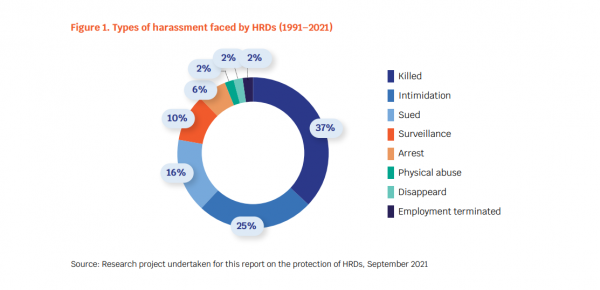
A new UN report claims that, between 2001 and 2021, 30% of outspoken Thai activists experienced violence resulting in a loss of life, by the businesses against which they had campaigned. Released by the United Nations Development Programme (UNDP), on 11 February 2024, the report says that businesses have used legal action, intimidation and violence to silence human rights defenders.
The categories of abuse faced by human rights defenders, per the report.
Activists, affected villagers and attorneys are among the groups considered to be human rights defenders in the report. Over the last 25 years, businesses filed 109 lawsuits against human rights defenders. 68.9% of these were by those with stakes in the mining, livestock and energy industries.
One anonymous interviewee said the lawsuits are used as strategic roadblocks and that they found themselves “going to court approximately once a month, incurring expenses and losing time.” Outside of the judicial system, human rights defenders were reportedly spied upon, or threatened with violence and job loss.
“After making a turn in my car, someone fired shots at me,” claims another anonymous interviewee, adding “I was in the orchard, a single home in the orchard. It was dark. Five shots were fired. I did not report the case, thinking it was an act of intimidation.”
4% of human rights defenders have died or been forcibly disappeared in the 25 years covered by the report, published on February 12th, the International Day for the Prevention of Violent Extremism.
In 2015, Thailand pledged to work towards the fulfilment of the UN’s 17 Sustainable Development Goals (SDGs), alongside other members of the organisation. SDG 16, one of the goals, asks countries to “uphold peace, justice and strong institutions,” and another, SDG 10, aims for “reduced inequalities”.
The report recommends that government and relevant agencies recognize the status and importance of human rights defenders and develop measures that protect them from violence and harassment.
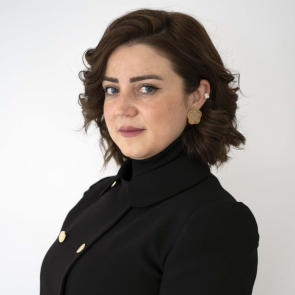
On 26 July 2023 Front Line Defenders stated that it stands in solidarity with Hiba Ezzideen Al-Hajji, and calls on the de facto authorities in Idlib to put an end to the targeting of the Syrian woman human rights defender.
Despite the efforts of human rights organisations, women human rights defenders in Syria continue to face many forms of restrictions and threats. In this context, Hiba Ezzideen Al-Hajji, a woman human rights defender and CEO of the feminist organisation Equity and Empowerment, has recently been targeted by a malicious online defamation campaign because of her work on women’s rights and democracy in Syria. On 4 July 2023, Hiba Ezzideen Al-Hajji received death threats from unknown individuals who disagreed with her advocacy efforts for “equality and democracy,” asserting that such work went against the teachings of Islam. Subsequently, the Facebook page of her organisation Equity and Empowerment was overwhelmed with hateful comments and threats, further escalating the distressing situation.
Those behind the defamation campaign are believed to be Jihadists operating in Idlib, northwestern Syria, where the woman human rights defender conducts her human rights work. The woman human rights defender has previously reported that these radical groups were responsible for similar threats, indicating a pattern of persecution and harassment against her and other human rights defenders in the area.
The attacks have also manifested in offline harm. On 18 July 2023, a family member of the woman human rights defender was insulted by a stranger who threatened them saying that if Hiba Ezzideen Al-Hajji does not stop her work, one of her family members will be killed. The defamatory narrative against Hiba Ezzideen Al-Hajji aims at inciting further hatred and violence against her, all in an effort to undermine her human rights work.
On 21 July 2023, an imam in the countryside outside of Idlib gave a sermon which mentioned the woman human rights defender Hiba Ezzideen Al-Hajji and the organisation Equity and Empowerment. The sermon called for the organisation to be closed, incorrectly mentioning its links to western states as a means of discrediting its work.
On 2 March 2020, Ahmed Shaheed, the UN Special Rapporteur on freedom of religion or belief declared that they “firmly reject any claim that religious beliefs can be invoked as a legitimate ‘justification’ for violence or discrimination against women or girls.”
The campaign has taken place over various online platforms, including WhatsApp, Facebook, Twitter and Telegram, using fake and verified accounts to post derogatory fake images of the human rights defender along with hateful captions. In addition to this, she has been subjected to death threats, harassment, and incitements against her and her family, along with doxing, deep fakes, threats of rape and sexual slurs.
Front Line Defenders believes that the defamation campaign is directly related to Hiba Ezzideen Al-Hajji’s work in defence of human rights, in particular her work towards the promotion of women’s rights in Syria. Front Line Defenders strongly condemns the defamation campaign against the woman human rights defender Hiba Ezzideen Al-Hajji. It calls on the de facto authorities in Idlib to put an end to the targeting of the woman human rights defender, including the defamation campaign, and demands that Hiba Ezzideen Al-Hajji’s safety and well-being be protected as well as that of all women human rights defenders facing similar threats and attacks in the country.
It finds that Latin American human rights defenders and their organizations face intimidation, harassment, physical attacks, and legislation that criminalizes their work, among other threats.
Latin America was the most dangerous region in the world for human rights defenders during 2020, and according to Defending Latin American Human Rights and Democracy Activists, a new report released today by Freedom House, the ongoing COVID-19 pandemic has only made things worse. Under the guise of enforcing public health measures, governments have deployed authoritarian restrictions to inhibit movement, curtail freedoms of expression and assembly, and implement militarized security policies.
“This is a seminal study that lays the foundation for further areas of inquiry and analysis,” said Gerardo Berthin, vice president of international programs at Freedom House. “The report identifies the main needs of vulnerable activists and human rights defenders in Latin America and highlights major issues that merit regional and national attention.”
The report found that worsening human rights conditions have also spurred unprecedented levels of migration and displacement—including of human rights defenders—across the region. Growing migrant and refugee populations in Latin America have been especially vulnerable in the context of COVID-19, as border closures and lockdowns made living conditions even more precarious and curtailed mobility and access to information and services. See also: https://humanrightsdefenders.blog/2020/07/29/global-witness-2019-worst-year-ever-for-land-rights-and-environmental-defenders/
The democratic landscape in Latin America is discouraging. According to Freedom House’s Freedom in the World2021 report, fewer than 40 percent of the countries in the region are classified as Free. Against this backdrop, the new study provides a baseline review of regional efforts to protect human rights defenders and prodemocracy civil society organizations in Latin America, including through shelter and relocation programs.
Key findings:
Human rights defenders are increasingly being forced into exile in neighbouring countries, and many are unable to continue their work.
The pressure experienced by human rights defenders can push them beyond the limits of physical and psychosocial safety. This can result in some level of trauma, as well as severe psychological symptoms including anxiety, depression, feelings of isolation, and suicidal inclinations. The symptoms have also taken the form of physiological conditions such as high blood pressure and diabetes.
Human rights defenders, especially women and Indigenous people, have sought to rethink “security,” moving away from a military and policing approach toward a more comprehensive and gender-balanced understanding. For example, women human rights defenders are incorporating the body, self-care, and self-awareness when defining security, and examining how these elements can affect other types of security, including the security of the family. For them, security is not just about reacting to a threat; it is also about maintaining economic security, food security, mental or psychological security, and physical health security. Indigenous human rights defenders are proposing to include their perspective in the design of protections for activists, dissidents, journalists, and others. This has begun to shift the focus of some protection mechanisms from the individual toward a more community-based model that accounts for the collective nature of human rights defense.
State-run protection mechanisms are often prescriptive, offering a predetermined menu of services that do not necessarily address the specific needs or risks faced by human rights defenders.
International protection organizations have implemented good practices pertaining to protection and security in general, aided by the expansion of internet access. This has enabled enhanced connection and communication with civil society organizations on the ground, including continuous and more systematic meetings and planning for effective protection.
The report contains two case studies of Venezuelan and Nicaraguan human rights defenders who have been forced into exile in Colombia and Costa Rica, respectively. The cases highlight key forms of individual, collective, and contextual support that would strengthen protection and allow human rights defenders to expand their work while in exile.
Few approaches to protect human rights defenders in Latin America have been evaluated systematically. The need for systematic evaluation is a key recommendation of the report, as such analysis could be used to develop future programs and strategic plans, and would help to identify the potential security risks that human rights defenders may face at home or in exile.
There are still gaps in knowledge about how to best support human rights defenders. However, human rights defenders themselves are driving efforts to share information about effective protection approaches. Thanks to their active involvement in protection strategies, temporary relocation providers, national protection organizations, and human rights defenders are more frequently raising the notion of holistic protection or integral security, which goes beyond physical or traditional security to include services such as medical, psychosocial, and psycho-emotional support.
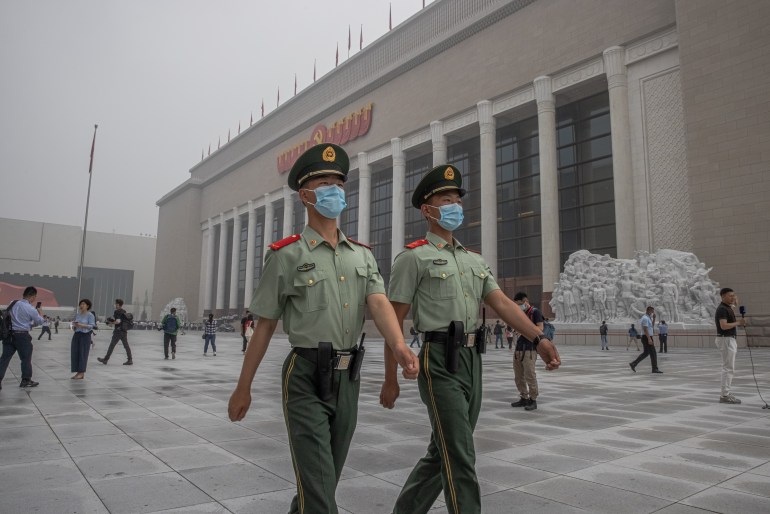
On 18 January 2022 a new report by Safeguard Defenders, inspired Al-Jazeera (Erin Hale) to write about how the Chinese authorities are trying to coerce critics thousands of miles from home into returning.
Wang Jingyou was living in Turkey last year when he found that the 7,000 kilometres (4350 miles) between him and his homeland was no obstacle to an offended Chinese state. Wang had left China after voicing his support on TikTok for Hong Kong’s democracy protests, but after he questioned the outcome of an Indian-Chinese border clash on social media in February 2021, mainland authorities sprung into action.
Within half an hour of the post, police in his hometown of Chongqing had visited his parents. Then they detained them. They said Wang, who is in his early twenties, had “slandered and belittled heroes” while also “picking quarrels”, two charges that in China are often used to silence government critics.
“I’m not in China, I’m in Europe,” Wang told Al Jazeera. “I just said something. I didn’t do anything and they put my (name) on a wanted (list) in the government website, in the official media, also in the Ministry of Foreign Affairs too.”
Wang soon found himself on a months-long journey of harassment that saw him detained while flying through Dubai in April 2021 and threatened with deportation to China – which he narrowly avoided when his story became international news. Wang and his fiancée travelled through several countries before they eventually claimed asylum in the Netherlands, but not before China had cancelled their passports.
“We are in the Netherlands, but they also have many, many ways to find us,” Wang said, alleging that even with a Dutch phone number he continues to receive threatening text messages and phone calls.
Wang’s story may sound dramatic, but it is far from extraordinary in Xi Jinping’s China, according to human rights watchdog Safeguard Defenders, which released a new report on Tuesday on the country’s widespread practice of “involuntary returns”. Such pressure has been used on more than 10,000 alleged Chinese “fugitives” who since 2014 have been coerced into returning from abroad to face detention or prosecution for alleged corruption and other crimes, the report said citing official data.
Methods to “encourage” return can vary from harassment and coercion of friends and family online, to approaching a citizen overseas through Chinese or domestic security agents, and more “irregular” methods like state-sponsored kidnapping, Safeguard Defenders said. In some cases, authorities may freeze family assets or even threaten to remove children from families.
Kidnappings typically occur in countries with a strong relationship with China, like Thailand or Myanmar, but Safeguard Defenders said as many as 10 people may have been kidnapped from among Australia’s large Chinese diaspora in recent years.
The list also includes the 2015 disappearance of five staff members associated with a Hong Kong book store specialising in books banned in China. One bookseller, Gui Minhai, disappeared in Thailand while the others went missing on trips to China, only to later emerge in Chinese detention
China has also made use of Interpol “red notices“, which flag a citizen to police and immigration departments around the world so they can be deported back home, where they face a 99 percent conviction rate if prosecuted, the watchdog said.
“Involuntary returns” have become increasingly common since China first launched an ambitious anti-corruption campaign in 2012, followed by Operation Foxhunt in 2014 to repatriate Communist Party officials facing corruption charges who have fled abroad, and the broader Operation Sky Net in 2015 to target money laundering.
While nominally law-enforcement based, Operation Foxhunt has been described as a “campaign to enforce political loyalty, avoid in-Party factionalism and to more generally instil Party discipline”, Safeguard Defenders said in the report.
Both campaigns have corresponded to a 700 percent jump in Chinese people seeking asylum abroad between 2012 and 2020 as China’s already limited civil and political rights have been curtailed even further under President Xi, the rights group said.
That number does not include the 88,000 Hong Kong people who applied to resettle in the UK in 2021 under a new immigration scheme, after the imposition of a national security law for the Chinese territory that Amnesty says has “decimated” freedoms and rights that Beijing had promised to respect until at least 2047.
More than 175,000 people have been officially recognised as refugees, but that has not kept Chinese authorities from orchestrating “involuntary returns” whether they are government defectors, Falun Gong practitioners, human rights defenders, political dissidents, or even ordinary citizens like Wang who have fallen afoul of increasingly strict authorities.
Wang says he was just doing what millions of other people do everyday — sharing his views on social media.
“We didn’t do anything against China,” he said. “I wrote something. I never thought they would (begin to) watch me.”
New enterprise uses machine learning to detect extremism across online platforms
On 7 December 2021, Human Rights First announced a new enterprise, originally conceived in its Innovation Lab as Extremist Explorer, that will help to track online extremism as the threats of domestic terrorism continue to grow.
Human Rights First originally developed Extremist Explorer to monitor and challenge violent domestic actors who threaten all our human rights. To generate the level of investment needed to quickly scale up this tool, the organization launched it as a venture-backed enterprise called Pyrra Technologies.
“There is an extremist epidemic online that leads to radical violence,” said Human Rights First CEO Michael Breen. “In the 21st century, the misuse of technology by extremists is one of the greatest threats to human rights. We set up our Innovation Lab to discover, develop, and deploy new technology to both protect and promote human rights. Pyrra is the first tool the lab has launched.”
Pyrra’s custom AI sweeps sites to detect potentially dangerous content, extremist language, violent threats, and harmful disinformation across social media sites, chatrooms, and forums.
“We’re in the early innings of threats and disinformation emerging from a proliferating number of smaller social media platforms with neither the resources nor the will to remove violative content,” Welton Chang, founding CEO of Pyrra and former CTO at Human Rights First, said at the launch announcement. “Pyrra takes the machine learning suite we started building at Human Rights First, greatly expands on its capabilities and combines it with a sophisticated user interface and workflow to make the work of detecting violent threats and hate speech more efficient and effective.”
The Anti-Defamation League’s Center on Extremism has been an early user of the technology. “To have a real impact, it’s not enough to react after an event happens, it’s not enough to know how extremists operate in online spaces, we must be able to see what’s next, to get ahead of extremism,” said Oren Segal, Vice President, Center on Extremism at the ADL. “That’s why it’s been so exciting for me and my team to see how this tool has evolved over time. We’ve seen the insights, and how they can lead to real-world impact in the fight against hate.”
“It really is about protecting communities and our inclusive democracy,” said Heidi Beirich, PhD, Chief Strategy Officer and Co-Founder, Global Project Against Hate and Extremism. “The amount of information has exploded, now we’re talking about massive networks and whole ecosystems – and the threats that are embedded in those places. The Holy Grail for people who work against extremism is to have an AI system that’s intuitive, easy to work with, that can help researchers track movements that are hiding out in the dark reaches of the internet. And that’s what Pyrra does.”
Moving forward, Human Rights First will continue to partner with Pyrra to monitor extremism while building more tools to confront human rights abuses.
Kristofer Goldsmith, Advisor on Veterans Affairs and Extremism, Human Rights First and the CEO of Sparverius, researches extremism. “We have to spend days and days and days of our lives in the worst places on the internet to get extremists’ context. But we’re at a point now where we cannot monitor all of these platforms at once. The AI powering Pyrra can,” he said.
Pyrra’s users, including human rights defenders, journalists, and pro-democracy organizations can benefit from using the tool as well as additional tools to monitor extremism that are coming from Human Rights First’s Innovation Lab.
“This is a great step for the Innovation Lab,” said Goldsmith. “We’ve got many other projects like Pyrra that we hope to be launching that we expect to have real-world impact in stopping real-world violent extremism.”
Kyrgyzstan must investigate death threats against human rights defender Kamilzhan Ruziev instead of harassing him for making complaints against the police, said Mary Lawlor, the UN Special Rapporteur on the situation of human rights defenders “It is extremely disturbing that authorities began laying criminal charges against Mr. Ruziev after he exposed police torture and ineffectiveness, when they should actually be investigating the death threats made against him,”
As director of the non-governmental human rights organisation Ventus, Ruziev defends victims of torture, domestic violence, and discrimination. In 2019, a police investigator, whom Ruziev exposed for committing torture, reportedly threatened to kill him. When the State Committee for National Security and the Prosecutor’s Office failed to investigate the threats, Ruziev took them to court, only to find himself facing seven criminal charges.
“Kyrgyz authorities must give Mr. Ruziev a fair trial and effectively investigate all allegations of threats and ill-treatment against him and other human rights defenders,” she said. The next hearing on Mr. Ruziev’s case will be on 11 November 2021.
Lawlor said she was also disturbed by reports that Mr. Ruziev was ill-treated while held in detention for 48 hours in May 2020, and denied access to his lawyer.
“Now I hear that his health is deteriorating, and complaints to the authorities about violations committed against him continue to fall on deaf ears,” she added.
In a report to the Human Rights Council earlier this year on threats and killings of human rights defenders, Lawlor warned: “when a human rights defender receives death threats, swift action must be taken to prevent the threats from escalating. Impunity fuels more murders.”
Lawlor is in contact with the authorities of Kyrgyzstan on this issue, and stressed that “Kyrgyzstan must do better to safeguard the environment for human rights defenders to carry out their work.”
On 15 January 2021 The International Service for Human Rights (ISHR) published a long interview with Alicia Wallace, a human rights defender from the Bahamas. Here it is in full:
“I remember to be hopeful, not because it feels good or because I am waiting for something to happen on its own, but because I believe in my own power and the magic we create when queer people, Black people, women come together to channel our rage, righteous and raw, into sustained action.”
The year is 2050. What does the world look like – in particular for women, Black people, LGBTI people?
We are making strides toward equality and we are centered in all decision-making processes. We are protected and respected. It is a norm for us to be in positions of leadership. Diversity is expected. We are as safe at night as anyone is during the day. We have access to education, healthcare, food, and housing. All of our needs are met. Redistribution of wealth is in progress. Our survival is not dependent on or propping up the capitalist system. We are defining justice for ourselves. We recognise ourselves as the source of our own healing.
How did your work help achieve the vision you just described?
My work provoked conversation. It made information, from academic theory to changemaking methodologies, accessible to everyone. I created spaces where people have been comfortable to question, critique, challenge, learn, share, and create. I developed tools for all of us to be able to think outside of the reality we used to know. We knew we were not bound to it because I put significant emphasis on imagination and future-making. I found a way to fight the injustice we faced and facilitate collaborative visioning, imagining, and creating. We channeled our rage, weaponised hope (inspired by the work of artist Angelika Wallace-Whitfield), and we came together to co-create the futures. I helped to create tools and systems to enable that practice.
Was there a defining moment in your life that motivated you to defend human rights?
I am a queer Black woman. I have student loan debt. I am unwaged. I am a survivor of violence. My life is a collection of moments that make it necessary for me to defend and promote human rights if I am to survive and leave the world better than I met it. Perhaps what prompts me to action is recognition of another important fact—I have privilege. I have had experiences I may never speak of, and I know that my circumstances could be a lot worse. It is important for me to use what I have to help us all get what we ought to have had a long time ago. For me, the defining moment happens over and over again, when I feel rage threatens to control my body, and I remember to be hopeful, not because it feels good or because I am waiting for something to happen on its own, but because I believe in my own power and the magic we create when queer people, Black people, women come together to turn channel our rage, righteous and raw, into sustained action.
Do you face any threats and attacks because of your work?
I’ve been experiencing rape and death threats for the past six years. Most of it has been online. The most troubling threats come following participation in direct action or agitation from people in positions of influence. In 2018, when I participated in the 71st session of the Committee on the Elimination of Discrimination against Women (CEDAW) in Geneva, a radio personality made dangerous statements about me on the air. The same person incited the first threats of violence against me in 2014, so I knew I needed to take it seriously. I made a report to the CEDAW focal point on reprisals, but the outcome was not favorable. A government representative called me to suggest I report the incident to the police, but did not offer support in doing so and could not cite an offense, according to Bahamian law, that I would be reporting. It was a ridiculous suggestion that gave me no help. The government, of course, reported its “action” to the UN, even claiming that I said I no longer felt unsafe. I told the focal point that this was untrue and that, at the very least, the government should have been instructed to publicly state its support for human rights defenders, enact hate speech and hate crime legislation, and direct the radio personality to cease and desist all reference to me and any other human rights defenders. It would have cost the UN nothing to support me and other human rights defenders by making these recommendations to the government. Instead, I am left to fend for myself in a place where I continue to live and work without protection, legal or otherwise.
On this see what was stated by Andrew Gilmour in December 2019: “The Bahamas responded to the allegations of intimidation and reprisals against woman human rights defender Alicia Wallace after she engaged with the Committee on Elimination of all forms of Discrimination against Women (CEDAW). She and her colleagues were subjected to hate speech by a well-known radio personality, the effect of which was to create an unsafe environment for Ms. Wallace and other women human rights defenders. The Bahamas affirmed its commitment to protect human rights defenders and ensure that they can engage freely with the UN. The delegation told the Council that authorities proactively provided assistance to Ms. Wallace to guarantee her safety.”[from: https://humanrightsdefenders.blog/2019/09/23/andrew-gilmours-2019-report-on-reprisals-it-gets-worse-but-response-remains-mostly-rhetoric/]
What could be done for you to be able to work safely and effectively?
Institutions and people in positions of power need to rebuke violence, harassment, and threats of violence. The State needs to enact legislation against hate crimes and hate speech. It needs to publicly state its support of human rights defenders, make it clear that the relationship between itself and advocates is complementary, not adversarial, and assert that it will protect us. The United Nations and other bodies in control of international mechanisms and reporting processes need to take responsibility for the safety and security of the human rights defenders it depends on to monitor and evaluate State action. These organisations need to raise the bar, calling States to higher standards. They have to make it clear to States and the general public that the safety and security of human rights defenders are a matter of priority before we are detained, disappeared, or murdered.
How has the Covid-19 pandemic affected your work?
It has, as predicted, increased the volume of work. People, especially vulnerable people, are suffering. The pandemic has created crisis after crisis, from domestic violence and unpaid care work to unemployment and disruption of education. In anticipation of the effects of COVID-19 and State actions in response to it, Feminist Alliance for Rights (FAR)—where I am a steering committee member—produced guidelines for feminist policymaking during this time. This is one of the most critical pieces of work I have contributed to this year. In addition, I have been engaged in rapid response, working on policy recommendations to end gender-based violence, and continuing the regular programming of Equality Bahamas. It has been a busy year, but one of learning and where I have been able to see and strengthen my own agility. Human rights defenders have to be able to anticipate, prepare, respond, pivot, assess, and revise at all times, and especially during the crisis. The work has intensified and been taxing, but I believe that we have learned more this year than we have in years gone by, people are more aware of inequalities, and in addition to getting more people on our team, we can get institutions to make substantive change.
You are the producer of a monthly newsletter called The Culture RUSH. How does fusing pop culture with social justice help achieve your vision?
I want people to understand the movement for justice and equality. I want to see a broader understanding of feminism, women’s rights, LGBTQ+ people’s rights, and the importance of centering vulnerable people in decision-making processes, programmes, and activities. We need more people on our team. That requires two main actions: communicating in clear, accessible ways, and meeting them where they are in order to deliver the message. Academic text, feminist theory, and the language of institutions and advocacy are not as appealing or accessible as pop culture. People know what’s going on in Cardi B’s marriage, Megan Thee Stallion’s friend group, and the lives of real housewives. If WAP gets us talking about women’s pleasure, let’s talk about women in rap, lyrics, and music videos. In The Culture RUSH, I make connections between pop culture and social justice. In January 2021, I am starting Scorch, a paid subscription newsletter breaking feminist theory and academic text down into digestible bites (similar to Blinkist). I’m excited about making human rights and social justice accessible and interesting to wider audiences. When people are interested, they’re more likely to get invested, and when they’re invested, we can convince them to take action with us. People power is how we win.
Thank you, Alicia!
Alicia A. Wallace is a queer Black feminist, gender expert, and research consultant. She is the Director of Equality Bahamas which promotes women’s and LGBTQ+ rights as human rights through public education, community programming, and advocacy. Her work has included a two-year educational campaign ahead of a national referendum on gender and citizenship, the design and coordination of Women’s Wednesdays—a month event series bringing women together to share knowledge and ideas—and management of a disaster relief donation and distribution center. Alicia is also a steering committee member of Feminist Alliance for Rights (FAR). She has a weekly column on social and political issues in the Bahamian daily newspaper The Tribune and has published academic papers.
Photo credits in order of appearance: Blair J. Meadows, Equality and Justice Alliance, Equality Bahamas
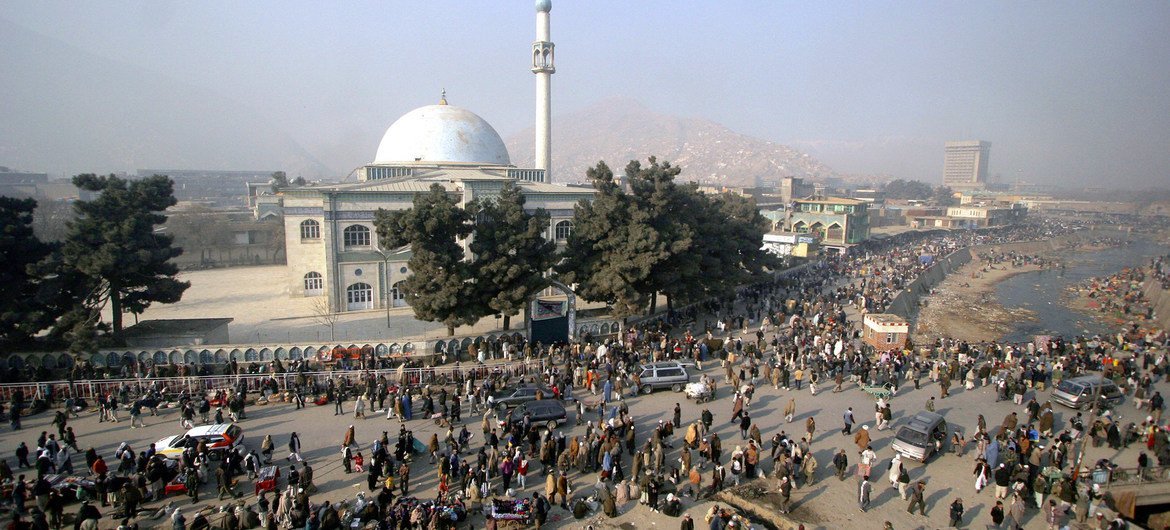
UNAMA/Freshta DuniaThe Pul-e-Kheshti Mosque in Kabul, Afghanistan. (file photo) 15 February 2021Human Rights
On 15 February 2021 the UN reported that 65 journalists, media professionals and human rights defenders were killed in Afghanistan between 1 January 2018 and 31 January 2021, with 11 losing their lives since the start of peace negotiations last September.
“This trend, combined with the absence of claims of responsibility, has generated a climate of fear among the population”, the UN Assistance Mission in Afghanistan (UNAMA) said in a news release, announcing the findings from its latest report.
“The killings have had the broader impact across society of also diminishing expectations around efforts towards peace”, UNAMA added.
The special report Killings of Human Rights Defender and Media Professionals also documented “changing patterns” of attacks. The most recent wave, that of intentional, premeditated and deliberate targeting of individuals with perpetrators remaining anonymous contrasts to previous years, UNAMA said. In the past, such deaths were mainly as a result of proximity of individuals to attacks by organized armed groups, mainly the Islamic State in the Levant-Khorasan-Province (ISIL-KP), involving the use of improvised explosive devices (IEDs). See also: https://humanrightsdefenders.blog/2020/06/30/car-bomb-kills-two-human-rights-workers-in-afghanistan/
The report underscored the role of all actors in preventing such killings and intimidation, promoting accountability and preventing impunity. Investigations into killings must be independent, impartial, prompt, thorough, effective, credible and transparent, it urged, adding that the prosecution of suspected perpetrators should strictly follow due process and fair trial standards.
Deborah Lyons, Special Representative of the Secretary-General for Afghanistan and the head of UNAMA, underscored the importance of media professionals and human rights activists.
“The voices of human rights defenders and the media are critical for any open and decent society. At a time when dialogue and an end to the conflict through talks and political settlement should be the focus, the voices from human rights and the media need to be heard more than ever before, instead they are being silenced”, she said.
“The Afghan people need and deserve a flourishing civic space – a society where people can think, write and voice their views openly, without fear”, Ms. Lyons added UNAMA reportHuman rights defenders, journalists and media workers killed by incident type
Recommendations
Among its recommendations, the report called on the Government to put in place an adequate preventive framework, including special protective and proactive security measures for rights defenders, journalists and media workers subject to threats or other types of intimidation.
It urged the Taliban to adopt, publicize and enforce policies that prohibit the killings of human rights defenders, journalists and media workers, as well as to repeal existing and refrain from new policies that limit civic space.
The report also called on the international community to continue to engage with rights defenders, journalists and media workers at risk and increase support to programs that provide security, travel, financial, capacity building and other assistance to them.
It also called on non-state actors to stop all killings of human rights defenders, journalists and media workers, in accordance with international human rights and humanitarian law.





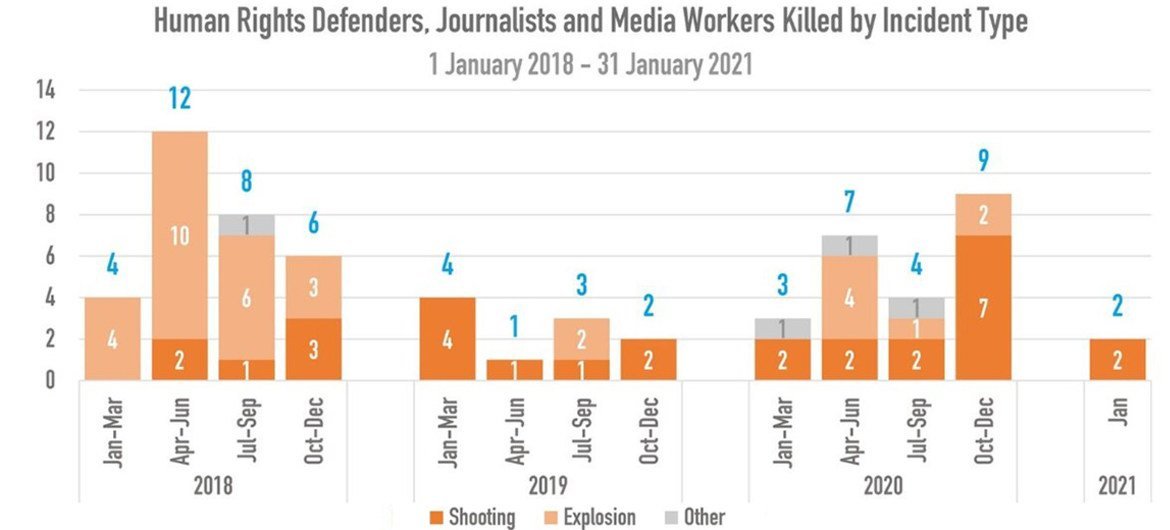 UNAMA reportHuman rights defenders, journalists and media workers killed by incident type
 Hans Thoolen on Human Rights Defenders and their awards