On 17 September 2020 the Human Rights Foundation announced the three recipients of the 2020 Václav Havel International Prize for Creative Dissent.
The 2020 Havel laureates are Chinese visual artist Badiucao, Saudi political satirist Omar Abdulaziz, and the late Rwandan gospel musician and peace and reconciliation activist Kizito Mihigo, who is the first posthumous recipient since the inception of the prize in 2012. This year’s laureates will receive their awards at 11:45 a.m. EDT on Friday, 25 September, during the 2020 Oslo Freedom Forum.
Badiucao is an exiled Chinese dissident artist based in Australia. His political artwork has unmasked the lies of the Chinese regime, raised awareness for pro-democracy protests in Hong Kong, and exposed the Chinese Communist Party’s censorship of the coronavirus pandemic. Badiucao is the creator of the Lennon Flag, which became a powerful protest symbol that inspired and mobilized the global community to stand in solidarity with Hong Kong’s pro-democracy movement. The Chinese regime has tried to silence Badiucao by intimidating his family in China.
Omar Abdulaziz is an exiled Saudi political satirist and activist based in Canada. His satirical news show on YouTube has uncovered the lies of the Saudi regime. His activism has raised awareness about ongoing repression and human rights abuses in the kingdom, where freedom of expression is nonexistent and political satire is a crime. The Saudi regime has tried to silence his activism by intimidating his family, offering bribes, and making him a target of surveillance.
Kizito Mihigo was a Rwandan catholic gospel singer, songwriter, organist, and the founder of the Kizito Mihigo Peace Foundation, which promoted peace, reconciliation, and nonviolence in schools and prisons through concerts, plays, and poetry. An ethnic Tutsi, he showed tremendous courage in a 2014 song in which he called for compassion for all civilians killed by Paul Kagame’s Tutsi-dominated ruling Rwandan Patriotric Front forces after Rwanda’s 1994 genocide. The regime quickly banned the song as it contradicted its official narrative, which presents ethnic Tutsis as the sole victims of Rwanda’s tragedy. Mihigo released the song with full knowledge that it would lead to terrible consequences. “The message is sometimes more important than the messenger,” he said. He was detained in order to be paraded as a conspirator in a violent anti-government plot and sentenced to 10 years in prison. He was released on pardon after serving three years, but he was arrested again while attempting to leave the country and died in police custody in February 2020. The regime claimed it was a suicide, but Mihigo told friends weeks before his death that he had been under government harassment and pressure to provide false testimony against political opponents.
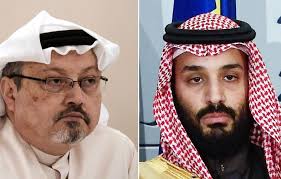
An independent UN human rights investigator called the overturned verdict of Saudi Arabia’s prosecutor in the 2018 murder of journalist Jamal Khashoggi a “parody of justice” that spared “high-level” plotters. At a regular press briefing on Tuesday, Rupert Colville, spokesperson for the UN High Commissioner for Human Rights, (OHCHR), quoted Agnes Callamard, the UN Special Rapporteur on Extrajudicial Executions, in saying, “they came at the end of a process which was neither fair nor just, or transparent“. [for earlier posts on Khashoggi, see: https://humanrightsdefenders.blog/tag/jamal-khashoggi/]
In October 2018, the 59-year-old columnist for The Washington Post was killed and dismembered at the kingdom’s consulate in Istanbul. Saudi prosecutors in Riyadh had convicted eight people for the brutal murder. However, on Monday, a Saudi court overturned five death sentences in a final ruling that jailed eight defendants for between seven and 20 years, according to Saudi State media.
The press briefing came on the heels of a series of tweets from the independent UN expert who reacted disparagingly to Monday’s verdict. “The five hitmen are sentenced to 20 years imprisonment, but the high-level officials who organized and embraced the execution of Jamal Khashoggi have walked free from the start – barely touched by the investigation and trial,” Ms. Callamard tweeted.
“As for the individual responsibility of the person on top of the State”, the independent UN expert upheld, “the Crown Prince Mohammed bin Salman, he has remained well protected against any kind of meaningful scrutiny in his country“. She stated that “the Saudi Prosecutor performed one more act today in this parody of justice”, adding “but these verdicts carry no legal or moral legitimacy”.
“With a deep appreciation for the Newcastle community and the significance of its football club, we have come to the decision to withdraw our interest in acquiring Newcastle United Football Club,” the group said in a statement. “Unfortunately, the prolonged process under the current circumstances coupled with global uncertainty has rendered the potential investment no longer commercially viable.”
The takeover bid had been condemned by Amnesty International and Hatice Cengiz, the fiancee of murdered journalist Jamal Khashoggi, over Saudi’s human rights record, putting pressure on the Premier League not to give it the green light in its owners’ and directors’ test.
“This is a victory for human rights and decency and clear defeat for Mohamed Bin Salman and his efforts to sportswash his human rights record,” said Cengiz in a statement.
“Let this defeat send a strong message to the leadership in Saudi Arabia that they will not be able to use their money to cover up their human rights record.”
Jon Stone in the Independent of 13 july 2020 wrote about the UK Government being urged to explain £75m exports to countries rated ‘not free’. The British government is providing more than a dozen repressive regimes around the world with wiretaps, spyware and other telecommunications interception equipment they could use to spy on dissidents, public records show. Despite rules saying the UK should not export security goods to countries that might use them for internal repression, ministers have signed off more than £75m in such exports over the past five years to states rated “not free” by the NGO Freedom House.
The 17 countries include China, Saudi Arabia and Bahrain, as well as the United Arab Emirates, which was the biggest recipient of licences totalling £11.5m alone since 2015….One such beneficiary of the UK’s exports is Hong Kong, which had a £2m shipment approved last year despite ongoing repression of pro-democracy protests. The Philippines, where police extrajudicial killings are rampant, has also provided steady business for British firms hawking surveillance systems.,,
A government spokesperson said blandly : “The government takes its export responsibilities seriously and assesses all export licences in accordance with strict licensing criteria. We will not issue any export licences where to do so would be inconsistent with these criteria.” But Oliver Feeley-Sprague, Amnesty International UK’s programme director for military, security and police affairs, said the UK did not seem to be undertaking proper risk assessments when selling such equipment and said the government’s controls were becoming “notorious” for their “faulty decision-making”…
“With numerous human rights defenders arrested and jailed in countries like Saudi Arabia, the UAE and Turkey in the past five years, there’s a greater need than ever for the UK to be absolutely scrupulous in assessing the risk of UK telecoms technology being used unlawfully against human rights activists, journalists, and peaceful opposition figures.
“It’s just not clear that the UK is undertaking proper risk assessments when selling this equipment, and it’s not clear whether UK officials are making any effort to track how the equipment is used in one, two or three years’ time.
This week international trade secretary Liz Truss announced the UK would be resuming arms exports to Saudi Arabia, after a court had previously ordered that they were suspended. The government said it had reviewed claims that Saudi forces in Yemen had breached international humanitarian law and said any possible breaches were “isolated incidents” because they had happened in different places and different ways.
Andrew Smith of Campaign Against Arms Trade said the sale of the spying equipment raised “serious questions and concerns”.
In an interesting article published on 10 july 2020, Bruno Stagno Ugarte – Deputy Executive Director for Advocacy of Human Rights Warch – sees encouraging signs of a revival of the leading role of the Nordic countries when it comes to international human rights policy.
…There are encouraging signs these countries might be ready to re-engage in denouncing grave abuses and lead international efforts for country-specific scrutiny and accountability.
..If Iceland with a population of 365,000, found the bandwidth to lead on two issues simultaneously, its larger Nordic neighbors can surely match both its courage and performance.
There are reasons to be encouraged on that front. In June, Finland supported the creation of a Libya investigation by the Human Rights Council to document violations committed by all parties and preserve evidence. Denmark, currently a member of the Council, is considering addressing ongoing rights violations by Saudi Arabia. And now that Norway has been elected to a non-permanent seat on the United Nations Security Council for the 2021-22 term, we hope it will become a principled voice for human rights and lead on country-specific situations.
In the absence of leadership by larger states, it is incumbent on smaller states, individually and collectively, to ensure that multilateral tools remain relevant to address dire human rights situations. The Nordic countries have done so in the past; it is time for them to do so again.
On 9 june 2020 Agnes Callamard, the UN special rapporteur on extrajudicial, summary or arbitrary executions, urged member states to pressure Saudi Arabia to free women activists before a G20 nations summit which Riyadh will be hosting in November. At least a dozen prominent women’s rights activists were arrested in Saudi Arabia in 2018 as it lifted a ban on women driving cars, a step that many of the detainees had long campaigned for. The women were rounded up as part of a broader crackdown on dissent that extended to clerics and intellectuals.
Several of the arrested women have alleged torture and sexual assault in detention. Saudi officials deny this and said the detainees were suspected of having harmed Saudi interests and offered support to hostile elements abroad.
Some of the activists are now on trial, but few charges have been made public. Charges against at least some of the activists relate to contacts with foreign journalists, diplomats and human rights groups. Their prosecution has drawn global criticism, particularly following the 2018 murder of journalist Jamal Khashoggi by Saudi agents inside the kingdom’s Istanbul consulate. (as Rapporteur Agnes Callamard also dealt with Khashoggi’s killing: https://humanrightsdefenders.blog/2019/12/23/the-unsatisfactory-end-to-the-khashoggi-investigation/)
Earlier Amnesty International had called on Saudi Arabian authorities to immediately release women human rights activists, including those who are “being punished for daring to drive.“…. Amnesty UK has launched a “Beep for freedom” campaign in support of the persecuted women’s rights defenders. The campaign involves supporters sharing photos of themselves behind the wheel of a car or sharing the campaign’s “Beep For Freedom” car horn symbol, with an appeal to the Saudi authorities to “immediately and unconditionally” release the activists and drop all charges against them.
Twenty (out of 40) board members have been announced so far including Denmark’s former prime minister Helle Thorning-Schmidt, former Guardian editor-in-chief Alan Rusbridger and Internet Without Borders executive director Julie Owono. “The board uses its independent judgment to support people’s right to free expression and ensure that those rights are being adequately respected,” the company said. Facebook added the board’s judgments on the social network’s content moderation decisions are “binding”. The company will have to implement them, unless they are in violation of the law.
Karman, a human rights activist, journalist and politician, won the Nobel Peace Prize in 2011 for her role in Yemen’s Arab Spring uprising. Her appointment to the Facebook body has led to sharp reaction in the Saudi social media. She said that she has been subjected to a campaign of online harassment by Saudi media ever since she was appointed to Facebook’s Oversight Board. In a Twitter post on Monday she said, “I am subjected to widespread bullying & a smear campaign by #Saudi media & its allies.” Karman referred to the 2018 killing of Jamal Khashoggi indicating fears that she could be the target of physical violence.
Tawakkol Karman✔@TawakkolKarman
I am subjected to widespread bullying&a smear campaign by #Saudi’s media&its allies. What is more important now is to be safe from the saw used to cut #jamalkhashoggi’s body into pieces.I am in my way to #Turkey&I consider this as a report to the international public opinion.
However, previous Saudi Twitter campaigns have been proven by social media analysts to be manufactured and unrepresentative of public opinion, with thousands of suspicious Twitter accounts churning out near-identical tweets in support of the Saudi government line. The Yemeni human rights organization SAM for Rights and Liberties condemned the campaign against Karman, saying in a statement that “personalities close to the rulers of Saudi Arabia and the Emirates, as well as newspapers and satellite channels financed by these two regimes had joined a campaign of hate, and this was not a normal manifestation of responsible expression of opinion“.
Many media reported on Saudi Arabia‘s King Salman having ordered an end to the death penalty for crimes committed by minors and to floggings, which should indeed be considered progress. King Salman’s son and heir, Crown Prince Mohammed bin Salman, has sought to modernize the country, attract foreign investment and revamp Saudi Arabia’s reputation globally. He’s also overseen a parallel crackdown on liberals, women’s rights activists, writers, moderate clerics and reformers. The 2018 killing of Saudi writer Jamal Khashoggi in Turkey by agents who worked for the crown prince drew sharp criticism internationally. [for some ealrier posts on Saudi Arabia, see: https://humanrightsdefenders.blog/tag/saudi-arabia/]
The latest royal decree could spare the death penalty for at least six men from the country’s minority Shiite community who allegedly committed crimes while under the age of 18, including Ali al-Nimr, who had participated in anti-government protests. Such activity carries terrorism-related charges in the kingdom for disturbing order and disobeying the ruler. Amnesty International and Human Rights Watch have long called on the kingdom to abolish the use of the death penalty, particularly for crimes committed by minors. The president of the Saudi government’s Human Rights Commission, Awwad Alawwad, confirmed the latest decision in a statement Sunday, saying it helps the kingdom establish “a more modern penal code and demonstrates the kingdom’s commitment to following through on key reforms.” He said “more reforms will be coming,” and that the two decisions “reflect how Saudi Arabia is forging ahead in its realization of critical human rights reforms even amid the hardship imposed by the COVID-19 pandemic.”
In the meantime long prison sentences carry their own risk as seen in the case of Saudi human rights defender Abdullah al-Hamid, 69, has died in custody in a hospital in Saudi Arabia, according to the Right Livelihood Foundation, which awarded a prize [https://humanrightsdefenders.blog/2018/11/14/right-livelihood-award-urges-freedom-for-3-saudi-laureates/]. It said on Friday that al-Hamid, who was serving an 11-year prison sentence, was taken to hospital after suffering from ill-health in a Riyadh prison earlier this year. He subsequently had a stroke and fell into a coma in early April, according to rights groups including Amnesty International. “Dr al-Hamid was a fearless champion for human rights in Saudi Arabia,” Lynn Maalouf, Amnesty’s Middle East research director, said in a statement.
The Right Livelihood Foundation said al-Hamid was repeatedly denied crucial medical care and “paid the ultimate price for his convictions”. Ole von Uexkull, head of the foundation, blamed Saudi authorities for his death, saying that al-Hamid’s “unlawful imprisonment and inhumane treatment … led to his death“.
There is a list – updated monthly – by the One Free Press Coalition of nearly 40 news organizations, which identifies the 10 most urgent cases threatening press freedom around the world. Understanding the COVID-19 requires unbiased journalists, whose work requires protection. Not only does the act of informing the public carry risk to one’s own health but, in many countries, risk of retaliation. In China, freelance video journalist Chen Quishi disappeared on February 6 after informing family of plans to report on a temporary hospital in Wuhan, where the virus originated. Beijing has since expelled journalists from outlets including The Wall Street Journal, The New York Times and The Washington Post and demanded personnel information from Voice of America and TIME. Mohammad Mosaed, a reporter in Iran who criticized the government’s response to the pandemic, has been barred from practicing journalism and suspended from social media. Family members of imprisoned Egyptian journalist Alaa Abdelfattah were detained for protesting on behalf of prisoners who are vulnerable to the spread of the virus. An Azerbaijani journalist freed in mid-March described detention conditions allowing one shower per week, without soap, he told CPJ
Journalist, who warned about pandemic, banned from work and social media.
Freelance economic reporter Mohammad Mosaed awaits a court date, after intelligence agents of the Islamic Revolutionary Guard Corps (IRGC) arrested and interrogated him in February regarding social media accounts critical of government. The criticism included lack of preparedness to tackle the coronavirus outbreak. Until trial, authorities bar him from practicing journalism and suspended his social media accounts. Last year he endured 16 days in Evin prison for his tweets and was released on bail.
Editor facing potential detention, arrested again March 28.
Rappler editor Maria Ressa is scheduled for trial April 24, expecting a verdict on a cyber-libel charge brought by local businessman Wilfredo Keng regarding a May 2012 story. The relevant law took effect four months after the story in question was published. Depending how judges interpret the 2012 Cybercrime Prevention Act, Ressa could face six years in prison.
Family of jailed journalist protests prisons’ inaction to prevent COVID-19 threat.
While blogger Alaa Abdelfattah is held in Cairo’s Tora Prison, three of his family members face charges of unlawful protest, illegal assembly and obstructing traffic in their call to protect prisoners from the spread of coronavirus. They were released on bail exceeding $300 apiece. After reporting about politics and human rights violations, Abdelfattah has endured threats and been told he will never go free if he speaks of guards’ abuse.
Journalist covering coronavirus disappeared more than six weeks ago.
Freelance video journalist Chen Quishi has not been seen since February 6, when he informed family of plans to report on a temporary hospital. In late January, he had traveled from Beijing to the city of Wuhan in Hubei province and began filming and reporting on the coronavirus health crisis, according to his posts on YouTube. Friends running his Twitter account believe he is likely held in residential surveillance.
Journalist fears for her life, amid government-orchestrated threats.
After 19 years of persecution and legal censorship, award-winning journalist Claudia Julieta Duque told IWMF that she learned on February 29 about an ongoing criminal threat against her life. According to Duque, agents of the state institution in charge of protecting human rights defenders and at-risk journalists, called the National Protection Unit (UNP), were reportedly ordered to carry out intelligence activities to infiltrate Duque’s security scheme and threaten her welfare.
Imprisoned publisher undertook hunger strike while awaiting appeal.
No date has been set, following postponement of a March 12 appeal in the case of Martin Inoua Doulguet, publisher of Salam Info. He was found guilty on criminal charges of defamation and conspiracy in September, and sentenced to three years in prison. The privately owned quarterly newspaper reports on crime and politics in Chad, and Doulguet’s penalty includes a $1,675 fine and paying part of $33,514 in plaintiff damages.
Journalist serving life sentence prepares for final appeal.
On April 6, a Kyrgyz court is scheduled to hear the final appeal in the case of award-winning journalist Azimjon Askarov. The ethnic Uzbek, who reported on human rights, has spent more than nine years imprisoned on trumped-up charges that included incitement to ethnic hatred and complicity in the murder of a police officer. The decade-long case has drawn persistent international condemnation, and Kyrgyzstan’s only imprisoned journalist’s health deteriorates.
Cuban journalist Roberto Jesús Quiñones has spent more than six months behind bars, experiencing worsening treatment. Staff listen to all of his phone calls, have served him food containing worms, and upon learning of his secretly publishing from prison, suspended family visits and put him in solitary confinement. A municipal court in Guantánamo sentenced him to serve one year as a result of “resistance” and “disobedience” when police beat and detained him for covering a trial as a CubaNet contributor last April and his refusal to pay a fine imposed on him following this incident.
Reporter experiences repeated retaliation for his work.
On two different occasions last year, Benin courts delivered prison sentences to Ignace Sossou, a reporter for privately owned site Web TV. First was a one-month imprisonment and fine of $850 for publishing “false information” about local business dealings. Then an 18-month sentence and fine of $337 for defamation and disinformation in his reporting public statements made by Public Prosecutor Mario Mètonou.
Turkish and U.S. leaders continue pressuring for murdered journalist’s justice.
On March 25 Turkish officials indicted 20 Saudi nationals in the ongoing pursuit for answers surrounding Jamal Khashoggi’s brazen killing in Istanbul in 2018 and the Saudi crown prince’s role. That follows a March 3 news conference with U.S. Senator Ron Wyden, Representative Tom Malinowsk, and The Washington Post columnist’s fiancé, Hatice Cengiz, announcing that they are invoking procedures within the Senate Intelligence Committee to provide a congressional release of information from intelligence agencies.