On Wednesday 25 May 2016 Azerbaijan finally released investigative journalist Khadijah Ismayilova[https://thoolen.wordpress.com/2015/12/18/azerbaijan-khadija-ismayilova-remains-in-jail-but-council-of-europe-takes-exceptional-step/] after a number of other human rights defenders were released bit by bit over the last months. Ismayilova was serving a seven-and-a-half year sentence on charges which included embezzlement, illegal business activities and tax evasion. The Supreme Court has now amended her imprisonment to 3 1/2 years of suspended sentence and released her from prison. She vowed to continue to fight to clear her name. “I will continue to fight until complete acquittal,” Ismayilova told reporters after her release. “I will also continue to work as a journalist.” The British-Lebanese lawyer Amal Clooney is representing Khadija Ismayilova at the European Court of Human Rights.
As an independent reporter and journalist of the Azerbaijani radio Azadliq (“Radio Freedom”) she has shown great courage (see: https://thoolen.wordpress.com/2014/12/11/khadija-ismayilova-azerbaijan-is-not-deterred/), and received several international prizes, such as the 2015 Alison Des Forges Award for Extraordinary Activism (HRW), the 2015 Freedom to Write Award, the 2012 Fritt Ord/Zeit Press Prize, and the 2012 Courage of Journalism Award by the Washington-based International Women’s Media Foundation.
Although there are still human rights defenders and journalists in prison, Azerbaijan provides a fine example of how awards and the combined international pressure from a variety of sources (States, NGOs and international organizations) can have an impact:
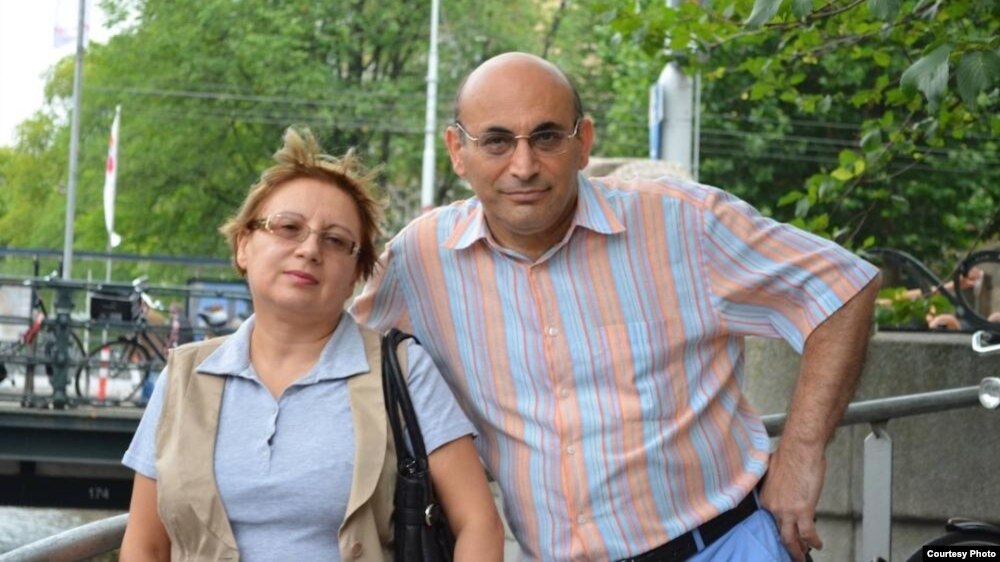
Two of Azerbaijan‘s most prominent human rights defenders have arrived in the Netherlands after the authorities in Baku suddenly granted them permission to leave.
Leyla and Arif Yunus
RFE/RL’s Azerbaijani Service reported on 19 April 2016 that Leyla Yunus and her husband, Arif, were greeted by their daughter, Dinara Yunus, who lives in the Netherlands, upon landing at Amsterdam’s Schiphol airport on April 19, according to Dutch media reports. Welcoming the two, Dutch Foreign Minister Bert Koenders said Leyla and Arif Yunus, who are seeking asylum in the Netherlands, “had put their own safety and happiness at stake in the struggle for democracy and human rights“.
This blog has had many occasions to be negative about Azerbaijan [https://thoolen.wordpress.com/tag/azerbaijan/], but this time some good news: President Ilham Aliyev of Azerbaijan signed a decree yesterday (17 March 2016) for the Novruz holiday, pardoning 148 prisoners, among them thirteen journalists, human rights defenders and activists.
The list includes: human rights campaigner Rasul Jafarov; the head of a local election monitoring group Anar Mammadli; youth activists from NIDA movement Rashad Hasanov, Rashadat Akhundov, Mammad Azizov, and Omar Mammadov; human rights defenders Taleh Khasmamedov and Hilal Mammadov; opposition Musavat party deputy chair Tofig Yagublu; journalists Parviz Hashimli and Yadigar Mammadli; also a blogger Siraj Karimov. Also today, the Baku Appeals Court converted a six-year prison sentence imposed on journalist Rauf Mirgadirov to a five-year suspended term, and released him from the courtroom.
While this is a great moment for those released, among those still behind bars on bogus charges are: political analyst Ilgar Mammadov, in defiance of the European Court of Human Rights decision on his case and the repeated calls by the Council of Europe Committee of Ministers to free him; human rights lawyer Intigam Aliyev; and Azerbaijan’s prominent investigative journalist, Khadija Ismayilova. Also youth activist Ilkin Rustamzadeh and journalist Seymur Hazi.
“We are overjoyed for the journalists, human rights defenders, and activists who were released today after being imprisoned for exercising their basic rights of free speech and free assembly,” said Nenad Pejic, Radio Free Europe editor in chief. “But Khadija should have been among them”. [https://thoolen.wordpress.com/2015/12/18/azerbaijan-khadija-ismayilova-remains-in-jail-but-council-of-europe-takes-exceptional-step/] In recent correspondence with RFE/RL, international human rights lawyer Amal Clooney, who will represent Ismayilova before the European Court of Human Rights, said that “the case involved a politically motivated prosecution to restrict [Ismayilova’s] freedom of speech… This is about a government that is abusing its power to silence journalists like Khadija, as well as other critics of the ruling regime.”
After more than 20 days of detention and a public confession that sounded forced, Swedish human defender Peter Dahlin has been expelled from China, and is on his way home. The Chinese foreign ministry and Swedish embassy in Beijing confirmed Peter Dahlin, 35, had been released from detention and expelled from the country on Monday 15 January 2016.
Another Swedish citizen, Hong Kong-based bookseller Gui Minhai, remains in custody in Beijing after his suspected abduction from Thailand by Chinese authorities. Swedish officials are “very concerned about the detained Swedish citizen Gui Minhai. Our efforts to bring clarity to his situation and be granted the opportunity to visit him continue with unabated intensity,” the Swedish embassy said in its statement.
And while we are on groups of UN human rights experts, also on 19 January three Rapporteurs welcomed Iran’s release of four Iranian-Americans in an apparent prisoner swap with the United States, and called on Tehran to pave the way for the freeing of all remaining unlawfully detained prisoners. Read the rest of this entry »
For more than two decades, Murod Juraev languished behind bars in Uzbekistan and was subjected to torture and ill-treatment so bad that all his teeth fell out. After 21 years in detention — one of the world’s longest imprisoned political activists — Juraev was released in November 2015. [Juraev was a member of the Erk opposition party and a former local mayor in southern Uzbekistan when he was jailed, in 1994.] Juraev had his jail term extended four times to keep him in jail — in 2004, 2006, 2009 and 2012 — after authorities found he had broken prison rules, including “peeling carrots incorrectly”, “failure to lift a heavy object”and “wearing a white shirt.”
Many NGOs have welcomed as a good Human Rights Day present the announcement of the freeing of Leyla Yunus in Azerbaijan. Here the views of the Deputy Director, Europe and Central Asia Division of Human Rights Watch, Rachel Denber:
As many international NGOs (e.g.: Human Rights First, Front Line, the Human Rights Foundation, ISHR and several trade unions) have already welcomed the release of two human rights defenders in Swaziland, it is perhaps interesting to give the local take on it through an article in the Swaziland Observer of 2 July 2015 at hand of Noxolo Nkabinde: “Bheki, Thulani sacrifice not in vain– SCCCO”.
The Swaziland Coalition of Concerned Civic Organisations (SCCCO) says the sacrifices made by Nation Magazine Editor Bheki Makhubu and human rights lawyer Thulani Maseko were not in vain..“When they wrote those articles, Bheki and Thulani could not have imagined the events that were to follow. They, as concerned members of the public and as human rights defenders, were simply articulating the sentiments of a nation, frustrated and rapidly losing faith in the justice system. As we continue to stand with them, we believe the pain they and their families have gone through is another building-block towards freedom – their sacrifice has not been in vain,” SCCCO said in their statement. They added that their charge, arrest, conviction and imprisonment were never justified and believed they were vindicated.
Interestingly the NGO gives big credits to the judiciary “We commend the judges of the Supreme Court for this ruling. We welcome this, amongst their first acts in office, as a sign that perhaps our judiciary is turning a corner towards the better path of justice. The past few years have increasingly eroded our confidence in the judiciary – the impeachment proceedings of the former chief justice exposed but a fragment of the rot that had set in the judiciary. But as we all know, that situation has been created and nurtured over time, and it’s predilection for injustice has its roots in an environment that is hostile to free speech, in particular the speech that dissents with the status quo. And so our rejoicing is bitter-sweet: this is not about the individuals who previously occupied and abused judicial office; nor is it about their heinous conduct during this and other cases – the problem of the judiciary, just as with the other structures of governance, is systemic, and our new judges and their successors will remain vulnerable to outside influence as long as the structural flaws are not addressed.”
This was also an opportunity to restore both the dignity of and confidence in the judiciary. It could also serve as an opportunity to develop and grow the country’s jurisprudence in a way that promotes a culture of human rights and good democratic governance.
The SCCCO anticipates an era of respect for the rule of law under the new Supreme Court Judges Qinisile Mabuza and Mbutfo Mamba: “We note in the appointments the presence of judges such as Qinisile Mabuza and Mbutfo Mamba who have a proven track record of fairness and we look forward to an era where such judges are not punished for being principled…We call on all the judicial officers, even as they have taken the judicial oath/affirmation of office, to also recall the following constitutional provisions: Whereas all the branches of government are the Guardians of the Constitution, it is necessary that the Courts be the ultimate Interpreters of the Constitution”.
The article adds with a sad note that in the meantime the Swaziland Office of the Media Institute of Southern Africa (MISA) has been closed due to lack of funding.
Having just posted about Sandra Kodouda’s disappearance for 4 days [https://thoolen.wordpress.com/2015/04/17/human-rights-defender-sandra-kodouda-remains-missing-four-days-after-abduction-in-sudan/ ] I am happy to report that yesterday (16 April 2015), the Sudanese human rights defender was returned home after reportedly being held in custody by the National Intelligence and Security Service (NISS) although they had denied they held her. She suffered a dislocated shoulder and other injuries during her detention.
The New York based Human Rights Foundation on 11 February 2015 called on the government of the Comoros to release Mohamed Said Abdallah Mchangama, President of the Federation of Comorian Consumers (FCC).
Mchangama is one of the leaders of the “Madji Na Mwendje” (power and water) movement, formed by the FCC and other civil society organizations to protest the government’s inability to resolve the frequent power blackouts and water shortages plaguing the island. The movement called on all Comorian civil society groups to engage in a three-day general strike scheduled for February 9-11. The Sunday before the strike was set to start, Mchangama was summoned to appear at the police station of Moroni where he was immediately arrested and is currently being held.
“Civil society leaders like Mchangama are a threat to competitive authoritarian regimes because of their ability to channel people’s frustration at corrupt and incompetent governments. By arresting him, the government seeks to quash a legitimate demand from hundreds of thousands of Comorians living below the poverty line. He must be released immediately,” said Thor Halvorssen, president of the Human Rights Foundation. “We have seen similar instances of repressing freedom of expression in the region. In Burundi, Pierre Claver Mbonimpa was arrested for criticizing the ruling party during a radio interview; and in Swaziland Thulani Maseko and Bhaki Makubu were both arrested for questioning the independence of the judicial system. These are all legitimate concerns in any democratic society. It is these abusive governments that are at fault here, not the people,” said Halvorssen.
For more information contact: Jamie Hancock at jamie[at]thehrf.org or see the original piece:
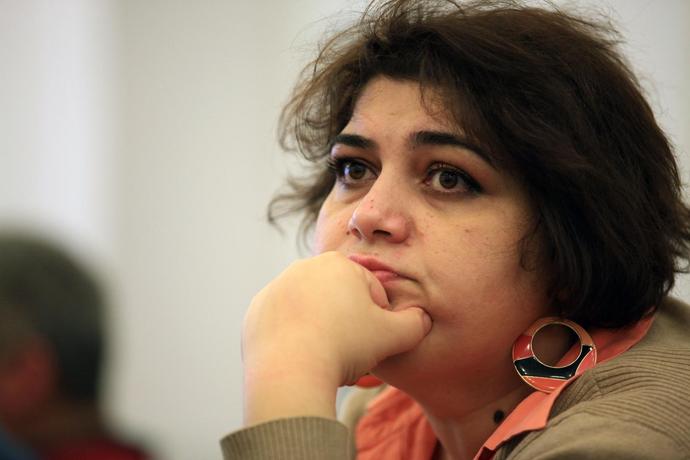 On Wednesday 25 May 2016 Azerbaijan finally released investigative journalist Khadijah Ismayilova [https://thoolen.wordpress.com/2015/12/18/azerbaijan-khadija-ismayilova-remains-in-jail-but-council-of-europe-takes-exceptional-step/] after a number of other human rights defenders were released bit by bit over the last months. Ismayilova was serving a seven-and-a-half year sentence on charges which included embezzlement, illegal business activities and tax evasion. The Supreme Court has now amended her imprisonment to 3 1/2 years of suspended sentence and released her from prison. She vowed to continue to fight to clear her name. “I will continue to fight until complete acquittal,” Ismayilova told reporters after her release. “I will also continue to work as a journalist.” The British-Lebanese lawyer Amal Clooney is representing Khadija Ismayilova at the European Court of Human Rights.