Posts Tagged ‘protection’

Thomas Antkowiak urges priority for the safety of front-line human rights workers

January 20, 2024

On January 12, 2024, Thomas Antkowiak in Just Security reflects on dangers of HRDs in Mexico and Latin america generally, motivated by the fate of his friends Ricardo and Antonio Díaz Valencia.

…Strategic use of the legal mechanisms—bolstered by the research and financial resources, political leverage, reputations, and media connections of Northern institutions—can be very effective to obtain remedies for victims of rights violations, and even to bring about legal reform and structural change. But the methods are toothless, and even misguided, without partners like Ricardo, the expert local attorneys. Truly, without such counterparts, this kind of human rights project lacks legitimacy. Without sustained connections to the affected communities, it would become just another decree handed down from the ivory tower.

In our isolated and polarized world, virtual meetings may have increased productivity in international lawyering, but they can further insulate us—cutting off deeper engagements to our clients abroad and the communities we hope to work with. In contrast, frontline defenders are fully connected and, of course, face all the risks. Authoritarian governments, criminal organizations, and complicit transnational corporations are all closing in. Can we still sense their peril?

If these human rights advocates are in more jeopardy than ever, so are the human rights themselves. Frontline defenders are the torchbearers of the international human rights movement. As such, they deserve the honors, the funding, and the protection. For the work to continue, we urgently need to do our part: the Global North’s human rights organizations, governments, universities, foundations, and businesses must coordinate to shield and support them.

Certainly, some institutions are already doing good work. Where to redouble our efforts? First, let’s ask the defenders themselves what they most need, recalling that their role is primary and their safety paramount. In the case of Mexico, there is almost total impunity for these types of cases. If the cartels, corrupt officials, and their accomplices cannot be held accountable, the killings will continue unabated (and thousands will keep fleeing from the violence to the southern U.S. border). When the defenders’ work becomes too hazardous, asylum must be streamlined—and the opportunity forever preserved. U.S. legislation and political pressure on Mexico play key roles here. So does divestment from colluding transnational corporations.

Every day, I wish that we could have somehow prevented the disappearance of my cherished friend and long-time collaborator. Through various channels, Global Rights Advocacy, other colleagues, and my clinic continue to push the Mexican government to find Ricardo and Antonio, and to prosecute the case. The world cannot afford the loss of another Ricardo, Berta Cáceres, Thulani Maseko. Without such guiding lights, we won’t be marking another 75 years of the international human rights movement.

10 years Natalia bracelet

December 20, 2023
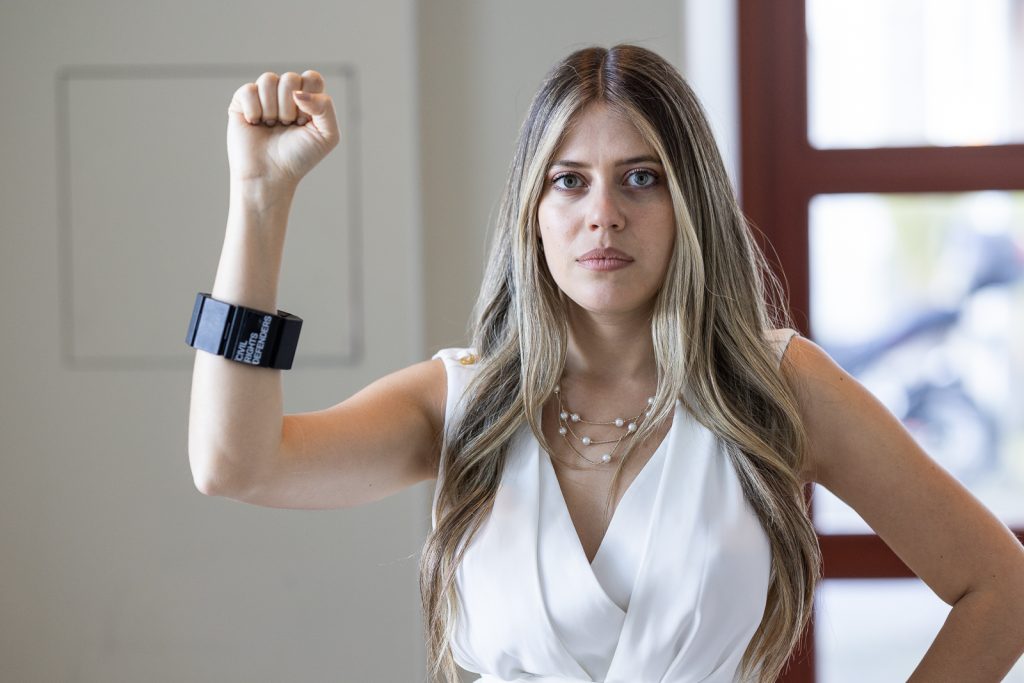
Génesis Dávila, participant in the Natalia Project.

On 18 December 2023 Civil Rights Defenders published an account of 10 years Natalia [see: https://humanrightsdefenders.blog/2014/04/24/the-natalia-gps-alarm-bracelet-wins-golden-egg-awards-in-stockholm/]

10 years ago, Civil Rights Defenders launched the Natalia Project, the world’s first assault alarm and community-based security system for human rights defenders. In the event of an attack, participants in the project can send out a distress signal so they can be located quickly and get help.

Natalia Project participant Génesis Dávila is the director and founder of Defiende Venezuela, a human rights organisation fighting for accountability and justice for victims of political persecution, people in arbitrary detention, and others who have been subjected to government-sanctioned attacks in Venezuela. In Venezuela being a human rights defender puts Génesis at risk of the very same political persecution she is trying to document.  

I face different threats on a daily basis. In general, they come from the Venezuelan regime. They harass human rights defenders because we try to protect people who are in danger and victims of human rights violations. This is something that puts us at great risk.” “It is really exhausting because then you don’t have space for other things. It’s the feeling of being chased all the time. It puts you under stress. You feel that you are never safe, wherever you are.”

In the case of an attack, the alarm is activated, and a distress signal goes off. Civil Rights Defenders and a network of human rights defenders can start investigating the situation within minutes.

For me, my Natalia has been a game changer. It helped me feel safe. Just having this tiny device with me, knowing that there was someone on the other side of the world just waiting for my call, being ready to act if something happens gave me such a confidence. That changed everything.”

The Natalia Project device is built to be durable and easy to use and take wherever is needed. 

Everywhere I go, I bring my Natalia. If I’m about to fly somewhere, I check my passport, cellphone and my Natalia. It makes me feel safe. It’s my lucky charm.” 

“Anyone who wants to support human rights can do it. You don’t have to be a lawyer, or someone waving a flag. You just need to advocate for human rights, and that will be enough.” 

CRD also runs an emergency fund, see: https://crd.org/emergency-fund/

Researcher puts bomb under ‘traditional’ protection of human rights defenders

July 7, 2023

On 6 July 2023 Janika Spannagel in Open Global Rights comes with a study of great importance to the work for human rights defenders. The researcher states that “focusing only on defenders’ physical integrity risks undermining the very idea of supporting agents of human rights change” and that there is a need to Rethink campaigns on human rights defenders

Spannnagel’s work featured in this blog before [see: https://humanrightsdefenders.blog/tag/janika-spannagel/] but this work questions more directly the core of HRD protection.

Instead of summarising I will provide large quotes:

,,,,The theory of change put forward by actors, including Front Line Defenders, International Service for Human Rights, and many others, claims that by protecting local human rights activists, international campaigns can support them in their work to advance human rights protection on the ground. This assumption appears plausible and aligns with prominent accounts in academic human rights literature, where domestic activists’ protection from repression is seen as a way to open spaces for them to challenge the regime and enact change.

That said, empirical evidence from UN casework and the experience of Tunisian defenders shows that this promise has not been fulfilled when it comes to human rights defenders in authoritarian regimes, as I show in my recent book. There, I argue that, while international attention can have important protective benefits, it does little to support individual human rights defenders as agents of change in repressive contexts. [Emphasis added]

The reason for this is that international casework on defenders, including urgent action–like campaigns or UN communications, maintain the traditional focus on physical integrity rights that has guided the long-standing casework on political imprisonment, torture, or enforced disappearances. In doing so, it overlooks the many administrative, discursive, and covert forms of repression that typically bypass international scrutiny more broadly but that often very effectively disrupt and thwart defenders’ work toward change.

The analysis of over 12,000 individual cases of human rights activists taken up by the UN special rapporteur on human rights defenders between 2000 and 2016 reveals that, in almost three-quarters of them, at least one of the violations described fell within the category of physical integrity violations. Detention cases alone made up 56% of all cases raised during that period. In contrast, only 4% of the cases dealt exclusively with softer types of repression, such as travel bans, bureaucratic issues, job dismissals, surveillance, or defamation.

This distribution far from represents the everyday experience of human rights defenders in authoritarian states—instead, it is reflective of a humanitarian instinct in human rights casework to privilege cases that are considered most severe. One could argue that UN communications, and perhaps attention-based campaigning more broadly, are inherently humanitarian, not transformative instruments. But one should ask: What, then, is the purpose of focusing on human rights defenders, as opposed to any victim of repression? [Emphasis added]

The priority given to physical integrity violations has two important adverse consequences. First, we can see that the data profoundly shape our understanding of what human rights defenders are struggling with. For example, on the basis of such data a CIVICUS report claims that in order to repress civic space, states resort “most often” to detention of activists, attacks against journalists, and excessive use of force against protesters. The human rights community’s own focus on violent repression thus paradoxically misleads us to believe that this is where most attention is needed.

Secondly, this focus reinforces a protection gap for violations that fall outside of the conventional notion of state repression as physically harmful and as undeniably politically motivated. Research on repression highlights that authoritarian states engage in repressive substitution, where they replace highly scrutinized coercive tactics—typically harder and overt types of repression—with softer and more covert measures. The case of Tunisia under Ben Ali aptly illustrates the strong impact of such tactics on defenders’ ability to carry out meaningful work.

When analyzing the further development of cases taken up by the UN, I also found that, while some positive effects of the UN’s attention could be identified for most of them, many did not see an actual improvement relative to the reported violations over the course of the next year; where they did, it was mostly an easing of harder repression. Ultimately, there is a real risk that governments continue to use hard repression to increase their bargaining power and then pass off a release from prison as a costly concession, while in reality imposing softer but equally effective measures against the activist in question.

With this problem in mind, what could be done differently? Casework that follows a transformative logic should not seek to maximize the reduction of physical harm—the humanitarian logic—but should define protection needs in terms of safeguarding a defender’s ability to do effective human rights work. 

Those engaging in casework and campaigns on human rights defenders should actively revisit their priorities in terms of the violations they tend to address. Far too often, softer repression remains unreported, unnoticed, and not acted upon, which effectively creates a twilight zone in which authoritarian states can comfortably stifle opposition voices without risking much pushback. We owe it to the countless number of human rights activists around the world to ensure that the label of “human rights defender” does not merely serve to laud their heroism and excite donors and the media, but that it is dedicated to fulfilling its promise of human rights change.

https://www.openglobalrights.org/rethinking-campaigns-human-rights-defenders/index.cfm

For the more traditional approach, see e.g. https://www.ipsnews.net/2023/07/recognising-human-rights-defenders-remarkable-agents-positive-change/
Ubuntu Hub in Accra will serve as a safe haven for Human Rights Defenders

March 28, 2022

Accra set to house threatened African Human Rights Defenders

An interesting example of what African NGOs can do in their own region for human rights defenders:

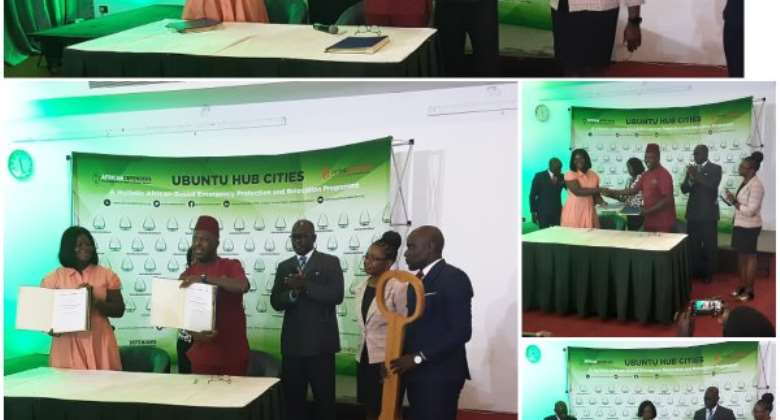
The Gender Centre for Empowering Development (GenCED) and African Defenders, a Pan-African Human Rights Defenders (HRDs) Network, have signed a Memorandum of Understanding (MoU) to set up the 7th Ubuntu Hub in Accra.

The Hub will serve as a safe haven for Human Rights Defenders and in some instances, their families within the continent who are subjected to attacks, threats, violence, and extreme pressure as a consequence of their human rights works.

The MoU would ensure that such victims are given medical, social, educational and psychosocial support in Accra or another African country if they so will, to ensure their wellbeing and development.

Mr Shire said it was prudent for Africa to stay alive and support each other to close the gaps such as threatening, torturing, murmuring, and crying caused as a result of the lack of protection of its people.

A feasibility study conducted by the parties proved that Accra in Ghana was the most suitable host for the initiative as its political, security, and human rights records gave the idea that the city provided an appropriate environment for the relocation of at-risk HRDs, he said.

Why do human rights defenders need to travel to Finland, just to seek a safe haven, why can’t we seek one from another country within our own continent,” he said.

He explained that the cost of relocating African HRDs at risk to another continent was prohibitory expensive, and the HRDS often faced cultural displacement, stigmatization and cultural and language barriers, hence, finding themselves unable to actively continue their human rights activism when relocated outside of the continent.

In 2019, he said the African Defenders, therefore, launched the Ubuntu Hub Cities, with the aim of providing at-risk African HRDs, with options for safe internal and external temporary relocation without having to leave their home continent.

The initiative since its inception has created a Hub in Kampala, Abidjan, Tunis, Johannesburg, Pretoria, and Cape Town.

Through their diverse local partnerships, Mr Dire said relocation also provided an opportunity for HRDs at risk to learn and share experiences, so that, they could have a positive impact on the host community and return home with enhanced capacities to protect and promote human rights.

Under the Ubuntu Hub Cities Initiative, he mentioned HRDs, Journalists, Writers and Scholars, Trade Union Workers, Human Right Lawyers and Artists as some of the groups they supported.

Ms Esther Tawiah, the Executive Director, GenCED, said African leaders had to stay true to the power and give voice to the ordinary citizen who gave them the mandate.

https://www.modernghana.com/news/1147846/accra-set-to-house-threatened-african-human-rights.html

Exiled Nicaraguan Human Rights Defenders in Costa Rica

March 15, 2022

A recent case study by Freedom House focuses on programming that offers holistic protection, support, and services, tailored to the needs of human rights defenders in their host country. This case study focused on the most current wave of migration of HRDs and CSOs who were forced to flee after anti-government protests in April 2018.

The Nicaraguan government continues to violate freedoms of expression, assembly and information and thwart the work of HRDs, including journalists and CSOs. Ortega-Murillo’s recent actions against potential presidential candidates and opposition figures demonstrate that the country will continue to see an outpouring of critics, activists, and HRDs to Costa Rica, among other countries. Nicaraguans continue to flee based on the attacks and harassment they face as HRDs and members of CSOs that champion democracy and human rights. See also: https://humanrightsdefenders.blog/2022/02/21/nicaragua-death-in-detention-and-sham-trial/

Of those 20 Nicaraguan HRDs who were surveyed, almost 90% stated that harassment and surveillance was a primary reason for leaving Nicaragua, followed by violence (65%) and threats (50%).
Costa Rica provides comparatively ample protection for migrants, and recently launched a new asylum category for those fleeing from authoritarian regimes in Venezuela, Cuba, and Nicaragua. The flow of migration since 2018 has persisted until March 2020 when the border shut due to the COVID-19 pandemic. Yet, migrant flows have begun to increase in recent months. However, Costa Rica is struggling to recover economically from the pandemic, particularly within the tourist, service, and commercial industries where most migrants and refugees find work. Most Nicaraguan refugees find themselves in a precarious economic situation, unable to find steady work, forcing many to resort to informal work with low salaries. HRDs are often not recognized as having different needs or characteristics from the larger refugee population, either by organizations or the Costa Rican population in general. Even for those who continue to work in human rights describe their ability to
continue work is difficult, and many express experiencing severe trauma as an exile, with remorse for not being able to stay and remain fighting for human rights at home. [see also: https://humanrightsdefenders.blog/2021/12/24/vilma-nunez-human-rights-defender-who-stays-in-nicaragua/]
However, many Nicaraguan HRDs try to carry out their work by investigating the laws and procedures in Costa Rica, accompanying their compatriots in their efforts, sharing knowledge, and giving advice. There are support and protection options for HRDs and CSOs in exile in Costa Rica, including a network of organizations and institutions facilitated by the United Nations High Commissioner for Refugees (UNHCR) that provide access to vital services.

All available support and protection options for Nicaraguan HRDs are operating at full capacity and cannot keep pace with the growing demand. We believe that it is necessary to seek support and accompaniment mechanisms for HRDs that facilitate their subsistence and enhance the
implementation of their work to defend the human rights of exiles and other Nicaraguan migrants who lack mechanisms for complaint and demand for their rights in Costa Rica.

https://freedomhouse.org/article/fighting-democracy-exile-my-story-nicaraguan-activist

later: https://thegaltimes.com/daniel-ortegas-regime-outlawed-another-25-ngos-in-nicaragua/87071/

Shelter City Netherlands: Call for Applications for March 2022

October 23, 2021

Justice & Peace Netherlands is launching a new call for applications for at risk human rights defenders to participate in Shelter City. The deadline for applications is 7 November 2021 at 23:59 CET.

It is part of Shelter City network –  a worldwide initiative to protect human rights defenders at risk and support them to reclaim their civic space! Seventeen cities worldwide offer temporary relocation and shelter, capacity-building tools, trainings and safety to human rights defenders worldwide who stand up against human rights violations in their home countries.

Shelter City provides temporary safe and inspiring spaces for human rights defender at risk where they re-energise, receive tailormade support and engage with allies. The term human rights defender is intended to refer to the broad range of activists, journalists and independent media professionals, scholars, writers, artists, lawyers, civil and political rights defenders, civil society members, and others working to advance human rights and democracy around the world in a peaceful manner.

From March 2022 onwards, several cities in the Netherlands will receive human rights defenders for a period of three months. At the end of their stay in the Netherlands, participants are expected to return with new tools and energy to carry out their work at home.

Journalists’ Safe Haven Initiative

Justice & Peace aims to promote the safety of journalists, and in particular women journalists, worldwide so that they can build new strategies and continue their important work for freedom of expression in their country of origin. With support of the Dutch Ministry of Foreign Affairs, Justice & Peace will be able to provide two additional temporary safe spaces per year in The Hague for journalists at risk and provide them with tailor-made support.

Shelter City and COVID-19

Please note that COVID-19 may pose certain challenges to the stay of human rights defenders in the Netherlands in 2022. These challenges can include:

  • Limitations and/or changes in the programme that we can offer HRDs during their stay in the Netherlands;
  • New measures and restrictions (including a lockdown) taken by the Dutch government;
  • Cancellation of flights to/from the Netherlands;
  • Postponement of return to the home country after 3 months because of travel restrictions;
  • Participants might be requested to self-quarantine for 5-10 days upon arrival in the Netherlands (Shelter City programme will be adapted accordingly) and to take other preventive measures due to COVID-19, including a COVID-19 test before travelling to the Netherlands.

Please consider these potential challenges carefully before applying to the programme.

To be eligible for Shelter City, human rights defenders should meet the following conditions:

  • They implement a non-violent approach in their work;
  • They are threatened or otherwise under pressure due to their work or activism;
  • They can be relocated for a period of maximum 3 months. Limited spots are available for people who are not able to stay for the full 3 months;
  • They are willing and able to return to their country of origin after 3 months;
  • They are willing to speak publicly about their experience or about human rights in their country to the extent that their security situation allows;
  • They have a conversational level* of English (limited spots are available for French or Spanish speaking human rights defenders);
  • They have a valid passport (with no less than six months of validity) or be willing to carry out the procedures necessary for its issuance. Justice & Peace covers the costs of issuing a passport and / or visa (if applicable);
  • They are not subjected to any measure or judicial prohibition to leaving the country;
  • They are willing to begin their stay in The Netherlands around March 2022.

Note that additional factors will be taken into consideration in the final round of selection, such as the added value of a stay in The Netherlands as well as gender, geographic, and thematic balance. Please note that we can only accept human rights defenders currently residing in a third country under exceptional circumstances.

To apply for Shelter City, please fill in the form by clicking the link below. Application forms must be submitted by 7 November 2021 at 23:59 CET (Central European Time). An independent commission will select the participants.

For 2020 call see: https://humanrightsdefenders.blog/2020/11/24/new-call-for-applications-for-human-rights-defenders-at-risk-to-participate-in-shelter-city-netherlands/

Apply now to Shelter City 2022

Urgent Action Fund for Women’s Human Rights provides quick relief

July 6, 2021

Christy Price on 30 June 2021 sets out the way the Urgent Action Funds works: The Urgent Action Fund for Women’s Human Rights works on behalf of women and LGBT+ human rights defenders at critical moments to get them the funding, protection, and strength they need to effect change quickly and without the bureaucracy.

People often speculate on where activists get the money to organize, educate and execute direct actions. Many times, they blame some “nefarious”, rich philanthropist for paying a group of people to protest in actions that lean their way politically. The truth is, at least for Women’s Human Rights Activists, much more nuanced. 

The Urgent Action Fund for Women’s Human Rights works on behalf of women and LGBT+ human rights defenders at critical moments to get them the funding, protection, and strength they need to effect change quickly and without the bureaucracy. 

The Urgent Action Fund For Women’s Human Rights is part of a larger project called the Global Philanthropy Project which is made up of 21 member organizations. The Urgent Action Fund is one of those member organizations. 

The Urgent Action Fund quickly funds women’s human rights defenders (WHRD) who are poised to make great gains and face serious threats to their work. Once a WHRD applies for a grant they receive a decision within 72 hours, with money on the ground being used to defend women and LGBT people within one to seven days. Activists can apply 24/7 and in any language. 

The Urgent Action Fund is led by activists rooted in feminism and strengthened through solidarity. Besides providing rapid response grantmaking, they help grassroots activists by advocacy and alliance building, as well as research and publications. They join a global consortium of Urgent Action Funds in Latin America and Africa. 

The Urgent Action Fund provides funding for direct action, political education, movement resilience, collective care, new grassroots frameworks and leadership building focused on women, transgender, gender diverse, youth and/or the historically marginalized. Collectively Urgent Action Fund support’s women’s rights and LGBT+ rights movements in more than 110 countries worldwide. 

If you are looking for funding for your organization or group, you can visit https://urgentactionfund.org/who-we-are/mission-history/ to learn more about this organization and to apply for a grant. You can also visit their Facebook and Twitter pages to see how you can get involved. The staff are all working remotely due to the COVID-19 pandemic but can be reached at 415-523-0360.

https://www.postnewsgroup.com/womens-human-rights-activists-receive-urgent-action-funds/

Possible grants for Protection of Human Rights Defenders and the Right to Defend Rights in India, Indonesia, Pakistan, Sri Lanka, Thailand and Myanmar.

March 22, 2021

The NHRF is opening a specialised and limited call for concept notes for projects contributing to building resilience, adaptability and increased safety and security for human rights defenders and human rights movements. Projects focusing on digital security and new technological threats used against human rights defenders and projects that seek to give psychosocial and multifaceted support to human rights defenders will be prioritized. The applicant should explain how the initiative will lead to a positive change for human rights defenders in their local communities.

Geographical location: India, Indonesia, Pakistan, Sri Lanka, Thailand and Myanmar. Regional initiatives that include human rights defenders from one or more of the listed countries are also welcome to apply.

Thematic area and target groups: Protection of human rights defenders at risk, the right to defend rights, digital security, psychosocial support, pressure on and repression of civil society. Initiatives with a strong gender focus will be prioritized.

Amount: 15-25,000 USD. Please note that the proposed project budget must be proportionate to the applicant’s current annual budget and must not exceed an amount that is more than double the current annual budget.

Project timeline: One year (12 months)

Project start date: End of 2021/beginning of 2022*.

Deadline for registration and concept note: 18 April 2021

(NB: This call is part of the NHRF’s resource mobilisation, and grantmaking is dependent upon positive response from the NHRF’s network.)

Priority will be given to:

  • Organisations that are led by the target group or that have a strong link to the community and have special competence in the thematic area of focus
  • Organisations that adapt an inclusive approach, for example for gender, minorities and persons with disabilities
  • Organisations that work with women human rights defenders, LGBTIQ- defenders, environmental defenders and trade union activists
  • Organisations that have proven experience from working in networks, both nationally and regionally
  • Organisations focusing on digital security and psychosocial support

How to apply

Organisations working within the thematic area are invited to complete the eligibility quiz and concept note form in the NHRF application portal. You will also be asked to upload an overview of a one-year budget of the proposed project. Applicants must adhere to the word limits within the submission form.

The NHRF will review submissions and then make a shortlist of applicants that will be invited to submit a full application. This process could take time – up to 6 months – so we ask applicants to please be patient with our processes.

Please visit the NHRF’s page for grantseekers for more information.

Internet of things (IoT) connectivity for Natalia

May 28, 2020

Swedish operator Tele2 is to provide IoT connectivity to the Civil Rights Defenders’ Natalia Project, allowing those in the program who feel under threat to use a specially issued wearable device to send a distress signal with a GPS location to nearby local contacts, as well as to the Civil Rights Defenders headquarters in Stockholm. [The Internet of things (IoT) is a system of interrelated computing devices, mechanical and digital machines provided with unique identifiers (UIDs) and the ability to transfer data over a network without requiring human-to-human or human-to-computer interaction]. In the future, Tele2 will provide IoT connectivity to every unit in the Natalia Project, including roaming on more than 450 networks worldwide

https://humanrightsdefenders.blog/2014/04/24/the-natalia-gps-alarm-bracelet-wins-golden-egg-awards-in-stockholm/

The Natalia Bracelet is named in honor of Natalia Estemirova, a human rights activist who was abducted and murdered in Chechnya in 2009.

Phyllis Omido, a Kenyan environmental human rights defender who participates in the Natalia Project, said the scheme has freed her from fear as she knows that someone is watching over her, adding that no tangible change can be achieved when one constantly lives in fear of retribution. 

https://www.telecompaper.com/news/tele2-provides-iot-connectivity-for-civil-rights-defenders-security-alarms–1340142

Policy response from Human Rights NGOs to COVID-19: Amnesty International

April 10, 2020
In the midst of the COVID-19 crisis, many human rights organisations have been formulating a policy response. While I cannot be complete or undertake comparisons, I will try and give some examples in the course of these weeks. Here the one by Amnesty International as posred on 8 April in Reliefweb: “Human rights defenders: We need them more than ever! States worldwide must protect Human Rights Defenders in the current COVID-19 crisis“:

At a time when some of our human rights have been restricted in order to implement public health measures, human rights defenders are more crucial than ever in our struggle to overcome the COVID-19 pandemic and ensure that no one is left behind…..

Crisis like this one put these commitments to the test. It is paramount that states around the world recommit to protect and recognize those who individually or collectively take action to protect our human rights, including in the context of the pandemic. In particular, states must ensure that all measures restricting the right to defend human rights, including those imposing limitations on the rights to freedom of expression, association and peaceful assembly, are strictly necessary and proportionate for the protection of public health. The authorities must not use restrictions imposed during the pandemic to suppress relevant information uncomfortable for the government or use the situation as a pretext to crack down critics and human rights defenders. States must recognise that human rights defence is an essential activity during emergency periods and ensure that human rights defenders can exercise their work free from reprisals, intimidation or threats, so that together we can all face up to this crisis.

Human rights defenders, including those working in the field of research, health and social care, journalism and other areas, have been key in informing the public about the challenges posed by COVID-19 at all stages of the crisis. Their work is essential in ensuring states provide accessible and reliable information in a fair and transparent manner and can raise the alarm when measures are damaging or inadequate. Governments must ensure that those carrying out this role can continue to do so. They must respond by being accountable and open to scrutiny as well as by providing evidence-based and accurate information as the pandemic unfolds. Other activists, including women and LGBTI human rights defenders, trade unionists, environmental and land defenders, refugees and migrants’ rights defenders and indigenous rights defenders, are also helping the public understand the impact and implications of COVID-19 in their communities and how it affects different sectors of society, particularly the most marginalized and at risk.

Human rights defenders play a key role in watching that the measures taken by authorities do not infringe unduly on human rights – for example on the right to freedom of expression, on the right to privacy, or on the rights to health, housing and to an adequate standard of living – and speak out when this happens.

Human rights defenders raise the alarm and demand action when marginalized groups or individuals are being disproportionately affected or forgotten by the new measures, that is those historically discriminated against: people in the informal economy, people at risk of domestic violence, refugees and migrants, or people in detention, for example.

Human right defenders keep a check on the misuse of power of non-state actors. For example, they raise their voice against abuses by businesses and corporations, including when they fail to uphold labour and human rights standards in their responses to the pandemic, or when they shift the economic impact on workers, or when they fail to provide adequate protection from contagion for workers at risk.

Health and social care workers are at the frontline of this pandemic, continuing to deliver services despite the personal risks to them and their families, including contracting COVID19 while doing their jobs, working long hours, enduring psychological distress and fatigue. At the same time, thousands of individuals are volunteering to help those in need and provide crucial services. Many others, such as those involved in cleaning, sanitation and domestic work, in running transport systems, in the production of food, and other key workers, are also providing critical services, sometimes without adequate protection for themselves. All these individuals are not only doing their jobs, they are also protecting everybody’s right to health despite serious challenges and risks. They should be given with urgency adequate and quality tools, protection measures and any other support they need to carry out their work in safety.

Without all the individuals and collectives who defend our human rights worldwide, it would be almost impossible to tackle COVID-19 and save as many lives and livelihoods as possible. It is therefore not just states’ obligation, but it is in the interest of states and society at large to recognise, protect and enable human rights defenders to carry out their crucial work so that the harshest impact of the crisis can be mitigated and ensure that no one is left behind.

Recommendations

In the weeks since the outbreak of COVID-19, we have seen a flourishing of solidarity and empathy towards people in need and those most at risk, including a revival of community initiatives and self-help groups. It is time for those in power to recognise and protect human rights defenders, who are precisely those leading the way in showing how to include all sectors of society in the effort against the pandemic. Human rights defenders have long led the way in delivering justice, equality and rights for all without discrimination, with their empathy, activism, passion and hope. They must be protected!

Authorities worldwide must send a clear, unequivocal message in all their communications stating that:

  • Human rights defenders are key allies to address the challenges posed by the COVID-19 pandemic, and therefore will be recognised and protected without discrimination at all times
  • Physical or verbal attacks against human rights defenders will not be tolerated and, where applicable, those responsible will be brought to justice in fair trials
  • Human rights defenders are key to overcoming the pandemic in a way that is inclusive and respectful of human rights, and therefore need to be included in any collective actions to tackle it
  • Those human rights defenders on the frontline of the pandemic must be given the necessary information, the tools and the protective equipment they need to carry out their human rights activities in safety