Posts Tagged ‘Pakistan’

Human Rights Day 2017 in Asia: MIND THE GAP

December 11, 2017
International Human Rights Day 2017 was celebrated all over the world by governmental and non-governmental entities alike. Here some cases of MIND THE GAP as reported in the media in Asia:

Cambodia:

The government celebrated Human Rights Day under the theme of ‘peace’, but 103 civil society groups spoke out against state ‘attacks’. KT/Mai Vireak

The government yesterday celebrated the 69th anniversary of International Human Rights Day under the theme of peace, while 103 civil society groups called for more protection for human rights defenders. Prime Minister Hun Sen posted on his Facebook page to say how the rights and freedoms of Cambodian people have been restored since the end of the Khmer Rouge regime in 1979: “December 10 is International Human Rights Day, which people all over the world celebrate. On January 7, 1979, the rights and freedoms of the Cambodian people were restored and have been until this day.”

Civil society meanwhile marked the day at different locations around Phnom Penh and in other provinces. A group of 103 civil society organisations issued a joint statement calling for justice and respect for human rights from the government. “On the occasion of International Human Rights Day, we, the undersigned members of Cambodian civil society, call for an end to government attacks on human rights defenders and civil society groups and the lifting of unjustifiable restrictions on fundamental freedoms,” the statement said.

Philippines:
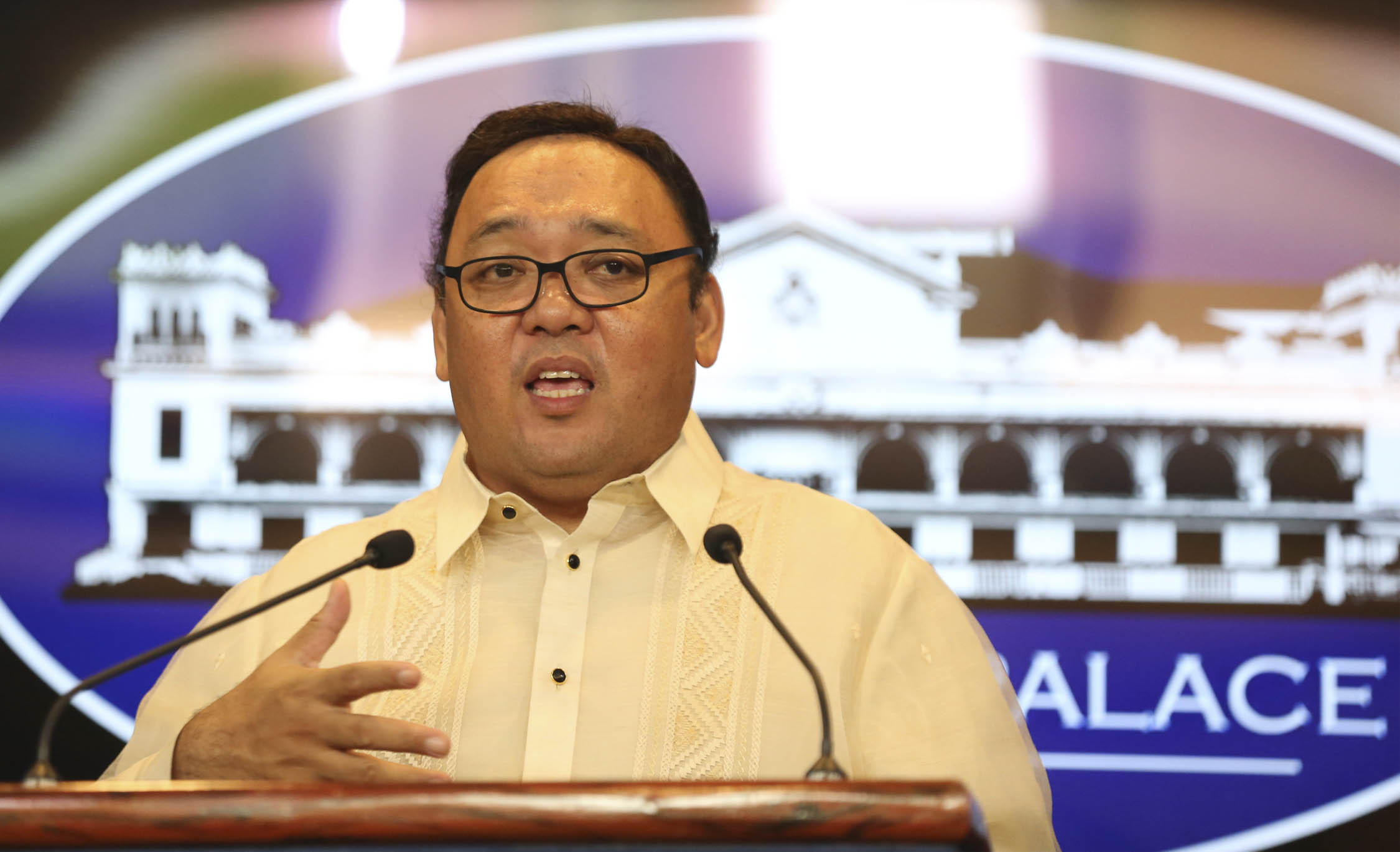
Presidential spokesperson Harry Roque INQUIRER PHOTO/JOAN BONDOC


On the observance of the International Human Rights Day, Presidential Spokesperson Harry Roque reiterated President Rodrigo Duterte’s commitment to uplift the lives of Filipinos, especially the poor, marginalized and vulnerable. Noting that the Philippines is an active member of the United Nations Human Rights Council and that respect for human rights is enshrined in the 1987 Constitution, Roque assured that the Duterte administration “works hard with the best interest of every Filipino.” ..“That direction is what inspires the government’s compliance with its human rights obligations. As a Nobel Peace Prize winner once said, ‘poverty is the absence of human rights” .

The Philippines has experienced a precipitous drop in basic human rights standards since President Rodrigo Duterte came to power last year, resulting in large, mass mobilizations across the country for the occasion of December 10, Human Rights Day. At least 12 rallies were held across the archipelago on Sunday, with human rights group KARAPATAN and progressive alliance BAYAN taking the lead alongside a range of like-minded groups calling for an end to what they describe as the U.S.-Duterte regime. In addition to over 13,000 small-time drug dealers and addicts killed during Duterte’s “war on drugs,” Karapatan has documented 113 victims of political killings, 81 victims of torture, 54,573 victims of threat, harassment, and intimidation, 364,617 who have suffered due to indiscriminate firing and aerial bombing, and 426,170 internally displaced who were subject to forced evacuation.  

Turkey:

Turkish President Recep Tayyip Erdogan. Photo: AA

Respect for human rights based on the principles of equality and non-discrimination of individuals before the law is the irreplaceable nature of the Republic of Turkey,” said Erdogan, according to state-run Anadolu Agency, on the occasion of Human Rights Day on Sunday. Erdogan specifically referenced Turkey’s commitment to “all oppressed people and victims from Palestine to Syria and Asia to Africa.”

Turkey has been cited by several international organizations for human rights violations, namely in its justice system, freedom of speech and Internet communications, treatment of minorities, and political censorship. See inter alia: https://www.amnesty.org/en/countries/europe-and-central-asia/turkey/report-turkey/and https://humanrightsdefenders.blog/2017/11/22/celebrities-come-out-to-support-taner-kilic-amnesty-turkeys-chair-on-trial-today/.

Thailand:

National Human Rights Commission (NHRC) commissioner and human rights defender Angkhana Neelaphaijit said that despite the government’s claim that it cherished human rights and had made them a priority, in reality it had done nothing to do so.
Angkhana Neelaphaijit
Thailand is still far from its goal of valuing human rights since the junta’s policies and actions have eroded rights, while many people do not even understand the principle. Prominent Thai campaigners marked Human Rights Day yesterday to lament that the country was still far from its professed goal of ensuring everyone was accorded the freedoms they deserve. The nation’s most severe human rights violation was the lack of freedom of expression, they said in an appeal to the National Council for Peace and Order (NCPO) to restore democracy to truly guarantee human rights for every citizen. They also said Thailand faced many serious human rights crises. For instance, social movements across the country continued to be suppressed by authorities, the justice system was being used against human rights defenders, and many people in society still did not understand human rights and harmed others. National Human Rights Commission (NHRC) commissioner and human rights defender Angkhana Neelaphaijit said that despite the government’s claim that it cherished human rights and had made them a priority, in reality it had done nothing to do so. On the contrary, Angkhana said the government was doing the very opposite, enforcing many laws and regulations that violated human rights and curbing the activities of campaigners, both through law enforcement and by force. In effect, the regime was deepening Thailand’s human rights crisis, she said.

Pakistan:

Message by Foreign Minister of Pakistan : ”On behalf of the people and Government of Pakistan, I wish to reiterate our strong commitment to promote and protect human rights and fundamental freedoms, as well as needs. Pakistan has demonstrated its resolve by enacting wide ranging legislation, establishing strong institutional machinery and putting in place robust policy measures in the field of human rights. Pakistan’s Constitution serves as an anchor and guarantor of fundamental freedoms and human rights of all Pakistanis.  The Government of Pakistan accords high priority to advancing mutually reinforcing objectives of development, human rights and democracy…This year is also significant for Pakistan in the field of human rights. Pakistan actively engaged with the UN human rights institutions and partners through regular submission of national reports, participation in review processes and implementation of recommendations arising from such mechanisms. Pakistan filed reports and participated in the review mechanism of three international treaty bodies, namely CAT, ICESCR and ICCPR. Pakistan also successfully presented its third national report on Universal Periodic Review (UPR) on 13 November 2017. This level of engagement, participation and contribution demonstrates Pakistan’s commitment as well as actions to advance the cause of human rights.  Pakistan’s success as the newly elected member of the Human Rights Council (HRC) this year is a testimony to the confidence reposed in Pakistan by the international community as a consensus builder within the international human rights policy framework.

The struggle against enforced disappearance was seen in Sindh alone while though there have been cases of missing persons in other provinces but Sindh has dared to raise voice against such violations of human rights.  These views were expressed at a seminar on occasion of Human Rights Day organized here by SAFWCO and Social Change. Noted Human Rights activist and lawyer Faisal Siddiqui said only voice against forced disappearances was being heard from Sindh while voice of Balochistan has been crushed with force. Though many persons were missing in KPK and Punjab but from there no voice is heard.  He said our judiciary has come out of colonization era and was giving right decisions. He said it was he who had filed petition in SHC for IG Sindh A.D.Khwaja. He said he was harassed for being advocate against Baldia Factory burning of 258 persons, Shahzeb Jatoi case and other cases for which he was harassed and could not open his office for many months. He said now powerful forces were active human rights.  The gathering paid tributes to Pubhal Saryo, convener of missing persons forum who was whisked away by agencies and released after more than 2 months. Punhal Saryo said it has become very difficult to work for human rights in situation where human rights defenders were also not safe.
—————–

http://www.khmertimeskh.com/5095119/civil-society-decries-attacks-nation-marks-human-rights-day/

https://www.telesurtv.net/english/multimedia/Human-Rights-Day-Marked-In-Philippines-Amid–All-Out-Repression-Drug-War-Martial-Law-20171210-0021.html & https://newsinfo.inquirer.net/951114/human-rights-day-roque-duterte-palace-poor-marginalized-un-rights-council

http://www.rudaw.net/english/middleeast/turkey/101220171

http://www.nationmultimedia.com/detail/national/30333640

http://www.mofa.gov.pk/pr-details.php?mm=NTY5Mw,, and http://www.pakistanchristianpost.com/detail.php?hnewsid=6705

Gauri Lankesh and Gulalai Ismail win 2017 Anna Politkovskaya Award

October 6, 2017

Thursday 5 October 2017, RAW in WAR (Reach All Women in WAR – <http://www.rawinwar.org) celebrated the courage of Gauri Lankesh, an Indian journalist and human rights campaigner, and Gulalai Ismail, a Pakistani human rights and peace activist by according them the 2017 Anna Politkovskaya Award for their courage to speak out and to defy extremism in the context of violence and armed conflict in their countries, for which they suffered death threats and Gauri paid for it with her life. Gulalai opposes Islamic extremism in Pakistan and Gauri – the Hindu extremism in India. A month ago today, on 5th September 2017, she was murdered when entering her home, in an attempt to silence her voice. For more on the award see: http://trueheroesfilms.org/thedigest/awards/anna-politkovskaya-award

On Gulalai Ismail and Gauri Lankesh receiving the 2017 Anna Politkovskaya Award, as well as the special tribute to Jamalida Begum (Myanmar/Bangladesh)Baron Judd of Portsea, a member of the 2017 Award Nominations Committee, said:  “Amidst all the disturbing violence and repression, not least of journalists, which is increasingly prevalent, Anna Politkovskaya remains a heroic example of courage and integrity.  I am glad to salute Gulalai Ismail and the late Gauri Lankesh together with Jamilida Begum as brave champions of Anna’s cause.  In doing this I also salute the countless individuals who are victims of oppression, tyranny, torture, sexual abuse and disappearances, wherever this occurs.”

Gulalai Ismail, at the age of 16 in 2002, founded Aware Girls , with her sister Saba Ismail, aiming to challenge the culture of violence and the oppression of women in the rural Khyber Pakhtunkhwa  area in the north west of Pakistan. Driven by a passion to challenge the inequality, intolerance and extremism, they began running workshops to provide girls and young women with leadership skills to challenge oppression and fight for their rights to an education and equal opportunities. Malala Yousafzai was an attendee of Aware Girls programmes in 2011.
Gauri Lankesh Gauri Lankesh, 55, an outspoken Indian newspaper editor, was shot dead outside her home by unidentified assailants in the southern city of Bengaluru, at a time of rising nationalism and intolerance of dissent in the country. She was a major figure in India, critic of right-wing Hindu extremism, campaigner for women’s rights, fiercely opposed to the caste system, campaigning for rights of Dalits and so on. With mixed feelings, Kavitha Lankesh, Gauri’s sister, told media persons here on Thursday that the Anna Politkovskaya Award was a morale booster for people who want to write and continue to fight against injustice. It was an honour not only for the members of Gauri’s family, but also to “huge family” that loved Gauri for her commitment to the cause of secular ideals, justice, equality and women rights. “In fact, the award honours what Gauri stood for throughout her life… that ‘you cannot silence me’”.

Sources: Gauri Lankesh & Gulalai Ismail Win 2017 RAW in War Anna Politkovskaya Award for Women HRDs | NewsClick

http://www.thehindu.com/news/cities/bangalore/gauri-lankesh-posthumously-honoured-with-anna-politkovskaya-award/article19802238.ece

http://www.reuters.com/article/us-india-journalist-award/award-honors-slain-indian-journalists-courage-to-write-and-fight-idUSKBN1CA01U

Parveena Ahangar and Parvez Imroz in Kashmir awarded Rafto Prize 2017

September 30, 2017

Several newspapers (here the Indian Express) referred to the announcement of the RAFTO award 2017. On Thursday the Bergen-based group announced that the award has gone to human rights defenders Parveena Ahangar and Parvez Imroz for their campaign “to expose human rights violations, promote dialogue and seek peaceful solutions to the intractable conflict in Kashmir that has inspired new generations across communities.” The Rafto Foundation noted “Parveena Ahangar and Imroz Parvez have long been at the forefront of the struggle against arbitrary abuses of power in a region of India that has borne the brunt of escalating violence, militarisation and international tension.” For more on the Rafto award, see: http://trueheroesfilms.org/thedigest

Terming the award an acknowledgement from Europe, Imroz, human rights lawyers and the founder of the Jammu Kashmir Coalition of Civil Society (JKCCS) said, “This helps to remind us that the international community has taken note of our struggles and our work.” “The state extends its control over every aspect of this conflict…. Speaking truth to power is not easy in these circumstances. This award is a recognition of the civil society in Kashmir” [see also https://humanrightsdefenders.blog/2016/12/01/human-rights-defender-khurram-parvez-reluctantly-released-in-india/

Source: J&K activist, lawyer awarded Rafto Prize | The Indian Express

Eulogy of Pakistan’s Abdul Sattar Edhi, “the richest poor man”

July 11, 2017

edhi

Farah Jamil published on 10 July 2017 a blog post “The Richest Poor Man” recalling the life of the great humanitarian Abdul Sattar Edhi from Pakistan. Leading humanitarian and the most endearing person in the country. ‘Edhi’ left us at the age of 88 last year on July 8. He had been suffering from kidney failure since 2013 and was on dialysis. Edhi dedicated his life for the welfare of the poor irrespective of their caste, class and creed and that’s what makes him an asset for the whole universe. “He was not only an asset for this country but for the whole humanity because of his selfless work”.

It was in 1974 when a formal institution by the name of Edhi Foundation was set up. …..with more than 1,800 ambulances stationed across Pakistan, the Edhi Foundation is Pakistan’s largest welfare organization.  In 1997, the foundation entered the Guinness World Records as the “largest volunteer ambulance organization”. The Edhi Foundation’s slogan is: “Live and help live”.….

Edhi Sahab received many national and international awards included the Ramon Magsaysay Award for Public Service, Lenin Peace Prize, Hamdan Award for volunteers, Peace and Harmony Award (Delhi), Peace Award (Mumbai), Gandhi Peace Award (Delhi), UNESCO-Madanjeet Singh Prize.

Throughout his life, Edhi sahab set examples for the world to follow through his actions. He was a simple man with a heart of gold. He slept in a windowless room adjoining the office of his foundation furnished with just a bed, a sink and a hotplate.…..

His last words were:

–Bury me in same clothes, donate all my body parts, and make sure my clothes are distributed among others.

—Take care of the poor people of my country.

…….Edhi sahib, you indeed were the richest poor man!

Source: #MainEdhiHun: The Richest Poor Man | SAMAA TV

Five Asian human rights defenders speak about anti-torture work in their region

February 2, 2017

The weekly video service of Just Asia of 26 January 2017 is a special focus on the regional meeting of Asian Parliamentarians & Human Rights Defenders Against Torture, held in Hong Kong in December. During the meeting focusing on modernizing criminal institutions, Just Asia interviewed several parliamentarians and human rights defenders.

Just Asia speaks to Dr. P. M. Nair, Chair Professor at the TATA Social Sciences Institute. According to Dr. Nair, institutions need to work together in India to combat torture, and he is confident that once this occurs, things will improve quickly. Dr. Nair also noted the importance of persons implementing laws and regulations to have a human rights perspective, which would particularly help vulnerable and marginalized sections of society.

Just Asia interviews Pakistani Member of National Assembly Imran Zafar Laghari, to learn his views on the rising incidents of torture and corruption in the policing and judicial systems.

In Nepal, the February 2017 deadline for the transitional justice commissions to complete their work is fast approaching. However, other than collecting over 60,000 complaints and starting preliminary investigations, the Truth and Reconciliation Commission (TRC) and the Commission of Investigation on Enforced Disappeared Persons (CIEDP) have not succeeded in anything meaningful. Meanwhile, Nepal’s Anti-torture legislation is pending in the Parliament. With Colonel Kumar Lama being released by the UK court, there are nominal chances for the Parliament to pass the anti-torture legislation and put it into practice. Just Asia speaks to Mr. Dipendra Jha, a practicing lawyer at the Supreme Court of Nepal, for his views.

Indonesia also faces a rise in executions and the use of the death penalty. At the same time, the revision of the country’s penal code has been ongoing for over a decade. Member of the drafting committee and parliamentarian Mr. Arsul Sani speaks about his views on the penal code revision process and rule of law in Indonesia.

Bangladesh has seen considerable violence and political manipulation in the last year. Dr. Badiul Alam Majumdar, secretary of Citizens for Good Governance shares with Just Asia his views on free and fair elections and the Bangladesh electoral system.

See also: https://humanrightsdefenders.blog/2017/01/16/amila-sampath-the-man-behind-the-video-service-of-just-asia/

For comments write to: news@ahrc.asia.

2017 (3): HRW reminds world of continuing repression of minorities and their defenders

January 20, 2017

On 12 January 2017, Human Rights Watch (HRW) released its World Report on global human rights violations in 2016 and on the dangers the world will be facing in 2017. HRW shines its spotlight on the global rise of authoritarian populism and the concomitant toughening and broadening of anti-terrorism legislation around the world, which endangered throughout 2016 – and must be expected to keep challenging in 2017 – the very foundations of human rights law and the personal dignity inherent in every human being just as much as the despicable extremist attacks, to which they are a direct reaction.

Below the UNPO‘s (stand for the UNREPRESENTED NATIONS AND PEOPLES ORGANIZATION) reading of the report which notes with satisfaction that HRW does not neglect to emphasize in its country reports the persisting human rights abuses directed against indigenous peoples and ethnic and religious minorities around the world, but also sees some shortcomings (from its own perspective): Read the rest of this entry »

Re-appearance of Abdul Wahid Baloch in Pakistan after four months!

December 8, 2016

abdul-wahid-balochRe-appearances after a time lapse of 4 months are rare. So this case in Pakistan deserves a mention: Abdul Wahid Baloch is a human rights defender who has called for justice for the Baloch community through the organisation of campaigns, protests and public condemnation of a number of high profile cases. Human rights defenders that have demanded justice for state violations against the Baloch community have been regarded as being anti-state by the Pakistani authorities.  On the morning of 5 December 2015, Abdul Wahid Baloch returned to his house in Karachi, roughly four months after his disappearance on 26 July 2016. Abdul Wahid Baloch thanked human rights groups, media and individuals who campaigned for his release but refused to comment on anything involving his disappearance.

Source: Abdul Wahid Baloch | Front Line Defenders

For another post on repression of the Baloch: https://humanrightsdefenders.blog/2014/04/07/intimidation-against-human-rights-defender-nasrullah-baloch-in-pakistan/

Interview with Hina Jilani, first UN Special Representative for Human Rights Defenders

November 9, 2016

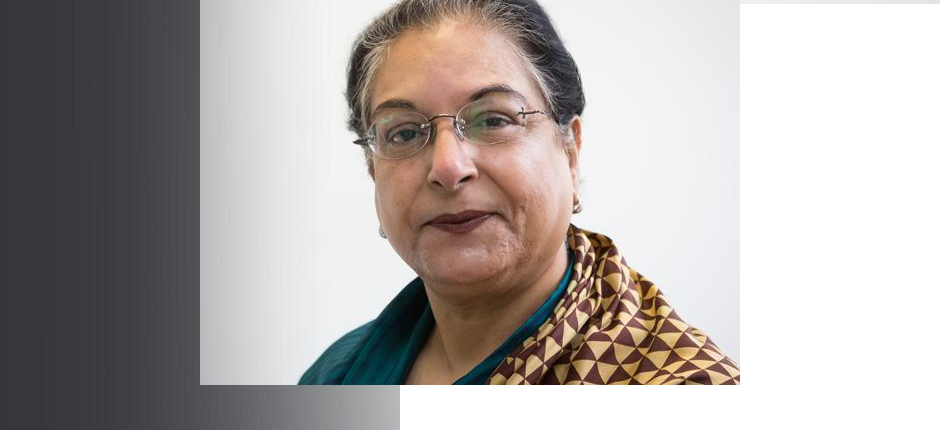
hina-jilani-biography-1_940x430The Diplomatic Courier of 9 November 2016 carries a long and serious interview with Hina Jilani, First UN Special Representative for Human Rights Defenders (2000-2008). In 2006, she was appointed to the UN International Fact-Finding Commission on Darfur, Sudan.  In 2009, she served on the United Nations Fact Finding Mission on the Gaza Conflict. In 2013, she joined The Elders, a group of world leaders and human rights leaders, brought together by Nelson Mandela. A preeminent lawyer, Hina Jilani co-founded the first all women law firm in Pakistan and the National Human Rights Commission of Pakistan. Hina Jilani has been in the forefront of human rights in Pakistan beginning from Zia Ul-Haq’s dictatorship in the 1970s.

 You served as the first mandate holder of the UN Secretary General’s Special Representative for Human Rights Defenders from 2000 to 2008 and shaped that seminal mandate. Please tell us some of the key aspects of that mandate?
Photo by The Elders.

HJ: Respect for human rights necessarily includes recognition of the legitimacy of the work of defenders. As a response to the deteriorating situation of human rights defenders, the United Nations adopted the Declaration on human rights defenders in 1998. On the one hand this was recognition of the dangers that human rights defenders confront and, on the other, a step taken by the international community to create norms for the protection of human rights activity. The Declaration makes it the primary responsibility of the State not only to guarantee the safety of human rights defenders, but also to ensure that conditions exist in which they can carry out their activities.  The mandate to oversee the implementation of the Declaration was established by the UN Secretary General in 2000. The mandate required the SRSG seek, receive examine and respond to information on the situation of human rights defenders and to establish cooperation and conduct dialogue with Governments and other interested actors on the promotion and effective implementation of the Declaration as well as on improving the protection of human rights defenders.

In a world where there is rising violent extremism and heightened crackdown on human rights defenders, please share some key challengers of human rights defenders around the world?

HJ: Establishing promoting and sustaining democracy, maintaining international peace and security and providing or advancing a people oriented agenda for development cannot be accomplished without the contributions that human rights defenders make. Defenders bring to the fore information on the realities of situations to be addressed without which national and international efforts would be ineffective. They contribute to poverty alleviation, humanitarian assistance, post-conflict reconstruction, and to improving individual indicators of development such as access to health care and adult literacy, among many other activities. In situations of crises, defenders can monitor an overall situation, rapidly investigate allegations of possible violations and report their conclusions, providing a measure of accountability. They also provide the international community with some independent verification of what is actually happening within an emergency situation, informing the process of taking decisions on possible actions. This was not easily done. Human rights defenders have suffered harm and face grievous threats to their life, liberty, security, independence and credibility. State apparatus, oppressive laws and other tools of repression continue to be used against defenders in attempts to deter them from the valuable work they contribute to the promotion of human rights. Human rights defenders all over the world continue to be subjected to assassinations, disappearances, illegal arrest and detention, torture, harassment and even exile.


……Can you speak of Blasphemy laws that target minority Muslim populations in Pakistan?  How did you face death threats and attacks on your family because of your struggles against Blasphemy laws and other human rights atrocities in an environment of impunity?

What are called “blasphemy laws” in Pakistan are provisions introduced in the Pakistan Penal Code by Zia’s regime, ostensibly to enforce respect for Islamic personalities and the Holy Quran. In reality this was a ploy to instill fear in the population. One particular provision disregards fundamental principles of criminal justice and makes mens rea irrelevant to a finding of guilt. It also prescribes a mandatory death sentence upon conviction. The law is not only flawed in legal aspects it has been used for malicious prosecution and has targeted religious minorities – not just non-Muslims, but also different minority sects of Muslims in Pakistan. Special laws were promulgated to restrict the freedom of religion of the Ahmediya community in Pakistan, that still remains a persecuted and threatened community in Pakistan. Any one raising their voice against this law is exposed to extreme violence at the hands of organized religious terrorists, who operate with impunity in Pakistan. The State has been both unwilling and unable to perform its duty to protect in cases where people are either threatened or have actually been harmed by these groups. Lawyers defending those who are accused of blasphemy, judges who have acquitted the accused persons and public figures who have pointed out the flaws in the law or the political and malicious use of the law have been killed. There is an apparent policy of silencing criticism through fear. There are, therefore, only a few voices that continue to be raised and these are people who remain extremely vulnerable to harm.

…….What is your advice to the new Secretary General of the United Nations?

HJ: The work of the United Nations for promoting peace and improving security of people living in different parts of the world can not be completed without due attention to the respect for human rights, the UN must ensure better coordination of its political and human rights policies and strategies. I would also strongly recommend that the UN Security Council and the UN Human Rights Council seriously consider making reference to the protection of human rights defenders and to the importance and legitimacy of their work in all their resolutions relating to the maintenance of peace and security. None such resolution so far mentions this very critical aspect of the protection and promotion of human rights…

For earlier posts on Jina Jilani: https://thoolen.wordpress.com/tag/hina-jilani/

Source: Interview with Hina Jilani, First UN Special Representative for Human Rights Defenders – Diplomatic Courier

Pakistani Digital activist Nighat Dad recipient of 2016 Human Rights Tulip

November 6, 2016

The 2016 Human Rights Tulip has been awarded to the Pakistani internet activist Nighat Dad stated the Dutch Ministry of Foreign Affairs today, 6 November 2016.

Human Rights Tulip
Human Rights Tulip Photo: Aad Meijer/Newsroom BZ

The Human Rights Tulip is an annual prize awarded by the Minister of Foreign Affairs to human rights defenders who take an innovative approach to promoting human rights. The prize consists of a bronze sculpture (see picture above) and €100,000, which is intended to enable recipients to further develop their work. [for last year’s award: https://thoolen.wordpress.com/2015/12/12/2015-human-rights-tulip-awarded-to-ira-mauritania/]

Human rights defenders are modern-day heroes,’ said minister Bert Koenders ‘Despite the many threats she has received, Nighat Dad continues to fight to improve adherence to human rights in Pakistan in a unique and innovative way. Ms Dad is a pioneer who is working to remove everyday obstacles to internet access, especially those that affect women.

Ms Dad is a staunch defender of digital rights and the importance of protecting women and girls and marginalised groups on social media. Mr Koenders hopes that this prize will serve as a gesture of support for the freedom of internet users, especially women. In 2012 Ms Dad founded the Digital Rights Foundation, which supports female internet users in the form of digital security training courses, public awareness campaigns and the newly created Cyber Harassment Helpline. Ms Dad’s approach enables her to reach women throughout Pakistan, including those in more remote areas of the country. She was awarded the Atlantic Council Digital Freedom Award 2016 and was among six ‘next generation leaders’ named by TIME Magazine last year.

Foreign minister Bert Koenders will present her with the prize on Saturday 10 December, Human Rights Day, in The Hague.

For earlier posts on the Tulip award: https://thoolen.wordpress.com/tag/tulip-award/

Source: Nighat Dad recipient of 2016 Human Rights Tulip | News item | Government.nl

http://www.dawn.com/news/1294671/pakistani-digital-rights-activist-nighat-dad-awarded-2016-human-rights-tulip-award

Iftikhar Mubarik, discusses his work addressing child exploitation in Pakistan

September 26, 2016


Human right defender, Iftikhar Mubarik, discusses his work addressing child exploitation in Pakistan and how he seeks to utilise the UN Human Rights system.


https://www.ishr.ch/news/human-rights-defender-profile-iftikhar-mubarik-pakistan