Posts Tagged ‘NGOs’

International Women’s Day 2020: Joint Statement at 43rd session of UN Human Rights Council

March 9, 2020

Many organisations, especially NGOs, used the occasion of International Women’s Day 2020 to highlight work carried out by women human rights defenders. See also: https://humanrightsdefenders.blog/2020/02/27/women-human-rights-defenders-in-focus-at-43rd-human-rights-council/. Here an example of how 18 NGOs came together for a Joint Statement during the 43rd session of the UN Human Rights Council

The speaker was: Paola Salwan Daher, Center for Reproductive Rights:

Renewal of the UN Special Rapporteur on Human Rights Defenders crucial

February 29, 2020

At the 43rd session of the Human Rights Council, States will consider a resolution extending for three years the mandate of the Special Rapporteur on the situation of Human Rights Defenders. Civil society organisations from across the world are calling on all States to support the consensus renewal of the mandate, and to resist any attempt to undermine the mandate and States’ obligations. This is a key opportunity for States and the Council to demonstrate their support and recognition for the indispensable role defenders play to ensure that all people enjoy freedom, dignity, justice and equality. Despite their vital contribution, both some governments and non-State actors are still seeking to silence defenders as they expose injustices and demand accountability for all.

The mandate of the Special Rapporteur on the situation of human rights defenders is integral to their protection and recognition, globally. It gathers and responds to information on the situation of defenders around the world, engages constructively with governments and non-State actors and provides expert recommendations to promote the effective implementation of the Declaration on human rights defenders (‘the Declaration’).  See also: https://humanrightsdefenders.blog/2019/09/11/what-should-michael-forsts-successor-as-rapporteur-on-hrds-look-like/

In 2019, the Human Rights Council and the General Assembly supported the vital work of defenders. The Human Rights Council recognised the critical role of environmental human rights defenders in protecting natural ecosystems, addressing climate change, attaining the sustainable development goals (SDGs). The General Assembly passed by consensus a resolution focusing on implementation of the Declaration and some key elements of protection policy; the resolution also attracted a record number of co-sponsors.

More than 50 Civil society organisations from across the world are calling on all States to support the extension of the mandate of the Special Rapporteur by:

  • Participating positively in the negotiations on the resolution,
  • Presenting early co-sponsorship of the text,
  • Resisting any attempts to dilute the mandate or State obligations, and
  • Supporting consensus renewal of the mandate.

https://www.ishr.ch/news/hrc43-support-consensus-renewal-un-special-rapporteur-human-rights-defenders

28 NGOs ask EU Parliament to reject cooperation deal with Vietnam on 11 February

February 10, 2020

The signing NGOs include Human Rights Watch, Defend the Defenders, The 88 Project, and the Independent Journalists Association of Vietnam.

There are notable precedents of the European Parliament setting human rights benchmarks to be met before giving their consent to bilateral deals in order to promote human rights progress,” the NGOs claim pointing to a 2016 case in Uzbekistan and the EP’s rejection in March 2019 of the EU-Turkmenistan Partnership and Cooperation Agreement. The European Parliament needs to take the exact same strategy with Vietnam, withholding Parliament’s permission and authorizing an identical resolution outlining the civils rights problems that Vietnam must satisfy for MEPs to greenlight the offer,” the NGOs claimed.

Only once a series of human rights concerns have been duly addressed by the state authorities, MEPs should give their consent to the deals.

See however 24 April 2020: https://www.marketscreener.com/news/EU-Vietnam-free-trade-agreement-passes-despite-human-rights-concerns–30471437/

https://www.hrw.org/news/2019/11/04/joint-ngo-letter-eu-vietnam-free-trade-agreement

Dutch government critical of pro-Israel lobby “NGO Monitor”

January 17, 2020

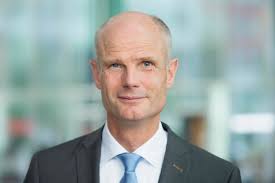
Dutch foreign minister Stef Blok

The Israeli government’s attacks on human rights defenders are aided by organisations such as NGO Monitor, which in particular lobby European authorities to cease funding such human rights groups. The Dutch minister added that “the government is familiar with the accusations by NGO Monitor against a broad group of Israeli and Palestinian human rights organisations, as well as with criticism of the conduct of NGO Monitor itself”, citing a September 2018 report by the Policy Working Group. “This research shows that many of NGO Monitor’s accusations are based on selective citations, half-facts and insinuations, but not necessarily on hard evidence”, Minister Blok added. “These accusations have contributed to a climate in which human rights organisations have come under increasing pressure”. [see also: https://humanrightsdefenders.blog/2019/08/01/following-threats-to-ngo-offices-in-israel-human-rights-defenders-demand-investigation/]

In response to a separate question, the Dutch foreign minister noted that, “to the best of the government’s knowledge, NGO Monitor…focuses exclusively on organisations and donors who are critical of Israeli policy in the territories occupied by Israel”.


Dutch government criticises pro-Israel lobby group NGO Monitor’s ‘half-facts and insinuations’

Saudi Arabia finds that celebrities are easier to buy than human rights NGOs

January 13, 2020
On 13 January 2020 Amnesty International has released a joint statement, along with Transparency International and Civicus, [https://www.amnesty.org/en/documents/ior30/1649/2020/en/] explaining why it will not be engaging in this year’s C20 process, a cycle of preparatory meetings leading up to the annual G20 summit, which  started yesterday with a three-day “kick-off meeting”.

“The C20 is supposed to provide a platform for civil society voices from around the world to influence the G20 agenda. Since Saudi Arabia has locked up most of its own independent activists, the only domestic organizations present will be aligned with the government – which makes a mockery of the whole process,” said Netsanet Belay, Research and Advocacy Director at Amnesty International. “The C20 in Riyadh is a sham. We cannot participate in a process which is being abused by a state which censors all free speech, criminalizes activism for women’s and minority rights, as well as homosexuality, and tortures and executes critics.”

Saudi Arabia took over the G20 presidency in December 2019. It has recently invested in expensive PR campaigns to improve its image, and hosted several high-profile sporting events which draw international visitors [see e.g.: https://humanrightsdefenders.blog/2020/01/04/dakar-rally-starts-on-5-january-in-jeddah-but-hrds-in-jail/]. But behind this carefully cultivated façade, Saudi Arabia’s human rights record is as appalling as ever. Saudi Arabia is responsible for the extrajudicial execution of the journalist and peaceful critic Jamal Khashoggi. More than a year after his murder in October 2018, there has been no justice or accountability for his death. [see also: https://humanrightsdefenders.blog/2019/12/27/saudi-arabia-continues-to-buy-celebrities-this-time-for-the-mdl-beast-festival/]

The country’s leading women’s rights activists remain behind bars and on trial for their promotion of women’s rights in the country. Scores of other individuals, including human rights defenders, have been serving lengthy prison terms for their peaceful activism or have been arbitrarily detained for up to a year and a half without charges. The Saudi Arabian authorities have also carried out executions following unfair trials and routine torture and other ill-treatment in custody.

The Saudi-led C20 process has already failed to guarantee the C20’s fundamental principles. The appointment of the Chairs of working groups and various committees was opaque and non-consultative, while arbitrary decisions have excluded experienced international groups. The C20 process is led by the King Khalid Foundation, which is connected to the Saudi Royal Family, and cannot be considered as transparent, inclusive and participatory. Since the Saudi authorities ban political parties, trade unions and independent human rights groups, there is no way the C20 meetings can be the free and open discussions they are designed to be.

The full statement is available here

Annual reports 2019: Tanzania mostly a bad year

December 31, 2019
And here the last of my selected annual reports of 2019:

..Should the country’s human rights defenders have any New Year resolutions of ensuring some notable rights violations are brought to an end, they must brace to encounter setbacks and frustrations from what is happening on the ground. Concerns on declining press freedom, the ban on political rallies, the push for an arrangement that would ensure a free and fair elections are some of the issues that continued to test the commitment of authorities in ensuring respect for human rights principles…

While it is true that there were many incidents which activists have described as blatant violations of human rights and the rule of law, the most recent is the ‘kidnapping’ of rights activists Tito Magoti and Theodory Faustine. Their earlier absence in the public eyes sent people into a frenzy which forced the police to clarify that it was they who ‘arrested’ the two. Mr Tito Magoti and Mr Theodory Giyan face three counts of leading a criminal gang, possession of a computer programme designed to commit an offence and money laundering. The former is a Public Affairs’ officer with the Legal and Human Rights Centre (LHRC) while the latter is associated with a digital solutions company, iPF Softwares. They are both at Segerea Remand prison awaiting their case scheduled on January 7, 2020 for mentioning.

..Journalists and the press, in general, were neither spared from the wreck of 2019 violations of people’s basic freedoms. According to the Media Council of Tanzania (MCT), a local press freedom advocacy group, incidents of violations of press freedom, including threats and interference in editorial independence, increased in Tanzania from eight in 2015 to 28 cases in 2019. [see e.g. https://humanrightsdefenders.blog/2019/08/06/journalist-kabendera-in-tanzania-now-suddenly-held-on-economic-charges/]

..Perhaps the serious blow to the country’s human rights landscape came from the government’s decision to withdraw its declaration it made under Article 34(6) of the Protocol establishing the African Commission on Human and Peoples’ Rights (AfCHPR) which gives individuals and non-governmental organisations (NGOs) a direct access to the court once the national judicial mechanisms have been exhausted. The decision came soon after the African Union rights body condemned massive human rights violations by authorities, especially reluctance to investigate serious human rights breaches like that of the disappearance of freelance journalist Azory Gwanda. [see: https://humanrightsdefenders.blog/2019/12/06/tanzania-wants-to-withdraw-right-to-complain-to-african-court/]

..Meanwhile, the political parties continued to raise the alarm; that they were operating under stringent conditions in the past three years as the government’s ban on political rallies remained in force. The year 2019 also witnessed the passing of amendments into the Political Parties Act which Tanzania’s political observers described as draconian.

.. Amidst these negative developments, nonetheless, there was also some positive steps taken by the government to try expressing its commitments to issues pertaining to human rights and good governance. This includes the revival of the State human rights and good governance commission. Since the stepping down of the former chairman, renowned lawyer Bahame Tom Nyanduga and his commissioners, the CHRGG remained inactive, making many of its tasks taken over by independent rights organisations which are blaming authorities over alleged failures to uphold the principles of human rights and the rule of law . President John Magufuli finally sworn-in the new CHRGG commission and asked the officials to go and help people whose rights are violated. President Magufuli’s directives to the commission were timely, to say the least, as they came immediately before Amnesty International and Human Rights Watch released scathing reports on the human rights situation in Tanzania. Launched on October 28, 2019, the two organisations expressed concerns the state of human rights in Tanzania.

..Other human rights-related concerns in 2019 were the frequent anti-human rights statements made by senior government officials which are often followed by cracking down on individuals and organisations.

Rights activists have also expressed uneasiness with the rhetoric, often coupled with arbitrary arrests and threats to deregister nongovernmental groups, which they think has stifled independent reporting by journalists and public discussion on human rights violations and abuses including in the context of the upcoming elections. “Tanzania should show true commitment to protecting and fulfilling the rights to freedom of expression and association. The authorities need to put a stop to harassment, intimidation, and arbitrary arrests of activists, journalists, and opposition members,” said Oryem Nyeko, Africa researcher at Human Rights Watch.

Special fund for rural defenders in South Africa

December 25, 2019
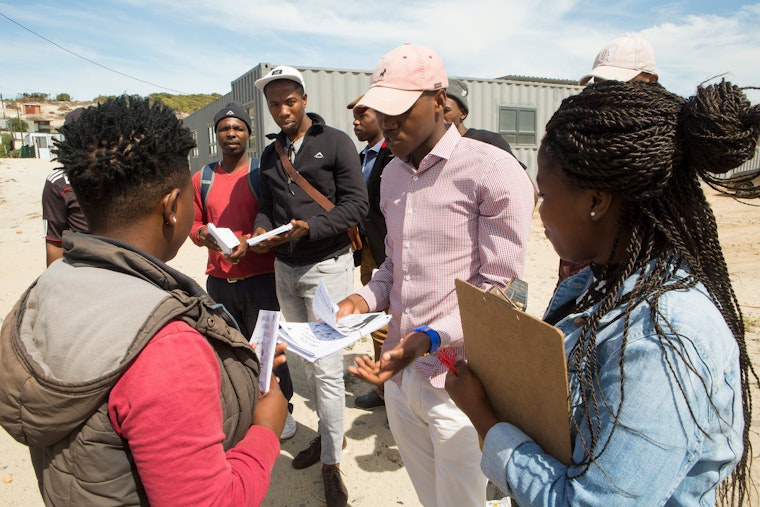
People standing in a circle in a settlement
A group of activists meets before a march for land rights, in Cape Town, South Africa, on March 7, 2018.© Melanie Stetson Freeman/The Christian Science Monitor/Getty

Sharan Srinivas (program officer with the Open Society Human Rights Initiative) wrote on 16 December 2019 about Protecting Civil Society in South Africa. …Before he was gunned down in front of his son, Sikhosiphi “Bazooka” Rhadebe—a leading environmental and housing advocate in Xolobeni, South Africa—telephoned others who had spoken out against mining interests along South Africa’s Wild Coast. He was checking on like-minded activists’ safety and warning them that a “hit list” had been developed targeting human rights defenders in the area who stood up against mining interests. Two hours later, gunmen posing as police officers shot him at his home.

No one has been held accountable in the killing of Rhadebe, which advocates now see as the first data point in a disturbing new trend. Increasingly, those that stand up for environmental, housing, and land rights in South Africa face bitter—and often violent—attacks. To counter this trend, the Open Society Foundations announced recently the creation of a new fund, hosted at the Southern Africa Human Rights Defenders Network, intended to provide support to activists. The fund will provide support services to activists depending on their needs and will include the provision of legal representation; emergency relocation for activists and their families; and physical, psychological, and medical support.

South Africa is rightly commended for its vibrant civil society, robust institutions and progressive constitution, which enshrines the fundamental rights of expression and assembly. But joint research conducted by Human Rights Watch, Earth Justice, GroundWork, and the Center for Environmental Rights reveals that communities who are exercising these fundamental rights have faced vicious reprisals.

  • There is an ongoing pattern of police misconduct during peaceful protests.
  • Local municipalities often impose extralegal restrictions on protest in mining affected communities.
  • An environment of fear has been created among community activists.

Though activists based in South Africa’s major cities are well connected to the international infrastructure built to protect human rights defenders, many attacks against community-based activists located in rural and isolated parts of the country have gone unreported and unnoticed. The fund hopes to serve as a vehicle of solidarity, and to strengthen the resilience of frontline community activists. Sharan Srinivas is a .

NGOs not willing to forget Syria’s disappeared human rights defenders

December 15, 2019
Human rights activists Razan Zaitouneh, Samira al-Khalil, Wael Hamada and Nazim Hammadi, called the “Douma 4”. Photo credit: Free #Douma4/Facebook

A very large number of human rights groups issued a joint statement on the missing, detained and forcibly disappeared human rights defenders in Syria, calling for their release, and an end to the culture of impunity for perpetrators of crimes against humanity. This statement was originally published on scm.bz on 9 December 2019.

Six years ago, the joint office of the VDC, LDSPS and Rising for Freedom in Douma in Eastern Ghouta was raided by armed men who abducted four human rights defenders, Razan ZAITOUNEH, Wael HAMADA, Samira ALKHALIL and Nazim HAMMADI (often referred to as the “Douma 4″). The parties controlling the region have changed and tens of thousands of people have been displaced, but the fate of our colleagues remains unknown. Razan Zaitouneh was one of the finalists of the MEA in 2016 (see: https://humanrightsdefenders.blog/2014/01/27/human-rights-defender-razan-zaitouneh-still-missing-in-syria-after-one-month/ and https://humanrightsdefenders.blog/2016/09/20/this-is-what-mea-jury-members-say-about-razan-zaitouneh-abducted-in-syria-in-2013/).

The groups pledge to fight impunity, as a basic guarantee for building a democratic state based on the separation of powers, the protection of human rights and citizenship, a state governed by law.   We remind the parties and guarantors of the political solution negotiations in Syria that revealing the fate of the missing, releasing the detainees, ensuring justice and holding the perpetrators of major crimes against humanity accountable is the best guarantee to end the culture of impunity and lay the first cornerstone for any future stability and peace in Syria and the region.

The organizations, emphasize the following:

  • We will continue to defend the fundamental rights of all Syrian citizens, seek truth and establish justice and work to hold those responsible for major crimes accountable.
  • We will continue to pursue the establishment of a transparent, fair and national accountability mechanism with international guarantees that investigate crimes and ensure accountability, reparation, and non-repetition, as only this guarantee will ensure sustainable peace in Syria.
  • We reaffirm our call on the countries and guarantors involved in the building of a political solution in Syria to face their responsibilities towards producing a political solution that establishes sustainable peace. By giving priority to restoring trust between parties to the conflict, first and foremost we urge those responsible to reveal the fate of the disappeared and detained in Syria, and pressure all parties of the conflict to commit to justice and to cooperate.
  • We call upon the international community and the United Nations to fulfill their responsibilities to defend human rights and work hard to uncover the fate of the missing and detained in Syria and ensure the freedom and safety of human rights defenders in order to ensure the launch of a political process that establishes a democratic state in Syria.

The Disappeared: Where are Syria’s forcibly disappeared activists?

Russia’s “foreign agents” bill goes in overdrive

November 19, 2019

Massive call in support of Ahmed Mansoor at his 50th birthday – How can Emirates remain deaf?

November 5, 2019

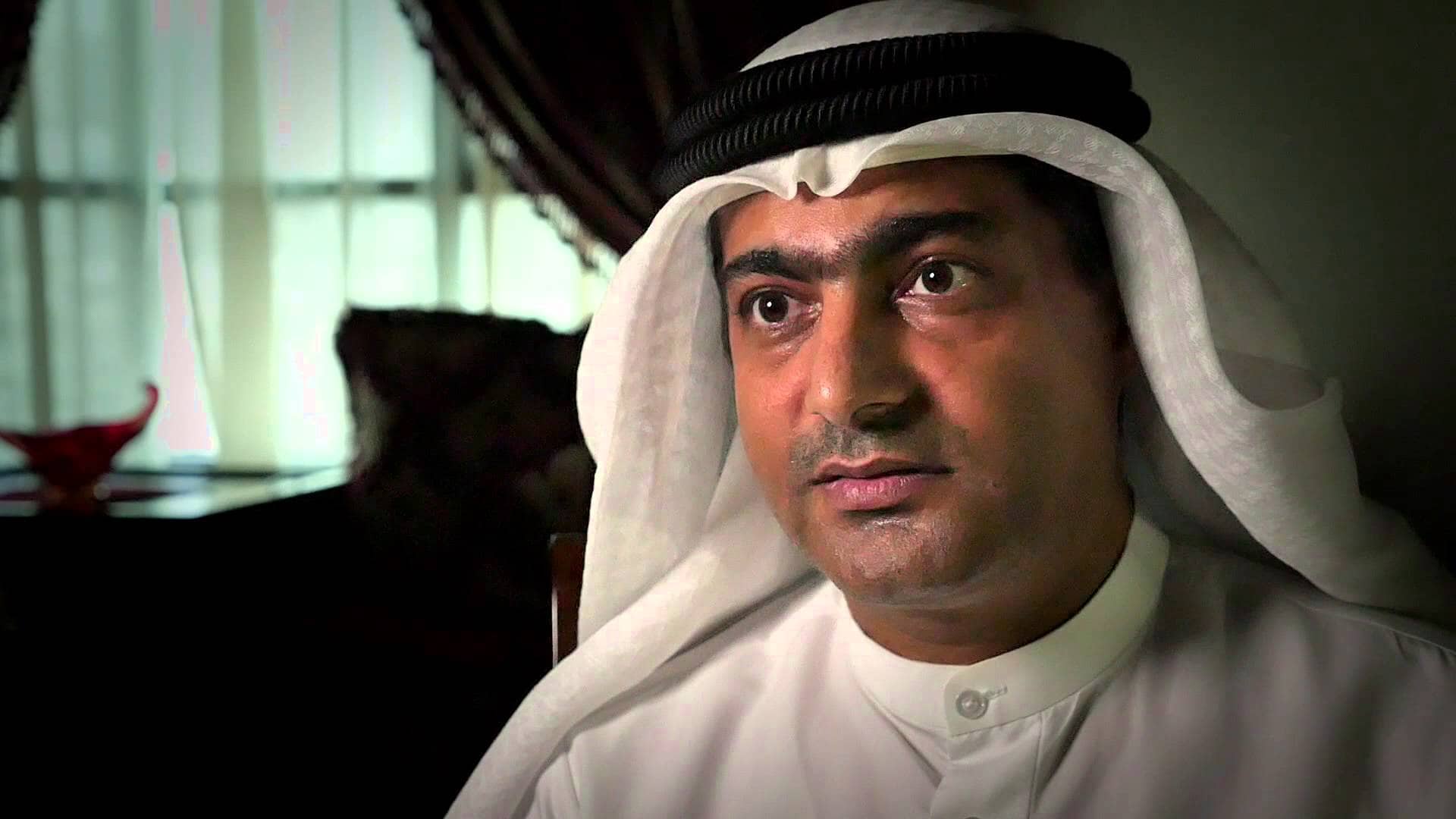
Screenshot from Youtube video on Ahmed Mansoor, a Martin Ennals Award Laureate 2015, Youtube/Martin Ennals Foundation

Screenshot from Youtube video on Ahmed Mansoor, a Martin Ennals Award Laureate 2015, Youtube/Martin Ennals Foundation

142 civil society organisations have called upon the UAE government to unconditionally release human rights defender Ahmed Mansoor, whose life they believe may be at risk following beatings and hunger strikes to protest his inhumane prison conditions. This statement was originally published on gc4hr.org on 16 October 2019.

Your Excellency, Sheikh Khalifa bin Zayed al Nahyan,

The United Arab Emirates (UAE) has recently announced multiple projects promoting pluralism and tolerance both at home and abroad. 2019 has been declared the ‘Year of Tolerance’ and in 2020, Dubai will host the World Expo trade fair, under the theme ‘Connecting Minds, Creating the Future.’ Upon Dubai’s selection for this exhibition in 2013, Sheikh Mohammed bin Rashid Al-Maktoum, Vice President and Ruler of Dubai, said: “[w]e renew our promise to astonish the world in 2020.” We welcome these public commitments to tolerance and open-mindedness.

It is in this same spirit that we, the undersigned, call upon the UAE government to immediately and unconditionally release human rights defender Ahmed Mansoor, whose life we believe may be at risk following beatings and hunger strikes to protest deplorable and inhumane prison conditions. The Authorities have convicted and imprisoned him solely for his human rights work and for exercising his right to freedom of expression, which is also protected under the UAE’s Constitution. Amnesty International considers him to be a prisoner of conscience.

Before his imprisonment, Mansoor was known as ‘the last human rights defender left in the UAE’ on account of his fearless work to document human rights violations in the country. His willingness to speak out publicly in defence of human rights on his blog, via social media and in interviews with international media was an example to us all. He is also an engineer, a poet, and a father of four. He is on the advisory boards of the Gulf Centre for Human Rights (GCHR) and Human Rights Watch and was awarded the 2015 Martin Ennals Award for Human Rights Defenders.

UAE authorities arrested Mansoor on 20 March 2017 at his home and subjected him to enforced and involuntary disappearance for over six months, with no access to a lawyer and sparse contact with his family, who did not know his exact whereabouts. The authorities held him in solitary confinement for prolonged periods of time.

Shortly after his arrest, a group of United Nations human rights experts said that the UAE should release him immediately, describing his arrest as “a direct attack on the legitimate work of human rights defenders in the UAE.” They expressed fear that his arrest “may constitute an act of reprisal for his engagement with UN human rights mechanisms, for the views he expressed on social media, including Twitter.”

A year later, on 29 May 2018, Mansoor was sentenced under vague charges of “insulting the status and prestige of the UAE and its symbols, including its leaders”, “publishing false information to damage the UAE’s reputation abroad” and “portraying the UAE as a lawless land.” He received a sentence of 10 years in prison, a fine of 1,000,000 UAE Dirhams (US$272,000), three years of probation after completion of his sentence, and confiscation of his electronic devices. On 31 December 2018, the State Security Chamber of the Federal Supreme Court upheld his conviction and sentence.

The UAE’s Government actions against Mansoor have been widely criticised. For instance, on 4 October 2018, the European Parliament adopted a resolution condemning Mansoor’s “harassment, persecution and detention, and calling for his release.” In May 2019, after he ended a month-long hunger strike to protest his unjust conviction and his detention conditions in Al-Sadr prison, a group of UN Special Rapporteurs stated that his conditions of detention “violate[d] basic international human rights standards and risk[ed] taking an irrevocable toll on Mr Mansoor’s health.” In September 2019, Mansoor was severely beaten for continuing his protests and he undertook yet another hunger strike. Nevertheless, he continues to be held in an isolation cell with no running water or bed and is not permitted to leave his cell except for family visits.

In September 2019, the annual report of the UN Secretary General about reprisals against those who cooperate with the UN mechanisms cited Mansoor’s case. This was the fourth time that the Secretary General had denounced reprisals against him, having previously raised concerns in 2014, 2017 and 2018.

It is a tragedy and a disgrace for the UAE that this Tuesday, on 22 October of the UAE’s ‘Year of Tolerance’, Ahmed Mansoor will turn 50, alone in a prison cell in such deplorable conditions, simply for exercising his fundamental right to free speech and for speaking out against human rights violations.

Mansoor’s imprisonment is part of a larger and growing pattern of repression in the UAE. Since 2011, the authorities have embarked on an unprecedented campaign of repression on freedom of expression, peaceful assembly and association in the country, shrinking the space for peaceful dissent to near-obliteration. Authorities have used privately manufactured technologies, such as those made by NSO Group, for the unlawful targeted surveillance of human rights defenders, including Mansoor, in order to monitor and clamp down on dissent. The authorities have arrested, detained, and prosecuted activists, human rights defenders and other critics of the government, including prominent lawyers, judges and academics, on broad and sweeping national security-related or cybercrime charges and in proceedings that fail to meet international fair trial standards.

The UAE has publicly declared itself a champion of tolerance in the Middle East and the world. Under the Universal Declaration of Human Rights, it has an obligation to protect the rights of its citizens and residents. For this reason, we call upon the UAE government to uphold these principles, and to release Ahmed Mansoor without further delay.

Yours sincerely,
https://ifex.org/open-letter-to-the-emirati-authorities-to-free-human-rights-defender-ahmed-mansoor-on-his-50th-birthday/

https://www.amnesty.org/en/latest/news/2019/10/uae-global-call-for-release-of-prominent-human-rights-defender-ahmed-mansoor/