Posts Tagged ‘national institutions’

National Human Rights Institutions of Egypt and Bahrain fail the Paris Principles

October 30, 2023
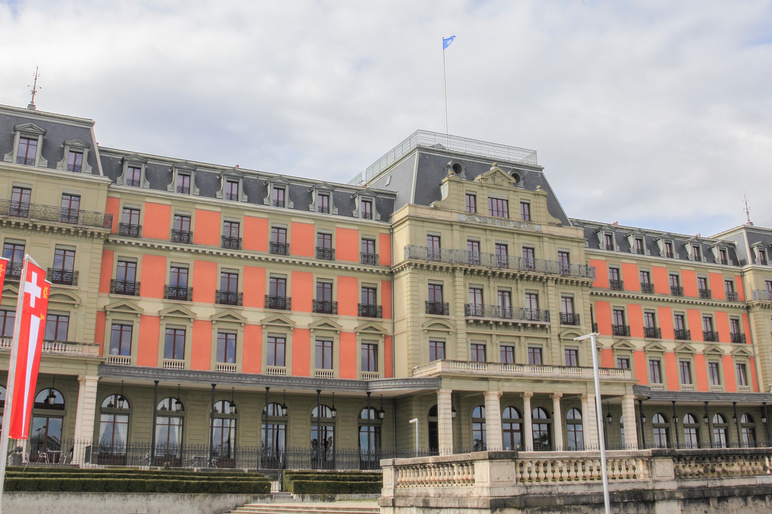
Palais Wilson shutterstock 1084789991

In a letter addressed to the Sub-Committee on Accreditation (SCA) of the Global Alliance of National Human Rights Institutions (GANHRI), civil society organisations, including the FIDH and the World Organisation Against Torture (OMCT), warn that Bahrain and Egypt do not comply with the Paris Principles, failing to respect the very pillars of these principles: pluralism, independence and effectiveness.

The undersigned civil society organisations believe that the two countries’ NHRIs have failed to comply with the Paris Principles and to implement recommendations outlined by the SCA’s previous reports in 2016 and 2018, respectively.

The Paris Principles define the minimal standards that NHRIs must abide by “in order to be considered credible and to operate effectively.” The pillars of these principles are pluralism, independence and effectiveness. NHRIs must be independent from the government, represent and cooperate with civil society, and effectively promote human rights by monitoring violations and addressing them. Based on civil society reports, the Bahraini and Egyptian NHRIs fall short of these standards.

In Bahrain, all the current members of the National Institution for Human Rights (NIHR) were appointed by King Hamad through a royal decree issued on 9 May 2021, and there is no democratic or independant mechanism through which these selections are made. The current Chairman of the NIHR, Ali al-Derazi, was reportedly implicated in abuses against migrant workers. Furthermore, the Vice-Chairperson of the NIHR, Mr. Khaled Abdulaziz Alshaer had previously called on those who criticised the Bahraini government to receive the death penalty.

In August 2022, the UN Committee on Economic, Social and Cultural Rights concluded that “[the NIHR] has not yet attained the independence required to perform its functions.” Previously in 2018, the UN Human Rights Committee had expressed similar concern and “[regretted] the lack of information on the complaints [the NIHR] has received and the investigations it has carried out in response to those complaints.”

In addition, Bahrain’s NIHR fails to address and outright denies the human rights abuses committed by the authorities, including arbitrary detention, ill-treatment and medical negligence in various detention facilities. This contradicts the UN Working Group on Arbitrary Detention’s findings regarding Abduljalil al-Singace, Abdulhadi al-Khawaja and Naji Fateel, three Bahraini human rights defenders who were arbitrarily detained, tortured, medically neglected and subjected to sham trials. [see also: https://humanrightsdefenders.blog/tag/bahrain/]

As for the Egyptian National Council for Human Rights (NCHR), it also lacks independence from the government. In 2021, new members of the NCHR were appointed for four years. The Chair, Ms. Moushira Khattab, and the Vice-President, Mr. Mahmoud Karem Mahmoud are both former Egyptian officials and diplomats. In both 2014 and 2018, Mahmoud was the coordinator of al-Sisi’s presidential campaign, which clearly demonstrates the NCHR’s close relationship with the executive.

In March 2023, the UN Human Rights Committee had echoed these concerns over the “lack of safeguards to ensure [the NCHR’s] full independence and effectiveness”, as well as over “the lack of information provided on the effective implementation of its recommendations.”

The NCHR has left hundreds of complaints unanswered and blatantly denies that certain human rights abuses are being committed. In 2020, the Council stated that findings of the UN Committee against Torture, according to which torture was “systematic” in Egypt, were a “politicized categorization” seeking to “undermine the efforts of the government”. The NCHR has also remained silent on prominent human rights issues such as the practice of enforced disappearance or the dire conditions of detention. In July 2023, the Council’s president compared a new correctional facility in Wadi al-Natroun to a “5-star hotel”. We believe that the Egyptian NCHR is far from acting as a NHRI with “A” status, which it has worryingly been granted since 2006 by the SCA. [see also: https://humanrightsdefenders.blog/tag/egypt/]

In light of the above, it is clear that the NHRIs of Bahrain and Egypt have consistently failed to comply with the Paris Principles and to implement the SCA’s recommendations.

We urge you to consider the aforementioned shortcomings of Bahrain and Egypt’s NHRIs when reviewing them during your upcoming session, and to not grant them status “A”.

Signatories:

  • Bahrain Institute for Rights and Democracy (BIRD)
  • CIVICUS
  • Democracy for the Arab World Now (DAWN)
  • Egyptian Commission for Rights and Freedoms
  • Egyptian Front for Human Rights (EFHR)
  • El Nadeem against Violence and Torture
  • Human Rights Foundation (HRF)
  • HuMENA for Human Rights and Civic Engagement
  • International Federation for Human Rights (FIDH) – within the framework of the Observatory for the Protection of Human Rights Defenders
  • International Service for Human Rights (ISHR)
  • Law and Democracy Support Foundation (LDSF)
  • MENA Rights Group
  • Rights Realization Centre (UK)
  • Salam for Democracy and Human Rights (SALAM DHR)
  • The #FreeAlKhawaja Campaign
  • The Freedom Initiative (FI)
  • World Organisation Against Torture (OMCT) – within the framework of the Observatory for the Protection of Human Rights Defenders

https://www.omct.org/en/resources/statements/bahrain-and-egypts-national-human-rights-institutions-do-not-comply-with-the-paris-principles

UN Rapporteur Michel Forst documents good practices in the protection of human rights defenders

March 7, 2016

A major new report by the UN Special Rapporteur on human Rights Defenders, Michel Forst, documents good practices and policies in the protection of defenders and makes concrete recommendations to States, business enterprises, national human rights institutions, donors, civil society organisations and other stakeholders to ensure a safe and enabling environment for defenders’ work (A/HRC/31/55).

Key among these is a recommendation that, in consultation with civil society, States should develop and implement specific national laws and mechanisms to protect defenders and to investigate and ensure accountability for threats and attacks against them. [ISHR’s work to develop a model national law on the recognition and protection of human rights defenders is specifically referenced in this regard.] [see also: https://thoolen.wordpress.com/2014/03/05/two-more-side-events-on-human-rights-defenders-on-10-and-12-march/]

In addition to enacting laws, the Special Rapporteur recommends that States establish and adequately-resourced protection mechanisms, in consultation with civil society.

Through the report, the Special Rapporteur endorses a ‘holistic’ approach to the protection of defenders, engaging the responsibility of a range of actors. Key insights and recommendations included in the report include that:

  • States should publicly recognise the vital and legitimate work of human rights defenders, disseminate and raise awareness about the Declaration and actively respect and protect ‘the right to defend rights’.
  • National human rights institutions should develop concrete action plans to support and protect defenders and establish focal points to ensure effective implementation and evaluation of such plans.
  • Business enterprises have an important and influential role to play in protecting defenders and should be engaged in this regard: ‘The condemnation of violations by members of the business community not only legitimises defenders’ concerns but also builds opposition to bad business practices,’ the report says. ‘In addition, due to their economic and political influence, the support of business leaders can draw in wider support of society.’
  • Donors should provide long-term, sustainable, flexible financial support to defenders and their organisations and networks, providing for their ‘holistic protection’.
  • The UN itself should strengthen the protection of defenders and prevent violations against them, including through the ‘Rights Up Front’ initiative and the Sustainable Development Goals, and by strengthening its institutional response to cases of reprisals against those who for cooperate with UN human rights mechanisms. The need to prevent and ensure accountability for reprisals is particularly important given the Special Rapporteur’s finding that international and regional human rights mechanisms are increasingly being turned to and relied upon by defenders either to complement and strengthen domestic advocacy efforts, or because democratic institutions and the rule of law are weak or non-existent at the national level. [see also my ‘old’ post: https://thoolen.wordpress.com/2014/03/13/zero-tolerance-for-states-that-take-reprisals-against-hrds-lets-up-the-ante/]

In addition to making concrete recommendations, the Special Rapporteur also articulates 7 key principles for all stakeholders that he considers should inform and underpin all policies and practices namely:

  • Principle 1: They should adopt a rights-based approach to protection, empowering defenders to know and claim their rights.
  • Principle 2: They should recognise that defenders are diverse and come from different backgrounds, cultures, and belief systems.
  • Principle 3: They should recognise the significance of gender in the protection of defenders and apply an intersectionality lens to the assessment of risks and to the design of protection initiatives.
  • Principle 4: They should focus on ‘holistic security’ of defenders, including physical security, digital security, and psychosocial wellbeing.
  • Principle 5: They should not focus on the rights and security of individual defenders alone, but also include the groups, organisations, communities, and family members who share their risks.
  • Principle 6: They should involve defenders in the development, choice, implementation and evaluation of strategies and tactics for their protection. The participation of defenders is key to their security.
  • Principle 7: They should be flexible, adaptable, and tailored to the specific needs and circumstances of defenders.

http://www.ohchr.org/Documents/Issues/Defenders/A-HRC-31-55_en.pdf

See more at: http://www.ishr.ch/news/good-practices-protection-human-rights-defenders-major-new-report#sthash.VjHvu4uZ.dpuf


Treat Human Rights Defenders seeking information better says Indian National Human Rights Commission

December 20, 2013

On 19 December 2013, DHNS reported an excellent action by the Indian National Human Rights Commission [NHRC] which should be an example to national institutions worldwide: Peeved at the way state authorities treat human rights defenders, the NHRC has shot off a letter to all State governments asking them to sensitise their officers while dealing with human rights defenders who are making use of their Right to seek Information (RTI users as they are called in India). In his communication NHRC Secretary General, Parvinder Sohi Behuria, said the activists have been complaining that the States treat them as nuisance and take actions to harass them. “It would be of immense help if state government functionaries are sensitised about the problems being faced by NGOs and Human Rights defenders. They should be treated as partners in bringing about a positive change,” Behuria said.

via Treat RTI users as rights defenders.

Upcoming Human Rights Council to deal with laws affecting human rights defenders

February 15, 2013

The UN Human Rights Council’s 22nd session will be held from 25 February to 22 March 2013 and consider a range of significant thematic and country-specific human rights issues and actions. The ISHR provides timely and expert information especially as for human rights defenders there are several relevant initiatives. Norway will lead negotiations on a resolution focusing on legislation that affects human rights defenders with the goal of improving the protection of human rights defenders and eliminating laws which impair their work. ISHRISHR-logo-colour-high has watched the development of this resolution closely. The resolution will build on the report of the Special Rapporteur on Human Rights Defenders, Ms Margaret Sekaggya, to the UN General Assembly in 2012. This report considered the issue of the ‘criminalisation’ of human rights defenders Read the rest of this entry »