Posts Tagged ‘Mary Lawlor’

HRW submission to Special Rapporteur focuses on child and youth human rights defenders

November 13, 2023

Human Rights Watch’ submission discusses the risks climate activists have faced in Australia, India, and Uganda. It focuses on examples of activists under age 32, as requested by the UN Special Rapporteur on Human Rights Defenders.

Australia

Following increased climate protest activity in New South Wales (NSW), the government in March 2022 established a new police unit known as the Strike Force Guard. The unit is designed to “prevent, investigate and disrupt unauthorized protests across the state.” On April 1, the state parliament introduced new laws and penalties specifically targeting protests that blocked roads and ports. Protesters can now be fined up to AU$22,000 (US$15,250) and be jailed for up to two years for protesting without permission on public roads, rail lines, tunnels, bridges, and industrial estates.

In 2022, Human Rights Watch interviewed three climate protesters who had been arrested and charged under the new laws. These cases indicate that climate protesters are being targeted for disproportionate punishment.

Violet (Deanna) Coco, a 31-year-old activist, took part in a climate protest on April 13, 2022, that stopped traffic in one lane on the Sydney Harbor Bridge. Coco climbed on the roof of a parked truck and stood holding a lit emergency flare. After approximately 25 minutes, NSW police forcibly removed her and the other protesters from the road. Coco was charged with disrupting vehicles, interfering with the safe operation of a bridge, possessing a bright light distress signal in a public place, failing to comply with police direction, and resisting or hindering a police officer. She was also charged under explosives regulations for holding the emergency flare; with an incitement offense for “encouraging the commission of a crime” by livestreaming the protest on Facebook; and for uploading a video of a climate protest she took the previous week, and with disrupting traffic during three previous protests.

Coco pleaded guilty to two charges – blocking traffic and failing to comply with police direction – and not guilty to the other charges. She was released on AU$10,000 (US$6,940) bail, but the magistrate ordered her not to leave her apartment for any purpose except for emergency medical assistance or to attend court. She was also ordered not to associate with any other Fireproof Australia member. Coco spent 21 days under what amounted to house arrest. On May 5, 2022, a magistrate amended her bail and, while she was allowed to leave her property, the authorities imposed a curfew banning her from leaving her address before 10 a.m. and after 3 p.m.

In March 2023, Coco was issued with a 12-month conditional release order after a district court judge heard she had been initially imprisoned on false information provided by the New South Wales police.

In August 2022, the state of Victoria followed New South Wales with harsh new measures targeting environmental protesters at logging sites with up to 12 months in jail or $21,000 in fines. In Tasmania, environmental activists now face fines of $13,000 or two years in prison, while nongovernmental organizations that have been found to “support members of the community to protest” face fines of over $45,000.

On May 18, 2023, the South Australia government introduced harsh new anti-protest measures in the South Australian lower house in the morning and then rushed them through after lunch with bipartisan support after just 20 minutes of debate and no public consultation. The bill would increase the punishment for “public obstruction” 60-fold, from $750 to $50,000 or three months in jail, with activists also potentially facing orders to pay for police and other emergency services responding to a protest or action. On May 30, the laws were passed after a 14-hour debate in the South Australian upper house.

India

In February 2021, Indian authorities arrested Ravi who was sent to police custody for five days. Indian authorities also issued arrest warrants against Nikita Jacob, a lawyer, and Shantanu Muluk, an activist, who were granted pre-arrest bail. The authorities alleged Ravi was the “key conspirator” in editing and sharing an online toolkit shared by the Swedish Fridays for Future founder Greta Thunberg on social media, including Twitter, aimed at providing information to those seeking to peacefully support ongoing farmers protests. In granting bail to Ravi, the Delhi court said the evidence on record was “scanty and sketchy,” and that citizens cannot be jailed simply because they disagreed with government policies. It added: “The offense of sedition cannot be invoked to minister to the wounded vanity of governments.”

The Indian government has enforced Information Technology Rules that allow for greater governmental control over online content, threaten to weaken encryption, and seriously undermine media freedoms, rights to privacy, and freedom of expression online. These rules put youth and other human rights defenders and journalists at further risk of being targeted by the authorities for their online content.

Uganda

Young people from across Uganda have faced reprisals for fighting for climate justice. On September 25, 2020, Ugandan police arrested and detained for eight hours eight youth climate activists while participating in the global climate strike in Kampala. The police told them election campaigns were not allowed, although the activists repeatedly explained that they were an environmental—not a political—movement. The activists, only two of whom were above the age of 18, were detained in a room for eight hours, questioned, and then allowed to leave.

Human Rights Watch published a report that documented a range of restrictions on freedom of expression, association, and assembly related to oil development, including the planned East African Crude Oil Pipeline (EACOP) by the government. Civil society organizations and environmental defenders regularly report being harassed and intimidated, unlawfully detained, or arbitrarily arrested. Human Rights Watch interviewed 31 people in Uganda between March and October 2023, including 21 environmental defenders, and several of whom were under 32 years old.

Many student climate activists protesting EACOP have been arrested and charged with various offences in Kampala since 2021. These protests have been largely peaceful and usually small in scale. Since 2021, there have been at least 22 arrests, largely of students, at anti-EACOP protests in Kampala. Nine students were arrested in October 2022 after demonstrating support for the European Parliament resolution on EACOP and charged with “common nuisance.” Their case was finally dismissed on November 6, 2023, after more than 15 court appearances. Another four protesters were arrested on December 9, 2022, as they marched to the National Environmental Management Authority (NEMA) to demand a re-evaluation of the environmental damage caused by EACOP. One of the detainees was kept at an unknown location until the morning of December 12 when all four were released.

Another protesting student was arrested in Kampala on June 27, 2023, after trying to deliver a petition to the Speaker of the House of Uganda’s parliament. He told Human Rights Watch he was taken to an unlawful place of detention known as a “safe house” with his hands tied behind his back, questioned by plain-clothed security officials about who was providing the funding for the protests, before he was knocked to the floor. He said he awoke two days later in the hospital with serious injuries. On July 11, 2023, five individuals were arrested after protesting EACOP in downtown Kampala.

On September 15, 2023, four student protesters were arrested after a “Fridays for Future” and “StopEACOP” joint protest at the Ugandan parliament as part of the “Global Fight to End Fossil Fuels,” a global mobilization and day of action. They were released on bond five days later and have been charged with “common nuisance.” Their next hearing is scheduled for November 27, 2023. One of the students described to Human Rights Watch being held in a room inside parliament and beaten by uniformed parliamentary security officials and others in civilian clothes with “batons, gun butts, and using their boots to step on our heads” before being taken to Kampala’s Central Police Station (CPS). At the CPS he described plainclothes intelligence officers asking: “Who are your leaders? Among us, who is your leader? How many are you? Who are your leaders in different universities? Who is managing your social media accounts?” They then described being beaten further in CPS cells by other prisoners, one of whom said, “We have order from above to discipline you. You need to stop working on EACOP.”

See also: https://globalpressjournal.com/africa/uganda/ugandan-pipeline-project-begins-landowners-navigate-crooked-road-compensation/

Human Rights Watch encourages the Special Rapporteur to call on governments to:

  • Promote and protect universally recognized human rights and fundamental freedoms, respect, and protect the work of climate activists, in line with their human rights obligations.
  • Publicly condemn assault, threats, harassment, intimidation, and arbitrary arrests of activists, and direct security and other government officials to stop arresting, harassing, or threatening activists for protesting or on false accusations.
  • End arbitrary arrests and prosecutions of human rights defenders, anti-EACOP activists, and peaceful protesters.
  • Respect and protect the rights of all human rights defenders and civil society organizations to exercise freedoms of association, assembly, and expression, in accordance with international human rights norms.
  • Where applicable, ratify and implement regional human rights agreements to ensure public participation in environmental decision-making and to protect environmental defenders.

Submission to the Special Rapporteur on the situation of human rights defenders
Climate Human Rights Defenders increasingly seen as eco-terrorists

October 15, 2023

Damien Gayle, Matthew Taylor and Ajit Niranjan in the Guardian of 12 October 2023 published the result of their research in Europe into using repressive measures to silence climate activists[see: https://humanrightsdefenders.blog/2023/10/04/human-rights-platform-at-the-gulbenkian-foundation-hears-michel-forst-worries-about-treatment-of-climate-defenders/]

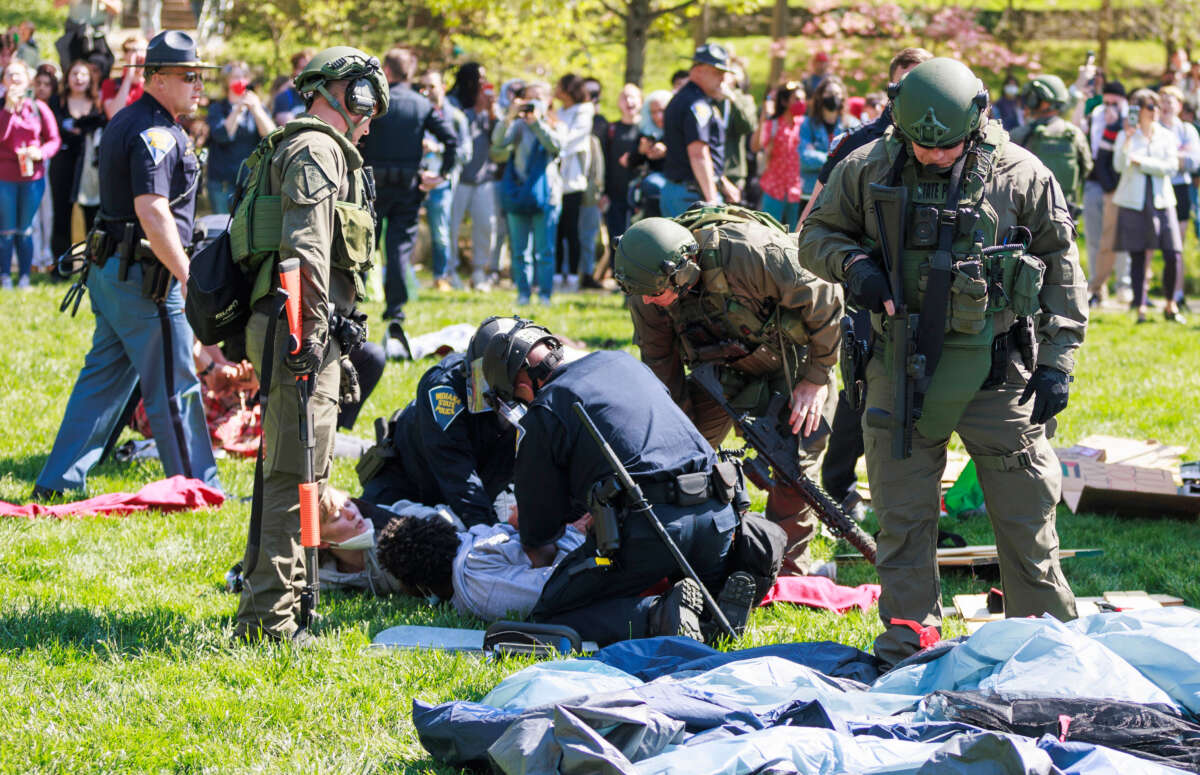
In Germany, France, Italy, Sweden, the Netherlands and the UK, authorities have responded to climate protests with mass arrests, the passing of draconian new laws, the imposing of severe sentences for non-violent protests and the labelling of activists as hooligans, saboteurs or eco-terrorists. The crackdowns have come in spite of calls by senior human rights advocates and environmental campaigners to allow civic space for the right to non-violent protest, after a summer of record-breaking heat in southern Europe that is attributed to the effects of climate breakdown.

The UK has led the way in the crackdown, experts say, with judges recently refusing an appeal against multi-year sentences for climate activists who blocked a motorway bridge in east London. The three-year jail terms for Marcus Decker and Morgan Trowland earlier this year are thought to be the longest handed out by a British judge for non-violent protest.

Michel Forst, the UN rapporteur on environmental defenders since June last year [not really, for his correct title is the “Special Rapporteur on Environmental Defenders under the Aarhus Convention, Mr. Michel Forst” [see: https://humanrightsdefenders.blog/2022/07/22/aarhus-convention-on-environmental-information-gets-especially-experienced-rapporteur/], described the situation in the UK as “terrifying”. He added that other countries were “looking at the UK examples with a view to passing similar laws in their own countries, which will have a devastating effect for Europe”.

“Since my appointment I have been travelling to many countries in Europe and there is a clear trend,” Forst told the Guardian. “We can see an increasing number of cases by which these climate activists are brought to court more and more often and more and more severe laws being passed to facilitate these attacks on defenders.”

He added: “I’m sure that there is European cooperation among the police forces against these kinds of activities. My concern is that when [governments] are calling these people eco-terrorists, or are using new forms of vilifications and defamation … it has a huge impact on how the population may perceive them and the cause for which these people are fighting. It is a huge concern for me.”

Amnesty International said it was investigating a continent-wide crackdown on protest. Catrinel Motoc, the organisation’s senior campaigner on civil space and right to protest in Europe, said: “People all around the world are bravely raising their voices to call for urgent actions on the climate crisis but many face dire consequences for their peaceful activism.

“Peaceful protesters are left with no choice but to stage public protests and non-violent direct actions because European countries are not doing enough to tackle the climate crisis.

“There’s alarming evidence of criminalisation, harassment, stigmatisation and negative rhetoric towards environmental defenders.”

In June, Dunja Mijatović, the Council of Europe’s commissioner for human rights, also called for an end to crackdowns on environmental activists. Last December, Volker Türk, the UN’s high commissioner for human rights, appealed to governments to protect the “civic space” for young environmental activists, and “not crack down in a way that we have seen in many parts of the world”.

There was widespread outrage this summer when France’s interior minister, Gérald Darmanin, used one of the state’s most-powerful tools to order the banning of one of the country’s leading environmental protest groups. Les Soulévements de la Terre, a collective of local environmental campaigns, had staged a series of protests, with tactics including sabotage, that ended with violent confrontations with police, and Darmanin denouncing the activists as “far left” and “ecoterrorists”.

In the Netherlands, one of a series of roadblock protests on the A12 highway in The Hague in May was dispersed by police using water cannon, with more than 1,500 arrested. Seven climate activists were convicted of sedition – a charge that had never before been levelled against climate protesters – in relation to online posts calling for people to join an earlier demonstration.

In Sweden, about two dozen members of the Återställ Våtmarker [Restore Wetlands] group were convicted of sabotage for blocking highways in the capital, Stockholm. Others were held on remand for up to four weeks for taking part in protests.

In Germany in May, police staged nationwide raids against the Letzte Generation (Last Generation) group, whose supporters had glued themselves to roads on a near-weekly basis for months, as well as targeting art galleries and other cultural spaces. On a police directive, the homepage of the group was shut down and possessions belonging to members were seized.

At the most recent count, supplied by the activists, police had made more than 4,000 arrests of supporters of Last Generation taking part in road blocks in Berlin alone.

Authorities in Italy have used anti-organised crime laws to crack down on protests, where the Ultima Generazione (also Last Generation) group has staged road blocks since last year. The Digos police unit, which specialises in counter-terrorism, in April justified the use of anti-Mafia laws to target the group by saying its civil disobedience actions had not taken place spontaneously, but were organised, discussed and weighed up by an internal hierarchy. This came along with new, stiffer penalties for protests, with activists facing fines of up to €40,000 for actions targeting artworks and other cultural heritage.

Richard Pearshouse, director of the environment division at Human Rights Watch, said: “These restrictions on environmental protest across Europe and the UK are incredibly short-sighted. These governments haven’t grasped that we all have a huge interest in more people taking to the streets to demand better environmental protection and more climate action.

“Governments need to respect the rights to assembly and expression, and ramp up their own environmental protections and climate ambitions. That’s the only way we have a chance to get out of this climate crisis with our democratic institutions intact.”

A spokesperson for the UK Home Office said: “The right to protest is a fundamental part of our democracy but we must also protect the law-abiding majority’s right to go about their daily lives.

“The Public Order Act brings in new criminal offences and proper penalties for selfish, guerrilla protest tactics.”

The French interior ministry said local officials had the right to ban demonstrations with a serious risk of disturbing public order. “These one-off bans, of which there are very few in absolute terms, are not imposed because of the reason for the demonstration.”

The Italian interior ministry referred to a statement from the culture minister Gennaro Sangiuliano in April, who said attacks on monuments cause economic damage to the community that is is expensive to clean up. “Those who cause damage must pay personally.”

The German interior ministry declined to comment. The Bavarian interior ministry referred the Guardian to the public prosecutor’s office in Munich, which provided a statement from June in which it confirmed it had authorised the tapping of phones for six of seven Last Generation members under criminal investigation.

The Swedish interior ministry declined to comment. The Dutch ministry of justice did not respond to requests for comment.

https://www.theguardian.com/environment/2023/oct/12/human-rights-experts-warn-against-european-crackdown-on-climate-protesters

and later followed by:

https://globeecho.com/politics/climate-protesters-in-europe-face-a-massive-crackdown/

https://www.ohchr.org/en/statements-and-speeches/2023/10/environmental-rights-are-key-all-human-rights-turk-says

Mary Lawlor urges India to release HRD Saibaba

August 29, 2023
Mary Lawlor, UN Special Rapporteur on the situation of human rights defenders.

Mary Lawlor, UN Special Rapporteur on the situation of human rights defenders.

An independent UN human rights expert has called for India to release an activist imprisoned since 2017, expressing concern over his persistent detention and deteriorating health. GN Saibaba, a former English professor at Delhi University, was arrested in 2014 and accused of links to banned Maoist groups, according to media reports. See: https://humanrightsdefenders.blog/2023/07/07/g-n-saibaba-in-india-continues-from-his-cell/

He was sentenced to life imprisonment three years later for multiple offences under the country’s Unlawful Activities Prevention Act.

GN Saibaba is a long-standing defender of the rights of minorities in India, including the Dalit and Adivasi people,said Mary Lawlor, UN Special Rapporteur on the situation of human rights defenders on 21 August “His continued detention is shameful. It bears all the hallmarks of a State seeking to silence a critical voice,” she added.

UN human rights experts have repeatedly raised grave concerns about the prosecution of Mr. Saibaba, who has suffered from a spinal disorder and polio since childhood and uses a wheelchair. 

His detention was declared arbitrary by the UN Working Group on Arbitrary Detention in an opinion issued in 2021.

In March 2024 came the good news: The Nagpur bench of Bombay High Court set aside the conviction, Read more at:
http://timesofindia.indiatimes.com/articleshow/108246679.cms?utm_source=contentofinterest&utm_medium=text&utm_campaign=cppst

https://news.un.org/en/story/2023/08/1139932

https://english.mathrubhumi.com/news/world/un-expert-pitches-for-ex-delhi-university-professor-g-n-saibaba-s-release-1.8840381

UN experts demand detailed information on nine Tibetan environment defenders

August 18, 2023

From TibetanReview.net, on 11 August 2023:

Three UN human rights experts have issued a joint statement on Aug 10, asking the Chinese government to provide information about nine Tibetans imprisoned for their peaceful efforts to protect Tibet’s fragile environment.

The experts—the Special Rapporteur on the situation of human rights defenders (Ms Mary Lawlor); the Special Rapporteur on freedom of assembly and association (Mr Clément Nyaletsossi Voul); and the Special Rapporteur on human rights obligations relating to the enjoyment of a safe, clean, healthy and sustainable environment (Mr David Boyd)—have asked Beijing to provide details about the reason for the detention and the health conditions of the nine Tibetans, who were all taken in between 2010 and 2019.

“We urge the Chinese government to provide details on why and where they are being held and their health conditions, provide them with adequate medical care and permit their families access to visit them,” the Special Rapporteurs have said.

The experts have further made it clear that the lack of information shared by Chinese authorities could be interpreted as a “deliberate attempt” to hide the environmental defenders from global attention.

The nine Tibetans, identified in the release as Anya Sengdra, Dorjee Daktal, Kelsang Choklang, Dhongye, Rinchen Namdol, Tsultrim Gonpo, Jangchup Ngodup, Sogru Abhu and Namesy were all detained after they protested illegal mining activities or exposed the poaching of endangered wild lives.

Three of the activists are serving up to 11-years jail sentences. However, China has not made public the jail sentences of the remaining six, namely Dhongye, Rinchen Namdol, Tsultrim Gonpo, Jangchup Ngodup, Sogru Abhu and Namsey. [see also: https://humanrightsdefenders.blog/2022/08/31/enforced-disappearances-in-china/]

The experts have sought to know the extent of access to legal representation the imprisoned Tibetans had, and whether any of them had been provided with medical assistance while in prison.

Since the defenders were sentenced, the right to a clean, healthy and sustainable environment was recognised at the international level by the Human Rights Council and the General Assembly.

If China is committed to tackle the impacts of climate change, it should refrain from persecuting environmental human rights defenders and release all nine immediately,” the experts have said.

China has declared mining as one of its pillar industries in occupied Tibet, and has also continued to carry out massive environmentally devastating urbanization and infrastructure projects. These have led to increasing persecution and long-term imprisonment of many environment defenders.

In a report published in June 2022, Washington-based advocacy group International Campaign for Tibet had documented 50 known cases of such Tibetans arbitrarily detained, arrested, tried and/or sentenced since 2008. Of the 50 documented cases, the prison sentences imposed on 35 of the individuals are known. The sentences range from one year and nine months to 21 years, with an average sentence length of nine years, said the group Aug 10 while reporting on the UN experts’ statement.

The environmental health of Tibet has major global implications. As the world’s “Third Pole” and Asia’s “water tower,” the Tibetan Plateau holds the largest volume of frozen freshwater outside the polar regions and is the source of Asia’s eight great rivers, ultimately sustaining the livelihoods of up to 1.4 billion people living downstream, the group has pointed out.

http://www.phayul.com/2023/08/12/48800/

Report of the Special Rapporteur on the situation of women human rights defenders in conflict, post-conflict and crisis-affected settings

August 17, 2023

In the present report to the General Assembly [A/78/131, dated 7 July 2023], the Special Rapporteur on the situation of human rights defenders, Mary Lawlor, analyses the situation of women human rights defenders working in conflict, post-conflict and crisis-affected settings and highlights their contributions to peace and security, despite the often difficult and even hostile environments in which they work. The report contains examples of individual cases of women human rights defenders working in these contexts, as well as recommendations to States and other relevant stakeholders on providing a safe and enabling environment in which to carry out their legitimate human rights work.

In a submission for the present report, April Dyan Gumanao of Alliance of Concerned Teachers in the Philippines noted that “we work on the premise that, to achieve sustainable peace, there should be food on tables, decent work and opportunities, equality, respect for human rights and justice”.

Clips from young Human Rights Defenders

August 17, 2023
Mary Lawlor

Mary Lawlor, UN Special Rapporteur on Human Rights Defenders, shows on her LinkedIn page young human rights defenders who are the ones who will carry the human rights movement into the future, and to who we need to listen now.

👉 e.g. meet Zeinab, a young WHRD from #Kenya who took part in the 2023 Vienna Youth & Children HRD conference:

#YouthForRights #InternationalYouthDay #YouthLead #InSolidarityAndHope

ISHR marking the 25th anniversary of the adoption of the UN Declaration on human rights defenders

March 11, 2023

To mark the 25th anniversary of the adoption of the UN Declaration on human rights defenders in 1998, the UN Special Rapporteur on human rights defenders, Mary Lawlor, will focus on successes achieved by human rights defenders in her upcoming thematic report to the Human Rights Council. The report will demonstrate how the work of defenders is crucial in helping achieve more just and equitable societies. 

This side event, which is co-sponsored by a number of States and organisations, including ISHR, will take place a day before the Special Rapporteur’s presentation of the report to the Human Rights Council and in addition to the Special Rapporteur herself, the panel will include a State representative who will outline how that State collaborated with defenders to bring about human rights gains. It will also include two defenders who will speak about successes they have achieved.

Speakers: 

  • Mary Lawlor, UN Special Rapporteur on the situation of Human Rights Defenders
  • Gustavo Gallon, Permanent Representative of Colombia to the United Nations Office at Geneva
  • Tara Houska, US-based citizen of Couchiching First Nation, Environmental & Indigenous rights defender
  • Daniel Goinic, Human Rights Program Director at Legal Resources Centre in Moldova

Moderator: Imogen Foulkes, BBC Correspondent in Geneva

Due to space limitation, registration is mandatory to attend the event in-person: please click here to register. 

The event will be live streamed on ISHR’s YouTube channel.

https://ishr.ch/events/success-through-perseverance-solidarity-25-years-of-achievements-by-human-rights-defenders/

For the report, see: https://ishr.ch/latest-updates/success-through-perseverance-and-solidarity-25-years-of-achievements-by-human-rights-defenders/

The 2022 “Human Rights Defenders Movement at a Crossroad” video report published

October 11, 2022

In September 2022, more than thirty human rights defenders from all over the world took the floor in a moment of a global backlash against the grass-roots movement for human rights and democracy. See: https://humanrightsdefenders.blog/2022/04/20/2021-protectdefenders-eu-annual-report/

The conference “The Human Rights Defenders’ Movement at a Crossroad“ featured the testimonies and experiences of a great diversity of grassroots activists coming from all backgrounds, including Yvette Mushigo (Synergie des Femmes pour la Paix et la Réconciliation des Peuples des Grands Lacs d’Afrique, DRC); Ukei Muratalieva (Nazik Kyz, Kyrgyzstan); Rocío Walkiria Santos Reyes (CEHPRODEC, Honduras); Yasmine Shurbaji (Families for Freedom, Syria); and Monika Maritjie Kailey (Komunitas Masyarakat Adat Marafenfen, Aru Islands, Indonesia).

With the participation of the United Nations Rapporteur on the situation of Human Rights Defenders, Mary Lawlor; the French Ambassador at Large for Human Rights, Delphine Borione; the Inter-American Commission on Human Rights Rapporteur on the Rights of Human Rights Defenders and Justice Operators, Commissioner Joel Hernández García; the Human Development, Migration, Governance, and Peace Unit Acting Director at the European Commission, Chiara Adamo.

“We call on the EU and the Member States to ensure the effective, timely, relevant and comprehensive implementation of the EU Guidelines on Human Rights Defenders”.

Read the keynote by Cristina Palabay (KARAPATAN Alliance, The Philippines)

Look around this room and you will see so many different nationalities full of patient, committed, resilient people working to defend human rights. That is hope” – UNSR on HRDs, Mary Lawlor.

You can see all the photos of the conference “The Human Rights Defenders Movement at a Crossroad” in the gallery here.

https://mailchi.mp/protectdefenders/bulletin-pdeu-conference-2022?e=ccacd47b1a

Human rights defenders in Greece, my adopted country: not doing well

July 28, 2022
OHCHR | Ms Mary Lawlor

Special Rapporteur on the situation of human rights defenders, Mary Lawlor, conducted an official visit to Greece from 13 to 22 June 2022, to assess the government’s efforts towards creating an enabling environment for those seeking to protect and promote human rights.

Human rights defenders in Greece, particularly those working on migration, operate in an environment of pervasive fear and insecurity, concluded Mary Lawlor. “I am concerned about the increasing criminalization of humanitarian assistance in Greece. Solidarity should never be punished and compassion should never be put on trial,” she said while presenting her preliminary findings at the end of a 10-day mission in the country.

With Greece facing intense international criticism over unlawful pushbacks of migrants at its borders and wider human rights concerns related to migration and asylum, the Greek government has moved to silence groups and individuals documenting these abuses. While acknowledging Greece’s migration challenges and government efforts to address them, Lawlor criticized burdensome rules for the registration of nongovernmental organizations working on migration, introduced in 2019, calling them discriminatory and in violation of Greece’s international human rights obligations. See my earlier: https://humanrightsdefenders.blog/2021/11/17/greeces-mistaken-deterrence-migrants-and-aid-workers-facing-heavy-prison-sentences/

The UN expert noted that human rights defenders not only face criminal sanctions for their activities, but are operating in an increasingly hostile environment where the general public is influenced by negative rhetoric from high-ranking officials and their unfavorable portrayal in the media, which often conflates their activities with traffickers and criminal networks.

Greece fell 38 positions within a year in Reporters Without Borders’ 2022 report on the Press Freedom Index, with the organization marking it the lowest-ranked European Union country for press freedom. “Journalists who counter the government’s narrative on the management of migration flows are often under pressure and lack access to mainstream media outlets.… Journalists reporting on corruption are sometimes facing threats and even charges,” Lawlor said. She noted that journalists have very limited or no access to facilities where migrants, refugees, and asylum seekers are being held, further contributing to a general lack of transparency regarding the government’s policies in this area.

See also: https://humanrightsdefenders.blog/2022/02/18/greek-court-fails-human-rights-defenders-on-antisemitism/

Lawlor will present a detailed report with her findings at the March 2023 session of the UN Human Rights Council. The government should listen to what the UN expert has to say and champion human rights defenders. The European Commission, which noted in July last year the narrowing space in Greece for groups working with migrants and asylum seekers, should step up its engagement on the issue and press Greece to stop harassing civil society groups and activists.

https://www.ohchr.org/en/media-advisories/2022/06/un-human-rights-expert-visit-greece-assess-situation-human-rights

https://www.ohchr.org/en/press-releases/2022/06/greece-migration-policy-having-suffocating-effect-human-rights-defenders

https://www.amnesty.org/en/location/europe-and-central-asia/greece/report-greece/

see also later:

https://www.theguardian.com/world/2022/aug/31/greece-should-face-more-checks-over-asylum-seeker-treatment-eu-official

https://www.theguardian.com/world/2022/aug/31/i-was-close-to-death-syrian-man-tells-how-greek-officials-pushed-refugees-back-out-to-sea

And on 7 November : https://www.hrw.org/news/2022/11/07/greeces-surveillance-scandal-puts-rights-risk

and then: https://www.hrw.org/news/2023/03/16/un-expert-slams-greece-over-civil-society-curbs

Karla Avelar speaks out in Diversity in Adversity campaign

April 28, 2022

Episode 4: People who work to end violence and discrimination based on sexual orientation and gender identity (SOGI) face multiple forms of risk. They can be targeted for their actual or perceived sexual orientation or gender identity, and for being human rights defenders as well.

Karla Avelar is trans woman human rights defender from El Salvador who has been working since the 1990s to defend the rights of LGBTI persons, people with HIV and other marginalised groups. After being subjected to two and a half years in prison, where she was tortured, sexual assaulted and denied access to medical treatment, she began to work more intensely for the rights of LGBTI persons. She began by calling for appropriate provision of HIV medications and greater access to justice within El Salvador. In 2008 she founded COMCAVIS trans, El Salvador’s first organisation for trans women with HIV. In 2013, she was the first trans woman to appear before the Inter-American Commission on Human Rights. After multiple threats to her own life and that of her mother, she applied for asylum in Switzerland in 2017, where she now lives and continues her work. She was a finalist of the MEA in 2017 [see: https://humanrightsdefenders.blog/2017/05/16/trans-defenders-karla-avelars-life-is-under-constant-threat/]

Diversity in Adversity is a joint campaign by Mary Lawlor, UN Special Rapporteur on Human Rights Defenders, and Victor Madrigal-Borloz, UN Independent Expert on sexual orientation and gender identity. It will feature interviews with 10 SOGI rights defenders from all over the world; ordinary people engaged in extraordinary work. For more on this campaign, visit: https://www.ohchr.org/en/special-proc…