Posts Tagged ‘Loujain al-Hathloul’

Update on ISHR anti-reprisals campaign 2025

October 31, 2025

On 25 September 2025, 11 States raised individual cases of intimidation and reprisal in 15 different countries and territories at the Human Rights Council‘s 60th session. The cases of Kadar Abdi Ibrahim (Djibouti) and Loujain Al-Hathloul (Saudi Arabia) were cited by States. Cases from ISHR’s 2022 and 2024 campaigns were also among the cases mentioned, as well as the case of Basma Mostafa (Egypt) facing transnational repression.

On 16 October 2025, at the Third Committee of the General Assembly‘s 80th session, specific cases and situations of intimidation and reprisal were raised again by Belgium, the Netherlands and Luxembourg during this dialogue with the Assistant Secretary-General. They raised the cases of Human Rights Center Viasna (Belarus), Chow Hang Tung (Hong Kong) and Pham Doan Trang (Viet Nam)

Additionally, 70 States joined the cross-regional statement on reprisals led by Ireland and Uruguay, delivered at the General Discussion on the promotion and protection of human rights (item 71) at the General Assembly’s Third Committee.


Travel bans, what does this mean in practice? 

A travel ban may be less visible than a prison cell, but its impact is deeply damaging. It restricts defenders from attending UN meetings, carrying out their work, reuniting with family or seeking international protection.  As reprisals evolve, what started as detention can turn into surveillance, harassment, or restrictions on movement.  [https://humanrightsdefenders.blog/2025/09/15/tomorrow-16-9-25-in-geneva-packed-with-courage-stories-of-human-rights-defenders-banned-from-travelling/]

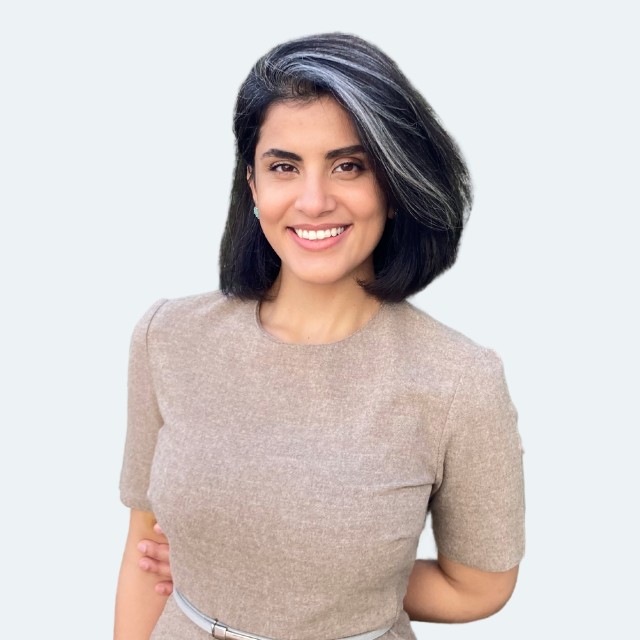
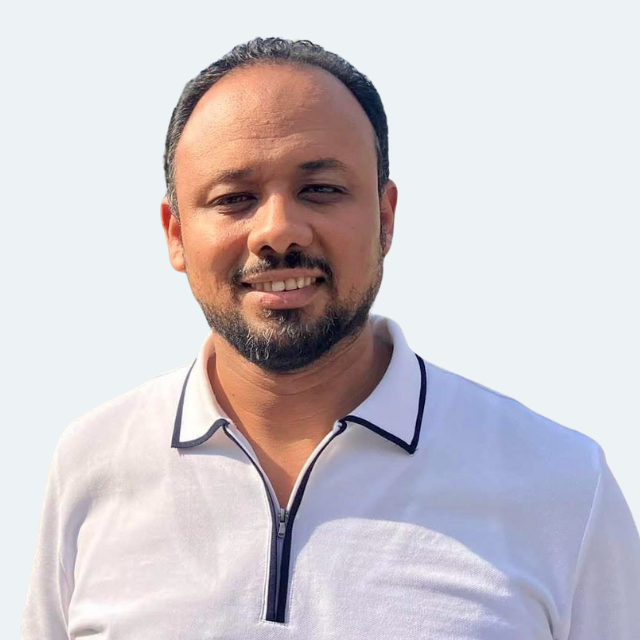
This is what happened to Loujain and Mohamed, prominent human rights defenders from Saudi Arabia and Egypt respectively.

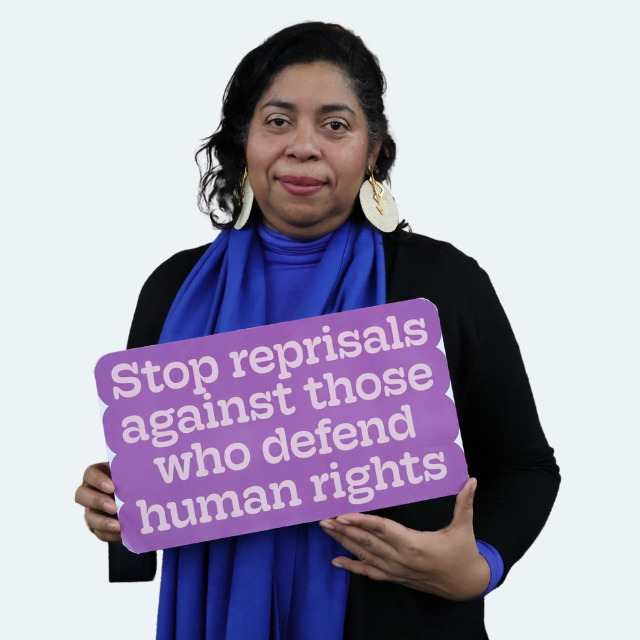
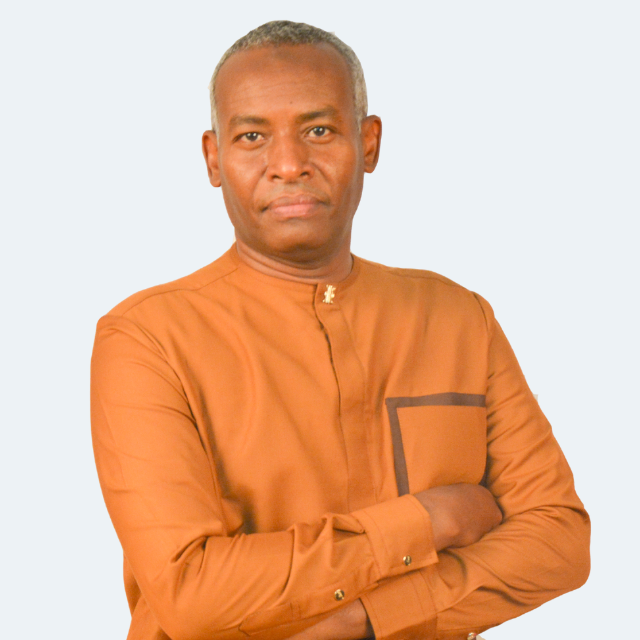
Meanwhile, Anexa, an Indigenous human rights defender, is unable to return to her home country of Nicaragua, and Kadar from Djibouti had his passport confiscated since 2018, preventing him from leaving the country and doing his work.  

IThrough this campaign, we share their stories. These are not just cases of reprisals — they are real lives disrupted, silenced, and confined. But they are also stories of resilience and perseverance for social change. 

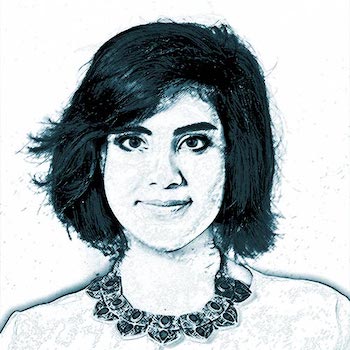
Loujain Al-Hathloul

Loujain is an iconic figure in Saudi Arabia’s women’s rights movement. She has actively campaigned for women’s rights in the country and against the driving ban imposed on women. She has also publicly and consistently called for the dismantlement of the male guardianship system.  

Mohamed El-Baqer is a human rights lawyer from Egypt. He is the director of the Adalah Center for Rights and Freedoms, founded in 2014. It is a non-governmental, independent legal and human rights organisation with a focus on four Programmes: 1) Criminal Justice 2) Student Rights and Academic Freedoms; 3) Refugees; 4) and Minorities. All these Programmes are implemented through legal support and strategic litigation, research, monitoring and documentation, advocacy activities and capacity-building. [https://www.trueheroesfilms.org/thedigest/laureates/a845697d-4b51-4e7f-b7d0-219c1e18ecd3]

Anexa Alfred Cunningham is a Miskitu Indigenous leader, woman human rights defender, lawyer and expert on Indigenous Peoples’ rights from Nicaragua. She defends the ancestral land and natural resources of Indigenous and Afro-descendant Peoples of the Caribbean Coast of Nicaragua. She has also worked with Indigenous and Afro-descendant communities to investigate the many abuses they suffer and denounce them to the United Nations. These Peoples face attacks by armed groups who seek to take away their ancestral territory with the State’s approval. 

Kadar Abdi Ibrahim is a human rights defender and journalist from Djibouti. He has drawn inspiration from historic figures in the human rights movement in the hopes of building a solid and lasting democracy in his country.  From 2015, Kadar was the co-director and chief editor of L’Aurore, Djibouti’s only privately-owned media outlet. In 2016, the newspaper was banned following the publication of a story on one of the victims of the Buldhuqo massacre, crackdown by Djibouti security forces on a religious celebration and a meeting of the opposition on 21 December 2015 that left at least 27 people dead. Kadar is also the president of the political party Movement for Democracy and Freedom (MoDEL) since December 2021. Over the years, Kadar has been arrested several times by the police in an attempt to silence him. 

#EndReprisals

Join our campaign by writing a letter to State representatives so they publicly raise the cases of Kadar, Anexa, Loujain and Mohamed at the General Assembly’s Third Committee in New York.

ISHR’s #EndReprisals database

In order to assist stakeholders with research, analysis and action on cases of reprisals and intimidation, ISHR launched an online database compiling cases or situations of intimidation and reprisals documented by the United Nations (UN) Secretary-General between 2010 and 2024.

https://ishr.ch/campaigns/endreprisals2025

Travel bans are Reprisals!

May 28, 2025

The Issue

Some States are using travel bans to punish and silence human rights defenders who dare to speak out at the United Nations. These acts of reprisal — from confiscating passports to unjustly labeling activists as terrorists — are designed to isolate, intimidate, and silence voices demanding accountability and justice.  A travel ban may be less visible than a prison cell, but its impact is no less damaging. It prevents defenders from attending UN meetings, carrying out their work, reuniting with loved ones, or seeking safety.

This is the lived reality for: 

These are not isolated cases — they are part of a pattern of reprisals meant to silence dissent and deter others from engaging with the UN.  

What the International Service for Human Rights demand is: 

  • The lifting of travel bans and restrictions against Loujain, Mohamed, Anexa, and Kadar. 
  • The inclusion of their cases in the UN Secretary-General’s annual report on reprisals. This is the first step to recognise they are cases of reprisals which need to be addressed and resolved. 
  • Concrete action from States to publicly condemn and raise these cases at the Human Rights Council and General Assembly.  
    According to our research, we found that more publicity and peer-pressure bring more probability for the reprisal case to be resolved (i.e. here, for the bans to be lifted). 
  • The establishment of clear UN protocols to prevent and respond to acts of reprisal. 

You can help us achieve our goals:  

The first step, is for the Secretary-General to include these cases in his reprisals report. You can contribute by:

👉 Signing our petition to the UN Secretary-General to ensure Loujain, Mohamed, Anexa, and Kadar are included.

Together, we can #EndReprisals.

Find out more about the campaign.https://www.change.org/p/their-voices-defend-human-rights-travel-bans-silence-them-endreprisals

https://www.change.org/p/their-voices-defend-human-rights-travel-bans-silence-them-endreprisals

About the ‘Stand As My Witness’ campaign which advocates on behalf of imprisoned Human Rights Defenders Around the World

August 12, 2023

Photo by Markus Spiske on Unsplash

On 4 August 2023, Jaxx Artz in Global Citizen explains the Stand As My Witness’ campaign:

Stand As My Witness was created in response to a growing trend in which civil society actors were arrested for their human rights work. Formerly known as Civil Society Behind Bars, the initiative is one of CIVICUS’ most effective strategies when it comes to sounding the alarm about the plights faced by HRDs around the world. According to the global alliance, hostile government actors and authoritarian regimes often use flawed legal processes with little oversight in order to prosecute activists. “[There are targeted attacks] against people uncovering high-level corruption, exposing very serious human rights violations, calling for accountability, and seeking to drive change in their societies,” Mandeep Tiwana, chief programs officer at CIVICUS, told Global Citizen.

As part of the campaign’s goal to spread awareness about some of the world’s imprisoned activists, CIVICUS profiles a handful of detained HRDs on their website. In actuality, these names and cases represent just a small percentage of people who are currently in prison because of their activism, and whom CIVICUS is trying to get released.

Abdulhadi al-Khawaja, founder and president of the Bahrain Center for Human Rights, who was forcibly arrested by Bahraini authorities. [see: https://humanrightsdefenders.blog/tag/abdulhadi-alkhawaja/ and https://www.trueheroesfilms.org/thedigest/laureates/4d45e316-c636-4d02-852d-7bfc2b08b78d]

As the global conditions for civic society worsen — with only 3.2% of the world’s population living in countries where civic space is considered open, according to the international global alliance CIVICUS — human rights defenders (HRDs) like al-Khawaja increasingly face the risk of government retaliation. 

The detention of HRDs is often arbitrary and a form of reprisal for the work [they] do,” David Kode, advocacy and campaigns lead at CIVICUS, told Global Citizen. “Take al-Khawaja, for example, who has been in prison since 2011 and is serving a life sentence. Despite many advocacy efforts, the Bahraini authorities seem to be bent on ‘punishing’ him and his family for calling for democratic reforms more than a decade ago.

Made up of civil society organizations and activists across more than 175 countries, CIVICUS has been campaigning on behalf of HRDs since its founding in 1993. As part of their work, the Stand As My Witness campaign — launched over 10 years ago — has sought to encourage investigations into unlawful imprisonments and bring global attention to cases like al-Khawaja’s.

Belarus has been restricting civic space and activists for years, with attacks increasing since the 2022 elections. [see also; https://humanrightsdefenders.blog/tag/belarus/]

How Are Human Rights Defenders Being Targeted?

CIVICUS has found that the tactics used to target HRDs are eerily similar across national borders and, over the years, the trends have only become more apparent and concerning.

“[The imprisonment of HRDS] is often preceded by stigmatization about their work, which includes branding activists as security risks. We saw this happen a lot after the [Arab Spring] in the Middle East and North Africa in 2011,” Tiwana said. “A lot of authoritarian regimes became fearful of people organizing and coming out into the streets to engage in civil society.”

To limit public support of pro-democracy movements and ostracize activists from society, government officials may twist the narrative surrounding an HRD’s arrest and accuse them of being spies for other nations. They may also invoke counter-terrorism or security legislation to pressure judges and quickly detain organizers or protestors without arrest warrants.

Take Khurram Parvez, an HRD from Northern India who was arrested in 2021 on charges of conspiracy and terrorism, for example. Parvez’s work documenting human rights violations — which include instances of disappearance, torture, and unlawful killing — in the Jammu and Kashmir region of India caught the attention of Indian authorities who wanted to silence his advocacy work.

See: https://www.trueheroesfilms.org/thedigest/laureates/81468931-79AA-24FF-58F7-10351638AFE3 and https://humanrightsdefenders.blog/tag/khurram-parvez/

CIVICUS currently advocates on behalf of Parvez through various strategies, such as raising concerns about his detention with the UN, holding meetings with diplomats in India, and encouraging the Human Rights Council in Geneva to put pressure on Indian officials to release him.

“We continue to raise concerns about his detention on social media, telling his story as a human rights defender and highlighting the gaps left by his detention in relation to the amazing work he does promoting human rights in Kashmir and supporting those who are forcibly disappeared in Asia,” Kode told Global Citizen. 

The private sector also plays an increasing role in silencing HRDs. Businesses may file strategic lawsuits against public participation (fittingly known as SLAPPs) against activists when their human rights work interferes with corporate profits or interests. [see: https://humanrightsdefenders.blog/tag/strategic-lawsuits-against-public-participation-slapps/]

In recent years, environmental activists and Indigenous land defenders have faced the brunt of the attacks as corporations file lawsuit after lawsuit restricting the right to protest, leading many activists to face house arrest, financial ruin, or imprisonment.

How Does Stand As My Witness Help Imprisoned HRDs?

Despite the myriad challenges that HRDs and civil society organizations face in their day-to-day work, CIVICUS’ Stand As My Witness campaign has been able to raise the profile of many activists who have been unjustly imprisoned.

Loujain al-Hathloul, for instance, is an HRD from Saudi Arabia who is well known for leading the campaign to legalize a woman’s right to drive. While in prison for nearly three years, al-Hathloul was subjected to severe torture from Saudi Arabian authorities, including electric shocks, flogging, and sexual assault, and denied regular access to see her family while in prison. See: https://www.trueheroesfilms.org/thedigest/laureates/1a6d84c0-b494-11ea-b00d-9db077762c6c

CIVICUS and other human rights organizations were able to mount an international campaign to bring attention to the years-long persecution faced by al-Hathloul and other women activists. The hashtag #FreeLoujain popped up across social media platforms, with global citizens around the world speaking up to urge Saudi Arabian authorities to release al-Hathloul.

While a national court initially sentenced al-Hathloul to five years and eight months for “conspiring against the kingdom,” she was released after 1,004 days. According to Tiwana, international pressure played a significant role in her release.

How Can Global Citizens Take Action?

The Stand As My Witness campaign relies on advocacy efforts from every part of civil society — when Global Citizens take action, for example, their voices can put an immense amount of pressure on world leaders.

“Hostile governments may have [HRDs] locked up for years, and it takes a concerted effort from relevant agencies, state actors, non-state actors, organizations, civil society, the media, and others to put enough pressure that leads to their release,” Tiwana said. “But justice often moves very slowly.”

One of the biggest challenges CIVICUS experiences with the Stand As My Witness campaign is engaging people during the life cycle of a case, which can often last several years. To fight against indifference, CIVICUS encourages Global Citizens everywhere to pay attention to the humanity of each activist who has dedicated their lives to the realization and protection of human rights.

You can get involved with the Stand As My Witness campaign by engaging with CIVICUS on social media, writing letters to government officials, and sharing information about HRDs who are not currently represented on CIVICUS’ interactive map. 

You can also demand that governments release HRDs from unjust imprisonment by taking action with Global Citizen on civic space issues.

https://www.globalcitizen.org/en/content/stand-as-my-witness/

Mona Seif’s letter: a cry for help for Alaa

July 7, 2022

On 7 July 2022, Egyptian Human Rights Defender Mona Seif [https://www.martinennalsaward.org/hrd/mona-seif/] wrote the following letter asking for your help:

Dear Friends, colleagues and human rights defenders 

As I write this, I am on day 25 of my hunger strike, and Alaa, my brother, is on day 96 of his.

Alaa is a British-Egyptian prisoner of conscience and pro-democracy activist imprisoned in Egypt for most of the past decade.I decided to go on this hunger strike right after I last saw my brother in prison, on June 12th. He has lost a lot of weight, there was a very frail air about him, his hands looked thin and so pale that I could see the blue veins, and he was livid with anger. He kept on telling me to get over the notion that he can be rescued, he will never make it out of prison. “Focus on making the political price of my death the highest possible”, he said. It was an incredibly intense visit. [see also: https://humanrightsdefenders.blog/2021/12/21/alaa-abdel-fattah-and-two-others-receive-heavy-prison-sentences-in-egypt/]

I stepped out of prison and decided I will join his hunger strike. I was frustrated with how all officials seemed to take his strike lightly. The Egyptian government was blatantly denying his hunger strike on national TV  and all official meetings, while making sure no one sees Alaa but his family, so they blocked his lawyer from visiting, the national council for human rights from seeing him, and they have been blocking his British consular visit for months. On the other hand the British officials while sharing their genuine concern with us as a family in meetings, in their public official communication seemed to tip toe around Alaa’s hunger strike and how critical his situation is. 

Things have changed over the course of the past weeks. 

On June 21st the British Foreign Secretary confirmed to parliament that she is “working very hard to secure his release.” On July 4th a letter written by MP David Lammy, my MP and shadow foreign minister to the foreign secretary Liz Truss stressing on the importance of her intervention for Alaa’s release and highlighting his hunger strike. Another letter signed by 35 MPs and Lords was sent to the Egyptian minister for foreign affairs, Sameh Shoukry, on the same day.

And finally Sameh Shoukry arrived in London this week and my brother’s case was brought up during the bilateral meetings he attended, we are still waiting for an update about these meetings and if any agreement has been reached between both governments with regards to Alaa.

Accordingly I have decided to put an end to my strike, mostly because I feel I am growing too weak and tired to carry out my most important role right now: advocating for my brother’s life and freedom. But Alaa, being a prisoner, has no way of voicing out his frustration and anger at the continued injustice he is trapped in, except through his body, and depriving himself of the comfort of food. So he continues with his hunger strike, and next Sunday will be his 100th day!

Things seem to be moving but it worries us that the pace is very slow given how critical and life-threatening Alaa’s situation is.

So I am writing asking for your help, and asking you to believe that no help is too little. Every small action at this point really helps in building more awareness, sympathy and pressure to help us save my brother and with him the possibility of any happy future for my family. I will share some suggestions but please feel free to reach out, or organize any kind of action you think might help.

– Write to the Egyptian ambassador in your respective countries, address the urgency of Alaa’s case and situation.

– Write to your parliament representatives asking them to write to their counterparts in the UK and Egypt discussing Alaa’s case. If they could also issue any solidarity public statements it’d help immensely. Only today the German MP Tobias B. Bacherle published this statement in solidarity

– With the coming UN Climate conference #COP27 taking place in Egypt this year, all participating governments can influence and help in improving the human rights situation in Egypt prior to their attendance. So accordingly you have a chance to write to your government’s representatives who might be taking part in it and urge them to raise Alaa’s case with their Egyptian counterparts, and stress on how devastating it’d be if they allowed a British/Egyptian activist to die in prison after years of unjust detention. – Statements of solidarity by Human Rights defenders and organizations, and any solidarity vigils are always welcome

Feel free to share this email with anyone you think could help. For more resources and info regarding Alaa : check https://freealaa.net/, and on twitter @FreedomForAlaa

I urge you to carry my brother’s case as yours and help me in every possible way. I am exhausted and scared we’d lose him, but I also think this is the first time in years his release seems like an actual possibility not just a dream.

Much love Mona Seif #FreeAlaa,

It is not just NSO – Loujain Al-Hathloul sues Spyware Maker DarkMatter

December 17, 2021
Laptop with broken screen

As announced on 9 December 2021, the Electronic Frontier Foundation (EFF) has filed a lawsuit to on behalf of Saudi human rights defender Loujain Al Hathloul against spying software maker DarkMatter and three of its former executives for illegally hacking her iPhone to secretly track her communications and whereabouts.

AlHathloul is among the victims of an illegal spying program created and run by former U.S. intelligence operatives, including the three defendants named in the lawsuit, who worked for a U.S. company hired by United Arab Emirates (UAE) in the wake of the Arab Spring protests to identify and monitor activists, journalists, rival foreign leaders, and perceived political enemies.

Reuters broke the news about the hacking program called Project Raven in 2019, reporting that when UAE transferred the surveillance work to Emirati firm DarkMatter, the U.S. operatives, who learned spycraft working for the National Security Agency and other U.S. intelligence agencies, went along and ran DarkMatter’s hacking program, which targeted human rights activists like AlHathloul, political dissenters, and even Americans residing in the U.S.

DarkMatter executives Marc Baier, Ryan Adams, and Daniel Gericke, working for their client UAE—which was acting on behalf of the Kingdom of Saudi Arabia (KSA)—oversaw the hacking project, which exploited a vulnerability in the iMessage app to locate and monitor targets. Baier, Adams, Gericke, all former members of U.S. intelligence or military agencies, designed and operated the UAE cybersurveillance program, also known as Project DREAD (Development Research Exploitation and Analysis Department), using malicious code purchased from a U.S. company.

Baier, who resides in UAE, Adams, a resident of Oregon, and Gericke, who lives in Singapore, admitted in September to violating the Computer Fraud and Abuse Act (CFAA) and prohibitions on selling sensitive military technology under a non-prosecution agreement with the U.S. Justice Department.

Companies that peddle their surveillance software and services to oppressive governments must be held accountable for the resulting human rights abuses,” said EFF Civil Liberties Director David Greene. “The harm to Loujain AlHathloul can never be undone. But this lawsuit is a step toward accountability.

AlHathloul is a leader in the movement to advance the rights of women in Saudi Arabia [see also: https://www.trueheroesfilms.org/thedigest/laureates/1a6d84c0-b494-11ea-b00d-9db077762c6c].


DarkMatter intentionally directed the code to Apple servers in the U.S. to reach and place malicious software on AlHathloul’s iPhone, a violation of the CFAA, EFF says in a complaint filed in federal court in Oregon. The phone was initially hacked in 2017, gaining access to her texts, email messages, and real-time location data. Later, AlHathloul was driving on the highway in Abu Dhabi when she was arrested by UAE security services, and forcibly taken by plane to the KSA, where she was imprisoned twice, including at a secret prison where she was subject to electric shocks, flogging, and threats of rape and death.

“Project Raven went beyond even the behavior that we have seen from NSO Group, which has been caught repeatedly having sold software to authoritarian governments who use their tools to spy on journalists, activists, and dissidents,” said EFF Cybersecurity Director Eva Galperin. “Dark Matter didn’t merely provide the tools; they oversaw the surveillance program themselves.

While EFF has long pressed for the need to reform the CFAA, this case represents a straightforward application of the CFAA to the sort of egregious violation of users’ security that everyone agrees the law was intended to address.

“This is a clear-cut case of device hacking, where DarkMatter operatives broke into AlHathloul’s iPhone without her knowledge to insert malware, with horrific consequences,” said Mukund Rathi, EFF attorney and Stanton Fellow. “This kind of crime is what the CFAA was meant to punish.” In addition to CFAA violations, the complaint alleges that Baier, Adams, and Gericke aided and abetted in crimes against humanity because the hacking of AlHathloul’s phone was part of the UAE’s widespread and systematic attack against human rights defenders, activists, and other perceived critics of the UAE and KSA.

The law firms of Foley Hoag LLP and Boise Matthews LLP are co-counsel with EFF in this matter.

EFF also welcomed the Ninth Circuit Court of Appeals’ recent ruling that spyware vendor NSO Group, as a private company, did not have foreign sovereign immunity from WhatsApp’s lawsuit alleging hacking of the app’s users. Courts should similarly deny immunity to DarkMatter and other surveillance and hacking companies who directly harm Internet users around the world.

For the complaint:
https://www.eff.org/document/alhathloul-v-darkmatter

For more on state-sponsored malware:
https://www.eff.org/issues/state-sponsored-malware Contact: Karen Gullo

https://www.eff.org/press/releases/saudi-human-rights-activist-represented-eff-sues-spyware-maker-darkmatter-violating

https://www.eff.org/deeplinks/2021/12/eff-court-deny-foreign-sovereign-immunity-darkmatter-hacking-journalist

United Arab Emirates: Dubai Expo continues whitewashing – EU Parliament call for boycott

October 4, 2021

Expo 2020 On 1 October 2021. Human Right Watch published “UAE: Tolerance Narrative a Sham Censorship; Surveillance; Prison or Barred Entry for Critics”. It stated that the United Arab Emirates authorities are using Expo 2020 Dubai to promote a public image of openness that is at odds with the government’s efforts to prevent scrutiny of its rampant systemic human rights violations. See also: https://humanrightsdefenders.blog/2021/09/03/uaes-new-human-rights-institute-sounds-like-a-joke/

Expo 2020 is a prominent global cultural event built on the free exchange of ideas. Domestic critics are routinely arrested and, since at least 2015, UAE authorities have ignored or denied requests for access to the country by United Nations experts, human rights researchers, and critical academics and journalists. The government’s pervasive domestic surveillance has led to extensive self-censorship by UAE residents and UAE-based institutions; and stonewalling, censorship, and possible surveillance of the news media by the government. “Dozens of UAE peaceful domestic critics have been arrested, railroaded in blatantly unfair trials, and condemned to many years in prison simply for trying to express their ideas on governance and human rights,” said Michael Page, deputy Middle East director at Human Rights Watch. “Expo 2020 is yet another opportunity for the UAE to falsely present itself on the world stage as open, tolerant, and rights-respecting while shutting down the space for politics, public discourse, and activism.” Expo 2020 is being held from October 1, 2021, to March 31, 2022, with the theme, “Connecting Minds, Creating the Future.”

This event, as with other expensive entertainment, cultural, sports, and educational events before it, is designed to promote a public relations image of the UAE as an open, progressive, and tolerant country while its abusive authorities forcefully bar all peaceful criticism and dissent, Human Rights Watch said.

…. Major international human rights organizations, including Human Rights Watch and Amnesty International, have also faced increased restrictions on their ability to visit and engage with government officials on human rights issues. Staff of both organizations were refused access to prisons and high-profile trials, and eventually admission to the country. UAE authorities have rarely responded to either organization’s requests for information or meetings.

The UAE has embarked on a decades-long effort to whitewash its reputation on the international stage. These efforts were made explicit in the government’s 2017 Soft Power Strategy, which includes cultivating “cultural and media diplomacy” as a central pillar and has a stated objective “to establish [the UAE’s] reputation as a modern and tolerant country that welcomes all people from across the world.” Expo 2020 is the latest in a long list of investments in ambitious cultural and educational projects that seek to further that goal, Human Rights watch said. Others include the acquisition of the Louvre, the Guggenheim, and New York University outposts, establishing Dubai as a luxury tourism destination, and hosting global cultural events such as the 2019 Special Olympics in Abu Dhabi and the upcoming World Expo in Dubai.  

While leading international academic and cultural institutions first established a presence in the UAE with the promise to serve the public good by promoting “ideas, discourse, and critical thinking,” they have since remained silent in the face of increasing repression of basic rights. … Some of those whose communications and devices were targeted by the government surveillance and who are residents of the UAE, were subsequently arrested and abused in detention.Among them is the prominent Emirati human rights activist Ahmed Mansoor. [See also: https://www.trueheroesfilms.org/thedigest/laureates/074ACCD4-A327-4A21-B056-440C4C378A1A] A UAE court sentenced Mansoor to 10 years in prison in May 2018 following a grossly unfair trial, partly based on private email exchanges and WhatsApp conversations. A 2016 Citizen Lab report demonstrated five other cases where arrests or convictions of users followed malware attacks against their Twitter accounts from 2012 to 2015. This repressive environment, coupled with the authorities’ use of advanced spyware to target anyone deemed a threat to the country, has led citizens, residents, and even journalists, academics, businessmen, and others who frequent the UAE to warily restrict their public criticism of the authorities. As one journalist said about their office based in Dubai, “The head of office is shit scared of the authorities … There is a practice of holding back stories if they can’t get official comment – which they often can’t. They don’t go hard on the UAE.” Governments and businesses have a human rights responsibility to avoid contributing to UAE authorities’ efforts to whitewash its abuses. As countries prepare to showcase their pavilions at the Dubai EXPO, they should help prevent the UAE’s whitewashing attempts by either advocating for the UAE to unconditionally release all those unjustly detained for exercising their right to free expression and to regularly open up the country, including its jails and its courts, to scrutiny by independent researchers and monitors, or not participate in the EXPO, Human Rights Watch said. “With widespread arrests, intimidation, surveillance, and retaliation that citizens and residents face for speaking out, Expo participants and other countries should raise concerns about rights abuses in the UAE,” ..The HRW report contains a lot more detail about the media repression.

The European Parliament has called on the United Arab Emirates to immediately release three prominent human rights defenders and urged EU member states to boycott next month’s Dubai Expo in order to “signal their disapproval” of rights violations. In a resolution adopted on Thursday, the parliament demanded the “unconditional release” of Ahmed Mansoor, Mohammed al-Roken, and Nasser bin Ghaith, as well as all other Emirati political activists and dissidents. Mansoor was arrested in 2017 on charges of publishing false information and rumours, and using social media to “damage the country’s reputation”.

According to letters that were published online in July, the 52-year-old said he had been held in solitary confinement since his arrest, cut off from the outside world as well as fellow prisoners.

Roken, a university professor and human rights lawyer, was arrested in July 2012, and convicted in July 2013 over charges of “establishing an organisation seeking to bring about the government’s overthrow”. He was sentenced to 10-years in prison and stood trial as part of a group that became known as the “UAE 94”. Former US intelligence officials admit to hacking for UAE at hearing in Virginia. See also: https://www.trueheroesfilms.org/thedigest/laureates/7B69B1D9-E359-444A-B448-02E8B9C0750C

Meanwhile, Ghaith, an economist, and human rights defender was arrested in August 2015 and jailed in March 2017 for 10 years over tweets that criticised Egypt, a key ally of the Gulf country. Ghaith had tweeted a picture of a burnt building in Cairo on 11 August 2015, a few days before the anniversary of the killing of hundreds of protesters in Rabaa square. 

In the resolution, which passed with 383 votes in favour, 47 towards and with 259 abstentions, the parliament criticised Mansoor’s prolonged detention and urged member states to boycott the upcoming World Fair in Dubai.

“In order to signal their disapproval of the human rights violations in the UAE, [the European Parliament] invites the international companies sponsoring Expo 2020 Dubai to withdraw their sponsorship and encourages member states not to participate in the event,” the resolution said.

Dubai has poured billions of dollars into Expo 2020, hoping the exhibition will generate new business and spur its economy amid a slowdown in growth due to the Covid-19 pandemic. 

Thursday’s strongly-worded resolution also condemned the role the UAE played in the extradition of women’s rights activist Loujain al-Hathloul. Hathloul was kidnapped in the UAE in 2018 and flown into Saudi Arabia against her will, where she faced a trial based on a loosely worded terror law often used to prosecute activists. She was released in February after almost three years in prison but is subject to a five-year travel ban and other restrictions.

On 15 September 2021 the Middle East Monitor has reported that the UAE had placed an additional 4 human rights defenders on its terror list:

Authorities in the United Arab Emirates (UAE) have placed 38 individuals and 15 companies on a terrorism list, saying they are “keen to target networks linked to the financing of terrorism.”

The updated list, issued by the Council of Ministers under Ministerial Resolution No. 83 of 2021, includes the names of four Emirati opposition figures living in exile: Ahmed Al Shaiba Al Nuaimi, Muhammad Saqr Al Zaabi, Hamad Al Shamsi and Saeed Al Tunaiji.

The UAE seeks to curb the political and legal activities of these activists who document human rights violations in the Emirates, WAM reported.

The four opposition activists are believed to be part of a small group that survived the state security apparatus’ 2012 arrest campaign of dozens of academics, lawyers, community leaders and students calling for political reform. However, they were outside the country and then tried in absentia in a case known as the “UAE94”.

The four opposition figures had announced the formation of the “Emirati League Against Normalisation” more than a year ago and issued a statement calling the normalisation agreement with the Israeli occupation a departure from the principles on which the UAE was founded.

https://www.hrw.org/news/2021/10/01/uae-tolerance-narrative-sham-0

https://www.middleeasteye.net/news/uae-european-parliament-release-political-prisoners-boycott-dubai-expo

https://www.middleeastmonitor.com/20210915-uae-puts-4-human-rights-defenders-on-terror-list/

https://www.middleeasteye.net/news/uae-ahmed-mansoor-activist-former-un-official-urges-release
Loujain Al-Hathloul wins Europe’s Vaclav Havel Human Rights Prize

April 20, 2021

The Council of Europe has given its annual human rights award to the Saudi Arabian women’s rights activist Loujain al-Hathloul who was released last month after nearly three years in prison

The Parliamentary Assembly of the Council of Europe (PACE) on Monday 19 April 2021 awarded its human rights prize to Loujain Al-Hathloul who is the recipient of several awards, see: https://www.trueheroesfilms.org/thedigest/laureates/1a6d84c0-b494-11ea-b00d-9db077762c6c

For more on the Vaclac Havel Human Rights prize and its laureates see: https://www.trueheroesfilms.org/thedigest/awards/7A8B4A4A-0521-AA58-2BF0-DD1B71A25C8D.

https://www.dw.com/en/loujain-al-hathloul-wins-vaclav-havel-human-rights-prize/a-57248168

Reminder: in a few hours starts the Martin Ennals Award ceremony 2021

February 11, 2021

Nothing can stop us from celebrating human rights defenders!

On-line February 11, 2021 at 18h (UTC+1): Celebration of the 2021 Martin Ennals Award Finalists:

Soltan Achilova, Republic of Turkmenistan

Loujain AlHathloul, Kingdom of Saudi Arabia (who was just released from jail https://humanrightsdefenders.blog/2021/02/09/will-loujain-al-hathloul-be-released-on-thursday-11-february/]

Yu Wensheng, People’s Republic of China

See also: https://humanrightsdefenders.blog/2021/01/18/%e2%80%8b%e2%80%8bmartin-ennals-award-finalists-2021-announced/

With cartoons by Patrick Chappatte, music by Gaspard Sommer and choreography by the Ballet Junior of Genève. An evening hosted by the journalist Catherine Sommer – in French and English – and broadcast on https://www.martinennalsaward.org/


Will Loujain al-Hathloul be released on Thursday 11 February? – She was.

February 9, 2021

Saudi activist Loujain al-Hathloul had been sentenced to almost six years in jail (AFP/File photo) By Ali Harb in Washington

After more than 1,000 days in detention where she endured torture and hunger strikes, Saudi women’s rights activist Loujain al-Hathloul is expected to be released on Thursday, her sister revealed in a tweet on Monday. 

A Saudi court sentenced Hathloul to close to six years in prison late in 2020 on charges of contacting foreign organisations stemming from her human rights work. With time served and the court suspending part of the jail sentence, she was set for release in March. [https://humanrightsdefenders.blog/2020/12/29/loujain-al-hathloul-sentenced-to-over-5-years-prison-by-saudi-terror-court/]

Her early release would come weeks into the administration of US President Joe Biden, who has vowed to “reassess” relations with Riyadh and prioritise human rights in its dealings with the kingdom. In a phone call with Saudi Foreign Minister Faisal bin Farhan last week, US Secretary of State Tony Blinken stressed “several key priorities of the new administration including elevating human rights issues and ending the war in Yemen”, according to a statement by the State Department.

In 2019, Hathloul and fellow detained feminist activists Nouf Abdulaziz and Eman al-Nafjan received the PEN/Barbey Freedom to Write Award. In 2020 she received the Prix de la Liberte (Normandy) and the Magnitsky award [see: https://www.trueheroesfilms.org/thedigest/laureates/1a6d84c0-b494-11ea-b00d-9db077762c6c] See also: https://humanrightsdefenders.blog/2021/01/18/%e2%80%8b%e2%80%8bmartin-ennals-award-finalists-2021-announced/

And it did happen on 10 February 2021: https://www.amnesty.org/en/latest/news/2021/02/saudi-arabia-release-of-womens-rights-defender-loujain-al-hathloul-long-overdue/

https://www.middleeasteye.net/news/loujain-al-hathloul-saudi-activist-be-freed-sister-says.

However, see https://redactionpolitics.com/2021/03/07/loujain-al-hathloul-still-not-free-argue-human-rights-groups/

​​Martin Ennals Award Finalists 2021 announced

January 18, 2021

Today 18 January 2021, the Martin Ennals Foundation announced that three outstanding human rights defenders based in authoritarian states are nominated for the 2021 Martin Ennals Award.

In isolated Turkmenistan, Soltan Achilova documents human rights violations and abuses through photojournalism.

Imprisoned in Saudi Arabia, Loujain AlHathloul is a leading advocate for gender equality and women’s rights.

A lawyer, Yu Wensheng defended human rights cases and activists before his conviction and imprisonment in China.

The Finalists distinguish themselves by their bravery and deep commitment to the issues they defend, despite the many attempts to silence them by respective governmental authorities. The 2021 Martin Ennals Award Ceremony will celebrate their courage on 11 February during an online ceremony hosted jointly with the City of Geneva which, as part of its commitment to human rights, has for many years supported the AwardEvery year thousands of human rights defenders are persecuted, harassed, imprisoned, even killed. The Martin Ennals Foundation is honored to celebrate the 2021 Finalists, who have done so much for others and whose stories of adversity are emblematic of the precarity faced by the human rights movement today”, says Isabel de Sola, Director of the Martin Ennals Foundation.

For more on this and similar awards, see: https://www.trueheroesfilms.org/thedigest/award/043F9D13-640A-412C-90E8-99952CA56DCE

Authoritarian states tend to believe that by jailing or censoring human rights defenders, the world will forget about them. During the COVID-pandemic, it seemed like lockdowns would successfully keep people from speaking out. This year’s Finalists are a testament to the fact that nothing could be further from the truth, says Hans Thoolen, Chair of the Jury.

  • In Turkmenistan, one of the world’s most isolated countries, freedom of speech is inexistent and independent journalists work at their own peril. Soltan Achilova (71), a photojournalist, documents the human rights abuses and social issues affecting Turkmen people in their daily lives. Despite the repressive environment and personal hardships, she is one of the very few reporters in the country daring to sign independent articles.
  • In Saudi Arabia, women still face several forms of gender discrimination, so much so, that the Kingdom ranks in the bottom 10 places according to the World Economic Forum’s Global Gender Gap Report 2020. Loujain AlHathloul (31) was one of the leading figures of the Women to drive movement and advocated for the end of the male guardianship system. She was imprisoned in 2018 on charges related to national security together with several other women activists. Tortured, denied medical care, and subjected to solitary confinement, Loujain was sentenced to 5 years and 8 months in prison on 28 December 2020. [see: https://humanrightsdefenders.blog/tag/loujain-al-hathloul/]
  • In China, more than 300 human rights activists and lawyers disappeared or were arrested in 2015 during the so called 709 Crackdown. A successful business lawyer, Yu Wensheng (54) gave up his career to defend one of these detained lawyers, before being arrested himself. Detained for almost three years now, Yu Wensheng’s right hand was crushed in jail and his health is failing. [see also: https://humanrightsdefenders.blog/2019/06/26/lawyers-key-to-the-rule-of-law-even-china-agrees-but-only-lip-service/]

Online Award Ceremony on 11 February 2021

The 2021 Martin Ennals Award will be given to the three Finalists on 11 February 2021 at an online ceremony co-hosted by the City of Geneva (Switzerland), a long-standing supporter of the Award. “The City of Genevareaffirmsits support to human rights, especially during these times of crisis and upheaval. Human rights are the foundation of our society, not even the pandemic will stop us from celebrating brave persons who have sacrificed so much”, says Member of the executive Alfonso Gomez.

For more information:

Chloé Bitton
Communications Manager
Martin Ennals Foundation
cbitton@martinennalsaward.org
media@martinennalsaward.org
Office: +41.22.809.49.25
Mobile: +41.78.734.68.79

Media focal point for Loujain AlHathloul
Uma Mishra-Newberry
FreeLoujain@gmail.com  
https://www.loujainalhathloul.org
+41.78.335.25.40 (on signal)

Press release

Press release (English)

Press release (French)

Press release (Chinese)

Press release (Russian)

Press release (Arabic)