Posts Tagged ‘land rights defender’

Report “Indigenous World 2019” launched on 24 April in NY

April 24, 2019

On 24 April 2019, at the United Nations Permanent Forum on Indigenous Issues in New York, IWGIA released The Indigenous World 2019, an extensive yearbook presenting a comprehensive, global overview of the developments indigenous peoples experience. The book documents an increasing trend towards the harassment and criminalization of indigenous peoples and communities. It also highlights the rising tensions between states and indigenous peoples, shrinking civil society space, loss of land rights and lack of access to justice for indigenous peoples to enjoy their rights.

“Indigenous peoples make up 5% of the world’s population, yet they represent 15% of the world’s poorest, and in 2017, half of the approximately 400 environmental and human rights defenders killed. The numbers for 2018 are as-yet-unknown, but this troubling trend hasn’t seemed to stop,” Julie Koch, IWGIA Executive Director, says. “We need to do more to protect, learn from and support indigenous peoples and their traditional, sustainable practices as key actors in ensuring a safer and more equitable world.”

In 2018, there has been an increase in the documentation and reporting of illegal surveillance, arbitrary arrests, travel bans preventing free movement, threats, dispossession and killings of indigenous peoples. We have witnessed instruments meant to protect indigenous peoples being turned against them, through the use of legislation and the justice system, to penalize and criminalize indigenous peoples’ assertion of their rights. [see e.g. https://humanrightsdefenders.blog/2017/08/08/9-august-international-day-of-the-worlds-indigenous-peoples-un-experts-see-increasing-murder/]

The intensification and exploitation of natural resources is leading to a global crisis for indigenous peoples’ rights,” Koch says. Many indigenous peoples live in the Earth’s last remaining biodiversity hotspots and are often called the “guardians of the forest”. Several studies have shown that tree cover loss is significantly reduced on indigenous land compared to non-indigenous controlled land.

See also: https://humanrightsdefenders.blog/2017/07/15/documenting-the-killings-of-environmental-defenders-guardian-and-global-witness/

Tensions are rising between states and indigenous peoples

What ‘Jokowi 2.0’ means for human rights in Indonesia

April 21, 2019

In anticipation of the final result of the Indonesian presidential election on 22 May, which seems to have been won by sitting President Joko “Jokowi” Widodo (now with a senior Islamic cleric Ma’ruf Amin as his vice president), Asmin Fransiska, Abdil Mughis Mudhoffir, and Lailatul Fitriyah give in EconoTimes of 21 April 2019 their views on what that means for human rights:

Asmin Fransiska, Lecturer in Human Rights Law, Universitas Katolik Indonesia Atma Jaya

In 2014, Jokowi won the presidential election by promising to respect, protect and fulfil human rights. For four and a half years the Jokowi government failed to keep this promise. Jokowi should use his second victory to keep his promises.Indonesia’s 2017 Universal Periodic Review by the UN , shows that the government must address a number of human rights issues, for example, violence carried out by security forces, especially in remote areas, such as Papua, and cases of torture, and violence against women, children and minority groups.

…..As a first step, Jokowi and his new vice president, Ma’ruf Amin, must evaluate the Attorney General’s performance who for four years failed to bring human rights criminals to justice as recommended by the National Human Rights Commission….

Jokowi needs to balance the priorities of infrastructure development with environmental protection and corruption eradication. These two things are a prerequisite for development that values human rights. Indicators of human rights-friendly development include environmental preservation, protection of indigenous peoples and vulnerable communities, and high public participation in the development process from the beginning to the end.

==========

Abdil Mughis Mudhoffir, PhD Candidate in Politics, University of Melbourne, Lecturer in Sociology, Universitas Negeri Jakarta

In my opinion not much will change in terms of civil liberties protection in Jokowi’s second term if the constellation of power supporting the Jokowi government remains the same. …..The existence of retired generals allegedly involved in human rights violations as well as those connected with mining companies in Jokowi’s circle of power will hinder efforts to resolve not only past atrocities but also agrarian conflicts. The number of land conflict victims from agriculture, mining and infrastructure development activities will likely increase. State repression and civilian violence against discussions, film screenings and meetings that criticise the business relationships of people around Jokowi as well as those advocating for the interests of marginalised groups will continue.

Meanwhile, civil society efforts to prevent the military from intervening in civilian matters will continue to face challenges. The case of Robertus Robet, an activist and academic who was recently arrested during a rally for singing a song that criticised the military, for example, is likely to be left unresolved but will serve as a warning. The use of identity politics will still be dominant given that the Prosperous Justice Party (PKS) and Gerindra seemed to gain significant votes and will remain in opposition. Moreover, they also have strong candidates, such as current Jakarta governor Anies Baswedan, Sandiaga Uno or other PKS officials for the 2024 presidential election. The two parties will likely continue using religious identity narratives that will reproduce and sharpen polarisation in society to consolidate their power. As before, Jokowi’s camp will also respond to the attacks using similar narratives, with minority groups taking the brunt.

==========

Lailatul Fitriyah, PhD Candidate in Theology, University of Notre Dame

……..In other words, in the context of human rights, voters choose Jokowi on the principle of ‘the best of the worst’. Jokowi was elected because he did not have any record of human rights abuse, that’s all. Another aspect of Jokowi 2.0 era, which human rights activists will closely monitor, is his running mate, Ma’ruf Amin. Ma’ruf Amin’s popularity does not come from his commitment to inclusiveness, but his traditional support base as the senior cleric of the Nahdlatul Ulama, Indonesia’s largest Muslim organisation. In the long term, Ma’ruf Amin must serve not only his Muslim base, but also other segments of Indonesian society, especially those from marginal groups.

Ma’ruf should change his perspective. In his role as an Islamic scholar, he has alienated minority groups, including, Syi’ah, Ahmadiyah and LGBTIQ. As Vice President, Ma’ruf must act as a public official with the obligation to protect the rights of all Indonesian people, irrespective of race, ethnicity, sexuality or religion/non-religion. For Jokowi’s second term, the sacrificing of minority rights to gain popular votes will no longer be acceptable. Jokowi should protect minority groups who, although they had lived within the structure of systemic violence under his first term, have shown they still trusted him for a second term in office.

See also my recent: https://humanrightsdefenders.blog/2019/04/16/82-year-old-father-magnis-in-indonesia-tough-words-for-a-good-purpose/

https://www.econotimes.com/Jokowi-wins-Indonesias-election-polls-indicate–what-does-that-mean-for-human-rights-1527148

Important legal victory for land rights defenders in UK Court

April 11, 2019
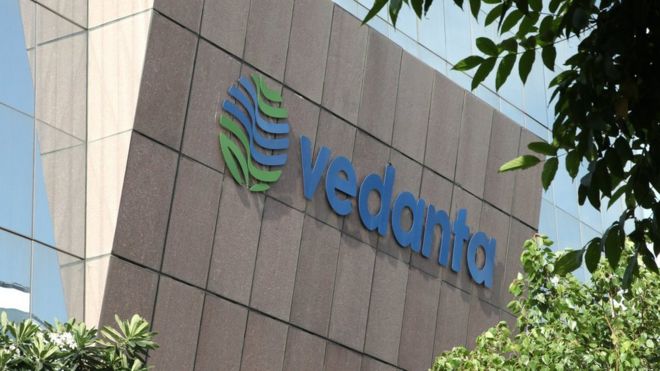
Vedanta building in India
Image copyright VEDANTA

On 10 April 2019, BBC and others reported on a landmark judgement in the UK that could have big implications for others cases in which human rights defenders seek compensation from multinationals. Nearly 2,000 Zambian villagers have won the right to sue mining giant Vedanta over alleged pollution, the UK Supreme Court has ruled. The landmark judgement means other communities in developing countries could seek similar redress in the UK.

Zambian villagers have been fighting for the right to seek compensation in British courts for several years. Vedanta had argued that the case should be heard in Zambia. The UK Supreme Court disagreed, saying that the case must proceed in the UK, due to “the problem of access to justice” in Zambia. The case relates to allegations by villagers living near the huge Nchanga Copper mine, owned by Konkola Copper Mines (KCM), a subsidiary of UK-based Vedanta. Vedanta said: “The judgment of the UK Supreme Court is a procedural one and relates only to the jurisdiction of the English court to hear these claims. It is not a judgment on the merits of the claims.

Martyn Day, senior partner at law firm Leigh Day, which is representing the Zambian villagers, said: “I hope this judgment will send a strong message to other large multinationals that their CSR [Corporate Social Responsibility]. policies should not just be seen as a polish for their reputation but as important commitments that they must put into action.

[In 2015, Zambian villagers accused Vedanta of poisoning their water sources and destroying farmland. Leaked documents seen by the BBC appeared to show that KCM had been spilling sulphuric acid and other toxic chemicals into the water sources. …In India’s Tamil Nadu state, a Vedanta-owned copper smelting plant was closed by authorities in May 2018.]

See also: https://humanrightsdefenders.blog/2019/03/23/human-rights-council-recognises-vital-role-of-environmental-human-rights-defenders/

‘Belgrade Call” presses governments to protect rural human rights defenders

April 9, 2019

On 9 April 2019 the International coalition: ‘Belgrade Call to Action’ urges governments to address rural repression”

The “Belgrade Call to Action” presses governments and members states of the United Nations to act upon the deteriorating conditions for civil society and the growing human rights violations targeting human rights defenders in the context of achieving the Sustainable Development Goals (SDGs) of the 2030 Agenda. The Civil Society Partnership for Development Effectiveness (CPDE), CIVICUS, Action for Sustainable Development, Civic Initiatives and the Balkan Civil Society Development Network initiated the launching of the action agenda on 8 April 2019, while civil society organizations worldwide are gathered in Belgrade, Serbia for the 2019 International Civil Society Week.

The People’s Coalition on Food Sovereignty (PCFS) finds the Belgrade Call to Action timely and relevant especially to land rights defenders including farmers and Indigenous Peoples groups who brave repression for their opposition to state-sponsored and corporate-backed development ‘aggression’ projects.

According to Sylvia Mallari, global co-chairperson of PCFS, the Belgrade Call to Action lays down practical measures for UN member states and international organizations to address the shrinking space of and foster an enabling environment for civil society organizations and human rights defenders, which would significantly advance the Agenda 2030 and its SDGs.

We hope that the Belgrade Call to Action will push the governments of these countries to undertake appropriate measures that will put an end to the phenomenon of peasant killings and promote genuine agrarian reform to uplift farmers from their dire conditions,” Mallari stressed.

………

We hope that through the Belgrade Call to Action, rural repression will end and land conflicts will be addressed. We appeal to the member states of the UN and the international community to support and adhere to the Belgrade Call to Action,” Mallari said.

http://www.scoop.co.nz/stories/WO1904/S00064/belgrade-call-to-action-to-govts-on-rural-repression.htm

Human Rights Council recognises vital role of environmental human rights defenders

March 23, 2019

The ISHR reports that on 21 March 2019 the UN Human Rights Council has adopted a strong consensus resolution recognising the critical role of environmental human rights defenders in protecting vital ecosystems, addressing climate change, attaining the sustainable development goals (SDGs) and ensuring that no-one is left behind. [See also: https://humanrightsdefenders.blog/2019/01/09/front-line-defenders-says-record-number-of-activists-killed-in-2018/].

The resolution meets many of the civil society demands ISHR expressed in a joint letter along with more than 180 groups (see reference below). By formally acknowledging the important role of environmental human rights defenders, the Council highlights the legitimacy of their work, helps counter stigmatisation and can contribute to expanding their operating space. Though the resolution falls short in some key areas, its adoption by consensus is a positive step towards better protection of environmental human rights defenders. It must now be followed by implementation at the national level by all relevant stakeholders, including States, UN agencies, businesses and development finance institutions….

The resolution was led and presented by Norway, on behalf of 60 States from all regions. In particular, many Latin American States strongly supported the resolution, which is significant given the dangerous situation for defenders in many of those countries. The consensus on the protection of environmental human rights defenders is a welcome sign of unity by the international community in recognising their vital contribution to a biodiverse and healthy environment, to peace and security, and to human rights.

We now look to States, business enterprises and development finance institutions to take rapid and decisive steps to address the global crisis facing environmental human rights defenders’, said Michael Ineichen, Programme Director at the International Service for Human Rights. ‘This means States need to create protection mechanisms which guarantee the security of defenders. States must also ensure that businesses put in place specific policies and processes allowing for the inclusion of human rights defenders and their concerns in due diligence processes’, Ineichen said.   

Key points of the resolution:

  • Expresses alarm at increasing violations against environmental defenders, including killings, gender-based violence, threats, harassment, intimidation, smear campaigns, criminalisation, judicial harassment, forced eviction and displacement. It acknowledges that violations are also committed against defenders’ families, communities, associates and lawyers;
  • Recognises that the protection of human rights defenders can only be achieved through an approach which promotes and celebrates their work. It also calls for root causes of violations to be addressed by strengthening democratic institutions, combating impunity and reducing economic inequalities;
  • Pays particular attention to women human rights defenders, by stressing the intersectional nature of violations and abuses against them and against indigenous peoples, children, persons belonging to minorities, and rural and marginalised communities;
  • Urges States to adopt laws guaranteeing the protection of defenders, put in place holistic protection measures for and in consultation with defenders, and ensure investigation and accountability for threats and attacks against environmental human rights defenders; and
  • Calls on businesses to carry out human rights due diligence and to hold meaningful and inclusive consultations with defenders, potentially affected groups and other relevant stakeholders.

While the resolution was adopted by consensus, the unity came at the price of a lack of specificity in certain areas. For instance, the resolution does not clearly recognise all of the root causes of the insecurity facing environmental human rights defenders, as documented by UN experts, nor comprehensively name the perpetrators or the most dangerous industries. It also fails to clearly spell out the human rights obligations of development finance institutions, and to detail the corresponding necessary steps to consult, respect and protect the work of environmental human rights defenders. 

https://www.ishr.ch/news/hrc40-council-unanimously-recognises-vital-role-environmental-human-rights-defenders

https://www.ishr.ch/news/hrc40-states-should-defend-environmental-human-rights-defenders

The UN Environmental Rights Initiative interviews Donald Hernández Palma

February 26, 2019

On 26 February 2019 the UN Environmental Rights Initiative (launched in Geneva last year during the UN Human Rights Council). The aim is to ensure that human rights defenders can carry out their activism safely, defend their local environments and the planet. 

However, alarming statistics on killings have been reported over the past few years—especially regarding the targeting of indigenous groups. Latin America has seen the highest number of murders in recent years, accounting for almost 60 per cent of the global total in 2016. In Honduras, 128 defenders are estimated to have been murdered since 2010—the world’s worst rate. UN Environment reached out to Donald Hernández Palma, a Honduran lawyer and human rights defender, for his take on the situation facing environmental and human rights defenders. [see also: https://humanrightsdefenders.blog/2014/11/28/peace-brigades-international-officially-launches-its-country-chapter-in-ireland/ ]

Donald specializes in criminal and environmental law, with a particular focus on mining. He is a member of the Latin American Lawyers’ Network, which works against the negative impacts of transnational extractive companies in Latin America. Since 2010, Donald has worked for the Honduran Centre for the Promotion of Community Development as coordinator of its legal department. He is also the coordinator of the Human Rights and Environmental Department.

Could you tell us a little about yourself, where you come from and how you became part of the environmental advocacy movement?

I am the son of peasant parents who cultivated coffee. I grew up in a remote village in Honduras. I studied in a school that only went up to sixth grade and had to walk almost 20 kilometres a day to go to class. Later, I studied agronomy, a profession I practiced for more than 10 years, in direct contact with peasant families across Honduras. I have directly witnessed the serious subsistence difficulties faced by my countrymen far from government aid.

Since graduating in criminal law in 2007, have been working on environmental protection issues in rural communities. In 2010, I began my work at the Honduran Centre for the Promotion of Community Development, allowing me to work in the defence of human rights for the same populations I had known for many years before.

What situations help explain the kinds of challenges environmental human rights defenders face in Honduras?

Different forms of political and economic corruption in Honduras have compromised – and in some cases denied – local communities’ access to natural resources. Many people have resisted mining, hydro and logging projects, and because of this resistance, have found themselves criminalized and harassed—even killed. Honduras is today considered one of the most dangerous countries for those who defend their land and territories.

What kind of resources are being exploited in your country and how is it affecting land, water, air and biodiversity?

Currently, 302 mining concessions have been approved by the Honduran Government for open-pit mining. Projects are awarded to national and international businesses on thousands of hectares of land, affecting populations that are rarely consulted. Meanwhile, rivers are being appropriated in many regions of the country to generate electricity. Projects are also often granted without consultation to business families, as a payback for favors made for political campaigns.

Also, thousands of hectares of land are being used to plant African palm, transgenic corn and sugar cane for biofuels. This is displacing traditional agriculture, and also causing displacement of populations from their territories to urban centres within and outside the country. Laws have also been passed in Congress to privatize criollo seeds, removing the right of indigenous peoples and peasant peoples to trade their seeds as they have been doing for thousands of years.

What has been done to address these problems?

Organizations like ours do permanent research on the concessions of common goods. This information is very difficult to obtain because it is hidden from the people. There is a law on access to public information that is not respected. We give this information to the affected peoples, whom we also organize and train on human rights and indigenous law, among other issues. We also carry out public protests, present unconstitutionality appeals before the Supreme Court of Justice and carry out legal defence actions when the leaders are criminalized for defending their territory.

What kind of national laws have been enacted? Do international laws help you in any way?

We have a mining law that is highly harmful to the population, a plant breeders’ law that harms people’s rights over seeds, and energy laws that facilitate the implementation of electrical projects that avoid environmental impact prevention processes. In addition, the modification of the criminal code criminalizes public protest. It is precisely international law that allows us to exercise defensive actions in favor of indigenous peoples and peasants, since Honduras has been found not to comply with the international treaties that bind the Honduran state to respect human rights defenders.

Are you working with any NGO groups? 

I am the facilitator at The National Coalition of Environmental Networks and Organizations Honduras (CONROA), a joint space that brings together more than 30 organizations.

Has the newly-signed treaty by 24 Latin American and Caribbean countries, formally called the Regional Agreement on Principle 10, provided any protection on people’s rights in Honduras

Unfortunately, the Honduran state was one of the countries in the region that did not sign this important treaty.

Have you encountered any successes, and is attention increasing on this issue on the ground? 

Unfortunately, an advocate such as Bertha Cáceres, our comrade in this struggle, had to die so that the eyes of the world could return to the terrible situation due to the contempt of the state against those who defend common goods. The visits of the rapporteurs (Michel Fort) and the rapporteur of indigenous peoples have been very important in forcing the Honduran State to respect human rights defenders.

Human Rights Defenders in Latin America under constant attack

February 20, 2019

Some 50 human rights defenders from Latin America held a meeting at the Journalists Club in Mexico City to exchange strategies and analyse the challenges they face in the most lethal region for activists. Special rapporteurs on indigenous peoples, displaced persons and freedom of expression attended the meeting. Credit: Emilio Godoy/IPS

Some 50 human rights defenders from Latin America held a meeting at the Journalists Club in Mexico City. Credit: Emilio Godoy/IPS

We’re in a very difficult situation. There is militarisation at a regional level, and gender-based violence. We are at risk, we cannot silence that,Aura Lolita Chávez, an indigenous woman from Guatemala. (Chávez was a finalist for the European Parliament’s Sakharov Prize for Freedom of Thought in 2017, and winner of the Ignacio Ellacuría Prize of the Basque Agency for Development Cooperation that same year). She has received death threats and attacks that forced her to seek refuge in Spain in 2017.

Latin America, the most lethal region for human rights defenders according to different reports, especially activists involved in defending land rights and the environment. Some 50 activists from Brazil, Colombia, Guatemala, Honduras, Mexico, Nicaragua, the United States and Uruguay participated in the International Meeting of Human Rights Defenders and Journalists in Mexico City from 15-18 February under the slogan “Defending does not mean forgetting.”

Guests at the meeting were United Nations Special Rapporteur on the Rights of Indigenous Peoples, Victoria Tauli-Corpuz from the Philippines; UN Special Rapporteur on the Human Rights of Internally Displaced Persons, Cecilia Jiménez-Damary from the Philippines; and the Inter-American Commission on Human Rights (IACHR) Special Rapporteur on Freedom of Expression, Edison Lanza from Uruguay.

The human rights defenders identified common threats such as interference by mining and oil companies in indigenous territories, government campaigns against activists, judicial persecution, gender-based violence, and polarised societies that often fail to recognise the defence of human rights.

Evelia Bahena, an activist from the southern Mexican state of Guerrero, told IPS about “the suffering and destruction” at the hands of “companies that make profits at the cost of the lives of others.”

A number of reports have focused on the plight of human rights defenders in the region. In the report “At what cost? Irresponsible Business and the Murder of Land and Environment Defenders 2017”, published in July 2018, the international organisation Global Witness stated that of the total of 201 murders of human rights defenders in the world in 2017, 60 percent happened in Latin America. [see also: https://humanrightsdefenders.blog/2019/01/09/global-witness-report-2018-on-environmental-defenders-bad-but-2017-was-worse/]

Brazil recorded the highest number of homicides of activists of any country, 57. In Mexico, the number was 15, five times more than the year before, while Nicaragua recorded the highest murder rate of activists relative to its population, with four killings, according to the British-based organisation.

The “Global Analysis 2018”, produced by the international organisation Front Line Defenders, also depicts a grim outlook, counting 321 human rights defenders killed in 27 countries, nine more than in 2017. Of that total, 77 percent involved defenders of the land, the environment and indigenous people. [https://humanrightsdefenders.blog/2019/01/09/front-line-defenders-says-record-number-of-activists-killed-in-2018/]

For Ana María Rodríguez, a representative of the Colombian Commission of Jurists, difficult conditions persist in her country, where 20 human rights activists have been murdered so far in 2019. “There are delays and non-compliance with the peace agreement,” which have contributed to the defencelessness of human rights activists, according to the lawyer.

The rapporteurs present at the meeting, on unofficial visits to Mexico, listened to the accounts given by activists and recalled that governments in the region have international obligations to respect, such as guaranteeing the rights of indigenous people, displaced persons and journalists, as well as protecting human rights defenders…In her October report on Mexico, the special rapporteur criticised the violation of rights of indigenous people, especially the right to prior consultation on energy, land or tourism projects in their territories. [https://humanrightsdefenders.blog/2019/02/16/human-rights-defenders-journalists-in-mexico-in-1919-2-killed-2-released/]

For his part, Lanza, the IACHR special rapporteur, said the recommendations of the joint report released in June 2018 with David Kaye, UN special rapporteur on the promotion and protection of the right to freedom of opinion and expression, should be the starting point for the measures to be adopted by the Mexican government.,,

Profile of Mexican indigenous defender Romel Rubén Gonzalez Diaz

February 17, 2019

ISHR published on 21 January 2019 this profile of Romel Rubén Gonzalez Diaz from the Indigenous and Popular Regional Council of Xpujil. This organisation works in partnership with the Cooperativa Chac Lol, in the defense of the territory, training in municipal and human collective rights, generating sustainable development alternatives (agriculture, biocultural tourism, sustainable management of natural resources). The main problem in Muna, Yucatan is the proposal to establish a solar park megaproject with 1227,000 solar panels, destroying 700 hectares of tropical forest, by the company Sunpower of the USA.

ISHR sets out the priorities for the Human Rights Council in 2019

February 9, 2019
On 28 January 2019 ISHR presented a blueprint for States with recommendations to some of the key issues the Human Rights Council should address in 2019. 

In 2018, the Council adopted some landmark decisions

  • an independent investigative mechanism on Myanmar
  • Yemen, renewing the mandate of the Group of Eminent Experts
  • Burundi, extending the mandate of the Commission of Inquiry.

At the same time, several situations of gross rights violations escaped Council scrutiny for political reasons.[see also: https://humanrightsdefenders.blog/2018/12/04/general-assemblys-3rd-committee-concludes-2018-session/]

The annual “High Level Segment” in March 2019 is a critical opportunity to set the agenda for the year. The Human Rights Council’s three regular sessions in March, June/July and September are further opportunities to advance priorities.

Here is ISHR’s checklist on the human rights situations and issues which should be advanced in 2019.

States should commit to strengthening the Council by demonstrating leadership, principled action and sustained follow through.

All regional groups presented the same number of candidates as seats for the 2018 Council elections and several States with terrible human rights records and with poor records of cooperation with UN mechanisms were elected, turning the elections into more of an appointment process, and going against the vision of the Council’s founding document.

States should collectively express concern about China’s failure to uphold human rights principles and protect the rights of its citizens, especially ethnic Uyghurs and Tibetans and those involved in the defence of human rights. China’s rejection of critical dialogue and universal principles is especially worrying as the Chinese government becomes increasingly active in the Council – a space dedicated to those same values.

States should also collectively press for the immediate and unconditional release of detained women human rights defenders in Saudi Arabia. If the international community is serious about contributing to advancing women’s rights in Saudi Arabia, it should recognise Saudi women human rights defenders as agents of change and urge the Saudi authorities to take all necessary measures to guarantee a safe and enabling environment for them to continue their vital work.

States should also initiate Council action to address recent cases of reprisals in Egypt as reported by the Special Rapporteur on the right to adequate housing after her visit in September 2018. These attacks come amidst a context of wide-scale repression against civil society through intimidation, arbitrary arrests, unfair prosecutions and travel bans.

States should collectively denounce the ongoing judicial harassment and arbitrary detention of human rights defenders in Bahrain, including reprisals for engaging or attempting to engage with UN mechanisms. As a minimum, States should call on the Bahraini authorities to immediately release all those detained for exercising their rights to freedom of expression, assembly and association, such as Nabeel Rajab and Abdulhadi Al Khawaja.

At the 40th session:

The Council will consider a resolution on the situation of human rights defenders working on rights related to land and environment. ISHR calls on States to address the particular threats and attacks against this group of defenders, in particular the specific risks faced by women human rights defenders, to combat impunity for attacks against them, and ensure full civil society participation in development and the management of natural resources. The draft resolution should call on States who prioritise the protection of human rights defenders to condition their provision of diplomatic support to business – such as export credit guarantees and trade support – on companies’ commitment to respect, consult and protect defenders. ..The Special Rapporteur on the situation of human rights defenders will present his report on the situation of women human rights defenders. States should publicly recognise the specific risks and threats women defenders face and commit to taking further measures to enhance their protection, underline the legitimacy of their work, their specific protection needs and adequate remedies to the specific violations they face.

At the 41st session:

Thanks to the sustained efforts by civil society and supportive UN Member States, the mandate of the Independent Expert on protection against violence and discrimination based on sexual orientation and gender identity (SOGI) was established in 2016. At the 41st session, ISHR urges States to renew the mandate and ensure that it is not weakened, so that it continues its vital work in capturing good practices and assisting States in ending discrimination and violence based on SOGI. The mandate continues to work with a diverse range of States from all geographical regions. Defenders from across the globe have affirmed that the mandate has contributed to their protection and recognition of their work. ..The Council will also consider a resolution on migrants and human rights. States should ensure that the text reiterates their obligations to support and not restrict defenders’ in their vital work and to protect migrant rights defenders in the face of rising intolerance, xenophobia and illiberalism. ISHR recalls Principle 18, from the OHCHR Principles and Guidelines on the human rights protection of migrants in vulnerable situations, which sets out measures States can take to respect and support the activities of migrant rights defenders.

At the 42nd session:

Human rights defenders must be able to access the UN freely and safely so that the UN can do its crucial work of monitoring countries’ compliance with human rights obligations and protecting victims from abuses. At the 42nd session in September 2019, States should not miss the opportunity to cite specific cases of reprisals at the second interactive dialogue on the Secretary-General’s annual report on reprisals….Finally, the accessibility of the Council to rights holders, victims and defenders is both a key contributor to, and indicator of, the Council’s relevance and success.  As discussions on enhancing the efficiency of the Council resume, States should continue to support and guarantee that any proposed measures do not restrict or limit civil society participation at the Council.

Protective accompaniment for land, water and human rights defenders badly needed

January 17, 2019
Photo: Peace Brigades International
Those who work to defend land, water, Indigenous, LGBTQI+ and human rights around the world face many dangers, including death- Photo: Peace Brigades International

Brent Patterson wrote on 16 January, 2019 a blog post: “Protective accompaniment supports land, water and human rights defenders”. It is a timely reminder of the work done by PBI:

According to Front Line Defenders, 2018 saw the highest number ever on record of human rights defenders killed [https://humanrightsdefenders.blog/2019/01/09/front-line-defenders-says-record-number-of-activists-killed-in-2018/]. One way to support these defenders is through protective accompaniment (often popularly describes ed as the ‘human shiled’). According to NGO Peace Brigades International (PBI), “Protective accompaniment is a strategy pioneered by PBI for protecting human rights defenders and communities whose lives and work are threatened by political violence.” The strategy involves recruiting volunteers from around the world who want to help “defend the defender,” providing them with training, and then sending them into areas of conflict in a highly visible way to provide increased security and moral support to defenders.

Normally volunteers spend a minimum of one year in the field. “When the level of threat is high accompaniment is sometimes round the clock. In other situations volunteers stay with threatened communities or remain in the offices of organizations, and accompany threatened activists when they travel,” PBI notes. “Another form of accompaniment is regular phone calls to organizations to check on their safety.

These volunteers are backed by an international network that raises the profile of the defender and their struggle, provides analysis and international solidarity, and increases the stakes and risk of repercussions for potential attackers. “Accompaniment increases the perceived political costs of ordering an attack in front of international witnesses — witnesses whose organization is committed to making such attacks as costly as possible for those responsible,” PBI notes. The political costs can be amplified by garnering local, national and international media coverage, mobilizing embassies, governments and international bodies, challenging with facts the official rhetoric that a human rights situation is improving, and making risk-adverse investors aware they could lose money with controversial mega-projects. Hundreds of defenders have received protective accompaniment over the years.

Those accompanied by PBI have included activists from Indigenous communities, environmental organizations, women’s organizations, trade unions, community organizations, as well as LGBTQI+ activists, journalists, lawyers and relatives of the disappeared.

Brent Patterson is an activist-blogger who writes this monthly column on inspiring stories of global resistance to neoliberalism and climate change.

http://rabble.ca/columnists/2019/01/protective-accompaniment-supports-land-water-and-human-rights-defenders