Posts Tagged ‘killings’

Guatemala’s slide into violence passes through killings of human rights defenders

January 29, 2019

….Indigenous citizens, many dressed in colorful traditional clothing, came out partly to protest the Guatemalan president’s recent expulsion of a United Nations-backed commission investigating corruption in the country. Since 2007, the International Commission against Impunity in Guatemala, known by its Spanish initials CICIG and funded by the U.N., the United States and the European Union, has worked with Guatemalan justice agencies to target corrupt officials.

In the highly unequal society that is Guatemala, many Maya believe any strengthening of the justice system will protect indigenous rights granted under the country’s constitution and peace accords.

The country’s indigenous people therefore have a strong motivation to lobby for the rule of law. Maya communities bore the brunt of almost four decades of a civil war that ended in 1996, leaving over 200,000 casualties, the majority indigenous Guatemalans, according to the United Nations. Now the mostly Maya organizations and many human rights groups worry that the violence is making a comeback: In just the last year, 26 members of mostly indigenous campesino organizations have been killed.

Guatemala is on the verge of a major human rights catastrophe,” says Jo-Marie Burt, a professor at George Mason University in Fairfax, Va., and a senior fellow at the Washington Office on Latin America, an independent research and advocacy center. According to Burt, the Guatemalan Union of Human Rights Defenders has tallied over 200 attacks against human rights defenders in Guatemala in the last year….Guatemala is close to falling into the violence that gripped the country 30 years ago, which the United Nations and some Guatemala courts say led to a genocide of the country’s indigenous citizens.

One of the killings took place in July, in the province of Quiché, one of the areas hardest hit by the civil war……Hundreds attended her wake and funeral, where a leader of the Campesino Development Committee said the organization would not be intimidated. Indigenous, human rights and international organizations expressed outrage for Raymundo’s murder.

Indigenous scholar and commentator Irma Alicia Velásquez Nimatuj wrote in her column in the newspaper El Periódico, “After having lived through a genocide, we should have learned the lesson that no one in Guatemala, regardless of ethnicity, gender or class, should be killed for thinking differently … or for dreaming of a different future.

According to Velásquez, Guatemala has entered “a new stage of repression”one focused on “assassinating community leaders who defend their territories from invasion by transnational companies bent on depriving indigenous peoples of the resources they have in the soil and the subsoil.

Numerous conflicts over land and mineral rights have surfaced in indigenous communities throughout Guatemala.

…..On Aug. 5, shortly after Raymundo’s killing, the respected sociologist Edelberto Torres-Rivas provided historical context for the attacks on rural leaders in a long opinion piece for El Periódico. …. He went on to warn that “In Guatemala there is a return of those who’ve carried out crimes in the recent past … and if the authorities don’t take care … there could be a reaction.”…..

——-

https://www.npr.org/2019/01/22/685505116/killings-of-guatemalas-indigenous-activists-raise-specter-of-human-rights-crisis?t=1548231003780

https://www.aljazeera.com/indepth/opinion/attacks-indigenous-rights-defenders-181206094334223.html

https://reliefweb.int/report/guatemala/iachr-expresses-alarm-over-increase-murders-and-aggressions-against-human-rights

https://www.telesurenglish.net

First Mexican journalist killed in 2019 – protection mechanism failing

January 22, 2019

The body of 34-year-old Rafael Murua Manriquez was found by the side of a road in Northern Mexico Sunday 20 January 2019, the same day he had been reported missing by his family. The former director of the community radio station, Radiokashana in Santa Rosalia, has become the first Mexican journalist to be killed in 2019.

Within his news reporting, Rafael Murúa Manríquez, is believed to have denounced the aggressions of the municipal president of Mulegé Felipe Prado, according to El Comercio. Following a statement from the Mexican representative of the Committee to Protect Journalists, Jan-Albert Hootsen, it has also been confirmed that the young journalist had already received threats since last year and had been placed under the country’s journalist protection programme since 2016.

It is the second journalist to have been reported as murdered within the presidency of Andres Manuel Lopez Obrador, the first of which was killed just one day after his inauguration. The country’s leading NGOs and media protection agencies have since called upon a thorough investigation into the murder, in hopes of finding the people responsible.

At least ten journalists were killed last year alone, and in 2018 Mexico recorded the highest rate of press disappearances around the globe. The attacks continue on a long line of violence against the press throughout the past decade in Mexico as cartels brush shoulders with politicians creating a violent treat towards the investigation of ‘narcopolitics’.  See also: https://humanrightsdefenders.blog/2018/03/24/new-national-award-to-honor-slain-mexican-journalists/

The Federal Mechanism for the Protection of Human Rights Defenders and Journalists, which is used by Mexicans who have had their lives threatened, came into play in 2012. However, the initiative is believed to already be overwhelmed with recent enrollment. …With both federal and state protection mechanisms, there are also concerns that journalists with state-level support are often seeking protection from the very authorities trusted with guarding them. Last year, Mario Gómez Sanchez was gunned down by armed motorbikers, however, human rights groups could not explain why his protection mechanism was removed before his killing. The State Attorney General’s office declined to comment when contacted by Aztec Reports.

https://aztecreports.com/first-mexican-journalist-killed-in-2019/2359/

Front Line Defenders says record number of activists killed in 2018

January 9, 2019
In 2018, 321 defenders in 27 countries were targeted and killed for their work – the highest number ever on record – according to data collected by Front Line Defenders. More than three-quarters of these, 77% of the total number of activists killed, were defending land, environmental or indigenous peoples’ rights, often in the context of extractive industries and state-aligned mega-projects. [see also: https://humanrightsdefenders.blog/2018/04/28/annual-reports-2017-by-front-line-defenders/]

Front Line Defenders reports that the murders of HRDs were not isolated events, but were preceded by judicial harassment, threats and physical attacks. At least 49% of those killed had previously received a specific death threat, and in an additional 43% of killings there had been general threats made to HRDs in the area. In the vast majority of cases, HRDs did not receive the necessary protection and support from state authorities from the time they reported threats to the time they were murdered.

According to the Front Line Defenders Global Analysis 2018, in addition to the threats experienced by male colleagues, WHRDs face gendered and sexualized attacks from both state and non-state actors, as well as from within their own human rights movements. Such violations include removal from public or high-ranking positions in NGOs, trade unions, and political societies; smear campaigns questioning their commitment to their families; sexual assault and rape; militarized violence; and the harassment and targeting of their children. In Saudi Arabia, authorities arrested, sexually assaulted, and tortured WHRDs who led the successful campaign for the abolition of the driving ban in 2018. Despite these attacks and the ongoing threats to stay silent, WHRDs in Saudi Arabia, as well as their family members, have publicly reported and condemned the abuses and are receiving unprecedented national, regional, and international visibility for their activism.

In addition to physical attacks and torture, the Front Line Defenders Global Analysis 2018 highlights the continuing trend towards restrictive legislation aimed at stifling the powerful work of HRDs and WHRDs, including:

  • A Digital Security Act in Bangladesh carrying a 14-year sentence for using digital media to “cause damage to the state”;
  • Retrospective legislation in Xinjiang province, China, legalising the use of “re-education” camps for the minority Uyghur population, including HRDs;
  • Anti-terror legislation in Nicaragua widening the definition of terrorism to include those accused of damaging property, leading to dozens of arrests of protesters now facing terrorism charges and 20 years in prison.

Front Line Defenders Digital Protection Team responded to a high number of reports from Brazil, Egypt, Guatemala, Honduras, Iraq, Mexico, Nicaragua and Venezuela in 2018. According to the Global Analysis, authorities around the world frequently used phone and email surveillance to target LGBTI+ defenders, WHRDs and environmental activists in particular. The report notes that in Tanzania, Pakistan, Russia, Malaysia, Nicaragua, Turkey, and many countries in MENA, governments claimed that HRDs were threatening “national security” as an excuse for censoring and blocking NGO websites.

Despite the severe and sometimes life-threatening risks faced by HRDs and WHRDs, Global Analysis 2018 highlights a number of major success achieved by HRDs and WHRDs in 2018, including:

  • The critical and leading role played by HRDs in securing The Escazu Agreement, now signed by 24 states in Latin America and the Caribbean, which stipulates a participatory approach to environmental projects and the mitigation of conflicts;
  • The monumental vote for reproductive rights in Ireland, secured through the extensive, decades-long campaigning of Irish WHRDs in the face of defamation, smear campaigns, and threats;
  • The Coalition of Women Leaders for the Environment and Sustainable Development in the Democratic Republic of Congo (DRC), who successfully campaigned for a province-wide decree in Equateur protecting women’s land and forest rights.

In response to attacks against HRDs in 2018, Front Line Defenders is working with HRDs to promote their security with a range of protection programming. In addition to risk management and digital protection trainings, advocacy at the national, international, and EU level, emergency relocation, Front Line Defenders provided nearly 550 protection grants to activists at risk in 2018. Front Line Defenders also works with HRDs to devise visibility campaigns to counteract the defamation and smear campaigns that put them at risk.

https://www.frontlinedefenders.org/en/resource-publication/global-analysis-2018


“Reprehensible” says UN about Mexican killing of human rights defender

November 7, 2018

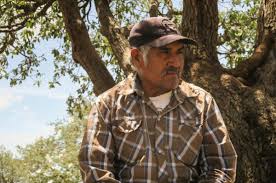
On 6 November 2018, four UN Special  Rapporteurs have strongly condemned the killing of Julián Carrillo, an indigenous rights defender from the state of Chihuahua, Mexico, who had worked tirelessly for over two decades to defend his community against the exploitation of Rarámuri ancestral lands.

On 23 October 23 2018, Julián Carrillo told a friend by phone that he believed he was being watched and said he would go into the forest in an attempt to hide. On the evening of 25 October, his body was found. He had multiple bullet wounds. “We urge the Mexican authorities to identify the perpetrators of this reprehensible crime and to bring them to justice in accordance with the law,” the experts said.

The experts also urged the Government to address the underlying causes of such violence. “The killing of Julián Carrillo highlights the serious situation in the Sierra Tarahumara where the lack of recognition of indigenous land rights is a root cause of the recurring violence against and displacements of indigenous communities.”… [The UN experts are: Mr. Michel Forst, Special Rapporteur on the situation of human rights defenders; Ms. Victoria Tauli Corpuz, Special Rapporteur on the rights of indigenous peoples;  Ms. Agnès Callamard, Special Rapporteur on extrajudicial, summary or arbitrary executions; and Ms. Cecilia Jimenez-Damary, Special Rapporteur on the Human Rights of Internally Displaced Persons.]

Julián Carrillo’s murder is one of a spate of killings of human rights defenders in the country. According to official OHCHR figures, 21 human rights defenders have been killed so far this year, nine of them from indigenous communities. Four members of Julián Carrillo’s family – his son, son-in-law and two nephews – have been killed since February 2016.

This follows soon after the assassination on Wednesday 23 October of journalist Gabriel Soriano Kuri.  Soriano had been covering Governor Héctor Astudillo Flores’ third annual report for the Radio y Televisión de Guerrero (RTG) broadcaster that evening. After the event, held in Acapulco, he was driving a company vehicle when he was attacked and killed by armed civilians. Following the murder, Astudillo offered his condolences to Soriano’s family via Twitter. But it didn’t go down very well. Soriano’s daughter replied with a blunt message: “My dad was assassinated doing his job. Covering your report to the state! Do your job and fix the situation the state is in. It’s not right,” she wrote. Her discontent was echoed in at least three demonstrations where journalists demanded that authorities solve the assassination of their colleague. A state journalists’ association reported that three members of the profession have been slain during Astudillo’s three years in office.

https://www.frontlinedefenders.org/es/profile/noel-castillo-aguilar

https://www.amnesty.org/en/latest/news/2018/10/mexico-asesinato-de-lider-raramuri-demuestra-falta-de-proteccion-estatal/

https://mexiconewsdaily.com/news/demonstrations-follow-journalists-assassination/

Joint Statement by NGOs: Ukraine should address attacks against Human Rights Defenders

October 8, 2018

On 3 October 2018 a number of NGOs published a Joint Statement on Ukraine deploying the many attacks against Human Rights Defenders:

More than 50 attacks on activists and human rights defenders in Ukraine have been recorded by local human rights organisations in just the last nine months, Amnesty International, Human Rights Watch, Freedom House and Front Line Defenders said today. Those under attack include people working to defend the rights of lesbian, gay, bisexual, and transgender (LGBT) people, protect the environment, and campaign against corruption. 

The organisations criticised the lack of effective investigations into these incidents and of prosecutions of those responsible, which heightens the risk to human rights defenders and sends a message that the authorities tolerate such attacks and assaults. Recently, the prosecutor general suggested that civil society activists brought the attacks on themselves <https://www.pravda.com.ua/news/2018/09/27/7193378/&gt;  for criticising the authorities, giving an impression that human rights defenders can be openly targeted.

In most cases, the attacks have targeted individuals or groups that campaign against corruption in the local community, shine a light on the operation of local government and businesses, or defend people’s rights. The purpose of such attacks is clear: to silence activists and human rights defenders and to discourage others from speaking out against injustice and standing up for human rights. 

Two recent examples of the kind of vicious attacks that have yet to be effectively investigated took place on 22 September, in Odessa and Kryvyi Rih. Oleh Mikhaylyk, an anti-corruption activist, was shot in Odessa, in southern Ukraine, and remains in the hospital. Mikhaylyk had campaigned with the Syla Lyudei (People’s Power) movement against illegal construction in Odessa. Three hundred kilometers away, in Kryvyi Rih, unidentified assailants broke into the home of Artem Moroka after he criticised the local police on Facebook. The assailants severely beat him, breaking his nose, Moroka told Ukrainian human rights monitors.

In June, an environmental activist, Mykola Bychko, was found dead under suspicious circumstances in a village in Kharkiv region. Villagers found Bychko hanged in the woods near the village of Eskhar on June 5. The local police initially started a suicide investigation, but have yet to investigate the possibility that he was killed in connection with his activism. At the time, Bychko was documenting the pollution of a local river, allegedly caused by a nearby waste treatment plant.  A lawyer representing Bychko’s family questioned the conduct of the local police for ignoring the possibility that this was an intentional killing, and for allegedly intentionally delaying the investigation. The lawyer told Freedom House that police lost relevant evidence from the site where Bychko’s body was found, such as the rope from the improvised gallows. The authorities have also not pursued allegations that Bychko had received threats related to his documentation work, such as questioning people from the waste treatment plant. 

On July 31, an unidentified assailant threw acid on Kateryna Handzyuk, a local council member who monitored police activities, in Kherson. ……….

The Ukrainian authorities should take effective steps to prevent further threats and attacks against activists and human rights defenders, and ensure prompt, thorough, impartial and independent investigations into such threats and attacks and bring those responsible to justice in fair trials. 

The Interior Ministry, the National Police, the prosecutor general’s office, and other relevant institutions should explicitly recognise the important work of human rights defenders in protecting human rights and uncovering corruption. The authorities should publicly denounce any threats and attacks against human rights defenders. They should take decisive measures to ensure that government critics can work in a safe and enabling environment in which they can exercise the rights to freedom of expression, peaceful assembly and association, and conduct their activities without fear of reprisals. 

https://www.frontlinedefenders.org/en/statement-report/ukraine-address-attacks-against-activists-and-human-rights-defenders

https://freedomhouse.org/article/ukraine-address-attacks-against-activists-and-human-rights-defenders

Click to access EUR5092012018ENGLISH.pdf

To say it again clearly: assaults on human rights defenders are incompatible with international human rights treaties

June 27, 2018
In a ground-breaking joint statement on 23 May 2018, the UN Special Rapporteur on human rights defenders and representatives from all of the UN human rights treaty bodies have affirmed that all forms of abuse or undue restrictions against human rights defenders constitute violations of States’ parties obligations towards the realisation of rights set out in the Treaties. The statement was adopted on the eve of the 30th annual meeting of Treaty Body chairs on the occasion of a consultation initiated by the UN Special Rapporteur on human rights defenders and ISHR in New York.

This pronouncement constitutes a major step forward in the protection of human rights defenders and lays the ground for substantial enhancement of treaty body recommendations and jurisprudence in that area” says ISHR head of treaty body advocacy Vincent Ploton.

The statement reiterates the vital and central role played by human rights defenders to promote and support the application of the fundamental rights enshrined in the core international human rights treaties. It further contextualises the importance and relevance of the UN Declaration on human rights defenders which “reaffirms, is underpinned by, and elaborates binding human rights obligations, including rights set out in the Treaties, and is relevant to the interpretation and implementation of the Treaties”.

The Committee on economic, social and cultural rights (CESCR) was the first to adopt in 2016 a statement affirming that threats and violence against human rights defenders amount to violations of the Covenant. “We are delighted that fellow Treaty Bodies are now following suit with the adoption of this new joint statement”, says ISHR’s New York Director Madeleine Sinclair.

Marking the 20th anniversary of the UN Declaration on human rights defenders, the statement confirms that the core international human rights treaties and the Declaration prohibit discrimination against individuals and groups who champion such human rights norms and standards. It reaffirms that all individuals should be able to engage with treaty bodies free from all forms of interference, intimidation, abuse, threat, violence, reprisal, or undue restriction. It concludes with a series of practical measures that States ought to take to guarantee the protection of human rights defenders, including the adoption of specific legislation to protect and recognise defenders, and the revocation of legislation which restricts or hinders their work.

Read the full statement: http://www.ohchr.org/EN/NewsEvents/Pages/DisplayNews.aspx?NewsID=23154&LangID=E

[The statement was endorsed by the Committee on Enforced Disappearances, the Special Rapporteur on Human Rights Defenders, and the following Treaty Body members in their individual capacity: Virginia Brás-Gomes, CESCR Chair; Dalia Leinarte, CEDAW Chair; Noureddine Amir, CERD Chair; Ahmadou Tall, CMW Chair; Danlami Basharu, CRPD Vice-Chair; Felice Gaer, CAT Vice-Chair; Marcia Kran, HRCttee member; Olga Khazova, CRC Vice-Chair and Satyabhooshun Gut Domah, SPT member.]

https://www.ishr.ch/news/treaty-bodies-threats-and-assaults-human-rights-defenders-incompatible-core-international-human

DRAMATIC ESCALATION OF HRDS KILLED IN RECENT YEARS

June 21, 2018

On Wednesday 20 June 2018, Dublin based international human rights organisation, Front Line Defenders along with the HRD Memorial Network, launched a major new report on the killing of human rights defenders (HRDs) at the UN Human Rights Council in Geneva. The report, Stop the Killings, analyses the root causes of killings of HRDs in 6 countries: Brazil, Colombia, Guatemala, Honduras, Mexico and the Philippines, which between them have accounted for 80%  HRDs killed in the last three years. 

In its Annual Reports for the last 4 years, Front Line Defenders has reported the killing of 879 HRDs. These were not random killings but the targeted elimination of those working to improve their own communities.  The use of lethal violence to silence those who defend the rights of the most vulnerable has become widespread, and is endemic in a number of countries. In its 2017 Annual Report, Front Line Defenders reported the killing of 312 HRDs in 27 countries; the true figure is certainly higher. Two-thirds of those killed were working on the environment, land rights and indigenous peoples’ rights, often in remote, rural areas.

Among the key drivers of killings and violence against HRDs detailed in the report are::

  • state failure to recognise the legitimacy and importance of the work of HRDs;
  • smear campaigns against HRDs by the state and/or its agents;
  • economic policies which prioritise the ruthless exploitation of natural resources over the protection of the environment and the land;
  • rights of peasant communities and indigenous peoples;
  • lack of effective systems to document and investigate attacks on HRDs and provide protection;
  • collusion by the state and/or its agents in the killing of HRDs.

The report was launched by United Nations Special Rapporteur on Extrajudicial, Summary or Arbitrary Executions, Agnes Callamard, at a special side event during  Human Rights Council proceedings on Wednesday 20 June 2018.

The full text of the report can be downloaded from: https://share.riseup.net/#VWzkKTN4f-156VE4dc-r_Q

See also my: https://humanrightsdefenders.blog/2018/01/05/front-lines-2017-report-confirms-worst-expectation-over-300-hrds-killed/

https://humanrightsdefenders.blog/2017/07/15/documenting-the-killings-of-environmental-defenders-guardian-and-global-witness/


Seven more land rights defenders killed in Guatemala in a single month

June 13, 2018

The seven people killed in the last four weeks were all involved in defending their communities’ land, territory or the environment, and they were all members of the Campesino Development Committee (CODECA) or the Altiplano Campesino Committee (CCDA). The wave of attacks began on 9 May, when CODECA coordinator Luis Arturo Marroquín, 47, was shot dead by unidentified assailants in San Luis Jilotepeque. The next day, CCDA member José Can Xol, 37, was also shot to death by unidentified assailants in Choctún Basilá in the municipality of Cobán.

On 13 May, 31-year-old Mateo Chamám Paau, another CCDA member, was found dead in San Juan Tres Ríos, also part of Cobán. He had previously been threatened because of his activism. Then, on 30 May, two men attacked Ramón Choc Sacrab, an Indigenous Q’echí’ leader and regional CCDA leader in Ixloq San Pedrito, Cobán. He died two days later from the injuries sustained to his throat and face. On 4 June, the CODECA community leaders Florencio Pérez Nájera, 42, and Alejandro Hernández García, 40, were found dead in the southern Jutiapa region shortly after attending a community meeting. Their bodies bore machete wounds. Four days later, 68-year-old Francisco Munguia, another CODECA community leader, was also hacked to death by assailants with machetes in Guatemala’s Jalapa region.

To date, no one has been arrested or charged in connection with these killings, which have occurred within a context of extreme violence, including threats, attacks and smear campaigns to demonize human rights defenders. President Jimmy Morales has referred to CODECA using stigmatizing and defamatory language in recent weeks, thus contributing to the atmosphere of hostility and violence against its members. The Unit for the Protection of Human Rights Defenders in Guatemala (UDEFEGUA), a non-governmental organization, documented 493 attacks against human rights defenders in 2017, and there have already been 12 killings this year. Those working on rights related to land, territory and the environment are among the most commonly targeted.

The ray of hope I signaled recently [https://humanrightsdefenders.blog/2018/05/25/ray-of-hope-2-guatemala-and-impunity/], turned out be just a ray. On 16 January 2018 Cargill’s withdrawal sendt an important signal to the palm oil industry, and set an important precedent for environmental and social accountability. “However, it brings with it real concern for ongoing repression,”​ said Jeff Conant, Senior International Forests Program Director for Friends of the Earth. “Unfortunately, land defenders continue to be under threat, and companies that have profited from activities in the region have a responsibility to prevent these threats.”​

New national award to honor slain Mexican journalists

March 24, 2018
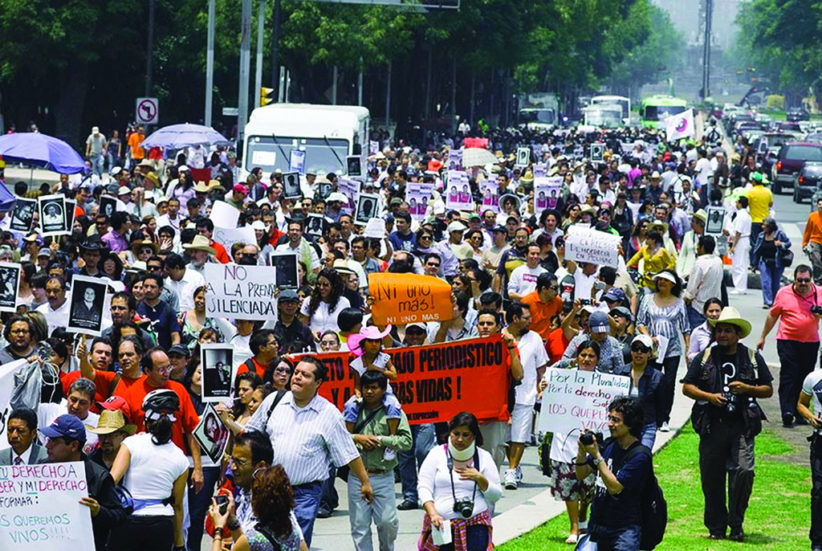
Miroslava Breach, a correspondent for Mexican daily La Jornada in the state of Chihuahua, on the US border, was a celebrated investigative journalist known for hard-hitting reports on links between politicians and organized crime (AFP Photo/HERIKA MARTINEZ)
Journalists take part in a protest outside the State Government building in Ciudad Juarez, Mexico to mark one year since the murder of journalist Miroslava Breach (AFP Photo/HERIKA MARTINEZ)

The UN and AFP launched an award Thursday 22 March 2018 to honor journalists who risk their lives to cover human rights abuses in Mexico, in tribute to two celebrated reporters murdered last year. The Breach-Valdez Prize will honor journalists who follow in the footsteps of their slain colleagues Miroslava Breach and Javier Valdez, two of the more than 100 reporters murdered since 2000 in one of the world’s most dangerous countries for the press. (see also: https://humanrightsdefenders.blog/2018/01/05/front-lines-2017-report-confirms-worst-expectation-over-300-hrds-killed/)

Its aim is “to recognize the careers of Mexican journalists who have distinguished themselves in defending human rights,” said Giancarlo Summa, director of the United Nations Information Center in Mexico.

Valdez, an award-winning journalist who covered Mexico’s powerful drug cartels, was gunned down last May in broad daylight outside the offices of Riodoce, the newspaper he co-founded in Culiacan, the capital of his native Sinaloa state. He was also a long-time AFP collaborator.

Miroslava Breach, a correspondent for Mexican daily La Jornada in the state of Chihuahua, on the US border, was a celebrated investigative journalist known for hard-hitting reports on links between politicians and organized crime. She was shot dead in broad daylight last March as she drove her son to school.

The annual prize is also co-sponsored by UNESCO, the Ibero-American University and the French embassy in Mexico. The first edition will be awarded on May 3 in Mexico City. The winner will receive a grant and a trip to France to take part in a series of events on free speech.

(Breach and Valdez were among at least 11 journalists murdered in Mexico last year, making it the deadliest country in the world for the press after Syria, according to watchdog group Reporters Without Borders. The latest murder came just Wednesday, when journalist Leobardo Vazquez was gunned down outside his house in Veracruz state — the second killed in 2018.)

“There is no indication these crimes are going to stop. Let’s hope this prize will help all the country’s brave journalists keep up the fight,” Valdez’s widow, Griselda Triana, said at the launch of the award.

This is a national award. There are many awards for journalists and for freedom of expression at the international level, see: http://trueheroesfilms.org/thedigest/

https://www.yahoo.com/news/un-afp-launch-prize-honor-slain-mexican-journalists-034757524.html

Environmental defenders face growing danger – what funders are doing

March 21, 2018

Will the world’s environmental defenders survive another year of violence? In 2017, a staggering 197 people—around four a week—were killed worldwide while defending the environment from “mines, plantations, poachers, and infrastructure projects,” according to the watchdog group, Global Witness. Even international recognition is no guarantee of safety. Two past winners of the Goldman Prize, often called the Nobel of environmentalism, were murdered in a span of months not long ago. [for more on the Goldman prize see: http://trueheroesfilms.org/thedigest/awards/goldman-environmental-prize]

Some funders are taking steps to stop the carnage. But can their giving keep up with the death toll, which has risen fourfold since 2012? To begin with, funders supporting the front line of environmental leaders are facing a hostile climate. Beatings and bullets aimed at their grantees are only one aspect of this.

The political environment has gotten a lot more toxic for a number of reasons,” said Alejandro Queral, who’s been following these issues for years and has firsthand knowledge of many environmental defenders’ cases…….”influence of the media, which is used to be a powerful tool for shining a light on the issue and shaming governments for their impunity, has been weakened on a global level.” More broadly, Queral said, “it has become increasingly difficult to hold abusive governments and individuals accountable for their actions.”

Similar concerns are reported by those in the funding world. “Not only have recent years seen a dramatic increase in the number of incidents involving environmental human rights defenders, but efforts to silence defenders are increasing,” said Alex Grossman, deputy director of communications at the Global Greengrants Fund.

Greengrants provides funding to strengthen grassroots environmental advocates around the world. Helping grantees deal with security threats is a fast growing part of its work, with grants going “toward bolstering physical security, securing legal assistance, developing safety protocols, purchasing equipment and supplies, relocation, and any other pressing need that may arise,” says Grossman. In the past year, Global Greengrants has given 21 grants totaling over $110,000 toward safety and security issues.

In recent years, though, it’s become harder to channel financial support to groups that need it around the world. 

“Governments are using the fear of terrorism and influence from abroad to put forward legislation that limits funding available and creates burdensome administrative procedures. Over 100 such laws have been enacted in the last five years,” Grossman told Inside Philanthropy. “These restrictions increase the difficulty for human rights defenders to continue their work. As the space for civil society continues to close, more funding is needed to help defenders on the front lines.”

The Global Greengrants Fund gets its funding mainly from individual donors. But it’s also pulled in support from some corporations like Aveda, which makes natural beauty products, and from several foundations, including the Arcus Foundation, which works to protect great apes. Arcus has funded a number of front-line efforts in Africa and Asia to combat poaching, which can be dangerous work. 

……..Protecting environmental defenders is often entwined with support for human rights activists writ large. The Open Society Foundations is a key player in this space, with offices in 37 countries, including areas with ongoing environmental conflicts. Another major outfit that has been entrenched in this space for a while now is the U.K.-based Sigrid Rausing Trust (SRT). Its Human Rights Defenders program supports organizations around the world that are providing security and increased media training to rights activists who are at risk of harassment, detention, torture and death.

Alex Grossman said that the Global Greengrants Fund often works to put environmental defenders in touch with human rights outfits like Urgent Action Fund and Frontline Defenders, which offer rapid response grantmaking and protection services.

But more work is needed to connect environmental and human rights efforts, and funders can play a role, here. 

“I believe the most important thing that grantmakers can do is be a catalyst for deep collaboration,” Queral said. “The Goldman Environmental Foundation funded the Sierra Club and Amnesty International to speak with one voice on behalf of activists. The knowledge, credibility and ability to move volunteers to action of these organizations raised the profile of many cases around the world.”

Queral said that such campaigns had, in some cases, led to successes, like the release from prison of environmental leader Aleksandr Nikitin, and the similar liberation of Rodolfo Montiel, who fought against widespread illegal deforestation in Mexico.

Against the backdrop of 2017’s death toll, it’s hard to imagine 2018 will be a year of safety for environmental defenders. But it could be a year in which their security becomes better supported. 

https://www.insidephilanthropy.com/home/2018/3/20/environmental-defenders-grants-security

see also: https://humanrightsdefenders.blog/2017/07/15/documenting-the-killings-of-environmental-defenders-guardian-and-global-witness/