Posts Tagged ‘Israel’

Five UN experts urge Israel to stop harassment of human rights activist Issa Amro

August 14, 2013

Special Rapporteur Richard Falk. UN Photo/Jess Hoffman

On 13 August 2013 a group of 5 United Nations independent human rights experts expressed deep concern at the alleged ongoing judicial harassment, intimidation and abusive treatment directed against Issa Amro, a prominent Palestinian human rights defender. Mr. Amro, a founder of the non-governmental organizations Youth Against Settlements and Hebron Defenders, was arrested and detained 20 times in 2012, and six times in 2013, without being charged Read the rest of this entry »

Centre for Constitutional Rights calls for action on death of US HRD, Furkan Doğan, in Mavi Marmara incident

May 22, 2013
Official photographic portrait of US President...

(Photo credit: Wikipedia)

The New York based Center for Constitutional Rights called on US President Barack Obama last week to break his three-year silence over Israel’s 2009 killing of 18-year-old US citizen Furkan Doğan during its siege on the Gaza-bound Mavi Marmara ship in international waters.

The CCR states in its 16 May 2013 letter (emphasis theirs): Read the rest of this entry »

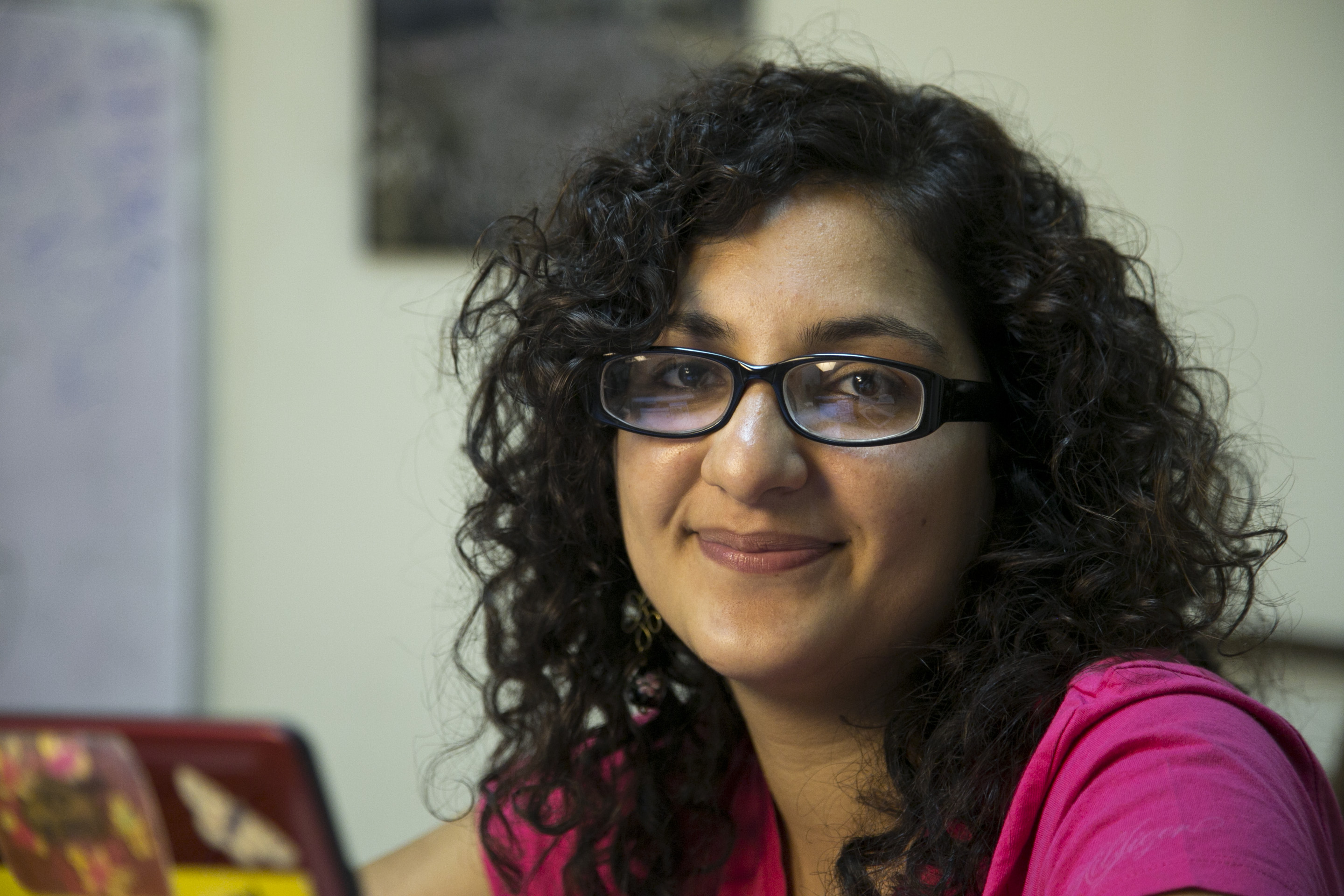
Egyptian HRD and MEA Nominee, Mona Seif, under attack

May 3, 2013

As readers of this blog know I would have readily reported on any developments surrounding the MEA especially since the Final Nominees 2013 were announced recently. A few days ago a controversy arose around the nomination of Mona Seif, the courageous Egyptian human rights defender who was selected because of her campaign against military trials for civilians. UN Watch, an NGO affiliated to the American Jewish Committee,  and famous for its strident monitoring of anything that smacks of  criticism of Israel, accused Mona Seif of being a terrorist sympathizer on the basis of 3 older tweets in which she strongly defended the right of Palestinians to resist Israeli occupation. The organisation started a twitter campaign to have Mona recalled as nominee.

Mona Seif, Egypt - Final Nominee MEA 2013

Mona Seif, Egypt – Final Nominee MEA 2013

The problem is that I am – in a personal capacity – the Chair of the Jury which is composed of ten of the world’s leading human rights NGOs (see list http://www.martinennalsaward.org). I am a non-voting chair whose only role is to facilitate the process and I do not participate in the selection. The board of the Martin Ennals Foundation also has no role in the selection as the Statutes provide for a fully independent Jury. Only the NGOs on the Jury can vote on the recipient of the MEA. Still, I feel that my capacity of Chair of the Jury obliges me to show restraint in speaking out.

Read the rest of this entry »

Stop the Wall activist Hassan Karajah arrested by Israel

February 5, 2013

karajah1

The Palestinian News Network on 4 February 2013 reported that in the early hours of Wednesday 23rd January 2013, Israeli Occupation Forces (IOF) arrested Hassan Yasser Karajeh, a 29 year old youth activist in the Stop the Wall Campaign, violently breaking into his home in the West Bank village of Safa, west of Ramallah. Since then he is in interrogation without access to his lawyer or family. He is part of a new generation of active Human Rights Defenders. ‘Stop the Wall‘ asks solidarity groups, social movements, human rights organizations and concerned citizens to act together to free Hassan Karajah and stop the repression of human rights defenders in Palestine.

UN Watch: simply anti UN and anti Pillay – NGOs should Watch Out

January 23, 2013

Today’s post, praising the Office of the High commissioner for Human Rights, lead a reader to draw my attention to the continuing attacks by UN Watch. In a recent post (9 January this year) I had already urged Human Rights Watch to take more and more publicly distance from this other NGO, but reading the website of UN Watch I realize that in fact all human rights organizations should take distance instead of being lured into signing up for an ad-hoc critical statement that suits them at that moment.

As an example I refer to the statement by UN Watch in May 2012 criticizing the extension of Mrs Pillay’s mandate. In an effort to make it sound as if a whole range of NGOs share UN Watch’s horror of this excellent High Commissioner it makes the assertion that “UN Watch is among more than 38 human rights groups that have “questioned Pillay’s record in taking on the most powerful blocs and repressive regimes“. In fact the questioning was done by a group of mostly unknown groups and – worse – the criticism only related to the High Commissioner’s (admittedly disappointing) decision not to attend the reception in Oslo for Nobel laureate Liu Xiaobo back in 2010. I have severe doubts that all of the NGOs agreed with the sweeping statement regarding Pillay’s record!

To get an idea of who the groups in question are I have reproduced the far from impressive the list below. If any feel that they do not want to be associated with this rabid and manipulating anti-UN NGO they should stand up and be counted! The prevalence of pro-Israel and anti-Cuba groups is remarkable in itself.

Hillel C. Neuer
Executive Director
United Nations Watch
Switzerland

Art Kaufman
Director
World Movement for Democracy
United States

Tashi Albertini
President
Associazone TicinoTibet
Switzerland

Abdurashid Abdulle Abikar
Chairman
Center for Youth and Democracy
Somalia

Nguyên Lê Nhân Quyên
Vietnamese League for Human Rights in Switzerland

Ted Brooks
Executive Director
Committee for Peace and Development Advocacy
Liberia

Benjamin Abtan
SOS Racisme

Bernard Schalscha
Secrétaire général
Collectif Urgence Darfour

Ulrich Delius
Asia Desk
Society for Threatened Peoples
Germany

Shomik Chaudhuri
Vice President
Institute of International Social Development
India

Carlos E. Tinoco
Consorcio Desarrollo y Justicia, A.C.
Venezuela

Peter Hesse
Director, Fondation Peter Hesse (www.solidarity.org)
Germany

Logan Maurer
Regional manager
International Christian Concern (www.persecution.org)
United States

Dr. Theodor Rathgeber
Forum Human Rights
Germany

Rene Wadlow
Representative to the UN, Geneva
Association of World Citizens
Switzerland

Natalia Taubina
Director
Public Verdict Foundation
Russia

Sylvia G. Iriondo
President
Mothers and Women against Repression (MAR por Cuba)

Nataliya Gourjii
Executive Director
Charitable Foundation ROKADA
Ukraine

Elena Bevilacqua
Director of Headquarters
International Union of Notaries (U.I.N.L.)

John Suarez
International Secretary
Directorio Democratico Cubano

Omar Lopez
Human Rights Director
The Cuban American National Foundation
United States

Klaus Netter
Main Representative, UN Office in Geneva
Coordinating Board of Jewish Organizations
Switzerland

Volodymyr Yavorskyy
Executive Director
Ukrainian Helsinki Human Rights Union

Jean Stoner
NGO Representative
Sisters of Notre Dame de Namur
United States

Zohra Yusuf
Council Member
Human Rights Commission of Pakistan

Heng-Hao (Leo) Chang
Secretary General
International Federation of Medical Students’ Associations

Sharon Gustafson
President
International Council of Jewish Women

Dr. Yael Danieli
Senior Representative to the United Nations
International Society for Traumatic Stress Studies

Thomas Leys
President
International Federation of Liberal Youth

Do Hoang Diem
Chairman
Viet Tan
Vietnam

Alim A. Seytoff
Vice-President
Uyghur American Association

Bhawani Shanker Kusum
Secretary and Executive Director
Gram Bharati Samiti
India

Francois Garaï
Representative
World Union of Progressive Judaism

Mamadi Kaba
President
RADDHO
Guinee

Dieudonné Zognong
Fondation Humanus
Cameroon

Dickson Ntwiga
Executive Director
Solidarity House International

Amina Bouayach
President
Moroccan Organization for Human Rights (OMDH)

Amaya Valcarcel
International Advocacy Coordinator
Jesuit Refugee Service
Italy

The website of UN Watch – quite smart, well-organised and with plenty of videos – is there for all to see:  http://blog.unwatch.org/index.php/category/navi-pillay/

Israeli NGOs condemn raid on offices of Palestinian colleagues

December 13, 2012

Yesterday, 12 December 2012, the undersigned Israel based organizations protest the aggressive treatment of three Palestinian civil society organizations by the Israeli military and demand that all property seized be restored and that the work of civil society organizations—and especially those comprised of human rights defenders – be protected and respected.

Early morning yesterday, 11 December 2012, just a few hours after the end of International Human Rights Day, the Israeli military entered the offices of three Palestinian organizations in Ramallah: Addameer Prisoner Support and Human Rights; Union of Palestinian Women’s Committee and the Palestinian NGO Network. The organizations were not provided with any explanation for the search or shown a search warrant and their staff members were not present during the search. The soldiers caused extensive damage to some of the offices and confiscated computers, hard discs, cameras and other essential equipment.

Addameer office after the raid. Photo: Iyad Hadad, B'Tselem, 11 Dec. 2012

Addameer office after the raid. Photo: Iyad Hadad, B’Tselem, 11 Dec. 2012

The undersigned organizations emphasize that all individuals have the right to freedom of association, and to be free from arbitrary or unlawful interference in their homes and offices, and to due process of law. It is particularly important that human rights organizations enjoy such rights so that they can protect and ensure the rights of others. A free civic space within which Palestinian individuals are able to organize is critical for the protection of Palestinian’s basic rights. Actions such as those taken by the Israeli military threaten this free civic space and damage the protection Palestinian human rights.

Adalah – The Legal Center for Arab Minority Rights in IsraelThe Association for Civil Rights in Israel (ACRI)B’Tselem – The Israeli information center for human rights in the occupied territoriesGisha – Legal Center for Freedom of MovementHamoked – Center for the Defence of the IndividualPhysicians for Human Rights – Israel (PHR-Israel); The Public Committee against Torture in Israel (PCATI)Rabbis for Human Rights (RHR);Yesh Din


http://www.btselem.org/press_releases/20121212_military_raid_on_hr_organizations

Palestinian HRD Nariman Tamimi speaks out on repression of peaceful protest in AI video

November 5, 2012

In Greece there is a frequently heard ‘complaint’ that international human rights groups – in particular AI – have the same agenda as the USA. At a recent meeting with friends in Chania, AI’s position on Pussy Riot was quoted as evidence.

I countered by pointing out that AI on many occasions has taken a stand that seems to go against US policy, from the death penalty to Guantanamo Bay and the Israeli occupied territories. A recent video referred to here makes that clear again in the case of Israel. Perhaps even more shocking are some of the comments that seems to confirm the existence of an orchestrated response [by whom?] to equal any criticism of Israel to anti-Semitism.

Every Friday since December 2009 residents of al-Nabi Saleh and solidarity activists gather around noon in the village centre and march peacefully towards the spring. They have been met repeatedly with unnecessary and excessive force by the Israeli army including the use of stun grenades, pepper spray, batons and guns. Demonstrations are dispersed as soon as they begin and are usually not allowed to reach the spring. The Israeli army raids the village regularly, usually during the night, and conducts house searches and arrests, including the arrest of children under the age of 15.

Israeli military laws in place in the West Bank impose sweeping and arbitrary restrictions on freedom of expression and peaceful assembly, requiring people to obtain advance permission from the Israeli military for any proposed gathering of 10 or more persons “for a political purpose of for a matter that could be interpreted as political”.  Nariman Tamimi told Amnesty International that in al-Nabi Saleh and all areas where there is popular resistance, police use extreme violence, noting that “there is nothing [to the protests] except that you chant and express your opinion.” As one of the organizers of the al-Nabi Salneh protests and a coordinator of the village’s popular committee, Bassem Tamimi and his family have been the target of harsh treatment by the Israeli army.  For more see the excellent film:

AI video on Palestinian protest


Ayman Nasser, Palestinian HRD in Israeli detention

October 23, 2012
Map showing the West Bank and Gaza Strip in re...

(Photo credit: Wikipedia)

The Middle East and the Israeli-Palestinian conflict in general may get a lot of media attention but the issue of individual HRDs in Palestine often remains outside the limelight. Here is a recent example:

The Jerusalem based NGO Addameer reports that its staff researcher and longtime prisoner advocate Ayman Nasser was abducted from his home by occupation forces early on October 15. On October 18, he appeared in a military court in Jerusalem where his interrogation period was extended by seven days. Ayman addressed the court directly with the following words: “I believe that every human being has opinions and positions and if it’s not violating the law he can freely think and speak these opinions. I am a human rights defender who supports the Palestinian prisoners and I represent my opinions in the public media. My thoughts are not secret, they are public, and everyone knows them.”

Like many Palestinian prisoners, Ayman is subject to medical neglect – he is currently only receiving two out of the five medications that he requires daily. Addameer reported, “The judge ruled that based on ‘secret evidence’ he would extend Ayman’s interrogation period for another seven days and referred the situation of the medicine to the doctor at Moskobiyyeh detention center.” Moskobiyyeh, where Ayman is now held, is one of the most notorious detention centres in the Israeli occupation system; he was interrogated for 10 hours straight on October 17 and his interrogation has continued with similar intensity since that time.

Ayman spent six years in Israeli prisons, from 1992 to 1997. He has worked at Addameer since 2008, lectures in social work at Al-Quds Open University, and directs the Handala Centre, a cultural centre in Saffa village. On October 21, it was announced that he won a seat on his village’s municipal council in the weekend’s West Bank municipal elections, from his cell in Israeli detention.

Click here to send a letter to Israeli officials demanding the immediate release of Ayman Nasser and an end to the persecution of Palestinian human rights defenders.

Israel refuses to let HRD Shawan Jabarin travel to receive award in Denmark

November 30, 2011
Map showing the West Bank and Gaza Strip in re...

Image via Wikipedia

On 29 November 29, 2011 Israeli authorities turned West Bank resident Shawan Jabarin, the director of the Palestinian human rights group Al-Haq, back at the Allenby Bridge crossing with Jordan, citing a travel ban. Several NGOs, such as Amnesty International, Human Rights Watch, and B’Tselem, said that the Israeli authorities violated Jabarin’s rights in imposing the ban and have not produced any evidence that would justify continuing to restrict him from travel.

The travel ban would seem to be clearly linked to his human rights work as Jabarin was stopped since 2006, when he became director of Al-Haq, a leading human rights organization in the West Bank, while Israel had allowed him to travel abroad eight times in the previous seven years. The Israeli military previously claimed in court that Jabarin was an activist in the Popular Front for the Liberation of Palestine, which Israel considers a terrorist organization, and that his travel abroad for even a limited period would endanger Israel’s security. However, Israeli authorities have not charged Jabarin with any crime or given him an opportunity to confront the allegations against him. The Israeli High Court of Justice has upheld Jabarin’s travel ban on security grounds, but did so based on secret information that Jabarin and his lawyer were not allowed to see or challenge. “It is hard to believe any claim that Jabarin’s travel to Denmark to receive a human rights award would harm Israeli security, the more so when any evidence is kept secret,” said Sarah Leah Whitson, Middle East director at Human Rights Watch. “While civil society groups recognize Jabarin’s courageous work, Israel is punishing him with a travel ban.”

The ban has prevented Jabarin from leaving the West Bank to receive a human rights prize from the Danish PL Foundation (Poul Lauritzen), participate in a European Union forum on human rights, and attend a Human Rights Watch meeting in New York City.  “The ban preventing Shawan Jabarin from traveling abroad to receive an award is emblematic of the arbitrary restrictions placed on Palestinian human rights defenders and civil society activists,” said Philip Luther, Amnesty International’s MENA Programme Director. “It must be lifted, and the Israeli authorities must stop using unspecified security concerns to obstruct the work of Palestinian human rights activists.”  Nina Atallah, the head of Al-Haq’s monitoring and documentation department, will try to travel to the prize ceremony.

It is a pity that Israel,in this respect, is emulating Iran, which is the only country until now to prevent the MEA Laureate Emad Baghi to travel to his ceremony in 2009.
Related articles

Feeding the inmates through the bars

June 30, 2010

This does not deal directly with Human Rights Defenders but as it is such a clear piece of work I include it anyway. Ross Mountain’s Op-Ed on the humanitarian situation in Gaza and the West Bank was published in An Nahar, a  leading newspaper in Lebanon on Saturday 19th June 2010. http://www.annahar.com/content.php?priority=3&table=kadaya&type=kadaya&day=Sat. For those who do not read Arabic, here is the English version:

“The killing in “self-defense” of unarmed civilians during Israel’s assault in international waters on a flotilla carrying humanitarian aid supplies to Gaza calls attention, once again, to the terrible situation of civilians living trapped under unbearable conditions in Gaza. Anyone asserting that these few boats could constitute a threat to the security of Israel is simply not credible. It is also the latest in a series of actions that perpetuate an artificial humanitarian crisis –not only in Gaza, but also in the West Bank – in which Israeli impediments to the movement of people and goods, on a daily basis test the tolerance and patience of the Palestinians beyond limits. Israel´s construction of the West Bank Barrier, based on its claim that it needs to secure its people, is a cornerstone of this unnecessary crisis. It is the largest infrastructure project in Israeli history, expecting to cost around US$4 billion on completion.  Although Israel signed an agreement to reduce the number of checkpoints and obstacles, these increased from 390 in 2005 to 630 in 2008, of which 550 were still in place in February this year.

The barrier and all the closures, differentiated passes and permits, settler- only roads and the enforced separation between Palestinians and Israelis resemble nothing so much as the laws and practices of racial segregation and forced removals that South Africa knew under Apartheid.Perhaps more cruel than the barrier itself is the arbitrary system of the opening and closing of checkpoints. These often cut West Bank residents from their land, their neighbours and friends, deliberately impeding access between East Jerusalem and the rest of the West Bank- let alone movement to and from Gaza. The Israeli authorities’ arbitrary decisions determine when, or whether, different border crossings are opened or if the different permits they insist are required are valid for movement  or not, and make predictable humanitarian access impossible. Indeed a direct product of this massive expenditure is the progressive impoverishment and heightened frustration of the Palestinian people! The suffering of civilians in Gaza and frustration of the humanitarian organizations on the ground struggling to provide aid have only increased in the aftermath of “Operation Cast Lead”, the military operation launched by Israel in December 2008. During this operation, houses, factories, wells, schools, hospitals, police stations, the recently built airport, and many UN and public buildings were destroyed and damaged – as were food supply warehouses and water and sanitation systems. More than a year later, families are still living amid the rubble of their former homes, since the continuing blockade has made meaningful reconstruction impossible despite the billions pledged by the international community. Virtually no improvement has been possible due to the item-by-item restrictions and elaborate procedures insisted upon by the Israeli authorities. With a broken economy and collapsed infrastructure, Gaza’s society has become increasingly destabilized. Over 1.5 million Palestinians remain trapped in Gaza, heavily dependent on restricted aid flows for basic necessities. Around 80% of the population now depends on food aid provided by the international community. As one humanitarian worker, struggling daily with this situation, graphically described it,“we are feeding the inmates through the bars.” In 2009 the international community contributed US$765 million to United Nations appeals for Gaza and the rest of the occupied Palestinian territory. The UN appeal for 2010 seeks US$644.5 million. This huge amount of money would be unnecessary if the Israeli authorities removed the barriers, lifted the blockade and respected International Humanitarian Law as repeatedly demanded by the UN, the US, the EU, Russia- the members of The Quartet. The International Committee of the Red Cross (ICRC) has exceptionally now also called for the Gaza closure to end. During my recent mission to the region, humanitarian actors on the ground, amongst them donors, NGOs, UN agencies, and other partners shared with my team their concern that international humanitarian assistance was in effect subsidizing the Israeli occupation. How much better and more helpful to building peace between the two communities would it be to invest such money in improving the skills and future prospect of the Palestinian people instead of serving as a band aid to avert the absolute collapse of their living conditions. Let us be clear. This is a manufactured humanitarian crisis that need not exist, that does not need to demand hundreds of millions of dollars year by year. The collective punishment the civilian population in Gaza is facing means that the international community has to deliver aid to cover needs brought about by the actions of the Israeli authorities. And at a high cost. As an illustration, the World Food Programme reports that the additional costs for procedures demanded by the Israeli authorities for the delivery of their food supplies to the citizens of Gaza has trebled their transport and handling costs. Who pockets this difference? Not the Palestinians, as purchases and storage take place mostly in Israel. There are many examples of protracted and trivial negotiations to import items such as pencils for schools. Only after months of negotiations, progress was made with the Israelis allowing materials like glass into Gaza to repair windows shattered by the attack in December 2008. However, this was only achieved after involving the highest level of the UN and diplomatic missions. Making matters worse, the application of the political “no contact” policy with Hamas by a number of key donors to humanitarian programs in the occupied Palestinian territories violates the basic humanitarian principle of dealing with all authorities – de facto as well as de jure – to ensure that humanitarian assistance reaches the vulnerable on the basis of their needs. Indeed, as the International Crisis Group has emphasized the international donor community must shoulder its share of the blame for continuing to politically support the isolation of Gaza.

The thwarted efforts of the flotilla to bring humanitarian and building supplies have highlighted Israel´s restrictive policies despite the outcry of the international community. In the wake of the Israeli killings, will donor countries now insist on the lifting of the blockade on humanitarian supplies for Gaza and the absurd limitations on movement including in the West Bank? None of these pose a credible threat to the security of Israel and would make all the difference to the health and welfare of the population of the occupied Palestinian territory. Or will the obstinacy of the Israel government and the spin of its skilled spokespersons be allowed to prevail once more?”