On earlier occasions I have expressed my admiration for the UN High Commissioner for Human Rights, Mrs Pillay, and her spokesperson, Rupert Colville, for the forthright manner in which this Office nowadays express itself on on-going human rights issues, including very often on Human Rights Defenders. It may seem tame in the eyes of some activists but one should not forget that (1) the Office remains an intergovernmental institution created and controlled by governments, and (2) not so long ago this was unheard of. Until the late 70’s countries could not be named in the proceedings of the UN Human Rights Commission, in the early 80’s under the leadership of Theo van Boven the first ‘special procedures’ were established but he was forced out of his job in 1982 for too much naming and shaming of Governments.

Navanethem Pillay (credit: Wikipedia)
To illustrate my point here follows a summary of a press statement made on 18 January 2013:
1) Mali
The crisis in Mali has led to various human rights violations, including extrajudicial killings, rape and torture. These have been documented in a report requested by the Human Rights Council which was published by our Office on January 14, along with the growing ethnic tensions in the country which raise very serious concerns. Our report (http://www.ohchr.org/Documents/HRBodies/HRCouncil/RegularSession/Session…in French only) presents the findings of a human rights mission deployed to Mali, Burkina Faso, Mauritania and Niger from 11 to 20 November 2012. …….OHCHR stands ready to provide assistance to the Malian Government by supporting the establishment of a transitional justice mechanism to facilitate national reconciliation.
2) Sri Lanka
The UN High Commissioner for Human Rights Navi Pillay is deeply concerned that the impeachment and removal of Sri Lanka’s Chief Justice has further eroded the rule of law in the country and could also set back efforts for accountability and reconciliation. The removal of the Chief Justice through a flawed process — which has been deemed unconstitutional by the highest courts of the land — is, in the High Commissioner’s view, gross interference in the independence of the judiciary and a calamitous setback for the rule of law in Sri Lanka. Chief Justice Shirani Bandaranayake was served notice of her dismissal and removed from her chambers and official residence on Tuesday (15 January), in spite of a Supreme Court ruling that the parliamentary procedure to remove her violated the Constitution. Sri Lanka has a long history of abuse of executive power, and this latest step appears to strip away one of the last and most fundamental of the independent checks and balances, and should ring alarm bells for all Sri Lankans.
The jurist sworn in by the President as the new Chief Justice on 15 January, the former Attorney-General and Legal Advisor to the Cabinet, Mr. Mohan Peiris, has been at the forefront of a number of government delegations to Geneva in recent years to vigorously defend the Sri Lankan government’s position before the Human Rights Council and other human rights mechanisms. This raises obvious concerns about his independence and impartiality, especially when handling allegations of serious human rights violations by the authorities……Just this morning we have received alarming reports from the Independent Bar of Sri Lanka of a series of death threats, acts of intimidation and even a couple of reported murder attempts against lawyers who have been supporting Chief Justice Bandaranayake, and the rulings of the Supreme Court and Court of Appeal on her case. The High Commissioner will be issuing a report on Sri Lanka at the February-March session of the Human Rights Council, focusing on the engagement of UN mechanisms in support of the accountability and reconciliation processes.
3) Zimbabwe
We condemn recent attacks against human rights defenders in Zimbabwe, including arbitrary arrests, intimidation and harassment. In the latest case, on January 14, the police charged Okay Machisa, the director of Zimbabwe Human Rights Association (ZimRights) and chairperson of the Crisis in Zimbabwe Coalition, for allegedly publishing false statements prejudicial to the State, fraud and forgery after allegedly conducting illegal voter registration. Machisa handed himself to the police on January 14, accompanied by his lawyer, and remains in detention. In a previous incident, ZimRights Education Programmes Manager, Leo Chamahwinya, and ZimRights Local Chapter Chairperson, Dorcas Shereni, were arrested by the police on 13 December 2012. They were both denied bail by the High Court and remain in detention. We are concerned about the crackdown on non-governmental organisations and dissenting voices seen as critical of President Robert Mugabe’s rule and apparently politically motivated prosecutions, ahead of the elections which are expected to take place later this year.
4) Iran
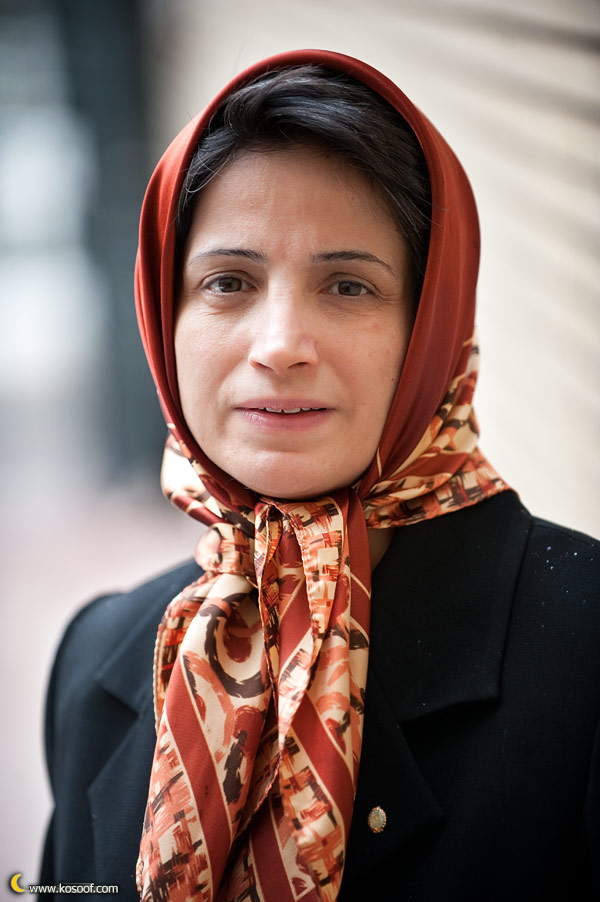
We welcome the temporary release of Nasrin Sotoudeh, the well-known lawyer and human rights activist who is serving a six-year sentence in Tehran’s Evin Prison. Ms Sotoudeh was granted a three day temporary leave and it has now been confirmed that she joined her family yesterday. The travel restrictions imposed on her family – the issue that caused her to go on hunger strike in the autumn — were lifted in December, so her temporary release marks a second improvement in her case. We hope that the temporary leave will be extended, and that Ms Sotoudeh will soon be indefinitely released.
If you want to be kept informed yourself, you can follow the UN Human Rights work on the following social media:
Facebook: https://www.facebook.com/unitednationshumanrights
Twitter: http://twitter.com/UNrightswire
Google+ gplus.to/unitednationshumanrights
YouTube:http://www.youtube.com/UNOHCHR S
torify: http://storify.com/UNrightswire



 Mam Sonando – Cambodia – has devoted his life to helping the poor and disenfranchised of Cambodia, fighting for their rights while also following the non-violent precepts of his Buddhist faith. He is a journalist and the Director of one of only three independent radio stations in Cambodia where the state has almost complete monopoly over the media, and crackdowns on free speech have led to widespread self-censorship. He is also founder and president of a national organisation called the Association of Democrats, which actively promotes democracy and human rights. He was arrested In early July 2012 and despite there being absolutely no evidence to link him with the so-called secessionist movement, he was found guilty on 1 October 2012 of instigating insurrection and incitement to take up arms against the state and sentenced to 20 years imprisonment.
 Mansoureh Behkish – Iran – is a women’s rights activist and co-founder of Mothers of Khavaran and Mothers of Laleh Park. As a supporter of non-violent resistance and a HRD she has spent the past three decades empowering survivors and victims of human rights abuses. In particular she seeks to help the mothers, sisters and wives of the thousands imprisoned or executed by the Islamic Republic authorities, to seek justice through legal and humanitarian channels.As a result of her work as a HRD, she herself has faced continuous harassment, confiscation of her passport and violation of her right to travel and three terms of imprisonment.
 David Rabelo Crespo – Colombia – has worked for 35 years in the defence of human rights. In the early years, he worked mainly in defence of social, economic and cultural rights, and later worked for worker’s rights, promoting social and union mobilisation. In more recent years, he has worked to defend the lives of others although in doing so he has put his own life at risk. Between 1998 and 2004 he was director of the Municipal Peace Council, a body devised to protect the lives of the local people who, with the arrival of the paramilitaries were at risk from the upsurge in assassinations of social and community leaders, and a series of massacres carried out with impunity. David Rabelo Crespo has devoted his life to promoting respect for human rights and international humanitarian standards in the Magdalena Medio region of Colombia, and even though he is now imprisoned he continues to work to protect the rights of political prisoners in Colombian prisons.
 Bahtiyor Hamraev – Uzbekistan – has been a dedicated campaigner for human rights in Uzbekistan for the last 15 years. He has been head of the Djizak regional branch of the Human Rights Society of Uzbekistan (HRSU) and has documented human rights violations in this region. In recent years he has become the main contact with families of imprisoned human rights defenders, helping to spread the information about their conditions in detention, the torture and ill-treatment and helping to provide the families with legal aid and financial assistance. The price he has had to pay has sometimes been far too high, but despite all of these difficulties, he has continued to work, refused to leave the country and tried to make a difference in one of the worst human rights situations in the region. Sadly, Hamraev is suffering from terminal cancer, yet he continues to send information about human rights violations and to assist families of imprisoned human rights defenders.
 Biram Dah Ould Abeid – Mauritania – has been threatened, defamed and harassed because of his work for human rights and against slavery in Mauritania. He has been arrested and ill-treated on several occasions and in April 2012 he was “disappeared” for several weeks into a secret, high-security government facility, without being able to contact to his family and without any legal assistance. It is believed he would have been killed but for the international outcry. He was released in September 2012 but has chosen to continue his work inside Mauritania.
 Ruth Mumbi – Kenya – is a passionate community mobiliser, and is the founder and current National Coordinator of Bunge la Wamama, a women’s chapter of Bunge la Mwananchi a movement that conducts strong advocacy and campaigning on issues of social justice and accountability in different parts of Kenya. She was born and still lives in Kiamaiko, a Nairobi slum and she began her involvement in community mobilisation initiatives in the late 1990s, when she was barely 16 years of age.


