Posts Tagged ‘International Service for Human Rights’

Phil Lynch talks about Human rights defenders as the lifeblood of the UDHR

December 22, 2023

On 21 November, ISHR celebrated the vital work of human rights defenders at a conference on ‘The Universal Declaration of Human Rights Seventy-Five Years On: Achievements and Current Challenges.’ A slightly shortened version of Phil Lynch’s (Executive Director of the International Service for Human Rights) speech is reproduced below.

Former High Commissioner for Human Rights, Navi Pillay, once called defenders the lifeblood of human rights. ‘They are the promoters of change,’ she said. ‘The people who ring the alarm bell about abuse’. She is right in at least two ways.

Firstly, because, even as most States take a selective and inconsistent approach to human rights principles and situations, defenders reaffirm that all human rights are universal and inalienable; that they are indivisible, interdependent and interrelated.

Defenders are also the lifeblood of human rights because defending and advocating for human rights is integral to realising them, particularly the rights of individuals and groups who have been subject to various and intersecting forms of discrimination and oppression.

The right to defend rights

We all have the right – and the responsibility – to defend human rights. This was the revolutionary idea behind the Declaration on Human Rights Defenders, adopted by the General Assembly exactly 50 years after that same body adopted the Universal Declaration of Human Rights (UDHR). [see also: https://humanrightsdefenders.blog/2023/12/14/some-thoughts-on-the-25th-anniversary-of-the-un-declaration-on-human-rights-defenders/ and https://humanrightsdefenders.blog/2023/12/14/universal-declaration-of-human-rights-at-75-still-relevant/]

This right is now firmly established in jurisprudence. UN Treaty Bodies and Special Procedures recognise that the work of defenders is so integral to the realisation of all human rights, that threats or attacks against them may amount to violations of the very rights for which they advocate…

 The Declaration also went further than enshrining the fundamental right to defend rights. It elaborated existing binding international human rights law as it applies to defenders. This includes the right of defenders and their organisations to access resources, including from so-called ‘foreign sources’, as well as the right to communicate and cooperate with international bodies, free from any form of intimidation or reprisal.

Government action to implement the Declaration

 25 years after its adoption, a number of States have enacted the Declaration at the domestic level with specific national law and mechanisms for the protection of defenders. Côte d’Ivoire, Burkina Faso, Mali, Niger, the DRC, Mongolia and Mexico are among the States that have taken this positive step.

Other States, including Norway, Finland, Switzerland, Ireland and Canada, among others, have adopted human rights defender guidelines heavily inspired by the Declaration, providing guidance to their embassies and diplomats about the protection of at-risk human rights defenders abroad.

Threats facing defenders

But much remains to be done.

Despite their vital work for gender justice and equality, women human rights defenders like Neda Parwan and Zholia Parsi in Afghanistan and Narges Mohammadi in Iran face systemic discrimination and arbitrary detention.

Despite their vital work for racial justice and non-discrimination, anti-racism activists like Assa Traoré in France or Marielle Franco in Brazil face judicial harassment and even death in the case of Marielle.

Despite their vital work for political justice and freedom of expression, pro-democracy activists like Abdulhadi Al Khawaja in Bahrain and Ahmed Mansoor, Maryam al-Balushi and Amina al-Abduli in the UAE all face unfair detention, torture and ill-treatment.

Despite their vital work for reproductive justice and women’s rights, defenders like Vanessa Mendoza in Andorra and Justyna Wydrzyńska in Poland face spurious legal charges and criminalisation.

And despite their vital work for environmental justice, environmental and land rights defenders like Sukhgerel Dugersuren in Mongolia and Trinh Ba Phuong in Vietnam face persecution and worse.

State pledges to recognise and protect defenders

Together with a coalition of 16 NGOs, ISHR is calling on States to make 5 key pledges on the recognition and protection of defenders.

First, States should publicly recognise the vital role of human rights defenders. Authorities should actively promote the work and achievements of defenders, so that we know them not just for the threats they face but also and foremost for their invaluable contributions to freedom, justice, equality and accountability.

Second, States should recognise and address the intersecting forms of discrimination and oppression that many defenders face. They should ensure defenders are protected and able to meaningfully participate in all relevant policy and decision-making processes.

Third, in genuine partnership with independent civil society actors, States should develop and implement specific national laws, policies and mechanisms for the protection of human rights defenders. They should also repeal or amend laws and policies which restrict and even criminalise defenders.

Fourth, States should refrain from any form of intimidation or reprisals against defenders who engage with the UN and other regional mechanisms. They should take a clear and public position against intimidation and reprisals, including by calling out and holding other States which commit such acts to account.

Fifth and finally, States should ensure that all threats and attacks against human rights defenders are the subject of prompt, impartial and independent investigations. Perpetrators must be held accountable, and effective remedies provided both to address the harms to the individual and to address any systemic or structural factors contributing to such threats or attacks.

 Conclusion

Human rights defenders are essential agents of progress and positive change. Their work is vital for gender justice, racial justice, environmental justice, political justice and economic justice. Their work confronts and challenges power, privilege and prejudice. For this, they are frequently exposed to threats and attacks from governments, corporations and other unscrupulous actors. Their work contributes to good governance and accountability at the local, national and international levels.

To defend human rights is an act of bravery and solidarity and, above all, an act of hope and resolve. Hope for a future in which all peoples and communities enjoy freedom, dignity, justice and peace on a healthy planet, in line with the Universal Declaration. And resolve to work, individually and collectively, to realise that still magnificent vision.

https://ishr.ch/latest-updates/human-rights-defenders-are-the-lifeblood-of-the-universal-declaration-of-human-rights/

ISHR launches its 2023 Annual Report, highlighting ‘wins’

April 25, 2023

Human rights defenders around the world are coming together in powerful coalitions and turning to international human rights laws and systems to achieve justice and accountability. And while the threats and challenges remain enormous, we’re starting to win! says ISHR in its latest annual report, outlining key impacts during the last year and its vision for 2023 and the years ahead.

Here are just a few examples:  In July 2022, a coalition of more than 1200 NGOs from almost 150 countries secured a win for equality with the renewal of a vital international mechanism to combat violence and discrimination on the grounds of sexual orientation or gender identity. Just a few weeks later, land, environment and indigenous rights defenders secured a win for climate justice with the landmark recognition of the right to a clean, healthy and sustainable environment at the UN General Assembly. Wins for accountability were achieved in April and October when international, regional and national civil society organisations coordinated successful campaigns to suspend Russia from the UN Human Rights Council and establish an independent international expert monitoring mechanism on the human rights situation in the country. International human rights organisations and Uyghur communities came together to score a win against impunity in August by securing the release of a landmark UN Rights Office report on the human rights crisis in Xinjiang, as well as the first ever formal initiative on China at the Human Rights Council just weeks later in September.

See more achievements by visiting the website!
In a recent conversation with Björk, environmental activist Greta Thunberg reflected that hope is not something you feel, but something you do. ‘When people act,’ she said, ‘they create hope’. In 2023, fuelled by indignation and sustained by hope, ISHR’s commitment is to provide solidarity to defenders, contribute to positive momentum and, with your support, achieve even more significant human rights wins!

https://mailchi.mp/ishr/ishrs-human-rights-council-monitor-june-33837?e=d1945ebb90

NGO report on China’s influencing of UN human rights bodies

February 8, 2023

UN secretary general Antonio Guterres with Chinese president Xi Jinping during an official visit to Geneva on 18 January 2017. (UN Photo/Jean-Marc Ferré)

On 25 January, ISHR released a new briefing paper outlining China’s tactics to influence the UN human rights treaty bodies (UNTBs), including various ways in which Chinese officials have sought to disrupt, limit and undermine their work. The paper concludes with possible responses to these efforts, on the part of governments and the UN itself.

In parallel, ISHR hosted a panel discussion on the topic with former member of the UN Committee against Torture (CAT) Felice Gaer, William Nee of the Network of Chinese Human Rights Defenders, Peter Irwin from the Uyghur Human Rights Project, and ISHR’s Director of Treaty Body advocacy, Vincent Ploton. ISHR Programme Director Sarah Brooks moderated the discussions.

The incidents recounted, while qualitative in nature, provide compelling evidence of China’s ability to effectively and unrelentingly restrict civil society engagement with [UN treaty bodies] in the context of specific reviews, and deter independent sources from speaking up,” the report states.

The report adds to growing suspicion of Beijing’s sway over the UN human rights office, after it led a successful campaign last year to delay for months the publication of a report concluding that mass detention of Uyghurs and other religious minorities in Xinjiang could amount to crimes against humanity.

When treaty bodies do their work well, they document violations and that can lead to serious actions such as the establishment of commissions of inquiry at the Human Rights Council, or even refereeing situations to the International Criminal Court, which can then lead up to indictment of national leaders or heads of state,” Vincent Ploton, co-author of the report, told Geneva Solutions. “So the consequences can be far reaching.”

China, which is party to six out of the ten treaties, has consistently sponsored candidates that have previously worked for the government and that work in institutions or organisations with close ties to the government, Sarah Brooks, co-author of the report, explained. At least one of them, Xia Jie currently sitting in the Committee on the Elimination of Discrimination Against Women (CEDAW), has formal ties to the Chinese communist party.

The authors recount how in 2015 during China’s evaluation by the Committee Against Torture (CAT), the Chinese committee member was kicked out by the chair for taking photos of the activists present, an intimidation tactic that China but also other countries have been known to use against campaigners who come to Geneva.

Seven Chinese activists were also reportedly prevented from travelling to Geneva to participate in the evaluation through threats and even detention. Felice Gaer, CAT chair at that time, recalled the event at a panel organised to launch the report.

This “creates a chilling effect”, leading “those who might be facing particular risks of reprisals to walk back their interest in participating in the process”, Brooks told Geneva Solutions.

The Chinese government has particularly targeted Uyghur and Tibetan groups, telling the office not to publish their reports on the UN human rights website under the pretext that they are “splitists” and therefore their input is misinformation, Gaer recalled at the panel. See also: https://humanrightsdefenders.blog/2022/09/01/finally-the-long-awaited-un-report-on-china/

Ploton said this external pressure exerted on UN staff is even “more worrying”, but said. At the same time, reports submitted by what civil society groups call Gongos, meaning government organised NGOs, that pose as civil society while promoting state interests, have been flooding the reviews, making it hard for the experts to know which sources to trust.

Speaking at the panel, William Nee of the Network of Chinese Human Rights Defenders warned that avenues for expression in China, from press to social media to academia, had been closing in recent years, making the UN system all the more important for Chinese rights activists.

China is set to be evaluated by the Committee on Social, Economic and Cultural Rights (CESCR) in February, followed by the CEDAW in May.

In an email response to Geneva Solutions, the Chinese permanent mission to the UN in Geneva rejected the report, calling the accusations “groundless and unjustified”.s

China is far from being the only country trying to influence the treaty bodies. The report also mentions Saudi Arabia and Russia. An analysis by the Geneva Academy from 2018 found that 44 per cent of treaty body expert members had experience working for the executive branch in their respective countries, as opposed to independent civil society groups or academia.

Ploton explained that this was allowed by countries practising “horse trading”, meaning that they agree to vote for a candidate in exchange for a vote for theirs.

Treaty bodies members adopted in 2012 the Addis Ababa guidelines, which spell out what independence and impartiality means for them, but the authors say Geneva Academy’s findings show there has been little progress since then. A major review of the treaty bodies system took place in 2020 for which civil society “had high hopes”, Ploton said. But in the end, “the process was a failure”, he said, describing the issue of reforming treaty bodies as a “hot potato” no state or UN official wanted to hold. “This is not a new phenomenon,” he said. “What is unique about China is how systematic it is.”

China has also been pushing for reforms to keep the expert groups in check, for example keeping them from doing follow-ups after a review or even banning NGOs that are not accredited by the UN Economic and Social Council, which had been blocking for years certain NGOs from being approved until recently.

A few countries including the Nordics and the United Kingdom have taken steps of their own to make sure that candidates are independent. “But the number of countries that take the process seriously is too narrow,” Ploton said.

The ISHR calls in the report for the creation of an independent vetting process, in the image of the International Criminal Court and the Inter-American Court of Human Rights, which have independent expert panels to monitor member elections. Both were NGO-led initiatives, as were the treaty bodies, Ploton said. “Perhaps it’s on us to make that change happen,” he added.

https://ishr.ch/latest-updates/none-of-them-take-orders-from-anywhere-else-than-beijing-analysing-chinas-efforts-to-influence-the-un-human-rights-treaty-body-system/

Applications for the 2023 Human Rights Defender Advocacy Programme (HRDAP) of the ISHR: deadline 10 January

January 5, 2023

The International Service for Human Rights in Geneva (ISHR) calls for applications for a new hybrid version of the Human Rights Defender Advocacy Programme (HRDAP). This intensive course will take place remotely between 17 April and 7 June and will be followed by an in-person training from 14 to 24 June 2023 in Geneva. The course equips human rights defenders with the knowledge and skills to integrate the UN human rights system into their existing work at the national level in a strategic manner. It also provides an opportunity for participants to prepare for and engage in lobbying and advocacy activities at the UN with the aim to create change back home. Find out why you should join HRDAP23 from Bonnie, one of our HRDAP 2022 Alumni:

So if you are a human rights defender keen to use the UN to push for change at home, get a taste of the programme here and apply before 10 January 2023!


Apply before 10 January 2

#EndReprisals campaign continues throughout HRC 51

September 20, 2022

Human rights defenders promote dignity, fairness, peace and justice in their homes, workplaces, communities and countries. They challenge governments that fail to respect and protect their people, corporations that degrade and destroy the environment, and institutions that perpetuate privilege and patriarchy. For many, the United Nations (UN) is the last arena in which they can confront abuses. 

Human rights defenders must be able to share crucial information and perspectives with the UN safely and unhindered. Yet some States try to escape international scrutiny by raising obstacles – such as intimidation and reprisals – aimed at creating fear and systematically hindering defenders’ access to and cooperation with human rights mechanisms. See my post of today: https://humanrightsdefenders.blog/2022/09/20/human-rights-defenders-at-the-51st-session-of-the-un-human-rights-council/

This needs to change! Join the campaign of the International Service for Human Rights today so human rights defenders have a seat at the UN table.

What can you do? ISHR and partners have worked to support individual defenders and organisations that have endured multiple forms of reprisals and intimidation. Take action for them now and help #EndReprisals!

Here are two quick, impactful actions you can take:

Write to State representatives at the UN and urge them to take up cases from Belarus, Burundi, China, Egypt, and Venezuela
Click to tweet a message in solidarity with the individuals or groups described in a specific case:

 Tweet for Viasna in Belarus

Tweet for human rights lawyers in Burundi

Tweet for Jiang Tianyong in China

Tweet for Ibrahim Metwally Hegazy in Egypt

Tweet for NGOs in Venezuela

Join the campaign

Webinar to introduce ISHR’s #EndReprisals database

July 12, 2022

Join the International Service for Human Rights on 13 July 2022 for a webinar to introduce ISHR’s #EndReprisals database. In follow up to ISHR’s 2021 study on the impact of the UN Secretary-General’s reports on reprisals, the ISHR’s #EndReprisals Database compiles cases or situations of intimidation and reprisals documented by the United Nations Secretary-General since 2010. [ See: https://humanrightsdefenders.blog/2021/09/30/reprisals-on-the-agenda-of-the-un-and-the-new-ishr-campaign-to-endreprisals/]

Each year the Secretary-General prepares a report that documents acts of intimidation and reprisals aimed at creating fear or blocking access to the United Nations of people who defend human rights. With ISHR’s #EndReprisals Database, users can more easily navigate the information contained in those reports, and research, analyse, and take action on the cases or situations so that together we can #EndReprisals. The webinar will introduce users to the database and its functionalities.

Register now for Webinar on 13 July 2022 15:00-16.00 pm CEST

https://mailchi.mp/ishr/749qlxejj6-33545?e=d1945ebb90

International Service for Human Rights: annual report 2022 (2021)

May 8, 2022

The last 18 months have been deeply challenging from a human rights perspective, with the COVID pandemic exposing and exacerbating inequalities, human rights defenders continuing to face deadly threats and choking restrictions to their work, and some governments working to undermine the accessibility and effectiveness of human rights mechanisms and multilateral processes.  But it’s also been a period over which sparks have been lit on key issues which we must now nurture and ensure fires of progress that long burn bright. 

ISHR invites you to discover our latest annual report, outlining our key impacts during the last year and our vision for 2022 and the years ahead.

What did we achieve in 2021?

Here are just a few examples of our collective impact:  Together with human rights defenders fighting racism, we celebrated the establishment of a historic expert mechanism to advance racial justice and equality in law enforcement, as well as a commission to inquire into the root causes of conflict and violence against the Palestinian people. Together with defenders promoting women’s rights, we were inspired by the widespread mobilisation and calls for accountability in cases of sexual harassment and assault, as well as the release from arbitrary detention of a number of prominent women human rights defenders. Together with defenders working on the environment and the climate crisis, we commended the landmark recognition under international human rights law of the right to a healthy and sustainable environment, as well as the mandating of a new UN Special Rapporteur on Climate Change. Together with defenders working to make governments accountable, we rejoiced in seeing an increased number and diversity of persons prepared to speak up and take action against widespread and systemic violations in States including China, Egypt, Nicaragua, Russia, Saudi Arabia and Venezuela, while in other States in Africa, Asia and Latin America progress was made in the legal recognition and protection of defenders. See more achievements by clicking on the two videos below and visiting our website!

For other annual reports of 2021, see: https://humanrightsdefenders.blog/tag/annual-report-2021/

Announcing the launch of its 2022 Annual Report

Donovan Ortega, young Human Rights Defender from Mexico

February 5, 2022

We try to defend happiness from a principle of reality” – Donovan Ortega, Human Rights Defender.
Donovan Ortega is a human rights defender from Mexico who participated in the 2021 online edition of ISHR’s Human Rights Defender Advocacy Programme (HRDAP).
Donovan is responsible for the international advocacy agenda at the Fray Francisco de Vitoria Human Rights Center in Mexico, and had the opportunity to do advocacy activities at the Human Rights Council in the framework of Mexico’s Universal Periodic Review (UPR).

In this short video, he explains how his work will help to achieve his objectives and vision in the future.

Apply now for ISHR’s Human Rights Defender Advocacy Programme 2022

December 10, 2021

If you are you a human rights defender keen to use the UN you would do well to apply to the 2022 edition of ISHR’s flagship training the Human Rights Defender Advocacy Programme (HRDAP).

After two successful online editions in 2020 and 2021, ISHR has launched the call for applications for the third online edition which will take place remotely between 4 April and 24 June 2022. [for last year’s see: https://humanrightsdefenders.blog/2019/11/07/applications-now-open-for-ishrs-2020-training-for-human-rights-defenders/]

The course equips human rights defenders with the knowledge and skills to integrate the UN human rights system into their existing work at the national level in a strategic manner, and provides an opportunity for participants to prepare for and engage in lobbying and advocacy activities at the UN with the aim to effect change back home.

Applications for HRDAP22 will remain open until Monday 3 January 2022.

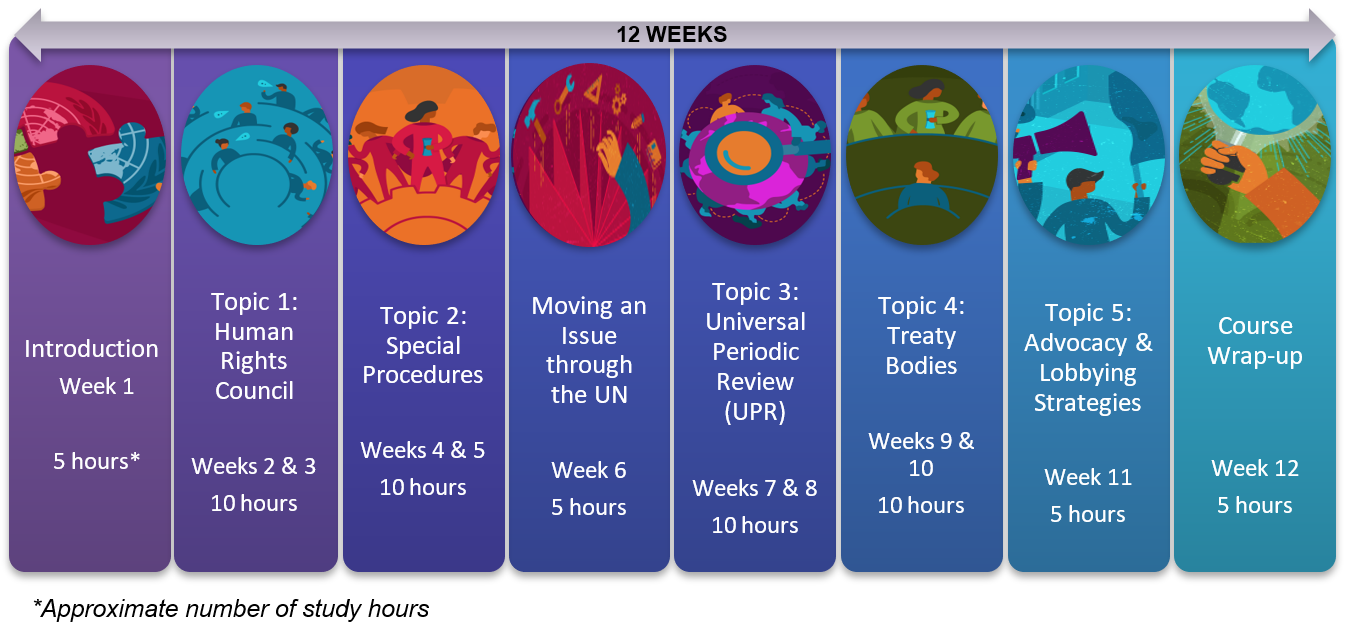
The 12-week course allows defenders to continue their vital work on the ground, while diving into the inner workings of each key UN human rights mechanism, and gaining first-hand experience from advocates and UN staff on how civil society can strategically engage in the international human rights space.  

By participating in HRDAP, defenders:

  1. Gain knowledge and tools, which they can use to ensure their voice is central in international human rights decision-making
  2. Explore and compare the benefits of engagement with the Human Rights Council, the Special Procedures, the OHCHR, the UPR and the Treaty Bodies, and examine how they can use them to bolster their work at the national level
  3. Develop strategies and lobbying techniques to increase the potential of their national and regional advocacy work

During the last training, 19 human rights defenders from 17 countries took part in the programme. At the end of the training, 100% of those surveyed were satisfied with the programme, with 82% indicating they were “very satisfied”. Find out more about what they learnt here.

This programme is directed at experienced human rights defenders in non-governmental organisations, with existing advocacy experience at the national level and some prior knowledge of the international human rights system. ISHR supports, and promotes solidarity with and between, defenders working in the following areas or contexts, which we recognise as intersectional and interdependent:

  1. Equality, dignity and non-discrimination
  2. Environmental justice and sustainability
  3. International accountability for the repression of human rights defenders
  4. Transparency and rule of law

Download the HRDAP22 Programme Description to find out more and apply before Monday 3 January 2022!

What are the next steps?

https://ishr.ch/latest-updates/hrdap-2022-apply-now-for-ishrs-training-for-human-rights-defenders/

“A Seat At The Table” a guide for engaging with the UN system: 30 June 2021

June 22, 2021

The ISHR is Launching “A Seat At The Table”A guide to crafting effective narratives at the UN
about human rights and the people who defend them

The stories and narratives that are told about human rights defenders at the UN have a major impact on how they are understood and supported on the ground. Over the past 9 months, the ISHR has explored perceptions and views that diplomats working at the UN have about human rights and people who defend them. The objective was to understand the messages that best increase support for human rights defenders and to craft more effective human rights narratives, particularly as they relate to people who defend human rights. ISHR is now ready to share its findings with you and launch the new practitioners’ guide “A Seat At The Table“, meant for anyone working within or engaging with the UN system to promote and protect human rights, whether they be advocates with organisations, diplomats or frontline community activists and leaders.

This event will be held online. In order to attend the event, please RSVP here.

Welcome:    Ambassador Marc Bichler, Permanent Mission of Luxembourg

Panelists:   

Tom Clarke, human rights campaigner, communications specialist and guide co-author

Sophie Mulphin, human rights communications specialist and guide co-author

Mary Lawlor, Special Rapporteur on the situation of human rights defenders

Ambassador Nazhat Shameen Khan, President of the Human Rights Council

Ilze Brands Kehris, Assistant Secretary-General for human rights

Guadalupe Marengo, Amnesty International

Thomas Coombes, human rights strategist and communications expert, founder of hope-based communications

Moderator: Marianne Bertrand, International Service for Human Rights

30 June 2021  
1:00-2:30pm CEST 
Online event Register now

https://mailchi.mp/ishr/749qlxejj6-33142?e=d1945ebb90