On 12 March 2019 Amnesty International reacted with “BRAZIL: ARRESTS ARE FIRST SIGN OF PROGRESS IN INVESTIGATION INTO KILLING OF MARIELLE FRANCO”.
Responding to reports that Brazilian police have arrested two men in Rio de Janeiro over the killing of human rights defender, Erika Guevara-Rosas, Americas director at Amnesty International, said: “These arrests are the first sign of progress in an investigation that has barely moved in the year since the killings. We are calling for the Brazilian authorities to ensure that investigations are independent and impartial, and to bring all those responsible, including those who ordered the crime, to justice in fair trials.” “There is no better way to honour Marielle Franco’s amazing legacy than by committing to protect human rights defenders and ensuring they can safely continue their vital work.”
A long piece in Open Democracy of 12 March provides more details and links tentatively the murder to the State:
Three moments have been key in unravelling the truth regarding this political crime. The first, the detention in December 2018 of Marcello Moares Siciliano, also a counselor in Rio de Janeiro. He was identified as the supposed intellectual author of the crime and he is being directly accused of being involved in the murder. The State Prosecutor and the Police searched his home and found material connected to the murder that also pointed towards two ex-military police officers who were also detained as possible complices.
The second, in January of this year, was the major revelation that these two military police officers have dark connections to Flavio Bolsonaro, the son of president Jair Bolsonaro, who is currently a senator. The accused are suspected to be members of the militia group ‘Escritório do Crime’, one of the most dangerous criminal groups currently in the west of Rio de Janeiro.
The third, is the unexpected arrest of a military police officer and another ex-police officer only a few days before commemorating one year since her murder. One is accused of pulling the trigger, and the other of driving the vehicle used for the attack. These appear to be the first concrete results of a complex investigation that remains plagued with uncertainty that would confirm the Brazilian state’s role in the murder…
What is certain is that the investigation has also suggested a link between Marielle’s opposition to the militarisation of Rio de Janeiro and her murder. She had discovered some worrying conexions, which could imply her death was caused by powerful mafias that wished to silence her. The complexity and the difficulty of clarifying the events surrounding her death show there are powerful interests impeding the investigation.
On 8 March 2019 LEXICON marked International Women’s Day – in partnership with Peace Brigades International,- with a profile of Valentina Rosendo Cantu, a human rights defender in Mexico. This is the story of a woman who fought for her dignity and transformed her trauma and suffering into resilience. Her case led to a groundbreaking verdict by the Inter-American Court in June 2018.
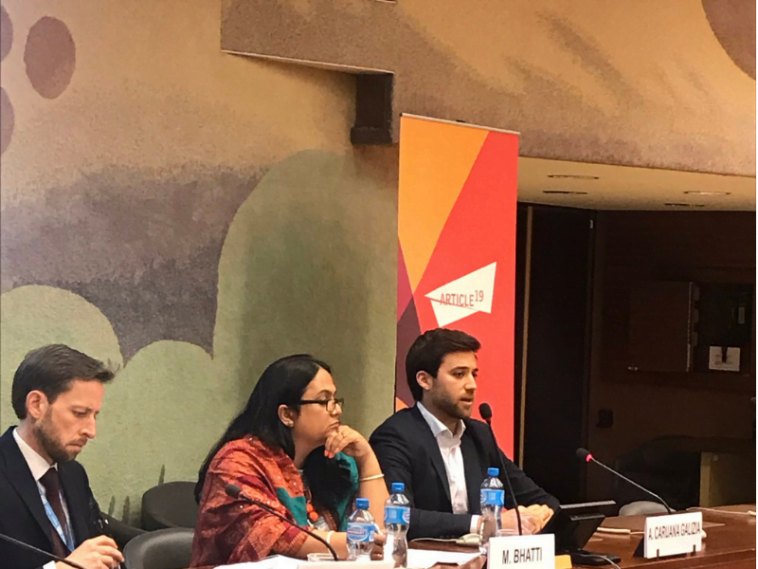
The NGO Article 19, which organised the panel, stressed that impunity for attacks against journalists must end. It listed worrying trends of human rights violations, all of which pose a major threat to freedom of expression globally:
Continued impunity for attacks against journalists;
Failures by States to combat religious intolerance, while also failing to secure the rights to freedom of religion or belief and freedom of expression;
The abuse of counter-terrorism laws to target civil society and dissenting voices;
Attacks against women human rights defenders and environmental and land defenders.
Brent Patterson posted on Rabble.ca on 4 February, 2019 a piece entitled: “Impunity for human rights violations must be challenged from Guatemala to the Wet’suwet’en territories“. It looks at the concept of impunity, especially in the context of indigenous people in Latin America and..Canada.Read the rest of this entry »
In a rare case of triumph over impunity, the Zimbabwean High Court, on 27 September 2018, ordered the state to pay $150 000 to Jestina Mungareva Mukoko, a pro-democracy campaigner and Director of Zimbabwe Peace Project (ZPP). In a Deed of Settlement endorsed by the High Court, the defendants have been ordered to pay $100.000 to Jestina in respect of her claims while a further $50.000 will be paid as a contribution towards her legal costs (before 31 October 2018).
This exceptional decision was welcomed by many NGOs, including the Zimbabwe Peace Project (ZPP) and Zimbabwe Lawyers for Human Rights (ZLHR).
My good friend and long-time Zimbabwean human rights defender Arnold Tsunga said the following: “I think it’s a very good resolution of the case. The damages are significant but the case was also quite serious including the torture meted out on Jestina that the damages seem to fit the case. In a way it’s a double benefit in that the abduction and torture resulted in criminal case against her collapsing and on top of that she gets paid. Hopefully the security sector have learnt a lesson. It is also good that the judiciary is getting stronger and confident to pronounce itself this way“. Especially the latter is an important outcome!
ackground Information (Jestina Mukoko Triumph: The Facts): Jestina was abducted by some unidentified armed men from her home in Norton on 3 December 2008, and her whereabouts together with two ZPP employees Broderick Takawira and Pascal Gonzo, who were also abducted later in December 2008 remained unknown until December 24, 2008, when they first appeared before the Harare Magistrates Court, after weeks of being held incommunicado and being tortured. In court, Jestina and her colleagues and dozens of other pro-democracy campaigners were accused by government of plotting to topple Robert Mugabe’s administration through recruiting people to undergo military training in neighbouring Botswana. After her release from a torturous three months stay in prison, Mukoko with the assistance of her lawyer Beatrice Mtetwa, a member of ZLHR, took legal action against the state.
In September 2009, the Supreme Court granted a permanent stay of prosecution in favour of Jestina due to the violation of several of her fundamental rights by state security agents as she had been subjected to torture and inhuman and degrading treatment including simulated drowning, being locked in a freezer and being subjected to physical assaults as her tormentors tried to make her confess to plotting to overthrow the administration of Zimbabwe’s former leader Robert Mugabe.
In 2017, the High Court ruled that those who had illegally arrested her could be held liable in their own individual capacities and the case culminated in lengthy protracted negotiations that have led to this outcome. During this time, Jestina was called different names such as ‘regime change agent, reactionary and other unprintable words in a bid to delegitimise her legitimate human rights activism. She was portrayed as a criminal, a tag which remains today but this settlement in the court vindicates her and her work in defending human rights.
Jestina Mukoko herself added the following piece on the “Significance of my case” (which I reproduce almost in full as it is such a good lessons learnt):
..The patrimonial settlement cannot atone for the trauma and suffering that I suffered and went through at the hands of the state security agents who were ruthless, merciless and very evil. It will not make for lost time as my liberty and all other human rights accorded to me by virtue of my being human was unjustifiably curtailed nor will it provide solace for my traumatised family – my mother, son, brothers, sisters in law, extended family, friends and other peace loving citizens.
However, it is a victory for the rule of law, constitutionalism and a mortal blow to impunity. The High Court’s decision is proof that the justice system is still able to prove the involvement of the state and its representatives in gross human rights violations, and bring them to account, with justice being done for the victims like myself.
It sets a landmark precedent and shows that the state actors can be held accountable for their illegal conduct. It also sends a message to the overzealous enforcers of orders and in this case very illegal orders to violate a plethora of my rights that they will be held responsible for their actions and this can even be in their personal capacity.
I hope my story will inspire many other victims. To some extent, justice has now been done and this case will stand as an example in the continuing fight against impunity for state crimes and excesses.
My resort to litigation and the subsequent victory in court sends a strong signal that state sponsored crimes cannot go unpunished.
It is also an encouragement to human rights defenders that the dangers of their work will not be in vain. I hope this case will embolden younger activists to pursue social justice in the comfort that they can rely on this case to hold the state or anyone accountable who may threaten their liberties. It is also a vindication of the advocacy work done by all human rights activists and those who have invested in promoting and protecting human rights that even though the fruits of this cumbersome and often arduous journey may come late , they eventually come. This is a victory for everyone who has been in the trenches with me and who has walked this risky journey of human rights work.
I hope that this victory will set an example, particularly to the Zimbabwean authorities, who must now prosecute the perpetrators of abductions and enforced disappearances which is a heinous crime.
The High Court’s decision sends a clear signal to the Zimbabwean authorities, who must do everything in their power to guarantee victims access to impartial justice and to put an end to the endemic impunity that is enjoyed by torturers and the perpetrators of serious human rights violations.
This settlement comes at a time when the Commission of Inquiry into Post Election Violence set by President Emmerson Mnangagwa has started its work to establish the facts around the circumstances that led to the death of six people on 1 August 2018 in Harare after members of the Zimbabwe Defence Forces opened fire against protesters. It must be established whether the force used by members of the Zimbabwe Defence Forces was proportionate to the threat posed by unarmed protesters. It must also be established whether in doing so they overstepped their mandate and therefore should be held liable or the state vicariously liable. This case must form the basis for national rejection of all forms of impunity and the same principles must be followed by the Commission of Inquiry into Post Election Violence.
In conclusion, I, Jestina through the Zimbabwe Peace Project, which plays a critical role in documenting human rights abuses, will continue to join hands with other civil society organisations such as ZLHR to champion human rights in the post-Robert Mugabe era without fear or favour. The journey to full implementation of the Constitution and compliance with the supreme law of the land continues.
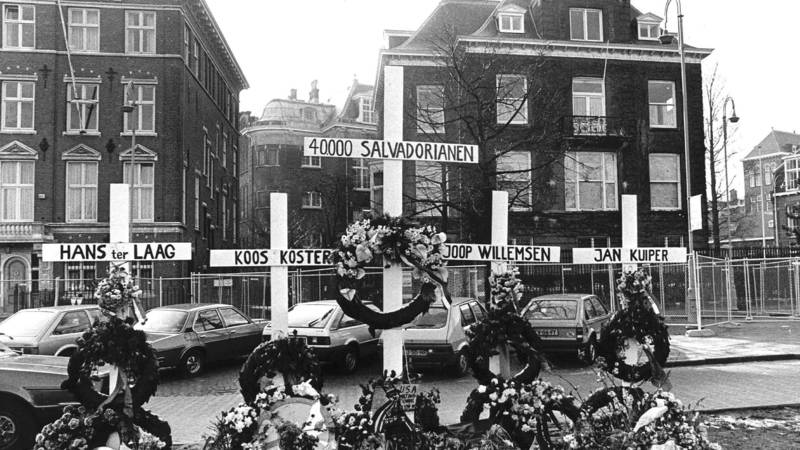
In the Dutch media a lot of attention is being paid at the moment to the 35-year old story of the IKON journalistswho were killed in El Salvador in 1982. Some years ago I started to write up ‘human rights stories’ that I had been closely involved in, with the idea that some day they would be of interest. This seems a good moment to ‘publish’ for the first time the chapter on my involvment with the case of the IKON journalists:
1982 IKON journalists killing and El Salvador
…On 17 March 1982, three months before I took up my post as thea first director of the new Netherlands Institute for Human Rights (SIM), the world – and especially the Netherlands – were shocked by the kiliing of a team of television journalists of the TV channel IKON in El Salvador. The very uncivil conflict there had already costs thousands of people their lives including the internationally known cases of the 4 American nuns and the progressive bishop Oscar Romero 1980. The USA under Reagan had clearly changed course and was openly supporting the Duarte regime against the left-wing rebels. The Dutch government – especially its ‘atlanticist’ Minister of Foreign Affairs Hans van de Broek[1]– was caught between its desire to appease the US government and to respond to the public outcry back home. The compromise reached was that the Dutch Ambassador from a neighbouring country (Jan Willem Bertens) was exceptionally allowed to undertake an investigation on Salvadoran territory, but – if no evidence of government involvement was found – that would be the end of the affair. The fact-finding mission by the Dutch Ambassador did not find any strong evidence; the report was left with the Salvador government and submitted to the Dutch parliament.
One of the first visitors to SIM was Yata Matsuzaki who was the partner of one of the journalists killed and on behalf of the families – who were not convinced by the inconclusive Bertens report. She asked me to take on the case and see whatever else could to done to keep the matter alive. There was even some money set aside for this by the families which was very useful as later – when the Dutch Minister Van der Stoel queried whether this kind of activity (i.e. second-guessing him) was within SIM’s mandate – I was able to refer to the fact that SIM was supposed to find externally funded projects and this had been one of them.
In fact, I had to scratch the bottom of the barrel to find ways to keep the case alive but fortunately the UN had just establish a “Special Rapporteur on extrajudicial, summary or arbitrary executions”and I submitted the case there. With the help of the Lawyers Committee for Human Rights in NY I also tried to obtain copies of relevant telexes from the US State Department but most was blacked out.
This involvement with El Salvador led SIM to start a project on how to count human rights violations in general (with initial focus on Central America) and we tried to solve difficult issues such as killings by non-state actors and defining indirect victims. One of the persons helping in El Salvador was Marianella Garcia Villas who had come to SIM in early 1983. I offered to help her with obtaining political asylum in the Netherlands, but she insisted on going back as she was most needed there. I felt not just sad and shocked but also ‘guilty’ when soon after her return she was murdered.
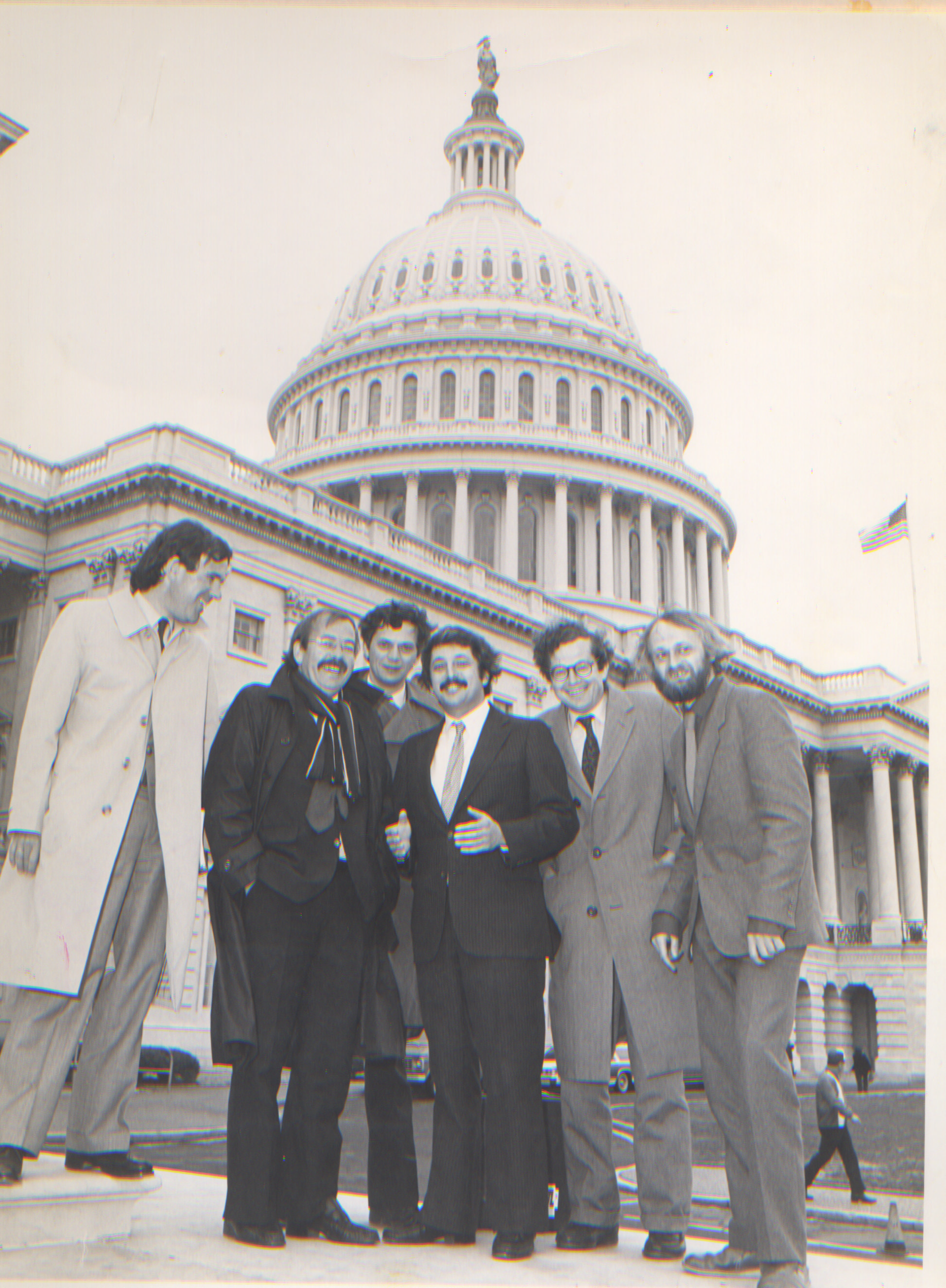
Then in May 1984 three Dutch parliamentarians (one from each main party) accepted to go on a mission to Central America (and the USA see picture) and I was asked to join as an independent ‘expert’. It became a memorable trip, including a shooting incident on the road in Nicaragua, but what crowned it was that in El Salvador I got a chance to meet with the Prosecutor’s office that was in charge of the IKON investigation. They kindly showed me the file and I was shocked to see that it contained almost nothing and especially that the report by the Dutch Ambassador – 2 years later! – had not been translated into Spanish.
Upon arrival in Schiphol airport, there was a well-attended press conference and when there were questions about the IKON investigation the parliamentarians agreed that I should answer as an independent expert. The journalists had clearly not forgotten their colleagues and fielded many questions. When asked what the Dutch government should do now, I replied that it is was time to re-open the investigation and that my colleagues on the mission representing a majority in parliament were well placed to formally ask for it, which they promptly said they would. When soon afterwards a majorly in parliament adopted a motion requesting this, the Minister of Foreign Affairs was not pleased and initially refused to carry out the motion. However, as this was not worth a government crisis the Prime Minster Lubbers engineered a compromise under which the Dutch government would follow up and at least translate the text.
In 1993 a Report of the Truth Commission of the United Nations on El Salvador concluded that the journalists had been killed in a planned ambush, that Reyes Mena was responsible and that El Salvador so far had failed to do research in order to sentence and punish those responsible. That same year an amnesty law was passed in El Salvador,…
and now (September 2018) I can add a final chapter:
A team of the Dutch television programme Zemblahas traced the former colonel of the Salvadoran army, Mario Reyes Mena, who ordered the killings. The now 79-year-old Reyes Mena has been living in the United States for four years. Zembla found him through his three adult children, who are active on social media.
When confronted he claimed that the amnesty pronounced by the government of El Salvador covers his actions. However this amnesty law was cancelled in 2016. In August 2017, the investigation into the murders was already reopened administratively. Two Salvadoran human rights organizations, ‘Fundación Comunicándonos’ and ‘Associacíon de Derechos Humanos’, urged the Salvadoran judiciary to carry out the investigation and the ensuing prosecution.Gert Kuiper, de brother of one of the killed journalists has also started a procedure against the colonel and the Dutch Ambassador in El Salvador supports the move.
It is not known where we stand with this investigation but interesting is to note that in November 2017 another former Salvadoran army colonel, Inocente [SIC] Orlando Montano, was extradited from the USA to Spain to face charges relating to the 1989 killings of the 6 Jesuits priests.
Killings cannot have happy endings but justice is the next best thing.
[1]He succeeded in May 1982 the socialist Van der Stoel whose initial reaction to the killing had been more forceful.
On24 May 2018, the UN High Commissioner for Human Rights, Zeid Ra’ad Al Hussein, welcomed the ruling issued unanimously by the High Risk “C” Tribunal in Guatemala yesterday against four high-ranking former military officials for crimes against humanity, aggravated sexual violence and enforced disappearance. “This is a milestone judgement for Guatemala and beyond with regards to the investigation, prosecution and punishment of serious human rights violations committed by senior military officers during an internal armed conflict,” High Commissioner Zeid said. The judgment, citing international human rights standards, found that the practice of sexual violence, torture and enforced disappearance formed part of the military strategy during the internal armed conflict in Guatemala. It also held that past crimes involving serious human rights violations are not subject to time limits for prosecution and cannot be subject to amnesty.
The High Commissioner said that this ruling, together with the jurisprudential precedents established in other transitional justice cases, such as Sepur Zarco, Dos Erres, Plan de Sánchez and Myrna Mack, sends a clear message that it is possible for Guatemala to advance in the fight against impunity of the past, which in turn, strengthens the fight against the impunity of the present and the consolidation of the rule of law. On 4 May 2004, the Inter-American Court of Human Rights had already held the State of Guatemala responsible for the enforced disappearance of Marco Antonio.“
I pay tribute to the Molina Theissen family for their courage and perseverance to fight for over three decades for their right to justice and the truth,” Zeid said. Emma Guadalupe Molina Theissen was detained at a military checkpoint on 27 September 1981 and transferred to the “Manuel Lisandro Barillas” Military Brigade in Quetzaltenango, where she was held captive, interrogated, subjected to torture and other cruel, inhuman or degrading treatment, as well as sexual violence. She escaped on 5 October 1981. The following day, her 14-year-old brother Marco Antonio was taken by force from the family’s home in Guatemala City, put into a nylon sack and taken to an unknown destination in a vehicle with an official Government license plate. He has never been found.
Two major cases of universal jurisdiction – after years of work – have finally borne fruit in the month of April 2018: One verdict in Switzerland (Sperisen) and one in the Democratic Republic of the Congo (Colonel “Marocain”) make the case that the mobilization of human rights defenders and civil society can really make a change.
The ISHRon 28 February 2018 made the following statement which seem obvious to the readers of this blog but it cannot be stressed enough: Human rights defenders risk their freedom and sometimes their lives to advocate for the rights of fellow human beings. On the occasion of the Human Rights Council’s High-Level panel commemorating the 70th anniversary of the Universal Declaration on Human Rights (UDHR) and the 25th anniversary of the Vienna Declaration and Programme of Action, ISHR stressed that the realisation of the UDHR depends on the work of human rights defenders and that States who restrict the work of defenders are in turn violating their obligations under the UDHR.
2018 is not only the 70th anniversary of the Universal Declaration of Human Rights (UDHR) and the 25th anniversary of the Vienna Declaration and Programme of Action (VDPA), it also marks the 20th anniversary of the Declaration on human rights defenders which was adopted by consensus by the General Assembly in 1998.
The rights enshrined in the UDHR cannot be guaranteed without a safe and enabling environment for the people exercising and fighting to defend those rights. States who commit to guarantee the UDHR cannot restrict the work of defenders, nor fail to act upon their obligation to protect them.
20 years after the adoption of the Declaration, human rights defenders have perhaps never been more under threat. They are subjected to judicial harassment, arbitrary arrest and detention, torture, enforced disappearance, physical violence and even murder.
Defenders are also attacked when they bring their voices to the international community. Last year, a report by the Secretary-General found evidence of a strategy on the part of some States to prevent the activities of individuals cooperating with the UN. The report also highlights that the incidence of reprisals is becoming broader and that the means used are increasingly blunt…
“The realisation of the UDHR depends on the work of defenders, who risk their lives and their freedom to advocate for the rights of others,” said Salma El Hosseiny, ISHR’s Human Rights Council Advocate. “It is alarming that States are increasingly shrinking civil society space on one hand, and professing their commitment to guarantee the UDHR on the other hand“. These unprecedented attacks against civil society and defenders amount to violations of the same rights to which they are advocating for.
States must translate their commitment to the UDHR by taking immediate and effective measures to ensure that defenders are able to carry out their legitimate human rights activities without any hindrance, to ensure accountability for all perpetrators, and access to remedies for victims.
The Human Rights Council plays an important role in contributing to the realisation of the UDHR on the ground. Accordingly, any proposals to strengthen or enhance the efficiency of the Council should be measured through the lens of increasing its impact, rather than the relatively insignificant time or money it may save. Finally, it is imperative that any legitimate process to strengthen the Council include the meaningful participation of civil society in all stages.
Among the many (written) NGO statements issued during the current session of the UN Council on Human Rights in Geneva, this one by the Asian Legal Resource Centre stands out by describing a whole government apparatus as standing against independent human rights defenders. It was dated 26 February 2018:
The Asian Legal Resource Centre (ALRC) wants to bring the situation of human rights defenders of Bangladesh to the attention of the United Nations Human Rights Council. The Government of Bangladesh stands against the human rights defenders with draconian legislations and various institutions and agencies of the State. Independent dissenting voices face systemic harassments. Given the circumstances, the human rights defenders have to work without any notion of protection while defending rights in the country. The threats against the human rights defenders are increasing as the 3rd Cycle of the Universal Periodic Review (UPR) is approaching.
The Government of Bangladesh has amended the existing laws and has adopted new laws with vague definitions and harsher provisions to stifle the human rights organisations and individual defenders along with other dissenting voices.
The incumbent government made the Foreign Donations (Voluntary Activities) Regulation Act 2016. This law not only intimidates the civil society actors but also prevents the expected outcome that the human rights organisations strive for achieving for the society. The law provides the NGO Affairs Bureau (NGOAB), a wing under the Office of Prime Minister, the power to review and cancel proposed projects by NGOs. A persons’ travelling out of Bangladesh in relation to the projects requires prior governmental approval. The NGO Affairs Bureau is authorised to scrutinise the activities through inspections and monthly coordination meetings by the representatives of the NGOAB while prior approval is also required for planned activities before receiving the grants. Without any judicial process the NGOAB is empowered to impose sanctions for alleged ‘non-compliance’ against any organisation or individual receiving foreign funds for voluntary activities. Such actions also include fines, disciplinary actions, and cancellation of registration of the NGO even for ‘derogatory’ remarks. The decisions of the NGOAB can only be brought before the Secretary of Office of the Prime Minister as an ‘appeal’. The law establishes the bureaucrats’ control over voluntary activities while Bangladesh’s bureaucracy has reputation for systemic corruption and abuse of power.
Bangladesh’s Cabinet has approved the Digital Security Bill-2018 on 29 January 2018. This Bill may be enacted in any day during the ongoing Session of the national parliament. This proposed law curtails both the freedom of press and the writ of human rights organisations. The police is authorised to arrest any person without a warrant of arrest issued by a Court of the country if the police officer believes that an offence is committed under this law. A person can be imprisoned for 14 years, with or without a fine of BDT 10 million for publishing any material online for ‘spreading negative propaganda against Liberation War or the Father of the Nation’ while there is no definition of ‘negative propaganda’ provided in the law. Publishing ‘false’ and ‘distorted’ information to tarnish the image of the State is punishable with three years’ imprisonment and with or without a penalty of BDT three hundred thousand. If a person is held for the second time for the same crime he or she will be imprisoned for five years with or without a penalty of BDT one million. Such provision will put the human rights defenders in grave danger, as they have to contest the official version of the State, which always denies allegation of human rights abuses and accuses the rights groups for ‘tarnishing the image of the State’. For example, the government and the law-enforcement agencies of Bangladesh deny every incident of enforced disappearances and each of extrajudicial executions while the human rights defenders and media explore and expose the truth.
Bangladesh Government, by default, protects the perpetrators of human rights abuses in a deeply rooted culture of impunity. The State prevents the basic institutions from functioning and serving the people with fairness. Instead, the incumbent government uses all the institutions, including the judiciary, as tools to secure its power at the cost of the lives and liberties of the ordinary people.
The participation of independent human rights organisations in the Universal Periodic Review (UPR) mechanism of the UN Human Rights Council makes them governmental targets for exposing the human rights realities. For example, Odhikar, a locally based human rights organisation, contributed to the UPR process during the first and second cycles in 2009 and in 2013. This rights group consistently documented the cases and pattern of extrajudicial executions, enforced disappearances, custodial torture, curtailing the freedom of expression and opinion, and denial of justice to the victims of gross human rights abuses in Bangladesh. The government started harassing this organisation for publishing a fact-finding report on a massive crackdown in May 2013. Its leaders were made the victims of the country’s first ever cyber crime case, which is still pending before a special tribunal incepted for holding trial of such cases. Their bank accounts are frozen and NGO registration’s renewal has been halted since mid 2014. The activists who are engaged in standing beside the victims of human rights violations remain under active surveillance by the intelligence and law-enforcement agencies.
Bangladesh is moving toward another general election by the end of 2018. The incidents of gross human rights abuses are also on the rise. The incumbent government is using the State’s law-enforcement agencies and judiciary to drive away the political opposition. The government has already started arresting the opposition activists arbitrarily as the main opposition leader is afraid to be convicted in controversial corruption cases. As days pass on more violation of human rights would deteriorate the situation requiring the human rights defenders to assist the victims. The activities of the rights groups would invite more reprisals against the human rights defenders, except those who directly or indirectly align with the incumbent government for their financial and political benefits.
Bangladesh’s system of governance is authoritarian and coercive by nature. The institutions – be it a constitutional body or a statutory entity – function according to the wish of the Prime Minister, as a supreme controller of everything. The universal normative principles of justice and good governance do not exist or work in this country. As a result, all the basic institutions constantly fail to act for the actual purpose of upholding the rule of law and facilitate functional democracy. The judiciary and the entire criminal justice apparatus, survive as mere facades. These facades facilitate the process of silencing the society’s vibrant voices.
The ALRC urges the Special Rapporteur on the Situation of Human Rights Defenders to request Bangladesh for sending invitation to the mandate for country visit. The Human Rights Council and the Office of the High Commissioner for Human Rights to focus on Bangladesh’s domestic human rights realities and intervene for the protection of victims from gross violation of rights.
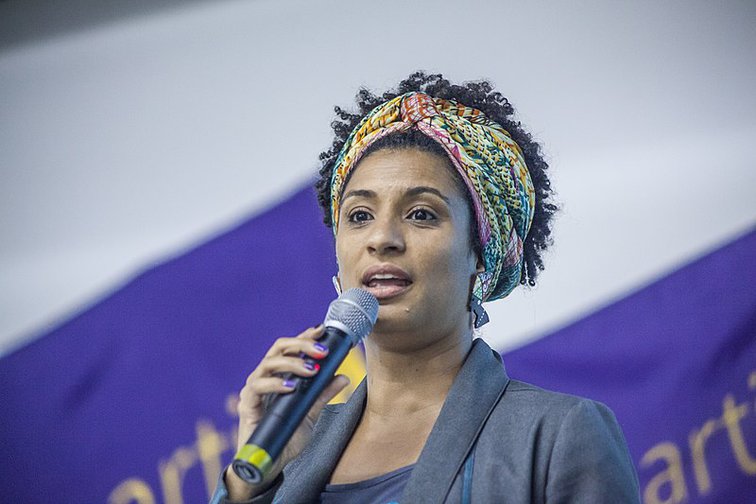 One year after the killing of Marielle Franco and her driver in Brazil, there seems to be finally some progress in the investigation. [see: https://humanrightsdefenders.blog/2018/03/16/marielle-franco-38-year-old-human-rights-defender-and-city-councilor-of-rio-assassinated/]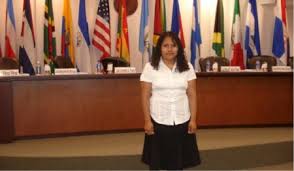

 Hans Thoolen on Human Rights Defenders and their awards