I just read the following piece (“A Vote of No Confidence on President Jammeh’s Appalling Human Rights Record”) by Alagi Yorro Jallow, who is a journalist and founding managing editor of the banned Independent newspaper in Gambia. He lives in the United States.He is a Nieman fellow at Harvard University. I copy it in full but draw especially attention to the underlined parts re HRDs. Would anybody really say this aloud? IF he stated this, how come there is so little reaction?
The Gambia today is neither complete dictatorship nor democracy, neither paradise nor complete hell; we are at a crossroad between “sembocracy” and “massala.” Under the leadership of President Yahya Jammeh and his APRC, the Gambia has descended into chaos. Its citizens live in fear of reprisal and harassment by government lackeys, its economy is in tatters, its media have been muzzled, and the social fabric of this once peaceful land is in danger of disintegration.
The sooner the African Commission gets out of the Gambia and dispenses with the inconveniences of history of how the Banjul Charter was developed, the better for practical human rights advocacy on the continent. The relocation of the African Commission would be a vote of no confidence in Jammeh’s administration of bad governance and human rights violation—one that I have long supported. Jammeh’s continued human rights abuses and poor governance portray that he feels that the Gambia and Gambians belong to him, and the presence of the Commission may seem to him and to some others as a supposed kernel of human rights promotion and protection in the Gambia. During the 64th session of the UN general assembly in New York, Jammeh explicitly threatened to kill human rights workers in the Gambia, including those visiting from elsewhere and people who cooperate with them. In a televised address, he stated:
“I will kill anyone who wants to destabilize this country. If you think that you can collaborate with so-called human rights defenders, and yet get away with it, you must be living in a dream world. I will kill you, and nothing will come out of it. We are not going to condone people, posing as human rights defenders to the detriment of the country. If you are affiliated with any human rights group, rest assured that your security and personal safety would not be guaranteed by my government. We are ready to kill saboteurs.”
The Gambia had previously recognized the Universal Declaration of Human Rights and is a member of the African Union, whose charter adopts universally accepted human rights including the rights to life and personal integrity, as well as freedom from cruel, inhumane, or degrading treatment or punishment. The African Union created the African Commission on Human and People’s Rights, with headquarters in Banjul, as the institution to promote and protect the human rights of individual and collective rights of peoples throughout Africa.
Unlike at the United Nations general assembly in America where America’s sworn enemies can fly in and challenge the United States on its shores, discussing the Gambia’s human rights record during meetings of the African Commission is strictly taboo.Thus, prominent human rights activists have been declared personae non grata for daring to shine a light on the Gambia’s poor human rights record. Many activists will simply not go to Gambia for fear of committing the ignominious sin of self-censorship, lest they risk being deported, when the voiceless suffer under the might of the powerful. Because of these human rights breaches, the continued presence of the headquarters of the African Commission in the Gambia is tantamount to condoning and even bankrolling a dictatorship.
Jammeh’s government look forward to the tourism revenue that the African Commission’s jamboree brings each year, which is used to finance flamboyant lifestyles and shield Gambians from worse repressions. In this way, the African Commission’s presence in Gambia legitimizes Jammeh’s acts of insanity.
Jammeh’s views have always been extreme, ever since he began to strive for power in Gambia, and recently they have only gotten worse. Below is an early statement made by Jammeh towards human rights defenders and journalists, where he accused some journalists and newspapers of printing half-truths and falsehoods which could create confusion and cause dissension in the society. He warned that the military would not tolerate instigation and innuendo calculated to create confusion for the Gambian people. In a show of his true feelings toward press freedom, even back then, he described journalists as the “illegitimate sons of Africa.” Below are the exact words of then Chairman of AFPRC Yahya Jammeh in a public rally in 1994:
“The enemies of African progress, the illegitimate sons of this country disguise themselves in the form of journalists, in the form of freedom fighters, in the form of human rights activists BUT they are all illegitimate sons of Africa. Get rid of them. The so called journalists, they are very vulnerable. You can send them into the streets begging when you don’t buy their newspapers; they won’t function; they depend on you. Don’t allow the mosquito to suck your blood, father tell you no lie. One day I was looking at a something you call newspaper, and I saw a big headline: DETAINEES STILL DETAINED HERE. When I looked at the headline I said, Yeah, they are still detained here; what can you do about it? They talk about Human Rights, an issue they don’t even understand. And I will tell you what Human Rights stand for: it is an illusion, a fallacy that is non existent anywhere in this world; it is a western machination to manipulate Africa, and I will tell you each letter of Human Rights what it stands for. The H stands for Hoodwink. You all know what hoodwink is, to blindfold people! The U stands for the Universe. M stands for Manipulate! A stands for Africa, and N stands for African Nations! They hoodwink the universe, manipulate the African nations. The R stands for to rip you off; they rip you off of your gold. After hoodwinking the universe and manipulating African nations, they rip you off of ideals, so that Africans will have no ideals but will follow their exported ideology that is meant to create wars in Africa, famine and starvation. We will never accept that, to turn some Africans into stooges so that they can always continue to manipulate us. We the AFPRC are saying that we will die but we will never let them suck our blood again. Tell me any country where there is so called human rights and people are not executed; tell me in most of the so-called western types of human rights, those who uphold the so-called principle of democracy, when you go to their jails, Africans form the majority of all the inmates. What types of rights are they talking about? So you see the fallacy in human rights? We will never accept it. I told you I will not talk about traitors because they continue to hang themselves. They will run but they will never hide. Their days are numbered and they know about it. Anybody under the AFPRC who steals even a single dime, you can go to wherever you think you can be free, you will never sleep, and you will come home either dead or alive, but you will never enjoy this world and in the next world you will burn. And I will tell you, this is what the so-called champions of human rights, of course they are champions of human rights, because they are enemies of Africa. But I will tell you what your rights are: Your rights are to live in peace, equality and prosperity. Anything that belongs to the nation, belongs to all of us. We have a right to development As far as we are concerned, you are free as long as your freedom does not encroach upon the rights of others. If you encroach upon the rights of others, you can never be free and we can never respect you. The law is to deal with you. We are running a state. We are not running a financial company We are not running a cowboy camp. We are not running a hippy camp. What we are running is a nation of human beings, where people are equal. If you think that you are going to use outside ideology to disturb us, what you are going to face will be worse than death. Gambians, this is a warning to all Gambians. We are Africans, we are Gambians, we are soldiers. Any patriotic Gambian is a soldier because you defend this country against injustice. We have passed the stage of appealing to people. If you want to be a donkey, we will treat you like a double donkey. If you want to be a human being, we will treat you like a human being. There is no compromise, and no nation outside The Gambia can do anything about it. If you want to be free, don’t steal. If you want to be free, don’t be a crook. If you want to be a free man don’t advocate for violence. Because when violence comes your bones would be in the air. People think they can use pressure to force us into elections? We can tell you, if we don’t want election in the next thousand years there will be no election. And those who want election, we will makesure that you go six feet deep, and there is nothing anybody can do about it!”
Last year, Jammeh’s pseudo-electoral process, which confirmed him for his fourth consecutive term in office, was dismissed by the Economic Community of West African States (ECOWAS) as not free and fair because of the high level of “intimidation, unacceptable level of control of the electronic media by his ruling party, the lack of neutrality of state and parastatal institutions, and an opposition and electorate cowed by repression and intimidation.” One of the sad things about the Gambia is that there is little room for alternative views and leadership to emerge as long as this dictatorial regime continues to lead the country. Ironically, in the Gambia the topic of human rights is discussed only when there is an African Commission on Human Rights in the Gambia but not if it were on the rest of the continent. The Gambia government does not give a damn about the commission and it has been reported that the Gambia government has not submitted its State party report for the past six years, even though it’s a basic treaty obligation. Again, though not respecting its obligation on human rights procedures, Gambia government has always been happy to offer the commission a traditional welcome banquet as part of its good will in hosting the body.
Before the military takeover by Jammeh, the Gambia was known as the “smiling coast,” a place of sunshine, hospitality and generosity. It was the custodian of the African Commission on Human and People’s Rights, where the country’s position as an advocate for human rights was on display. Soon afterward, the government brazenly contradicted its position through extrajudicial executions in a tragic betrayal of the Gambia’s obligations to freedom and human rights. Despite its many challenges and critics, the significance of the role played by the commission in the protection of human rights particularly through its interpretation and enforcement of the African Charter cannot be denied. It also remains indisputable as the main and most relevant human rights oversight body on the continent and the only one that provides direct access to an individual after he or she has exhausted all local remedies.
At the time, the African Commission was hosted in Gambia not only because the African Charter had been adopted in Banjul and headquartered there but because the Gambia’s adherence to international political and human rights norms was seen at the time as exemplary. It was thought that this commitment to human rights would ensure the Gambia as a good place to serve as headquarters to both the charter and commission.
In accepting the invitation to host the African Commission, the Gambian government agreed to guarantee the conditions and sustain an environment that would enable the norms and values of human rights and democracy to flourish. However, they have not kept this pledge.
Consequently, there have recently been more and more voices for the relocation of the commission’s headquarters from Banjul to a more suitable place, since many are again questioning the wisdom of keeping the commission in Gambia given the country’s appalling human rights record (including the recent executions and the government’s defiance of the commission’s recommendations).
President Jammeh is Africa’s forgotten dictator, and since he took power illegally in 1994 he has never considered giving it back. Although the Gambia has been relatively stable under Jammeh’s iron-fisted rule, poverty and human rights abuses remain high. According to 2010 World Bank figures, the Gambia’s gross national income per capita was only $450.
The real question is, how and for how long can the Gambian people continue to live under Jammeh’s “Tangal Cheeb” administration? Because as of yet we have no answer to this question, and because there is no immediate hope for the improvement of Gambian human rights in sight, relocation of the African Commission would be best not only for the country (because of the pressure it might put on the Gambian government to stop impeding human rights) but for the African continent as a whole.
 Federico Moro, the director of the project, says the intention is to use “technology to promote democracy, human rights and justice”. “The idea is that with social media you can achieve change,” he says. He says campaigners might have passion and belief in their struggles, but they also need practical knowledge. These students will be blog writers and campaigners, who will be able to study in Florence on scholarships provided by the Robert Kennedy Center. Recruiting will be complicated by the need to protect the privacy of people who might be put at risk even by applying.
 The Arab Spring saw social networking becoming a forum for protest. But the question remains whether Facebook really enabled Arab revolutions, or whether it enabled the rest of the world to find out more about a revolution that was going to happen anyway. Stephen Bradberry, a community activist in New Orleans in the wake of Hurricane Katrina, uses the word “slacktivism” – as a caution for the idea that clicking on a “like” button is a sufficient alternative to grassroots organisation. He also makes the point that while the internet makes so much information accessible, the power to find it is handed over to the search engines and their algorithms.
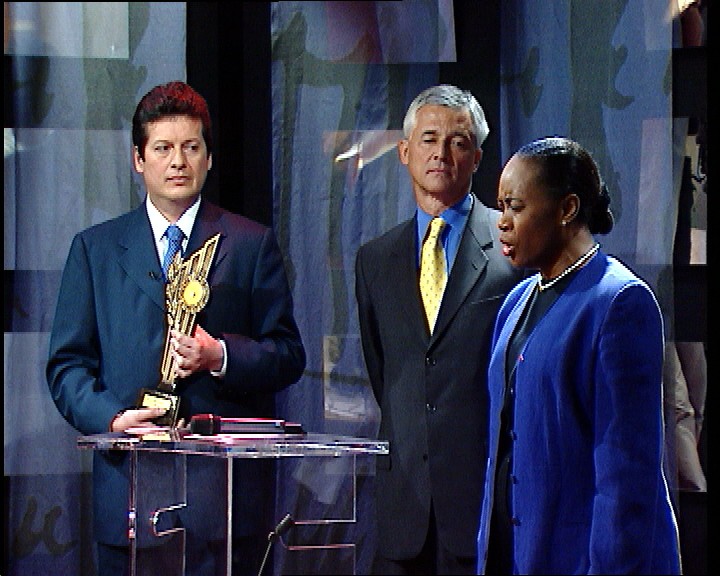
 Hans Thoolen on Human Rights Defenders and their awards