Posts Tagged ‘Human Rights Defenders’

Profile of Human Rights Defender Yésica Sánchez from Mexico

October 20, 2018

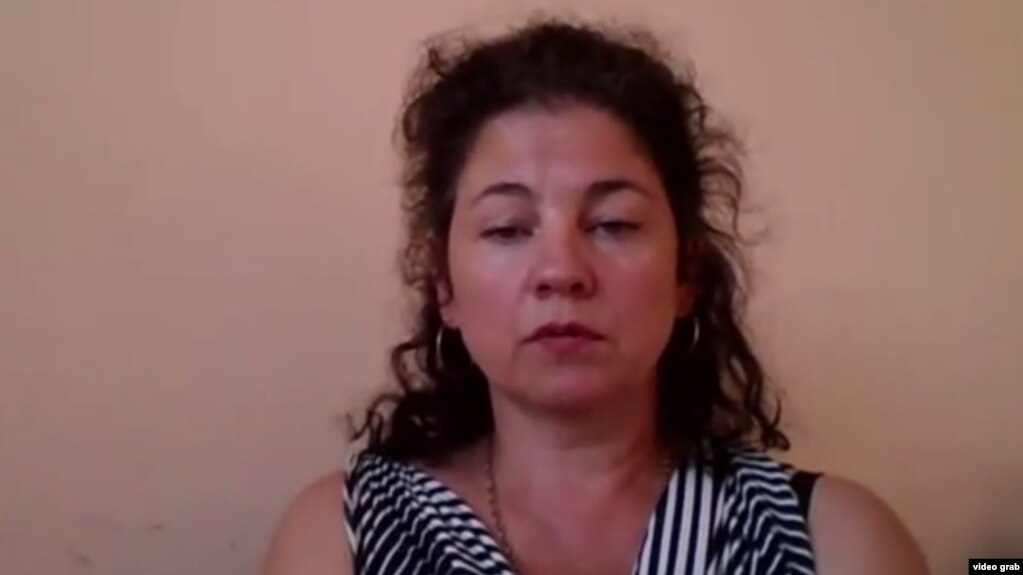
This is Human Rights Defender Yésica Sánchez from Mexico who has been involved in the broad struggle for human rights including torture, disappearances and detention with emphasis on indigenous women. This is another of the profiles recently published by European External Action Service (EEAS) in the context of the 70th anniversary of the adoption of the Universal Declaration of Human Rights. [see: https://humanrightsdefenders.blog/2018/10/04/chia-wei-chi-first-in-series-of-videos-by-european-external-action-service/].

https://eeas.europa.eu/headquarters/headquarters-homepage/51515/human-rights-defenders-yésica-sánchez-mexico_en

Profile of Human Rights Defender Margarita Durán Estragó from Paraguay

October 18, 2018

Human Rights Defender Margarita Durán Estragó from Paraguay is a land rights defender. This is another of the profiles recently published by European External Action Service (EEAS) in the context of the 70th anniversary of the adoption of the Universal Declaration of Human Rights. [see: https://humanrightsdefenders.blog/2018/10/04/chia-wei-chi-first-in-series-of-videos-by-european-external-action-service/].

https://eeas.europa.eu/headquarters/headquarters-homepage/51516/human-rights-defenders-margarita-durán-estragó-paraguay_en

Profile of Human Rights Defender Samussuko in Angola

October 18, 2018

Human Rights Defender Samussuko from Angola is a democracy and human rights activist using hip hop and radio. This is another of the profiles recently published by European External Action Service (EEAS) in the context of the 70th anniversary of the adoption of the Universal Declaration of Human Rights. [see: https://humanrightsdefenders.blog/2018/10/04/chia-wei-chi-first-in-series-of-videos-by-european-external-action-service/].

https://eeas.europa.eu/headquarters/headquarters-homepage/51517/human-rights-defenders-samussuko-angola_en

Michelle Bachelet, new UN High Commissioner for Human Rights, gives major interview

October 18, 2018

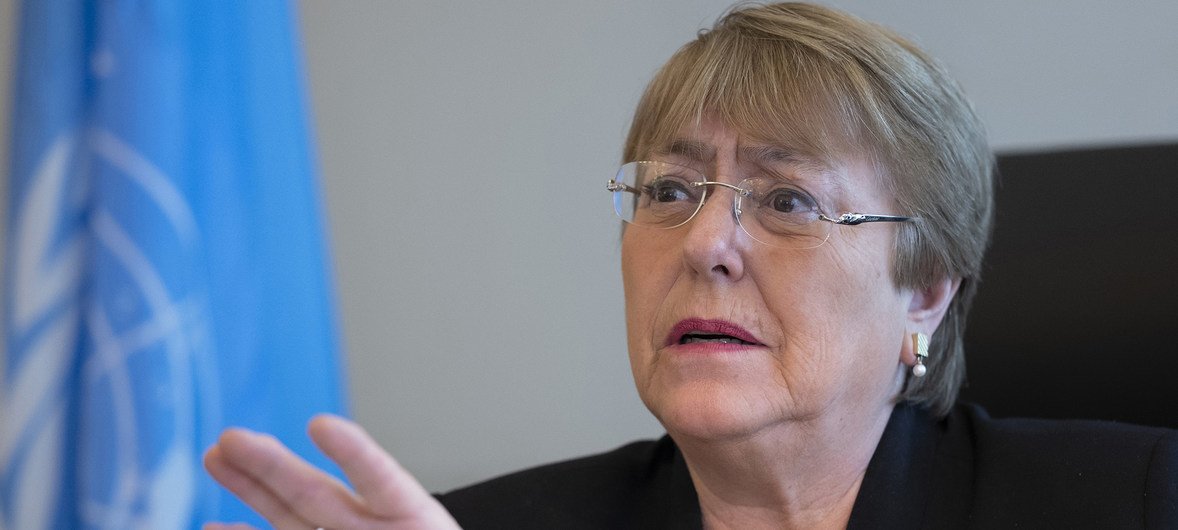
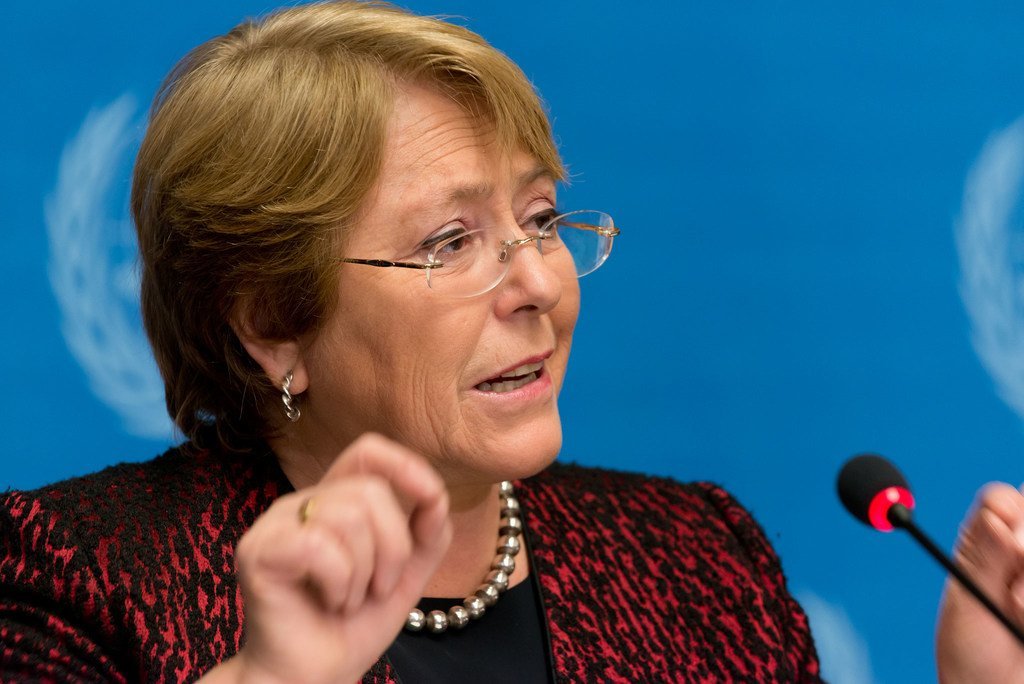
In August 2018, Michelle Bachelet, twice-elected President of Chile was confirmed as the new UN High Commissioner for Human Rights, replacing Zeid Ra’ad Al Hussein. [see e.g.: https://humanrightsdefenders.blog/2018/08/22/change-of-high-commissioner-for-human-rights-at-the-un-optimism-warranted/]. Minutes after she was approved, UN chief Antonio Guterres told reporters he was “delighted” by the news of her official appointment, describing Ms. Bachelet, a “pioneer”, has been “as formidable a figure in her native Chile, as she has at the United Nations”. Shortly after assuming office in early September, Ms. Bachelet was in New York for the General Assembly’s high-level general debate. She spoke then with UN News on the rights situation around the world, the priorities for her tenure, and how can rights be better protected. It was published on 17 October 2018.

Bearing in mind her own personal experience of being detained and tortured in Chile, the interview started with a question on how she overcame the hardships she suffered under the military dictatorship of Augusto Pinochet.

UN High Commissioner for Human Rights Michelle Bachelet (file photo) ILO/M. Creuset

Michelle Bachelet: ….there was a period of my life that I really hated what was happening – I had so much rage. But afterwards, I started thinking, “you know what, I do not want this to happen anymore in Chile or in any other country of the world. So, what can I do to contribute, that Chile will be a peaceful, democratic society?” So, I sort of put all my energies on that, and that is why I started working on defence issues to be able to speak to the militaries, because I never thought I was going to be Minister of the Defence or President of the Republic.,,I would say it permitted me to understand that, first of all, lessons learned, and if you really want some objective, and in a possible, constructive way, it can be done.

As the High Commissioner, you have come in a time when human rights are under serious attack globally. What your priorities are going to be?

Michelle Bachelet: …. first of all, of course, my priorities are to do what my mandate tells me to do, to be the voice of the voiceless. But also to engage with governments so they respect human rights, protect people from rights violations, and promote human rights.

….But one of my particular priorities from the Secretary-General is prevention. I am not saying I will succeed on that, maybe not. But I will try to design a system where we can have early warning signs and try to think on early action. …..

Right now, some countries do not want to cooperate with OHCHR or question the worth of the Human Rights Council. How do you plan on bringing everyone together?

Michelle Bachelet: In my opening statement, I spoke about, that consensus could be possible, that we should not lose ourselves in sterile disputes. Of course human rights is a very political thing and you see that here in the General Assembly, in the Security Council, so it is not in the Human Rights Council, by itself.

I mean, countries have their visions, their interests, and sometimes, they are not interested in some issues. But what I have been doing is meeting, not only with the whole council, but with groups of countries in Geneva such as the Group of Latin American and Caribbean countries, the African countries, the Arab countries, the Asia-Pacific countries, the West European and Other countries, the Eastern European countries, speaking but also listening. Because, sometimes, you know what you have to do, but the way you do it can be more successful than others. Sometimes you need to speak out. Sometimes you need to strategize in terms of saying, look, it will work better if we do diplomatic prevention, if we start engaging the government. But today the world is complicated, and it is very polarized in some issues………

This year is the 70th anniversary of the Universal Declaration of Human Rights. What progress do you think has been done in the past 70 years?

Michelle Bachelet: …..Think of 1948: how many countries allowed women to vote, for example; how many respected of freedom of speech. If you think of the different aspects of the human rights, even in more complete things that usually people do not think of as human rights, but they are human rights: on health, on education, on sanitation, on housing. The world today is better than 70 years ago. But having said that, there are a lot of threats, there are a lot of threats for multilateralism, there is a lot of threat and pushback on human rights. …We see a pushback, we see that in some documents, human rights is not mentioned, and when you ask, they say, “it is mainstream.” And if it is mainstreamed, it is fantastic, because everybody’s doing their job. But if it is invisible, mainstream, that is not a good thing. On the other hand we see human rights defenders and civil society having their space shrink. They have been under attack. Journalists have been killed.

So there is a lot of challenges. The only thing I can say is that the struggle for human rights probably will never end, because it is a process where you advance, but there will be always people who want to push back, and that could be governments or that could be armed groups. The task of the UN is to ensure and promote the whole human rights system. And I will do what I have to do about it, but it cannot be only the task of the Office of the High Commissioner for Human Rights, it has to be the task of the whole UN system….

I would like to ask you about protecting those who protect: human rights defenders are often targets of abuse and violence. How can they be better protected?

Michelle Bachelet: Well, the curious thing is that, as we are celebrating the 70th year of the Universal Declaration of Human Rights, we are celebrating 20 years of the Declaration on the Protection of Human Rights Defenders. And in November 2017, a resolution on the protection of human rights defenders was approved unanimously by the General Assembly.  No country voted against it. So, the issue is: on paper things can look very good, but reality is another thing. I think we have the task of making people accountable for the things they have approved. Second, to monitor implementation of those agreements that everybody has made, and engage governments, and in the cases where things are happening, holding them accountable and responsible for the killings, the torture, the detentions of many human rights defenders.

You have been a very important defender of women’s rights. How is that going to continue, as the UN High Commissioner for Human Rights?

Michelle Bachelet: The thing is that, people tend to see OHCHR as only concerned with civil and political rights, and that is not it. The Universal Declaration of Human Rights clearly states the rights for migrants, for children, for women; right to health, to education. It is very comprehensive. Even though I am not intending to replace any other agency, I always speak about gender issues, gender empowerment. This morning I was speaking about women who are women’s human rights defenders, who have been attacked, threatened with rape.

I will be always raising the voice for women, trying to support their capacities, and building partnership with UN Women, as we have spoken with Henrietta Fore, the head of UNICEF to see how we can create synergies. …..

One of the most pressing issues for the entire world is climate change. How are human rights linked to the environment?

Michelle Bachelet: ..There are so many concrete consequences that will be effects in people’s lives and their rights. That is why we also believe that working strongly to combat climate change is a very essential task, including of the High Commissioner. I think also that we need to be more part of the 2030 Agenda for Sustainable Development and how we support the Sustainable Development Goals (SDGs). ..

And climate change is of huge importance, because I have seen places where there is no more water and people who depend agriculture, mainly women, and now have to think how they get their incomes. With climate change, we have seen, and scientists tell us … about worsening natural disasters and extreme weather, forest fires. And all of these will have a lot of consequences for the life of people. It is very important to work very closely on that, too. I completely agree with the Secretary-General when said that this is one of the major, major challenges that we have.
Full interview at: Human Rights

Profile of Human Rights Defender Margaret Arach Orech from Uganda

October 14, 2018

Human Rights Defender Margaret Arach Orech from Uganda is a victim of landmines and turned activist to help others. Another in the series recently published by European External Action Service (EEAS) in the context of the 70th anniversary of the adoption of the Universal Declaration of Human Rights. [see: https://humanrightsdefenders.blog/2018/10/04/chia-wei-chi-first-in-series-of-videos-by-european-external-action-service/]. See also: https://humanrightsdefenders.blog/2018/05/23/two-ugandans-get-eu-human-rights-award-in-uganda/

https://eeas.europa.eu/headquarters/headquarters-homepage/51519/human-rights-defenders-margaret-arach-orech-uganda_en

Kazakh Human Rights Defender Yelena Semyonova not allowed to travel to Strasbourg

October 10, 2018
Kazakh rights activist Yelena Semyonova (file photo)

Posted in Front Line, Human Rights Defenders | Leave a Comment »
Tags: , , , , , , , , , ,

Profile of Human Rights Defender Angélica Choc from Guatemala

October 10, 2018

The is the profile of indigenous Human Rights Defender Angélica Choc from Guatemala. Another in the series recently published by European External Action Service (EEAS) in the context of the 70th anniversary of the adoption of the Universal Declaration of Human Rights. [see: https://humanrightsdefenders.blog/2018/10/04/chia-wei-chi-first-in-series-of-videos-by-european-external-action-service/]. 

Human Rights Defenders- Angélica Choc- Guatemala

Posted in films, Human Rights Defenders | Leave a Comment »
Tags: , , , , , ,

Joint Statement by NGOs: Ukraine should address attacks against Human Rights Defenders

October 8, 2018

On 3 October 2018 a number of NGOs published a Joint Statement on Ukraine deploying the many attacks against Human Rights Defenders:

More than 50 attacks on activists and human rights defenders in Ukraine have been recorded by local human rights organisations in just the last nine months, Amnesty International, Human Rights Watch, Freedom House and Front Line Defenders said today. Those under attack include people working to defend the rights of lesbian, gay, bisexual, and transgender (LGBT) people, protect the environment, and campaign against corruption. 

The organisations criticised the lack of effective investigations into these incidents and of prosecutions of those responsible, which heightens the risk to human rights defenders and sends a message that the authorities tolerate such attacks and assaults. Recently, the prosecutor general suggested that civil society activists brought the attacks on themselves <https://www.pravda.com.ua/news/2018/09/27/7193378/&gt;  for criticising the authorities, giving an impression that human rights defenders can be openly targeted.

In most cases, the attacks have targeted individuals or groups that campaign against corruption in the local community, shine a light on the operation of local government and businesses, or defend people’s rights. The purpose of such attacks is clear: to silence activists and human rights defenders and to discourage others from speaking out against injustice and standing up for human rights. 

Two recent examples of the kind of vicious attacks that have yet to be effectively investigated took place on 22 September, in Odessa and Kryvyi Rih. Oleh Mikhaylyk, an anti-corruption activist, was shot in Odessa, in southern Ukraine, and remains in the hospital. Mikhaylyk had campaigned with the Syla Lyudei (People’s Power) movement against illegal construction in Odessa. Three hundred kilometers away, in Kryvyi Rih, unidentified assailants broke into the home of Artem Moroka after he criticised the local police on Facebook. The assailants severely beat him, breaking his nose, Moroka told Ukrainian human rights monitors.

In June, an environmental activist, Mykola Bychko, was found dead under suspicious circumstances in a village in Kharkiv region. Villagers found Bychko hanged in the woods near the village of Eskhar on June 5. The local police initially started a suicide investigation, but have yet to investigate the possibility that he was killed in connection with his activism. At the time, Bychko was documenting the pollution of a local river, allegedly caused by a nearby waste treatment plant.  A lawyer representing Bychko’s family questioned the conduct of the local police for ignoring the possibility that this was an intentional killing, and for allegedly intentionally delaying the investigation. The lawyer told Freedom House that police lost relevant evidence from the site where Bychko’s body was found, such as the rope from the improvised gallows. The authorities have also not pursued allegations that Bychko had received threats related to his documentation work, such as questioning people from the waste treatment plant. 

On July 31, an unidentified assailant threw acid on Kateryna Handzyuk, a local council member who monitored police activities, in Kherson. ……….

The Ukrainian authorities should take effective steps to prevent further threats and attacks against activists and human rights defenders, and ensure prompt, thorough, impartial and independent investigations into such threats and attacks and bring those responsible to justice in fair trials. 

The Interior Ministry, the National Police, the prosecutor general’s office, and other relevant institutions should explicitly recognise the important work of human rights defenders in protecting human rights and uncovering corruption. The authorities should publicly denounce any threats and attacks against human rights defenders. They should take decisive measures to ensure that government critics can work in a safe and enabling environment in which they can exercise the rights to freedom of expression, peaceful assembly and association, and conduct their activities without fear of reprisals. 

https://www.frontlinedefenders.org/en/statement-report/ukraine-address-attacks-against-activists-and-human-rights-defenders

https://freedomhouse.org/article/ukraine-address-attacks-against-activists-and-human-rights-defenders

Click to access EUR5092012018ENGLISH.pdf

Posted in AI, Freedom House, Front Line, human rights, Human Rights Defenders | Leave a Comment »
Tags: , , , , , , , , , , ,

 India: attacks on human rights defenders abound under Unlawful Activities Prevention Act

October 7, 2018

I recently wrote about India’s shameful place in the list of countries that practice reprisals [https://humanrightsdefenders.blog/2018/09/22/attack-on-human-rights-defenders-in-india-are-an-attack-on-the-very-idea-of-india/]. On 5 October 2018 this was followed by a joint statement by a large number of UN experts (Mr. Michel Forst, Special Rapporteur on the situation of human rights defenders; Ms. Fionnuala D. Ní Aoláin, Special Rapporteur on the promotion and protection of human rights and fundamental freedoms while countering terrorism; Mr. Fernand de Varennes, Special Rapporteur on minority issues; Mr. David Kaye, Special Rapporteur on the promotion and protection of the right to freedom of opinion and expression; Ms. Ivana Radacic (Chair), Ms. Meskerem Geset Techane (Vice Chair), Ms. Elisabeth Broderick, Ms. Alda Facio, Ms. Melissa Upreti, Working Group on the issue of discrimination against women in law and in practice; Ms. E. Tendayi Achiume, Special Rapporteur on contemporary forms of racism, racial discrimination, xenophobia and related intolerance; Mr. Seong-Phil Hong (Chair), Ms. Leigh Toomy (Vice-Chair), Ms. Elina Steinerte (Vice-Chair), Mr. José Guevara, Mr. Setondji Adjovi, Working group on arbitrary detention) saying that India uses terrorism charges as a pretext to silence human rights defenders

The UN human rights experts did so in the context of terrorism charges – under the Unlawful Activities Prevention Act (UAPA) – laid against 10 human rights defenders working with India’s poorest and most marginalised communities, including the Dalits, and urged authorities to ensure their cases are promptly heard in line with international law. All were arrested in June in connection with investigations into a public meeting organised a day before the 200th anniversary of the commemoration of a battle at Bhima-Koregaon, an important cultural event and a symbol of Dalit empowerment. Police subsequently claimed that the human rights defenders had links with ‘unlawful organisations’. “We are concerned that terrorism charges brought in connection with the commemoration of Bhima-Koregaon are being used to silence human rights defenders who promote and protect the rights of India’s Dalit, indigenous, and tribal communities,” the UN experts said. “We are very concerned about the charges against the human rights defenders and the continuing detention of nine of them,” the UN experts said. “All have been active in peacefully defending human rights, including those of marginalised and minority communities, political prisoners, and women, and their arrests appear to be directly related to their human rights work.


In June2018 Front Line Defenders listed as some of these:


Surendra Gadling <https://www.frontlinedefenders.org/en/profile/surendra-gadling> a human rights lawyer and General Secretary of the Indian Association of Peoples’ Lawyers (IAPL).

Rona Wilson <https://www.frontlinedefenders.org/en/profile/rona-wilson&gt;  is a member of the Committee for the Release of Political Prisoners (CRPP), which has campaigned against the Unlawful Activities (Prevention) Act and other repressive laws.

Sudhir Dhawale <https://www.frontlinedefenders.org/en/profile/sudhir-dhawale&gt;  is a Dalit rights activist and the editor of the Marathi magazine ‘Vidrohi’.

Shoma Sen <https://www.frontlinedefenders.org/en/profile/shoma-sen&gt;  is a professor at Nagpur University and a long time Dalit and women’s rights activist.

Mahesh Raut  <https://www.frontlinedefenders.org/en/profile/mahesh-raut&gt; is a land rights activist working with Gram Sabhas in the mining areas of Gadhchiroli.

On 5 July 2018, Front Line reported that human rights lawyer Advocate Sudha Bhardwaj released a statement refuting the false allegations and defamatory statements levelled against her by Arnab Goswami, news anchor and managing director of Republic TV. In a program that aired on 4 July 2018, Arnab Goswami alleged that the human rights defender was linked to Maoists. (https://www.frontlinedefenders.org/en/profile/sudha-bhardwaj). Sudha Bhardwaj firmly denied that the letter was written by her, and refuted the false allegations as defamatory and hurtful. She also expressed incredulity at the fact that the source of the letter had not been revealed, and that the letter had surfaced at the studio. She believes that the malicious and fabricated attack on her is a result of a press conference she had addressed in Delhi on 6 June 2018, condemning the arrest of Advocate Surendra Gadling. Front Line adds that This smear campaign comes as a part of an ongoing crackdown against human rights lawyers in India, especially those who work with Adivasi people and Dalits. Front Line Defenders condemns the smear campaign against human rights defender Sudha Bhardwaj, which it considers to be in retaliation to her legitimate and peaceful human rights work. Front Line Defenders expresses its concern for the security of Sudha Bhardwaj, particularly as the inflammatory allegations may motivate judicial harassment or other forms of retaliation.  

—–

https://www.jurist.org/news/2018/10/un-experts-decry-india-terrorism-charges-against-human-rights-defenders/

https://www.ohchr.org/EN/NewsEvents/Pages/DisplayNews.aspx?NewsID=23686&LangID=E

https://www.frontlinedefenders.org


Posted in Front Line, human rights, Human Rights Defenders, OHCHR, UN | 3 Comments »
Tags: , , , , , , , , , , , , , , ,

HRD Marija Mitrovic, Serbia, in the series of videos by European External Action Service

October 6, 2018

This video of Human Rights Defender Marija Mitrovic from Serbia, focusing on the right of Roma, is another of the profiles recently published by European External Action Service (EEAS) in the context of the 70th anniversary of the adoption of the Universal Declaration of Human Rights. [see: https://humanrightsdefenders.blog/2018/10/04/chia-wei-chi-first-in-series-of-videos-by-european-external-action-service/].

Posted in films, Human Rights Defenders | Leave a Comment »
Tags: , , , , , , , ,