Posts Tagged ‘Human Rights Defenders’
May 21, 2015

reports that on 20 May 2015, the Upper House of Russia’s Parliament has approved the draft Federal Law No. 662902-6, otherwise known as the draft law on “undesirable organisations”. The draft law was already approved by Russia’s State Duma (lower house) [see post: https://thoolen.wordpress.com/2015/01/19/russia-the-next-step-in-curtailing-human-rights-defenders/] and now awaits signature into law by the President. Read the rest of this entry »
Posted in Front Line, Human Rights Defenders, Observatory for the Protection of Human Rights Defenders | 2 Comments »
Tags: administrative rules, draft law on undesirable organisations, Federal Law No. 662902-6 (Russia), foreign agent law, freedom of association, Front Line (NGO), Human Rights Defenders, international human rights organizations, judicial harassment, NGOs, Observatory for the Protection of Human Rights Defenders, Russia
May 19, 2015
The High Commissioner for Human Rights is putting together a report of practical recommendations on how to create and maintain the space for civil society to work freely and independently. The freedom of expression, association, peaceful assembly etc are at the heart of civic activity and good laws and rules to guarantee public freedoms, as well as ways to monitor and protect them are of course a necessary condition. But also needed are:
- a political and public environment that values civil society’s contributions
- free flow of information
- long-term support and resources
- space for dialogue and collaboration
The OHCHR is interested to hear from you about your experience. Please share:
- your examples and illustrations of these and other ways to maintain space to work
- if there are limitations, how do you continue to carry out your activities
- useful links, tools, resources, guides (whatever the language)
And forward this Note to others who should know about it!!
Please send information before 30 June 2015 by email to: civilsociety@ohchr.org, with in the subject heading “Civil Society Space Report – Input”.
For the full text of the resolution of the UN Human Rights Council, see: http://ap.ohchr.org/documents/dpage_e.aspx?si=A/HRC/RES/27/31
Consultation – updated 21 April 2015.doc – Google Docs.
Posted in human rights, Human Rights Council, Human Rights Defenders, OHCHR, UN | Leave a Comment »
Tags: Civil society, consultation, enabling environment, freedom of association, freedom of expression, human rights, Human Rights Defenders, OHCHR, the Office of the UN High Commissioner for Human Rights, UN Human Rights Council
May 19, 2015
This is an interesting website by the International Federation for Human Rights (FIDH) which allows you to quickly contact decision makers and other persons with influence to help free at least some arbitrarily detained human rights defenders.
http://en.freedom-defenders.org
Posted in FIDH, human rights, Human Rights Defenders | Leave a Comment »
Tags: #ForFreedom, arbitrary arrest, campaign, decision-makers, detention, FIDH, harassment, Human Rights Defenders, International Federation for Human Rights, Solidarity, website
May 18, 2015
Under the title “Dooley doodling” appeared a post in the Gulf Daily News of 18 May 2015. It is supposed to a pun on the name of Brian Dooley, the director of Human Rights First’s human rights defenders’ programme. The writer [Duri?] draws fortunately more attention to Dooley’s piece in the Huffington Post of 6 May: ‘How to Sound Like a Washington Expert on Bahrain’.
There is a rather-vaguely worded attack on his work for human rights defenders in Bahrain without ever substantiating any of the claims that he or his organization is receiving money from unnamed sources (“Guess who foots the bills?“) or going in any detail on the harassment of the human rights defenders (“Every time Mr Rajab or any of the players happen to be [SIC] behind bars, expect one piece from him attacking the Bahraini government and its institutions.“). Dooley is quite capable of defending himself, but the awards aspect below is worth a bit more attention: Read the rest of this entry »
Posted in awards, HRF, human rights, Human Rights Defenders | Leave a Comment »
Tags: awards, Bahrain, Brian Dooley, Gulf Daily News, His Royal Highness Prime Minister Prince Khalifa bin Salman Al Khalifa, HRF, Human Rights Defenders, Human Rights First, Nabeel Rajab, USA
May 16, 2015
The Office of the UN High Commissioner for Human Rights issued the following statement after the failed coup d’etat in Burundi:
“We are very concerned by developments in Burundi over the past two days, and call on all armed forces and non-state actors to refrain from taking actions which may endanger the lives of civilians and to ensure their protection from the effects of conflict. There is a clear risk that the instability may be prolonged, or even made worse, if there are violent reprisals.
We have received reports of numerous attacks on both private and state media with radio and television stations destroyed, endangering the lives of the journalists who were still inside them at the time. We call for a re-opening of all media outlets and the respect of the independence of journalists. There is also an urgent need to ensure the safety of human rights defenders and journalists. To give just one example, one of Burundi’s most prominent human rights defenders, Pierre-Claver Mbonimpa [Laureate of the MEA in 2007 – ed], has had to go into hiding after receiving death threats.
Those who incite or engage in acts of mass violence are liable to be prosecuted by competent judicial bodies, as reflected in the recent statement by the Chief Prosecutor of the International Criminal Court.
We are also very concerned that political instability and reports of intimidation of civilians could result in an even greater humanitarian crisis. There is a significant increase of refugees fleeing Burundi to neighbouring countries, with reports of rapidly deteriorating sanitary conditions in some locations where large numbers of refugees have gathered, such as Kagunga in Tanzania.”
see also: https://thoolen.wordpress.com/2015/04/29/high-commissioner-leaves-burundi-and-the-repression-goes-up/
via OHCHR PRESS BRIEFING NOTE – (1) South East Asia / migrants boats (2) Burundi (3) International Day against Homophobia & Transphobia » Press releases » News – StarAfrica.com – News – StarAfrica.com.
Posted in human rights, Human Rights Defenders, OHCHR, UN | Leave a Comment »
Tags: Burundi, coup d'etat, freedom of expression, Human Rights Defenders, journalists, MEA Laureate 2007, media, Office of the United Nations High Commissioner for Human Rights, Pierre Claver Mbonimpa, reprisals, the Office of the UN High Commissioner for Human Rights
May 14, 2015
Zhu Junqing, writing in the Shanghai Daily of 13 May 2015, is the prime example of how distorted the Chinese government’s view of the international human rights regime is. Under the title: “U.S. needs to work on own human rights record first before blaming others“, the author quite rightly points to the UN Human Rights Council findings on 11 May and the comments by UN High Commissioner for Human Rights, Zeid Ra’ad Al Hussein, which conclude that there a lot of human right problems remain unresolved in the USA (including excessive use of force by law enforcement agencies, racial, religious and sex discrimination, Guantanamo Bay detention, migrant rights, environmental issues and counterterrorism practices). Also he recalls correctly that the United States is one of the two countries in the world that have not ratified the UN Convention on the Rights of the Child, and is reluctant on other international instruments.
But then the article draws exactly the wrong conclusion. Instead of appreciating the UN’s courage to tackle a superpower, it call the USA the “ultimate human rights judge” (why??) and concludes that this “self-proclaimed human rights watchdog, needs to examine itself critically and improve its own human rights record before [!] blaming other countries for their violations”. Since “no country is perfect in its human rights record,” as Chinese Foreign Ministry Spokesperson Hua Chunying put it, “any country with human rights defects should work hard to resolve its own problems and improve its own human rights record before casting the first stone”.
Yep, that it the solution! Nobody criticizes anybody and we are all happy. The more obvious and consistent solution does not even get mentioned: IF the USA can be criticized, WHY is China so fearful and retaliates regularly against human rights defenders? [e.g. https://thoolen.wordpress.com/2014/03/20/china-in-the-un-human-rights-council-manages-to-silence-cao-shunli-as-well-as-ngos/ ].
China’s own extraordinary sensitivity to ‘interference’ of any level into what it considers its domestic affairs is well-known. I touched upon this ‘hot’ topic’ in my own 2011 article “The international human rights movement: not perfect, but a lot better than many governments think” in the book ‘NGOs in China and Europe’ (exceptionally also published in Chinese!): Yuwen Li (ed), Ashgate, 2011, pp 287-304 (ISBN: 978-1-4094-1959-4).
Commentary: U.S. needs to work on own human rights record first before blaming others | Shanghai Daily.
Posted in human rights, Human Rights Council, Human Rights Defenders, OHCHR, UN | 1 Comment »
Tags: Cao Shunli, China, diplomacy, Hans Thoolen, Human Rights Defenders, human rights violations, interference in internal affairs, international human rights instruments, NGOs in China and Europe, retaliation, Shanghai Daily, UN, UPR, USA, Zeid Ra'ad Al Hussein, Zhu Junqing
May 13, 2015

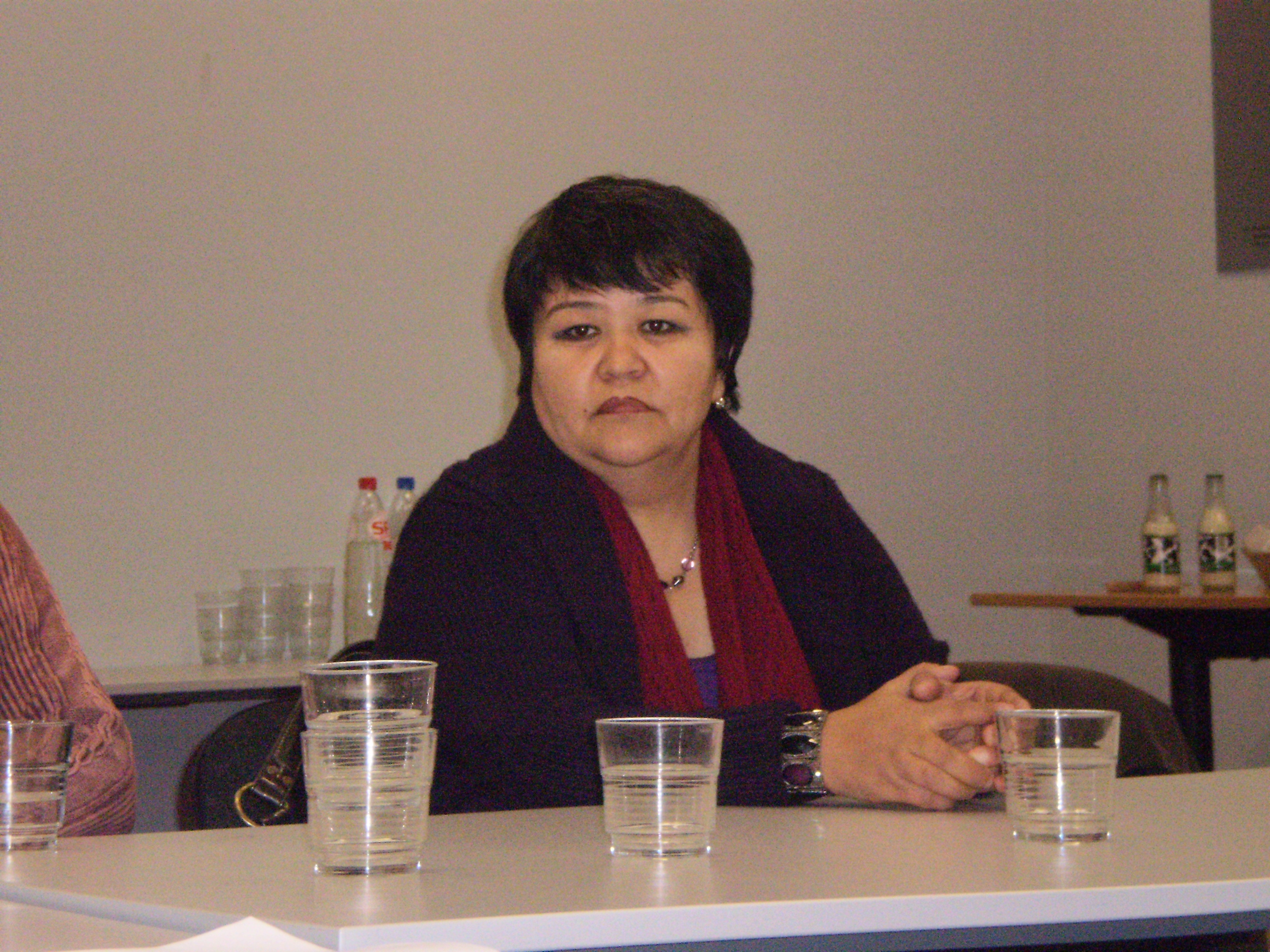
Tilder Kumichii is Programme Coordinator at Gender Empowerment and Development (GeED) based in Cameroon.
On 21 April 2015 the International Service for Human Rights [ISHR] carried an interview with Tilder Kumichii, a human rights defender from Cameroon.
‘My motivation to do human rights work stems from my personal experience as a young woman growing up in a patriarchal system, which forced me to marry very young and become a very young widow’. Tilder resolved to devote her life to support other women who find themselves in a similar situation like herself. Describing herself as a woman human rights defender, she stresses that she is involved in both teaching people to understand their rights, as well as seeking accountability for violations and abuses of human rights. Read the rest of this entry »
Posted in human rights, Human Rights Defenders, ISHR | Leave a Comment »
Tags: Cameroon, Gender Empowerment and Development (GeED), gender issues, Human Rights Defenders, human rights of women, interview, ISHR, non-discrimination, profiles, Tilder Kumichii, traditional practices, woman human rights defender
May 11, 2015
Some NGOs of a regional character do not always get the international recognition they deserve. One example is the Cairo Institute for Human Rights Studies [CIHRS] which celebrated its 21st anniversary in Tunisia on 23 may in Tunis.
It had a remarkably high level attendance including the Minister of Justice Mohammed Saleh Bin Eissa, the Moroccan ambassador, and diplomats and representatives of the embassies of the US, EU, UK, France, Belgium, Japan, Finland as well as the director of the Tunis bureau of the UN Office of the High Commissioner for Human Rights, Dimiter Chalev. Also present were many representatives of international and local civil society, among them Idris al-Yazmi, the head of the National Council for Human Rights in Morocco; al-Mukhtar al-Tarifi, the representative of the International Federation for Human Rights in Tunisia, and Bushra Belhaj, the chair of the rights and liberties committee in the Tunisian parliament.
The occasion was inaugurated with a one-minute silence in tribute to the victims of human rights abuses and terrorism in the Arab region. This was, followed by a note sent by the High Commissioner on Human Rights Zeid Bin Raad al-Husseini, who was unable to attend. In the note, he said that the Arab world was currently facing two related challenges: the transition to more stable democratic societies and the alarming increase in violence in the context of the rise of ISIS and other extremist takfiri groups. This lends even greater importance to rights organizations in the region that can analyze these difficulties, spread a culture of tolerance, promote respect for human rights, and engage in a constructive dialogue on cultures and global human rights standards. For more than two decades, Raad said, the CIHRS has been engaged in these missions, becoming a strong advocate and defender of human rights that has won international recognition and several awards. It also enjoys credibility in the region, having given a voice to those who are afraid to speak and stood up against religious bigotry and hate speech.
Tunisian Minister of Defense Farhat Horchani also sent a note of congratulations to the CIHRS, expressing his regret for being unable to attend. This may be the first time a rights group has received such a missive from a defense minister in the region. Horchani, who has no military background, was the dean of the Faculty of Law and Political Science in Tunis, the chair of the Tunisian Association for Constitutional Law, and a member of several other civic associations. A UN expert, he was also a member of the High Body for the Realization of the Objectives of the Revolution in Tunisia. The Ministry of Women apologized for not attending, but also sent its congratulations and wished the CIHRS the best for its new start in Tunisia.
During the celebration, special tribute was paid to Minister of Constitutional Bodies and Civil Society Kamal Jendoubi, the chair of the CIHRS board of directors.
CIHRS director Bahey eldin Hassan expressed his gratitude to all those who supported CIHRS in its long journey on the regional and international levels, and noted that this is an historic moment for the Arab region, with increased concern for the respect for human rights. It is no coincidence, Hassan added, that the collapsed states (Syria, Libya, and Iraq) in which terrorist chose to settle, were ruled by the worst of the dictatorships for more three decades.
[Founded as a regional organization in 1994 in Cairo, the CIHRS developed its perspective on change and its priorities and strategies based on its vision of the nature of the human rights problem in the Arab world. It began to expand with the goal of strengthening its capacities to defend human rights, establishing an office in Geneva to promote coordination and ties between rights organizations in the Arab world and the OHCHR and the UN Human Rights Council. In 2014, it opened a regional branch office in Tunis and appointed a permanent representative in Brussels; it intends to soon open a branch office in another country.]
CIHRS celebrates its 21st anniversary in Tunisia and honors chair Kamal Jendoubi » Press releases » News – StarAfrica.com – News – StarAfrica.com.
Posted in human rights, Human Rights Defenders, OHCHR | 1 Comment »
Tags: anniversary, Arab region, Arab spring, Bahey eldin Hassan, Cairo Institute for Human Rights Studies, CIHRS, democratic principles, Egypt, Human Rights Defenders, Islamist terrorist groups, Kamal Jendoubi, regional NGOs, Tunisia, UN Office of the High Commissioner for Human Rights, Zeid Bin Raad al-Husseini
May 11, 2015
On Tuesday the 5th May CAHR [Centre for Applied Human Rights at the University of York, UK] hosted a one-day workshop on Risk and Protection.

from left to right, Jamshid Gaziyev (Office of the UN Special Rapporteur on HRDs); James Savage (Amnesty International UK); Andrew Anderson (Frontline Defenders); and Alice Nah (CAHR).
The workshop examined the lessons, synergies and tensions that emerge when considering the approaches to protection that have been taken by human rights, development and humanitarian actors. The workshop sought to address how actors from adjacent fields could work together, and learn from each other, to build safe and enabling environments for HRDs and broader communities at-risk.
The workshop brought together practitioners, academics and donors from across fields. Speakers included representatives from the office of the Special Rapporteur on Human Rights Defenders, Amnesty International, Frontline, Global Witness, the Business and Human Rights Resource Centre and the Overseas Development Institute (Humanitarian Policy Group). It was supported by a grant from the Open Society Foundations Human Rights Initiative. The learnings for the workshop will be written up as an article and will feed into CAHR’s ongoing work on HRDs.
via HRD protection workshop 2015 – Centre for Applied Human Rights, The University of York.
Posted in AI, Front Line, human rights, Human Rights Defenders, OHCHR | Leave a Comment »
Tags: Alice Nah, Andrew Anderson, CAHR, Centre for Applied Human Rights, Centre for Applied Human Rights at York University, Human Rights Defenders, protection, research, York university
May 8, 2015
Here the piece in full:
“On May 5, the European Union’s Court of Justice will hear a complaint by the head of Iran’s state broadcaster, Mohammad Sarafraz, and the news director of its English-language channel, Hamid Reza Emadi. The EU imposed a travel ban and asset freeze on them because they broadcast forced confessions by tortured or mistreated political prisoners. Sarafraz and Emadi want the restrictions lifted. But even if they lose their case, they can park their money in the United States, because they aren’t on a U.S. sanctions list.
Their case shows that sanctions hurt human rights abusers and corrupt officials, as intended. And that’s a key selling point for the bipartisan Global Magnitsky Human Rights Accountability Act (S. 284/H.R. 624) being debated on Capitol Hill. The bill, based on Russia-specific sanctions legislation adopted in 2012, would begin to hold human rights abusers and corrupt officials to account around the world by denying them U.S. visas and access to our financial system.
Aside from the Russia-specific sanctions, executive orders have imposed sanctions on human rights abusers in Iran (though the U.S. sanctions list for Iran is significantly shorter than the EU’s) and on seven Venezuelan officials. Targeted sanctions on human rights abusers should be expanded worldwide, because authoritarian rulers and their lieutenants are driving a global decline in respect for human rights. According to Freedom House’s ratings, media freedom has fallen to its lowest point in 10 years, and political and civil rights overall have deteriorated for nine consecutive years.
Targeted sanctions as envisioned by the Global Magnitsky Act could start to turn this trend around. It would build on current policy of condemning human rights abuses and supporting human rights defenders by actually going after the perpetrators of abuses. Perpetrators are usually shielded by their government and expect to evade justice. If a penalty loomed over their head, they may think twice about committing their crimes.
By imposing consequences on individual abusers, the Global Magnitsky Act would force authoritarian rulers into a difficult choice: either to protect the most repugnant officials and thereby expose the cruelty of their regimes or to cut loose the officials who do their dirty work and keep them in power.
A Global Magnitsky Act also targets high-level corruption — the Achilles heel of authoritarian regimes. While human rights might seem a bit abstract to ordinary citizens, corruption is all too real. Citizens understand what’s wrong with corrupt officials getting rich at the public’s expense while everyone else struggles to make ends meet.
Corruption often fuels human rights abuses. Because corrupt officials stand to lose their ill-gotten gains if they leave office, they will go to ever-greater lengths to hold onto power. Former Ukrainian President Viktor Yanukovych was a prime example. As he and his family amassed enormous wealth, he tightened media restrictions, selectively prosecuted opposition figures and increasingly manipulated elections.
Under the Global Magnitsky Act’s targeted sanctions, no country would be singled out. And it would apply to countries like China and Saudi Arabia that tend to escape criticism for their human rights abuses because of U.S. economic or security interests.
The executive branch would decide whom to sanction. But it would have to listen to Congress’s input and explain its decisions. And chances are that governments with an extensive apparatus of repression would end up with more than seven officials on the sanctions list.
If passed, a Global Magnitsky Act probably will elicit some angry responses, like Venezuela’s cryabout “a new escalation of aggression” and “extraordinary threat” from the United States. But authoritarian governments can’t give an honest response, because they can’t admit that they harbor officials responsible for human rights abuses and large-scale corruption. If China’s leadership were sincere, it ought to welcome a Global Magnitsky Act for reinforcing President Xi Jinping’s policy of cracking down on corrupt officials and stemming their flow of assets abroad.
The prospect of angry reactions shouldn’t discourage the introduction of the Global Magnitsky Act. The United States always meets resistance when it champions human rights, because authoritarian governments prefer to avoid responsibility for their violations. We shouldn’t let their officials abuse their power and then benefit from our legal protections.
And we shouldn’t accept their insistence that we look away from human rights abuses as the price for economic or security cooperation. The Global Magnitsky Act would focus pressure on the perpetrators, not commercial relations. We should use our influence and engage authoritarian governments on our terms. We can be strong and confident enough both to cooperate with authoritarian governments where prudent and to still hold their human rights abusers and corrupt officials to account.”
Holding torturers and kleptocrats to account | TheHill.
see also: https://thoolen.wordpress.com/2015/01/29/human-rights-defenders-and-anti-corruption-campaigners-should-join-hands/
Posted in Freedom House, human rights, Human Rights Defenders | 3 Comments »
Tags: anti corruption, Daniel Calingaert, Freedom House, Global Magnitsky Act, Global Magnitsky Human Rights Accountability Act, human rights abusers, Human Rights Defenders, impunity, perpetrators, sanctions, smart sanctions, The Hill, travel ban, USA