Posts Tagged ‘Human rights defender’
February 5, 2013
Having just today reported on the new human rights defenders network created in the Arab world, I would be amiss not to draw attention to the developments of an already existing network in Africa. On 4 February 2013 the Pan-African Human Rights Defenders Network (PAHRD-Net) officially launched from Kampala, Uganda, a 3-year programme totalling 1.8 million Euros to promote a safe legal and working environment for human rights defenders (HRDs) across Africa.
“The tireless and innovative work done at the sub-regional level to protect human rights defenders will now have a dedicated venue at the Pan-African level for mutual support and reinforcement,” said Hassan Shire Sheikh, Chairperson of PAHRD-Net and Executive Director of the East and Horn of Africa Human Rights Defenders Project (EHAHRDP). Today’s launch is the result of a process started in 1998 in Johannesburg (All-Africa Human Rights Defenders Conference) and renewed in 2009 at the follow-up meeting in Kampala.
PAHRD-Net brings together the five sub-regional human rights defenders networks in Africa (the Central African HRD Network, the East and Horn of Africa HRD Network, the North Africa HRD Network represented through the Cairo Institute for Human Rights Studies, the Southern Africa HRD Network hosted by the International Commission for Jurists, and the West African HRD Network) to meet the protection needs of human rights defenders and especially to address the needs of the five groups of most-at-risk: journalists fighting to end impunity and corruption, women human rights defenders, defenders working on issues of sexual orientation and gender identity, HRDs working under oppressive regimes or in armed/post-conflict areas, and HRDs engaging with the resource extraction industries.
Human rights defenders are individuals working alone or through organizations under the goal of promoting respect for universal human rights norms. Frequently HRDs come into conflict with the entrenched local power structures of state and non-state actors through their activism. This conflict can put in jeopardy the security of the HRD and their work and family networks. HRDs are often the victims of harassment, threats, assault, injury, and death across Africa, and many are forced into exile, a move which may effectively end their advocacy for human rights. The consolidation and growth of protection mechanisms within the sub-regions will improve the responses available to mitigate these threats and develop HRDs’ ability to manage their own security effectively.
The European Commission supports the new programme under its global fund for Democracy and Human Rights, which is to underpin the implementation of the European Union Guidelines on Human Rights Defenders
For further information please contact:
Hassan Shire Sheikh – Chairperson, Pan African Human Rights Defenders Network executive@defenddefenders.org
Joseph Bikanda – Coordinator, Pan African Human Rights Defenders Network: Tel +256-312-202133, +256-312-265825, or panafrica@defenddefenders.org
Rachel Nicholson – Advocacy Officer, East and Horn of Africa Human Rights Defenders Project: Tel +256-312-265-824, +256-778-921274, or advocacy@defenddefenders.org
Posted in human rights | 2 Comments »
Tags: Africa, EU Guidelines on Human Rights Defenders, European Commission, Hassan Shire Sheikh, Human right, human rights, Human Rights and Liberties, Human rights defender, Human Rights Defenders, impunity, Johannesburg, journalists, Kampala, PAHRD-Net, Pan-African Human Rights Defenders Network, protection, resource extraction, women human rights defenders
February 5, 2013

The goal of the
International Centre for supporting Rights and Freedoms (ICSRF) is “
the provision of legal assistance to human rights activists in all countries of the world and its commitment to establish a new generation of cadres working in the field of defense of human rights“, although strangely its website
http://www.icsrf.org/ is at the moment only in Arabic and the scope of its activities seems to be restricted to the Arab-speaking world.
The creation of the new network was announced at the conclusion of a regional training course entitled “supporting skills of the defenders of human rights in the Arab countries”, held from 24 to 25 January 2013 in Kuwait with the participation of 32 participants from Kuwait, the UAE, Saudi Arabia, Bahrain and Oman including human rights organizations, human rights defenders and activists monitoring and documenting human rights violations.
The ‘Freedom – Network of Human Rights Defenders’ is established under the management of the International Centre for supporting Rights and Freedoms (ICSRF) and the members of the network will be selected from the participants who attended one of the training courses of the ICSRF or from those who work closely with the ICSRF. They will be trained on how to use international law and communication skills with media – both at the theoretical and practical level – in addition to the role of each member in monitoring and documenting violations. The ICSRF aims to create “a new generation of human rights defenders who are able to practice human rights work in a professional manner in line with the international law and the latest international developments as well as to establish a network of human rights defenders.”
Although everything points more to a regional than an international network, one can only wish them success as the Middle East is a region where Human Rights Defenders require support and freedom.
Posted in human rights | Leave a Comment »
Tags: Advocacy Organizations, Bahrain, freedom, human rights, human rights activists, Human Rights and Liberties, Human rights defender, Human Rights Defenders, human rights organizations, human rights violations, information technology, International Centre for supporting Rights and Freedoms, Kuwait, legal assistance, media, Middle East, network, Oman, protection, Saudi Arabia
February 4, 2013
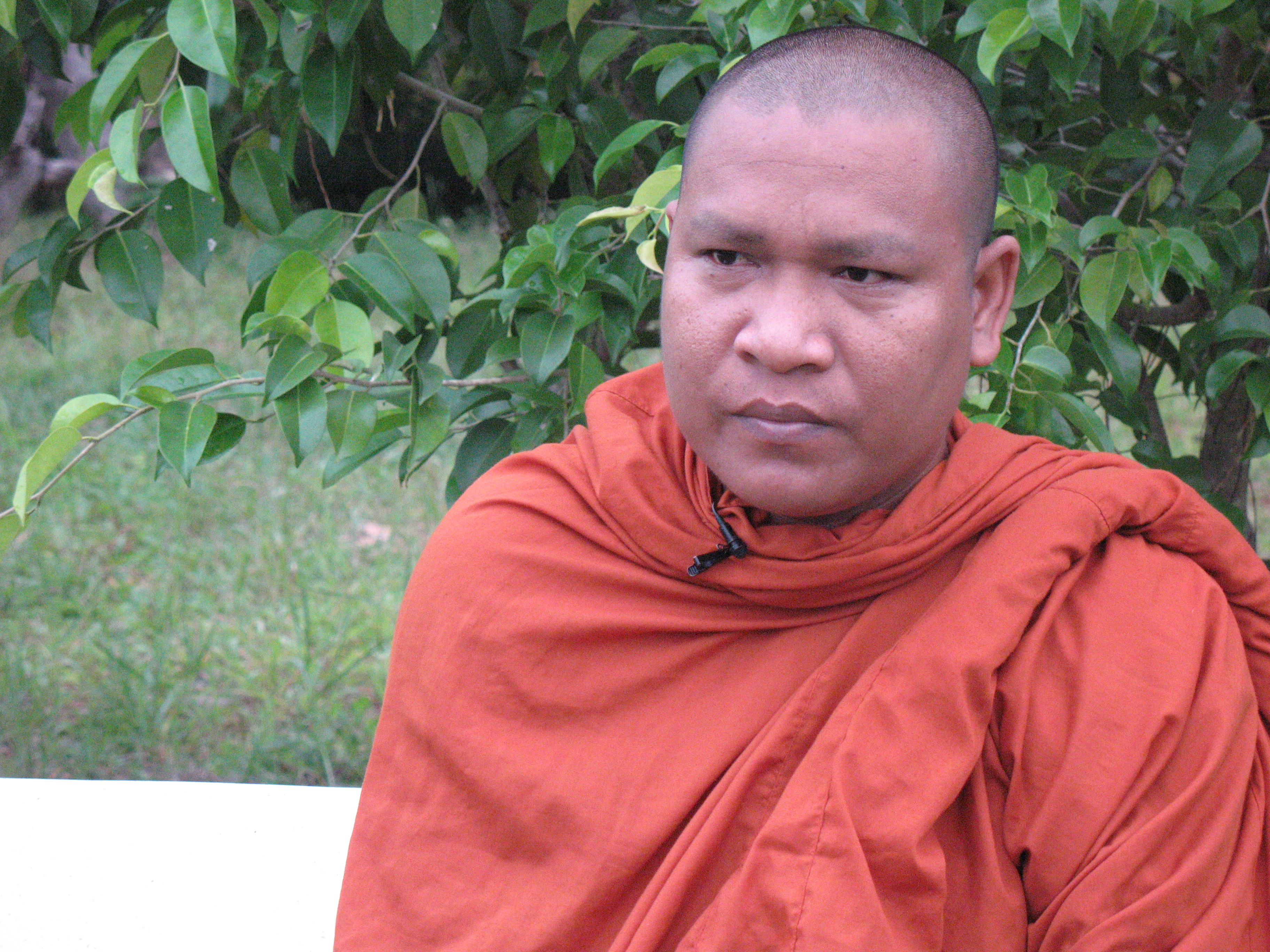
Ever since the monk Luon Sovath became the Laureate of the Martin Ennals Award 2012, I have following events in Cambodia with more than usual interest. And it is clear that the struggle for land rights there is continuing.
Luon Sovath by Dovona
Two Cambodian women human rights defenders were convicted on baseless charges in separate trials on 26/27 December 2012. Yorm Bopha was sentenced to three years in prison. Tim Sakmony from Borei Keila received a six-month sentence, partially suspended, and has been released.
Both women have been prominent in protesting against the forced eviction of their communities. Yorm Bopha was outspoken during the detention of 13 other women activists from Phnom Penh’s Boeung Kak Lake community, who were sentenced for up to two-and-a-half years’ imprisonment in May 2012. Tim Sakmony is one of the representatives of 106 families now living in tents next to the demolished site of the Borei Keila community, also in Phnom Penh. The two women are believed to have been targeted because of their leading roles in peacefully advocating for the right to adequate housing for their communities.
Further information: http://amnesty.org/en/library/info/ASA23/020/2012/en
In this context I want to draw attention to the film maker Chris Kelly and his colleagues. They have been filming in Cambodia for more than three and a half years, following the lives of three extraordinary individuals(including the Venerable Luon Sovath) caught up in the chaos and turmoil of Cambodia’s economic development. Now they are finished filming and starting the editing phase. They have launched a crowdfunding campaign to help raise funds towards the completion of the documentary.Please visit this link to see what they need to raise. If you cannot afford to donate, please help spread the word using your social media platforms, blogs, word of mouth or any other means that you can think of. http://www.blog.thecauseofprogress.com
Posted in human rights | Leave a Comment »
Tags: AI, Borei Keila, Cambodia, Chris Kelly, documentary, Human rights defender, Khmer Rouge, Land Law, Loun Sovath, Luon Sovath, Martin Ennals Award for Human Rights Defenders, MEA 2012, Phnom Penh, The Cause of Progress, Tim Sakmony, women human rights defenders, Yorm Bopha
February 3, 2013
 Human rights defenders from Iran, Cambodia, Kenya, Uzbekistan, Colombia and Mauritania are finalists for the 2013 Front Line Award for Human Rights Defenders at Risk. The jury is made up of members of the Irish and the European Parliament as well as Front Line Defenders board member Noeline Blackwell.
The winner of the 2013 Front Line Award for Human Rights Defenders will be announced at a ceremony in Dublin later in the year.
Finalists for Front Line Award for Human Rights Defenders at Risk 2013 are:
 Mam Sonando – Cambodia – has devoted his life to helping the poor and disenfranchised of Cambodia, fighting for their rights while also following the non-violent precepts of his Buddhist faith. He is a journalist and the Director of one of only three independent radio stations in Cambodia where the state has almost complete monopoly over the media, and crackdowns on free speech have led to widespread self-censorship. He is also founder and president of a national organisation called the Association of Democrats, which actively promotes democracy and human rights. He was arrested In early July 2012 and despite there being absolutely no evidence to link him with the so-called secessionist movement, he was found guilty on 1 October 2012 of instigating insurrection and incitement to take up arms against the state and sentenced to 20 years imprisonment.
 Mansoureh Behkish – Iran – is a women’s rights activist and co-founder of Mothers of Khavaran and Mothers of Laleh Park. As a supporter of non-violent resistance and a HRD she has spent the past three decades empowering survivors and victims of human rights abuses. In particular she seeks to help the mothers, sisters and wives of the thousands imprisoned or executed by the Islamic Republic authorities, to seek justice through legal and humanitarian channels.As a result of her work as a HRD, she herself has faced continuous harassment, confiscation of her passport and violation of her right to travel and three terms of imprisonment.
 David Rabelo Crespo – Colombia – has worked for 35 years in the defence of human rights. In the early years, he worked mainly in defence of social, economic and cultural rights, and later worked for worker’s rights, promoting social and union mobilisation. In more recent years, he has worked to defend the lives of others although in doing so he has put his own life at risk. Between 1998 and 2004 he was director of the Municipal Peace Council, a body devised to protect the lives of the local people who, with the arrival of the paramilitaries were at risk from the upsurge in assassinations of social and community leaders, and a series of massacres carried out with impunity. David Rabelo Crespo has devoted his life to promoting respect for human rights and international humanitarian standards in the Magdalena Medio region of Colombia, and even though he is now imprisoned he continues to work to protect the rights of political prisoners in Colombian prisons.
 Bahtiyor Hamraev – Uzbekistan – has been a dedicated campaigner for human rights in Uzbekistan for the last 15 years. He has been head of the Djizak regional branch of the Human Rights Society of Uzbekistan (HRSU) and has documented human rights violations in this region. In recent years he has become the main contact with families of imprisoned human rights defenders, helping to spread the information about their conditions in detention, the torture and ill-treatment and helping to provide the families with legal aid and financial assistance. The price he has had to pay has sometimes been far too high, but despite all of these difficulties, he has continued to work, refused to leave the country and tried to make a difference in one of the worst human rights situations in the region. Sadly, Hamraev is suffering from terminal cancer, yet he continues to send information about human rights violations and to assist families of imprisoned human rights defenders.
 Biram Dah Ould Abeid – Mauritania – has been threatened, defamed and harassed because of his work for human rights and against slavery in Mauritania. He has been arrested and ill-treated on several occasions and in April 2012 he was “disappeared” for several weeks into a secret, high-security government facility, without being able to contact to his family and without any legal assistance. It is believed he would have been killed but for the international outcry. He was released in September 2012 but has chosen to continue his work inside Mauritania.
 Ruth Mumbi – Kenya – is a passionate community mobiliser, and is the founder and current National Coordinator of Bunge la Wamama, a women’s chapter of Bunge la Mwananchi a movement that conducts strong advocacy and campaigning on issues of social justice and accountability in different parts of Kenya. She was born and still lives in Kiamaiko, a Nairobi slum and she began her involvement in community mobilisation initiatives in the late 1990s, when she was barely 16 years of age.
For further information please contact Jim Loughran, Head of Communications, Front Line Defenders
Tel +353 (0)1 212 37 50
Mobile +353 (0)87 9377586
Email: jimloughran@frontlinedefenders.org
Posted in Front Line, Human Rights Defenders | Leave a Comment »
Tags: awards, Cambodia, Colombia, Front Line, Human right, Human rights defender, Human Rights Defenders, Iran, Kenya, Mauritania, nominees 2013, Uzbekistan
February 2, 2013
Radhia Nasraoui, human rights defender and lawyer, is awarded the 2012 Olof Palme Prize, for her untiring work against torture and impunity for more than three decades. As a concerned and patriotic citizen, she has under severe pressure defended human rights in Tunisia and challenged authorities under the motto “We must use our voices. Not saying anything makes us accomplices of the oppression”.
Waleed Sami Abu al-Khair receives the 2012 Olof Palme Prize for his strong, self-sacrificing and sustained struggle to promote respect for human and civil rights for both men and women in Saudi Arabia. Together with like-minded citizens and colleagues, Waleed Sam Abu AlKhair does so with the noble goal of contributing to a just and modern society in his country and region.
THE OLOF PALME PRIZE, the Swedish labor movement’s most prestigious award since 1987 when the Olof Palme Fund’s Board decided to establish an annual prize for a particularly significant achievement in the spirit of Olof Palme. The prize consists of USD 75 000.
Posted in Human Rights Defenders | 1 Comment »
Tags: Advocacy Organizations, Human right, human rights advocates, Human Rights and Liberties, Human rights defender, labour movement, Middle East, Olof Palme, Radhia Nasraoui, Saudi Arabia, Sweden, Tunisia, Waleed Sami Abu al-Khair
January 31, 2013
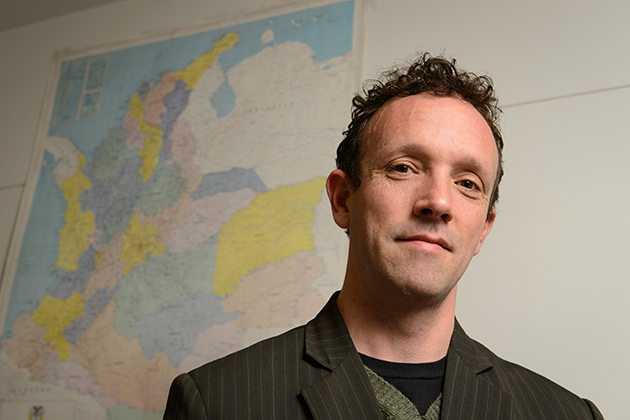
When writing about individual Human Rights Defenders the tendency is to give attention to those in the front line who are in immediate trouble. This time I want to refer to a HRD teaching at the University of Connecticut based on a blog post by Kenneth Best of 30 January 2013. It concerns Luis van Isschot, an assistant professor of history, who specializes in the study of human rights in Latin America ( photo by Peter Morenus/UConn Photo).

Conversation around the dinner table in the van Isschot home in Montreal was a bit different than in most Canadian homes. Growing up with a Spanish, Peruvian, and Dutch family heritage, Luis van Isschot listened to discussions about Latin American history and politics led by his father, a physician who treated families in a clinic based in Montreal’s Latino community…….
…His path to a doctoral degree developed from his volunteer work in Guatemala and later in Colombia, where he served as a human rights observer. It was during his time in Colombia that a friend who was a university professor and a historian told him that one of the most important books of Colombian history was written by a professor from his hometown of Montreal, Catherine Le Grand at McGill University, and that he should look her up. He did, and it led to his enrollment in the doctoral program. “She made it seem that you could be a wonderful teacher, a cutting-edge scholar, and have a balanced life of engagement in your community, and that the Ph.D. was a way of doing that,” van Isschot says. “The university is central to the community, not apart from it. That makes sense to me.”
He later became involved with MEA Laureate 2001 Peace Brigades International, a nonpartisan organization that sends international volunteers to areas of conflict to provide protective accompaniment to human rights defenders threatened by political violence in 11 nations, including in Asia, Africa, and Latin America. In addition to serving as a human rights observer in Colombia, he also traveled to the Great Lakes Region of Africa, doing research in the Democratic Republic of Congo, Rwanda, and Burundi.
“It was a really important experience for me to go somewhere where the language of human rights and social justice and the understanding of history really enriched my own understanding of what I was working on in Latin America,” he says. His experience in Colombia led him to focus his doctoral studies on human rights activities in that nation’s oil capital, Barrancabermeja, where he lived for a year. The city was the center of a major urban war between Colombian paramilitary groups and leftist guerillas. Between 1998 and 2002, in a city of 300,000 there were about 2,000 violent murders. “It was a devastating period. The relationships I made with Colombian human rights activists, teachers, and scholars convinced me that I needed to find some place to explore the issues,” he says.
His book, The Social Origins of Human Rights: Protesting Political Violence in Columbia’s Oil Capital, 1919-2010, is near completion, and scheduled to be published in early 2014. His new research project is titled “When the Courts Make History: the Impact of the Inter American Court of Human Rights in Latin America’s Conflict Zones,” and examines the historical changes set in motion by the pursuit of justice across borders.
http://today.uconn.edu/blog/2013/01/focusing-on-human-rights-with-a-latin-american-perspective/
Posted in human rights, Human Rights Defenders | Leave a Comment »
Tags: Africa, Canada, Colombia, Democratic Republic of Congo, Human rights defender, human rights education, human rights teaching, Latin America, Luis van Isschot, McGill University, PBI, Peace Brigades International, research, University of Connecticut, USA
January 29, 2013
On 28 January 2013, a number of Brazilian civil society organisations and social movements addressed an open letter to the Coordinator of the National Programme for the Protection of Human Rights Defenders (NPPHRD) and the Presidency regarding the security situation for human rights defender Alexandre Anderson de Souza.
Alexandre Anderson de Souza is head of the Associação dos Homens do Mar – AHOMAR (Association of Seamen), an organisation set up to defend the rights of the fisherfolk working in Rio de Janeiro, and particularly those affected by the construction of a gas pipeline for Petrobras. AHOMAR argues that there are reports of environmental permit irregularities in the construction of the pipeline and it will have a negative impact on local flora and fauna as well as on the livelihood of those who fish in those waters in the Guanabara Bay.
Alexandre Anderson de Souza has suffered a number of threats to his life and has been under the NPPHRD since 2009, but the federal government has delegated the responsibility to authorities in the state of Rio de Janeiro, where he and his family live. However, the human rights defender and a number of Brazilian civil society organisations and social movements that support him, have been repeatedly expressing their discontent with the protection offered by the state programme and the conditions in which Alexandre Anderson de Souza, his wife Ms Daize Menezes and their children have been forced to live. As the situation has worsened the human rights defender and his family have had to relocate to different hotels in the city of Rio de Janeiro but the locations were highly insecure. The buildings did not have 24-hour reception personnel and the rooms they were accommodated in had no telephone. The protection programme has been unable to ensure Alexandre and his family’s return to their residence in Magé, and as a result the human rights defender remains unable to resume his work at AHOMAR. Four members of AHOMAR have been killed to date.
Another point of discontent with the state protection programme has been the unsatisfactory level of legal support provided to the human rights defender by the non-governmental organisation (NGO) Projeto Legal (Legal Project). Projeto Legal has signed an agreement with the government of the state of Rio de Janeiro, in the context of the state protection programme, to provide legal support and advice to the human rights defenders included in the programme. After repeated complaints about the NGO’s inaction in several instances, Alexandre Anderson de Souza received information from a reliable source that one of Projeto Legal’s main funders is Petrobras, the same oil company whose actions the human rights defender and his organisation AHOMAR have been trying to hold accountable for environmental damages. The information was confirmed on the websites of both Petrobras and the NGO, but neither they, nor the government of the state of Rio de Janeiro, have clarified the terms of the agreement, raising doubts over the impartiality of the organisation and a conflict of interests.
The open letter signed by several civil society organisation addressed the main concerns of Alexandre Anderson de Souza and other NGOs working with human rights defenders in the country. While welcoming the formal establishment of the state of Rio de Janeiro’s protection programme for human rights defenders through the Decree 44.038 signed on 18 January 2013, the letter asks for Alexandre and his wife Daize, as well as other human rights defenders who are currently under the protection of the state, to have their security ensured by the National Protection Programme until the state protection programme is fully operating and able to fully ensure the safety of human rights defenders in the territory of the state of Rio de Janeiro.
Front Line Defenders is gravely concerned following reports of the vulnerable security situation of human rights defender Alexandre Anderson de Souza and his family, and of other human rights defenders under the protection of the state of Rio de Janeiro.
http://racismoambiental.net.br/2013/01/carta-aberta-ao-coordenador-nacional-do-programa-de-protecao-aos-defensores-de-direitos-humanos-sr-igo-martini/#more-85964
Posted in Front Line, human rights, Human Rights Defenders | 2 Comments »
Tags: Alexandre Anderson de Souza, Brasil, environmental issues, Front Line, Front Line Defenders, human rights, Human rights defender, Non-governmental organization, Petrobras, protection, threats
January 28, 2013
On 24 January 2013, human rights defender Martha Díaz was targeted again with a death threat.
On 24 January, a package in a manila envelope was delivered to the residence of Martha Díaz, which contained a mass card and note with letters cut from a newspaper. The letters stated: “You are dead, you are a collaborator of the guerilla, we are not joking, one of you is going to die”[translated from Spanish]. On 22 January, the human rights defender had already received a pamphlet sent by a group who identified themselves as “Los Rastrojos”.
Martha Díaz is Director of AFUSODO, an organisation of relatives of victims of extrajudicial executions and a member organisation of MOVICE (National Movement of the Victims of State Crimes). Since its creation, AFUSADO has received some 27 threats. Front Line Defenders issued an urgent appeal https://www.frontlinedefenders.org/node/20842 on death threats received by Martha Díaz on 14 November 2012, and has issued previous appeals on threats against human rights organisations in the Cauca and Valle del Cauca departments.
Posted in Front Line, Human Rights Defenders | Leave a Comment »
Tags: Colombia, Death threat, death threats, Front Line, human rights, Human rights defender, impunity, Martha Diaz, MOVICE
January 26, 2013
The Human Rights House Foundation (HRHF) was informed today by its partners that prominent human rights defenders were arrested in Baku, Azerbaijan, in connection with a protest held on Saturday 26 January 2013:
Hundreds of people have demonstrated in Azerbaijan’s capital to express solidarity with recent protests in the central town of Ismayilli.More than 40 participants to the peaceful protests were detained, including prominent blogger Emin Milli, Rafto Prize winner 2009 Malahat Nasibova, human rights lawyer Intigam Alieyev, as well as investigative journalist Khadija Ismayilova.The arrests happen to come two days after the Parliamentary Assembly of the Council of Europe (PACE) adopted a resolution on the human rights situation in Azerbaijan and called upon the authorities to stop attacks and harassment against human rights defenders. The Azerbaijani human rights defenders present in Strasbourg held a joint press conference in the Council of Europe buildings on Wednesday 23 January 2013.
“By arresting within a crowd of protesters also these prominent human rights defenders, Azerbaijan authorities show that they use detention as a tool to punish critical voices, few days after those critical voices expressed their opinions at the Council of Europe” says HRHF.
Posted in human rights | 2 Comments »
Tags: Azerbaijan, Baku, Council of Europe, Emin Milli, freedom of assembly, freedom of expression, harassment, human rights, Human rights defender, Human Rights Defenders, Human Rights House Foundation, Intigam Alieyev, Malahat Nasibova, Parliamentary Assembly of the Council of Europe
January 25, 2013
Front Line Defenders launched today its 2013 Annual Report on human rights defenders, which rather confusingly in fact covers 2012. It highlights developments in the
situation of human rights defenders in 2012 and analyses the situation in each region of the world. It concludes: “The sad reality is that while governments
proclaim their support for human rights and their respect for the work of human rights defenders in international fora, in practice, human rights defenders face a daily struggle for survival.”
In 2012, Front Line Defenders issued 287 urgent appeals on 460 human rights defenders at risk in 69 countries; it provided 267 security grants and trained 358 human rights defenders.
The Report, currently in English, will shortly be available in French, Spanish, Russian, Arabic and Farsi.The Report is available at
http://www.frontlinedefenders.org/node/21376 <http://www.frontlinedefenders.org//node/21376>
Posted in Front Line, Human Rights Defenders | Leave a Comment »
Tags: 2013, annual report 2012, Front Line Defenders, human rights, Human Rights and Liberties, Human rights defender, Human Rights Defenders




 Hans Thoolen on Human Rights Defenders and their awards