Posts Tagged ‘Human rights defender’

Over 100 NGOs write to Prime Minister of Denmark to pressure Bahrain to release Abdul-Hadi Al-Khawaja.

January 27, 2021
Over 100 NGOs urge Bahraini king to release rights defender Abdul-Hadi Al-Khawaja

The Danish government should renew and strengthen efforts to secure the immediate and unconditional release of prominent human rights defender and dual Danish-Bahraini citizen, Abdulhadi Al-Khawaja, 108 international and Bahraini rights groups said on 24 January 2021 in a joint letter to Prime Minister Mette Frederiksen of Denmark. As reported by the AhlulBayt News Agency (ABNA).

The human rights defender, Abdulhadi Al-Khawaja, 59, is serving a life sentence in Bahrain’s Jaw prison for his peaceful political and human rights activities, in violation of his right to freedom of expression. [see also https://humanrightsdefenders.blog/tag/abdulhadi-al-khawaja/]

There is no doubt that the conviction and sentencing of Abdulhadi al-Khawaja was unfair and oppressive and tried to silence his prominent voice demanding the rights of Bahrainis,” said Joe Stork, deputy Middle East director at Human Rights Watch. “Al-Khawaja should not have had to spend a single minute behind bars, yet he has been unjustly detained for almost a decade.

He had worked as the Middle East and North Africa protection coordinator for Front Line Defenders from 2008 until early 2011. See: https://www.frontlinedefenders.org/en/case/case-history-abdulhadi-al-khawaja

https://en.abna24.com/news//over-100-ngos-urge-bahraini-king-to-release-rights-defender-abdul-hadi-al-khawaja_1108546.html

Writer Tran Duc Thach sentenced to 12 years in Vietnam

December 22, 2020

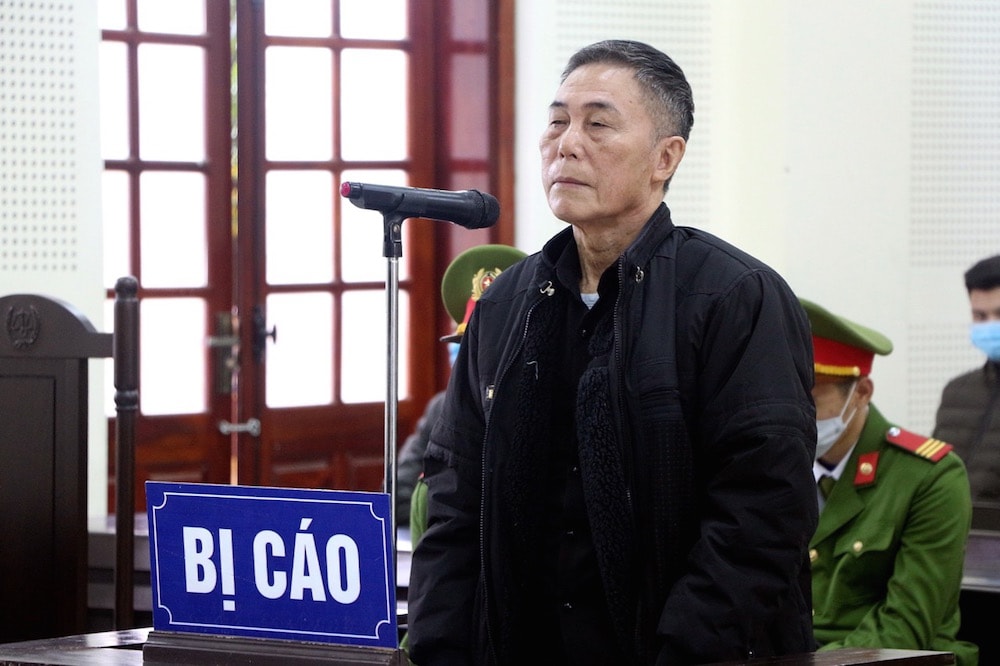
PEN America reported on 17 December 2020 that writer Tran Duc Thach was sentenced to 12 years in Vietnamese prison.

This picture taken and released by the Vietnam News Agency on 15 December 2020 shows Vietnamese writer Tran Duc Thach during his court trial in Nghe An province, as he was sentenced to 12 years in jail. -/Vietnam News Agency/AFP via Getty Images

Vietnamese writer Tran Duc Thach was convicted on charges of subversion under Article 109 of the country’s criminal code. He was arrested in April for Facebook posts criticizing corruption in government and human rights abuses in the country.

Poet, blogger, and human rights defender Tran Duc Thach was sentenced to 12 years in prison and three years probation. PEN America condemned the sentencing today as a repressive attack on free expression in the country. “This is a shocking and shameful outcome in a case that never should have been brought to trial in the first place. Thach should be celebrated for his civic engagement and advocacy, not subjected to mistreatment and imprisonment,” said James Tager, deputy director of free expression research and policy at PEN America. “This draconian sentence is another blatant violation of basic human rights and stifling of freedom of expression by the Vietnamese state in the name of national security. We call for his immediate and unconditional release.

Thach was initially arrested on April 23 for “activities against the people’s government.” Authorities reportedly used several Facebook posts he published criticizing government corruption and human rights violations as the primary implicating evidence. During the trial, provincial prosecutors claimed that Thach’s activism and writings “threatened social stability, encroached upon national independence and socialism, reduced people’s trust in the political institution of the state of Vietnam, and infringed upon national security and social safety and order.”

Thach is a prolific writer, whose work includes his 1988 novel Doi Ban Tu (Two Companions in Prison), his memoir Ho Chon Nguoi Am Anh (A Haunting Collective Grave), and his poetry collection Dieu Chua Thay (Things Still Untold). His writing commonly deals with human rights issues within Vietnam. Thach is also co-founder of the Brotherhood for Democracy, a civil society group that has been repeatedly targeted by authorities for their activism, with several members of the group apprehended in recent years. Thach has faced repeated harassment for his writing and his activism.

Thach is just one of those who has been targeted by the Vietnamese government’s heightened campaign against internet personalities, rights advocates, and independent journalists, a campaign that has become more pronounced in the run-up to the country’s 13th National Congress scheduled for January 2021. According to the NGO Vietnam Human Rights Defenders, there have been 17 subversion-based convictions this year alone while 31 individuals are currently held in pre-trial detention. Additionally, the government has leveraged the pandemic to arrest dissidents on the pretext of public security and stifling COVID-related disinformation.

PEN America has been active in advocating for other targeted or imprisoned Vietnamese writers, including Pham Doan TrangNguyen Ngoc Nhu Quynh (“Mother Mushroom”), and Nguyen Huu Vinh, and Nguyen Thi Minh Thuy. In PEN America’s 2019 Freedom to Write Index, released earlier this year, the organization noted that the lengthy imprisonment of bloggers Truong Duy Nhat and Ho Van Hai “demonstrate the longstanding risks associated with online expression in the country.”

See also: https://humanrightsdefenders.blog/2020/12/01/facebook-and-youtube-are-allowing-themselves-to-become-tools-of-the-vietnamese-authorities-censorship-and-harassment/

Good news: Iran temporarily frees human rights defender Nasrin Sotoudeh

November 9, 2020

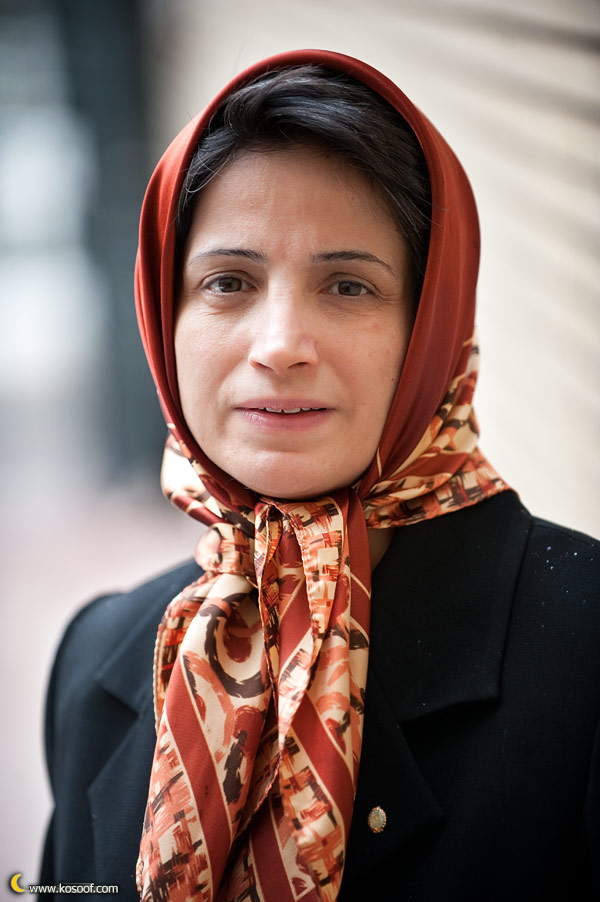
Many media outlets (here the Guardian) reported on Saturday 7 November 2020 that Iran has temporarily released Nasrin Sotoudeh, a prominent human rights lawyer who was jailed two years ago on spying and propaganda charges. Sotoudeh’s release followed warnings last month by human rights groups that her health had severely deteriorated after she staged a six-week hunger strike to demand the release of political prisoners and rights activists.

{see: https://humanrightsdefenders.blog/2020/10/07/un-rights-chief-urges-iran-to-release-jailed-sotoudeh-and-other-human-rights-defenders-citing-covid-19-risk/ as well as:https://humanrightsdefenders.blog/2019/06/13/1-million-people-demand-that-iranian-government-release-nasrin-sotoudeh/ ]

“Nasrin Sotoudeh … went on furlough with the agreement of the assistant superintendent of the women’s prison,” the judiciary’s Mizan news agency said, without giving further details.

Sotoudeh, 57, who has represented opposition activists including women prosecuted for removing their headscarf, was arrested in 2018 and charged with spying, spreading propaganda and insulting Iran’s supreme leader.

Sotoudeh has been recognised widely with seven major human rights awards.

https://humanrightsdefenders.blog/2020/04/24/martin-ennals-award-laureates-rally-to-demand-freedom-for-their-imprisoned-fellow-award-winners/

See also: https://www.lawgazette.co.uk/news/sotoudeh-thanks-global-colleagues-as-she-is-freed-for-now/5106333.article

https://www.theguardian.com/world/2020/nov/07/iran-temporarily-frees-human-rights-lawyer-nasrin-sotoudeh

BBC podcast on the framing of video monk Luon Sovath

November 2, 2020

On 31 October 2020 the BBC published a very interesting podcast on Luon Sovath, the Buddhist monk who has long been a thorn in the side of the Cambodian governmen and has been targeted by a state-sponsored disinformation campaign. [see: https://humanrightsdefenders.blog/2020/08/23/more-details-about-luon-sovaths-framing-and-facebooks-role/] The podcast is presented by Reha Kansara.

https://www.bbc.co.uk/sounds/play/w3cszvsm

For the film on the MEA 2012 laureate, see:

https://www.bbc.co.uk/sounds/play/w3cszvsm

In memoriam Diallo Abdul Gadiry from Guinea

October 29, 2020

On Wednesday 28 October 2020 Hassan Shire Sheikh, Executive Director of DefendDefenders, wrote the following obituary in memory of Diallo Abdul Gadiry

On behalf of AfricanDefenders (Pan African Human Rights Defenders Network) & DefendDendefenders (East and Horn of Africa Human Rights Defenders Project) I would like to pay a tribute to a friend we honour and respect. His great love of people was rooted in his faith.

As African human rights defenders fraternity, our hearts are filled with sorrow as we mourn Diallo’s death. Loosing someone we love is nothing easy, Diallo’s passing is even more painful to us. Knowing that we were part of his life, we can realize that we were blessed to have been able to share in his life.

Diallo was a founding member of the West African Human Rights Defenders Network, a Steering committee member of AfricanDefenders and the Forum for the Participation of NGOs to the ACHPR Sessions. We can’t weigh the energy he invested, the enthusiasm and dedication he put to promote and protect human rights in West Africa. Given the difficulties of travelling within the continent, Diallo would often times cross rivers or ocean move through the desert, and use many inter-regional connections to attend sessions of the African Commission on Human and People’s Rights to raise awareness or simply for solidarity with others.

We note numerous sacrifices and risks he made for the protection of the vulnerable. This courageous intellectual was an investigative journalist in West Africa who never shied away from controversial topics. Diallo leaves behind a legacy of enriched human rights defenders across West Africa and his loss will be felt deeply by many, especially those for whom he secured justice.

May the soul of our departed friend rest in eternal peace.

https://www.seneweb.com/news/Necrologie/guinee-deces-du-president-des-droit-de-l_n_332120.html

Human rights defender’s profile: Leon Dulce from the Philippines

September 30, 2020
human rights defender

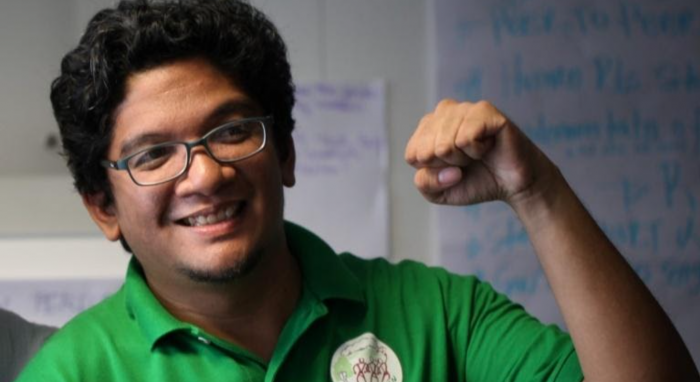
On 24 September.2020 the International Service for Human Rights (ISHR) published the human rights defender’s story of Leon Dulce from the Philippines. Leon Dulce is the National Coordinator for Kalikasan People’s Network for the Environment, an organisation that prevents environmental exploitation and protects marginalised communities from harm caused such exploitation. Working closely with different networks and alliances, his responsibilities include legislative advocacy, undertaking fact-finding investigations, facilitating grassroots dialogues, and engaging with government agencies.

Hi Leon, tell us about yourself and how you decided to defend human rights

I am Leon Dulce, a 31 year-old environmental defender from the Philippines.  Choosing the path less travelled in protecting our right to a balanced and healthful ecology was a confluence of factors throughout my life, from the formative influence of my parents, both development workers, to my exposure to student activism in the University of the Philippines.  The life-changing decision to be a full-time activist came in 2011 when I decided to join the Kalikasan People’s Network for the Environment (Kalikasan PNE) to be one of its youth organisers. I haven’t turned back ever since.

How does defending rights affect your personal life?

Being an environmental defender has shaped my worldview to live with simplicity, to tap your inner humanity, to be conscientious of your work knowing the lives of people and our planet itself are at stake. I echo the words of Albert Einstein, “Man can find meaning in life, short and perilous as it is, only through devoting himself to society.”

Macintosh HD:Users:leon:Downloads:Links:Image-1.jpg

At the 2017 International Human Rights Day protest mobilisations in the Philippines. Photo credit to Kalikasan PNE

What continues to inspire you to defend human rights?

We continue to be inspired by the living, breathing victories of people power in working towards a better world. We have seen that it is possible for corporations to be shuttered down and made to pay reparations, murderous generals put in jail, and fascist dictators to be toppled and held to account, all at the hands of people power.

Businesses should realise that the whole of society benefits from a premium investment in due diligence for our rights, environment, and climate. When nobody is left behind, everyone is on board to push through with building the cogs and wheels of society.

There are no shortcuts, especially with multiple conflicting interests over natural resource-rich environments where the powerful can easily override the marginalised.

Are you encountering any threat because of your work, and if so, what could be done at national / international level to help you work in safer conditions?

We have been repeatedly tagged as enemies of the State in a worsening crackdown on human rights defenders by the regime of President Rodrigo Duterte. Our office has been constantly harassed and almost raided by the police last year. Our members on the ground have been murdered in the dead of the night.

We hope the international community joins us in urging the United Nations to conduct an independent investigation into the human rights situation in the Philippines. We hope the inquiry would lead to greater action from UN experts and member States to hold the Duterte regime to account.

What is your hope for the future? 

I hope to live in that better world, a just and humane society in harmony with nature and climate, before I come to the end of my days.

What was the human rights problem you were addressing? 

We are campaigning with local indigenous Tuwali communities to close down the 10,266-hectare Didipio gold-copper mine of Australian-Canadian corporation Oceanagold. This mining project has figured in a long history of civil-political and socio-economic rights violations against the indigenous communities in the remote mountain villages of Kasibu Municipality since it acquired a contract over the mineralised lands it currently operates on in Nueva Vizcaya province in 2006.

Why did you decide to choose this UN mechanism to help you solve it? 

We decided to engage with the UN Special Procedures hoping that a communication from UN Special Rapporteurs would pressure the Duterte government to take action, even in spite of its bristling stance against the UN.

If the Special Rapporteurs respond with a country visit, whether formal or academic, it would create high-profile attention for the Tuwali people’s struggles against Oceanagold. It would be a show of solidarity that would raise the morale of the defenders on the ground.

What happened at the UN?

On 13 February 2019, a total of nine Special Procedures mandate holders sent a joint communications letter to the Duterte government echoing the human rights concerns we raised.

Later, on 30 April 2020, Special Rapporteurs would cite this communication once again in urging the Duterte government to respect indigenous people’s rights in response to an earlier violent dispersal of the Tuwali protester’s ongoing barricade against the mine.

What was the impact on the ground? 

We believe the intervention from the UN experts is a significant factor in making the Duterte government think twice from railroading then the impending renewal of Oceanagold’s contract agreement.

The UN Communication helped create the momentum that led to the provincial government’s issuance of a restraining order against the Oceanagold mine, and the community organisations’ launching of a people’s barricade enforcing this restraint through direct action.

Do you have any tips for other defenders using this mechanism? 

Crucial to our success in engaging the UN Special Procedures is in how we strategically located it within an interplay of various advocacy tactics. The UN intervention fed into the direct action of organised communities of defenders, and helped galvanise a broad support network from churches, local governments, and civil society.

The intervention was also leveraged in a communications and lobbying strategy that exposed the national government’s collaborationism with irresponsible big businesses, discouraged their usual ‘rubber-stamping’ for these mining corporations, and deterred full-on reprisals against the defenders.

George Bizos: Anti-apartheid lawyer who defended Mandela dies aged 92

September 10, 2020
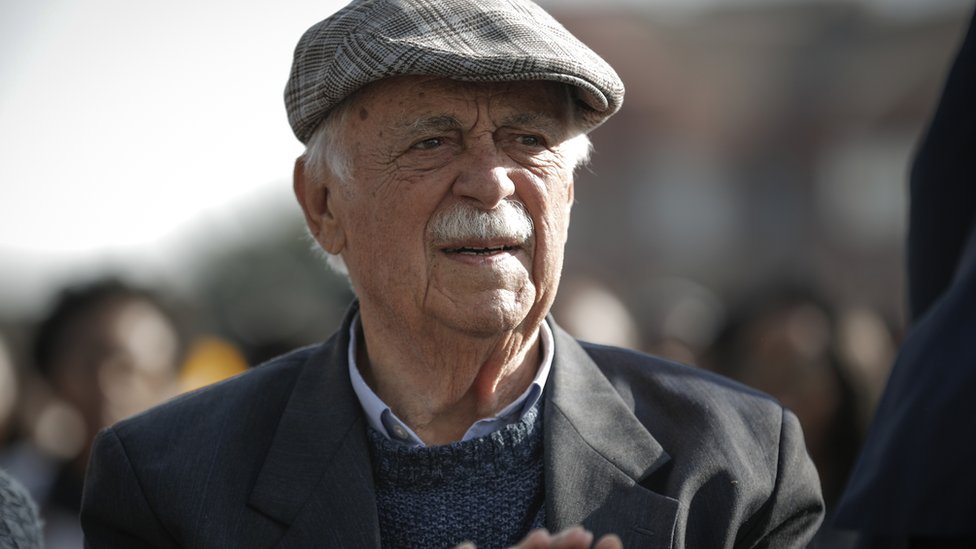
Nelson Mandela's lawyer and friend George Bizos is pictured in Johannesburg in 2018
 
George Bizos is best known for defending Nelson Mandela at his trials – image copyrightAFP
Many media reported that South African human rights lawyer George Bizos, who famously defended Nelson Mandela, has died aged 92 (here the BBC).
After representing some of the country’s best known political activists during the apartheid years, Mr Bizos became one of the architects of South Africa’s new constitution. President Cyril Ramaphosa announced his death, saying Mr Bizos had “contributed immensely to our democracy”.
George Bizos is most widely known for his work with Nelson Mandela. The pair met while studying law in Johannesburg and Mr Bizos went on to represent his friend and other anti-apartheid figures in various court cases. He was one of the lawyers who represented Mandela at his treason trial, which began in 1956. He also represented Mandela during the Rivonia Trial, when he and other anti-apartheid activists were sentenced to life imprisonment in 1964 on charges of seeking to overthrow the apartheid government.
George Bizos was born in Greece but came to South Africa at the age of 13 as a World War Two refugee. Before moving to South Africa, he and his father helped seven New Zealand soldiers to escape Nazi-occupied Greece. He fell out of education for an extended period of time and worked instead in a Greek shop, after arriving in Johannesburg with no English. He later trained as a lawyer at South Africa’s Witwatersrand university, before being admitted to the Johannesburg Bar. After the end of white minority rule, Mr Bizos helped to write South Africa’s new constitution. He also represented families of anti-apartheid activists who had been killed during apartheid at the Truth and Reconciliation Commission. In one of his last major trials, he secured government payouts for families of 34 mine workers who were killed by South African police in 2012.
https://www.bbc.com/news/world-africa-54094248

Appeal to support human rights defender Waldo Albarracín in Bolivia

July 8, 2020

Human rights defender Waldo Albarracín continues to be the subject of death threats and may be the target of surveillance, as a result of his work in Bolivia. Since October 2019, the defender has been targeted on a regular basis with threatening messages via his Facebook account by known and unknown individuals. The messages include threats to incriminate him and to set his house on fire.

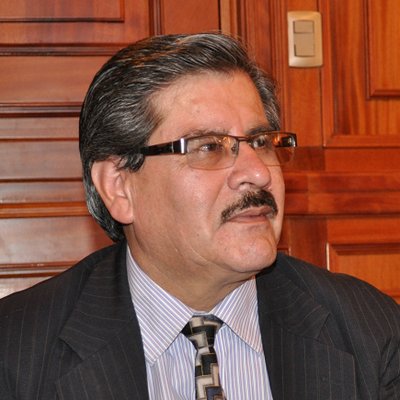
Waldo Albarracin

About Waldo Albarracín: Waldo Albarracín is a well established and widely recognised human rights defender in Bolivia. He was the President of the Permanent Assembly of Human Rights of Bolivia (APDHB) from 1992 to 2003 and the Bolivian Ombudsman from 2004 to 2010. He is the current Rector of Universidad Mayor de San Andrés in La Paz and President of the National Committee for the Defence of Democracy (CONADE), a civil platform defending political rights.

1 July 2020 Front Line Defenders called for urgent action. Those of you who want to take action in this and other cases of threatened HRDs, should subsctibe to Front Line’s almost daily information.

Download the Urgent Appeal

In May 2020, Waldo Albarracín was mentioned as a target in a threatening video posted and circulated on social media by the illegal armed group Resistencia Juvenil Cochala. At 1:10 in the video, one man of a group of six men, hooded and armed, stated: “Resistencia Juvenil Cochala will fight on behalf of the Bolivia against Waldo Albarracín and Bolivian political leaders.” The armed group currently exceeds 5,000 members online and describes itself as a citizen’s platform, formed to fight against tyranny and in promotion of democracy in Bolivia. According to the group, it has no one leader.

In June 2020, the Fake Antenna Detection Project, an initiative established by the South Lighthouse organisation, released its findings that Waldo Albarracín, along with a number of human rights organizations and academic entities, may have had their mobile phones intercepted. The study identified 24 suspicious antennas, capable of interfering with mobile phones, some of which were located by the Office of the Permanent Assembly of Human Rights in Bolivia and also by the University Mayor de San Andres, both places where Waldo Albarracín works from. It has been suggested by local media that the interceptions were orchestrated by the military and government authorities, however the authorities are yet to comment publicly on the existence of the antennas and how permanent they are. South Lighthouse researches and monitors surveillance activities and abusive technological practices threatening human rights, security, and privacy in Latin America and other parts of the world.

Front Line Defenders has previously expressed concern regarding the risks faced by Waldo Albarracín. Although the human rights defender has faced risks since 2004 as a result of his human rights work, there has been a worrying escalation since the protests in 2019 regarding the results of the presidential election. On 10 November 2019, the defender’s house was set on fire by a crowd of around 500 people, whilst his family were still inside.

..Front Line Defenders believes he is being targeted solely as a result of his peaceful and legitimate human rights activities.

https://www.frontlinedefenders.org/en/case/ongoing-death-threats-against-and-potential-surveillance-waldo-albarracin

Oak Human Rights Fellow is migrants’ rights defender Nasim Lomani

June 13, 2020

On 12 June 2020 the Oak Institute for Human Rights announced as the 2020 Oak Human Rights Fellow: Nasim Lomani, a human rights defender and migrants’ rights activist, who has been working in Greece and across the EU for over a decade.

As a then 16-year-old Afghanistani, Lomani left for Greece nearly two decades ago. Upon arrival, he was arrested and charged with illegal crossing of the Greek border, ultimately serving a two-year prison sentence. During the process of appealing to the court for having his rights as a refugee abused and violated, he learned about the bureaucratic difficulties that all migrants face while trying to enter Europe. He joined a number of solidarity groups, such as the Network for Social Support to Immigrants and Refugees and the Migrants’ Social Center in Athens, where he coordinated free language classes and the Athens Anti-racist Festival. He also engaged in solidarity work that involved lawyers, human rights defenders, as well as refugees and migrants.
 Nasim Lomani

Nasim Lomani © Marios Lolos

In Greece, Lomani, founded City Plaza – Refugees Accommodation Solidarity Space in Athens – where he organized daily life for migrants, managed media communication, coordinated international volunteers, and served as the public representative to researchers, students, and academics. City Plaza, once one of the largest solidarity migrant accommodations in Athens, was an abandoned hotel in central Athens repurposed to offer migrants the right to live in dignity in the urban space with access to social, economic, and political rights. Lomani lived inside the now-closed City Plaza for the entirety of its existence. Over almost three and half years, it welcomed 3,000 people, lodging up to 400 at a time.  The story of City Plaza is known as an example of self-organization, self-management, and everyday processes to help empower refugees. In essence, it was a political statement against Europe’s use of militarized borders, repression, and systematic violation of human rights and refugees’ rights.

Lomani was also involved in organizing the largest NoBorder refugee and migrant solidarity camp to date, leading to the closure of the Pagani Detention Center on Lesvos island in 2009. 

Lomani is at increasing risk, as migration solidarity work and defending human rights in Greece, and Europe at large has been criminalized in recent years. Helping refugees and criticizing the human rights violations by authorities is now a major offense by both national and European law. In Greece, this has led to large-scale evictions of housing sites for refugees and asylum seekers and to increasing arrests and trials of activists on the ground. 

Lomani has been active in the human rights field since he was a child, so the Oak Fellowship will come as a much-needed respite.

Established in 1997 by a grant from the Oak Foundation, the Oak Institute for Human Rights hosts a Fellow each year. The fellowship offers an opportunity to spend the fall semester in residence at Colby, where they teach, conduct research, and raise awareness about important global human rights issues.

http://www.colby.edu/news/2020/06/12/migrants-rights-activist-to-be-2020-oak-human-rights-fellow/

Breaking: Human Rights Defender Nabeel Rajab in Bahrain finally released

June 10, 2020

Human rights activist Nabeel Rajab gestures as he leaves a police station in Manama, Bahrain, on May 28, 2012. Rajab, who had been sentenced to five years in prison for tweets alleging abuse at Bahrain’s prisons, has been released amid the ongoing coronavirus pandemic HASAN JAMALI/AP

JON GAMBRELL for Associated Press reproted on 9 June, 2020 that Bahrain has freed prominent human rights defender Nabeel Rajab amid the ongoing coronavirus pandemic, allowing him to serve out the remainder of his internationally criticized prison sentence from home. See recent post: https://humanrightsdefenders.blog/2020/04/24/martin-ennals-award-laureates-rally-to-demand-freedom-for-their-imprisoned-fellow-award-winners/

Nabeel Rajab, 55, wore a garland of white roses after his release, smiling while posing with his family for the first time since being detained in June 2016. Bahrain has been releasing inmates amid the pandemic, but largely had avoided freeing political prisoners. In September, a court denied Rajab’s request to serve out the rest of his sentence at home.

Rajab received a five-year prison sentence over tweets alleging torture at one of the country’s prisons and criticism of the Saudi-led war in Yemen. He separately received a two-year prison sentence over television interviews he gave that included criticism of Bahrain, a small island nation off Saudi Arabia that’s home to the U.S. Navy’s 5th Fleet. Fo rmore posts on Rajab, see: https://humanrightsdefenders.blog/tag/nabeel-rajab/

Bahrain’s prisons remain crowded with peaceful human rights defenders and opposition leaders, whose lives are threatened by the government’s inadequate response to COVID-19,” said Husain Abdulla, the executive director of the group Americans for Democracy and Human Rights in Bahrain.

https://www.startribune.com/bahrain-activist-nabeel-rajab-released-from-prison/571128782/?refresh=true

https://www.stripes.com/news/middle-east/prominent-bahraini-rights-activist-released-from-prison-1.633018