BREAKING NEWS: Ahmed Mansoor was just announced during the ceremony in Geneva as the 2015 MEA Laureate [6 October 2015]. Since 2006, Ahmed Mansoor (United Arab Emirates) has focussed on initiatives concerning freedom of expression, civil and political rights. He successfully campaigned in 2006-2007 to support two people jailed for critical social comments, who were released and the charges dropped. Shortly after, the Prime Minister of UAE issued an order not to jail journalists in relation to their work. Mr Mansoor is one of the few voices within the United Arab Emirates who provides a credible independent assessment of human rights developments. He regularly raises concerns on arbitrary detention, torture, international standards for fair trials, non-independence of the judiciary, and domestic laws that violate international law.
He has faced repeated intimidation and harassment, including imprisonment in 2011 after being convicted of “insulting officials” and sentenced to three years’ in prison, although he was released after eight months. Since being jailed in 2011, he has been denied a passport and banned from travelling. The Martin Ennals Jury has in vain urged the government of the UAE to lift this travel ban and allow him to travel. Martin Ennals Foundation Chair Micheline Calmy-Rey stated “ Ahmed Mansoor continues to pay the price for speaking out on human rights issues in his country, we urge his government to lift the travel ban.” [https://thoolen.wordpress.com/2015/09/15/fly-emirates-if-the-emirs-let-you/]
Ahmed Mansoor’s message (recorded on video before the ceremony):
The Martin Ennals Award for Human Rights Defenders (MEA) is a unique collaboration among ten of the world’s leading human rights organizations to give protection to human rights defenders worldwide. The Jury is composed of the following NGOs:
Martin Ennals Award for Human Rights Defenders
– Amnesty International,
– FIDH,
– Human Rights First,
– HURIDOCS,
– International Service for Human Rights,
– EWDE Germany,
– Front Line Defenders,
– Human Rights Watch,
– International Commission of Jurists,
– World Organisation Against Torture.
The two other finalists received Martin Ennals Prizes:
Robert Sann Aung (Myanmar)
Since 1974, Robert Sann Aung has courageously fought against human rights abuses. He has been repeatedly imprisoned in harsh conditions, physically attacked as well as regularly threatened. He was disbarred from 1993 – 2012. Currently, he represents students detained for peaceful protests.
Asmaou Diallo (Guinea)
Her human rights work started following the events of 28 September 2009 when the Guinean military attacked peaceful demonstrators. She founded l’Association des Parents et Amis des Victimes du 28 septembre 2009 (APIVA), which assists those affected, and supports them to testify in court proceedings.
The 2015 Right Livelihood Awards were announced today in Stockholm:
Three Laureates will share the cash award of SEK 3 million (ca. EUR 320 000):
SHEILA WATT-CLOUTIER (Canada) “for her lifelong work to protect the Inuit of the Arctic and defend their right to maintain their livelihoods and culture, which are acutely threatened by climate change.“
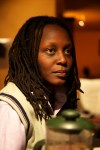
KASHA JACQUELINE NABAGESERA (Uganda) “for her courage and persistence, despite violence and intimidation, in working for the right of LGBTI people to a life free from prejudice and persecution.”Kasha was the Laureate of the 2011 Martin Ennals Award.
GINO STRADA, co-founder of EMERGENCY, (Italy) “for his great humanity and skill in providing outstanding medical and surgical services to the victims of conflict and injustice, while fearlessly addressing the causes of war.“
The 2015 Right Livelihood Honorary Award goes to TONY DE BRUM and THE PEOPLE OF THE MARSHALL ISLANDS “in recognition of their vision and courage to take legal action against the nuclear powers for failing to honour their disarmament obligations under the Nuclear Non-Proliferation Treaty.”
The Awards will be presented at a ceremony in Stockholm on 30 November 2015, hosted by the Society for the Right Livelihood Award in the Swedish Parliament.
Transparency in the composition of the jury of human rights awards is not always very high, so the announcement by the Netherlands Ministry of Foreign Affairs on the composition of its 2105 Tulip jury is to be welcomed:
Ugandan Margaret Sekaggya is to chair the jury. She is a human rights lawyer who from 2008 until 2014 was UN Special Rapporteur on the Situation of Human Rights Defenders. She is the founder and Executive Director of the Human Rights Centre Uganda and sits on the Board of a number of NGOs, including True Heroes Films.
Ales Bialiatski is a distinguished human rights defender from Belarus and the founder of the Viasna Human Rights Center.
Nicola Jägers is a professor international human rights law and her research is mainly focused on the expansion of trade beyond borders and the universaling effects of the human rights movement.
Shahzad Ahmed has made his voice known by fighting against online censorship in Pakistan.
Amira Yahyaoui is a Tunisian blogger, activist and founder of the NGO Al Bawsala.
Human Rights Watch just announced that its Alison Des Forges Awardwinners 2015 come from Uganda, Syria, Malaysia and Azerbaijan:
Nisha Ayub, Malaysia
For over a decade, Nisha Ayub has championed the rights of transgender people in Malaysia through support services, legal and policy analysis, and public outreach. Human Rights Watch honors Nisha Ayub for challenging the discriminatory laws that prevent transgender people in Malaysia from living free of violence, fear, and oppression.
Yara Bader, Syria
Yara Bader, a journalist and human rights activist, works to expose the detention and torture of activists – including her husband, Mazen Darwish recently released – in war-torn Syria. She has experienced first-hand how the Syrian government uses its security and intelligence agencies to brutally crack down on independent voices. Human Rights Watch honors Yara Bader for her tremendous courage in speaking out on behalf of Syrian detainees despite grave risks to her safety.
Khadija Ismayilova, Azerbaijan
Khadija Ismayilova, a prominent investigative journalist in Azerbaijan, has dedicated her life to the fight against corruption, for human rights, and for freedom for political prisoners in a country under increasingly harsh authoritarian rule. Human Rights Watch honors Khadija Ismayilova for her extraordinary courage as a journalist and human rights activist in the face of an escalating crackdown on freedom of expression in Azerbaijan. She is currently behind bars. see also: https://thoolen.wordpress.com/2014/12/11/khadija-ismayilova-azerbaijan-is-not-deterred/
Nicholas Opiyo, Uganda
Nicholas Opiyo is a leading human rights lawyer and founder of Chapter Four Uganda, a human rights organization. He has successfully argued several high-level constitutional challenges, including to the notorious Anti-Homosexuality Act of 2013, which was declared null and void in August 2014. Human Rights Watch honors Nicholas Opiyo for his unfaltering dedication to upholding the human rights of all Ugandans by promoting universal access to justice.
The four 2015 honorees will be honored at the Voices for Justice Human Rights Watch Annual Dinners held in more than 20 cities worldwide in November 2015 and March-April 2016. Also two 2014 recipients of the award, Father Bernard Kinvi from the Central African Republic and Dr. M.R. Rajagopal from India will included in this series of events:
Father Bernard Kinvi, Central African Republic
Father Bernard Kinvi is a Catholic priest who directs the hospital at the Catholic mission in Bossemptele, Central African Republic. In early 2014, when sectarian violence devolved into coordinated violence targeting Muslim civilians, Kinvi saved the lives of hundreds of besieged Muslims, whom he gathered from their homes and sheltered in the Catholic church. Despite repeated death threats, Kinvi persisted in protecting those in his charge until they could be taken to safety. Human Rights Watch honors Father Bernard Kinvi for his unwavering courage and dedication to protecting civilians in the Central African Republic.
Dr. M. R. Rajagopal, India
Dr. M. R. Rajagopal is a leading palliative care physician from India who, for more than 20 years, has battled conditions that cause patients to suffer severe pain unnecessarily. As clinician, academic, and activist, Rajagopal is a global force behind efforts to promote and put into practice palliative care as a human right. He built the world’s most successful community-based palliative care program, and he and his organization, Pallium India, played a key role in convincing India’s government to make morphine accessible. Human Rights Watch honors Dr. M. R. Rajagopal for his efforts to defend the right of patients with severe pain to live and die with dignity.
Sister Stella Matutina explains the threats of large-scale mining in Mindanao during a conference in early August (Photo by Leon Dulce)
A Benedictine nun, Stella Matutina, is the recipient of Germany’s “Weimar Award for Human Rights”2015 for her anti-mining advocacy in the southern Philippine region of Mindanao.
Sister Stella Matutina has been recognized for “[engaging] herself extraordinarily for the rights of the native population, despite being exposed to permanent threats to her safety due to her engagements”. “This highlights the situation of Mindanao and the Philippines in general where the poor, the farmers, the indigenous peoples, the human rights activists and defenders of the environment endure harassment and face risks and death,” the 47-year-old nun told ucanews.com(Jefry Tupas, 7 August 2015) . More than a personal recognition, Matutina said the award acknowledges the “collective sacrifices” of freedom and environment defenders in the face of a “systematic effort to limit democratic space and security threats”.
Matutina has been a vocal opponent of attempts to convert the farmlands in Mindanao to plantation crops like palm oil, pineapples, and bananas. She has also led a campaign against the entry of large-scale mining companies in tribal communities in Mindanao. In 2012, the Philippine military labeled Matutina a “fake nun” and accused her of being a communist New People’s Army guerrilla. In 2009, soldiers detained Matutina and two other anti-mining activists in the town of Cateel in Mindanao for giving a lecture on environmental awareness to residents of an upland village. Early this year, authorities charged Matutina, other Church leaders and human rights activists with kidnapping, human trafficking, and illegal detention for taking care of displaced tribal people in the provinces of Davao del Norte and Bukidnon.
“These are proof that helping the oppressed, the poor, the abused comes with great risks,” said Matutina, chairwoman of the Sisters Association of Mindanao and secretary-general of the environment protection group Panalipdan.
Since 1995, the Weimar Award has honored individuals or groups engaged in the fight for freedom and equality, the prevention and condemnation of genocide, the right to free speech, and the respect and preservation of political, ethnic, cultural and religious rights of minorities, among others. The award comes with a 2500,00 Euro stipend.
The same Weimar Human Rights Award went in 2000 to Father Shay Cullen of the Peoples Recovery Empowerment Development Assistance (PREDA) Foundation for his work defending the rights of children and women, victims of human trafficking, sexual abuse and exploitation in the Philippines.
The 2015 Sergio Vieira de Mello Prize goes to the Interfaith Peace Platform for the work achieved to reconcile religious groups in the hope of reaching a lasting peace in Central African Republic (CAR), a country devastated by a war between fractions.
The Interfaith Platform promotes dialogue as a preventive measure against religious violence and a means to pursue peace across CAR. It was established in 2013 by representatives of the three most important religions in the country, the Catholic Archbishop of Bangui, Mgr. Dieudonné Nzapalainga, the President of the Islamic Council in CAR, Imam Oumar Kobine Layama and by the President of the Evangelical Alliance, Pastor Nicolas Guérékoyaméné-Gbangou. Read the rest of this entry »
On 16 July 2015 Assistant-Secretary of State for Democracy, Human Rights, and Labor – Tom Malinowski – presented the 2014 Human Rights Defenders Award to Azimjon Askarov of Kyrgyzstan and Foro Penal, a NGO from Venezuela, in the Treaty Room at the U.S. Department of State.
Azimjon Askarov is known for trying to bring together people of all ethnicities especially Uzbeks and Kyrgyz. He is serving a life sentence for alleged involvement in the killing of a police officer. He won the 2010 Homo Homini award and was a Final Nominee for the MEA in 2011. Due to Mr. Askarov’s imprisonment, his son, Sherzod, accepted the award on his behalf.
Foro Penal, a Venezuelan pro-bono network of over 200 lawyers and 1,000 human rights defenders, advocates for human rights and rule of law in Venezuela and abroad. With severe restrictions on the media and internet access, Foro Penal provided timely, critical, and independent information during the 2014 protests, and continues to defend and promote human rights despite risk of government suppression. Founder and Director Gonzalo Himiob and Executive Director Alfredo Romero accepted on behalf of Foro Penal.
For the backlash created in the case of Mr Askarov see my next post.
Nasrin makes a brief appearance in Jafar Panahi’s recent film “Taxi, which was awarded the Golden Bear for best film at the Berlin international film festival 2015.
On 8 July FIDH published an update on the situation of Iranian human rights defender Nasrin Sotoudeh: “With A Defiant Smile – A Portrait of Nasrin Sotoudeh“. For more posts on her see: https://thoolen.wordpress.com/tag/nasrin-sotoudeh/
Nasrin Sotoudeh is among the most prominent human rights lawyers in Iran (recipient of the 2012 Sakharov Prize, which she shared with the Iranian filmmaker Jafar Panahi, and the PEN/Barbara Goldsmith Freedom to Write Award). Known for her work in defending women’s rights activists, minors on death row, journalists, Kurdish rights activists and other human rights lawyers, including the Nobel prize winner Shirin Ebadi, she is a national hero to many Iranians.
In January 2011, she was sentenced to 11 years in prison on charges of “propaganda against the system,” and “acting against national security“. Following persistent calls for her release from the UN, governments, and NGOs her sentence was reduced to six years, to be spent in the notorious Evin prison.
In 2013, after three years in prison, Sotoudeh was unexpectedly released, without explanation from the authorities. During her incarceration, she spent time in solitary confinement and went on several hunger strikes in protest of the inhumane prison conditions and the 2012 travel ban imposed on her husband and young daughter. One of the hunger strikes lasted 49 days and resulted in her losing 95 pounds. Upon her release, despite her weakened physical state, Sotoudeh got right back to work fighting for the respect for human rights in Iran.
Since then she has reactivated the Professional Women Lawyers Association and the Children’s Rights Committee, both of which she had helped found before her imprisonment. However, she has been spending much of her energy on a new campaign to abolish the death penalty in Iran, called Step by Step to Stop the Death Penalty (LEGAM). The initiative focuses on amending Iranian legislation to gradually reduce and eventually abolish the use of the death penalty.
Until recently, her ability to push for legislative reforms remained greatly limited due to the Iran Bar Association’s October 2014 decision (under pressure from the Judiciary) to suspend her license to practice law for a period of three years. In protest, Sotoudeh staged daily sit-ins in front of the Bar Association’s offices in Tehran. Her perseverance and that of her supporters finally paid off when, on 23 June 2015, Sotoudeh was informed that the Bar Association had revised the ban and reduced it to a period of nine months [Sotoudeh declared that she would be applying to renew her license].
When asked how she became a human rights defender, Sotoudeh says that as a lawyer, she was forced to make a choice: “When a lawyer witnesses unfair trials, when a lawyer witnesses the execution of minors, either they must turn their back or they must face up to the problem they are witnessing. I think I entered the field of human rights on the day I decided not to avoid such issues.”
Sotoudeh seeks to change Iran from the inside, by arguing cases and convincing others that protecting human rights is necessary. As she said recently regarding the conflict with the Iran Bar Association: “The channel for negotiations should never be closed. However, there are prerequisites for negotiations. If they are fulfilled, we should welcome such negotiations. If not, we should not insist only on negotiations. We should use civil action to persuade the other party to engage in negotiations.”
In the brief appearance in Jafar Panahi’s recent film “Taxi,” (see above) Sotoudeh explains the trials and tribulations human rights defenders face in Iran all the time with a smile on her face, but a defiant smile!
New Tactics in Human Rights is currently having an on-line conversation on “The Use of Photography in Advancing Human Rights“. It lasts until 26 June.
Photography (as images in general) is a powerful tool that can create awareness and effect change. The visual narrative created through photographs can move individuals to a place and understanding of people, geographies, and events that would otherwise be impossible. Used as a tool to document, educate, move, and inform, photographs can be a powerful resource in the efforts of human rights practitioners when used effectively and ethically.
Waleed Abu al-Khair, a human rights defender from Saudi Arabia has won the 2015 Ludovic Trarieux Prize, a prestigious award for human rights lawyers [for more info on the award see: http://www.brandsaviors.com/thedigest/award/ludovic-trarieux-international-human-rights-prize]. Waleed Abu al-Khair is a long-standing campaigner (started the Monitor of Human Rights in Saudi Arabia – MHRSA) and was given a 15-year jail sentence by a Jeddah court last year, in a ruling that Human Rights Watch (HRW), Front Line and many others have heavily criticized [https://thoolen.wordpress.com/tag/waleed-abu-al-khair/].
Bertrand Favreau, the founder of the Ludovic Trarieux Prize, told AFP the award goes to those who “through their work, activities or suffering defend the respect for human rights“.


 tened by climate change.“


 Hans Thoolen on Human Rights Defenders and their awards