Posts Tagged ‘Hina Jilani’

Hinah Jilani on human rights defenders: the first report of her Maastricht lecture

November 17, 2014

The 5th Theo van Boven lecture was given by Hinah Jilani on 11 November 2014 in Maastricht. As a primeur here is a report written by Daan Bronkhorst (1953) who has been at the staff of Amnesty International Netherlands since 1979. He has written on refugees, transitional justice, history and other issues, and produced a Dutch-language encyclopedia of human rights. He is now writing a PhD study on human rights defenders.

Hinah Jilani on human rights defenders

Observations on a lecture

by Daan Bronkhorst

At the law faculty of Maastricht University, the 5th Theo van Boven Lecture was presented on 11 November 2014 by Hinah Jilani. From 2000 to 2008, she was the United Nations Special Representative on Human Rights Defenders. She is in various respects an emblematic human rights defender herself. Already in 1980, with her sister Asma Jahangir she founded the Legal Aid Cell in Lahore. She was co-founder of the Human Rights Commission of Pakistan and the Women’s Action Forum. She was the target of arrests and death threats, once narrowly escaping a gunman who killed the woman she was counseling at that time.

In the lecture, she described human rights defenders as those who bring to the fore information on the abuses to be addressed by governments and organizations. They contribute to relief and protection, they provide a measure of accountability, they inform governments on possible actions and help ensure a measure of justice. In conflict situations, they have a critical role in promoting peace and peace building. They prompt recognition of participatory democracy and transparency. ‘Human rights defenders are not just making human rights violations visible, they confront states with their duty to protect’, she said. For their work, defenders are considered a threat in most parts of the world. They experience vilification, unfair trials, acts of violence, self-imposed exile and reprisals.

Jilani said that ‘time and again, I was pressured by governments to define human rights defenders. I was wondering why there was this insistence. Then I understood then that when you define, you can make it easy to exclude people.’ Among human rights defenders, Jilani includes professionals as well as peasants, workers, teachers, doctors, judges, MPs and many others. ‘Actually anyone who undertakes any activity for the promotion and protection of human rights, and is harmed becomes of that, comes under the protection of the [1998 UN] Declaration on Human Rights Defenders.’ Quoting examples from her native country, Pakistan, she described the threats that befall the defenders not just from state oppression, but also coming from the ‘lack of judicial independence, social biases, traditional and religious practices, economic interests and political privileges.’ Women are targeted and ostracized by the elders of their communities. There is a positive note as well: ‘Until not so long ago judges used to honour honour killings in Pakistan. Today that has become unthinkable.’

 Jilani pictures the defending of the defenders as ‘often a story of one step forward and two steps backwards’. Leaders of indigenous communities, representatives of migrants and refugees, trade unionists: they are all increasingly targeted. More and more reports of attacks now come from Africa. In an increasing number of countries law and policies are leading to the shrinking of civil society space. Meetings are dispersed for alleged security reasons, the defenders are called insurgents or anti-state elements, or simply terrorists. In the UN Declaration, Jilani said, civil society was explicitly given a role in safeguarding democracy and human rights. ‘The defenders initiated programs for institution building, education and the enforcement of the rule of law. But it is impossible for them to achieve those aims if civilians are not allowed to live their normal lives.’ She also cracked a nut with the media: ‘The media have been the first to attack human rights defenders. They have not taken the effort to understand their work. They hit back at the very people who stand up for them when freedom of the press and freedom of opinion are threatened.’

Jilani’s opinions and convictions can be considered as leading in the field. Her observations, I think, also give rise to a number of questions. I mention three.

         First, the concept. That the UN Declaration offers no definition has the advantage of greater inclusion, but the risk of confusion and erosion. There are conspicuous inconsistencies in the UN Declaration with later commentaries and explanations issued by the Office of the High Commissioner for Human Rights. Is the term meant to denote only those who are at risk, or also those working from safe offices in say Geneva? That the very concept of the human rights defender is still in the air even at the UN is testified by the November 2013 debate that led to a resolution on women human rights defenders. In the last-minute final text some of the draft’s references, such as to violence against women and to the refraining from invoking customs and religion, were left out, even though shortly before having been adopted in UN General Assembly resolutions.

            Second, the scope of the work of human rights defenders. It is one thing to state that human rights work contributes to processes such as that of peace building and social justice, it is another to imply that their actual work is in those fields. There is much consensus about human rights including protection from torture or equality before the law, but not on such issues as the human rights scope of poverty. What is the dividing line between what is injustice and what is a human rights violation? This ties in with a larger present-day debate on the position and foundations of human rights. Will human rights defenders get lost in this debate and become one more bone of contention? Or can a somehow limited purview of their work strengthen human rights’ position?

            And third, the empirical data that support the call for better protection and underpinning of the human rights defenders’ work. Jilani’s statement that the space for human rights defence is shrinking on a worldwide scale and that attacks on human rights defenders are increasing, is reflected in reports by international defenders organizations. Simultaneously these organizations report greatly expanding international networks, much success in training, rising awareness of the international community. Is there a discrepancy here? Is the image of increasing threats perhaps self-serving the (donor) organizations? To the perceived rise of menaces one can argue that not long ago in most non-Western countries there was no civil society space at all. Also, since so many more individuals and groups are now labeled ‘human rights defenders’, the absolute number of those victimized may grow even if their proportion decreases. If there is indeed progress, this may prompt emphasizing the effectiveness of programs and using this as leverage for work on situations where the threats persist or newly occur.

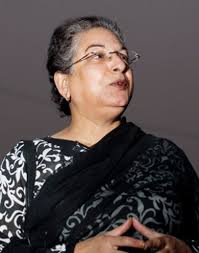
12 November 2014: 5th Theo van Boven lecture by Hina Jilani

November 1, 2014
Theo van Boven 2011

Theo van Boven 2011

On 12 November 2014 the fifth annual Theo van Boven Lecture will be delivered by Mrs. Hina Jilani, in the University of Maastricht (16.00 – 18.30). The lecture is in honour of Prof. Theo van Boven, one of the founders of the Maastricht Centre for Human Rights and the most crucial human right director in the UN in 1977-1982 when the first special procedures were enacted. [https://thoolen.wordpress.com/tag/theo-van-boven/]

Mrs. Jilani is an internationally known human rights defender from Pakistan. She created Pakistan’s first all-women law firm and co-founded Pakistan’s first legal aid centre. She also founded the Human Rights Commission of Pakistan and Pakistan’s Women Action Forum, a prominent women’s rights group whose campaigns have been at the heart of the democracy movement in the country. She was the first Special Representative of the United Nations Secretary-General on Human Rights Defenders from 2000 to 2008. Since 2013 she is a member of The Elders. For more information on her work: http://www.maastrichtuniversity.nl/web/file?uuid=23a2b13c-1422-4e13-8df8-4209bb39e791&owner=20b720a7-b4e5-478d-a68e-9b2019fc1761. The lecture is open to the public.

Hina Jilani 2014

Ban Ki-Moon calls civil society “an indispensable part of the United Nations”

March 27, 2014

Civil society actors must be able to do their work freely, independently, safe from fear, retaliation or intimidation. This requires collective action to denounce reprisals and defend free voices and protect those targeted,” said the UN Secretary-General Ban Ki-Moon, referring to civil society as “an indispensable part of the United Nations”. “We must expand the space for civil society to meaningfully participate and contribute,” he added in a video statement screened at a discussion on the promotion and protection of civil society space, in the context of the Human Rights Council’s 25th session.humanrightslogo_Goodies_14_LogoVorlagen

Civil society actors around the world face risks ranging from threats and intimidation to horrible reprisals, even killings”, said UN Human Rights Deputy, Flavia Pansieri at a discussion on the promotion and protection of civil society space. “From the NGO who is prohibited from receiving funding to the whistle-blower who is imprisoned for revealing corruption… we must work to protect civil society from such practices,” she said.

Hina Jilani, Read the rest of this entry »

Margaret Sekaggya succeeded as HRD Rapporteur by Michel Forst: Reassuring

March 13, 2014

In March, Margaret Sekaggya will finish her term as the UN Special Rapporteur on Human Rights Defenders. For more than five years the Ugandan Margaret Sekaggya has served the mandate with dedication and commitment, and has played an integral role in promoting the work of and furthering protection for human rights defenders around the world.

Also it has been announced that the new Special Rapporteur will be Michel Forst , from France.

Michel ForstHe is a lawyer by training and the Secretary General of the Commission Nationale Consultative des Droits de l’Homme de la Republique Française. From 2008 – 2013, he was the Independent Expert of the United Nations on the situation of human rights in Haiti. He was Director General of Amnesty International in France and worked in the human rights department of UNESCO. Mr. Forst is also a founding trustee of Front Line Defenders.

In short, Margaret Sekaggya did a great job – like her predecessor Hina Jilani – and the credentials of the new Rapporteur give all reason to hope that the level of knowledge and commitment will be maintained. Glad to report something good coming out of the Council!

“It’s human rights defenders that make human rights a reality”

December 17, 2013

This video clip was published on 5 December 2013 by the International Service for Human RightsHuman Rights experts, Hina Jilani, Mehr Khan Williams, Jean-Daniel Vigny, and Walter Kalin tell us why human rights defenders play a critical role and why supporting them is a good way to support the whole global human rights movement.

Who should be the new UN Rapporteur for Human Rights Defenders? Ravindran is my choice.

December 14, 2013

A number of protection mechanisms exist at the international, regional and national levels for the protection of Human Rights Defenders at risk. The Special Rapporteur at UN level is the prime example. We have been very fortunate with the first two mandate holders (Hina Jilani and Margaret Sekaggya) and it is crucial to ensure that the next Rapporteur in April 2014 will be of the same caliber. While in Geneva last week I came across Ravindran Daniel a human rights lawyer from India with whom I worked together in the International Commission of Jurists a long time ago. He told me – with his usual modesty – that he is a candidate for the post of HRD rapporteur. He may not have a big lobby machinery to support him but I think he should be seriously considered. Here a bit more about his impressive background. Please spread the word. Read the rest of this entry »

International Human Rights Day celebrated in Geneva on 5 December with Tim Berners-Lee

December 3, 2013

International Human Rights Day this year marks the 20th anniversary of the UN Human Rights Office and will be celebrated with events around the world throughout the week, including a day of discussions on 5 December in Geneva on a range of pressing human rights issues. Sir Tim Berners-Lee, the inventor of the World Wide Web and founder of the World Wide Web Foundation, will join UN High Commissioner for Human Rights Navi Pillay in a discussion over access to the Web and the balance between security and privacy online. Sir Tim Berners-Lee has been working to ensure that the World Wide Web is made freely available to all, and to establish the Web as a global public good and a basic right. The discussion will be moderated by prominent TV presenter Tim Sebastian, former host of the BBCs Hardtalk programme. The High Commissioner and the President of the Human Rights Council, Remigiusz Achilles Henczel will also deliver speeches at the opening of the event. Hina Jilani, former Special Rapporteur on human rights defenders and Christof Heyns, the Special Rapporteur on extrajudicial, summary or arbitrary executions, will lead panel discussions on protecting the space for human rights defenders and building a vision for an effective human rights system over the next 20 years and beyond. Panelists will also engage on the importance of ensuring the participation and inclusion of all individuals, regardless of their background or status, in the economic and political life of a State. The panels will be moderated by journalist Ghida Fakhry Khane, who was until recently one of the primary anchors for Al Jazeera English. Civil society representatives from Zimbabwe, Colombia, Tunisia and Norway will also lend their perspectives and rich experience to the discussions. The day will end with a performance by renowned musician Salif Keita, from Mali. Known as the “Golden Voice of Africa“, Mr. Keita was born with albinism and, in 2005, founded the Salif Keita Global Foundation to raise awareness about albinism.

The event will be held on Thursday, 5 December 2013, at the Palais des Nations in Room XX, from 9h30 to 17h00. The full programme and biographies of the participants can be found on http://at20.ohchr.org/events.html.

via Human Rights Day – 20 years of working for your rights – World News Report.


Leading international human rights advocates appointed to ISHR Board

June 5, 2013

This blog tries not to keep track of all the personal appointments in the human rights movement – that would be impossible – but the additions to the Board of the International Service for Human Rights (ISHR) in Geneva announced on 30 May 2013 are too impressive to leave unmentioned: Read the rest of this entry »

The Commonwealth and Human Rights Defenders

December 14, 2012

As post number 400 something positive. Without entering into the ongoing discussion on whether the Commonwealth still has a function or even a raison d’etre, it is true that over the years it has increasingly embraced human rights and agreed to the Declaration of Commonwealth Values in 1977. The Commonwealth Deputy Secretary-General, Mmasekgoa Masire-Mwamba, stressed  this point again at the opening of an expert panel discussion recently held at the Commonwealth Secretariat in London, on ‘Strengthened Protection for Human Rights Defenders in the Commonwealth‘.

“Sustainable development and democracy cannot take place when human rights are not defended,” said Ms Masire-Mwamba. “We will continue to strengthen national human rights protection systems, and work with human rights defenders in their interpretation and application of laws to further the interests of the people in democracy and development. She noted that while all human rights defenders are vulnerable to human rights violations as a result of their work, evidence illustrates that women human rights defenders are most at risk as a result of their gender.

Human rights defenders in many Commonwealth countries still do not have the protected space within which to raise their voices without state reproach, said Karen McKenzie, Head of Human Rights at the Commonwealth Secretariat. She said human rights defenders who are particularly targeted include people working on issues related to land and natural resources; the rights of women; the rights of lesbian, gay, bisexual, transgender and intersex people; abuses against migrants, as well as those working to ensure justice for human rights abuses, journalists, bloggers and trade unionists.

Ms McKenzie said the Secretariat aims to advocate for and encourage the opening up of safe spaces within which human rights defenders are able to operate with the necessary protections. Towards this end, she said the Commonwealth will be deepening its assistance to member countries to prepare for the Universal Periodic Review and implement accepted outcomes.

Hina Jilani, a human rights lawyer in Pakistan and former UN Secretary-General’s Special Representative on the Situation of Human Rights Defenders, said efforts to establish, promote and sustain democracy; maintain international peace and security; and provide or advance a people-oriented agenda for development cannot be accomplished without the contributions that human rights defenders make. She pointed out that in situations of crisis, defenders can monitor an overall situation, rapidly investigate allegations of possible violations and report their conclusions, providing a measure of accountability. They also provide the international community with some independent verification of what is actually happening within an emergency situation, informing the process of decision-making. She stated that their presence is known to have calmed situations and, at times, to prevent human rights violations from being committed. Ms Jilani said the work of human rights defenders can help to bring human rights violations to an end and ensure a measure of justice for those who suffered violations.

Other speakers included the Oak Foundation’s Director of International Human Rights Programme, Adrian Arena, who spoke about the importance of civil society’s support for human rights defenders and the provision of tools to facilitate their advocacy work; and Mozambique’s High Commissioner to the UK, Carlos Dos Santos.


source: http://allafrica.com/stories/201212131203.html