On 10 December 2021, David Fischer, HRW’s Media Coordinator, Germany published “A Human Rights Roadmap for Germany’s New Government“
…The climate crisis threatens catastrophic impacts on human rights, and ambitious climate action by the government to reduce greenhouse gas emissions is critical if Germany – the European Union’s biggest greenhouse gas emitter – is to help prevent the worst of those impacts. The new government’s coalition agreement, a non-binding roadmap for legislative action, calls for elimination of coal energy “ideally” by 2030, promises a roll-back of subsidies for fossil fuels and legislation to deal with climate change adaptation planning. These are positive steps but insufficient to reach Germany’s contribution toward the global goal in the Paris Agreement of limiting global warming to 1.5°C above pre-industrial levels.
In addition to the climate crisis, the new coalition between the Social Democrat Party (SPD), the Free Democrats (FDP) and the Greens (Die Grünen) will have to tackle challenges to the rule of law within the EU, stand up for human rights against autocrats in China and Russia, and address the many challenges arising from the pandemic.
The coalition agreement makes promising commitments to advance the rights of lesbian, gay, bisexual, and transgender (LGBT) people, including to change the law on legal gender recognition for transgender people so that it is based on self-determination. The coalition also commits to protecting human rights in supply chains in line with the UN Guiding Principles on Business and Human Rights that include the right to a remedy for victims. It proposes to increase the capacity of German courts to prosecute universal jurisdiction cases such as the trial on state-sponsored torture in Syria.
Within Europe, the new government intends to push for judgements of the European Court of Human Rights to have greater impact and “be implemented in all member states”. It supports the use of mechanisms and sanctions to enforce the rule of law in European Union member states. It also calls for shared responsibility for migrants and refugees among member states, an end to pushbacks at EU borders and for the border agency Frontex to respect human rights.
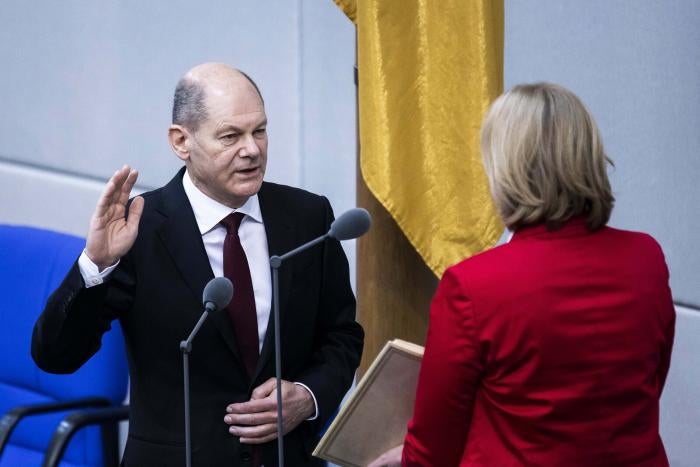
Scholz’s new government will now need to live up to expectations on human rights and prove that what the coalition dubbed “Germany’s responsibility for Europe and the World” is expressed in actions and not just words.
A computer programmer, blogger and high-profile activist who mobilized youths in the uprising that unseated autocrat Hosni Mubarak, Abdel Fattah had been in pre-trial detention since September 2019.
Abdel Fattah, his lawyer Mohamed al-Baqer and blogger Mohamed “Oxygen” Ibrahim were convicted of “broadcasting false news” in their trial in Cairo.
A judicial source, speaking on condition of anonymity, confirmed the verdict and sentencing to AFP.
Rulings in the court cannot be appealed. They require final approval by President Abdel Fattah al-Sisi.
Washington, which has already frozen 10 percent of its aid to Egypt over repeated rights violations, said it was “disappointed” by the sentence. “Journalists, human rights defenders, and others seeking to peacefully exercise their freedom of expression should be able to do so without facing criminal penalties, intimidation, harassment, or any other form of reprisal,” said State Department spokesman Ned Price.
The verdict “demonstrates the lengths to which authorities are willing to go to punish these journalists for their work”, said Sherif Mansour, CPJ’s Middle East and North Africa Coordinator. “Both journalists have already spent several years in prison on bogus charges, and authorities must release them immediately and unconditionally,” Mansour added.
Human Rights Watch on Sunday slammed “the government’s rush to use emergency courts… after holding people illegally for years in pretrial detention”. The New York-based rights watchdog then said that if Abdel Fattah and the other activists were to be sentenced, this would confirm “that fierce repression of peaceful critics remains the order of the day in Egypt”.
Abdel Fattah has spent most of the past decade in jail at Tora, one of the country’s most notorious prisons, after previous convictions. His mother, mathematics professor Laila Soueif, wrote in a New York Times opinion piece published on Saturday that “the outside world, once so inspired by the Egyptian revolutionaries, is looking away. His crime is that, like millions of young people in Egypt and far beyond, he believed another world was possible. And he dared to try to make it happen.”
Prolific writer Abdel Fattah’s critically acclaimed essay collection “You Have Not Yet Been Defeated” was published in October.“At its fundamental core, his writing is attached to justice,” Soueif told AFP in October when the book was released.
Ahead of the trial session, Egypt’s foreign ministry lambasted the German government on Saturday for a statement calling for a “fair trial” and the release of the three dissidents. Cairo described the German foreign ministry’s call as “a blatant and unjustified meddling in Egyptian internal affairs”.
In a 2019 interview with the show 60 Minutes on US broadcaster CBS, Sisi said there were no political prisoners in Egypt. And – of course – the official reaction to interventions was: Egypt’s foreign ministry stressed on Monday that it was absolutely not appropriate to comment on or in any way refer to an independent judicial process.
Finbarr Bermingham in the South China Morning Post of 19 August 2021 tells the harrowing story of Liu Bing who narrowly escaped imminent deportation, for now.
Liu Bing was active in dissident groups in China for almost a decade until he fled the country in May 2019. He was set to be deported next week. Photo: Twitter
A Chinese human rights activist facing imminent deportation from Germany to China has won a stay, after authorities granted him an appeal against a rejected application for political asylum. Liu Bing was set to be deported to China next Thursday, where he claimed that he would “definitely face long-term detention without trial” for taking part in political protests before he fled the country.
But lawyers who recently began working on his behalf secured an adjournment in his exit on Wednesday, meaning Liu will be free to leave the detention centre where he is being held in the North Rhine-Westphalia region on Tuesday, while his appeal is heard.
Reached by phone in his single room at the detention centre, where he is equipped with a refrigerator, television and cooker, Liu confirmed he took part in protests in China, including those commemorating the Tiananmen Square crackdown in 1989.
“If I am sent back to China, I will definitely face long-term detention without trial, because this kind of thing is very common in China. They don’t need the police, and I don’t need any court decision, they can treat a person at will. I will be detained,” he said.
Liu said he is in a “terrified state”, and that his “family members [in China] may not understand or support my participation in political activities”.
Liu was active in dissident groups in China for almost a decade, including the Open Constitution Institute, a protest movement calling for the rule of law in China. He fled China after being pictured taking part in a meeting with other political activists in Xiamen in May 2019.
It has been reported that other dissidents involved in the Xiamen meeting – including Ding Jiaxi, Xu Zhiyong and Dai Zhenya – were arrested in the subsequent months.
After leaving China, Liu first went to Thailand, then Serbia, before finally arriving in Germany, where he was initially held in a refugee camp in Frankfurt, before being released to begin an application for political asylum. After his application was rejected, he fled once more to the Netherlands, where he again tried to gain political asylum. However, he was arrested in June for breaching the EU’s Dublin Regulation, which states that if a person’s asylum application is rejected in one EU country, they cannot apply in another, and was sent back to Germany where he has remained in detention since.
Campaigners working with Liu have said that his lack of understanding of the German legal system and language meant he did not initially realise that an appeal was possible – nor was he aware of a process by which an asylum seeker could request the process be restarted. Both clauses have now been triggered.
“For the first case, he didn’t have a lawyer, he didn’t ask for one. He’s from China, where many people don’t have a strong concept of the legal system or the rule of law,” said a spokesperson for the International Society for Human Rights, which is working with Liu.
His case has been promoted by a number of high-profile German politicians, including MEP Reinhard Buetikofer, who took to Twitter to say: “Germany must stop deportation of Chinese activist Liu Bing.”
William Nee, research and advocacy coordinator for the Chinese Human Rights Defenders, an NGO, said it would be a “tragedy” for Liu to be deported.
“He faces an almost certain fate of immediate detention, followed by torturous interrogations and a sham trial. The German authorities must put a stop to this right now,” Nee said. A spokeswoman for the German Federal Office for Migration and Refugees said that “for privacy and data protection reasons, we do not comment on individual cases within the asylum procedure in general”.
Data from the UN High Commissioner for Refugees showed that between 2012 – when Xi Jinping became the general secretary of the Communist Party – and 2020, the number of asylum seekers from China rose by 602 per cent, from 15,362 to 107,864.
The human rights organization Amnesty International published a scathing report on 25 January 2021 decrying the inhumane conditions in Egyptian prisons. The report comes a decade after the Arab Spring uprising.
The report detailed the experiences of 67 individuals in detention, 10 of whom died in custody and two who died shortly after being released. It was carried out primarily between February 2020 and November 2020 and focused on 16 prisons. It found that:
Prisoners were kept in squalid conditions and received unhealthy food;
There was no proper access to health care, which may have resulted in death;
Overcrowding, poor ventilation and limited access to water and toilets led inevitably to outbreaks of coronavirus.
The report also found that some prisoners were deliberately denied access to health care due to their political affiliations. Activists, politicians and human rights defenders were denied basic treatments available to other inmates. There was also evidence of prison authorities “targeting prisoners critical of the government and denying them adequate food or family visits,” Markus Beeko, Secretary General of Amnesty International in Germany, asserted. According to UN estimates, there are 114,000 people incarcerated in the north African country.
On 22 January 2021 Mary Lawlor also deplored the arrest and prolonged pre-trial detention of human rights defenders and bloggers, and their accusation of being members of a terrorist organisation, continuing Egypt’s practice to intimidate and criminalise human rights defenders, journalists and their families.
“I am extremely concerned by the seemingly unrelenting efforts of the Egyptian authorities to silence dissent and shrink civic space in the country, despite repeated calls from UN mechanisms and the international community,” said Mary Lawlor, UN Special Rapporteur on the situation of human rights defenders.
The Special Rapporteur said she was disturbed by the detention since 2018 of human rights defender and blogger Mohamed Ibrahim Radwan, also known as ‘Mohamed Oxygen’, on charges of “membership of a terrorist organisation” and “misuse of social media” in retaliation for his posts and videos reporting on human rights issues. He was granted conditional release by the Cairo Criminal Court in November last year but was attached to a new case on charges of joining a terrorist organisation and kept in detention. He remains in pre-trial detention in Al-Aqrab Prison, south of Cairo.
Lawlor said that human rights defenders such as researcher and post-graduate student Patrick Zaki, who was arrested in February last year, have endured repeated renewals of detention without trial. “Pre-trial detention should only be used as the exception to the rule, rather than the default approach,” said Lawlor.
“Not only are these human rights defenders, journalists and other civil society actors unduly targeted for their legitimate and peaceful defence of human rights and fundamental freedoms, they are wrongfully accused of belonging to terrorist organisations and portrayed as a national security threat under vague legal provisions,” the Special Rapporteur said. “This is an issue which I and a number of UN experts have previously communicated our concern about to the Egyptian authorities.”
Ten years after the Tahrir square protests in Cairo, Egypt’s human rights record is disastrous. On the occasion of the anniversary of the 2011 revolution, several international campaigns are calling for the release of imprisoned activists writes Sofian Philip Naceur in Qantara.de Violent, authoritarian and extremely paranoid: since his bloody takeover in 2013, Egypt’s President Abdul Fattah al-Sisi has restored a regime whose brutality far outstrips even the reign of long-term ruler Hosni Mubarak. Hopes for real political and social change after the mass uprising that forced Mubarak out of office after 30 years in power have faded away, leaving a disillusionment that is omnipresent.
Egyptian opposition figures are using the current media attention around the tenth anniversary of the “25 January Revolution” to highlight the fate of those currently in prison for their political engagement. Some have been sentenced to heavy jail terms, while others are subjected to pre-trial detention lasting years by the Egyptian security forces and the country’s judiciary. European opposition politicians are also participating in corresponding campaigns.
Eight politicians from Germany’s left-wing party – Die Linke – have signed a solidarity statement calling for the immediate release of all political detainees, which explicitly highlights the fate of six detained leftist activists, journalists and trade unionists. Although the campaign specifically highlights six individual cases, it expresses solidarity not only with Egyptian leftists, but with all those “who are resisting Sisi’s dictatorship”. In addition to journalist Hishem Fouad, who advocated for striking workers and independent trade unions long before 2011, the German politicians are also calling for the release of novelist Ayman Abdel Moati, lawyer and trade union activist Haitham Mohamadeen and trade unionist Khalil Rizk. All four are detained on flimsy, terrorism-related charges.
Deutsche Welle carries a long but interesting piece on “What impact is hate speech having on climate activism around the world?”
From the Philippines to Brazil and Germany, environmental activists are reporting a rise in online abuse. What might seem like empty threats and insults, can silence debate and lead to violence.
Renee Karunungan, an environmental campaigner from the Philippines, says being an activist leaves you “exposed” and an easy target for online hate. And she would know. “I’ve had a lot of comments about my body and face,” she says, “things like ‘you’re so fat’ or ‘ugly’,” she says. “But also, things like ‘I will rape you‘.” Such threats were one reason she decided to leave the country.
There isn’t much data on online abuse against environmentalists. But Karunungan is one of many saying it’s on the rise.
As it becomes woven into the fabric of digital life, we sometimes forget the impact a single comment can have, Karunungan says: “The trauma that an activist feels – it is not just ‘online’, it is real. It can get you into a very dark place.”
“There is also a huge gray zone,” says Josephine Schmitt, researcher on hate speech at the Centre for Advanced Internet Studies, and definitions can be “very subjective.” ..
While no international legal definition exists, the UN describes hate speech as communication attacking people or a group “based on their religion, ethnicity, nationality, race, color, descent, gender or other identity factor.”
According to several researchers and activists, environmental campaigning also serves as an identifying factor that attracts hate.
“Environmental defenders are attacked because they serve as a projection surface for all kinds of group-based enmity,” says Lorenz Blumenthaler of the anti-racist Amadeu Antonio Foundation.
Blumenthaler says his foundation has seen an “immense increase” in hate speech against climate activists in Germany – and particularly against those who are young and female. This year Luisa Neubauer, prominent organiser of Germany’s Fridays for Future movement, won a court case regarding hateful comments she received online. This came after far-right party Alternative für Deutschland’s criticisms of Greta Thunberg included likening her to a cult figure and mocking her autism.
In Bolsonaro’s Brazil, for example, Mary Menton, environmental justice research fellow at Sussex University, says in there is often a fine line between hate speech and smear campaigns. She has seen an increase in the use of fake news and smear campaigns – on both social and traditional media – aiming to discredit the character of Indigenous leaders or make them look like criminals. Coming from high-level sources, as well as local lobbies and rural conglomerates, these attacks create an atmosphere of impunity for attacks against these Indigenous activists, Menton says, while for activists themselves, “it creates the sense there is a target on their backs.“..
Some of it comes from international “climate trolls” calling climate change a hoax or the activists too young and uninformed. But the most frightening come from closer to home. “Some people outrightly say we are terrorists and don’t deserve to live,” Mitzi says. In Philippines, eco-activists are targets for “red-tagging” – where government and security forces brand critics as “terrorists” or “communists.”
Global Witness ranks it the second most dangerous place in the world for environmental defenders, with 46 murders last year, and Mitzi believes there is a clear link between hate speech online and actual violence.
Online hate can delegitimize certain political views and be the first step in escalating intimidation. Mitzi says many environmental groups are frightened of having their offices raided by the police and have experienced being put under surveillance.
Ed O’Donovan, of Irish-based human rights organization Frontline Defenders says in contrast to the anonymous targeting of human rights defenders by bots, attacks on climate activists “often originate with state-controlled media or government officials.”
And they can serve a very strategic purpose, dehumanizing activists so that there is less outrage when they are subject to criminal process, or even attacked and killed. Extractive industries and businesses are also involved, he adds, highlighting how “very calculated” hate speech campaigns are used to divide local communities and gain consent for development projects.
Indigenous people protesting against large-scale projects, like these activists against a mine in Peru, are particular targets for hate campaigns For those invested in suppressing climate activism, Wodtke says hate speech can be a low-cost, high-impact strategy. For environmental defenders, it diverts their “attention, resources and energy,” forcing them into a position of defence against attacks on their legitimacy. …
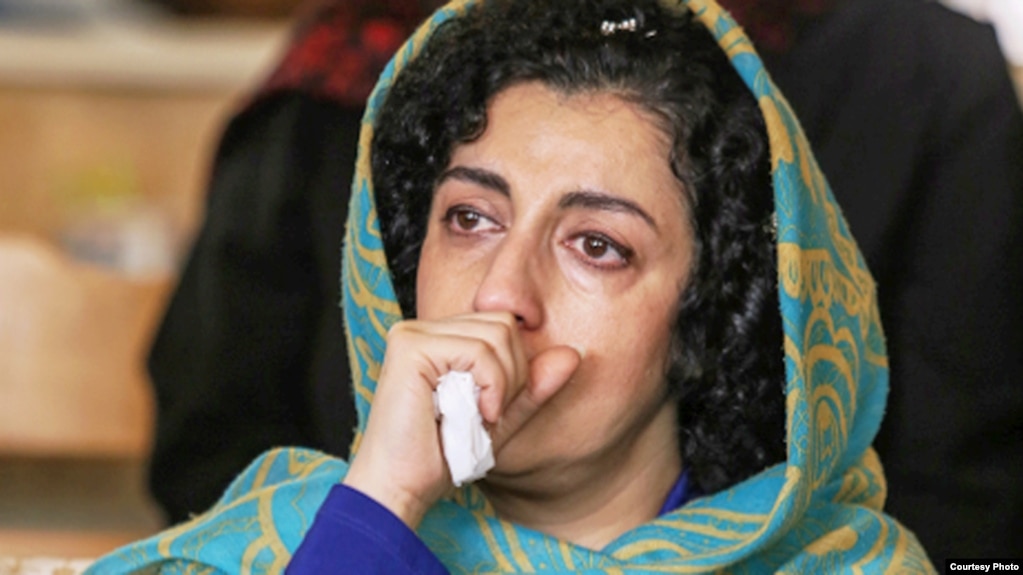
Narges Mohammadi has “serious health problems,” her brother says, but is not allowed out of prison to see a doctor.
Reporters Without Borders (RSF) has condemned the latest “absurd charge” brought against jailed Iranian journalist and human rights advocate Narges Mohammadi, who has been imprisoned since 2015. On 12 June 2020 RSF urged the UN special rapporteur on the human rights situation in Iran, Javaid Rehman, to “intervene quickly and do everything possible to obtain the release of Iran’s longest-held woman journalist.“
In a recent open letter to the Iranian judicial authorities, her brother revealed that she was now accused of “dancing in prison during the days of mourning” commemorating the seventh-century killing of Imam Hussein, a revered figure in Shi’ite Islam. Mehdi Mohammadi, now a refugee in Norway, also wrote that his sister had serious health problems but “was not allowed out of prison to see a doctor, who went to her cell.” “This persecution of Narges Mohammadi is evidence of judicial discrimination at the behest of the Intelligence Ministry and senior justice system officials,” said Reza Moini, the head of RSF’s Iran-Afghanistan desk.
In the meantime there is also an interesting case of an Iranian judge and former prosecutor who was arrested in Romania by Interpol for rights violations (13 June 2020 Radio Farda)
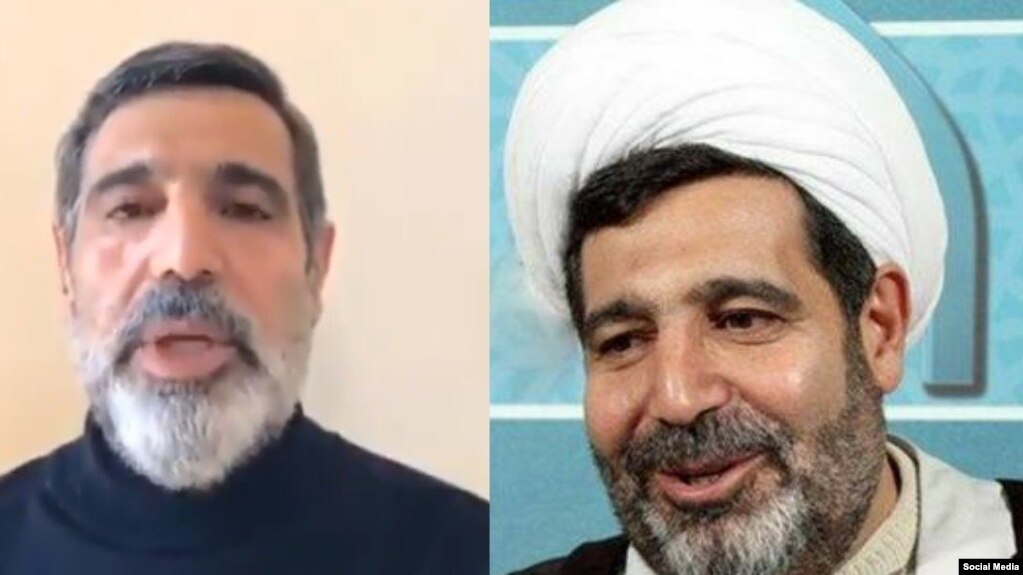
Gholamreza Mansouri, Iranian judge and former prosecutor.
Iran’s Judiciary Spokesman confirmed that Interpol has detained Gholamreza Mansouri in Romania. He is accused of human rights violations by rights defenders, but he is also one of the defendants in a recent sensational corruption case in Iran who fled to Europe. Judiciary spokesman Gholam-Hossein Esmaili said Mansouri’s extradition is not possible now due to coronavirus restrictions but he will be returned to Iran and put on trial for corruption. He also told a local news network that Iran requested the arrest through the Interpol.
In a tweet on June 11, the Secretary-General of Reporters without Borders urged German authorities not to let him escape justice. Reporters without Borders (RSF) has supported the call of Iranian activists and filed a complaint with Germany’s Federal Public Prosecutor against Mansouri for the arrest and torture of at least 20 journalists in 2013….Mansouri is a highly influential prosecutor and judge notoriously famous for prosecuting journalists and putting them behind bars. In one instance in 2013 he ordered the simultaneous arrest of 20 journalists in one day.
Mansouri’s name came up as one of the recipients of bribes in the first trial session of Akbar Tabari, a former Judiciary deputy. The former judge allegedly received 500,000 euro in bribes from Tabari.
In a video published on social media on June 9, Mansouri claimed that he was abroad for treatment of a serious medical condition and could not return due to the restrictions introduced after the breakout of coronavirus. He did not reveal where he was but said he would go to an Iranian embassy to arrange for his return to defend himself against the corruption charges.
The European Court of Human Rights (ECHR) ruled that France violated the freedom of expression of pro-Palestinian activists who were convicted of campaigning for a boycott of Israeli products and pressuring that country to end the occupation of Palestine.
The ruling refers to a 2009 French justice conviction against 11 activists from the BDS (Boycott, Divestment and Sanctions) movement for “economic discrimination” for protesting and distributing leaflets against Israeli products in a supermarket in eastern France.
BDS has called for boycotts against Israeli companies, universities and cultural institutions in what it says is a non-violent campaign against Israeli abuses in Palestine, while Israel claims that the movement masks attempts to delegitimize or destroy the Jewish state.
“This important court ruling is a decisive victory for freedom of expression, for human rights defenders and for the BDS movement for Palestinian freedom, justice and equality,” said Rita Ahmad of the Palestinian-led movement. Most of the international community considers Israeli settlement in the West Bank illegal.
The ECHR ruling orders the French government to pay € 101,000 in general damages to the activists, as the criminal conviction “had no relevant and sufficient basis” and violated the freedom of expression of the protesters. The French government has three months to appeal the decision
Israel promotes a number of legislative initiatives against BDS abroad, particularly in the United States and Europe. The United States House of Representatives passed a bipartisan resolution last year condemning the boycott of Israel as detrimental to peace efforts. The German Parliament passed a resolution last year describing the movement’s methods as “anti-Semitic” and reminiscent of Nazi-era calls to boycott Jews. BDS activists deny the charges of anti-Semitism and say discrimination laws have been used to unfairly attack them. See also: https://humanrightsdefenders.blog/2019/09/25/revoking-of-kamila-shamsies-dortmund-book-award-is-fiercely-contested/
Amnesty International expressed hope that the ruling “will send a clear message to all European states that they must stop the prosecution of peaceful activists.”
The Middle East Eye correspondent reported on 4 February 2020 that an annual awards ceremony at the Semper Opera House in Germany’s Dresden has been cancelled after the decision to grant Egyptian President Abdel-Fattah el-Sisi a presitigious prize created a public relations crisis.
Sisi, the general-turned-president who is a chief architect of serious human rights violations [for just a few examples, see: https://humanrightsdefenders.blog/tag/egypt/], was set to receive the Order of St George at the Semper Opera Ball on Friday. It is awarded to “those who have, like St. George, been a force for good in the world, despite all opposition – those who swim against the current.”
Though the Semper Opera Ball will go ahead, hosting 2,500 guests, its PR agency Zastrow + Zastrow told Middle East Eye that the award ceremony traditionally accompanying it has been scrapped. Sisi, however, has already been handed the prize. A delegation from the Opera Ball Association, led by its director Hans-Joachim Frey, visited Cairo on 26 January and presented the award to Sisi at the presidential palace. News about the award quickly sparked a backlash against the event and its organisers.
At the time, Frey defended the award as a token of appreciation for what he described as Sisi’s role in restoring stability and peace to Egypt and Africa. But that characterisation has been denounced by human rights defenders. On Tuesday, Vanessa Ullrich, an expert at Amnesty International Germany, told MEE that those granting Sisi an award have a “responsibility to carefully consider who is the right person to honour in public and who is being called an outstanding bridge-builder and peacemaker”.
MDR, the main broadcaster of the event, condemned the award as “wrong”, saying the media organisation had no influence on the decision. The network’s entertainment chief, Peter Dreckmann, promised his team would not broadcast any part of the event that features Sisi’s award.
Multiple celebrities who had been invited to the ball have also distanced themselves from the event, in the aftermath of what German media described as a “scandal”. The latest were German billionaire Dietmar Hopp and former Bayern FC president Uli Hoeness.
Hopp, who was due to be awarded the same medal as Sisi, said on Tuesday he has turned down the award. Hoeness, who had been chosen to present the award to Hopp, has also followed suit, according to the German press agency DPA. The gala’s main host, prominent TV anchor Judith Rakers, announced on Wednesday she was pulling out altogether, complaining the Semper Opera Ball had been turned into a political event. Following Rakers’ withdrawal, her nominated replacement Mareile Hoppner also announced her rejection of the role. She cited the “very justified criticism of the selection of a prize winner”.
In response to the outcry, Frey apologised for the award. “We are aware of the irritation that has arisen and we sincerely regret it,” he said in a statement. “We would like to apologise for the award ceremony and distance ourselves from it. The award ceremony was a mistake.” Frey also said the award will not be part of the Semper Opera Ball programme, “in word or picture”.
Despite Frey’s apology, public figures have continued to pull out of the event. Dresden’s mayor was among those who denounced the honour. “It is inconceivable for me how this honour has come about and which criteria were followed,” Mayor Dirk Hilbert said. “I am reserving the right to decide whether I will appear officially in the programme as I have done before, and whether I will take part in the ball with my guests.”
Still, It was not immediately clear whether the award will be reversed. Sisi is not attending the gala.
[ The Award Committee seems to have problems in slecting winners anyway: In 2009, the Order of St George was controversially awarded to Russian President Vladimir Putin. Three years ago it was handed to Saudi Arabia’s Prince Salman bin Abdulaziz bin Salman].
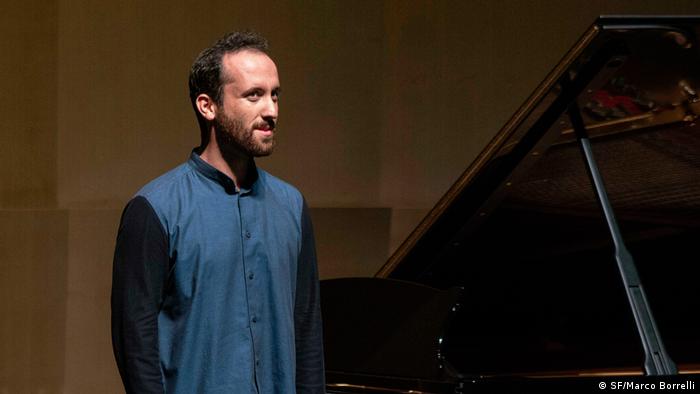
The International Beethoven Prize is awarded to artists who place themselves in the service of human rights, peace, freedom, combating poverty and inclusion [see: http://www.trueheroesfilms.org/thedigest/awards/beethoven-prize-for-human-rights]. Igor Levit, 32, is hailed by critics and audiences as one of the finest pianists today, a master not only at the keyboard but also at his smartphone. His 32,000 Twitter followers look forward to his almost daily comments on social and political issues. “Racism, anti-Semitism, anti-feminism and hostility to human beings are dangerous, often life-threatening and deplorable attitudes. They do not deserve to be jazzed up to the status of legitimate opinions,” the pianist tweeted for instance in November.
Levit’s opinions have attracted much attention beyond the concert hall. At a time when only few artists take a clear political stand, such positioning runs the risk of alienating part of the public or provoking storms of online hostility. In this sense, Levit stands out. His media presence extends to television talk shows; for example, “Words, rage, contradiction — prevent hate, tolerate opinions?” was the topic of a recent TV discussion he was invited to take part in….At the national convention of Germany’s Greens Party, Igor Levit played Beethoven’s “Ode to Joy,” the official anthem of the European Union. In 2018, he returned his Echo Klassik out of protest against the Echo prize awarded to rappers Kollegah and Farid Bang, whose texts include anti-Semitic and misogynous content. But before or during concert performances, Levit will make a statement “only if absolutely necessary and if I feel an absolute emotional urgency to do so.”
Levit has performed at the #Unteilbar demonstration in Berlin on behalf of social inclusion, as well as at the Fridays for Future strikes — and wears a button of the youth movement protesting climate change at concert appearances. He dedicated his recent Opus Klassik award to the victims of a terror attack in the city of Halle. In a recent interview with the newsweekly Die Zeit, Levit said, “I don’t just want to be the man striking the keys.” Critics even see a statement in his choice of repertory.
Khemta H Jose in the Quint reviews the movie ‘Hell & Hope’. This documentary is filmed in Germany in 2018, where 1,100 Yazidi survivors of ISIS brutalities found refuge. There, they have managed to rebuild shattered lives even as mothers and sisters are missing – presumed enslaved or killed – fathers and brothers dead. Before it was too late for Salwa in Iraq’s Sinjar, before the militants came, she says it was Yazidi men who prevented them from running. “The men refused to run despite their wives asking them to. ‘We men don’t run away, we stay and fight’. But the women didn’t know how to drive, so they couldn’t run either. I doubt if in all of Sinjar, even four women know how to drive – if they knew how to drive, they would have escaped and survived. The men could’ve stayed and fought if that was what they wanted. They should have fought and not let us face what we faced.” said Salwa, Yazidi Survivor Knowing how to drive seems like a small thing, in the grand scale of what was happening in Iraq and Syria. And yet it is that small independence they were denied that might have made all the difference.
Despite the gripping horror of each story, there is not much different in the perspectives offered than what we’ve heard over the years now in countless pieces of reporting – the kidnappings, the slavery, the killings. What’s new is the fine detail that comes out when you have multiple women tell broadly the same story; the banality of evil.
Two of the three women who spoke expressed disgust, contempt and were especially distressed by the encouragement given to Daesh terrorists by their wives. It was felt as a deeper betrayal, even though Salwa explains why they did it: “What we saw was that the women encouraged their husbands. This is why I always say that women should see the world and get an education. They controlled women’s minds. What was Daesh telling their wives? They would say that women don’t go to heaven, that a woman is incomplete. Only men go to heaven, so in this life, women must please their husbands, and when they go to heaven, they can ask for their wives to join them. After a Daesh militant kills Yazidis, because they are infidels, he will go to heaven and if he is satisfied with his wife, he will ask for her to come.”
..how did they make it out of that hell? The German government reached out. “The girls did not apply for asylum. The government of the German state of Baden Württemberg came up with a special quota program to give girls, children and other victims a direct residence permit for 3 years.” Amish Srivastava, Director, Hell & Hope…
Watching the documentary is an exhausting experience, but the viewer is forewarned. One of the first lines that appear on the screen is “Girls risked their lives to escape Islamic State captivity. Few succeeded.”



 Hans Thoolen on Human Rights Defenders and their awards