Posts Tagged ‘fair trial’
March 15, 2014
On 6 March 2014, in Tashkent the trial of two members of the Mazlum Human Rights Center took place: Fakhriddin Tillaev and Nuriddin Jumaniyazov. They were charged under Art. 135 of the Criminal Code (“trafficking in persons”). The prosecutor asked for 12 years of imprisonment. The court sentenced both the human rights advocates to 10 years and 8 months of imprisonment and applied the amnesty act passed by the Senate of Uzbekistan. The final term of punishment was thus still 8 years and 3 months of imprisonment.
 |
| Fakhriddin Tillaev |
Posted in human rights, Human Rights Defenders | Leave a Comment »
Tags: fair trial, Fakhriddin Tillaev, false accusation, Human Rights Defenders, human trafficking, labour rights, lawyers, Maslum Human Rights Center, Mazlum Human Rights Center (Uzbek), Nadejda Atayeva, Nuriddin Jumaniyazov, Union of Independent Trade Unions, Uzbekistan
February 12, 2014
Howe complex the situation in post-Morsi Egypt is can be illustrated by the letter sent to Al-Monitor by Neil Hicks, one of the most experienced international human rights workers to be found today. As a member of the independent US-based Working Group on Egypt he responds to Wael Nawara’s criticism of the this Working Group’s recommendations on US policy toward Egypt, published on 4 February. Neil Hicks – who works for Human Rights First – in his reply of 7 February neatly outlines the views from an international human rights perspective, under the title: “The US Working Group is right on Egypt”: “One of the most perplexing aspects of the months of instability in Egypt that have followed the removal of President Mohammed Morsi from office on July 3, 2013, is the number of prominent Egyptian liberals who have shown themselves to have a somewhat selective commitment to liberal principles, Read the rest of this entry »
Posted in HRF, human rights, Human Rights Defenders | Leave a Comment »
Tags: Al-Monitor, Constitution, Egypt, fair trial, Foreign Policy of the USA, freedom of expression, human rights, Human rights defender, liberal, Neil Hicks, peaceful protest, Wael Nawara, Working Group on Egypt
February 6, 2014
In an opinion adopted on 20 November 2013, the United Nations UN Working Group on Arbitrary Detention [WGAD] requested the release of Iranian human rights defenders Khosro Kordpour and Massoud Kordpour from arbitrary detention. The WGAD carried out its investigation pursuant to an appeal by the Observatory for the Protection of Human Rights Defenders and informed the Observatory (an FIDH-OMCT joint program me) of its decision on 4 February, 2014.
 Read the rest of this entry »
Posted in FIDH, human rights, Human Rights Defenders, Observatory for the Protection of Human Rights Defenders, OMCT | Leave a Comment »
Tags: arbitrary arrest, detention, fair trial, FIDH, freedom of expression, Human Rights Defenders, human rights violations, illegal detention, Iran, journalists, Khosro Kordpour, Kurdish cause, Massoud Kordpour, media, minority rights, Observatory for the Protection of HRDs, OMCT, UN, Working Group
November 17, 2013
While the appeal of human right defender Naji Fateel in Bahrain is due to start tomorrow, 18 November, a group of five human rights NGOs regrets the lack of cooperation by Bahraini authorities to allow access to the country for a trial observation mission. The Arabic Network for Human Rights Information, the Cairo Institute for Human Rights Studies, Front Line Defenders, the Gulf Center for Human Rights, and the Observatory for the Protection of Human Rights Defenders (a joint programme of the International Federation for Human Rights – and the World Organisation Against Torture), had mandated – with support from IFEX – a lawyer to observe the trial, but their request remains unanswered.
[Naji Fateel, co-founder of the Bahrain Youth Society for Human Rights and a blogger, was sentenced on September 29, 2013 to 15 years in prison for “the establishment of a group for the purpose of disabling the constitution” under Article 6 of the Terrorism Act.]
via Bahrain: Lawyer mandated by international human rights NGOs denied entry to Bahrain to observe the trial of human rights defender Naji Fateel / November 15, 2013 / Urgent Interventions / Human rights defenders / OMCT.
Posted in FIDH, Front Line, human rights, Human Rights Defenders, OMCT | 2 Comments »
Tags: anti-terrorist laws, Arab Network for Human Rights Information, Arabic Network for Human Rights Information, Bahrain, Bahrain Youth Society for Human Rights, bloggers, Cairo Institute for Human Rights, fair trial, Front Line Defenders, Gulf Center for Human Rights, Gulf Centre for Human Rights, Human right, Human rights defender, IFEX, International Federation for Human Rights, Naji Fateel, Non-governmental organization, Observatory, Trial, trial observation, World Organisation Against Torture
October 5, 2013
14 September 2013 marked three years since renowned human rights defender David Ravelo Crespo, member of the director’s board of the Regional Corporation for the Defense of Human Rights (CREDHOS) based in the city of Barrancabermeja, was detained. Over NGOs reiterated on that occasion their concerns regarding a series of irregularities that were reported throughout the proceedings which resulted in his conviction and sentencing to 220 months in prison. Reiterating their respect for the independence of the judiciary in Colombia, the NGO statement lists a series of irregularities (see statement in full). The NGOs stress that David Ravelo Crespo is an internationally renowned human rights defender. He has won several awards such as the San Pedro Claver Award from the Diocese of Barrancabermeja in 2009; was one of the finalists for the 2013 Front Line Defenders Award fand has been nominated for the National Human Rights Defenders Awards in Colombia . His NGO was nominated for the 2013 Human Rights Award for the city of Weimar (Germany).
Two weeks later Front Line reports that human rights defender and campesina leader Adelinda Gómez Gaviria was killed in Almaguer, Cauca region. Adelinda Gómez Gaviria worked with the Comité de Integración del Macizo Colombiano – CIMA. She played an active role in the Mining and Environmental Forum in Almaguer, which has 1,500 indigenous and farming members. On 30 September as Adelinda Gómez Gaviria was returning home after a meeting, she and her 16 year-old son were approached and shot at by two unidentified men. Adelinda Gómez Gaviria suffered five bullet wounds and was killed, whilst her son is in a critical state in the Clínica La Estancia in Popayán city. One month prior to her killing Adelinda Gómez Gaviria had received a threatening telephone call from strangers who warned her to: “Stop messing around with this miners’ thing. It’s risky and it’ll get you killed.” The Red por la Vida y los Derechos Humanos del Cauca (Cauca Network for Life and Human Rights) has registered the murders of fourteen women human rights defenders in Cauca so far this year, primarily from rural areas of Cauca. Twelve death threats against human rights defenders have been reported, with five of those against women.
Colombia: On the third anniversary of the detention of renowned Colombian human rights defender David Ravelo Crespo, International organisations express concern / September 13, 2013 / Urgent Interventions / Human rights defenders / OMCT.
Posted in Front Line, human rights, Human Rights Defenders | Leave a Comment »
Tags: Adelinda Gómez Gaviria, Barrancabermeja, campesinos, Civil society, Colombia, David Ravelo Crespo, due process, environmental issues, fair trial, Front Line Defenders, Germany, Human right, human rights awards, Human rights defender, Human Rights Defenders, illegal detention, killing, Mining, Non-governmental organization, Ravelo Crespo, social and economic rights, World Organisation Against Torture
September 30, 2013
The Ahlul Bayt News Agency reports today that a court in Bahrain sentenced today political detainees, including activists and human rights defenders, to total of more than 400 years’ imprisonment and upheld the sentence of 10 years’ imprisonment against two children. All of the sentences were delivered under the internationally criticized and vague terrorism law. The court also reduced the sentences of two police officers who tortured a detainee to death from 10 years’, to 2 years’ imprisonment. On 29 of September 2013, the court held the ruling session in the case known as “February 14th Coalition”, in which 50 individuals were tried under the terrorism law, including human rights defender Naji Fateel, political activist Hisham Al-Sabbag and activist Rihanna Al-Mosawi. In first session when defendants spoke about the torture they were subjected to, but were ignored by the court. On the 5th of September, the legal defense team submitted a letter requesting a change of court due to the conflict of interest, and requested a medical committee to investigate the torture allegations from the defendants. The defense team then withdrew from the session based on Article 211 of the Criminal Procedure Law of Bahrain, which stated that the defense team can refuse the judges ruling in the cases mentioned in the previous article and in other cases which are prescribed by the law. Moreover, the defendants issued a statement boycotting the trial stating that the lack of an independent judiciary as one of the reasons. On the 29 September 2013, the court continued the trial and sentenced the 50 defendants in the case to a total of 430 years in prison: 16 defendants were sentenced to 15 years’ imprisonment including Naji Fateel and political activist Hisham Al-Sabbag, 4 were sentenced to 10 years imprisonment and 30 to 5 years. The BCHRs Acting President Maryam Al-Khawaja stated: “There was no due process in the entirety of this case which is why the defendants and their lawyers decided to boycott. From the time that the defendants were abducted, tortured and then sentences, nothing was done according to international standards of a fair trial. If these fifty people were really guilty of a crime, why was the only evidence presented confessions extracted under torture? This was a sham trial with a political verdict, they should be released immediately”.
via Bahrain Court Sentences 50 Shia Muslims to Total 430 Years Imprisonment / Names.
Posted in human rights | 2 Comments »
Tags: activism, Bahrain, Bahrain Centre for Human Rights, Criminal procedure, fair trial, Human rights defender, illegal detention, independence of the judiciary, Maryam Al-Khawaja, Naji Fateel, Shia Islam, torture
September 12, 2013
On 11 September EurasiaNet published a piece implying that powerful people in Armenia can get away with violence and even murder. At least that is how human rights defenders have reacted to the September 8 decision to drop all murder charges against the son of former strongman governor, Suren Khachatrian. In a shootout near the ex-governor’s mansion in the southeastern town of Goris, Tigran Khachatrian [junior] this June shot dead local businessman Avetik Budaghian. Budaghian’s brother Artak, a military officer, was wounded in the clash with Kachatrian’s son and his bodyguards. Tigran Khachatrian and one of the bodyguards were arrested on murder and illegal weapons possession charges, but were released after the military police, which are handling the case, decided that all the shots fired by Khachatrian were made in self-defense. Human rights activists, the victims family and the familys lawyer all have condemned the ruling. A local representative of Human Rights Watch alleged in a conversation with Radio Free Europe/Radio Liberty that Armenian President Serzh Sargsyan, a former defense minister, may personally have pushed for the ex-gubernatorial son. …It has been widely suggested that this quid-pro-quo relationship kept Kachatrian in office despite his long alleged record of violent behavior. Allegations like assaulting a journalist and a businesswoman had been piling up against Kachatrian, but never resulted in indictments or dismissal. Khachatrian père tendered his resignation after the shooting incident, but, critics say, he can still call in favors with the establishment.
via In Armenia, Like Father, Like Son | EurasiaNet.org.
Posted in human rights, Human Rights Defenders | Leave a Comment »
Tags: Armenia, EurasiaNet, fair trial, fraud, human rights activists, illegal weapons possession, khachatrian, murder, politics, President of Armenia, Radio Free Europe/Radio Liberty, Serzh Sargsyan, Tigran Khachatrian
August 19, 2013
On 15 August 2013 the Human Rights League of the Horn of Africa [HRLHA] called for reversal of the sentencing of 21 Oromo students by the Federal High Court of Ethiopia on 7th August.
Posted in human rights | Leave a Comment »
Tags: anti terrorism legislation, Ethiopia, Ethiopian Government, fair trial, Horn of Africa, HRLHA, human rights, minority rights, Oromo, Oromo people, prison sentence, students
March 16, 2013
United Arab Emirates (UAE) authorities should guarantee the safety of 94 defendants facing trial on state security charges says Human Rights Watch. They should also establish an independent investigation into the defendants’ allegations of ill-treatment in detention. The second session of their trial begun on 11 March 2013.
At the first trial session on March 4, authorities brought 84 of the 94 accused before the court to enter pleas. The remaining 10 are being tried in absentia. All 84 of the defendants denied the charges, which, local activists say, are largely based on confessions obtained from two of them, apparently while they were detained incommunicado in 2012. One of the two, Ahmed al-Suweidi, told the court he is innocent and asked for its protection. He told the judges: “I know that what Im going to say may cost my life, but I deny the charges and I ask the court to protect my life and the life of my family,” according to witnesses present in the courtroom. Many of the other defendants told the court that they had been seriously ill-treated during months in detention, including prolonged solitary confinement, exposure to continuous fluorescent lighting that made it difficult to sleep, inadequate heating, and hooding when they were taken from their cells, including while being taken to the toilet or for interrogation. They said they had been repeatedly insulted by prison guards. Lawyers acting for the defendants have repeatedly pressed the judicial authorities to investigate these allegations, but they have yet to do so. “This trial raises serious questions about the UAE’s willingness to respect the fundamental right of all accused to receive a fair trial,” said Sarah Leah Whitson, Middle East director at Human Rights Watch. “The court shouldn’t admit evidence obtained through ill-treatment or coercion. And the UAE government should ensure allegations of ill-treatment of detainees are properly investigated at once.” Authorities prevented a group of international observers and journalists from entering the court on March 4, stating that they had not requested permission from the Ministry of Justice. Security officials also denied entry to the UAE to two international human rights observers who attempted to enter the country to monitor the trial. “The UAE authorities seem intent on keeping this trial as much under wraps as they can,” said Whitson. “If they are interested in ensuring a fair trial, they should allow international observers to attend the court sessions, not block their presence.”
via UAE: Ensure Safety of 94 on Trial | Human Rights Watch.
Posted in human rights | Leave a Comment »
Tags: Ahmed al-Suweidi, Defendant, fair trial, human rights, Human Rights Watch, ill treatment, Middle East, Ministry of Justice, religion, Sarah Leah Whitson, Trial, trial observation, UAE, uae government, United Arab Emirates
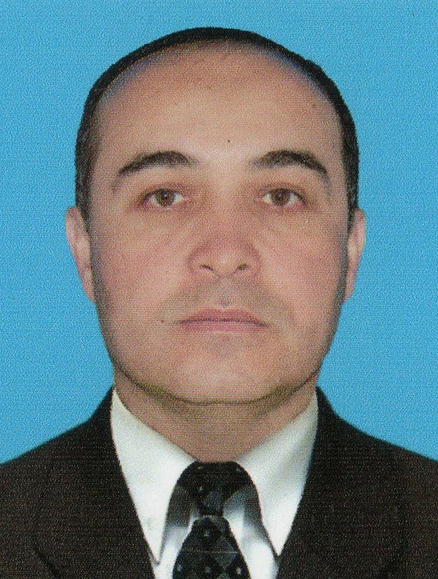


 Three of the Sentenced Oromo Students
 Hans Thoolen on Human Rights Defenders and their awards