On 14 November 2025, Scilla Alecci of the International Consortium of Investigative Journalists, Inc. (ICIJ) wrote about a parliamentary report which identified China and other authoritarian regimes as harassing and attacking dissidents abroad, echoing findings from ICIJ’s China Targets.
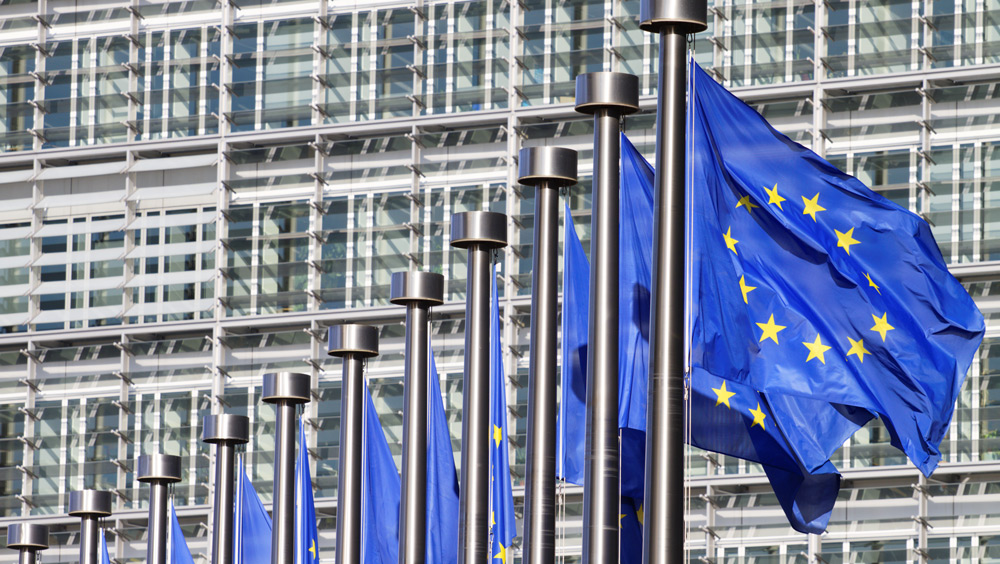
European Parliament in Brussels, Belgium.
The European Parliament has adopted a resolution urging member states to confront efforts by authoritarian regimes to coerce, control or silence political opponents and dissidents living in Europe. “Human rights defenders are a key pillar of democracy and the rule of law, and they are insufficiently protected,” a statement from the parliament said.
The resolution, adopted with a majority of 512 votes (to 76 against and 52 abstentions), called for targeted sanctions against perpetrators, market surveillance of spyware and better coordination among European authorities to counter what lawmakers labeled “transnational repression.”
The resolution is not legally binding but signals that European lawmakers want to take a clear position on the issue and draw attention to it, Elodie Laborie, a spokesperson for the Parliament’s Subcommittee on Human Rights, told the International Consortium of Investigative Journalists in an email.
It confirms findings by ICIJ’s China Targets investigation, which revealed how Beijing continues to use surveillance, hacking and threats against Chinese and Hong Kong dissidents, Uyghur and Tibetan advocates and their families to quash any criticism of the regime abroad.
Two journalists, one imprisoned in Belarus and the other in Georgia, have won the European Union’s top human rights honor, the Sakharov Prize, European Parliament President Roberta Metsola announced on Wednesday 22 October 2025.
Andrzej Poczobut is a correspondent for the influential Polish newspaper Gazeta Wyborcza. He was convicted of “harming Belarus’ national security” and sentenced to eight years, which he is serving in the Novopolotsk penal colony.
Mzia Amaghlobeli, a prominent journalist who founded two of Georgia’s independent media outlets, was in August convicted of slapping a police chief during an anti-government protest. She was sentenced to two years in prison in a case that was condemned by rights groups as an attempt to curb media freedom.
“Both are journalists currently in prison on trumped up charges simply for doing their work and for speaking out against injustice. Their courage has made them symbols of the struggle for freedom and democracy,” Metsola said at the parliament in Strasbourg, France.
Each year the European Parliament awards the Sakharov Prize to honour exceptional individuals and organisations defending human rights and fundamental freedoms, safeguarding the rights of minorities, and fighting for respect of international law, democracy and rule of law. Nominations are made by political groups or by at least 40 MEPs. This year’s nominations were presented during a joint meeting of the foreign affairs and development committees, and the human rights subcommittee on 23 September 2025:
Andrzej Poczobut
Andrzej Poczobut is nominated by the groups of theEuropean People’s Party and the European Conservatives and Reformists. He is a journalist, essayist and blogger from the Polish minority in Belarus, known for his criticism of Alexander Lukashenko’s regime and has become a symbolic figure in the struggle for freedom and democracy in the country.
Poczobut has been repeatedly arrested by the authorities. Detained in 2021, he was sentenced to eight years in a penal colony. He has at times been held in solitary confinement without adequate medical treatment. His current condition is unknown and his family is denied any visits. Parliament has called for his immediate and unconditional release.
The Socialists and Democratsgroup has nominated journalists and humanitarian aid workers in conflict zones represented by the Palestinian Press Association, the Palestine Red Crescent Society (PRCS), and the United Nations Relief and Works Agency (UNRWA). Gaza is identified as the world’s deadliest region for journalism, with a high number of Palestinian journalists killed. Humanitarian workers have also endured significant losses during the conflict, with deadly attacks affecting organisations such as World Central Kitchen, the PRCS and UNRWA. These individuals, through their work and sacrifices, ensure international awareness of the critical human rights situation in Gaza.
The Left group has also nominated journalists in Palestine, with a specific mention of Hamza and Wael Al-Dahdouh, Plestia Alaqad, Shireen Abu Akleh, Ain Media (in honour of Yasser Murtaja & Roshdi Sarraj), representing all the journalists active in Palestine.
Franco-Algerian writer Boualem Sansal is nominated by the Patriots for Europe group. A former senior official in Algeria’s Ministry of Industry, he began writing novels after retiring. He has received several literary awards and is known for his criticism of Islamism and the Algerian government.
In November 2024, Sansal was arrested in Algeria for “undermining national unity” following an interview with French media. In March 2025, he was sentenced to five years in prison, despite health concerns and without his French lawyer present. The sentence was later upheld on appeal. The European Parliament and French National Assembly have both called for his immediate release.
The Renew Europe group has nominated the Serbian students who initiated nationwide protests after the collapse of a railway station canopy in Novi Sad, Serbia, on 1 November 2024. This tragedy, which killed 16 people, was linked to alleged systemic corruption and infrastructural neglect. It triggered silent nationwide protests demanding accountability. The movement has transcended ideological and political divisions and now includes academic staff and students, farmers, artists, journalists, taxi drivers, engineers, and others. It culminated on 15 March 2025, when over 350,000 people gathered in Belgrade for the largest demonstration in Serbia’s post-Yugoslav history.
Budapest Pride
Budapest Pride has been nominated by the Greens/European Free Alliance group as well as by Marc Angel (S&D, Luxembourg), Kim van Sparrentak (Greens/EFA, Netherlands) and 43 other MEPs. Taking place despite a government-announced ban, 2025 Budapest Pride drew the largest attendance in the event’s history and became the seventh-largest Pride march in Europe. Despite the risks of potential police intervention, fines, and imprisonment, the march emphasised freedom of assembly and expression. By combining grassroots LGBTQ activism with support from established NGOs amid increasing government restrictions, the event has played a role in advocating for democratic values and civil liberties in Hungary.
Charlie Kirk, nominated by the Europe of Sovereign Nations group, was an American civic activist and public speaker, co-founder and CEO of Turning Point USA (TPUSA), founded in 2012 to engage students and young voters. Under his leadership, TPUSA played a significant role in youth political participation and debates on free speech on university campuses. On 10 September 2025, Charlie Kirk was shot dead during an outdoor event at Utah Valley University. The assassination has been widely condemned and highlights concerns over threats to freedom of expression.
Mzia Amaglobeli and Georgia’s pro-democracy protest movement have been nominated by Rasa Juknevičienė (EPP, Lithuania) and 60 other MEPs. Mzia Amaglobeli, a Georgian journalist and director of online media outlets, was detained in 2025 for participating in an anti-government protest and imprisoned for two years on politically motivated charges. The first female political prisoner in Georgia since its independence and a fighter for freedom of expression, she has become the symbol of Georgia’s pro-democracy protest movement that opposes the Georgian Dream regime after the October 2024 elections.
Democratic leader María Corina Machado and exiled presidential candidate Edmundo González won the top human rights award for representing all Venezuelans who are “fighting for the restoration of freedom and democracy.” | Marcelo Perez del Carpio/Getty Images
The European Parliament on Thursday 24 October 2024 awarded the Sakharov Prize to Venezuela’s opposition leaders. Democratic leader María Corina Machado and exiled presidential candidate Edmundo González won the top human rights award for representing all Venezuelans who are “fighting for the restoration of freedom and democracy.”
The Venezuelan opposition leaders were nominated by the center-right European People’s Party (EPP) and the hard-right European Conservatives and Reformists (ECR). The far-right Patriots group rallied behind them after their original candidate, tech billionaire Elon Musk, failed to make the shortlist for the prestigious prize.
After Venezuela’s elections in late July, in which incumbent socialist President Nicolás Maduro declared victory for another term, the European Union’s foreign service said it would not recognize the results because the government had failed to release supporting voting records from polling stations.
The authoritarian Maduro’s disputed declaration of victory sparked massive opposition protests and a violent government crackdown that left more than two dozen people dead and nearly 200 injured.
Later, presidential candidate González — who fled to Madrid during the crackdown — was recognized by the European Parliament as the country’s legitimate leader.
Two other finalists made the shortlist. One was Gubad Ibadoghlu, a jailed Azerbaijani dissident and critic of the fossil fuel industry nominated by the Greens. The other finalist was a joint nomination of Israeli and Palestinian peace organizations Women Wage Peace and Women of the Sun. The groups, who announced a partnership in 2022, were nominated by the Socialists and the Renew group.
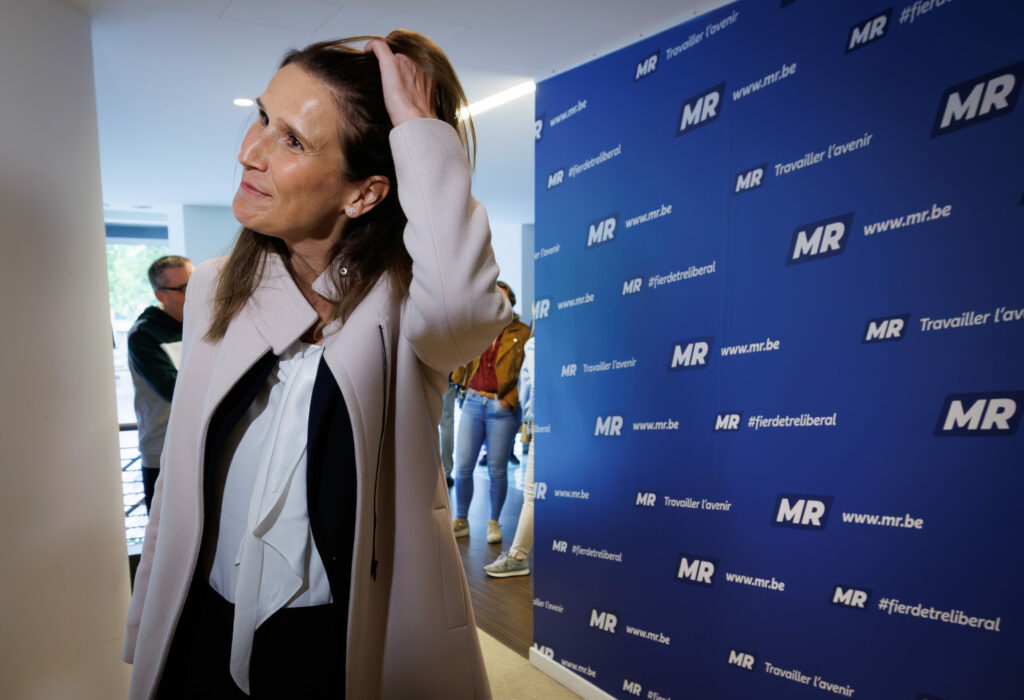
MR’s Sophie Wilmès (Renew). Credit: Belga/Benoit Doppagne
Human rights, democracy and the rule of law are at the heart of the powers that were delegated to Belgian Vice-President of the European Parliament Sophie Wilmès (Renew), President Roberta Metsola announced during the September plenary session in Strasbourg.
Metsola announced the powers delegated to the different vice-presidents for their two-and-a-half-year mandate. For Belgium’s Wilmès, there was a strong emphasis on human rights, democracy and the rule of law.
“Defending our fundamental values is a priority for me. With the democratic model clearly under threat around the world and under attack from all sides in Europe by those who indulge in authoritarian adventures, we democrats must show ourselves combative,” she said. “We are talking about the great inviolable principles that are part of our identity as Europeans. That is non-negotiable.“
In practice, Wilmès’ powers will take form in her work within the Democracy Support and Elections Coordination Group, which focuses on election observation and supporting parliaments to strengthen democracy and the rule of law in third countries, especially candidate countries.
She will also develop mediation initiatives to promote a culture of dialogue and support proponents of democratic change and human rights defenders. Additionally, she will represent the European Parliament at the United Nations, where it remains important to raise these issues.
Women fighting for a free, safe and legal abortion in Poland, El Salvador and the US: Justyna Wydrzyńska is a Polish women’s rights defender and member of the Abortion Dream Team, who was sentenced to eight months’ community service for helping a woman obtain an abortion in Poland. Morena Herrera is a feminist and social activist, advocating for safe and legal abortion access in El Salvador. Colleen McNicholas is an American obstetrician-gynaecologist with a strong track record of high-quality patient care and impactful reproductive health advocacy.
19 October: Parliament President Roberta Metsola and the political group leaders decide on the winner
13 December: the Sakharov Prize award ceremony takes place in Strasbourg.
Eddy Wax in Politico of 14 September 2023 reported that the far-right political group in the European Parliament nominated tech billionaire Elon Musk for the EU’s top human rights award. The Identity and Democracy (ID) grouping, which includes members of European Parliament tied to France’s Marine Le Pen and Italy’s Matteo Salvini, put Musk’s name forward, according to a document sent to MEPs on September 14 and seen by POLITICO. An ID official confirmed to POLITICO its decision to nominate Musk.
ID cited Musk’s decision to release the so-called Twitter Files, which consisted of selected internal documents over how the social media platform handled requests to remove political posts. This amounts to a defense of the principle of freedom of expression, ID argued.
Musk is highly unlikely to receive the accolade as the President of the Parliament Roberta Metsola and the leaders of all political groups will select the winner together later this year.
The Greens have nominated Ugandan climate activist Vanessa Nakate, while the right-wing ECR group put forward Nino Lomjaria, a public defender in Georgia who stood up to Russian interference. The Left proposed three women’s rights activists.
“This award is for those Ukrainians fighting on the ground. For those who have been forced to flee. For those who have lost relatives and friends. For all those who stand up and fight for what they believe in. I know that the brave people of Ukraine will not give up and neither will we,” said Roberta Metsola, the European Parliament’s head.
EU Commission chief Ursula von Der Leyen congratulated the people of Ukraine and said: “Their spirit and determination to fight for the values we hold dear is an inspiration to us all.”
“At (the EU Council) we’ll focus on continuing our assistance; we will stand with Ukraine for as long as it takes,” European Council President Charles Michel said on Twitter.
On 10 March 2022, The Wire in New Delhi reported that India has been added to CIVICUS’ watchlist of countries that have seen a “rapid decline” in civic freedoms by an independent monitor, highlighting the drastic measures taken by Prime Minister Narendra Modi to silence critics of his Bharatiya Janata Party (BJP).
India and Russia were added to CIVICUS Monitor’s Watchlist. CIVICUS Monitor is an online platform that tracks the latest developments to civic freedoms, including the freedoms of expression, association and peaceful assembly, across 197 countries and territories.
India has remained a “repressed” nation in the ‘People Power Under Attack 2021’ report by the CIVICUS Monitor, along with 48 other countries including Afghanistan, Russia and Hong Kong. Its rating was first downgraded in 2019, “due to a crackdown on human rights activists, attacks on journalists and civil society groups, and the assault on civic freedoms in Indian administered Jammu and Kashmir”.
This rating is typically given to countries where civic space is heavily contested by power holders, who impose a combination of legal and practical constraints on the full enjoyment of fundamental rights.
In its report, CIVICUS highlighted several developments that it saw as cause for concern.
In January, the Central Bureau of Investigation conducted raids on Madurai-based human rights watchdog, People’s Watch. The raid came against the backdrop of 6,000 other civil society organisations, including Oxfam, losing their foreign funding licenses under the controversial Foreign Contribution (Regulation) Act. Greenpeace and Amnesty International are among the civil society groups that have had to close their offices in India.
Meanwhile, scores of human rights defenders and activists remain in detention under the draconian Unlawful Activities (Prevention) Act (UAPA) and other laws. They include the 15 human rights defenders linked to the 2018 Bhima Koregaon incident who have been accused of having links with Maoist organisations, based on evidence believed to be “fabricated”.
Waiting for bail, 84-year-old tribal rights activist Stan Swamy, who remained in custody since October 2020 in the Elgar Parishad case under UAPA, died in July last year. [Update on this case: The death of Jesuit priest and Adivasi rights activist Stan Swamy in judicial custody will “forever remain a stain on the human rights record of India”, says a new brief by the United Nations’ Working Group on Arbitrary Detention. The group had formally adopted its opinion on Swamy’s death during its 92nd session on November 16, last year but made its comments public just this week. The Working Group transmitted to the Indian Government a communication concerning Swamy on May 12 last year, but did not receive any response. India is a party to the International Covenant on Civil and Political Rights [ICCPR]. In its communication, the Working Group urged the Government to prioritize the use of non-custodial measures at all stages of criminal proceedings, including during the pretrial phase, in the current context of a global pandemic. Furthermore, its source submitted that placing Father Swamy in prison increased his risk of contracting COVID-19 and thus put his life at risk. The failure of the Government to heed these prescient warnings led to his avoidable death in custody, the opinion states.] [https://theleaflet.in/un-working-group-asks-india-to-accord-stan-swamys-family-with-compensation-and-reparations-under-international-law/]
Further, at least 13 activists who were arrested under the UAPA for their work against the Citizenship (Amendment) Act (CAA) 2019 remain in detention. The slow investigative processes and extremely stringent bail provisions ensure that those detained under the law are held in pre-trial detention for long periods.
“The office raids and foreign funding bans are part of the government’s strategy to harass and silence their critics,” said Josef Benedict, Civic Space Researcher for the CIVICUS Monitor. “The use of broadly worded anti-terrorism laws against activists, journalists, academics, and students, reflect a multi-year decline in the state of civic and democratic freedoms in the country.”
Journalists have continued to be targeted in India for their work in recent months and there have also been concerns about the widespread surveillance of activists, journalists and others critical of the Modi government following thePegasus spyware expose.
“The government must release all human rights defenders detained and come clean about its surveillance of activists and journalists as well as establish an independent and effective oversight mechanism to monitor all stages of interceptions of communications,” said Henri Tiphagne, national working secretary of HRDA – India.
…
In a letter addressed to Prime Minister of India Narendra Modi, 21 members of European Parliament stated, “We, the undersigned Members of the European Parliament, are writing to express our concern over the treatment of human rights defenders (HRDs) in India.” “We have followed cases of HRDs being jailed for their peaceful work, targeted under anti-terror laws, labeled as terrorists, and facing increasing restrictions on their ability to safely mobilize and access funds due to restrictive legislation. We are especially concerned about the safety of unjustly jailed defenders with emphasis on 15 HRDs accused in what is known as the Bhima Koregaon case and 13 defenders currently in jail for their campaign against the Citizenship Amendment Act (CAA).”
They expressed worry that the prominent human rights defender Khurram Parvez remained in detention under the UAPA in one of the most overcrowded and unsanitary prisons in the country for his documenting of rights violations in Indian-administered Kashmir.
On 14 February 2022 FIDH published a joint statement to support Sri Lankan human rights defender Ambika Satkunanathan:
We the undersigned human rights organizations, express our deep concern about the statement issued by the Sri Lankan Foreign Ministry on February 4, 2022, in which the government denounced testimony given by Ambika Satkunanathan, a leading human rights lawyer, to the European Parliament on January 27. The government statement clearly constitutes an act of harassment and intimidation. We condemn the Sri Lankan government’s tactics to intimidate human rights defenders, and express our full solidarity with Ms. Satkunanathan, a well-known, respected and courageous human rights defender. Targeting her for providing accurate testimony about the human rights situation in Sri Lanka to the European Parliament is completely unacceptable, and sends a chilling message to all Sri Lankan civil society, especially those in the north and east, who are already operating under considerable duress under the current administration.
Sri Lanka’s international partners, including the European Union, should publicly condemn the Sri Lankan government’s statement and express solidarity with Ms. Satkunanathan, who has been targeted for her international engagement, and increase their efforts to engage with Sri Lankan civil society at large.
The Foreign Ministry’s statement contains numerous false claims in an attempt to disparage and delegitimize a distinguished human rights advocate, placing her at risk of physical danger in retribution for her brave work. The government’s claim that her testimony was “reminiscent of LTTE [Liberation Tigers of Tamil Eelam] propaganda that once stoked hatred among communities,” and that “such allegations need to be refuted in the interest of social harmony” Is particularly insidious and dangerous.
The government’s statement mirrors its repeated practice of falsely equating human rights defenders and human rights advocacy with those pursuing “terrorism.” The statement’s language aligns these baseless allegations with vague and frequently abused provisions under the Prevention of Terrorism Act (PTA), exposing Ms. Satkunanathan to a heightened risk of threats, attacks and persecution.
Ms. Satkunanathan was a commissioner of the National Human Rights Commission of Sri Lanka before that body’s independence was compromised under the current administration and led the first national study on Sri Lanka’s prisons. Prior to that, she was for many years a legal consultant to the Office of the United Nations High Commissioner for Human Rights. She is the author of an important recent report on abuses committed during the so-called “war on drugs.”
We are concerned that the government’s statement seeks to place the blame on human rights defenders if the European Union determines that Sri Lanka failed to meet its human rights commitments under GSP+, the preferential tariff system. The European Union should remind the Sri Lankan government that the responsibility to uphold its international human rights obligations rests with the government. The government’s treatment of human rights defenders reflects its lack of respect for international human rights law.
We support Ms. Satkunanathan’s testimony to the European Parliament, which accurately described a situation already reported by the United Nations and many domestic and international human rights organizations. The government’s response contains numerous false statements, including:
The government claims to be “engaged in long standing cooperation with the UN human rights mechanisms and the UN Human Rights Council.” On the contrary, in February 2020, soon after taking office, the government of President Gotabaya Rajapaksa withdrew Sri Lankan support from consensus resolutions of the council, repudiating commitments made by the previous government. Special Procedures mandate holders of the Council issued a statement on February 5, 2021, noting that their recommendations, including on torture, the independence of the judiciary, arbitrary detention, enforced disappearances, minority rights, counterterrorism, freedom of religion or belief, and freedom of assembly and association, had been ignored.
The government claims to be “strengthen[ing] rule of law, access to justice and accountability.” However, President Rajapaksa campaigned on a platform of protecting “war heroes” from prosecution, and has appointed individuals implicated in war crimes to senior government posts. His presidential commission on “political victimization” has sought to interfere in judicial proceedings and block trials and investigations in human rights cases implicating the president’s associates and the president himself. The president pardoned Sunil Ratnayake, one of very few members of the armed forces ever convicted of human rights violations, who murdered eight Tamil civilians including children.
The government denies that civic space is shrinking, as Ms. Satkunanathan described in her testimony. Yet under the current government, many human rights defenders have said that they are subjected to continual government intimidation, intrusive surveillance, and attempts to block their access to funds. In her most recent update to the Human Rights Council, High Commissioner Michelle Bachelet wrote that, “surveillance, intimidation and judicial harassment of human rights defenders, journalists and families of the disappeared has not only continued, but has broadened to a wider spectrum of students, academics, medical professionals and religious leaders critical of government policies.” The UN Special Rapporteur on contemporary forms of slavery in his end-of-mission statement last December documented government intimidation of civil society and a “shrinking civic space.”
The government claims there is no “concrete evidence of discrimination against minorities.” In fact, for nearly a year the government banned the burial of people said to have died with Covid-19, causing immense distress to the Muslim community without any medical justification in what is only but one example of discrimination against ethnic and religious minorities. Such burials are now permitted only at a single remote site. In January 2021 High Commissioner Bachelet found that, “Tamil and Muslim minorities are being increasingly marginalized and excluded in statements about the national vision and Government policy… Sri Lanka’s Muslim community is increasingly scapegoated.” The High Commissioner’s findings are in line with reports by Amnesty International, Human Rights Watch, and others that the Prevention of Terrorism Act is used almost exclusively against members of the Tamil and Muslim communities. The government continues to deny efforts to commemorate war victims belonging to the Tamil community.
The government denies Ms. Satkunanathan’s description of alleged extrajudicial killings committed in the context of Sri Lanka’s “war on drugs.” However, these abuses are widely documented. In September, High Commissioner Bachelet said, “I am deeply concerned about further deaths in police custody, and in the context of police encounters with alleged drug criminal gangs, as well as continuing reports of torture and ill-treatment by law enforcement officials.”
The Sri Lankan government’s statement attacking Ambika Satkunanathan for her testimony to the European Parliament’s Sub-Committee on Human Rights exemplifies threats faced by human rights defenders, particularly when they engage with foreign and international forums, and it further shows the government’s refusal to address the ongoing serious human rights violations taking place in the country. Instead of trying to silence those who seek to defend human rights, the government should give serious consideration to their input and contributions, and take urgent action to ensure that they can work in a safe environment without fear of reprisals.




 The government claims to be “engaged in long standing cooperation with the UN human rights mechanisms and the UN Human Rights Council.” On the contrary, in February 2020, soon after taking office, the government of President Gotabaya Rajapaksa
  Hans Thoolen on Human Rights Defenders and their awards
