Posts Tagged ‘European Court of Human Rights’

Oxford Human Rights Hub inviting applications for two paid internships

July 24, 2024

The Oxford Human Rights Hub (OxHRH) brings together academics, practitioners, and policy-makers from across the globe to advance the understanding and protection of human rights and equality. Through the vigorous exchange of ideas and resources, we strive to facilitate a better understanding of human rights principles, to develop new approaches to policy, and to influence the development of human rights law and practice.

The Oxford Human Rights Hub (OxHRH) is currently inviting applications for two paid internships jointly organised with ASSEDEL (Strasbourg).

ASSEDEL (L’Association européenne pour la défense des droits et des libertés) is a non-profit organisation, established to disseminate, promote and defend human rights and fundamental freedoms in the spirit of the European Convention on Human Rights, both within the Council of Europe system and at the local, national and international levels. The organization guides and supports victims of human rights violations.

ASSEDEL works with local and international partners, submits reports to worldwide organizations, informs the public and publishes opinion articles about human rights violations and humanitarian issues such as immigration, women’s rights, discrimination, new technologies, environment, children’s rights, education, freedom of speech, rule of law and democracy.

Tasks include:

  • Analysis of the judgments of the European Court of Human Rights (ECtHR) and publication of articles on these judgments
  • Creating partnerships with the civil society organisations working with the ECtHR
  • Following the implementations of the judgments of the Court
  • Preparing applications to the Court, in particular on Rule 39 cases
  • Creating working relations with relevant structures of the Council of Europe
  • Participating in relevant meetings at the Council of Europe and the ECtHR

Duration and starting dates

Duration: min. 3 months (a longer period can be negotiated)

Start dates: September 2024 or February 2025 (please indicate preference in your application letter)

Requirements

Essential

  • A strong understanding of human rights law, in particular: knowledge about the human rights bodies in Strasbourg
  • Strong editorial skills
  • Good communication skills
  • Strong research skills

Desirable

  • Working knowledge of French
  • Ability to use digital tools

Eligibility

These internships are open to current graduate students in (or recent graduates of) the Law Faculty in the University of Oxford.

Stipend

Each intern will receive a stipend of EUR 700 per month (which should be sufficient to cover living costs in Strasbourg).

How to Apply

Applicants are invited to send:

  1. A cover letter (2 pages max) outlining how they qualify for the role, their availability and experience;
  2. A CV (2 pages max) including their publications;
  3. The names of 2 referees (including your supervisor), to oxfordhumanrightshub@law.ox.ac.uk by noon 9 August 2024.

Enquiries about the project are welcome at: oxfordhumanrightshub@law.ox.ac.uk .

Environmental defender Alexander Nikitin awarded compensation by European Court

November 13, 2023

On 10 November 2023 the Caucasian Knot reported that the ECtHR had found a violation of the rights of Krasnodar activist Nikitin. Alexander Konstantinovich Nikitin is a Russian former submarine officer and nuclear safety inspector turned environmentalist. In 1996 he was accused of espionage for revealing the perils of decaying nuclear submarines, and in 2000 he became the first Russian to be completely acquitted of a charge of treason in the Soviet or post-Soviet era. Nikitin is still engaged in environmental and human rights issues in Russia. He is the head of Bellona Foundation’s Saint Petersburg branch, and is engaged in environmental and nuclear safety projects, as well as in human rights cases. He is a widely recognised HRD, see: https://www.trueheroesfilms.org/thedigest/laureates/D519B52C-D0C3-4B3B-B8F6-798A34B1BF04

The European Court of Human Rights (ECtHR) has awarded compensation of EUR 5000 to Alexei Nikitin, a Krasnodar activist. Nikitin was detained at an action against increasing prices for public transport in 2018 and at a rally in support of Alexei Navalny* in 2021.

Navalny’s offices are recognized as extremist organizations and banned in Russia. Alexei Navalny is a founder of the Anti-Corruption Foundation (known as FBK), an NCO that is included by the Russian Ministry of Justice (MoJ) into the register of NCOs performing functions of a foreign agent. The NCO is also recognized by a court as extremist and banned in the territory of Russia.

https://eng.kavkaz-uzel.eu/articles/63451

What will happen to pending cases against Russia in the European Court of Human Rights?

August 24, 2022

By Kanstantsin Dzehtsiarou, of the University of Liverpool wrote 16 August 2022 a piece: stating that “the Range of Solutions to the Russian Cases Pending before the European Court of Human Rights [are]: Between ‘Business as Usual’ and ‘Denial of Justice’

Exactly in a month time, on 16 September 2022, Russia will no longer be a party to the European Convention on Human Rights (ECHR or Convention). See also: https://humanrightsdefenders.blog/2022/03/11/russia-refuses-to-further-participate-in-the-council-of-europe/. The European Court of Human Rights (ECtHR, Court) will have no jurisdiction over human rights violations that will happen after that. It does not mean that the ECtHR will stop accepting applications against Russia immediately on 16 September 2022 as often victims of human rights violations have to go through national legal remedies and this can take months or even years. It will be mostly for the Court to decide how to treat the applications against Russia both pending now and those arriving after 16 September 2022. The Court already had at least five months to clarify this, but no publicly available decision has been taken yet and it will perhaps be a last-minute compromise between judges. The reason for this delay is that this question is complex in terms of its consequences for the Court, for the victims of human rights violations and for the Council of Europe as a whole.

As of 30 June 2022, there were 17,550 pending applications from Russia. Although the vast majority of these cases are most likely repetitive or inadmissible, there are some complex and high-profile cases including over a dozen of inter-state applications. So, what should the Court ‘do’ with the pending applications? The ECtHR has a few plausible solutions to this challenging problem:

1. ‘Business as usual’

The Court can continue dealing with all pending Russian cases. ..However, dealing with more important meritorious applications will be much more difficult within the ‘business as usual’ model for the following reasons: first, it is clear that the Russian authorities will not collaborate with the Court. ….

There will be no sitting judge from Russia and it is highly unlikely that anyone from the list of ad hoc judges will be willing to sit. So, the Court will have to decide cases without the Russian judge and without the input from the respondent state. A one-of departure from the rule enshrined in Article 24(4) is not perhaps catastrophic but a systematic bypassing of this norm might undermine the legitimacy of the Court’s processes.

The second reason why the ‘business as usual’ model is suboptimal is that it will take a lot of resources from the Court in the circumstances when the budget of the organisation will be significantly reduced by the departure of Russia, who has been a major contributor to the budget of the Council of Europe. The resources spent on the cases from Russia will be arguably taken from other cases in relation to situations where the Court can make a significant and meaningful impact. And this leads me to the final and perhaps the most important reason. The Russian authorities will not implement any of the judgments that entered into force after 16 March 2022. The argument that execution of these judgments can be used as a condition for the return of Russia into the organisation is not particularly convincing as there is no indication that Russia is going to come back any time soon. Moreover, there are plenty of unenforced cases at the moment and the currently available unexecuted judgments pending before the Committee of Ministers can make a solid basis for a conditional return of Russia to the Council of Europe.

Finally, I have to mention that the victim-centric approach would perhaps support the ‘business as usual’ model as in this case the ECtHR will at least confirm that human rights violations have taken place. Having said that, this acknowledgement will not lead to any tangible changes: the applicants will not even receive the monetary just satisfaction from the respondent state. This might increase the feeling of frustration and hopelessness rather than provide any satisfaction.

2. ‘Pick and choose’

Another possible solution to the Russian docket of cases at the ECtHR can be a ‘pick and choose’ model. This way, the Court will select a number of leading cases which would perhaps include inter-state cases, sensitive political cases and the cases exemplifying the structural legal problems in Russia and deliver judgments in these cases.

Within this model the Court can use the so-called Burmych scenario. The judgment in Burmych v Ukraine was a follow-up judgment to the pilot case of Ivanov v Ukraine. In this case the Court ruled that non-execution of the final national judgments is a violation of Article 6 of the ECHR and that the delay in execution should be covered by an appropriate compensation. In Burmych the Court decided that there is no point in keeping producing judgments in clone cases and transferred all applications dealing with the same issue to the Committee of Ministers. Applying this approach to the pending Russian cases, the Court can pick the key complaints on broadly defined themes, then attach similar applications to this leading case and then transfer all of them to the Committee of Ministers without giving separate judgments in each individual case. One of the drawbacks of this approach is that it will cement the questionable principle applied in Burmych as a modus operandi of the Court.

This model would highlight the key problematic areas and give some satisfaction to some victims. It would also be a less resource-consuming than the ‘business as usual’ model but this approach would not be able to solve other problems highlighted in the previous paragraph such as lack of Russian engagement and probably total short-term ineffectiveness of such judgments. It also creates a new challenge: the Court can be accused of a selection bias. The ECtHR will perhaps have to justify why some cases are selected while some others are not.

3. ‘Total freeze’

Total freeze is one of the quicker and more radical solutions available to the ECtHR. The Court can suspend the adjudication of all applications against Russia until the situation changes. The President of the ECtHR has already briefly suspended examination of Russian cases before this suspension was lifted by the Plenary of the Court. This means that suspension is a possible avenue for the Court. This suspension can take at least two forms – either a total freeze of all pending applications or a rejection of all clearly inadmissible applications and then freezing of all meritorious ones. Both of these solutions would save a lot of resources for the Court, it will remove the need for a ‘deemed to fail’ collaboration with Russia and will not require the Court to select the ‘lucky’ applications to deal with. However, no victim will get even moral satisfaction from the fact that the ECtHR found their rights violated but one can argue that this moral satisfaction is not enough for an operation of a judicial organisation. The ECtHR is not an archive that systematises the human rights violations in Russia. It is a judicial institution. The legitimacy of the Court depends on the effective implementation of its judgments and no implementation can be expected from the judgments against Russia.

4. ‘Strike out’

The clearest and the most radical solution would be striking out all the applications against Russia pending before the ECtHR. Pursuant to Article 37(1)c ECHR, the ECtHR can strike out any application for any reason if it is no longer justified to continue the examination of the application. The Convention provides very wide discretion to the Court here. The ECtHR can decide that in the current situation the delivery of judgments will make no impact and therefore all of the applications should be excluded from the list of pending cases. However, this option is not very likely. It was just decided by the ECtHR that the Convention is applicable to Russia for 6 months after Russia ceased to be a member of the Council of Europe. This decision was not the only plausible interpretation of Article 58 ECHR that regulates the denunciation of the Convention. This would have been irrational if immediately after taking this decision, the Court disposed all applications, including of those which were submitted in relation to the violations that happened between 16 March and 16 September 2022. It is also unlikely that the Court would do it for political reasons – it can be seen as a complete denial of justice for a vast number of victims. So, this option is not plausible at least in the short run.

Conclusion

Neither ‘business as usual’ nor ‘strike out’ models are very plausible. It is more likely that the Court will chose some combination from the spectrum between the ‘pick and choose’ and ‘total freeze’ models. In making this decision, the Court will have to weigh the importance of symbolic judgments against Russia and the amount of resources and legitimacy that will be required to deliver these judgments. These resources might be needed in other areas and in relation to other situations.

https://www.echrblog.com/2022/08/the-range-of-solutions-to-russian-cases.html

and

https://www.echrblog.com/2022/09/russia-no-longer-party-to-echr-as-of.html
Kavala ruling of European Court of Human Rights – infringement procedure against Turkey

July 27, 2022
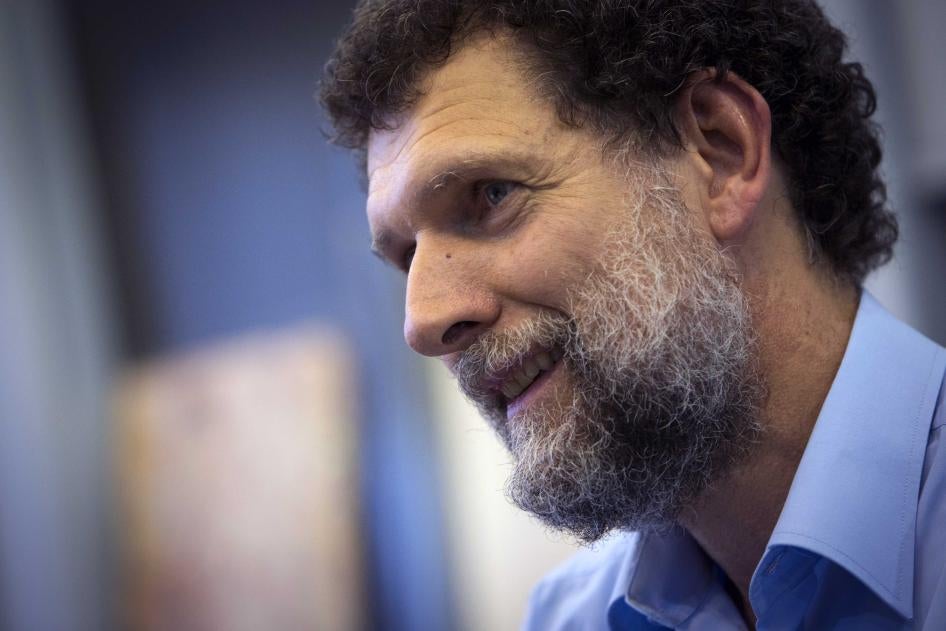
Osman Kavala © 2017 Private

Several sources (here HRW) reported on the European Court of Human Rights (ECtHR) handing down a landmark judgment (announced on July 11, 2022) against Turkey for its failure to carry out the court’s order to free the imprisoned human rights defender Osman Kavala. See: https://humanrightsdefenders.blog/2022/04/27/unexpected-in-its-harshness-kavala-gets-life-sentence-without-parole/

The court found in Kavala v. Türkiye, a case brought by the Council of Europe’s Committee of Ministers, that Turkey failed to fulfil its obligation under Article 46(1) of the European Convention on Human Rights to comply with its judgment issued on  December 10, 2019.  The judgment is an important step toward accountability for Turkey’s systemic disregard for the convention system and as recognition of the urgency of implementing the court’s order to release Kavala.

This is the only second time, after Mammadov v. Azerbaijan, that the ECtHR has ever conducted infringement proceedings and determined that a member state has not complied with a European Court judgment,” said Helen Duffy of the Turkey Litigation Support Project.

It is an acknowledgement of Turkey’s ever-deepening rule of law crisis, which has involved seriously undermining the Convention system and the escalating use of criminal law for political purposes.”

In its new judgment, the court held that “Türkiye has failed to fulfil its obligation under article 46§1 to abide by the Kavala v. Türkiye judgment of 10 December 2019.”

The European Court underlined that:

Its finding of a violation of Article 18 taken together with Article 5 in the Kavala judgment had vitiated any action resulting from the charges related to the Gezi Park events and the attempted coup. It is nonetheless clear that the domestic proceedings subsequent to the above judgment, which resulted first in an acquittal and then a conviction, have not made it possible to remedy the problems identified in the Kavala judgment (para. 172).

The Grand Chamber judgment addresses these practices of the Turkish authorities by stating that “the measures indicated by Türkiye do not permit it to conclude that the State Party acted in good faith,’ in a manner compatible with the ‘conclusions and spirit’ of the Kavala judgment, or in a way that would make practical and effective the protection of the Convention rights which the Court found to have been violated in that judgment” (para. 173).

Aisling Reidy, senior legal adviser at Human Rights Watch said: “As the European Court has now confirmed Turkey’s failure to execute the 2019 Kavala judgment, the Committee of Ministers needs urgently to take all feasible measures to ensure the judgement is respected and Kavala released“.

The Committee of Ministers is expected to resume its supervision process and take more robust steps to discharge its mandate of ensuring the necessary individual and general measures are taken by Turkey to implement the court’s ruling.

Now, it is up to the Committee of Ministers, which oversees the implementation of the ECtHR rulings, what measures to take against Turkey after the country failed to comply with the court’s ruling. This could lead to Turkey’s suspension from the Council of Europe. In anticipation, the Foreign Ministry of Turkey said they expected the Committee of Ministers “to act without bias and with common sense” in a statement.

However, see: https://stockholmcf.org/coe-fails-to-sanction-turkey-over-jailed-philanthropist-opts-for-dialogue-instead/

https://www.hrw.org/news/2022/07/12/landmark-judgment-against-turkey-ignoring-european-ruling

Turkey’s unsuitable candidate for the UN Human Rights Committee

May 18, 2022

Abdullah Bozkurt in the Nordic Monitor of 18 May 2022 points out that Turkey is nominating an unsuitable candidate for membership on the UN Human Rights Committee.

Turkey nominates human rights abuser to UN Human Rights Committee

Turkish President Recep Tayyip Erdoğan has nominated a person with a poor human rights record for membership on the UN Human Rights Committee. According to UN documents Hacı Ali Açıkgül, head of the human rights department at Turkey’s Justice Ministry since 2015, was officially nominated to become one of nine new members of the Human Rights Committee.

Açıkgül, a loyalist and partisan official in the Erdoğan regime, hushed up cases of torture and abuse in Turkey’s detention and prison facilities where many people, including journalists, human rights defenders and activists, were subjected to harsh treatment.

The widespread and systematic practice of torture and abuse is approved by the Erdoğan government as part of an intimidation campaign to silence critical and independent voices in Turkey. Complaints of rights abuse fell on deaf ears, while officials who were involved in ill-treatment and torture were granted impunity.

He issued opinions to challenge complaints filed by victims with the Constitutional Court on violation of fundamental human rights and secretly and illegally coordinated with judges and prosecutors to ensure the continuous imprisonment of government critics. He defended the Erdoğan government in cases brought to the European Court of Human Rights.

Açıkgül used his position in the department not only to bury torture and abuse allegations and complaints, but also helped whitewash them when queried by organizations such as the Council of Europe.

Kavala saga continues: Turkish court keeps philanthropist in prison

January 18, 2022

A Turkish court ruled Monday that prominent Turkish civil rights activist and philanthropist Osman Kavala should stay in prison, despite his more than four years in pre-trial detention.
The hearing took place as a Council of Europe deadline that could trigger infringement procedures looms. The European Court of Human Rights ruled in 2019 that Kavala’s rights had been violated and ordered his release. But Turkey has repeatedly refused to do so.
Kavala, who is in Silivri prison on the outskirts of Istanbul, did not participate in the hearing in line with an October statement that he would no longer attend trials via video conference because he didn’t have faith the court would deliver a fair trial.

Kavala, 64, is accused of financing nationwide anti-government protests in 2013, attempting to overthrow the government by helping orchestrate a coup attempt three years later and espionage. He denies the charges, which carry a life sentence without parole.
He was acquitted in February 2020 of charges in connection with the 2013 Gezi Park protests. As supporters awaited his release, Kavala was rearrested on new charges. The acquittal was later overturned and linked to charges relating to the 2016 coup attempt, which the Turkish government blames on the network of US-based Muslim cleric Fethullah Gulen, who denies any ties to the coup.
That trial is now part of a merged case involving 51 other defendants, including fans of the Besiktas soccer club who were acquitted six years ago of charges related to the Gezi protests before that decision also was overturned. Kavala is the only jailed defendant.

His continued imprisonment for 1,539 days is the continuation of lawlessness identified by the European Court of Human Rights,” Bayraktar his lawyer said. “End this lawlessness today so our client gets his freedom.
In October, Kavala’s case also caused a diplomatic crisis between Turkey and 10 Western countries, including the United States, France and Germany, after they called for his release on the fourth anniversary of his imprisonment.
Turkish President Recep Tayyip Erdogan openly disdains Kavala, accusing him of being the “Turkish leg” of billionaire US philanthropist George Soros, whom Erdogan alleges has been behind insurrections in many countries. He threatened to expel Western envoys for meddling in Turkey’s internal affairs.
The European Court of Human Rights’ 2019 decision said Kavala’s imprisonment aimed to silence him and other human rights defenders and wasn’t supported by evidence of an offense.
The Council of Europe, a 47-member bloc that upholds human rights, notified Turkey in December that it intended to refer the case to the court to determine whether Turkey refused to abide by final judgments, which are binding. It called on Turkey to release Kavala immediately and conclude the criminal procedures without delay. It asked Turkey to submit its views by Jan. 19 before a Feb. 2 session of the council.
Kavala is the founder of a non-profit organization, Anadolu Kultur, which focuses on cultural and artistic projects promoting peace and dialogue. https://humanrightsdefenders.blog/2020/09/16/osman-kavala-and-mozn-hassan-receive-2020-international-hrant-dink-award/

The next hearing is scheduled for Feb. 21.

next: https://www.amnesty.org/en/latest/news/2022/03/turkey-osman-kavala-and-co-defendants-must-be-acquitted-of-all-charges/

https://www.arabnews.com/node/2006211/middle-east

https://www.whio.com/news/world/turkish-court-rules/GT56VN3YVPXZYAHFJ6FCKYKRE4/

European Court of Human Rights calls probe into murder of Natalia Estemirova ineffective

September 1, 2021

Tanya Lokshina of Human Rights Watch wrote on 31 August 2021 “Justice for Murder of Chechen Rights Defender Remains Elusive”

Today, the European Court of Human Rights ruled on the case of Natalia Estemirova, Chechen human rights defender murdered in July 2009. It found that Russia had violated their obligations to protect her right to life by “fail[ing] to investigate effectively [her] abduction and killing.” [see: https://www.trueheroesfilms.org/thedigest/laureates/BA7B3FCE-AFE7-4B72-9156-EA257B3BC205]

Natalia – Natasha to me and many others – was a colleague and very close friend. I last saw her 36 hours before the murder, while staying at her place in Grozny, as I always did when in Chechnya. We’d spent a week interviewing people whose homes police had torched because of their alleged involvement with militants, and whose relatives had been rounded up, disappeared, or killed by security officials.

We said goodbye just past midnight on July 14. When I woke up later that morning, Natasha had already left for an early meeting, so I went to the airport without getting to see her again. The next day, armed men pushed her into a car as she was running to catch a bus to the city center. They drove her into neighboring Ingushetia and shot her near the forest.

In 2011, having lost hope for an effective investigation by Russian authorities, Natasha’s family filed a complaint with the European Court, alleging a violation of her right to life because Russian authorities failed to protect human rights defenders in Chechnya, Chechnya’s leadership repeatedly threatened Natasha, and her abduction was apparently carried out by security officials.

Ten years later, the court ruled today that Russia had failed to investigate but also held that there wasn’t sufficient evidence to conclude that state agents had murdered Natasha.

[see also: https://humanrightsdefenders.blog/2019/07/15/ngos-remember-10th-anniversary-of-natalia-estemirovas-murder/]

The ECHR noted that Russian authorities promptly opened a probe into Estemirova’s killing and identified a suspect, but emphasized that Moscow’s failure to provide full materials of the case made the court “unable to conclude that the investigation had been carried out thoroughly.” It noted some contradictions in the expert evidence led it to doubt that the investigation had been effective.

The victim’s sister, Svetlana Estemirova, alleged in her appeal that state agents were behind the killing but the Strasbourg-based court ruled that the evidence didn’t support the claim.

The court required Russia to pay 20,000 euros ($23,600) to Estemirova’s sister and urged Russian authorities to track down and punish the perpetrators of her murder.

I had very high hopes and it would be an understatement to say that I’m disappointed,” Natasha’s daughter Lana, who was 15 when she lost her mother, told me today.

The lack of sufficient evidence the court cited is a direct result of Russia’s brazen determination to protect the perpetrators of this outrageous murder. Natasha was killed for fearlessly exposing abuses by Chechen authorities. An effective investigation would leave no doubt about official involvement in her murder.

https://spectrumlocalnews.com/nc/charlotte/ap-top-news/2021/08/31/europe-court-russian-probe-into-activist-murder-ineffective

https://www.eng.kavkaz-uzel.eu/articles/56609/

https://www.hrw.org/news/2021/08/31/justice-murder-chechen-rights-defender-remains-elusive

Human Rights for the Planet conference starts 5 October

October 1, 2020
Human Rights for the Planet conference

What is the future role of international human rights law in helping to tackle challenges posed by climate change and the degradation of the natural environment? On Monday 5 October 2020, the European Court of Human Rights will host a high-level conference entitled “Human Rights for the Planet”. Both in person and online, participants will look at the rapidly-developing case-law on environmental issues of the Strasbourg court and other international tribunals. Speakers will include the President of the European Court of Human Rights, Robert Spano, the Secretary General of the Council of Europe, Marija Pejčinović Burić, and the UN High Commissioner for Human Rights, Michelle Bachelet.

Contributors will include environmental lawyers, academics and NGO representatives as well as a number of current and former ECHR judges.

If you would like to take part, register via the conference website.


More information: Human rights and the environment

Turkish human rights defenders shocked by honorary doctorate for ECtHR president Spano

September 5, 2020

This post has been written by Harry Hummel, the Senior Policy Advisor of the Netherlands Helsinki Committee, with many thanks:

This week, European Court of Human Rights president Robert Spano visited Turkey. A high profile event in the country. In the face of government denial of the massive human rights violations it is committing, the voice of the European Court has an extraordinary importance. Human rights defenders therefore expressed unease about the programme of the visit, which included talks with authorities, an address to the Justice Academy and the acceptance of an honorary doctorate at Istanbul university, but no encounters with civil society human rights workers. One of the oldest human rights organisations in Turkey, the IHD, wrote: <https://ihd.org.tr/en/ihd-open-letter-to-robert-spano-president-of-the-european-court-of-human-rights/>

Universities in Turkey are controlled by the Board of Higher Education that was established in the aftermath of the 12 September 1980 coup d’état. Universities in Turkey do not have scientific or administrative autonomy whatsoever. In the past university rectors were elected by academics serving that university but now they are being appointed by the president himself, the head of the executive branch, following changes introduced during the latest state of emergency period. Furthermore, İstanbul University that we learnt was presenting you with an honorary doctorate dismissed hundreds of academics through the state of emergency decree laws and it is one of the institutions that has virtually become the symbol of the state of emergency.

Dear President, you will see young judges and public prosecutors before you at the Justice Academy of Turkey where you are going to teach. During the state of emergency between 2016 and 2018 more than 4,200 judges and prosecutors were dismissed from their posts while more than 8,000 judges and prosecutors were inaugurated. These figures indicate that 45% of all judges and prosecutors on active duty have three years of professional experience or less. Moreover, complaints lodged by thousands of judges and prosecutors are still pending before judicial authorities for the deliverance of a ruling.

Dear President, we do see the will to maintain communication with Turkish authorities in spite of all these negative developments. Turkey, however, is not merely composed of the political power itself. There stand before your court, on one side, the political power alleged to have violated rights and on the other side the victims of those rights violations.  Turkey has a quite developed and dynamic web of civil society organizations working in the field of human rights in spite of all these setbacks. In order for your visit to Turkey to genuinely be beneficial, your lending an ear to these civil society organizations that make the voices of rights victims be heard bears vital significance. We can list the following as examples: women’s organizations that have been defending the Council of Europe İstanbul Convention at a time when withdrawal from the Convention was on the agenda, Saturday Mothers who have long been searching for their children lost under custody and whose right to assembly has been prohibited, bar associations that objected to Law No. 7249 introducing multiple bar associations and regulations that went against the right to defense, and associations of lawyers who advocate for justice and rights, who are imprisoned to this end, who go on hunger strikes. We believe that it is not late to organize a public meeting with the press during which you can answer questions by civil society organizations.

Mixed feelings were expressed in particular about  the honorary doctorate. Former Istanbul University professor Mehmet Altan wrote an open letter to Spano <https://www.expressioninterrupted.com/open-letter-to-president-of-the-european-court-of-human-rights/> :

“The people who will be giving you an honorary doctorate are the very people who dismissed me and many other academics. Under normal circumstances, of course it would be pleasing to hear that you will be visiting Turkey. Unfortunately that’s not the case.”

The concerns about the doctorate were taken up by international human rights NGO Article 19 <https://www.article19.org/resources/open-letter-article-19-urges-president-spano-to-decline-honorary-degree/> :
ARTICLE 19 urges you to decline the offer of an honorary doctorate from Istanbul University due to the role of the University in the crackdown on the crackdown on civil society and purges of Turkish academia by the Turkish authorities.

More than 120,000 individuals <https://soe.tccb.gov.tr/> were dismissed through decree laws after the 2016 failed coup attempt, including more than 5,000 academics. While the process for these dismissals was not transparent, the Spokesman for the Council of Higher Education has previously confirmed in interviews that the management of the universities were responsible <https://www.bbc.com/turkce/haberler-turkiye-38906141?ocid=socialflow_twitter>  for preparing the lists of academics to be dismissed by decree. University rectors from other universities interviewed by the BBC in 2017 stated <https://www.bbc.com/turkce/haberler-turkiye-39055854>  that they prepared the dismissal lists in cooperation with the Intelligence services, using criteria defined by the government. 192 <http://bianet.org/english/print/183432-4-811-academics-from-112-universities-discharged-by-5-statutory-decress> academics <http://bianet.org/english/print/183432-4-811-academics-from-112-universities-discharged-by-5-statutory-decress>  were dismissed from Istanbul University by emergency decrees. Istanbul University itself dismissed at least 95 academics, <http://bianet.org/english/human-rights/176960-95-academic-suspended-in-istanbul-university-yok-suspends-4-rectors>  without due process or the opportunity for review. The consequences for those dismissed were devastating, as documented <https://www.hrw.org/news/2018/05/14/turkey-government-targeting-academics>  by Human Rights Watch.  Those dismissed from their academic positions were blacklisted, unable to find other work and had their passports cancelled. While the hundreds of academics who were dismissed for signing a peace petition had their criminal convictions overturned by the Constitutional Court, they still face unemployment as they were unable to return to their positions.

We also point out that the news about your acceptance of this honorary degree, as the Court’s most senior judge and particularly during an official visit, has raised huge concerns within Turkish civil society, undermining their trust and public confidence in the Court. We therefore respectfully urge you to decline the honorary degree you have been offered by Istanbul University.

In his speech accepting the honorary doctorate <https://echr.coe.int/Documents/Speech_20200904_Spano_Honorary_Doctorate_Istanbul_ENG.pdf> , Spano explained that accepting these kind of honors is part of the usual protocol for Court visits to Council of Europe member states:

It has long been a tradition as a matter of protocol that Presidents of the Court accept to be awarded the title of Doctor Honoris Causa during their official visits to Member States of the Council of Europe. Such offers have not been refused. In this regard the Court must always be seen to be independent and impartial and not making distinctions between Member States.

On this basis, I accept this award from this very prestigious institution which has been in existence for centuries as it will also give me, a former academic, an opportunity to stress the fundamental role of academic freedom and free speech in a democracy governed by the rule of law. These are core values which lie at the heart of the European Convention on Human Rights, a constellation of rights and fundamental freedoms which require that Government in all their actions be balanced and proportionate. In short, the Convention does not tolerate extremes.

The concerns of civil society are fueled by mixed feelings more generally <https://verfassungsblog.de/the-ecthr-and-post-coup-turkey-losing-ground-or-losing-credibility/>  about the approach of the Court in addressing the delaying and evading tactics of the Turkish authorities. In his open letter <https://www.expressioninterrupted.com/open-letter-to-president-of-the-european-court-of-human-rights/> , Mehmet Altan thanks the Court for a verdict against his own imprisonment. The verdict led to his release after a lot of legal wrangling by Turkish courts about its implementation. His dismissal has not been corrected however, a decision about this is lingering before inadequate Turkish appeal procedures (as are tens of thousands of other cases) which the Court however considers a ‘domestic remedy’ that needs to be exhausted before it can take up the issue. In the letter, he also mentions the case of his brother Ahmet Altan:

“The very section of the Court that you presided had given priority status to the application of Ahmet Altan, whose novels have been published in 23 countries, and who, even despite the Covid-19 pandemic has remained behind bars in Silivri Prison for the past four years. Even though the court is very much familiar with the file’s content, unfortunately we have been waiting for that priority to come into effect for the past four years.”

Whether the visit of Spano to Turkey has had a positive effect, will likely be also measured against progress in the case of Osman Kavala, a human rights defender who the Court has said should be released. His situation is under review by the Committee of Minissters, the Council of Europe’s supervisory body for execution of Court judgements. The Committee just this week repeated its call for his immediate release <https://www.coe.int/en/web/portal/-/implementing-echr-judgments-council-of-europe-urges-turkey-to-release-osman-kavala> .

See also:

https://ahvalnews.com/robert-spano/echr-should-call-spanos-resignation-after-turkey-visit-human-rights-defender-fincanci?language_content_entity=en and

https://www.washingtonexaminer.com/opinion/european-court-of-human-rights-president-degrades-court-with-turkish-award

European rights court president draws further ire by posing with members of Turkey’s ruling party

Azerbaijani journalist Khadija Ismail refuses $250,000 ‘prize’ offered by Qatar

July 26, 2020

On 26.July 2020 Jam News comes the interesting news that the Azerbaijani investigative journalist Khadija ismayilova has been offered a $250,000 cash award from Qatar’s Rule of Law and Anti-Corruption Centre. After looking into the activities of the centre and discovering the fund was created by the emir of Qatar, who had closed the center for investigative journalism in Qatar, Khadija Ismail declined the award. 

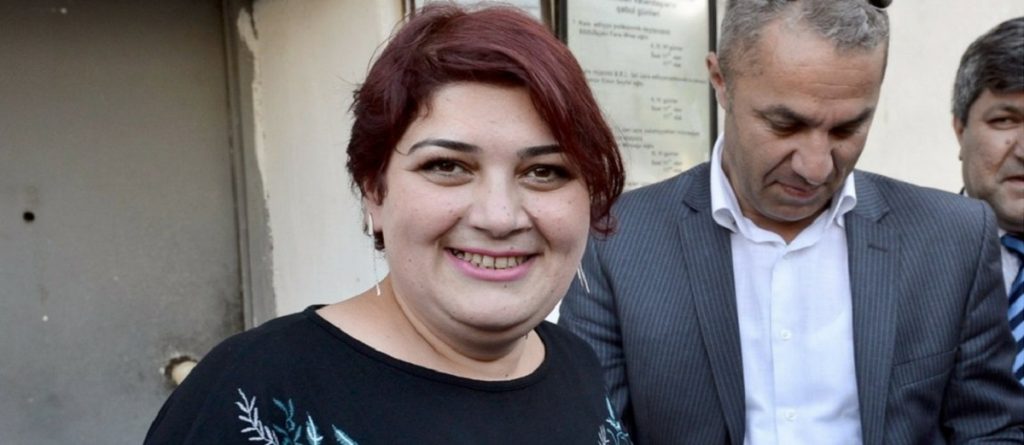
Khadija Ismail

The journalist also added that the reason why the foundation wants to give her the prize is to keep famous journalists under its influence with this award: “Why me? They have been distributing the prize for three years, not a single famous person has yet agreed to receive the prize. It is the famous winners who legitimize such initiatives. I don’t want to sound immodest, but a friend explained to me that they need my name.

I answered them. I said, thank you, I investigated the issue and do not believe in your sincerity, and I do not sell my reputation for money.

Khadija Ismail is engaged in investigative journalism. She was arrested in 2014 and imprisoned for seven years and six months on charges of tax evasion and illegal entrepreneurship. On May 25, 2016, the Supreme Court changed her sentence to a suspended sentence of three and a half years and released her. Now the journalist has a ban on leaving the country. See: https://humanrightsdefenders.blog/2017/11/24/azeri-journalist-khadija-ismayilova-not-allowed-to-come-and-pick-up-her-award-in-stockholm/]

By the decision of the European Court of Human Rights, in this case, the rights of the journalist, protected by Articles 5 (liberty and security of person), 6 (fair trial), 10 (freedom of expression) and 18 (limits on the use of restrictions on rights) of the European Convention were violated.For these violations, the Azerbaijani government as a whole must pay the journalist compensation to the amount of 25,000 euros, but the journalist says that she has not yet received this money.

https://jam-news.net/khadija-ismail-journalist-refuses-prize/