On 4 December 2018 Jonathan Emmett wrote in a post about something that I had been wondering for weeks: “Are UK authors only prepared to defend the rights of people like themselves?”. Totally correct:
Posts Tagged ‘Emirates’
Emirates (Mansoor) and UK (Hedges): finally someone made the point
December 6, 2018Ahmed Mansoor: ten years jail for tweeting and a street named after you
June 7, 2018
 Joe Odell (press officer for the International Campaign for Freedom in the UAE) wrote on Wednesday 6 June 2018 a long piece in the Middle East Eye about the “UAE‘s shameful imprisonment of Ahmed Mansoor“. As the last dissident voice in the Emirates is silenced, it remains to be seen who is left to speak out about injustice in the UAE, he states rightly. As I have posted regularly on him (see e.g. https://humanrightsdefenders.blog/2018/04/13/update-on-mansoor-in-uae-after-one-year-detention-appears-in-court/), will only refer to a few highlights in Odell’s article:
“Last week Abu Dhabi’s Supreme Court sentenced the awarded-winning Emirati human rights activist Ahmed Mansoor to 10 years in prison after finding him guilty of using his social media account to “defame the nation” by spreading “rumours and lies about the UAE” and promoting “sectarian feelings and hatred” among its citizens. It is a ruthless ruling for one of the region’s most prominent rights campaigners, who in 2015 won the prestigious Martin Ennals Award for Human Rights Defenders after his tireless struggle for basic political and civil rights in the UAE.……
It was almost as if the UAE wanted to get this news out in a way that created as little fanfare as possible. Many hours were to pass before the UAE state-owned publication the National confirmed that this was indeed Ahmed Mansoor; international media promptly picked up the story within minutes – no doubt to the ire of the UAE government. Emirati authorities, however, are yet to give an official comment on the court decision. More pertinently, Mansoor’s exact whereabouts remains unknown, leaving the 48-year-old father of four at grave risk of torture and other forms of ill-treatment.
…..Perhaps, in his heart, Ahmed knew this day would come. But he always refused to place himself above the struggle, telling journalist Bill Law prior to his arrest: “The only way to counter repression is by revealing it. And, yes, there is always that possibility that I will go back to jail. But if activists do not talk, who will?”
This knock-on effect has already begun. In the UK, pressure is now mounting on Manchester mayor Andy Burnham to issue a statement on Ahmed’s case after a coalition of 34 NGOs, including Amnesty International and the European Centre for Democracy and Human Rights, demanded intervention. This is a sensitive and fought over issue in a city whose council have burgeoning commercial links with the UAE, and whose football club is owned outright by the Emirates’ deputy prime minister, Sheikh Mansoor bin Zayed al-Nahyan. [see below]
…….Meanwhile, in north London, Arsenal supporters are now questioning their club’s links with the UAE, which began with their move to the Emirates Stadium more than 10 years ago. In response to Ahmed’s sentence, leading Arsenal fan website the Daily Cannon published an editorial calling for a review of the club’s sponsorship deal with Emirates Airline. Perhaps for the first time the UAE’s soft-power project in the UK now lies on contested ground, not only from regional foes, but increasingly from ordinary people across Britain….[ see also my: https://humanrightsdefenders.blog/2015/09/15/fly-emirates-if-the-emirs-let-you/]
And indeed on Friday 3 June 2018, campaigners in Manchester, UK, held a “street renaming” ceremony for Ahmed Mansoor and to highlight the city’s close links with the UAE government. Activists raised a banner saying “Ahmed Mansoor Street” in Manchester, to pressure the city’s council to bring up the case of the blogger who was sentenced to a decade in jail by UAE authorities this week.
The protest took place on Thomas Street, in the city’s fashionable Northern Quarter district. Supporters of Mansoor in the UK have asked Manchester Mayor Andy Burnham to help secure the release of the free-speech activist. The campaigners believe one way that could help is for Burnham to name a street after the 2015 Martin Ennals Award for Human Rights Defenders laureate.
“As the first directly-elected Mayor of Greater Manchester you are in a unique position to show leadership on this issue,” a letter by Mansoor’s supporters to Burnham stated. “Your public support for a street named after Ahmed Mansoor – and calling for his immediate and unconditional release – would demonstrate your commitment to this heritage and these ideals.”
Manchester has deep ties with the Gulf state, including companies and investment groups tied to Abu Dhabi Crown Prince Mohammed bin Zayed al-Nahyan, the de-facto ruler of the UAE. The football club, Manchester City, is also owned by leading Emirati royal Sheikh Mansour bin Zayed al-Nahyan.
——-
Update on Mansoor in UAE: after one year detention appears in court
April 13, 2018Ahmed Mansoor – the Emirates’ most prominent human rights defender – finally has been taken to court after a year in arbitrary detention [see: https://humanrightsdefenders.blog/2018/03/21/emirates-one-year-later-human-rights-defender-ahmed-mansoors-whereabouts-remain-unknown/].

The Gulf Centre for Human Rights (GCHR) has finally received information about Mansoor, including the surprising news that his trial had already started in March 2018. There had been no news about him since September 2017. The second hearing took place on 11 April 2018, and as Mansoor still has no lawyer to defend him, no details about the exact charges are available.
In the weeks leading up to his arrest, Mansoor had used Twitter to call for the release of human rights activist Osama Al-Najjar, who remains in prison despite having completed a three-year prison sentence in March 2017 for his peaceful activities on Twitter; as well as prominent academic and economist Dr. Nasser bin Ghaith. The latter, who was jailed in a previous case with Mansoor in 2011, was also held incommunicado for nine months after his subsequent arrest in August 2015. He continued to be held in solitary confinement after court proceedings began, remaining in solitary for 19 months. On 29 March 2017, he was sentenced to 10 years in prison for critical comments he had made online about human rights violations in the UAE and Egypt. On 2 April 2017, Dr. Bin Ghaith began a hunger strike to protest his sentence, which violated his rights to freedom of expression and fair trial. On 25 February 2018, Dr. Bin Ghaith began another hunger strike to protest poor conditions in Abu Dhabi’s notorious Al-Razeen prison, a maximum security prison in the desert used to hold activists, government critics, and human rights defenders. On 2 April 2018, GCHR learned that Dr. Bin Ghaith had been forced to end his recent hunger strike earlier due to threats made by the authorities to restrict visits after news of his protest became known….
Emirates: one year later human rights defender Ahmed Mansoor’s whereabouts remain unknown
March 21, 2018
The authorities in the United Arab Emirates (UAE) should reveal the whereabouts of prominent human rights defender and citizen-journalist Ahmed Mansoor and release him immediately and unconditionally, an impressive group of over twenty human rights organisations said on 20 March 2018. This day marks one year since security forces arbitrarily arrested Mansoor, winner of the Martin Ennals Award for Human Rights Defenders in 2015, at his home in Ajman. The UAE authorities have continued to detain him in an unknown location, despite condemnation from UN human rights experts and independent human rights organisations.
The authorities have subjected Ahmed Mansoor to enforced disappearance since his wife last saw him in September 2017. They must reveal his whereabouts to his family and grant him regular access to them and to a lawyer of his choosing. Following his arrest on 20 March 2017, the authorities announced that he is facing speech-related charges that include using social media websites to “publish false information that harms national unity.” On 28 March 2017, a group of UN human rights experts called on the UAE government to release Mansoor immediately, describing his arrest as “a direct attack on the legitimate work of human rights defenders in the UAE.” They said that they feared his arrest “may constitute an act of reprisal for his engagement with UN human rights mechanisms, for the views he expressed on social media, including Twitter, as well as for being an active member of human rights organisations.” Since his arrest, Mansoor has not been allowed to make telephone calls to his family and has been allowed only two short visits with his wife, on 3 April and 17 September 2017, both under strict supervision. He was brought from an unknown place of detention to the State Security Prosecutor’s office in Abu Dhabi for both visits. The authorities have refused to inform his family about his place of detention and have ignored their requests for further visits.
In February 2018, a group of international human rights organisations commissioned two lawyers from Ireland to travel to Abu Dhabi to seek access to Mansoor. The UAE authorities gave the lawyers conflicting information about Mansoor’s whereabouts. The Interior Ministry, the official body responsible for prisons and prisoners, denied any knowledge of his whereabouts and referred the lawyers to the police. The police also said they had no information about his whereabouts. The lawyers also visited Al-Wathba Prison in Abu Dhabi following statements made by the authorities after Mansoor’s arrest, which suggested that he was held being held there. However, the prison authorities told the lawyers there was nobody matching Mansoor’s description in the prison. Instead of protecting Mansoor, the authorities have detained him for a year with hardly any access to his family and no access to a lawyer of his choosing. Their contempt for human rights defenders and brazen disregard for their obligations under international human rights law is truly shocking. [https://humanrightsdefenders.blog/2018/02/27/somewhere-in-a-prison-in-the-emirates-is-ahmed-mansoor-but-authorities-claim-not-to-know-where/]
Background to his case is documented in the joint statement and in my earlier posts: https://humanrightsdefenders.blog/tag/ahmed-mansoor/
Mansoor is a member of GCHR’s Advisory Board and a member of the advisory committee of Human Rights Watch’s Middle East and North Africa Division.
Signed:
Americans for Democracy and Human Rights in Bahrain
Amnesty International
Arabic Network for Human Rights Information (ANHRI)
ARTICLE 19
CIVICUS
Committee for the Respect of Freedoms and Human Rights in Tunisia
English PEN
Freedom Now, Morocco
Front Line Defenders
Gulf Centre for Human Rights (GCHR)
Human Rights First
Human Rights Watch
International Commission of Jurists (ICJ)
International Federation for Human Rights (FIDH), under the Observatory for the Protection of Human Rights Defenders
International Service for Human Rights (ISHR)
Maharat Foundation
Martin Ennals Foundation
Moroccan Association for Human Rights
PEN International
Reporters Without Borders
Scholars at Risk
Tunisian Association for Academic Freedoms
Tunis Center for Press Freedom
Tunisian Forum for Economic and Social Rights
Tunisian League for Human Rights (LTDH)
Tunisian Organisation against Torture
Vigilance for Democracy and the Civic State
World Organisation Against Torture (OMCT), under the Observatory for the Protection of Human Rights Defenders
http://www.martinennalsaward.org/ahmed-mansoors-remain-missing/
https://www.ifex.org/united_arab_emirates/2018/03/20/uae-ahmed-mansoor-1-year/
Somewhere in a prison in the Emirates is Ahmed Mansoor but authorities claim not to know where
February 27, 2018 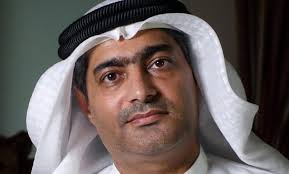 Two Irish lawyers attempt to reach human rights defender Ahmed Mansoor, who is held incommunicado in United Arab Emirates, but in vain.
Today the Martin Ennals Foundation reports that on 26 February 2018, two lawyers from Ireland approached the Ministry of the Interior in the United Arab Emirates (UAE) to try to gain access to distinguished human rights defender Ahmed Mansoor, who has been detained since 20 March 2017 for his human rights activities. Mansoor, who received the Martin Ennals Award for Human Rights Defenders in 2015, is a member of the advisory boards of the Gulf Centre for Human Rights (GCHR).
Given the widely documented use of torture and solitary confinement by UAE authorities, and the lack of any independent information regarding Mansoor, there are grave fears for his safety. Numerous organisations have expressed concern that he may be tortured and subject to ill treatment in detention.
See also: https://humanrightsdefenders.blog/2017/03/28/ahmed-mansoor-under-arrest-emirates-under-pressure/
In Abu Dhabi, the Irish lawyers approached the Ministry of the Interior headquarters, which is the authority controlling and running prisons. The Ministry referred the lawyers to the police, who are not responsible for prisons. The police then advised them to approach the Al-Wathba prison, which they did, only to be told Mansoor is not being held there. The inability of the authority responsible to provide any information on Mansoor is remarkable given that he has been detained for almost a year.
The mission was mandated by GCHR, the Martin Ennals Foundation, Front Line Defenders, the International Service for Human Rights (ISHR) and the Observatory for the Protection of Human Rights Defenders, a partnership of FIDH and the World Organisation Against Torture (OMCT).
Background
Ahmed Mansoor was arrested by a dozen security officers at his home in Ajman in the pre-dawn hours of 20 March 2017 and taken to an undisclosed location. The security officials conducted an extensive search of his home and took away all of the family’s mobile phones and laptops, including those belonging to his young children. The family had no information about Mansoor until a statement was issued on the Ministry of Foreign Affairs website on 29 March 2017 saying that he was in detention in the Central Prison in Abu Dhabi. Since his arrest, his family were allowed to visit him only twice – on 3 April and 17 September 2017, and he has had no access to a lawyer.
In their public statements, the UAE authorities have said that Mansoor is accused of using social media websites to “publish false information that harms national unity.” On the day of his arrest, the UAE’s official news agency, WAM, announced that he was arrested on the orders of the Public Prosecution for Cybercrimes and detained pending further investigation on charges of “using social media [including Twitter and Facebook] sites to publish false and misleading information that harms national unity and social harmony and damages the country’s reputation” and “promoting sectarian and hate-incited agenda”. The statement classified these as “cybercrimes,” indicating that the charges against him may be based on alleged violations of the UAE’s repressive 2012 cybercrime law, which authorities have used to imprison numerous activists and which provides for long prison sentences and severe financial penalties
In the weeks leading up to his arrest, Mansoor had used Twitter to call for the release of activist Osama Al-Najjar, who remains in prison, despite having completed a three-year prison sentence in 2017 on charges related to his peaceful activities on Twitter; as well as prominent academic and economist Dr Nasser bin Ghaith, arrested in August 2015 and sentenced to 10 years in 2017. Both men have been convicted of charges related to peaceful messages they posted on the social media platform Twitter. Mansoor had also used his Twitter account to draw attention to human rights violations across the region, including in Egypt and Yemen. He had also signed a joint letter with other activists in the region calling on leaders at the Arab Summit who met in Jordan in March 2017 to release political prisoners in their countries.
As a result of his selfless and tireless efforts to defend the rights of migrants and Emirati nationals in the UAE, he had become a thorn in the side of the UAE authorities and consequently the object of years of government harassment and persecution.
Since his arrest, a group of United Nations human rights experts have called on the UAE to release Mansoor, describing his arrest as “a direct attack on the legitimate work of human rights defenders in the UAE.” They said they feared that his arrest “may constitute an act of reprisal for his engagement with UN human rights mechanisms, for the views he expressed on social media, including Twitter, as well as for being an active member of human rights organizations.” The experts include special rapporteurs on human rights defenders, on the promotion and protection of the right to freedom of expression and opinion, along with the Working Group on Arbitrary Detention and the Working Group on Enforced or Involuntary Disappearances.
The lengths the UAE authorities will go to silence Mansoor are shown by their efforts to hack his iPhone. In a widely documented case, the UAE were exposed after Mansoor’s suspicions were raised and he contact the Citizen Lab at the University of Toronto in Canada. Citizen lab released the following report: https://citizenlab.ca/2016/08/million-dollar-dissident-iphone-zero-day-nso-group-uae/
Mansoor, along with Dr Nasser bin Ghaith, and online activists Fahad Salim Dalk, Ahmed Abdul-Khaleq, and Hassan Ali al-Khamis were arrested in April 2011 and charged with “publicly insulting” UAE rulers. On 27 November 2011, a panel of four judges of the Federal Court found all five men guilty and sentenced Mansoor to three years in prison, and the others to two years. The four men were released the next day, after the UAE president, Sheikh Khalifa bin Zayed Al-Nahyan, issued a pardon.
For more information: khambatta@martinennalsaward.org or visit www.martinennalsaward.org
Emirates at the UPR in Geneva: two sides of the same medal?
January 23, 2018Sometimes it hard t believe that media have observed the same meeting. Here the case of the Emirates (UAE) which was the subject of a UPR session on 22 January 2018. The Middle East Eye says that “At UN meeting, rights groups slam UAE for arbitrary detention“, while The National sees that “UAE strategy will advance human rights in Middle East, Gargash tells UN council”.

Portrait of UAE founder Zayd Bin Sultan Nahyan at UAE’s culture exhibition at the Palace of Nations, Geneva (MEE/Amandla Thomas-Johnson)
 Amandla Thomas-Johnson reports that Minister of State for Foreign Affairs Anwar Gargash strongly denied allegations that the country practises arbitrary detention. Gargash, who led a high-level delegation to a peer-review process called the Universal Periodic Review (UPR), which each UN-member state undergoes every five years. “I would like to affirm that the UAE does not arrest or detain any person arbitrarily,” he said. “A person is immediately informed of the accusations against them. Everything that takes place is in line with our laws and done with concrete safeguards against arbitrary detention and arrest.”
- Safwa Aissa, Executive Director of the Geneva-based International Centre for Justice and Human Rights, said of the session: “It’s not bad, but we wanted something better, especially from European countries. We had met with many countries beforehand and made them aware of the situation in the countries.”
- Similarly, Julia Legner from Geneva-based Alkarama Foundation said: “It was slightly disappointing. I was expecting harsher criticism, given that it’s a peer review by states. It’s clear that some states will always congratulate the UAE.” “There could have been stronger comments on the total silencing of civil society, the crackdown on freedom of expression, which has reached a limit where there is no human rights defenders operating from within the UAE.” Responding to Gargash’s claim that arbitrary detention is not practised, she said: “We beg to differ and we have evidence.”
- Toby Cadman, an international human rights barrister, said that while the UPR is “an important process,” it often has “the appearance of the Eurovision Song Contest of International Justice whereby friendly States, regional, diplomatic and trade partners pat each other on the back rather than offer constructive criticism and call for change”. “The UAE UPR was indicative of that approach today. There is a real need for fundamental reform in the UAE criminal justice and penal system.”
David Haigh, who is bringing a legal case against UAE authorities for his arbitrary arrest and torture, criticised Gargash’s comments as untruthful. “I was arbitrarily detained for 15 months before I was charged. In the judgments against me one of the UAE courts confirmed that I had complained of arbitrary detention,” Haigh told MEE after the session. “Of course there is arbitrary detention.” Haigh, who has now established a foundation and law firm to assist others who suffer injustice in the UAE, said arbitrary detention happens “time and time again”.
 Damien McElroy, for the National reports mostly on what the UAE Minister of State for Foreign Affairs Anwar Gargash said:
Advancing human rights is a critical factor in ensuring stable societies and promoting development, ..The Minister of State for Foreign Affairs said that as a model nation for youth in the region, the UAE had sought to strengthen human rights and legal safeguards within the review framework overseen by the UN High Commissioner for Human Rights….In the context of a region where extremism creates division and polarisation, Mr Gargash said advancing human rights was a “powerful antidote” to pernicious forces.
“The promotion of tolerance and the rejection of extremism is fundamental to the advancement of human rights in the UAE and the wider region,” he told a packed chamber at the Palais des Nations. “Piece by piece, we have developed a comprehensive strategy to advance the cause of human rights in the UAE.” The UAE will establish a national human rights institution in line with the Paris Principles and guidance of the reporting process before the end of the year, he said. In responses to contributions from the floor, Dr Gargash said the country would also study joining additional protocols and extending invitations to special rapporteurs…
In response to allegations based on reporting about pre-trial detention, Dr Gargash said there was no detention without an arrest warrant…“The UAE is a bastion of stability where people from about 200 nationalities live peacefully in social and religious harmony. We are committed to finding the right balance between protecting our legitimate need for security and preserving our reputation as an open society.”….
He also pointed to the UAE’s role as the world’s largest donor of official development assistance as a proportion of its national income….
In its submission, the Office of the High Commissioner for Human Rights recognised considerable developments in the UAE in the past four years. “UAE’s efforts in combating trafficking are marked as a good example,” the office said. “This included the Adoption of Federal Act Law No 1 of 2015, which provides protection for victims of trafficking, and the 2012 and 2015 Amendments of Federal Law No 51 of 2006 on combating trafficking.” It also hailed the progress in raising the status of women. “The National Strategy for Empowerment of Emirati Women in the UAE for 2015-2021 … provides a framework for government, private sector and civil society organisations to establish work plans to increase women’s presence and empowerment mainly in the economic sector in the UAE.”

Anwar Gargash, UAE minister of state for foreign affairs, tours Michael Møller, Director-General of the UN Office at Geneva, around UAE culture exhibition (MEE/Amandla Thomas-Johnson)
Cultural diplomacy: Earlier in the day, Gargash had been the focus of attention as he hosted the director-general of the UN in Geneva, Michael Moller, around a new cultural exhibition the UAE had officially opened minutes before the human rights session began a floor above. Spread over two floors and including mock Bedouin tents and a photo exhibit, women took centre-stage at the UAE’s latest efforts at cultural diplomacy, with a troop of women clad in sequined abayas performing a fashion show for onlookers. But The Middle East Eye said that “UAE’s efforts at cultural diplomacy came under fire by Julia Legner, at Alkarama”: “It’s part of the propaganda machine of the UAE, trying to portray an image of culture and tolerance and inclusion and progress. They’re using it as a chance to cover up the dark side.”
For my earlier posts on the UAE, see: https://humanrightsdefenders.blog/tag/uae/
Jailed human rights lawyer in UAE awarded the 2017 Ludovic Trarieux Award
May 28, 2017
The Emirates lawyer was sentenced to 10 years in jail in 2013. Mohammed al-Roken was among 69 people jailed on charges of conspiring to overthrow the government following a mass trial criticised by rights groups. A former head of the UAE Jurists’ Association, Roken, 54, was arrested in July 2012, after taking on the defence of several government opponents, including seven islamists. According to Amnesty the trial “was marred by allegations of torture which were blatantly ignored, the rights of defence were flaunted, and independent observers were banned from the court room“. For more on the Emirates and human rights: https://humanrightsdefenders.blog/tag/united-arab-emirates/
In awarding the Jury said Roken had devoted two decades to defending fundamental freedoms. The jury lamented that Roken’s trial had gone ahead behind closed doors and demanded his immediate release.
Source: Jailed UAE lawyer awarded major human rights prize | Daily Mail Online
UAE: it is not just Ahmed Mansoor – academic Nasser Bin Ghaith gets 10 year for tweets
March 31, 2017Middle East Eye reported on 31 March 2017 that the Emirates (UAE) had sentenced human rights defender Nasser Bin Ghaith to 10 years for ‘offensive online posts‘ (i.e. that criticised Egypt).

Dr Nasser bin Ghaith speaking at a conference (ADHRB)
After all the attention on the recent arrest of MEA Laureate, Ahmed Mansoor [https://humanrightsdefenders.blog/tag/ahmed-mansoor/], it is good to point out that he is not the only one being silenced in the UAE. On Wednesday Nasser Bin Ghaith was sentenced to 10 years in jail. Ghaith told the court he had been beaten and deprived of sleep for up to a week at a time by prison guards. The court did not specify which social media posts the charge related to or what they said. The authorities said he had published “photos and articles that are offensive to the state’s symbols and values, its internal and foreign policies and its relations with an Arab state,” which is understood to refer to Egypt. Ghaith is an Emirati economist who has lectured at the Abu Dhabi campus of the Paris-based Sorbonne University. He also worked as an economic and legal consultant to the UAE army.”By imposing this ludicrous sentence in response to his peaceful tweets, the authorities have left no room for doubt: those who dare to speak their minds freely in the UAE today risk grave punishment,” declared Lynn Maalouf, deputy director for research at Amnesty International. Amnesty called Ghaith “a prisoner of conscience, imprisoned for the peaceful expression of his conscientiously held beliefs.” See also: https://humanrightsdefenders.blog/2016/05/18/uae-emirates-human-rights-defender-nasser-bin-ghaith-ngos-censorship/
For background see the older links:
Amnesty International: https://www.amnesty.org/en/latest/news/2015/08/uae-press-release/ Amnesty International: https://www.amnesty.org/en/documents/mde25/2299/2015/en/
Human Rights Watch: https://www.hrw.org/news/2015/08/24/uae-reveal-whereabouts-academic
https://www.frontlinedefenders.org/en/case/detention-nasser-bin-ghaith
Source: 10 years for a tweet: UAE jails academic for criticising Egypt | Middle East Eye
Ahmed Mansoor under arrest – Emirates under pressure
March 28, 2017The importance of Ahmed Mansoor – MEA Laureate 2015 – as human rights defender and as the most important source of information on human rights in the Emirates (UAE) has been demonstrated by the international response to his sudden arrest [https://humanrightsdefenders.blog/2017/03/21/ahmed-mansoor-mea-laureate-2015-arrested-in-middle-of-the-night-raid-in-emirates/ ]. In addition to many newspaper and social media, there have been two important statements this morning:
The UN Special Procedures have called for Ahmed Mansoor’s release: http://www.ohchr.org/EN/NewsEvents/Pages/DisplayNews.aspx?NewsID=21449&LangID=E,
And so has the Chair of the Subcommittee on Human Rights of the EU Parliament http://www.europarl.europa.eu/news/en/news-room/20170328IPR68805/droi-chair-calls-on-uae-to-unconditionally-release-ahmed-mansoor
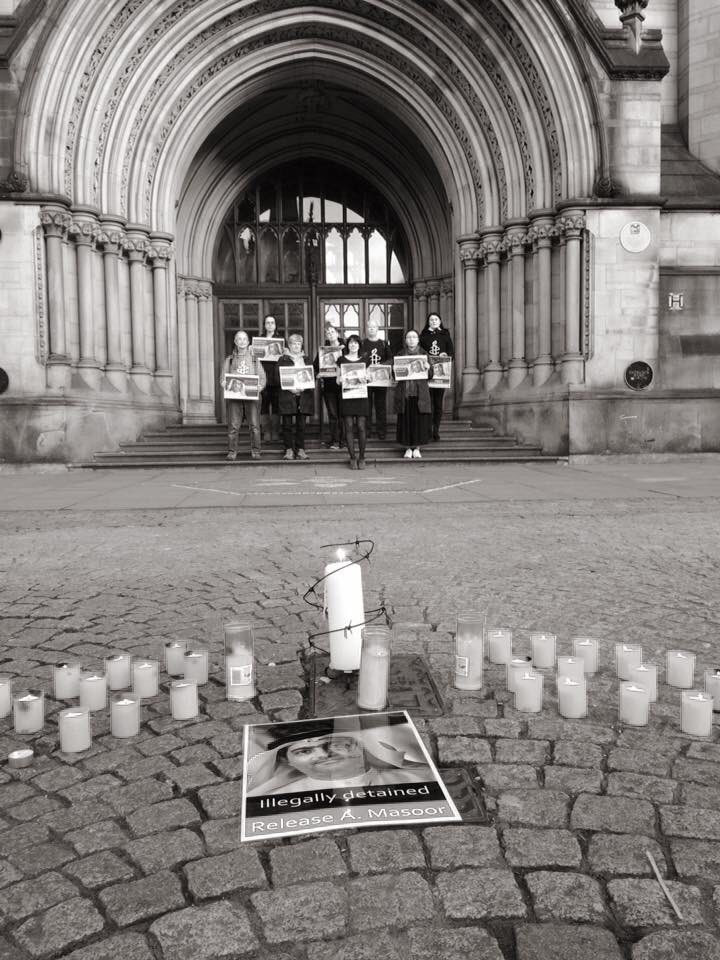
In view of the link between Manchester and UAE airlines (Emirates and Ethiad) it is specially interesting to note that AI Manchester has joined the campaign to free Ahmed Mansoor:
Emirates response to UN High Commissioner’s could do more than calling for more dialogue
September 16, 2016The UN High Commissioner’s opening speech at the 33rd session of the UN Human Rights Council [https://thoolen.wordpress.com/2016/09/14/un-high-commissioner-for-human-rights-states-may-shut-my-office-out-but-they-will-not-shut-us-up/] continues to makes waves and has led to interesting reactions. Here the one from the Emirates as reported by ArabianBusiness.com on 15 September 2016 under the heading: “UAE calls for open, transparent dialogue on human rights”

Zeid Ra’ad Al Hussein, UN High Commissioner for Human Rights, in his statement at the 33rd session of the Human Rights Council, said he was “concerned by harassment and arrests of human rights defenders and political activists, and legislation which enables revocation of citizenship without due process” in Bahrain. The UAE’s Permanent Representative to the United Nations, Obaid Salem Al Zaabi said that the emirates shares the high commissioner’s concerns about several human rights issues in different parts of the world. He even gave careful endorsement of the HC’s statement on interference by saying: “The current experience shows that there is still a misunderstanding in the areas related to enhancing human rights at the national levels, which led the nations to deem them as interference in their respective internal affairs and a violation of their sovereignty,” Al Zaabi said, according to news agency WAM.
But then he had to add that he regretted that the High Commissioner ignored in his update the efforts made by Bahrain to provide a rapprochement ground for all parties to overcome this difficult stage. “Concentrating only on the negative aspects can create a wrong impression that others may exploit to further complicate the situation in Bahrain,” Al Zaabi said. He said the only way to resolve the situation in Bahrain is through objective and constructive dialogue, not confrontational and tense language.
Al Zaabi also renewed the UAE’s readiness to co-operate with the High Commissioner, through its continuous contributions to the relevant UN funds. This is fine of course but, more convincing would be if the Emirates would lift the travel ban on their most prominent human rights defender: Ahmed Mansoor: https://thoolen.wordpress.com/2015/10/06/ahmed-mansoor-leading-human-rights-defender-in-the-emirates-is-2015-laureate-mea/ and https://thoolen.wordpress.com/2015/09/15/fly-emirates-if-the-emirs-let-you/
Source: UAE calls for open, transparent dialogue on human rights – ArabianBusiness.com
 Hans Thoolen on Human Rights Defenders and their awards