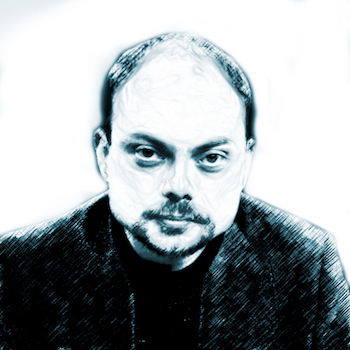
Vladimir Kara-Murza, the Russian democracy activist, historian, twice-poisoned critic of Vladimir Putin’s regime, and a senior advisor to Human Rights First, was reportedly arrested near his Moscow residence on 11 April 2022. Kara-Murza’s arrest came just days after his return to Russia and shortly after CNN broadcasted an interview with him. He is the winner of 3 human rights awards, see: https://www.trueheroesfilms.org/thedigest/laureates/34e43b60-3236-11ea-b4d5-37ffeeddd006
“We are deeply concerned for our friend Vladimir Kara-Murza’s personal safety, and we call on Russian authorities to release him immediately,” said Michael Breen, President and CEO of Human Rights First. “Putin and his regime have shown themselves to be willing to break any law, domestic or international, to suppress political opposition at home and subjugate neighboring countries like Ukraine. We call on all of democracy’s allies to oppose criminal behavior like this to protect human rights in Russia, Ukraine, and around the world.”
Having been targeted for assassination twice before, Kara-Murza knew his return to Russia put him in danger. In his recent CNN interview, Kara-Murza said, “The biggest gift we could give…to the Kremlin would be just to give up and run…that’s all they want from us.”
On 12 April 2022 SRSG-SVC Pramila Patten made a statement at a side event in New York on the Protection of Women Human Rights Defenders and Journalists:
…..Today’s meeting is a critical opportunity to take stock of both the persistent and entrenched, as well as new and emerging, challenges that women activists, women human rights defenders, and women journalists face in their daily lives. The annual Report of the Secretary-General on Conflict-Related Sexual Violence, which is due to be debated tomorrow by the Security Council, notes that in 2021, women peace builders and human rights defenders were specifically targeted, including through sexual violence and harassment as a form of reprisal, in order to exclude them from public life in a number of country settings, such as Afghanistan, Libya, Myanmar, Yemen and elsewhere. Moreover, activists working to highlight the plight and rights of survivors of conflict-related sexual violence, and to support their access to justice and services, were also subjected to reprisals and intimidation, which has a chilling effect on their critical work.
The high-risk environment in which women leaders and activists are compelled to operate is directly correlated with the trend of intersecting humanitarian, security and political crises, including coups, military takeovers, and unconstitutional shifts of power seen in recent months. This has exacerbated the root causes and drivers of conflict-related sexual violence, including militarization, the proliferation of arms, impunity, the collapse of rule of law institutions, structural gender-based inequality, and harmful social norms.
Today, we will hear directly from powerful women activists who have raised their voices against injustice, at great personal risk, and continue to advocate for the eradication of conflict-related sexual violence, and the closure of accountability and protection gaps. Today’s panel of speakers will highlight the tireless efforts of women human rights defenders and journalists, as well as the risks they endure working on the frontlines of armed conflict and civic strife. In the work of my mandate, I am continually reminded that we are only as strong as our partnerships. Since I took up this mandate in 2017, I have consistently emphasized the importance of working directly with survivors as the co-creators of solutions. It is in this spirit that today, I recognize Ms. Jineth Bedoya Lima, a trailblazing survivor, activist, and agent of change, with the demonstrated ability to lead and influence others to take action to end the scourge of conflict-related sexual violence. [see: https://www.trueheroesfilms.org/thedigest/laureates/6f49a0f6-7dd6-4f95-902c-9d9f126e0bcc] I commend her courage and commitment in elevating the issue of conflict-related sexual violence onto the public agenda and historical record in Colombia and globally, and her two-decade quest for justice, truth and reparations for these heinous crimes. Her vision and determination contributed to the establishment of the National Day for the Dignity of Women Victims of Sexual Violence in the context of the internal armed conflict in Colombia, which is commemorated every year on the 25th of May. [see also: https://humanrightsdefenders.blog/2021/10/19/inter-american-court-holds-colombia-responsible-in-the-case-of-jineth-bedoya/]
I also congratulate Ms. Bedoya on the emblematic judgment delivered by the Inter-American Court of Human Rights on 18 October 2021, in connection with her case, which sets a powerful precedent for women activists, journalists, human rights defenders, and peace builders the world-over, who are subjected to, or at risk of, sexual violence. This ruling marks the first time that a court has specifically considered the use of sexual violence as a tool to silence a female journalist in the context of the Colombian armed conflict. Significantly, the judgment also entailed important reparative measures, such as the creation of a fund for the prevention, protection, and assistance of women journalists who are victims of sexual and gender-based violence.
I am pleased to announce that today I am naming Ms. Jineth Bedoya Lima a Global Champion for the Fight Against Sexual Violence in Conflict. In this capacity, she will contribute to the efforts of my mandate to enhance advocacy and awareness-raising, and to amplify the voices of survivors.
Please join me in showing our appreciation for Jineth’s remarkable journey and infinite courage. Jineth, I look forward to working with you in common cause to break not only the silence of history, which has hidden these crimes, but also the vicious cycle of violence and impunity, which must be replaced with a virtuous cycle of recognition and redress for all survivors. It is only by facing difficult truths that we can transcend them and end the seemingly endless cycle of violence.
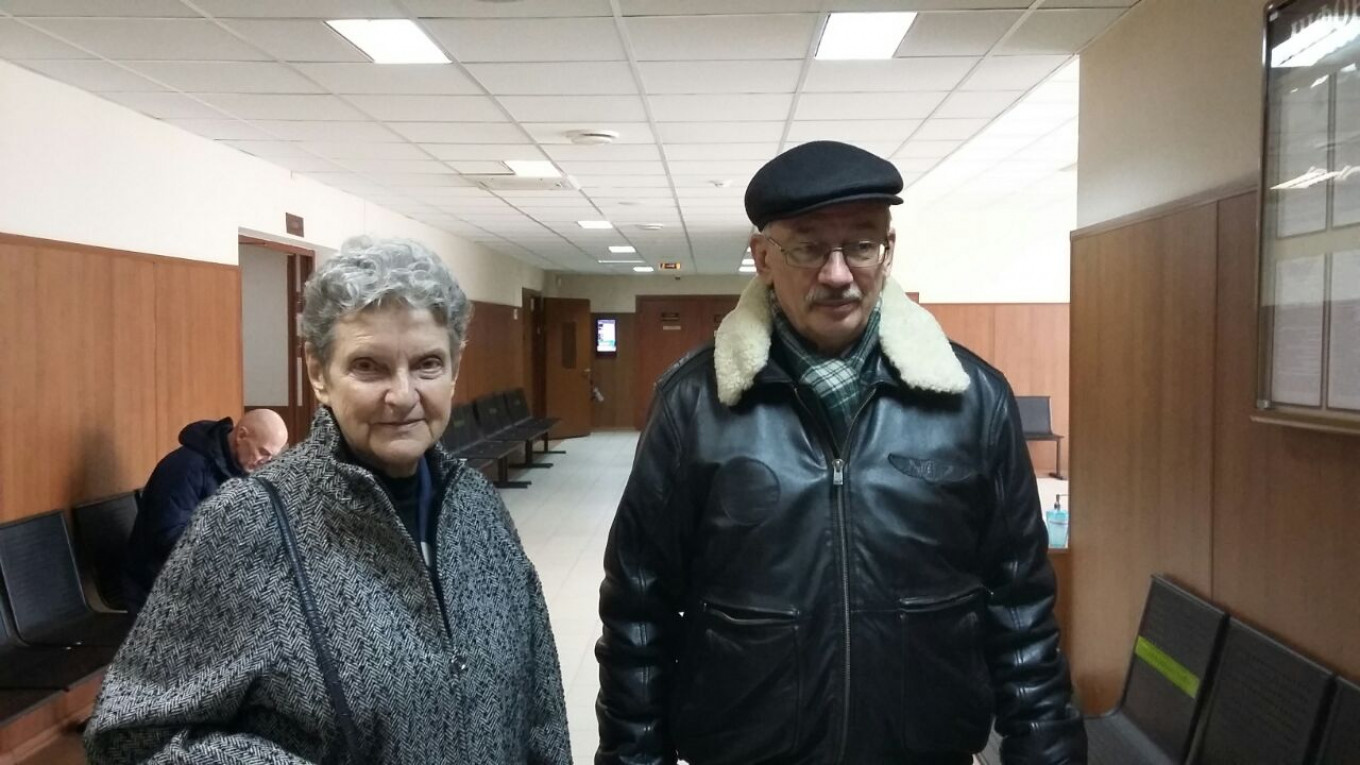
For many years, veteran Russian human rights defender Oleg Orlov thought his country’s darkest days were behind it. Not anymore. “I don’t think I have ever seen a darker period,” says Orlov, 68, who began a lifetime of activism in the early 1980s handing out leaflets against the Soviet war in Afghanistan.
“What is happening now cannot be compared with anything that happened before in Russia, maybe anywhere in the world… when a country that left totalitarianism behind went back.”
For Orlov and other activists of his generation, the conflict in Ukraine has marked the definite end of a hopeful time that started with Soviet leader Mikhail Gorbachev’s reforms in the 1980s. Nearly 40 years later, Russian troops are again fighting and dying abroad, Kremlin opponents are in jail, independent media have been shut down and thousands of Russians have decided to flee the country.
“The hopes we had did not come true, there have been terrible disappointments,” says Svetlana Gannushkina, 80, one of Russia’s most prominent post-Soviet rights activists. “Today we have a country that can no longer be called authoritarian, this is already a totalitarian regime.“
Orlov and Gannushkina are two of the last few critical voices still at work in Russia, and in interviews with AFP in Moscow this week both said they had no plans to quit or to leave. Orlov was in the offices of Memorial, which was shut down last year after decades as Russia’s most prominent rights group, where bookcases sat empty, desks had been cleared and packing boxes were piled on the floor. [see: https://humanrightsdefenders.blog/2021/12/29/russias-supreme-court-orders-closure-emblematic-memorial/]
“I don’t see myself outside Russia. I… have always wanted to live and die in this country,” says Orlov.
A biologist by training, Orlov joined Memorial in the late 1980s when the group was set up to document Soviet-era crimes. He went on to record rights abuses in a series of post-Soviet conflicts, especially in Russia’s two wars in Chechnya in the 1990s. In 1995 he was part of a group who swapped themselves for hostages taken by Chechen fighters and were eventually released, and in 2007 he was abducted, beaten and threatened with execution by a group of masked gunmen in Ingushetia next to Chechnya. After serving two years in the mid-2000s on Russia’s presidential human rights council, Orlov has since been active in opposing President Vladimir Putin. He was arrested at a March 6 protest against the military action in Ukraine, and returned home one day this week to find his front door painted over with the letter “Z” — a symbol used to show support for Russia in the conflict — and a sign reading “collaborator.”
The harsh new political climate and impact of severe sanctions have prompted thousands of Russians to leave in recent weeks, including many of the country’s young, opposition-minded liberals. Gannushkina has seen it at her Civic Assistance Committee, the group she founded in 1990 to help refugees and migrants in an often-hostile environment. “Unfortunately, our wonderful young people, who followed their hearts to our organization, are leaving,” she says…These young people, who we had so much hope for, feel in danger and helpless, so they leave. And we are left here with this insanity...”
The former mathematics professor set up the Civic Assistance Committee to help the thousands displaced by conflicts as the Soviet Union fell apart in 1991. From its modest Moscow offices, it provides legal assistance and help with finding jobs and housing, as well as campaigning for the rights of marginalized groups. Gannushkina also worked with Memorial and like Orlov served on the presidential human rights council before resigning in 2012. A letter of thanks for her service signed by Putin still hangs on her office wall. She remains very active, taking the time to meet individually with people seeking help. [see: https://www.trueheroesfilms.org/thedigest/laureates/215E5731-7786-434A-9C20-923168E65F44]
“No, I don’t think about leaving,” Gannushkina says, though she admits she is glad her children and grandchildren live abroad. I am happy they are not here, because it gives me the chance to say what I think, to everyone and everywhere.”
“We had a chance to create a normal federation, which would be governed in the way other federations are governed in democratic regimes. We missed that chance,” she says. All she can do now, Gannushkina says, is “hope that time will pass and we will get another chance. “But most likely I won’t be here to see it.”
Also on 31 March 2022 The Washington Post had an editorial: A generation of independent Russian journalists meets its grim end:
In his lecture accepting the Nobel Peace Prize on Dec. 10, the editor of the Russian investigative newspaper Novaya Gazeta, Dmitry Muratov, declared that “journalism in Russia is going through a dark valley.” He said more than 100 journalists, media outlets, human rights defenders and nongovernmental organizations have been branded “foreign agents,” a label equivalent to “enemies of the people.” Many journalists lost their jobs and fled the country. [see: https://www.trueheroesfilms.org/thedigest/laureates/bdbb2312-8b7a-4e44-bb4c-1864474daec7]
Now Novaya Gazeta itself has suspended publication, threatened by the government for failing to label a group as a “foreign agent” and because of an onerous new law that makes it a crime with penalties up to 15 years in prison to “discredit” the armed forces — including use of the words “war,” “invasion” or “attack” to describe President Vladimir Putin’s onslaught against Ukraine. A day after the invasion, Novaya Gazeta expressed outrage with a front-page three-word banner headline against a black background: “Russia. Bombs. Ukraine.” The paper continued to report, including from a correspondent in Ukraine, until it could no longer. The decision to suspend was portrayed by Mr. Muratov as temporary, but the future for all independent media in Russia appears grim.
This is a tombstone moment for a generation of independent journalists. In the final years of Soviet glasnost and in the unbridled and exuberant first years of Russia’s democracy, they threw off the straitjacket of censors and state-dominated media outlets to create newspapers, magazines, radio stations, television broadcasts and digital and social media that drew large and information-hungry audiences. To be sure, the audiences often were liberal, elite and urban, but at the very least, Russians benefited from information sources outside state control. Even in the authoritarian years of Mr. Putin’s rise, some were permitted to function. Novaya Gazeta distinguished itself with hard-hitting investigations, as Mr. Muratov noted in his lecture, fearlessly exposing money-laundering and the exploitation of Siberian forests, among other topics. Six of the paper’s reporters have been killed over the years.
But now it seems that Russia is moving from authoritarianism to totalitarianism, where the state can no longer tolerate any independent outlets. Echo Moskvy, a bastion of open discussion on radio and online, has been silenced and closed. TV Dozhd, founded in 2010, has suspended operations, and some of its journalists have fled. The popular news website Znak.com has also closed. A similar trend has swept independent media in Russia’s regions.
Mr. Putin completely missed the ferment and exhilaration of the late-1980s glasnost years — he was serving in the KGB in East Germany — and in his two decades in power, he has shown little patience for free speech. Lately, dozens of people have been arrested for expressing anti-war sentiments. Vera Bashmakova, the editor of a popular science magazine, was detained for several hours when she showed up at preschool to pick up her daughter with a “No to war!” sign in her car window. She was charged with “discrediting the army.” This is indeed a “dark valley” for Russia, and it is growing darker by the day.
European Union leaders should announce specific policy responses to the Chinese government’s atrocity crimes, Human Rights Watch said today, 30 March 2022. A virtual summit between the EU and China is scheduled for April 1, 2022.
The summit takes place at a time of heightened tensions between the EU and the Chinese government, which retaliated against Lithuania for its relations with Taiwan, baselessly sanctioned EU bodies and European research institutions, and has not condemned Russian war crimes in Ukraine. The Chinese government’s disregard for international human rights norms mirrors its domestic track record of grave abuses without accountability.
“The EU’s foreign policy chief has pointed with alarm to the Chinese government’s ‘revisionist campaign’ against universal human rights and institutions,” said Sophie Richardson, China director at Human Rights Watch. “Brussels should revise its approach to match the magnitude of that threat.”
While the EU has taken important steps in reaction to these developments, including some targeted sanctions and strong condemnations of Beijing’s abuses at the United Nations, these efforts lack the consequences to bring significant change. The rights groups urged Michel and von der Leyen to use their time with the Chinese leaders to announce further steps to counter Beijing’s abuses, and cautioned them against calling for yet another round of the bilateral human rights dialogue, which after 37 rounds has proven unable to secure concrete progress.
Stronger, better coordinated action is also supported by the European Parliament, which has remained a staunch critic of the Chinese government’s crackdown and has repeatedly denounced its abuses. Beijing responded by sanctioning several members of the European Parliament. In response, the European Parliament froze consideration of a bilateral trade deal and called for a new, and more assertive, EU strategy on China, including further targeted sanctions and closer coordination with like-minded partners. [see: https://humanrightsdefenders.blog/2021/05/21/china-eu-investment-deal-off-the-rail/]
“Presidents Michel and von der Leyen should go beyond words of condemnation at the summit if they want to deter Chinese government violations now and in the future,” said Claudio Francavilla, EU advocate at Human Rights Watch. “Bolder steps are needed to counter Beijing’s crimes against humanity and anti-rights agenda, and EU leaders should announce their determination to pursue them.”
On Monday, 14 March, 2022 Secretary of State, Antony J. Blinken, hosted the annual International Women of Courage (IWOC) Awards in a virtual ceremony at the U.S. Department of State. The 2022 IWOC Award ceremony honours a group of twelve extraordinary women from around the world. The First Lady of the United States, Dr. Jill Biden, delivered remarks in recognition of the courageous accomplishments of this year’s IWOC awardees. For more on this award and its laureates, see: https://www.trueheroesfilms.org/thedigest/awards/A386E593-5BB7-12E8-0528-AAF11BE46695
Out of an abundance of caution due to the COVID-19 pandemic, and in order to practice safe social distancing, the ceremony was live streamed on www.state.gov.
Now in its 16th year, the Secretary of State’s IWOC Award recognizes women from around the globe who have demonstrated exceptional courage, strength, and leadership in advocating for peace, justice, human rights, gender equity and equality, and the empowerment of women and girls, in all their diversity – often at great personal risk and sacrifice. U.S. diplomatic missions overseas nominate one woman of courage from their respective host countries and finalists are selected and approved by senior Department officials. Following the virtual IWOC ceremony, the awardees will participate in an International Visitor Leadership Program (IVLP) Virtual exchange to connect with their American counterparts and strengthen the global network of women leaders. The 2022 awardees are:
The candidates (activists, personalities or organisations) must have distinguished themselves in the following areas: protection of human rights, defence of pluralist democracy, public awareness raising on issues of global interdependence and solidarity.
Nominations can be submitted through the online form available on the North-South Prize webpage. The deadline for presenting nominations is 15 September. The Jury of the North-South Prize, composed by the members of the Bureau of the Executive Committee of the North-South Centre, will meet in the last quarter of 2022 to select this year’s Laureates.
For over 30 years, the independent Ethiopian Human Rights Council (EHRCO) has been the voice of human rights in Ethiopia. The employees investigate human rights violations, provide legal advice for those affected and are involved in human rights education. Their use is often associated with reprisals and personal dangers. The outbreak of the armed conflict in 2020 in the north of the country, especially in the Tigray region, makes EHRCO’s human rights work indispensable.
“The EHRCO is the voice of the unheard in Ethiopia,” says Markus N. Beeko, Secretary General of Amnesty International in Germany. “For 30 years, EHRCO has been fighting for those affected by human rights violations: its supporters have been insulted, imprisoned, tortured and even killed for this. Nevertheless, EHRCO has never allowed itself to be intimidated. Amnesty International is honoring this courage and commitment with the eleventh Amnesty Human Rights Prize. ”
“Receiving the award and working with international human rights organizations such as Amnesty International are of great importance to us. Human rights are universal and require cooperation and solidarity to improve human rights and democracy,” said Dan Yirga Haile, Executive Director of EHRCO.
“We now know that if something happens to us, others will raise their voices and stand up for us in solidarity. In Ethiopia, the government and politicians suppress many popular voices in various ways. These voices do not receive the attention they deserve. The human rights award of Amnesty International is helping to make these voices heard by recognizing EHRCO’s tireless commitment to human rights over the past thirty years.”
Since the armed conflict in northern Ethiopia began in November 2020, Amnesty International has observed that all parties to the conflict are responsible for gross human rights violations, including extrajudicial executions and sexualised violence against women and girls. These constitute violations of international humanitarian law, war crimes and, in some cases, possible crimes against humanity, according to Amnesty International. Millions of people have been internally displaced and millions of people in Tigray and neighboring regions are being denied humanitarian assistance. Clashes between the armed groups claimed at least 1,500 lives, according to Amnesty. Police have been arbitrarily detaining people coming from Tigray or working on the conflict since early 2021.
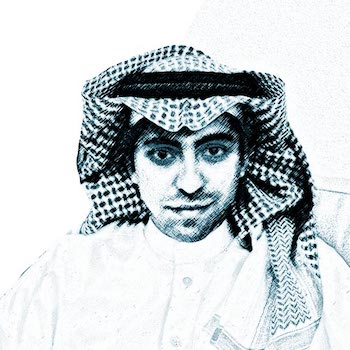
On Friday 11 March 2022, AFP reported that Saudi blogger Raif Badawi has been released from prison in Saudi Arabia after serving a 10-year sentence for advocating an end to religious influence on public life.
“Raif called me. He is free,” his wife, Ensaf Haidar, who lives in Canada with their three children and had been advocating for his release, told AFP. Badawi’s release was also confirmed by a Saudi security official who said on condition of anonymity that Badawi “was released today”. “I jumped when I found out. I couldn’t believe it. I can’t wait to see my dad, I’m so excited,” one of his daughters, Nawja Badawi, 18, told AFP. Badawi’s son Terad Raif Badawi tweeted: “After 10 years my father is free!”
“Raif Badawi, human rights defender in Saudi Arabia, has finally been released!” Amnesty International tweeted. “Thousands of you have mobilized alongside us in the defense of Raif Badawi for 10 years. A big thank you to all of you for your tireless support.”
Every Friday for almost seven years, Haidar – who fled to Canada after Badawi’s arrest and has since become a Canadian citizen – had held a public vigil for him. Quebec has paved the way for Raif Badawi to come to the country if he chooses by placing him on a priority list of possible immigrants for humanitarian reasons.
No details of his release conditions were immediately available. But Amnesty noted that the Saudi blogger could still face a 10-year ban on all travel outside Saudi Arabia following his release.
Today, Human Rights First announced a call for nominations for the 2022 Roger N. Baldwin Medal of Liberty Award. Nominations are due by April 10.
“For more than thirty years, the Baldwin Medal of Liberty has provided recognition and support for courageous human rights activists around the world,” said Human Rights First President and CEO Mike Breen. “We are proud to issue this prestigious award, and we encourage supporters of human rights to nominate deserving individuals or organizations.”
This year’s award will honor an individual or organization outside of the United States that has demonstrated an exceptional commitment to human rights advocacy in areas such as the protection of refugees; human rights accountability; countering extremism, including anti-Semitism and Islamophobia; or technology and human rights, among other topics. See also: https://www.trueheroesfilms.org/thedigest/awards/F23B5465-6A15-4463-9A91-14B2977D9FCE
A distinguished jury will select this year’s winner, who will receive a $30,000 prize and a trip to the United States to engage in advocacy. An individual or an organization can make nominations. Nominees will be judged based on the following criteria:
The nominee’s work is unique or particularly distinctive;
The nominee’s work has been effective in advancing human rights in a country other than the United States;
The nominee faces risk or insecurity as a result of their work; and
The nominee would benefit significantly from receiving the Baldwin Award in the form of enhanced protection or any other way.
On 2 March 2022, Fortify Rights called on the Thai authorities to drop all remaining cases brought by Thai chicken company Thammakaset Company Limited against human rights defenders and protect the right to freedom of expression. On February 22, the Bangkok South Criminal Court rescheduled the start of the criminal defamation trial against Angkhana Neelapaijit to 25 April. See: https://www.trueheroesfilms.org/thedigest/laureates/0D5DED3E-F79F-4AB4-8261-F6A19486F062
“Delaying the trial affects access to justice and leaves the defendant in fear and worry,” said Angkhana Neelapaijit. “It affects the person’s livelihood and freedom during the bail process. The delays are incredibly traumatizing.”
Thammakaset first filed a complaint against Angkhana Neelapaijit more than two years ago, on October 25, 2019, alleging criminal defamation for posting two tweets on social media on December 3, 2018 and June 28, 2019 that expressed support for human rights defenders facing lawsuits by the company. On August 16, 2021, the court concluded that the case should proceed to trial following four preliminary hearings that spanned more than 17 months. The court originally scheduled the trial to start on March 3, 2022 but postponed the start due to rising COVID-19 cases in Thailand.
Angkhana Neelapaijit also faces a second criminal defamation complaint brought by Thammakaset in June 2020 that is part of a combined case that includes charges against Fortify Rights Senior Human Rights Specialist Puttanee Kangkun and Thanaporn Saleephol, a former Fortify Rights Communications Associate. The complaints against the three women all relate to similar social media posts expressing solidarity with others facing lawsuits brought by Thammakaset. The Bangkok South Criminal Court is scheduled to continue preliminary hearings on the combined case on March 21.
The Community Resource Center Foundation—a Thai nonprofit and legal aid organization committed to promoting human rights, community rights, and environmental protection – is providing legal representation to human rights defenders facing complaints by Thammakaset, including in the cases against Angkhana Neelapaijit, Puttanee Kangkun, and Thanaporn Saleephol.
“Thailand should be proud and promote the work and achievements of Angkhana Neelapaijit as a strong Thai woman human rights defender, a winner of the prestigious Magsaysay award, and a former National Human Rights Commissioner,” said Amy Smith, Executive Director of Fortify Rights. “These types of lawsuits create an insecure environment for human rights defenders, hampering their ability to conduct critical activities that benefit the public. The case against Angkhana Neelapaijit and others should be dropped.” See: https://humanrightsdefenders.blog/2019/08/03/magsaysay-awards-2019-honor-4-outstanding-asians/
On March 31, the Court of Appeal will also decide whether to uphold an earlier decision by the Criminal Court to acquit human rights defender and former Thammakaset employee Nan Win and former Fortify Rights Thailand Human Rights Specialist Sutharee Wannasiri of criminal defamation charges brought by Thammakaset in October 2018.
Since 2016, Thammakaset has filed at least 37 complaints against 22 human rights defenders. The courts have dismissed or ruled against the company in almost all cases.
In 2018, the National Legislative Assembly amended Section 161/1 of the Thailand Criminal Procedure Code, allowing judges to dismiss and forbid the refiling of a complaint by a private individual if the complaint is filed “in bad faith or with misrepresentation of facts to harass or take advantage of a defendant.” Section 165/2 also allows the presentation of evidence to show that the complaint “lacks merit.” Despite these amendments and specific requests for the court to apply Section 161/1 to prevent cases brought by Thammakaset from moving forward, the courts have allowed these cases to proceed.

 protection of human rights,
 Hans Thoolen on Human Rights Defenders and their awards