Posts Tagged ‘Colombia’

Death threats in Colombia on the rise again

February 12, 2014
Martha Díaz at the 2013 FLD Platform for Human Rights Defenders
(Martha Díaz at the 2013 FLD Platform for Human Rights Defenders)
Death threats abound again in Colombia:
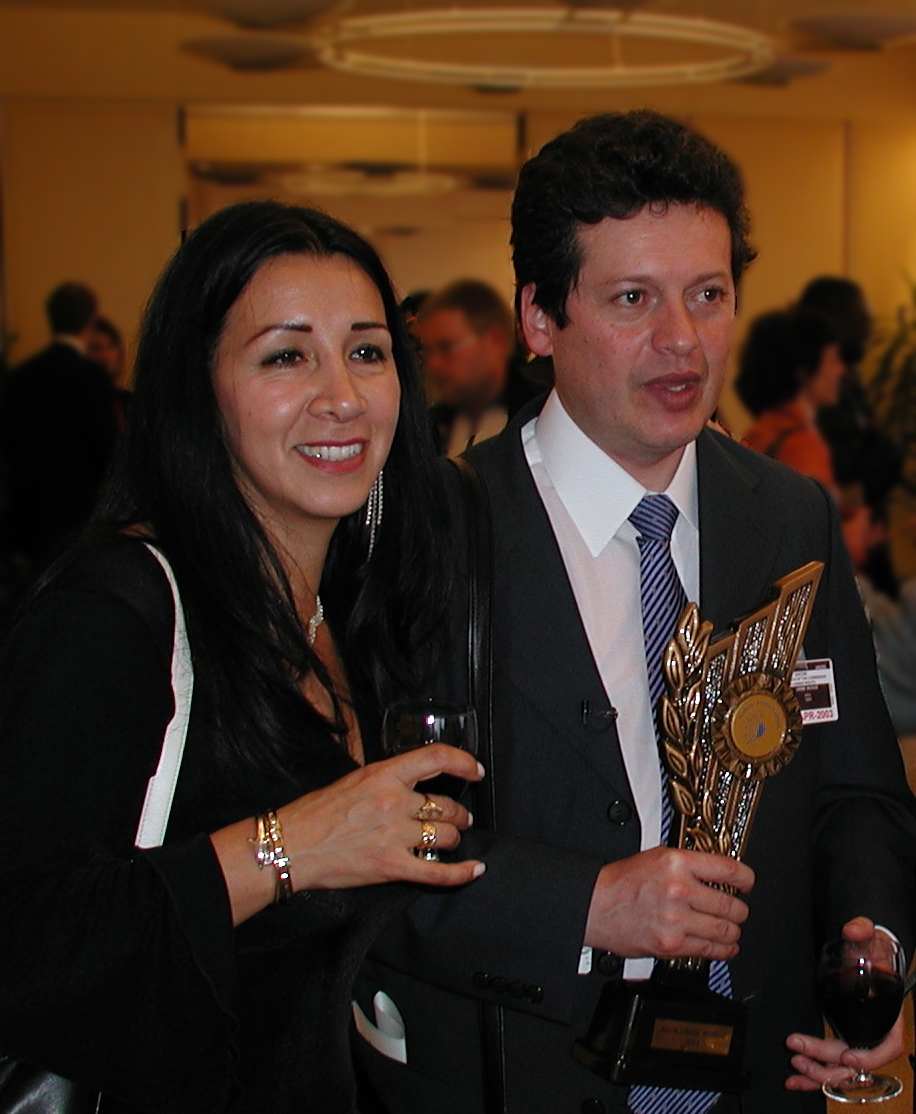
Front Line Defenders report that on 9 February 2014, human rights defender Martha Díaz received the fifth text message to declare her a military target and threaten her with death within three days. All five threats have come from the same phone number. Martha Díaz is the director and legal representative of the Asociación de Familiares Unidas por un Solo Dolor (Association of Relatives United by a Single Sorrow – AFUSODO), an organisation for family members of victims of extrajudicial killings, particularly false positives. She is also the technical secretary of the Atlantic chapter of MOVICE (National Movement of Victims of the State).On Wednesday 12 February,  the President of Parliamentarians for Global Action Ross Robertson has expressed his concern and condemnation of the death threats against a well-known Colombian parliamentarian, Ivan Cepeda is a well-respected Colombian MP and human rights defender as well as against Bogota Mayor Gustavo Petro and human rights defender Alirio Uribe Muñoz (the latter is the 2003 Laureate of the Martin Ennals Award for Human Rights Defenders, portrayed here with his wife in 2003). Alirio Uribe Munoz and spouse MEA 2003

via:

Colombia: Series of death threats against human rights defender Martha Díaz | Front Line.

MP deplores death threats against Colombian MP | Voxy.co.nz.

Colombia: Human Rights Defender Adelinda Gómez Gaviria killed and David Ravelo Crespo remains in jail

October 5, 2013

14 September 2013 marked three years since renowned human rights defender David Ravelo Crespo, member of the director’s board of the Regional Corporation for the Defense of Human Rights (CREDHOS) based in the city of Barrancabermeja, was detained.  Over NGOs reiterated on that occasion their concerns regarding a series of irregularities that were reported throughout the proceedings which resulted in his conviction and sentencing to 220 months in prison. Reiterating their respect for the independence of the judiciary in Colombia, the NGO statement lists a series of irregularities (see statement in full). The NGOs stress that David Ravelo Crespo is an internationally renowned human rights defender. He has won several awards such as the San Pedro Claver Award from the Diocese of Barrancabermeja in 2009; was one of the finalists for the 2013 Front Line Defenders Award fand has been nominated for the National Human Rights Defenders Awards in Colombia . His NGO was nominated for the 2013 Human Rights Award for the city of Weimar (Germany).

Two weeks later Front Line reports that human rights defender and campesina leader Adelinda Gómez Gaviria was killed in Almaguer, Cauca region. Adelinda Gómez Gaviria worked with the Comité de Integración del Macizo Colombiano – CIMA. She played an active role in the  Mining and Environmental Forum in Almaguer, which has 1,500 indigenous and farming members. On 30 September as Adelinda Gómez Gaviria was returning home after a meeting, she and her 16 year-old son were approached and shot at by two unidentified men. Adelinda Gómez Gaviria suffered five bullet wounds and was killed, whilst her son is in a critical state in the Clínica La Estancia in Popayán city. One month prior to her killing Adelinda Gómez Gaviria had received a threatening telephone call from strangers who warned her to: “Stop messing around with this miners’ thing. It’s risky and it’ll get you killed.” The Red por la Vida y los Derechos Humanos del Cauca (Cauca Network for Life and Human Rights) has registered the murders of fourteen women human rights defenders in Cauca so far this year, primarily from rural areas of Cauca. Twelve death threats against human rights defenders have been reported, with five of those against women.

Colombia: On the third anniversary of the detention of renowned Colombian human rights defender David Ravelo Crespo, International organisations express concern / September 13, 2013 / Urgent Interventions / Human rights defenders / OMCT.

For HRDs digital surveillance can mark the difference between life and death says Mary Lawlor

September 22, 2013

This blog has tried to pay regularly attention to the crucial issue of electronic security and referred to the different proposal that aim to redress the situation in favour of human rights defenders. In a column of Friday 20 September the Director of Front Line, Mary Lawlor, writes about the digital security programme “Security in a Box” which her organisation and the Tactical Technology collective started some years ago. For Sunday reading here the whole text:

Mary Lawlor

ARE YOU AWARE that the recording device on your smartphone can be activated remotely and record sensitive conversations? And that the webcam on your PC can film inside your office without you knowing?

For most people, debates about the snooping NSA and GCHQ are little more than great material for a chat down the pub, but for human rights defenders around the world, digital security is synonymous with personal security. For a gay rights campaigner in Honduras or a trade unionist in Colombia, safety from interception of communications or seizure of data can be the difference between freedom or imprisonment, life or death.

Digital surveillance has been described as “connecting the boot to the brain of the repressive regime”. Governments are developing the capacity to manipulate, monitor and subvert electronic information. Surveillance and censorship is growing and the lack of security for digitally stored or communicated information is becoming a major problem for human rights defenders in many countries.

By hacking into the computer system of a human rights organisation, governments or hostile hackers can access sensitive information, including the details of the organisation’s members and supporters. They can also install spyware or viruses to monitor or disrupt the work of the organisation.

Dangerous in the wrong hands

One of the best-documented cyber attacks on an NGO was the hacking of the Political Prisoner’s Solidarity Committee, a Colombian human rights organisation. The organisation’s email account was hacked and used to send malicious viruses and spam messages, and all employee work email accounts were deleted.

The hacked email account was also used to send threatening emails to a member of the organisation based in a different region. Their offices were broken into and the hard disk of one computer was stolen and replaced with a faulty one. Spyware was found on the computer used to maintain the organisation’s website; this recorded all the information on the computer and sent it via the internet to an unknown location. This cyber attack also coincided with a wave of anonymous phone calls and direct threats to staff members.

In this digital age how can human rights defenders make sure their online communications and their data are safe and that they are not putting themselves or colleagues in danger?

This is where Front Line Defenders is able to give practical help. With a security grant from Front Line Defenders, the Political Prisoner’s Solidarity Committee installed a new secured server and router, and upgraded their whole computer security system. We also organised a workshop on digital security for all the members of their organisation.

This was useful for a seriously at-risk organisation. But there are effective steps all of us can take to stay safe. Most of us have a computer or laptop and most have a password. That password is probably a cat’s name or a daughter’s name – which can be broken in about 10 seconds. Simply by changing your password to a longer one which combines upper case, lower case and digits makes the password virtually unbreakable and is a simple, first step to improve your online security.

“Back doors”

Recent revelations have shown that even encrypted communications that were previously thought to be secure have been built with deliberately included “back doors”, so that organisations like the NSA and GCHQ can access information that people think is secret. One protection against these built-in weaknesses is to use open-source software – this is software not provided by a big-name company like Microsoft or Apple, but one in which the workings of the software are made available for all to see, so that any such intended weakness in the encryption would be spotted and exposed by the global community of digital security experts.

Even if authorities or malicious hackers can’t see what you’re communicating, it can still be possible for them to see when you communicate and with whom. The Tactical Technology Collective has said, “If you use a computer, surf the internet, text your friends via a mobile phone or shop online – you leave a digital shadow.” If you want to find out the size of your digital shadow, and more importantly want to know what you can do about it, visit their award-winning website myshadow.org (now: https://privacy.net/analyzer/)

.

Security in-a-box (available onlineis a collaborative effort of the Tactical Technology collective and Front Line Defenders. It was created to meet the digital security and privacy needs of advocates and human rights defenders, but can also be used by members of the public.Security in-a-box includes a how-to booklet  which addresses a number of important digital security issues.

It also provides a collection of Hands-on Guides, each of which includes a particular freeware or open source software tool, as well as instructions on how you can use that tool to secure your computer, protect your information or maintain the privacy of your internet communication.

A clear understanding of the risks

When we started our Digital Security Programme we only ran one or two trainings per year. Now we are organising workshops on digital security all over the world, sometimes in secret locations for human rights defenders from countries where even to use the word “encryption” in an email would bring you under the eagle eye of the security services.

Electronic communication enables human rights defenders to network and cooperate as never before but survival depends on having a clear understanding of the risks involved and the need for a well thought-out digital security strategy.

Column: For some people, digital surveillance can mark the difference between life and death.

Example of how universities can link up with human rights defenders: Minnesota and Colombia

September 18, 2013

Hailey Colwell on 18 September describes how: Read the rest of this entry »

Colombian Human rights defender informed of plan to kill him and his wife

June 11, 2013

On 3 June 2013, an email was sent to Colonel Julián González, Chief of Police for Sucre, Colombia, informing him of a plan to kill human rights defender  Juan David Díaz Chamorro, his wife Malena Martínez, and one other person closely linked to the family. Several other human rights defenders were copied in the email. Juan David Díaz Chamorro is the leader of the Sucre branch of the Movimiento Nacional de Víctimas de Crímenes de EstadoMOVICE (National Movement of Victims of State Crimes) and the son of Eudaldo Díaz, assassinated Mayor of El Roble, Sucre.  Read the rest of this entry »

Crime pays in Colombia: Human rights organisation GIDH closes offices

May 30, 2013

The Grupo Interdisciplinario por los Derechos Humanos GIDH (Interdisciplinary Group for Human Rights), based in Medellín, Colombia, has announced that it has been forced to close its offices based on information that threats received by the organisation in the last months would be realised within the next hours. GIDH is a not-for-profit organisation working with victims of state violence. Front Line Defenders Read the rest of this entry »

Colombia: Assassination of Elver Cordero Oviedo, well-known human rights defender in Córdoba

April 22, 2013

NGOs as well as the Inter-American Commission on Human Rights (IACHR) condemn the murder of Ever Cordero, chairman a participatory dialogue process for victims of displacement in the department Córdoba, Colombia. 

Ever Cordero was a community leader who worked to bring about the restitution of lands for victims of the armed conflict. On April 9, 2013, Ever Cordero was traveling toward the urban area of Valencia, in Córdoba, when two individuals on a motorcycle intercepted him and shot him to death. Ever Cordero was going to Valencia to attend ceremonies and marches commemorating the National Day of Memory and Solidarity with Victims.

The Observatory for the Protection of Human Rights Defenders issues a text in Spanish:

via Colombia: Assassination of Mr. Elver Cordero Oviedo, well-known human rights defender in Córdoba / April 16, 2013 / Urgent Interventions / Human rights defenders / OMCT.


Colombian Human Rights Defender dies under controversial circumstances

March 4, 2013
Colombian human rights defender Angélica Bello died on 16 February in controversial circumstancesFor years Angélica Bello, a human rights defender from Colombia, rarely spent a day alone – that would have been, simply, too dangerous. A number of threats against her because of her job helping the many survivors of sexual violence – women caught up in Colombia’s long-running armed conflict – meant that it was too dangerous for the 45-year-old mother of four to travel alone. In 2000, two of her daughters were kidnapped and kept as sexual slaves by paramilitaries, and were only released after Angélica personally intervened. Read the rest of this entry »

Father Alberto Franco’s car screen tested with bullets in Colombia

February 14, 2013

Frontline NEWlogos-1 condensed version - cropped reported that on 13 February 2013, three pellets were fired at the vehicle of Father Alberto Franco, a prominent human rights defender and Executive Secretary of the Comisión Intereclesial de Justicia y Paz – CIJP (Inter-Church Commission for Justice and Peace). The CIJP is a church-based human rights organisation working to expose human rights violations committed by state security forces and paramilitary groups in conflict regions in Colombia. The attack follows acts of surveillance and intimidation of Father Alberto Franco during recent weeks and coincides with the hearing of the case “Operation Genesis”, a joint military and paramilitary operation which resulted in the killing and forced disappearance of many civilians; a case which the CIJP has provided key evidence for. Read the rest of this entry »

Justice for Colombia reports threats against human rights defenders

February 5, 2013

Friday, 1 February 2013 Diego Martinez, national executive secretary, and Jeison Pava of the Permanent Committee for Human Rights (CPDH), have suffered threats in the last weeks. On 16th January, an anonymous call was made to the CPDH head office in Bogota, asking after Mr. Pava, his timetable and when he would be coming and going from the office. On the receptionist’s refusal to relay this information, the caller insulted her and said “We need that head” referring to Mr. Pava. On 28th January, Mr. Martinez’ bodyguard was detained by units of the National Police. Mr. Martinez informed the police officers that this would leave him without security, however the police officers continued their operation. The police then also asked Mr. Martinez to come with them, despite having committed no crime, but he refused. One of the police officers refused to identify himself, and when Mr. Martinez went to lodge a complaint at the police station, they point-blank refused to receive his report. The same police unit has since returned to the CPDH headquarters, threatening Mr. Martinez against denouncing the crime.

On 4th July 2012, Martinez and Pava were described as military targets. Other members of the CPDH human rights organization have also been threatened in recent months, including Harry Caicedo, director of the CPDH branch in Charco, Narino, whose house was shot at in the night on 13th January, following an arson attack months before. CPDH has been requesting security measures since August 2010 and in May 2012 was granted “precautionary measures” by the Inter-American Commission of Human Rights. In December 2012 the government finally provided the requested security. CPDH has expressed concern that, only one month on, in Mr. Martinez’ case, state forces removed the protection they are obligated to provide.

via Justice for Colombia news: Threats and hostilities against CPDH human rights defenders.