Here a few highlights for this year from UN and NGOs sources:
While commemorating the 76th anniversary of the Universal Declaration of Human Rights, the United Nations Secretary-General Antonio Guterres said that “human rights are under assault”. “Whether economic, social, civic, cultural or political, when one right is undermined, all rights are undermined,” Guterres said in a post on X. “Let’s protect, defend and uphold all human rights for all people,” he added. In a video message, The UN secretary-general said “we must stand up for all rights — always.”
..As we mark Human Rights Day 2024, we are reminded that human rights are not abstract ideals. They are vital tools for addressing these pressing challenges and advancing dignity and justice for all.
… the United Nations Development Programme (UNDP) works to support human rights solutions that strengthen accountability, protect communities and foster peace, recovery, and stability. This includes partnering with National Human Rights Institutions, which often represent the frontline defenders of human rights. … Local initiatives also remain key. That includes women in Somalia who are being supported to lead peace efforts including assisting those facing violence, discrimination, and injustice. “I have resolved numerous local disputes…I feel motivated when I see I have been able to change people’s lives positively,” says Fatuma who led a local Peace Working Group.
As the accelerating climate emergency threatens the ability of current and future generations to enjoy their right to a clean, healthy, and sustainable environment, UNDP is focusing on access to justice, working with the United Nations Environment Programme (UNEP) and OHCHR to help communities claim their rights. …The private sector also has a pivotal role to play. UNDP supports the implementation of the UN Guiding Principles on Business and Human Rights including to advance sustainable practices that protect the environment. Indeed, technology offers both risks and opportunities to advance human rights. The Global Digital Compact aims to create an inclusive, open, safe, and secure digital space that respects, protects and promotes human rights. Tech-enabled UNDP tools like iVerify and eMonitor+ deployed in over 25 countries to monitor and address false narratives and hate speech show the potential. It is now crucial to adopt a rights-based approach to technologies like A.I., addressing ethical challenges, protecting data, and tackling biases to mitigate risks today and unlock immense benefits for the generations to come. [https://humanrightsdefenders.blog/2024/09/27/united-nations-adopts-ground-breaking-pact-for-the-future-to-transform-global-governance/]
——
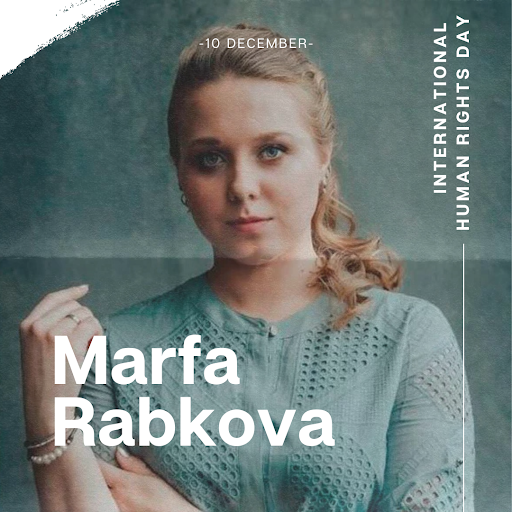
The NGO Index on Censorship spotlights four people standing up for human rights around the world:
Despite the declaration, all around the world human rights are being challenged, degraded and attacked. That is why this year, on Human Rights Day, we pay tribute to five human rights defenders who have worked tirelessly to defend people’s rights and have been persecuted as a result.
Jemimah Steinfeld, CEO at Index on Censorship said: “In this increasingly polarised and authoritarian world these people stand out as beacons of hope and light. It’s depressing to think that over 75 years since the Declaration, we still need a day like this but that should not detract from the bravery and fortitude of these people. May their example show us all how we can all better fight injustice.”
Marfa Rabkova (Belarus) Marfa Rabkova is a human rights defender who has been behind bars since 17 September 2020. She has long been targeted by the Belarusian authorities as a result of her civic activism. Marfa became head of the volunteer service at the Human Rights Centre Viasna in 2019. During the 2020 presidential election, she joined the “Human Rights Defenders for Free Elections” campaign, which registered over 1,500 election observers. When peaceful protests began to take place after the election, she helped document evidence of torture and violence against demonstrators. Marfa was indicted on a long list of charges, including inciting social hostility to the government and leading a criminal organisation. She was sentenced to 14 years and 9 months in prison in September 2022, after nearly two years of pre-trial detention. Index on Censorship calls for her immediate and unconditional release. See also: https://humanrightsdefenders.blog/2021/03/22/belarus-end-reprisals-against-human-rights-defenders/
Threats against investigative journalists are widely documented. According to UNESCO’s Observatory of Killed Journalists, 1,718 journalists have been killed since 1993. The Committee to Protect Journalists’ latest prison census found the number of jailed journalists hit a near-record high, with 320 reporters behind bars at the time of the count last December. Yet a lesser-known story is the increasing targeting of the lawyers representing them.
“Behind all those cases against journalists who have become household names — like Evan Gershkovich, Maria Ressa, and José Rubén Zamora — there are the often unseen lawyers representing them and taking remarkable risks to defend them,” Carolina Henriquez-Schmitz, director of TrustLaw, said at Trust Conference 2024. “[Lawyers] themselves are becoming the targets of a whole range of attacks.”
In recent years, threats have escalated. Azerbaijani lawyer Elchin Sadigov, and his client, journalist Avaz Zeynalli, were detained in 2022 while officers searched their homes and offices and seized confidential case files. Vo An Don, a Vietnamese human rights lawyer who represented a dissident blogger was disbarred in 2018 and subsequently sought political asylum in the US. Dmitry Talantov, a lawyer who represented Russian investigative journalist Ivan Safronov in 2021, now himself faces up to 15 years in prison on a number of charges.
“It sends an unequivocal message, not just to the individual lawyer, but to the entire legal profession,” Henriquez-Schmitz said. “If you pursue these cases, we will go after you. The potential chilling effect cannot be understated.”
Human rights lawyer Vo An Don was disbarred and forced to seek political asylum in the US after the Vietnamese government targeted him for representing a dissident blogger. Image: Screenshot, Facebook
The Thomson Reuters Foundation, in partnership with the American Bar Association Center for Human Rights and Media Defence, conducted a first-of-its-kind review of individual cases of harassment or persecution of lawyers defending journalists. The recently published preliminary findings identified over 40 cases of lawyers being targeted in four ways: criminal and other suits; interference with their ability to represent their clients; targeting their ability to practice the profession; and threatened killing, physical harm, forced flight, or exile, and other similar persecution.
“The research has identified cases in Vietnam, Ethiopia, Zimbabwe, Azerbaijan, Iran, Yemen, Tajikistan, Russia, China, and Hong Kong, to name a few. Unsurprisingly, many of these countries also happen to be among the world’s worst jailers of journalists,” Henriquez-Schmitz noted. “The damage greatly reverberates. Without lawyers, journalists are unable to adequately defend themselves against retaliatory charges, and citizens are likely left less informed on matters of public interest.”
José Carlos Zamora, chief communications and impact officer at Exile Content Studio and the son of Guatemalan investigative journalist José Rubén Zamora, joined the Trust Conference panel only a few days after his father’s release to house arrest. Previously, his father had spent more than 800 days in prison on charges of alleged money laundering. The elder Zamora founded elPeriódico, a now-defunct newspaper which specialized in government corruption investigations.
“It’s a great step forward, but it’s not the end of the process,” Zamora said of his father’s transition to house arrest. “These repressive regimes, everywhere from Russia, to the Philippines, to Hong Kong, to Venezuela and Nicaragua, use the same tactics. And you see them copy from each other’s punishments, and one of these tactics is attacking the legal defense. So they go after the lawyers, and the main goal is to leave the journalists defenseless.”
Guatemalan journalist José Rubén Zamora, who founded the elPeriódico site that dug into the country’s political corruption, recently spent more than 800 days in prison on alleged money laundering charges. Image: Shutterstock
In all, 10 lawyers represented Zamora, and all of them were persecuted and eventually forced to abandon the case. Many of them did not appear to have access to the case file, and one lawyer, Christian Ulate, had to leave Guatemala after ongoing harassment and intimidation. The lawyers that took over the case after Ulate, Romeo Montoya García and Mario Castañeda, were detained, and Castañeda was sent to a maximum security prison. Lawyers Juan Francisco Solórzano Foppa and Justino Brito Torres were also arrested.
“At that point, the only defense was the public legal defense. There were some great lawyers in the public legal defense, but unfortunately, they are also part of the system,” Zamora explained. “At one point, none of the lawyers could visit him in prison. So everything was done through us. They could rarely talk. The ones that could go did not want to visit him because it was dangerous for them.”In some countries, human rights attorney Caoilfhionn Gallagher said, even the act of talking to an international lawyer can put local lawyers at risk.
María Consuelo Porras has acted as Guatemala’s attorney general since 2018. In 2022, she was barred from entering the US due to involvement in significant corruption, and in 2023 she was named OCCRP’s Person of the Year in Organized Crime and Corruption, for “brutally persecuting honest prosecutors, journalists, and activists,” the group wrote. “Porras and her kind are the new banal faces of evil.”
“[Porras] became the best tool to persecute opposition, critical voices,” Zamora said. “Because they use this special prosecutor’s office that is focused on organized crime […] it allows them to have you in pre-trial detention. That prosecutor’s office was intended to investigate and prosecute the heads of drug cartels and mob bosses. And now they use it to go after journalists.”
Irish-born attorney Caoilfhionn Gallagher specializes in international human rights and civil liberties at Doughty Street Chambers in London. Her cases often involve working closely with domestic lawyers around the world, in order to hold the state to account on the global stage. In some countries, Gallagher said, even the act of talking to an international lawyer can put local lawyers at risk.
“When I deal with cases involving Iran, for example, or Egypt, even engaging with an international lawyer, being privy to a complaint going to the United Nations, could result in [local lawyers] themselves being charged with a whole range of things, including national security-type offenses,” she noted. One particular example she gives of lawyer oppression is the Philippines, where, in total, 63 lawyers were killed during President Rodrigo Duterte’s six-year term, and 22 journalists. “So this is completely a tactic,” Gallagher warned. “You try to leave nobody able to speak truth to power.”
One of Gallagher’s clients is 76-year-old publisher, writer, and prominent pro-democracy campaigner Jimmy Lai. A British national, Lai has been in solitary confinement in a maximum security Hong Kong prison for almost four years, on charges of breaching national security and colluding with foreign forces. His newspaper, Apple Daily — the most popular Chinese language paper in Hong Kong — supported pro-democracy protests in the region. He now faces life imprisonment.
“Being called an enemy of the people, hit pieces in Chinese state media, formal statements from the Chinese and Hong Kong authorities threatening to prosecute us,” Gallagher said, reflecting on the implications of representing Lai. “But as well as that, we get physical threats, rape threats, and dismemberment threats, and it’s targeted in a way which is designed to try to undermine you doing your job.”“We coordinate pro bono for human rights defenders, and what we realized was that standing next to every defender facing criminalization was a lawyer also at risk.” — Ginna Anderson, associate director of the American Bar Association’s Center for Human Rights
On a key day in Lai’s case, Gallagher will wake up to notifications that there has been an attempt to hack her bank account, as well as her personal and professional email addresses. “I will also wake up to a whole series of […] threats, including things relating to my kids,” she continued. “I had a really vile message last week about my teenage daughter, by name, and it’s unpleasant.”
Gallagher says that, despite attacks, she will continue to represent reporters. “You’re rattling the right cages,” she said. “It’s designed to try to stop you doing your job, and for me, it makes me think if they care this much about the lawyers for Jimmy Lai based in London, doing work in Geneva, New York, and Dublin, just think about how much they hate my clients. And to be honest, it makes me more determined to stick with it.”
Associate director of the American Bar Association’s Center for Human Rights, Ginna Anderson, emphasized the lack of current research into the growing threats against lawyers defending journalists, citing it as a driving force behind their work. “We realized no one was really talking about it, and the data wasn’t being collected,” she explained. “We coordinate pro bono for human rights defenders, and what we realized was that standing next to every defender facing criminalization was a lawyer also at risk and asking for none of those resources for themselves.”
While networks often operate to support journalists who are being subjected to physical threats, cyberattacks, and forced exile, Anderson emphasized the ad hoc nature of the support available to lawyers — in part due to the recent escalation in cases. “There’s not one place we go and coordinate,” she said. “It’s a lot of personal relationships and knowing who has capacity, and quite frankly there’s very little capacity in any of these places to really deal with the scale of the problem.”
“Just like journalists don’t want to be part of the story, lawyers don’t, and many other trends are mirrored,” she continued. “One thing that struck me […] was this perception that safety of journalist networks are so much better connected and resourced than anything to support lawyers. That terrified me because I think we all think that there’s not enough being done for the safety of journalists.”
“Lawyers are often trusted voices, just like some legacy media establishments,” Anderson said. “They’re trusted voices on the rule of law. They’re trusted voices on the Constitution. And when you disparage them and smear them, and in some cases make it criminal for them to talk about these issues, you have silenced one of the most important voices.”
Defending Lawyers Protecting Journalists
As attacks on lawyers rise, the panel reflected on the ways in which those representing journalists can defend themselves. Increasing knowledge of cybersecurity — which may not have previously been a priority for lawyers — is essential, Gallagher said. “In the last number of years working on cases against Saudi Arabia, Iran, and Russia, I’ve been very surprised by [top-ranked multinational law firms] trying to send you something on Google Docs,” she continued. “The media organization and the journalists will have really good protocols, but then when they get into some kind of difficulty, they may instruct an external lawyer who simply doesn’t.”
Law societies and governments also have a responsibility to take such threats more seriously, Gallagher says, reflecting on the case of Pat Finucane, a Northern Irish human rights lawyer who was murdered in his home in 1989. The UK government only announced a public inquiry into his death in 2024, 35 years later. “That is a home example of these issues simply not being taken seriously enough,” she said. “I can tell you basic preventative strategies were simply not implemented here in Britain.”
Another issue is a lack of psychological support for lawyers, Anderson says. “I’ve been surprised how often a conversation about digital security becomes the place where a lawyer may talk about what’s weighing on their mind,” she continued. “[They’re] not saying, ‘I would like to talk about my psychosocial needs’, but they start with a practical need around digital security, and it finds its way into the things that are weighing on them.”
As Zamora reflected on the future for his father, he seemed hopeful. “He’s excited. He’s very happy. He feels like he’s at a spa after spending those 813 days in an isolation cell,” he said. “We are going to continue fighting these processes. They are really spurious charges, and we are going to fight until the end to demonstrate that everything is false.”
While he says that his father’s trial has exposed the worst in humanity, through Guatemala’s political persecution of those standing up for democracy and freedom, Zamora also believes that it has brought out the best in humanity, too. “I feel that’s everybody in this room,” he concluded. “You care about these issues, you are doing the work, and you can continue to do the work to keep these cases alive.”
Emily O’Sullivanis an editorial assistant at GIJN. She has worked as an investigative researcher for BBC Panorama, and an assistant producer for BBC Newsnight. She has an MA in Investigative Journalism from City, University of London.
Are you an artist passionate about human rights and social justice? We’re looking for talented creators to develop original art pieces for our 2024 Write for Rights campaign. This is your chance to use your creative skills to fight injustice and show your solidarity with people who are advocating for change.
What We’re Looking For
We are looking for a wide range of artistic expressions, including but not limited to:
Graphic design artwork
Videos of spoken-word art
Musical pieces (vocal, instrumental…etc.)
Videos of dances, skits
Animations
Paintings
Comic Illustrations
Project Details
Objective: Create an original art piece representing a specific Write for Rights case. Compensation: TBD Timeline: September 15, 2024 – October 15, 2024 Submission Deadline: August 30th, 2024
How to Apply
Submit your application including:
A brief introduction of yourself, your artistic background and your interest in social justice
A short proposal outlining:
Two Write for Rights cases you are interested in working on and why
A short description of your artistic vision for the piece
Don’t miss this chance to make a global impact with your art. Join us in advocating for human rights through powerful, creative expression.
Write for Rights Cases
Manahel al-Otaibi (Saudi Arabia)
Manahel al-Otaibi is a fitness instructor and a brave outspoken advocate for women’s rights in Saudi Arabia. In November 2022, she was arrested after posting to Snapchat photos of herself at a shopping mall. In the photos, she was not wearing the traditional long-sleeved loose robe known as an abaya. Manahel has been sentenced to 11 years in prison.
Wet’suwet’en Nation Land Defenders (Canada)
The Wetʼsuwetʼen Nation are deeply connected to their ancestral lands, but this is threatened by the construction of a fossil fuel pipeline through their territory. Their Hereditary Chiefs did not consent to this construction. Land defenders have been charged for blocking pipeline construction sites, even though these sites are on their ancestral lands. They could face prison and a criminal record.
Maryia Kalesnikava (Belarus)
Political activist Maryia Kalesnikava dared to challenge the repressive Belarus government. On 7 September 2020, Maryia was abducted by the Belarus authorities. She was taken to the border where she resisted deportation by tearing up her passport. She was detained and later sentenced to 11 years in prison on false charges. Maryia’s family haven’t heard from her for more than a year.
Floraine Irangabiye (Burundi)
Floriane Irangabiye is a mother, journalist, and human rights defender from Burundi. In 2010 she relocated to Rwanda where she co-founded a radio station for exiled Burundian voices. In August 2022 she was arrested while visiting family in Burundi. In January 2023 she was sentenced to 10 years in prison for “undermining the integrity of the national territory”, all for criticizing Burundi’s human rights record.
Kyung Seok Park (South Korea)
Kyung Seok Park is a dedicated disability rights activist. Holding peaceful protests on Seoul’s public transport systems, Kyung Seok Park has drawn attention to how hard it is for people with disabilities to easily access trains and subways safely – denying them the ability to travel to work, school, or to live independently. Kyung Seok Park’s activism has been met with police abuse, public smear campaigns and punitive litigation.
On 27 May 2024 Human Rights Watch published a major report on the politically motivated crackdown on Human Rights Lawyers in Belarus.
Summary: In August 2020, peaceful protests in Belarus began with hundreds of thousands of people gathering in the streets of Minsk and across Belarus following the contested electoral victory of Aliaksandr Lukashenka, who had already served as president for more than 26 years. Belarusian authorities responded with unprecedented brutality, using excessive force, arbitrarily detaining thousands of peaceful protesters, and subjecting them to ill-treatment and torture in detention before conveyor-belt administrative and criminal trials.
Since then, Belarusian authorities have unrolled widespread and systematic repression of any form of dissent. Government critics have been forced into exile or thrown behind bars on politically motivated charges. The number of political prisoners swelled and at time of publication exceeded 1300, according to Human Rights Center “Viasna,” the prominent Belarusian human rights organization. The term “political prisoner,” for the purpose of this report, includes anyone detained, imprisoned or otherwise deprived of their liberty by Belarusian authorities for peacefully exercising their rights and freedoms or defending human rights and fundamental freedoms.
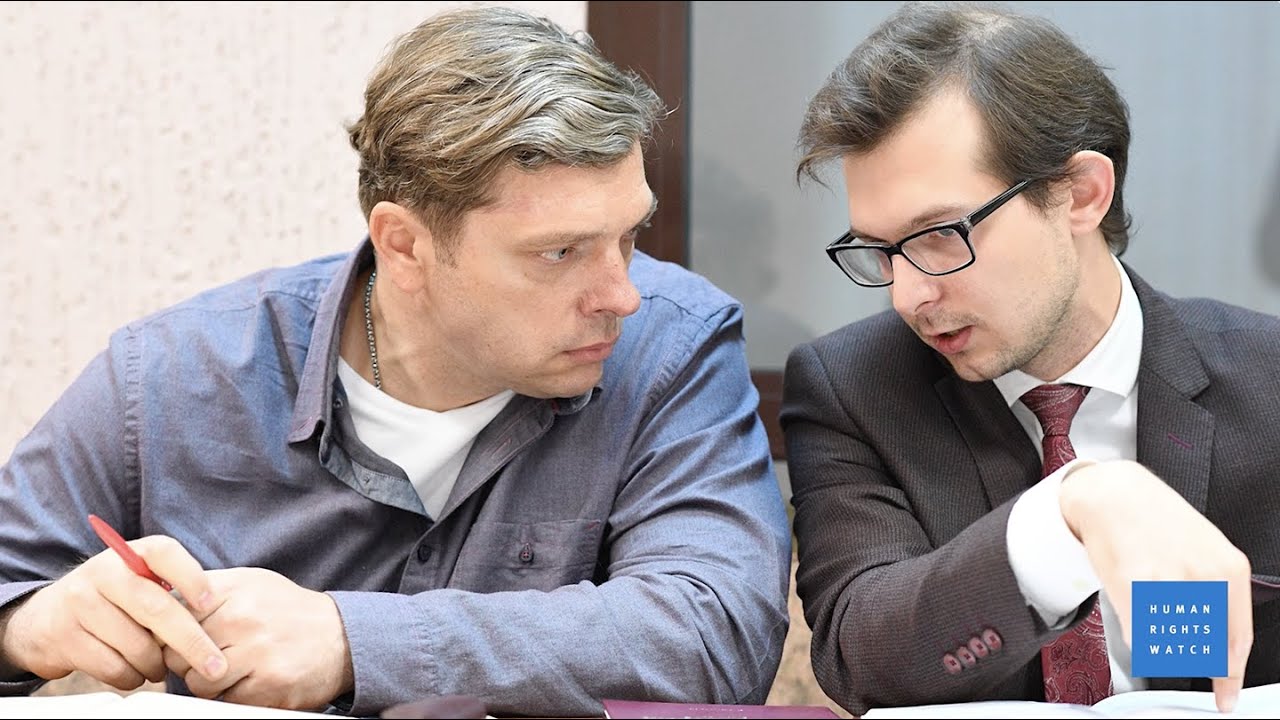
In the face of these grave and widespread rights violations, some lawyers stepped up to represent clients in politically motivated cases. ..This report examines the Lukashenka government’s retribution against lawyers who represent government critics and its nearly complete takeover of the legal profession in Belarus. The authorities have subjected lawyers in politically motivated cases, as well as lawyers who criticize state abuses, to harassment, arbitrary revocation of their licenses, detention and administrative charges, and politically motivated criminal prosecution. Behind bars, lawyers along with other politically-targeted detainees and convicts, experience retaliatory ill-treatment. The authorities have left no space for earnest and efficient discharge of lawyers’ duties in politically motivated cases. At the time of writing, very few lawyers, if any, were willing to take on such cases, which has severely undermined the right to a fair trial, due process, and access to remedy in Belarus.
The report shows that while governmental crackdown on lawyers in times of political unrest in Belarus is not new, the scale and severity of this wave of repression is unprecedented. For the first time in the history of modern Belarus, lawyers have become political prisoners themselves for their work on behalf of clients.
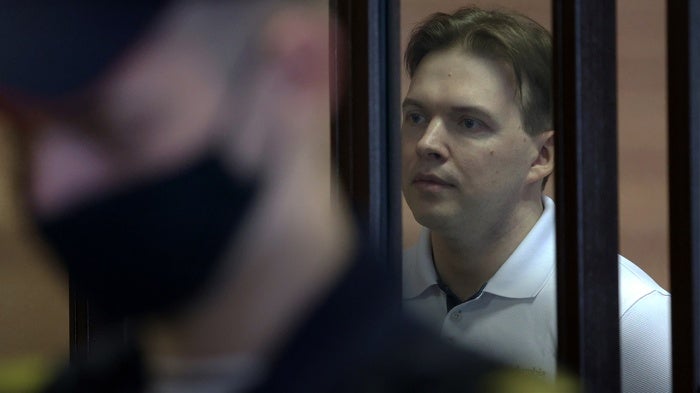
At the time of writing, six lawyers—Maksim Znak, Aliaksandr Danilevich, Vital Brahinets, Anastasiya Lazarenka, Yuliya Yurhilevich, and Aliaksei Barodka—were serving sentences on politically motivated charges ranging from six to ten years. Such charges included providing legal aid to political opposition figures and activists or giving interviews to and sharing information with independent media labelled “extremist” by the authorities. [see https://humanrightsdefenders.blog/2021/09/10/two-lawyers-from-belarus-share-lawyers-for-lawyers-award-2021/]
In addition to politically motivated prosecution, lawyers also have faced politically motivated disbarment. Since 2020, more than 140 lawyers have been disbarred by the regional bar associations or faced arbitrary license revocation by the Justice Ministry following decisions of its Qualification Commission because they supposedly breeched some regulations or were not sufficiently qualified to work as lawyers. These grounds are often easily exposed as flimsy pretexts: on average, those “unqualified” lawyers had more than 13.5 years of experience; many had successfully worked in the legal field for two to three decades, or more, and some of them were previously recognized by bar associations for their excellence…
The report also examines how the Belarusian government has established all-encompassing control over the legal profession in the country by controlling the admission of lawyers into the profession, regulating the way they discharge their duties, and exercising other broad controlling functions including but not limited to revoking lawyers’ licenses and essentially stripping lawyers’ self-governing bodies of independence.
In November 2021, a set of amendments into the Law on the Bar and Practice of Law in the Republic of Belarus (Law on the Bar) entered into force, which banned lawyers from working individually or opening law firms, requiring them to join legal consultation offices created and supervised by regional bar associations in coordination with the Justice Ministry. The amendments also significantly expanded the Justice Ministry’s control over the self-governing bodies of the bar and eased the conditions for obtaining a lawyer’s status for ex workers of law enforcement and judiciary….
The Belarusian Republican Bar Association (BRBA) and regional bar associations generally have failed to represent and protect the rights of their members and withheld support from lawyers facing obstacles in discharging their duties, which in recent years have come to include harassment, arbitrary detention, and criminal prosecution. Moreover, bar association executive bodies have become vehicles for the agenda of state officials, triggering sanctions against and disbarring lawyers deemed undesirable by the authorities. In light of the control exercised by the state over the formation of the Belarusian bar’s executive bodies and their work, these associations cannot be considered genuinely independent self-governing bodies representing the interests of all lawyers in Belarus.
Some lawyers described the current state of the Belarusian justice system and bar as a “total collapse of the legal system” and many felt “disarmed” in the face of systematic and widespread violations of due process, fair trial, and rule of law. Yet, lawyers noted, that it is their duty to discharge their functions to the highest professional standard, notwithstanding the political motivation of their clients’ cases and the unprecedented pressure from the state:
Recommendations
To the Belarusian Government
Immediately end the systematic detention and prosecution of anyone who peacefully exercises their rights and freedoms, release all political prisoners, provide effective remedies for victims and survivors of human rights abuses, and carry out prompt and impartial investigations into all alleged human rights violations;
Immediately end the ill-treatment of prisoners and ensure the protection of their rights and freedoms in confinement, including by ending the pervasive practice of incommunicado detention; grant lawyers and families unhindered access to detainees, and ensure all prisoners receive adequate medical assistance;
End all harassment of, attacks on, and interference with lawyers, particularly those representing clients in politically motivated cases and exercising their freedom of expression in line with international standards;
Ensure all courts adhere to fair trial standards. Allow lawyers to effectively perform their professional functions in accordance with the guarantees provided for in article 14 of the International Covenant on Civil and Political Rights (ICCPR) and the UN Basic Principles on the Role of Lawyers, including by instructing law enforcement and state agencies on the protected role and function of lawyers;
Repeal and amend national legislation to bring domestic law in compliance with international standards to ensure the independence and self-governance of the legal profession in Belarus;
Restore the licenses of all lawyers who have been disbarred or lost their licenses as a result of discharging their professional duties in accordance with international standards or for exercising their freedom of expression (including those lawyers who lost their license over arbitrary and state-controlled procedures at the Justice Ministry’s Qualification Commission);
Guarantee the independence of disciplinary proceedings against lawyers, which should be carried out by lawyers’ self-governing bodies in a fair and objective manner;
Curtail the Justice Ministry’s authority to interfere with independence of the legal profession, including the ministry’s authority to issue regulations on the work of lawyers, admit them into the profession, revoke licenses, carry out certification procedures, initiate disciplinary proceedings, and shape the selection of executive bodies of bar associations;
Void existing policies undermining the independence of legal profession and ensure separation of the bar from the state, including by abolishing the pervasive practice of forcing lawyers to express support for the government’s agenda and interests;
Respect the right to legal assistance, including by removing arbitrary obstacles to lawyers’ access to clients, safeguarding lawyer-client privilege, stopping the practice of making lawyers sign arbitrary and overly broad non-disclosure obligations, and ensuring fair and public trials and full equality of arms in courts of law;
Promptly comply with repeated requests by the UN special rapporteur on the human rights situation in Belarus to conduct a country visit.
To the Belarusian Republican Bar Association and Regional Bar Associations
Immediately end retaliation against members for carrying out professional duties or legitimately exercising their freedom of expression, and ensure lawyers targeted on such grounds have access to an effective remedy;
Repeal internal regulations that undermine the unhindered provision of legal assistance;
Advocate resolutely with the Belarusian government in support of the above recommendations and for Belarus’s adherence to international standards on the role of lawyers and the right to a fair trial;
Take measures to actively protect the interests of lawyers, defend the right of all accused to an effective defense regardless of the charges, and emphasize that lawyers cannot be identified with or punished for the alleged crimes of their clients;
Push back consistently and in principled fashion against the ongoing severe erosion of the bar’s professional autonomy and integrity, and the state’s overarching control of the bar;
Encourage regional bar associations to draw up rosters of lawyers to visit prisons to provide free legal advice and assistance to prisoners.
To United Nations Member States, Council of Europe, Organization for Security and Co-operation in Europe, and the European Union
Refrain from any cooperation with the Belarusian Republican Bar Association and regional bar associations until they become independent self-governing bodies representing the interests of Belarusian lawyers;
Call on the government of Belarus and the Belarusian bar to respect the rights of lawyers and to end arbitrary arrests, harassment, retaliation, and attacks against them;
Develop and fund programs to support lawyers who have faced retaliation for their professional activities or exercise of freedom of expression and examine ways of integrating Belarusian lawyers in exile into the legal profession in host countries;
Recognize Belarusian lawyers who have faced retaliation for their professional activities in defending clients in politically motivated cases as human rights defenders and afford them the requisite protection, including assistance with access to visas, funding and protection in exile and protection from transnational repression;
Consider imposing coordinated, targeted sanctions against the Justice Ministry officials and leaders of the Belarusian bar responsible for the systematic and widespread abuses against lawyers working on politically motivated cases and exercising their freedom of expression;
Recognize the Belarusian Association of Human Rights Lawyers as a key independent organization of Belarusian lawyers, and support its efforts to promote and protect the human rights of lawyers deprived of their right to exercise their profession in retaliation for discharging their duties and exercising their freedom of expression, and to improve the provision of legal aid in Belarus;
Express solidarity with and provide support to Belarusian human rights defenders working to deter politically motivated repression and document cases of grave rights violations for future accountability;
Support independent information sources providing independent coverage of events in Belarus and promoting universal human rights principles.
To Bar Associations and Lawyers’ Associations in Europe, Canada, and the US
Advocate for the above recommendations, in particular , for Belarusian authorities, and bar, to uphold international human rights standards, ending politically motivated persecution, ensuring independence and guarantees for legal profession.
Privately and publicly express concern at the interference of the government in the work of lawyers in Belarus;
Support Belarusian lawyers who have experienced or face retaliation for their legitimate professional activities, including by monitoring politically motivated cases against lawyers and, when relevant, providing third party interventions to courts and international agencies;
Refrain from any cooperation with the Belarusian Republican Bar Association and regional bar associations until they become independent self-governing bodies representing the interests of Belarusian lawyers.
Human Right Watch wrote to the Belarusian Justice Ministry and the Belarusian Republican Bar Association in April 2024 seeking their response to a summary of the report findings. At the time of writing no response had been received.
Right Livelihood Laureates illuminated the struggles and triumphs facing youth activists in a panel discussion organised by its Geneva office in March 2024. With speakers including Laureates from Belarus, Cambodia, and Egypt, as well as the UN Special Rapporteur on human rights defenders, the event painted a vivid picture of the evolving landscape of youth activism.
Natallia Satsunkevich, representing Belarusian Laureate organisation Human Rights Center “Viasna”, shared her journey, beginning as a civil rights summer school attendee to becoming an activist with Viasna to shed light on the abuses of Belarus’s repressive regime.
“I realised that I have this power to monitor and control the government,” she said. “This is obviously the aim of civil society in each country.”
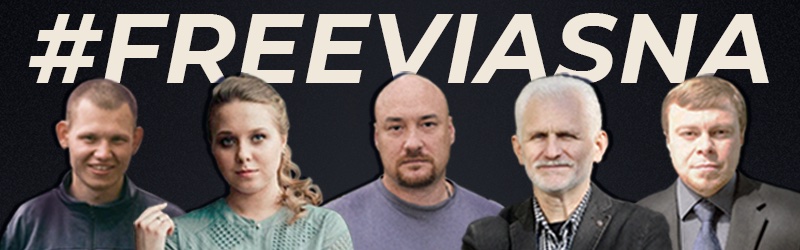
She has faced backlash for her work: her apartment was searched and her mother was questioned by authorities. Eventually, Satsunkevich had to flee Belarus to avoid criminal prosecution. Five of her Viasna colleagues, including founder and Right Livelihood Laureate Ales Bialiatski, are imprisoned for their work.
“Nevertheless, I think the decision to become a human right activist and joining Viasna was one the best decisions of my life,” she said, pointing to the close friendships and working relationships she has developed. “The most important point is that I feel like I am doing the right thing, I know that I am making this world better.”
She called on young people around the world to “check your rights”: keep an eye on leaders and make sure that all human rights are respected.
Ratha Sun, from the Laureate organisation Mother Nature Cambodia, highlighted the innovative approaches of young activists. Despite facing legal challenges and imprisonment, the group’s viral campaigns and grassroots mobilisation have sparked significant environmental advocacy.
“For all our videos and campaigns, we … think about creativity and technical ideas to get more involvement from young people,” Sun said. “We also work closely with the local community that is being affected by the project [we’re fighting].”
The group’s activism has stopped damaging construction and extraction projects such as a hydropower dam and sand mining.
Their successes have resulted in more attention from the Cambodian public and, at the same time, also drew the ire of the government.
“Between 2015 and now, 11 members of Mother Nature Cambodia have been in jail, and now, six of us still have charges against us from the court,” Sun said, noting that the charges include insulting the king and plotting against the government. Sometimes, they are also accused of being members of the CIA.
“Even though we are facing 10 years in prison, our activists, who are young, are still standing to fight the government,” Sun said.
2016 Laureate Mozn Hassan, the founder of Nazra for Feminist Studies and the Doria Feminist Fund, talked about the double bind of being a young female activist in the Global South. Battling stereotypes and systemic challenges, Hassan emphasised the importance of expressing feminism and fighting gender-based discrimination creatively.
“Being a woman in these contexts is so problematic and has all these barriers from the private and the public – and all of them are affecting us,” Hassan said. “Especially if they are young: … it is also about resources, accessibility and acceptance.”
She noted that in the Middle East and North Africa region, the stigma for young feminist activists working on gender issues has been increasing, and they are targeted more often.
“For example, in Iraq, it’s not allowed to name any of the activity as something relating to gender,” she said, noting that this was especially the case for young activists expressing their femininity or sexuality in non-traditional ways.
When it comes to the tools young activists are using, in many countries, such as Egypt, they are being targeted and imprisoned for social media posts.
Having just finished a report on youth and child human rights defenders, Mary Lawlor, UN Special Rapporteur on human rights defenders, provided a global perspective. She highlighted the unique contributions of youth and child activists, drawing attention to their innovative use of social media, decentralisation, and creativity in campaigning.
“Young people face the same challenges as all other human rights defenders, and they often use the same approaches as other human rights defenders,” Lawlor said. “But where they differ is that they are very creative, and they have novel tools and methods.”
She noted their “extremely clever use of social media” that can garner attention.
However, she also pointed out the challenges they face, including exclusion from formal decision-making.
“Ageism is a frequent barrier to young and child activism: Young defenders feel they are not being heard, not being taken seriously, and their views are not being taken into account,” Lawlor said. “Even when their participation in public and political decision-making has been increased, it’s usually a tokenistic box-ticking exercise.”
The failure of States to pay their membership dues to the United Nations in full and in time, and the practice of conditioning funding on unilateral political goals is causing a financial liquidity crisis for the organisation, the impacts of which are felt by victims and survivors of human rights violations and abuses. … Without the resources needed, the outcomes of this session can’t be implemented. The credibility of HRC is at stake.
We welcome the adoption of three resolutions calling for the implementation of effective accountability measures to ensure justice for atrocity crimes committed in the context of Israel‘s decades long colonial apartheid imposed over the Palestinian people, and for the realisation of the Palestinian people’s right to self-determination. Special Procedures expressed their profound concern about “the support of certain governments for Israel’s strategy of warfare against the besieged population of Gaza, and the failure of the international system to mobilise to prevent genocide” and called on States to implement an “arms embargo on Israel, heightened by the International Court of Justice’s ruling […] that there is a plausible risk of genocide in Gaza […].” This session, the Special Rapporteur on the OPT concluded that the actions of Israel in Gaza meet the legal qualifications of genocide.
We deplore the double standards in applying international law and the failure of certain States to vote in favor of ending impunity. This undermines the integrity of the UN human rights framework, the legitimacy of this institution, and the credibility of those States. From Palestine, to Ukraine, to Myanmar, to Sudan, to Sri Lanka, resolving grave human rights violations requires States to address root causes, applying human rights norms in a principled and consistent way. The Council has a prevention mandate and UN Member States have a legal and moral duty to prevent and ensure accountability and non-recurrence for atrocity crimes, wherever they occur.
We want to highlight and specifically welcome the adoption of the first ever resolution on combating discrimination, violence and harmful practices intersex persons. The resolution builds on growing support in the Council on this topic and responds to several calls by the global coalition of intersex-led organisations. The resolution takes important steps in recognising that discrimination, violence and harmful practices based on innate variations of sex characteristics, such as medically unnecessary interventions, takes place in all regions of the world. We welcome that the resolution calls for States to take measures to protect the human rights of this population and calls for an OHCHR report and a panel discussion to address challenges and discuss good practices in protecting the human rights of intersex persons.
We welcome the renewal of the mandate of the Independent Expert on the enjoyment of human rights by persons with albinism. As attested by human rights defenders with albinism, the mandate played an invaluable role by shedding light on human rights violations against persons with albinism through ground breaking research, country visits, and human rights training, and ensuring that defenders with albinism are consulted and take part in the decision-making. The organisations also welcomed the inclusion of language reflecting the important role played by “organizations of persons with albinism and their families”, and the reference to the role of States in collaboration with the World Health Organization, “to take effective measures to address the health-related effects of climate change on persons with albinism with a view to realizing their right to the enjoyment of the highest attainable standard of physical and mental health, particularly regarding the alarming incidence of skin cancer in this population, and to implement the recommendations of the report of the Independent Expert in this regard”.
We welcome the adoption of the resolution on the renewal of the mandate of the Special Rapporteur on the human right to a clean, healthy and sustainable environment. We also welcome the update of the title of the mandate acknowledging the recognition of this right by the Human Rights Council in its resolution 48/13 on 8 October 2021 and the General Assembly resolution 76/300 on 28 July 2022. We also welcome the inclusion of gender-specific language in the text, and we call on the Special Rapporteur to devote a careful attention to the protection of environmental human rights defenders for their strong contribution to the realisation of the right to a clean, healthy, and sustainable environment, as called for by several States. We also welcome that the Council appointed for the first time a woman from the global south to fulfill this mandate, and we welcome the nomination of another woman as Special Rapporteur on the promotion and protection of human rights in the context of climate change.
We welcome the resolution on countering disinformation, which addresses new issues whilst once again rejecting censorship and reaffirming the ‘essential role’ that the right to freedom of expression plays in countering disinformation. We welcome the specific focus on girls – besides women – as well as risks associated with artificial intelligence, gender-based violence, and electoral processes. We urge States to follow the approach of the resolution and to combat disinformation through holistic, positive measures, including by ensuring a diverse, free and independent media environment, protecting journalists and media workers, and implementing comprehensive right to information laws. Importantly, we also urge States to ensure that they do not conduct their own disinformation campaigns. At the same time, social media companies have an essential role to play and should take heed of the resolution by reforming their business models which allow disinformation to flourish on their platforms. The resolution also mandates the Advisory Committee to produce a new report on disinformation, and it is absolutely essential that this report mirrors and reinforces existing standards on this topic, especially the various reports of the Special Rapporteur on freedom of opinion and expression.
Whilst we welcome the technical renewal of the resolution on freedom of religion or belief, we regret that the parallel resolution on combating intolerance (widely known by its original name Resolution 16/18) was not tabled at the session. Since 2011, these duel resolutions have been renewed each year, representing a consensual and universal framework to address the root causes of hate based on religion or belief in law, policy, and practice. We call on the OIC to once again renew Resolution 16/18 in a future session, while ensuring no substantive changes are made to this consensual framework. We also urge all States to reaffirm their commitment to Resolution 16/18 and the Rabat Plan of Action and adopt comprehensive and evidence-based national implementation plans, with the full and effective participation of diverse stakeholders.
We welcome the adoption of the resolution on prevention of genocide and its focus on impunity, risks and early warnings, as well as the paragraph reaffirming that starvation of civilians as a method to combat is prohibited under international humanitarian law; however, we regret that the resolution fails to adequately reflect and address serious concerns relating to current political contexts and related risks of genocide.
We welcome the adoption of the resolution on the rights of the child: realising the rights of the child and inclusive social protection, strengthening the implementation of child rights-compliant inclusive social protection systems that benefit all children. We also welcome the addition of a new section on child rights mainstreaming, enhancing the capacity of OHCHR to advance child rights mainstreaming, particularly in areas such as meaningful and ethical child participation and child safeguarding. We remain concerned by persisted attempts to weaken the text, especially to shift the focus away from children as individual right-holders, to curtail child participation and remove the inclusion of a gender perspective.
We welcome the adoption of the resolution on torture and other cruel, inhuman or degrading treatment or punishment which addresses effective national legislative, administrative, judicial or other measures to prevent acts of torture. We welcome the new paragraph urging States concerned to comply with binding orders of the International Court of Justice related to their obligations under the Convention Against Torture.
We welcome the adoption of a new resolution on the human rights situation in Belarus. The Belarusian authorities continue their widespread and systematic politically-motivated repression, targeting not only dissent inside the country, but also Belarusians outside the country who were forced to flee for fear of persecution. Today, almost 1,500 prisoners jailed following politically-motivated charges in Belarus face discriminatory treatment, severe restriction of their rights, and ill-treatment including torture. The resolution rightly creates a new standalone independent investigative mechanism, that will inherit the work of the OHCHR Examination, to collect and preserve evidence of potential international crimes beyond the 2020 elections period, with a view to advancing accountability. It also ensures the renewal of the mandate of the Special Rapporteur who remains an essential ‘lifeline’ to Belarusian civil society.
We welcome the resolution on technical assistance and capacity building in regard to the human rights situation in Haiti and emphasis on the role civil society plays in the promotion and protection of human rights and the importance of creating and maintaining an enabling environment in which civil society can operate independently and free from insecurity. We similarly welcome the call on the Haitian authorities to step up their efforts to support national human rights institutions and to pursue an inclusive dialogue between all Haitian actors concerned in order to find a lasting solution to the multidimensional crisis, which severely impacts civil society. We welcome the renewal of the mandate of the designated expert and reference to women and children in regard to the monitoring of human rights situation and abuses developments, as well as encouragement of progress on the question of the establishment of an office of the Office of the High Commissioner in Haiti. We nonetheless regret that the resolution does not address the multifaceted challenges civil society faces amidst escalating violence, fails to further address the link between the circulation of firearms and the human rights violations and abuses, and does not identify concrete avenues for the protection of civilians and solidarity action to ensure the safety, dignity and rights of civilians are upheld.
We welcome the adoption of the resolution on Iran, renewing the mandate of the Special Rapporteur on human rights in Iran and extending for another year the mandate of the Independent International Fact-Finding Mission on Iran. The continuation of these two distinct and complementary mandates is essential for the Council to fulfill its mandate of promotion and protection of human rights in Iran. However, given the severity of the human rights crisis in the country, we regret that this important resolution remains purely procedural and fails to reflect the dire situation of human rights in Iran, including the sharp spike in executions, often following grossly unfair trials. It also fails to address the increased levels of police and judicial harassment against women and girls appearing in public without compulsory headscarves, human rights defenders, lawyers, journalists and families of victims seeking truth and justice, and the continued pervasive discrimination and violence faced by women and girls, LGBTI+ persons and persons belonging to ethnic and religious minorities in the country.
We welcome the adoption by consensus of the resolution on Myanmar, which is a clear indication of the global concern for the deepening human rights and humanitarian crisis in the country as a result of the military’s over three-year long brutal war against the people resisting its attempted coup. We further welcome the Council’s unreserved support for Myanmar peoples’ aspirations for human rights, democracy, and justice as well as the recognition of serious human rights implications of the continuing sale of arms and jet fuel to Myanmar.
We welcome the resolution on the situation of human rights in Ukraine stemming from the Russian aggression. The latest report of the Independent International Commission of Inquiry (COI) reveals disturbing evidence of war crimes, including civilian targeting, torture, sexual violence, and the unlawful transfer of children. These findings underscore the conflict’s brutality, particularly highlighted by the siege of Mariupol, where indiscriminate attacks led to massive civilian casualties and infrastructure destruction. The report also details the widespread and systematic torture and sexual violence against both civilians and prisoners of war. Moreover, the illegal deportation of children emerges as a significant issue, as part of a broader strategy of terror and cultural erasure. The COI’s mandate extension is crucial for ongoing investigations and ensuring justice for victims.
By adopting a resolution entitled ‘advancing human rights in South Sudan,’ the Council ensured that international scrutiny of South Sudan’s human rights situation will cover the country’s first-ever national elections, which are set to take place in December 2024. With this resolution, the UN’s top human rights body extended the mandate of its Commission on Human Rights in South Sudan.
We welcome the resolution on the human rights situation in Syria and the extension of the mandate of the Independent International Commission of Inquiry (COI), which will continue to report on violations from all sides of the conflict in an impartial and victim-centered manner. Syria continues to commit systematic and widespread attacks against civilians, in detention centers through torture, arbitrary detention and enforced disappearance and through indiscriminate attacks against the population in Idlib. We welcome that the resolution supports the mandate of the Independent Institution of the Missing People and calls for compliance with the recent order on Provisional Measures by the ICJ – both initiatives can play a significant role in fulfilling victims’ rights to truth and justice and should receive support by all UN Member States. In a context of ongoing normalisation, the CoI’s mandate to investigate and report on human rights abuses occurring in Syria is of paramount importance.
We continue to deplore this Council’s exceptionalism towards serious human rights violations committed by the Chinese government. At a time when double-standards are enabling ongoing atrocity crimes to be committed in Palestine, sustained failure by Council Members, in particular OIC countries, to promote accountability for crimes against humanity against Uyghurs and Muslim peoples in China severely undermines the Council’s integrity, and its ability to prevent and put an end to atrocity crimes globally. Findings by the OHCHR, the UN Treaty Bodies, the ILO and over 100 letters by UN Special Procedures since 2018 have provided overwhelming evidence pointing to systematic and widespread human rights violations across the People’s Republic of China. We reiterate our pressing call for all Council Members to support the adoption of a resolution establishing a UN mandate to monitor and report on the human rights situation in China, as repeatedly urged by UN Special Procedures. We further echo Special Procedures’ call for prompt and impartial investigations into the unlawful death of Cao Shunli, and all cases of reprisals for cooperation with the UN.
We regret the Council’s silence on the situation in India despite the clear and compounding early warning signs of further deterioration that necessitate preventive action by the Council based on the objective criteria. The latest of these early warning signals include the recent notification of rules to implement the highly discriminatory Citizenship Amendment Act by the Bharatiya Janata Party-led government just weeks before the election, along with recent intercommunal violence in Manipur and ongoing violence against Muslims in various parts of India amid increasing restrictions on civic space, criminalisation of dissent and erosion of the rule of law with political interference.
We further regret that this Council is increasingly failing to protect victims of human rights violations throughout the Middle East and North Africa, including in Algeria, Bahrain, Egypt, Libya, Saudi Arabia, and Yemen. The people of Yemen and Libya continue to endure massive ‘man-made’ humanitarian catastrophes caused in large part by ongoing impunity for war crimes, crimes against humanity and other grave violations of international law. In Algeria, Egypt, Bahrain, Saudi Arabia and in other MENA countries, citizens are routinely subjected to brutal, wide-spread human rights violations intended to silence dissent, eradicate independent civil society and quash democratic social movements. Countless citizens from the MENA region continue to hope and strive for a more dignified life – often at the cost of their own lives and freedom. We call on this Council and UN member States to rise above narrow political agendas and begin to take steps to address the increasing selectivity that frequently characterises this Council’s approach to human rights protection and promotion.
We regret that once more, civil society representatives faced numerous obstacles to accessing the Palais and engaging in discussions, both in person and remotely, during this session. The UN human rights system in Geneva has always and continues to rely on the smooth and unhindered access of civil society to carry out its mandate. We remind UN Member States, as well as UNOG, that the Council’s mandate, as set out in HRC Res 5/1, requires that arrangements be made, and practices observed to ensure ‘the most effective contribution’ of NGOs. Undermining civil society access and engagement not only undermines the capacities and effectiveness of civil society but also of the UN itself.
Signatories:
All Human Rights for All in Iran
Asian Forum for Human Rights and Development (FORUM-ASIA)
Association Arc pour la defense des droits de l’homme et des revendication democratique/culturelles du peuple Azerbaidjanais Iran -”ArcDH”
Balochistan Human Rights Group
Cairo Institute for Human Rights Studies
Child Rights Connect (CRCnt)
CIVICUS
Commonwealth Human Rights Initiative (CHRI)
Egyptian initiative for Personal Rights (EIPR)
Ensemble contre la Peine de Mort
Franciscans International
Gulf Center for Human Rights
Impact Iran
International Bar Association’s Human Rights Institute (IBAHRI)
On 20 March 2024, it was reported that Aliaksandr Vaitseshyk was arrested during a raid on his home.
Last week, human rights defender Aliaksandr Vaitseshyk was detained in Baranavičy. The police released a video of the raid on his home, which shows him lying on the floor during the arrest. The reasons for this harassment are unknown. The activist is being held in the Baranavičy temporary detention center.
Lorenzo Tondo in Palermo reported in the Guardian of 22 February 2024 that people and groups who assist asylum seekers are reporting a disturbing trend of escalating intimidation, with aid workers facing direct threats including being held at gunpoint and having their phone communications monitored by government authorities, according to a report from the Council of Europe’s commissioner for human rights.
“Organisations and people assisting refugees, asylum seekers, and migrants have been subjected to beatings, had their vehicles or equipment destroyed, or have been targeted by vandalism of their property, and even by arson or bomb attacks,” she wrote.
Mijatović said she had observed in certain member states how authorities had engaged with human rights defenders in an aggressive or intimidating manner. During the humanitarian crisis at the Poland-Belarus border, thousands of refugees from the Middle East were offered a route by the Lukashenko regime to try to reach the EU from Belarus, highlighting the restrictions by Poland on access to the border zone for people and organisations providing humanitarian assistance and legal aid.
The commissioner noted how “the emergence of an approach in which migration issues are increasingly addressed by member states from a security perspective” had led to the building of fences and deployment of military personnel, equipment and surveillance in border areas that has also affected NGOs.
“These physical obstacles deny asylum seekers the chance to seek protection and the right to a fair and efficient asylum procedure [and] this approach has also created an extremely difficult environment for human rights defenders,” she wrote.
“Those who assist refugees, asylum seekers, and migrants may be seen by states as an obstacle to the implementation of asylum and migration policies focused on deterrence and security, and therefore are faced with hostility. The rolling back of human rights, which is often part of states’ policies in this area, also leads to measures explicitly or implicitly targeting those helping.”
NGO rescue boats have also faced violence, including the use of firearms, from non-European countries with which Council of Europe member states cooperate on external migration control. NGO workers on some of these vessels have documented how often the Libyan coastguard has fired gunshots and endangered crew members and people in distress in the central Mediterranean. [see e.g. https://humanrightsdefenders.blog/2019/12/18/international-migrants-day-the-story-of-the-ocean-viking/]
Mijatović also noted the growing use of surveillance technologies. “During discussions for the preparation of this document concerns were raised that, in some member states, pervasive surveillance activities created mounting challenges for human rights defenders, including lawyers and journalists,” she wrote.
“Governments, in the name of national security concerns, often employ advanced surveillance tools to intercept communications and monitor online activities, including human rights defenders’ social media.”
In 2022, the Greek journalists Thanasis Koukakis and Stavros Malichudis were allegedly targeted for investigating sensitive topics such as financial crime cases and migration. The Italian justice minister in 2021 dispatched inspectors to Sicily after revelations that prosecutors had intercepted hundreds of telephone conversations involving no fewer than 15 journalists and covering migration issues and aid workers in the central Mediterranean.
Mijatović wrote: “Invasive surveillance practices, whether through physical surveillance, phone and internet tapping or by using spyware not only infringes on the personal security and privacy of individual human rights defenders, but also threaten the confidentiality between human rights defenders and the refugees, asylum seekers and migrants they assist, which is often crucial to working effectively.”
She added that people helping refugees, asylum seekers and migrants often experience extremely high levels of online hate and even death threats. Human rights defenders who are themselves refugees or from an ethnic minority background may also receive racist abuse, online and offline.
The award ceremony took place on at the Palace Cultural Center in St. Gallen.
Paula Weremiuk from Narewka on the Polish-Belarusian border works as a teacher during the day and as a refugee aid worker in the Bialowieza forest at night. According to the Paul Grüninger Foundation, a refugee drama of enormous proportions has been taking place there since 2021.
Paula Weremiuk searches for people in need in the inaccessible areas of Bialowieza, providing them with clothing, food, sleeping bags and the most basic necessities, writes the Paul Grüninger Foundation. The Belarusian dictator Alexander Lukashenka is forcing thousands of refugees from the Middle East and Africa across the border to Poland, where they are met with strong political rejection.
At the border, in the primeval forest of Bialowieza, there is often brutal violence, abuse, rape and repeated deaths. The refugees, including women and small children, are helplessly abandoned to their fate in the inaccessible terrain and are chased back and forth across the border by the authorities. Refugee helpers are being harassed and criminalized, the press release continues.
Ayşe Gökkan’s award was accepted by her lawyer, Berfin Gökkan. The lawyer read out a letter from Ayşe Gökkan written in Kurdish: “I greet you with the warmth of the sun and the enthusiasm of Jin-Jiyan-Azadî. As a member of the Movement of Free Women, I accept this award on behalf of thousands of struggling Kurdish women. There are many fighting women in prison in Turkey.”
The foundation justified the awarding of the recognition prize of 10,000 francs to the Kurdish feminist and human rights defender Ayşe Gökkan for her civil society commitment and her criminalization:
“Ayşe Gökkan has particularly distinguished herself as a journalist and as an activist for women’s rights. For almost forty years, she has been writing newspaper columns against racial and gender discrimination, speaking at national and international podiums and seminars, leading workshops on the topic of gender inequality and taking part in peaceful demonstrations in this context.
From 2009 to 2014, Ayşe Gökkan was mayor of the Kurdish city of Nusaybin, which lies on the border between Turkey and Syria. When Turkey began to build a wall against refugees between Nusaybin and the neighbouring Syrian town of Qamishlo, the mayor protested against this “wall of shame” with, among other things, a sit-in strike.
Because of her civil society commitment, Ayşe Gökkan has been arrested in Turkey more than eighty times, subjected to more than two hundred investigations and, in 2021, sentenced to more than 26 in a grotesque court case based on the statements of a single “secret witness” for membership in a “terrorist organization”.
She is a victim of the criminalization of the political opposition in Turkey. Ayşe Gökkan is in prison, her sentence has not yet been confirmed by the Turkish Court of Cassation, and proceedings are also pending before the European Court of Human Rights.”
A group of human rights organisations, including the World Organisation Against Torture (OMCT) and FIDH (see Co-signatories), called on 27 October 2023 for the release of the human rights defender Nasta Loika after more than 396 days of her detention.
Nasta Loika is a prominent human rights defender, one of the founders of Human Constanta. For years, she has been promoting human rights education, raising awareness about the repressive “anti-extremist” legislation in Belarus, and protecting foreign citizens and stateless persons in Belarus. She was named Human Rights Defender of the Year 2022 by the Belarusian human rights community. Yet, in the eyes of the repressive Belarusian authorities, she is a criminal and earlier in October, the government put her on a “terrorist” list.
Since 6 September 2022, Nasta has served a total of six 15-day consecutive administrative sentences on trumped-up “petty hooliganism” charges. On 24 December 2022, she was charged with “incitement of racial, national, religious or other social enmity or discord” under notorious Article 130 of the Criminal Code of the Republic of Belarus and on 20 June sentenced to 7 years in prison. [see also: https://humanrightsdefenders.blog/2023/08/11/nasta-anastasia-loika-in-belarus-sentenced-to-7-years-in-a-penal-colony/]
She was tasered, threatened, and featured in a forced “confession” video as a form of digital degrading treatment which was spread across pro-government channels before she was even charged. Her home was searched two times. Her mother’s home was searched too. She spent 93 days in detention, repeatedly sentenced to “administrative arrests” while the authorities looked for a reason to bring criminal charges against her. The charge was ultimately found, and Nasta was accused of inciting hatred for preparing a human rights report in 2018 on the persecution of anarchists and leftists in Belarus. According to the prosecution, the group she was allegedly inciting hatred against was the police.
Belarusian state authorities continued to ignore both the letter of allegation sent by five Special Rapporteurs and the Working Group on Arbitrary Detention following Human Constanta’s appeal to these mandates, as well as the decision on interim measures, adopted by the Human Rights Committee in Nasta’s case.
Her lawyers were repeatedly arrested, disbarred, forced out of the country, and intimidated – hardly a surprising occurrence given en masse persecution of independent lawyers and outlawing of human rights work in Belarus. Disbarment of human rights lawyers is one of the tools the authorities consistently employed to intimidate and persecute lawyers who represent human rights defenders, activists, democratic politicians, and survivors of torture and state-perpetrated human rights violations.
Any assistance to Nasta is punished as well: two people were arrested for 15 and 30 days for bringing her parcels with food and essentials. Now that she has been sentenced, she is only able to receive parcels from her 76-year-old mother, her only family member. Moreover, as she was designated a “terrorist,” it would be impossible to make monetary transfers as those would be characterized as “financing terrorism.”
Nasta also continues her human rights work from behind bars: she helped dozens of other women cellmates to file complaints related to their cases. She also drafted a concept of prison reform in Belarus. This is a powerful reminder that persecution and imprisonment cannot force human rights defenders to stop their work.
In fact, their voices can be amplified not just through letters, but through technology and social media. While the authoritarian government is set on silencing human rights defenders, the Human Constanta team used AI to create Nasta’s animated digital avatar to raise awareness about human rights violations and political persecution of human rights defenders, demand accountability, and support those in detention. The “Human Show” podcast called “Waiting for Nasta” featuring her colleagues and friends also reminds the world about her work and unjustified detention.
“A young girl came up to me [at an event in honor of a human rights award] and said: “Hello, my name is Nasta. I graduated from law school, I’ve entered law school, and I would really like to do human rights work, but I don’t know how. Maybe you could give me some advice?” […] I told her, yes, of course, come to our Committee. She came to the Committee a couple of days later and we hired her. That became her first human rights work.”
Excerpt from “Waiting for Nasta” podcast, episode 1
“And then I asked, “Do you know exactly what you’re doing? This may be the last chance [to flee Belarus].” And Nasta replied very calmly that she was aware of all the risks, that she understood the situation, and that it was not blind stubbornness. In my mind, Nasta lives her life as a person with very high values, who is ready to stand by them to the end.”
Excerpt from “Waiting for Nasta” podcast, episode 2
We call on the Belarusian authorities for Nasta Lojka’s immediate and unconditional release and condemn the physical and psychological torture Nasta was subjected to by state agents. Nasta Lojka’s arrest, torture, and imprisonment are retaliation by the Belarus government for her peaceful and legitimate human rights work.
We continue to call upon the international community to take measures to urge the Belarusian authorities to respect their obligations towards human rights defenders, by raising awareness in various fora, publicly condemning human rights violations, requesting visits to human rights defenders in detention, and inquiring with the Belarusian authorities about their health and detention conditions, demanding the release of imprisoned human rights defenders in bilateral and multilateral fora, exploring additional targeted measures against the individuals allegedly responsible for the torture, ill-treatment, arbitrary detention and harassment of human rights defenders, and keeping the situation of defenders in Belarus high on the political agenda.
We also call to utilize and explore available mechanisms for holding the Belarusian authorities account for human rights abuses against human rights defenders, inter alia, by means of extraterritorial and universal jurisdiction and inter-state complaints under relevant treaties, and through strengthening existing accountability mechanisms.







 Hans Thoolen on Human Rights Defenders and their awards