Posts Tagged ‘BBC’

Palestinian Human Rights Defender Awdah Hathaleen killed by Israeli Settler

August 4, 2025

“Despite it all, I hold onto a small hope—that the future might bring justice, that our voices will eventually be heard, and that one day I can celebrate my birthday again, in peace, with the people I love, free from fear and loss.”  – Awdah Hathaleen, April 2025 Photo by: Emily Glick

An Israeli settler shot dead a Palestinian teacher who helped film Oscar-winning documentary No Other Land, according to the Palestinian education ministry and an Israeli-American activist who was at the scene of the shooting.

No Other Land co-director Yuval Abraham said on X that a settler shot Odeh (also Awdah) Hathaleen in the lungs in Umm Al-Khair village in the occupied West Bank. Residents allege the shooter was Yinon Levy, who is sanctioned by the UK.

Attorney Avichai Hajbi said he was representing a resident “who felt his life was in danger, was forced to fire his weapon into the air” after residents were “attacked by an Arab mob, along with foreign activists, with stones and violence”. Mattan Berner-Kadish, an Israeli-American activist at the scene, told the BBC that at about 17:20 local time (15:20 BST) on Monday, a bulldozer from a nearby Israeli settlement was driven through private Palestinian land, crushing a sewage pipe, multiple olive trees and two fences.

Berner-Kadish and other activists, including Hathaleen’s cousin Ahmad, ran to block the bulldozer. The activist said the driver hit Ahmad in the neck and shoulder with a drill that extended from the bulldozer, with his footage capturing Ahmad falling to the ground. Berner-Kadish did not believe Levy was driving.

While attending to Ahmad’s injuries, Berner-Kadish heard a pop. Running back to the village to get water, he saw Hathaleen lying bleeding from a gunshot wound and Levy, the only settler he saw, holding a gun.

In a video believed to be filmed by a relative of Hathaleen and posted on social media, a man identified as Levy is seen holding a pistol with a bulldozer behind him, as men yell at him. Levy pushes at one man, who pushes back. Levy then raises his pistol and shoots ahead of him, then again into the air.

The clip cuts off when the person filming turns around to run away as women are heard screaming. The footage does not show what or who the shots hit, if anything, and whether anyone else was shooting. There are no other settlers visible. Israeli police said it was investigating the incident in the area of Carmel, an Israeli settlement near Umm Al-Khair.

“As a result of the incident, a Palestinian man was pronounced deceased. His exact involvement is under investigation,” police told the BBC. Police said on Tuesday morning they had detained an Israeli citizen for questioning. Israeli media later reported Levy was released on house arrest.

The Israel Defense Forces (IDF) also detained five Palestinians on suspicion of involvement in the incident, along with two foreign tourists who were present. Berner-Kadish said on Tuesday evening they were still detained. The activist, who began visiting the village in 2021, said Hathaleen was “one of my best friends in the world” and the two were days away from constructing a football field in the village. He added that Hathaleen was a “warm and loving” father of three young children.

The Palestinian education ministry said Hathaleen was a teacher at a local secondary school. US congresswoman Lateefah Simon, a Democrat from California, said she was “heartbroken” over the killing of Hathaleen. He and his cousin, “both holding valid visas”, were detained and deported from San Francisco airport last month while travelling for a multicultural faith dialogue, she said.

Abraham said Hathaleen had helped film No Other Land, the 2025 Oscar winner for best documentary feature that follows the legal fight between the Israeli government and Palestinians over Masafer Yatta, a West Bank community of about 20 villages.

..Levy, a leader of an outpost farm, was sanctioned by the UK in 2024, along with others, because he “used physical aggression, threatened families at gunpoint, and destroyed property as part of a targeted and calculated effort to displace Palestinian communities”.

He was also sanctioned by the US under the Biden administration, along with others, last year, but President Donald Trump lifted those sanctions.

Gilad Kariv, a member of Israel’s Knesset from the Democrats party, said on X in response to the video that “in the territories, armed Jewish militias operate unchecked”.

Settler violence, which has also been on the rise for years, has surged since the outbreak of the war in Gaza. The UN documented at least 27 attacks by settlers against Palestinians that resulted in property damage, casualties or both, between 15 and 21 July, in the West Bank.

see also: https://www.frontlinedefenders.org/en/statement-report/optisrael-statement-solidarity-palestinian-human-rights-defenders-risk-occupied

https://www.bbc.com/news/articles/c776x78517po

https://www.amnesty.org/en/latest/news/2025/

https://en.wikipedia.org/wiki/Killing_of_Awdah_Hathaleen

https://mailchi.mp/2a4342b25255/hrdf-10982507?e=51113b9c0e Read here the words of chairperson of the board, Sahar Vardi.

Syrian human rights defender Mazen al-Hamada found dead in Sednaya prison

December 13, 2024

If the world knew about the extent of the brutality of Assad’s regime against its own people, it was in part because of Mazen, an activist who was an outspoken critic of the regime. On Sunday 8 December 2024, his body was found in the notorious “slaughterhouse”, Seydnaya prison in Damascus. It bore signs of horrific torture. A doctor who examined it told the BBC he had fractures, burn marks and contusions all over his body, allegations corroborated by Mazen’s family.

“It’s impossible to count the wounds on his body. His face was smashed and his nose was broken,” his sister Lamyaa said.

A protester when the uprising in Syria began in 2011, Mazen Al-Hamada was arrested and tortured. Released in 2013, he was given asylum in the Netherlands. He began to speak openly about what he was subjected to in prison. In the documentary Syria’s Disappeared by Afshar Films, Mazen describes how he was raped, his genitals clamped, and how his ribs were broken by a guard jumping on his chest over and over again.

While in asylum, Mazen’s nephew Jad Al-Hamada says he began suffering from severe depression and other mental health issues. …In 2020, he decided to return to Syria.

“The government told him he had a deal and that he would be safe. He was also told that his family would be arrested and killed if he didn’t return,” Lamyaa said. He was arrested as soon as he arrived in the country. And his family believes he was killed after rebels took Hama last week, shortly before the regime fell.

Ruth Michaelson in the Guardian of 10 December 2024 adds

Hamada was detained and tortured alongside tens of thousands of people after the 2011 uprising against Assad’s rule. “Mazen had endured torture so cruel, so unimaginable, that his retellings carried an almost otherworldly weight. When he spoke, it was as if he stared into the face of death itself, pleading with the angel of mortality for just a little more time,wrote Hamada’s friend, the photographer and director Sakir Khader. He “became one of the most important witnesses against Assad’s regime”, he said.

The Syrian network for human rights (SNHR) recorded 15,102 deaths caused by torture in prisons run by the regime between March 2011 and July this year. It said 100,000 more people were missing and thought to be detained, and some might be found now that prison populations have been set free.

Fadel Abdulghany, the head of SNHR, which tracks people who have been “forcibly disappeared”, broke down on live television this week as he said that all 100,000 people had probably “died under torture” in prison.

Hamada was released in 2013 and granted asylum in the Netherlands in 2014, after which he began touring western capitals, bringing audiences to tears as he showed them his scars and described what he had endured at the hands of the Syrian authorities. Then, in a decision that terrified and confused his friends and rippled through the community of dissident exiles, Hamada disappeared in early 2020 after seemingly deciding to return to Syria.

That someone who had experienced the worst of Syria’s torture chambers would choose to return led many to believe he was enticed to do by elements of Assad’s regime to prevent him from speaking out.

Rebel forces said they found 40 corpses piled in the morgue at Sednaya showing signs of torture, with an image circulating online showing Hamada among them.

The discovery of his body indicated he was probably killed shortly before prison inmates were liberated by insurgents. Khader described his friend’s suffering as “the unimaginable agony of a man who had risen from the dead to fight again, only to be condemned to a slow death in the west”.

https://www.theguardian.com/global-development/2024/dec/10/syrian-activist-who-symbolised-assad-brutality-found-dead-in-sednaya-prison

https://www.bbc.com/news/articles/c89xgke2x7lo

Green human rights defenders of Mother Nature jailed in Cambodia

July 3, 2024

Five Cambodian activists record a podcast.
Five Mother Nature activists, from left to right Ly Chandaravuth, Thun Ratha, Yim Leanghy, Phuon Keoraksmey, and Long Kunthea on June 11, 2024. © 2024 Private

Cambodia has jailed 10 environmental activists who had sounded the alarm on river pollution for plotting against the government – a case critics have decried as politically motivated. Members of the group Mother Nature were charged in 2021 after they documented waste run-off into Phnom Penh’s Tonle Sap river, near the royal palace. [see: https://www.trueheroesfilms.org/thedigest/laureates/d41428d8-4b96-4370-975e-f11b36778f51]

Three of them, including Spanish co-founder Alejandro Gonzalez-Davidson, who were also convicted of insulting the king, were sentenced to eight years’ jail and fined $2,500 (£1,980). The seven others were handed six-year terms. Prosecutors have never explained how the activists had violated the law against insulting the king or conspiring against the government.

Since its founding in 2013, Mother Nature has campaigned against environmentally destructive projects and raised questions on how natural resources are managed in the South East Asian country. They document their findings in playful and informative videos that they post on Facebook, where they have 457,000 followers.

Environmental groups have long accused Cambodia’s leaders of profiting from the country’s natural resources. The government denies this and says Mother Nature is encouraging social unrest. Gonzalez-Davidson, who was earlier banned from entering Cambodia, called the verdict a “disastrous decision by the Hun family regime”.

Opposition political parties were dismantled, independent media outlets were shut and dozens of activists were jailed under the decades-long rule of former prime minister Hun Sen, who stepped down last year to pave the way for his son, Hun Manet, to assume leadership.

Under Hun Manet, Mother Nature activists have continued to criticise what they describe as an unequal enforcement of laws in favour of companies and the wealthy elite.

Four of the convicted activists attended the hearings and were immediately arrested following the verdict. Representatives of local NGO the Cambodian League for the Promotion and Defence of Human Rights (Licadho) who were present outside the Phnom Penh court said the arrests were violent, with “at least two of [them] dragged by their necks”. Arrest warrants have been issued for the six others, including Gonzalez-Davidson.

Earlier in the day, dozens of Mother Nature supporters marched towards the court where the activists were due to receive the verdict. Dressed in white – the traditional colour of mourning in the country – some of the supporters held up hand-written posters that read “We need freedom” and “We need rights”. Others held white flowers.

The verdict “sends an appalling message to Cambodia’s youth that the government will side with special interests over the environment every chance it gets,” said Human Rights Watch’s deputy Asia director Bryony Lau.

“It is astounding to criminalise activities of youths who are advocating for clean water in Phnom Penh, protecting mangrove forests in Koh Kong and warning against the privatisation of land in protected areas and characterising it as an attack against the state,” said Licadho’s outreach director Naly Pilorge.

Several of those convicted today had already served jail terms in the past. One of them, Long Kunthea, told BBC in an interview last year that she is willing to take on the risks of her activism to “for positive change”.

Kunthea was previously jailed for more than a year for organising protests to protect the Mekong river from further pollution. See also: https://humanrightsdefenders.blog/2021/06/22/continued-harassment-of-mother-nature-defenders-in-cambodia/

https://www.bbc.com/news/articles/c1340lze6ppo

https://www.hrw.org/news/2024/07/02/cambodia-environmental-activists-sentenced-6-8-years

https://www.reuters.com/world/asia-pacific/cambodian-court-jails-environmental-activists-plotting-against-government-2024-07-02/

Now it is the turn of the Iranian journalists who reported on Mahsa Amini

May 11, 2023
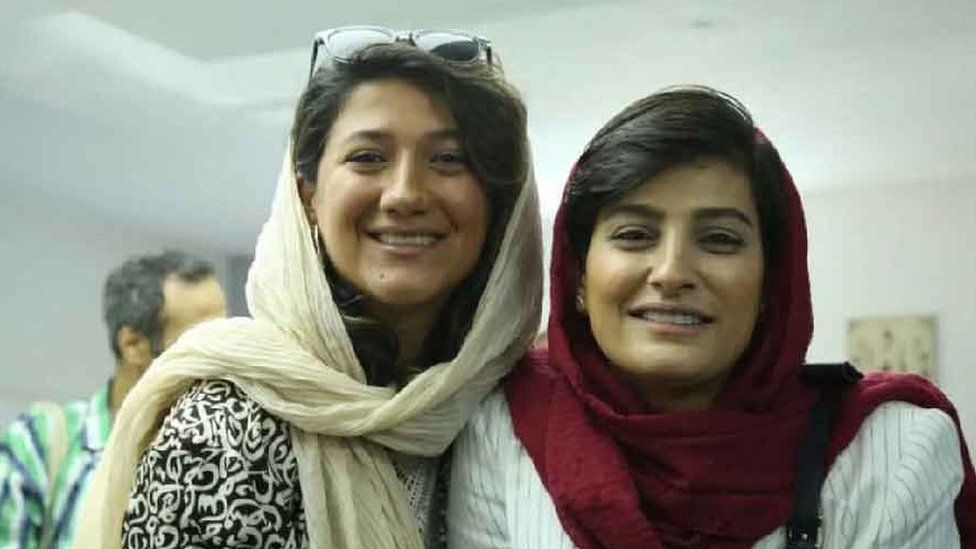
Niloufar Hamedi and Elaheh Mohammadi
Image caption, Niloufar Hamedi and Elaheh Mohammadi have been detained in Iran for more than 200 days

BBC Persian Service on 5 May 2023 drew attention to the fate of the two journalists who reported first on Mahsa Amini, whose name made headlines around the world when she died in custody last September, sparking waves of protests in Iran. But not many people have heard of Niloufar Hamedi and Elaheh Mohammadi.

The two female journalists helped break the story of Ms Amini’s death and have been detained in two of Iran’s most notorious prisons ever since. On Tuesday, they and the imprisoned Iranian human rights activist Narges Mohammadi were awarded the 2023 Guillermo Cano World Press Freedom Prize by the United Nations’ cultural agency, UNESCO.”They paid a hefty price for their commitment to report on and convey the truth. And for that, we are committed to honouring them and ensuring their voices will continue to echo worldwide until they are safe and free,” said Zainab Salbi, the jury chair. For more on Narges, see; https://www.trueheroesfilms.org/thedigest/laureates/07C20809-99E2-BDC0-FDC3-E217FF91C126

On 22 September, just six days after she tweeted a photograph of Mahsa’s grieving family, Niloufar Hamedi was arrested. Security forces also raided Elaheh Mohammadi’s home at the same time, seizing her electronic devices. On 29 September, she too was arrested.

Both Ms Hamedi and Ms Mohammadi were already known for hard-hitting news reports and coverage of human rights issues.

As well as winning UNESCO’s press freedom prize, Ms Hamedi and Ms Mohammadi have been named as two of Time Magazine’s 100 Most Influential People of 2023 and given the 2023 Louis M Lyons Award for Conscience and Integrity in Journalism, presented by Harvard University in the United States. See: https://www.trueheroesfilms.org/thedigest/awards/8809EB31-7E9C-4624-88E3-FC592D496807 and https://www.trueheroesfilms.org/thedigest/awards/1748C306-757A-49EB-8436-A9C607356112

“Journalists in Iran are risking their lives on a daily basis to report on the conditions and oppressions there,” the Harvard fellows noted.

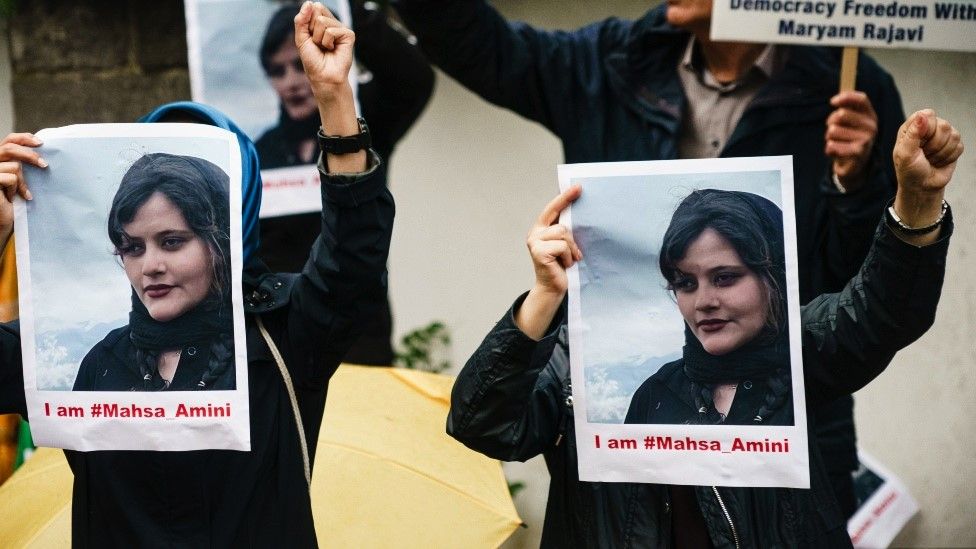
Protesters hold up pictures of Mahsa Amini in Berlin, Germany
Image caption, Mahsa Amini’s death led to a wave of protests in Iran and rallies in solidarity around the world

Ms Hamedi and Ms Mohammadi have meanwhile been kept in harsh conditions at Evin prison in Tehran and Qarchak Women’s Prison, south of the city. Reports from inside Qarchak suggest that the facilities are inhumane, with a lack of medicine, food and even safe drinking water or clean air. Ms Mohammadi lost 10kg (22lbs) in the first three months of her detention, her husband wrote on his Instagram page.

Both women have also struggled to access legal support. The first lawyer appointed to represent the pair said in October that he was unable to communicate with them or access the legal documents surrounding their arrests. Less than a month later, he was himself arrested. The journalists’ families have struggled with the pain of not knowing what is going to happen to them.

“I’m asked, ‘What do the authorities tell you?’ I’m not even sure which institution or person to contact,” Ms Hamedi’s husband, Mohammad Hossein Ajorlou, said in an interview with Sharq.

He too has found it difficult to get information about what his wife is accused of and what is likely to happen to her.

At the end of October, Iran’s ministry of intelligence and the intelligence agency of the Revolutionary Guards issued a statement accusing Ms Hamedi and Ms Mohammadi of being trained by the US Central Intelligence Agency to foment unrest in Iran.

Their newspapers denied the allegations and insisted they had just been doing their jobs.

Last week, after they had both spent more than 200 days in custody, the Iranian judiciary announced that Ms Hamedi and Ms Mohammadi had been indicted and their cases referred to a court.

On Monday, Ms Hamedi’s husband wrote on Twitter that she and Ms Mohammadi had been transferred back to Evin prison from Qarchak, apparently in preparation for their trial.

https://www.bbc.com/news/world-middle-east-65466887

see also: https://iranhumanrights.org/2023/06/iran-proposed-bill-pushes-denial-of-basic-rights-to-unveiled-women/

in August 2023, things got further out of hand: with mass arrests:

https://www.nbcnews.com/news/world/iran-arrests-women-activists-mahsa-amini-protests-anniversary-rcna100566

https://www.frontlinedefenders.org/en/statement-report/iran-alarm-over-mass-arrests-human-rights-defenders-advance-anniversary-september

https://www.hrw.org/news/2023/08/19/iran-mass-arrests-womens-rights-defenders

Ales Bialiatski sentenced to 10 years in jail

March 9, 2023

Belarus court sentences Ales Bialiatski to 10-year jail term, The sentencing of the Nobel Peace Prize winner and human rights defender has triggered protests. Media and human rights defenders across the world said that his arrest is ‘politically motivated’. See also: https://humanrightsdefenders.blog/2022/10/08/meet-ales-bialiatski-nobel-peace-prize-2022/

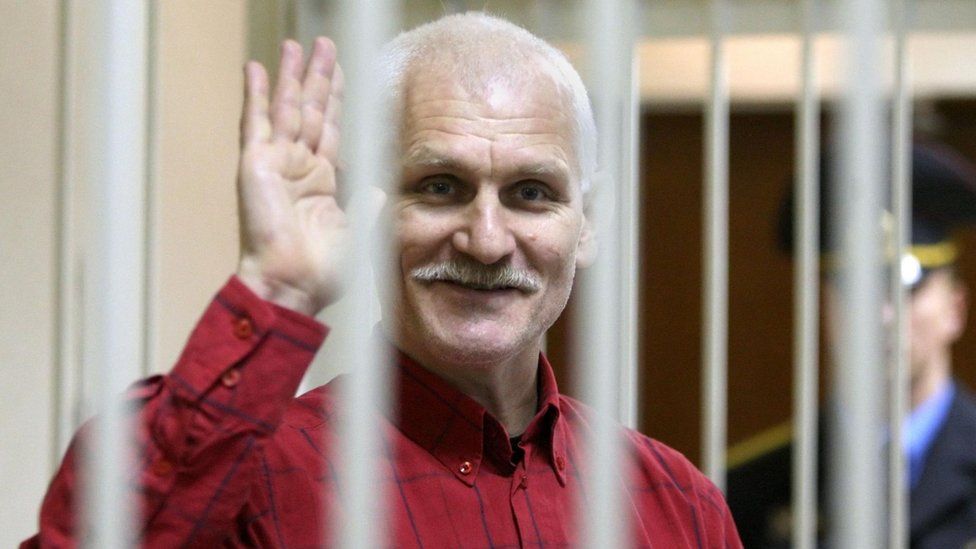
Ales Bialiatski pictured in November 2021
Image caption, Ales Bialiatski pictured in November 2021

Oliver Slow of BBC News reported as follows¨

…Supporters of Mr Bialiatski, 60, say the authoritarian regime of Belarusian leader Alexander Lukashenko is trying to silence him. He was arrested in 2021 following massive street protests over widely disputed elections the previous year, and accused of smuggling cash into Belarus to fund opposition activity. Demonstrators were met with police brutality and Lukashenko critics were regularly arrested and jailed during the demonstrations, which started in 2020.

Mr Bialiatski was in court alongside two fellow campaigners, Valentin Stefanovich and Vladimir Labkovich.

Mr Stefanovich was sentenced to nine years in prison, while Mr Labkovich received seven years, according to Viasna, the group Mr Bialiatski founded in 1996. All three had pleaded not guilty.

Mr Bialiatski’s wife, Natalya Pinchuk, said the trial was “obviously against human rights defenders for their human rights work”, describing it as a “cruel” verdict.

Referring to her husband’s letters from prison, where he has been held since arrest, she said: “He always writes that everything is fine. He doesn’t complain about his health – he tries not to upset me.”

Kostya Staradubets, a spokesperson for Viasna, said the sentences imposed on the three activists were “breaking our hearts”.

Speaking to the BBC World Service’s Newshour programme, he said: “We knew that our three colleagues would get long prison terms but anyway it’s still a shock, it’s breaking our hearts, not only the [prison] terms are long but the conditions also very horrific.

Belarus’s exiled opposition leader Svetlana Tikhanovskaya said the sentencing was “simply appalling”. “We must do everything to fight against this shameful injustice and free them,” she said.

Berit Reiss-Andersen, chair of the Norwegian Nobel Committee that awards the Nobel Peace Prize, said the verdict was a “tragedy” for Mr Bialiatski and described the charges as “politically motivated”.

In awarding the 2022 Nobel Peace Prize to Mr Bialiatski, Ms Reiss-Anderson said the Belarusian government had “for years tried to silence him”. “He has been harassed, he has been arrested and jailed, and he has been deprived of employment,” she said.

European Union foreign policy chief Josep Borrell condemned what he described as “sham trials”, adding they were “yet another appalling example of the Lukashenko regime trying to silence those who stand up in defence of human rights and fundamental freedoms of the people in Belarus”.

There are currently 1,458 political prisoners in Belarus, according to Viasna. Authorities claim there are none.

Mr Bialiatski is a veteran of the human rights movement in Belarus, establishing Viasna in 1996 in response to the brutal crackdown of street protests that year by Mr Lukashenko, who has been president of Belarus since the office was established in 1994. See: ¨https://humanrightsdefenders.blog/2022/10/07/nobel-peace-prize-2022-goes-to-well-recognised-human-rights-defenders/

This was followed by the sentencing of women journalists: https://www.theguardian.com/world/2023/mar/18/belarus-jails-senior-staff-at-independent-news-site-in-crackdown-on-lukashenko-critics

https://www.bbc.com/news/world-europe-64833756

https://www.livemint.com/

Mary Robinson and the case of the Arab Princess

February 16, 2021

There’s a saying in show business that you can spend 20 years becoming an overnight star. In politics, the same is true in reverse, as the sad case of Mary Robinson and Princess Latifa of Dubai shows. Mary Robinson as former UN High Commissioner for Human Rights and a widely-honored human rights defender [with 9 awards to her name, see: https://www.trueheroesfilms.org/thedigest/laureates/4E44A265-DF1A-45E2-8C6A-3294577EA211] was a much admired personality. For that reason I was reluctant to highlight her role in the sad case back in December 2018, although many human rights NGOs (including AI and HRW) did criticise her.

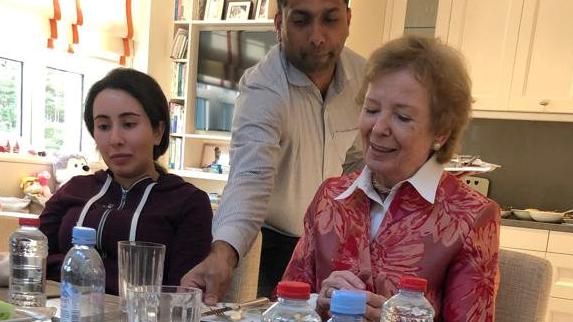
The former UN human rights Commissioner has been criticised for describing the daughter of Dubai’s ruler as “troubled” after she was reportedly forcibly returned to the kingdom after fleeing months earlier. Mary Robinson met with Sheikha Latifa on 15 December and photos released showed the two women smiling together in what appears to be a home. Ms Robinson, the former president of Ireland, told BBC’s Radio 4 the princess was a “vulnerable” woman with a “serious medical situation” for which she was receiving psychiatric care.

Immediately the highly publicised and bizarre meeting in December was panned by rights groups for being stage-managed by the Emirati ruling family (Ms Robinson is a personal friend of Sheikha Haya, a wife of the Dubai ruler.) Defending her comments, Ms Robinson released a statement saying: “I am dismayed at some of the media comments on my visit and I would like to say I undertook the visit and made an assessment, not a judgement, based on personal witness, in good faith and to the best of my ability.”

Toby Cadman, a barrister instructed by Detained in Dubai to act on behalf of the princess, told Review: “I am extremely disappointed that she would lend herself to what has been interpreted as a whitewash. We have requested an independent assessment of [Princess Latifa’s] state of mind and her physical well-being. It’s up to the United Nations to be satisfied that she is not being detained against her will.” Then in January 2019 Mrs Robinson stated that she contacted Michelle Bachelet, UN high commissioner for human rights. On 18/02/2019 Former Irish president Mary Robinson said she has no regrets over getting involved in the case of a Dubai princess who had tried to flee the UAE.

Exactly one year on from Latifa’s dramatic capture at sea, rights groups told The Independent they were deeply concerned about her welfare and still had no knowledge of what happened to her between her March 2018 capture and December when she reappeared in Dubai. Pleas to the UAE for an independent delegation to be granted access to the royal to assess her, have gone unanswered. “Human Rights Watch is still calling for her to be able to travel to a third country where we and other monitors can be assured she is able to speak freely and independently without fear of retaliation,” Hiba Zayadin of HRW told The Independent.Ms Robinson is not equipped to make an evaluation of Latifa, who was in the presence of people who allegedly forcibly disappeared her,” she added.

Amnesty International put out a similar call. “There has been no reply from the UAE, which has never responded to anything regarding domestic human-rights abuses that Amnesty International has attempted to raise with them,” said Amnesty’s Devin Kenney.

Now, 16 February 2021, after new footage was shared by BBC Panorama, in which the 35-year-old daughter of the ruler of Dubai has confirmed that commandos drugged her as she tried to flee by boat and flew her back to detention and accused her father, Sheikh Mohammed bin Rashid Al Maktoum, of holding her “hostage”, Mrs Robinson has stated that she feels “horribly tricked” by the family of Princess Latifa Al Maktoum, and has joined in calls for immediate international action in order to establish Princess Latifa’s current condition and whereabouts

Fortunately some of the worst rumours turn out not to be true e.g.that  Sheikha Latifa was killed during early 2019 through extreme physical torture by the female maids inside the palace.[https://www.weeklyblitz.net/news/fraud-racket-plays-new-trick-centering-a-murdered-princess/].

Robinson is rightly revered for her life’s work, and that work is not invalidated by her unacceptable interference in the case of Princess Latifa. But her reputation has been tarnished by this.

And on 25 February followed this https://www.theguardian.com/world/2021/feb/25/princess-latifa-letter-uk-police-investigate-sister-shamsa-cambridge-abduction

For those interested in the many articles about his case:

https://www.thetimes.co.uk/edition/ireland/dubai-paid-for-robinson-to-visit-runaway-princess-c3gnrv8cj
https://www.irishcentral.com/news/politics/former-irish-president-defends-decision-to-meet-princess-allegedly-detained-against-will
https://www.independent.ie/irish-news/the-mysterious-story-of-princess-latifa-her-reported-escape-from-dubai-and-her-meeting-with-mary-robinson-37679044.html
https://www.breakingnews.ie/ireland/mary-robinson-visit-to-dubai-a-private-family-matter-says-princess-haya-895790.html
https://www.thetimes.co.uk/article/robinson-writes-to-un-human-rights-chief-wp2z8vc9j
http://www.midwestradio.ie/index.php/news/28421-mary-robinson-s-address-to-ireland-s-diplomats-today-will-take-place-behind-closed-doors
https://www.wsj.com/articles/mrs-robinson-and-the-missing-princess-11547078838
https://www.independent.co.uk/voices/mary-robinson-dubai-princess-latifa-escape-uae-sheikh-mohammed-haya-a8717081.html
https://www.dailymail.co.uk/news/article-6586191/UAE-swaps-British-arms-consultant-centre-bribery-scandal-Dubai-princess.html was there a swap? https://scroll.in/latest/909621/christian-michels-family-to-move-un-after-claims-that-he-was-extradited-in-swap-for-dubai-princess
https://www.middleeasteye.net/news/mary-robinson-cancels-appearance-dubai-festival-over-jailed-uae-activist-840835552
https://www.hrw.org/news/2019/01/17/uae-injustice-intolerance-repression
https://www.breakingnews.ie/ireland/former-president-mary-robinson-has-no-regrets-over-dubai-princess-visit-905272.html
https://www.independent.ie/irish-news/letter-robinson-sent-to-un-about-princess-latifa-visit-is-not-for-public-distribution-37833996.html
https://www.dailymail.co.uk/news/article-6925547/Lisa-Bloom-calls-Dubai-rulers-HORSE-banned-Kentucky-derby-protest.html
https://www.middleeastmonitor.com/20190629-reports-dubai-princess-left-crown-prince-husband-fled-uae/
https://www.theguardian.com/commentisfree/2021/feb/18/uae-release-latifa-shamsa-women-rights

https://www.theguardian.com/commentisfree/2021/feb/28/the-tourists-who-flock-to-dubai-seem-happy-to-overlook-a-few-missing-princesses

Max Richter’s ‘VOICES’ to be broadcast for Human Rights Day by 34 countries

December 9, 2020

A unique global broadcasting event, to coincide with UN Human Rights Day on 10 December, will promote a message of unity through music with the first-ever radio broadcast of Max Richter’s VOICES, incorporating text from the historic 1948 Declaration of Human Rights.

This special performance, produced by BBC Radio 3 and co-conceived by Richter and his creative partner Yulia Mahr, will be broadcast by 37 EBU radio channels from 34 countries, the EBU announced on 7 December 2020.

VOICES is inspired by the opening statement from the Declaration: “All human beings are born free and equal in dignity and rights.” A decade in the making, the piece premiered in London in February 2020, weeks before the pandemic brought unprecedented changes to the lives of citizens worldwide. With months of uncertainty still on the horizon, the recording’s uplifting messages of community and hope have particular resonance. 

Max Richter and Yulia Mahr said, “Thinking back now to the premiere of VOICES in February feels like visiting another world. In these strange and anxious times, it is a great privilege to be able to mark Human Rights Day by presenting the work again, despite the pandemic. We are thrilled about the partnership with the UN Human Rights office and the collaboration with BBC Radio 3 and the EBU, which have made it possible to perform our work once more. In this challenging time in human history, the text of the Declaration is more important than ever.”

Víctor Fernández, Chief, Communications Section, Office of the United Nations High Commissioner for Human Rights, said, “Collaborating with Max Richter, BBC Radio 3 and the EBU on Human Rights Day was a natural way for the United Nations Human Rights Office to promote the global human rights message through high quality music. 

“VOICES is a musical interpretation of the Universal Declaration of Human Rights, and music, like human rights, is universal. Both have the power to unite, to inspire and to promote peace and understanding. This concert on BBC Radio 3, broadcast via the EBU, helps ensure that the principles enshrined in the Declaration reach a wide audience.”

This is the second time that the EBU has collaborated with Richter. During Easter 2020, as the world was closing down, EBU radio channels across Europe presented the composer’s eight-hour work – Sleep – to audiences in 20 countries as a moment of hope in unprecedented times. VOICES will continue that tradition.  

The BBC Radio 3 broadcast of VOICES will be presented by Elizabeth Alker and features soprano Grace Davidson; violinist Viktoria Mullova as soloist; British actor Sheila Atim as the narrator; the Tenebrae choir; the Max Richter ensemble – with Richter himself on keyboards and electronics; and conductor Robert Ziegler.

https://www.ebu.ch/news/2020/12/37-ebu-radio-stations-to-broadcast-max-richters-voices-for-un-human-rights-day

BBC podcast on the framing of video monk Luon Sovath

November 2, 2020

On 31 October 2020 the BBC published a very interesting podcast on Luon Sovath, the Buddhist monk who has long been a thorn in the side of the Cambodian governmen and has been targeted by a state-sponsored disinformation campaign. [see: https://humanrightsdefenders.blog/2020/08/23/more-details-about-luon-sovaths-framing-and-facebooks-role/] The podcast is presented by Reha Kansara.

https://www.bbc.co.uk/sounds/play/w3cszvsm

For the film on the MEA 2012 laureate, see:

https://www.bbc.co.uk/sounds/play/w3cszvsm

Sad story continues: Saba Sahar, Afghanistan’s First Female Film Director, shot

August 26, 2020
saba sahar
Saba Sahar facebook

Afghan actress Saba Sahar was reportedly shot in Kabul on Tuesday 25 August. Her husband Emal Zaki told the BBC that three gunmen opened fire on the car she was traveling in on her way to work just five minutes from their house, the outlet reported. Zaki said that Sahar was one of five people in the vehicle, including the driver, two bodyguards and a child, according to the BBC. It was not clear if the child was one of Sahar’s children. Both bodyguards reportedly also sustained injuries from the shooting, according to BBC. In addition to her work as an actress and director, Sahar is a trained police officer and women’s rights advocate.

Afghanistan: The rise in attacks and assassination attempts on human rights defenders, political activists, journalists and film actors is extremely worrying,” Amnesty International South Asia said in a tweet on Tuesday, responding to the news of the attack on Sahar.  See also: https://humanrightsdefenders.blog/2020/06/30/car-bomb-kills-two-human-rights-workers-in-afghanistan/

In an interview with The Guardian in 2012 she said:  “I want to show the conservatives who lock their daughters and wives at home that they should let them out to get an education, earn some money and help rebuild Afghanistan,” she said, adding that she has received death threats from anonymous phone callers. “They told me to say goodbye to my loved ones because I’d soon be dead.” After reporting the threats to authorities, Sahar said the calls only continued. “They called me again and asked why I’d gone to the authorities,” she said. “They said that even if the whole government is behind you, we will still kill you. We will murder you on the street, in public.” “Every morning when I leave the house, I know I might get killed, might never see my family again,” she told The Guardian at the time.

Newcastle’s takeover bid from Saudi Arabia welcomed by many fans but it remains ‘sportswashing’

January 30, 2020

On Monday 27 January 2020, Football365.com carried the story about Amnesty International calling the take-over of footbal club Newcastle by Saudi Arabia a case of ‘sportswashing’. Two days later the BBC reported on the conflicting feelings within the supporters group.

A Saudi takeover of Newcastle United would be “sportswashing, plain and simple” according to human rights body Amnesty International.The Premier League club are in talks with two potential buyers, including a consortium which features the Saudi Arabian Sovereign Wealth Fund, controlled by Crown Prince Mohammed bin Salman. Saudi Arabia has recently engaged on a large scale in buying a positive image with events such as Anthony Joshua’s heavyweight boxing match against Andy Ruiz, Spain’s Super Cup and the Dakar ralley.[see also: https://humanrightsdefenders.blog/2020/01/13/saudi-arabia-finds-that-celebrities-are-easier-to-buy-than-human-rights-ngos/ ]

Amnesty sees this as an attempt to use sport to clean up its image, describing the country’s human rights record as “abysmal”.“ It’s not for us to say who should own Newcastle, but players, back-room staff and fans alike ought to see this for what it is – sportswashing, plain and simple,” Amnesty’s UK head of campaigns Felix Jakens said.

The Wall Street Journal has reported that Newcastle owner Mike Ashley is considering a £340million bid by the consortium, which is led by Amanda Staveley a businesswoman and financier, who failed to buy the club two years ago.

(Premier League club Sheffield United are also owned by Saudi Prince Abdullah bin Mosaad bin Abdulaziz Al Saud. And Amnesty have also criticised Manchester City’s Abu Dhabi owners for “sportswashing” their country’s “deeply tarnished image” by pouring money into the Premier League champions. See e.g. https://humanrightsdefenders.blog/2018/06/07/ahmed-mansoor-ten-years-jail-for-tweeting-and-a-street-named-after-you/)

Also Khashoggi’s fiance came out against the sale: https://english.alaraby.co.uk/english/news/2020/4/29/khashoggi-fiancee-slams-saudi-takeover-of-newcastle-united

https://www.football365.com/news/amnesty-international-labels-newcastle-takeover-bid-sportswashing

https://www.bbc.co.uk/sport/football/51299845

see also: https://www.metro.news/deep-pockets-matter-more-to-fans-than-human-rights/1893025/