Posts Tagged ‘Australia’

Pacific human rights defenders can do more to deal with extractive industries

March 7, 2019

Patrick Earle, the director of the Diplomacy Training Programme.

Patrick Earle, the director of the Diplomacy Training Programme. Photo: RNZ Pacific

The Australia-based Diplomacy Training Programme offers education and training, as well as capacity-building for NGOs, human rights defenders, and community advocates.

The NGO turns 30 this year, and its director Patrick Earle said it is refocusing its work on the Pacific region. “Because we feel there is a lot of vulnerability. There’s a lot of economic activity. A lot of people see the Pacific as a place they can take things from, and take things from in a way that doesn’t recognise standards of human rights that are accepted internationally,” Patrick Earle said.

Mr Earle said if local people gain better understanding of their rights, and of the responsibilities of governments and companies, they will be in a better position to negotiate better outcomes from local development. Mr Earle said that in the Pacific, people tended to talk about victims of development rather than beneficiaries of development. “So where people aren’t giving their free, prior, informed consent based on both knowledge of their rights but also knowledge of the outcomes of particular forms of development, then we see very negative impacts that can feed into community conflict, that can feed into environmental damage, a whole wide range of issues,.

Mr Earle said that his organisation’s work in human rights in the Pacific was revealing a pattern of issues particularly in the extractive industries. He also mentioned concerns around deep sea mining, concerns about labour in fisheries, and treatment of migrant or seasonal workers. “There’s a wide range of issues, but there’s very little knowledge and awareness of the international standards that people can use to try and shape their development.”

https://www.radionz.co.nz/international/pacific-news/383669/pacific-communities-urged-to-hold-companies-and-governments-accountable

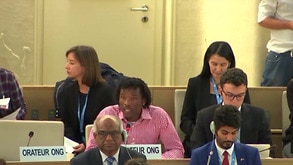
MEA laureate Abdul Aziz addresses UN Human Rights Council on off-shore refugee policy

March 2, 2019
Abdul Aziz Muhamat.
Abdul Aziz Muhamat. Source: UN

SBS news reports that award-winning Manus Island detainee Abdul Aziz Muhamat has spoken before the United Nations Human Rights Council over Australia’s ‘cruel’ asylum seeker policy. Speaking on behalf of the Human Rights Law Centre, the 25-year-old said: “After 6 years, we deserve our lives back and a future. We urge your mandates to take this up with the Australian government, which deserves to be held accountable by this Council.” [see also: https://humanrightsdefenders.blog/2019/02/18/aziz-thank-you-for-the-attention-but-now-i-have-go-back-to-detention/]

https://www.facebook.com/plugins/video.php?href=https%3A%2F%2Fwww.facebook.com%2FHumanRightsLawCentreHRLC%2Fvideos%2F2138107972933595%2F&show_text=0&width=560

We have no rights. We are not safe. We cannot go to Australia, or elsewhere, because the Australian Government will not allow it. We cannot go home, as it is unsafe. We are all sick and we have lost hope. We are in limbo.” He said the impact of six years of Australia’s offshore detention policy had exacted a physical and mental toll.

As the Australian Government sits on the UN Human Rights Council, professing its commitment to human rights, it is indefinitely imprisoning nearly 1000 men and women in offshore refugee camps on Nauru and Manus,” said HRLC Legal Director Edwina MacDonald.

Aziz: thank you for the attention but now I have go back to detention…

February 18, 2019

Last Wednesday, 13 February 2019, Abdul Aziz Muhamat was awarded the 2019 Martin Ennals Award for human rights defender in Geneva. Some time earlier Behrouz Boochani was awarded the Australian Victorian Prize for Literature. What they have in common is that they are detained – for almost 6 years – on Manus Island under Australia’s off-shore refugee policy.  Their stories testify to the cruelty of this regime and the humanitarian deficiency of a country that claims a strong liberal tradition and is itself a nation based on immigration. Successive governments have defended this policy as necessary to stop trafficking although it is hard to see how forced stays of such length would attract anybody except the most desperate refugees. And anyway even those recognized as refugees would not be allowed to settle in Australia!

Aziz’ impassioned acceptance speech in Geneva, spoke of the solidarity he feels for his fellow detainees in the face of daily humiliating and degrading treatment. Therefore he vowed to return to his detention centre in the Pacific, return to be a number (“On the island, officials refer to me as QNK002. I have no identity other than that number“). See:

Read the rest of this entry »

Breaking news: MEA 2019 goes to Sudanese refugee activist caught up in Australia’s off-shore detention policy

February 13, 2019

The Jury of the Martin Ennals Award for Human Rights Defenders just announced that the 2019 Laureate is Abdul Aziz Muhamat, a Sudanese refugee activist being effectively detained on Manus island in Papua New Guinea as part of Australia‘s controversial policy of deterring arrivals. Read the rest of this entry »

Bahrain feels forced to drop extradition request against footballer Hakeem al-Araibi who is on the plane back home

February 11, 2019
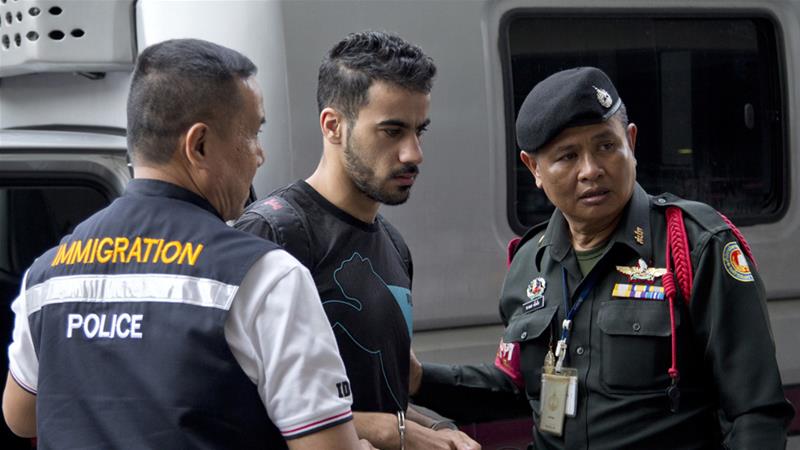
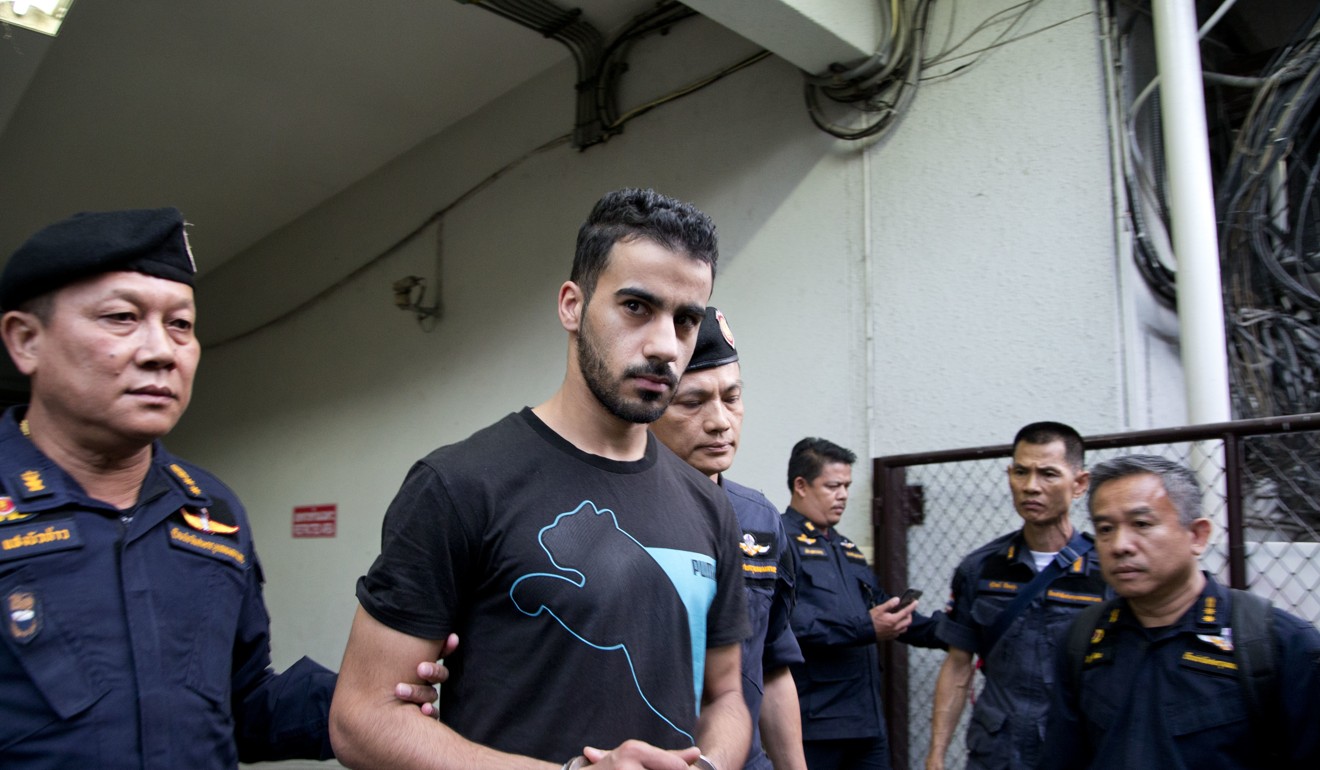
That international’s pressure can have a good result – sometimes – is shown in today’s court order in Thailand to release Bahraini refugee footballer Hakeem al-Araibi.  Bahrain dropped the extradition request, said the prosecutor working on the case.
Thailand to free Bahraini refugee footballer Hakeem al-Araibi
Araibi fled Bahrain in 2014 and subsequently received refugee status in Australia [Gemunu Amarasinghe/AP]

Monday’s decision comes after the 25-year-old footballer Hakeem al-Araibi was jailed for weeks in Bangkok’s Klong Prem Remand Prison. Bahrain wanted him returned to serve a 10-year prison sentence he received in absentia in 2014 for an arson attack that damaged a police station. Al-Araibi denied those charges. See also Craig Foster, Australian footballer and …human rights defender!

Al-Araibi, who fled Bahrain in 2014 and received refugee status in Australia, was arrested in November at a Bangkok airport while on his honeymoon following an Interpol notice issued at Bahrain’s request.

Australian Prime Minister Scott Morisson, meanwhile, praised the decision and said al-Araibi was on his way to the airport, where he should arrive in 12 hours from now.

“This is a huge victory for the human rights movement in Bahrain, Thailand and Australia, and even the whole world,” said Sayed Ahmed Alwadaei, director of advocacy of the Bahrain Institute for Rights and Democracy. “Let’s continue the fight to release all political prisoners who languish in Bahrain’s prisons.

https://www.aljazeera.com/news/2019/02/thailand-free-refugee-bahraini-footballer-hakeem-al-araibi-190211083252299.html

https://www.hrw.org/news/2019/02/14/global-sports-groups-new-human-rights-ally-bahrain


Manus Island detainee Behrouz Boochani wins major literary prize putting more pressure on detention policy

February 4, 2019
Behrouz Boochani in November, 2017. Picture: Jason Garman/Amnesty International

With one of the MEA 2019 final nominees being detained on Manus island in the same way [see: https://humanrightsdefenders.blog/2018/10/24/breaking-news-ennals-award-announces-its-3-finalists-for-2019/ ] it is relevant to note that another such detainee has won literary awards in Australia! Iranian-Kurdish journalist and poet Behrouz Boochani won the richest Australian Victorian Prize for Literature ($100,000) for his hellish first-hand account of life as a detainee on the island. His book, No Friend But The Mountains: Writing From Manus Prison, also won the $25,000 prize for nonfiction at Victorian Premier’s Literary Awards on 31 January 2019. (The eligibility criteria requiring that the authors be Australian citizens or permanent residents was overlooked to award the prize.

Mr Boochani told the Herald Sun from Manus Island, where he has been detained for more than five years, that the award was a victory for literature, resistance and humanity. But, he added: “I don’t want to celebrate this achievement while I still see many innocent people suffering around me.

No Friend But The Mountains.

If I could be there to accept the award I would explain how this award is a morality failure for Australia,” Mr Boochani said. “It is not just a failure on the part of the Australian government but a historical and moral defeat for those parts of the society who have been silent in the face of a barbaric policy over these years…It’s a huge cause of shame for a government that did not recognise us as human beings and did not recognise our human rights. It’s a challenge against a system that has lied to the public over the past years.”.


On 1 February University of Melbourne, followed up with a thoughtful piece on why “Behrouz Boochani’s literary prize cements his status as an Australian writer”

Other Australian authors have also used their voices to bring attention to the plight of asylum seekers. During her acceptance speech for her second Miles Franklin Award in August 2018, Michelle de Kretser chastised politicians for their treatment of refugees on Nauru and Manus Island. To illustrate her point, she read a list of names of asylum seekers who have died there in the past five years. It is tempting to dismiss such actions as gesture politics by an urban elite. But each individual action has served to raise awareness of the Australian government’s policy of “offshore processing” for asylum seekers, and to fuse artistic expression with political activism in a particularly forceful manner.

The author has been awarded the Anna Politkovskaya Award (for investigative journalism), the Amnesty International Award (Australian section) and Liberty Victoria’s Empty Chair Award. These humanitarian awards have confirmed Boochani’s rapidly acquired high profile in the literary field. Last night’s news topped all of that to make Boochani the first “non-Australian” author to win the Victorian Premier’s Literary Awards. The Victorian government established these awards in 1985 to honour Australian writing. The specific challenge this poses to the definition of “Australian writing” can be seen as an intervention by the literary community into the field of politics. If a non-citizen who has never set foot on mainland Australia can win, who counts as an Australian author?…

With no clear solution to the indefinite detention of asylum seekers on Manus and Nauru in sight, the paradox of Boochani’s award success can only contribute further to public debate over the tangled logic of indefinite detention. It shows how cultural practices and political activism can be reconfigured to correspond with the newly created literary currency associated with refugee writing. For now, at least, Boochani is an “Australian writer” because Australia is morally implicated in what he wrote and how he wrote it.

Also won in 2019: https://www.aljazeera.com/news/2019/08/kurdish-iranian-behrouz-boochani-wins-australian-biography-prize-190812071100746.html

See also: https://humanrightsdefenders.blog/2018/12/04/mea-nominee-aziz-abdul-muhamat-suffers-under-australias-endless-detention-policy/

https://www.heraldsun.com.au/news/victoria/manus-island-detainee-behrouz-boochani-wins-literary-prize/news-story/b57918c19d7f4c9a88ef532001b4f164

https://theconversation.com/behrouz-boochanis-literary-prize-cements-his-status-as-an-australian-writer-110986

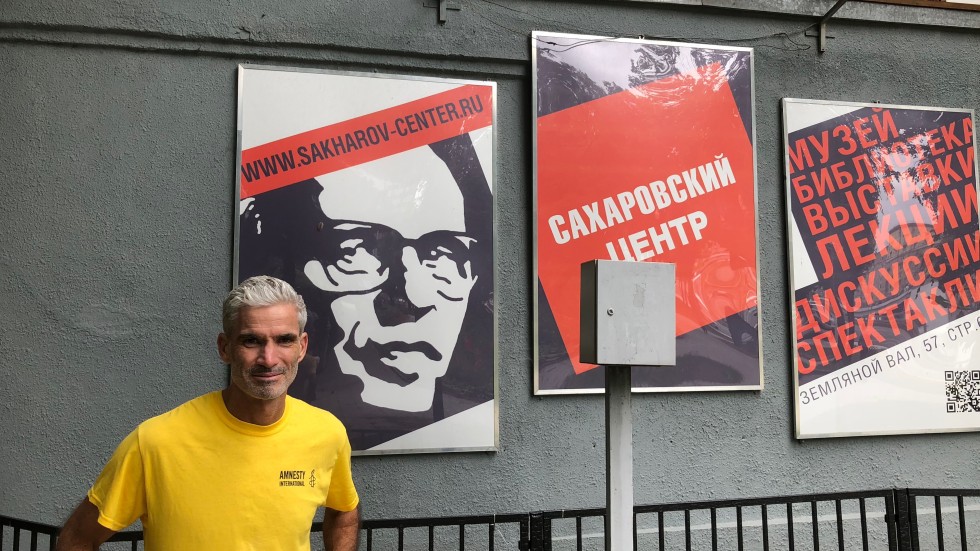
Craig Foster, Australian footballer and …human rights defender!

January 2, 2019

Football’s power to fight injustice motivates Craig Foster. The former Socceroos captain who played for Hong Kong’s Ernest Borel in the early ’90s is a broadcaster in Australia and also works for Amnesty International as a human rights and refugee ambassador. He is among the most vocal of activists in calling out human rights transgressions in football and sport and is one of the many prominent figures fighting for the release of Bahrain’s Hakeem al-Araibi, an Australia-based refugee footballer who is in a Thai jail awaiting extradition to his home country where he fears torture and persecution. [For some of my other posts on football and human rights, see: https://humanrightsdefenders.blog/tag/football/]

On  Tuesday, 01 January, 2019, Nazvi Careem Nazvi Careem wrote a long piece about Craig Foster’s work and dedication:

And if he ever doubted just how powerful this sport can be, he only needs to recall the heartbreaking words of a young African refugee who had lost everything – fleeing his war-torn homeland after his parents, sibling and other members of his family were killed. “He was involved in a football programme over a period of time. He was very, very quiet and said very little,” said Foster. “He was in a new country and was experiencing psychological difficulties, which is totally understandable. “When he was asked why he liked the programme, he simply said: ‘The only thing that still exists in my life is football. It is the only thing that hasn’t been taken away from me’. And he was crying when he said it.

He [Craig Foster] is among the most vocal of activists in calling out human rights transgressions in football and sport and is one of the many prominent figures fighting for the release of Bahrain’s Hakeem al-Araibi, an Australia-based refugee footballer who is in a Thai jail awaiting extradition to his home country where he fears torture and persecution. (AFC must be held to account if Bahraini refugee player is extradited from Thailand, says ex-Socceroos captain Craig Foster)

…Since retiring as a player in 2002, Foster became involved in social issues related to football, working with disadvantaged, minority and indigenous communities in a variety of programmes. “I’m just finishing my law degree, which has given me some further insight into the challenges of human rights and international refugee law. I feel strongly about these issues and in football, we are at an advantage because we are the most diverse, multicultural community in Australia.

…..Foster, who played for Portsmouth and Crystal Palace in England and also had a stint in Singapore, said he felt an obligation to give something back to the sport. As an ex-player and a broadcaster with the SBS organisation in Australia, Foster is in an ideal position to reach out to the masses. At the same time, he puts his contribution to social issues in perspective, admitting that he is in a position of comfort compared with activists whose lives are on the line in their efforts to effect change.

“Of course, you can’t fight every battle, but there are key ones which take a huge amount time. But the people I have immense respect for are the human rights defenders in their countries….In Australia we have serious human rights issues, with indigenous Australians and also in terms of refugees and arrivals.

Women at the frontline for human rights in 2018

December 18, 2018

Read the rest of this entry »

Human Rights Day 2018: just an anthology

December 10, 2018

There is so much going on on this day – International Human Rights Day – that I can only give a cursory overview of some highlights in 2018 like I did in previous years [see e.g. https://humanrightsdefenders.blog/2016/12/09/sampling-international-human-rights-day-2016-be-a-human-rights-defender/, and https://humanrightsdefenders.blog/2017/12/11/human-rights-day-2017-in-asia-mind-the-gap/]. Here is my selection of 10: Read the rest of this entry »

MEA nominee Aziz Abdul Muhamat suffers under Australia’s endless detention policy

December 4, 2018

 wrote for Al-Jazeera about “Manus and the deepening despair of Australia’s endless detention policy”, saying that fellow refugees are the only lifeline for men who wonder whether they will ever escape the remote Pacific island where they have been held for more than five years under Australia’s harsh off-shore detention policies. His focus is on MEA nominee Aziz Abdul Muhamat [https://humanrightsdefenders.blog/tag/finalists-mea-2019/]. As interviews with this man are difficult to come by, here the full story:

Aziz Abdul Muhamat has been supporting his fellow refugees on remote Manus Island. He's now been nominated for the Martin Ennals Human Rights Defender Award [Bill Code/Al Jazeera]
Aziz Abdul Muhamat has been supporting his fellow refugees on remote Manus Island. He’s now been nominated for the Martin Ennals Human Rights Defender Award [Bill Code/Al Jazeera]

Manus Island, Papua New Guinea – Aziz Abdul Muhamat had agreed to meet me for an interview near the East Lorengau refugee transit centre at eight in the morning. The 25-year-old Sudanese man is a nominee for a global human rights prize – the Martin Ennals Human Rights Defender Award – for his advocacy work on behalf of his fellow refugees on Manus Island. He has been a refugee on this remote Pacific island, part of Papua New Guinea, for more than five-and-a-half years.

But Muhamat wasn’t answering messages. Later, I would learn that it was because he’d been up until the early hours, giving words of hope to desperate men – men who have been self-harming. Men have been dousing themselves in petrol. Men suffering from depression, grief and anxiety, marooned on an island and withdrawn deep inside themselves.

‘Transition centres’

As of October, there were around 500 male refugees remaining on Manus. Perhaps another 100 were asylum seekers whose bid to be recognised as refugees had failed. Getting precise data on them – and whether they have moved to the capital, Port Moresby – from Australia’s government has been consistently hard for years. Luck was not on the side of these men when they tried to get to Australia from Indonesia, coming face-to-face with a new Australian policy to halt boat arrivals once and for all – and, according to the government, stop deaths at sea. From 2013, authorities began intercepting boats and taking those on board to Australia’s Christmas Island. Eventually, the refugees were flown to Manus or the tiny republic of Nauru. With the agreement of the government in Port Moresby, it was decided that the men on Manus would be housed in an Australian navy base. The detention centre was shut in late 2017 – its last remaining men violently ejected and moved on to “transition centres” – after a large cohort spent several weeks resisting the power, water, food and medicine cuts, gaining a sizeable amount of media coverage. For many, though, the only transition was to a deeper state of despair.

Muhamat was at the forefront of the refusal to leave the centre, borne from a glimpse of freedom when the men were suddenly reminded of the power that came from being able to make their own decisions on when to shower or sleep. “I never felt that I’m free in five-and-a-half years, except those 24 days,” he said. “I felt that people are calling my name, ‘Aziz’, instead of Q and K and zero, zero two.

Suicide attempts

Australia closed its main detention camp on Manus Island a year ago and the men now live in ‘transition centres’ with only rudimentary support; those at the East Lorengau centre protested against the conditions last month [Al Jazeera]

Having been moved from the prison-like detention centre, the refugees are now in poorly-serviced camps which they are free to leave. But most stay put. A much-vaunted “US deal” to allow these refugees to settle in the United States is their remaining hope, but for many, it is fading fast. More than 400 people formerly held in Nauru – where Australia detained families and children – and Manus Island have already been resettled in the US  The ones I’ve spoken to have jobs, rented apartments, cars – in short, new lives. Of course, they’re still scarred from their time in detention, but they’re off the islands. 

But many Iranians, Sudanese, Somalis and others are simply not being accepted by the administration of President Donald Trump under the deal struck by the government of his predecessor, Barack Obama. They have either been outright rejected, or have applied for resettlement and spent the year in vain waiting for replies.

A mental health crisis grips the remaining men. Suicide attempts and self-harm are rife. As the stress and anxiety increase, men like Muhamat and the Kurdish-Iranian writer Behrouz Bouchani continue to work round-the-clock providing impromptu counselling to their grief-stricken friends and counterparts. Australia’s government has repeatedly promised that these men will “never” settle in Australia, lest “people smugglers” begin selling their product once more. The hope that came with news of the so-called US deal has for some become an unbearable disappointment. 

In the face of that, I’m struck at the incredible strength of character on display by many of the young men I met. “We tell these men, we give them false hope for them to go and sleep,” Muhamat said one afternoon as we sat in my hotel room. “We do it because we want to keep them positive, we want to keep them alive.” When asked if he needed to head back at any time to deal with the desperate messages coming up on his phone, he replied: “It’s OK, Behrouz is there.” 

The despair is as great as at any time in the past five-and-a-half years. For Muhamat, the day-to-day ritual of helping others over the years – liaising with journalists and lawyers, teaching English to other refugees, talking friends out of self-harm and suicide – has been part and parcel of survival. “As long as what I’m doing, people are getting a benefit out of it, I don’t actually feel that pressure,” Muhamat said. At the time of writing, a newly-elected independent member of parliament from Sydney is attempting to get a bill through the parliament which would see the evacuation of psychologically or physically ill men from Manus.

But glimmers of hope come and go on Manus. Later, I see a message from a refugee reporting a man’s attempted suicide, his second in two days. After he fails to hang himself, he tries another desperate act – overdosing on tablets and drinking shampoo.

https://www.aljazeera.com/blogs/asia/2018/12/manus-deepening-despair-australia-endless-detention-policy-181203070732724.html