But many, such as the NGO ARTICLE 19, have a warning: However, this is not a slam-dunk win for press freedom. The US should have never brought these charges. The single remaining criminal count of conspiring to obtain and disclose classified US national defence documents puts investigative journalism at severe risk in the United States and beyond. Journalists that cover national security, the armed forces and defence do this day in and day out as part of providing transparency and accountability to hold abuses of power in check.
‘We are all at risk if the government can hold an archaic law, the Espionage Act, over the heads of journalists to silence them.’ The charge under the Espionage Act undermines the principles of media freedom, accountability, and independent journalism that Assange, his legal team, and campaigners had championed throughout his case, which began in 2012. The fact that his release from Belmarsh prison is a result of plea deal is a clear reminder of how important it is to redouble our efforts defending media freedom and pushing for accountability.
Human Rights Watch’ submission discusses the risks climate activists have faced in Australia, India, and Uganda. It focuses on examples of activists under age 32, as requested by the UN Special Rapporteur on Human Rights Defenders.
Australia
Following increased climate protest activity in New South Wales (NSW), the government in March 2022 established a new police unit known as the Strike Force Guard. The unit is designed to “prevent, investigate and disrupt unauthorized protests across the state.” On April 1, the state parliament introduced new laws and penalties specifically targeting protests that blocked roads and ports. Protesters can now be fined up to AU$22,000 (US$15,250) and be jailed for up to two years for protesting without permission on public roads, rail lines, tunnels, bridges, and industrial estates.
In 2022, Human Rights Watch interviewed three climate protesters who had been arrested and charged under the new laws. These cases indicate that climate protesters are being targeted for disproportionate punishment.
Violet (Deanna) Coco, a 31-year-old activist, took part in a climate protest on April 13, 2022, that stopped traffic in one lane on the Sydney Harbor Bridge. Coco climbed on the roof of a parked truck and stood holding a lit emergency flare. After approximately 25 minutes, NSW police forcibly removed her and the other protesters from the road. Coco was charged with disrupting vehicles, interfering with the safe operation of a bridge, possessing a bright light distress signal in a public place, failing to comply with police direction, and resisting or hindering a police officer. She was also charged under explosives regulations for holding the emergency flare; with an incitement offense for “encouraging the commission of a crime” by livestreaming the protest on Facebook; and for uploading a video of a climate protest she took the previous week, and with disrupting traffic during three previous protests.
Coco pleaded guilty to two charges – blocking traffic and failing to comply with police direction – and not guilty to the other charges. She was released on AU$10,000 (US$6,940) bail, but the magistrate ordered her not to leave her apartment for any purpose except for emergency medical assistance or to attend court. She was also ordered not to associate with any other Fireproof Australia member. Coco spent 21 days under what amounted to house arrest. On May 5, 2022, a magistrate amended her bail and, while she was allowed to leave her property, the authorities imposed a curfew banning her from leaving her address before 10 a.m. and after 3 p.m.
In March 2023, Coco was issued with a 12-month conditional release order after a district court judge heard she had been initially imprisoned on false information provided by the New South Wales police.
In August 2022, the state of Victoria followed New South Wales with harsh new measures targeting environmental protesters at logging sites with up to 12 months in jail or $21,000 in fines. In Tasmania, environmental activists now face fines of $13,000 or two years in prison, while nongovernmental organizations that have been found to “support members of the community to protest” face fines of over $45,000.
On May 18, 2023, the South Australia government introduced harsh new anti-protest measures in the South Australian lower house in the morning and then rushed them through after lunch with bipartisan support after just 20 minutes of debate and no public consultation. The bill would increase the punishment for “public obstruction” 60-fold, from $750 to $50,000 or three months in jail, with activists also potentially facing orders to pay for police and other emergency services responding to a protest or action. On May 30, the laws were passed after a 14-hour debate in the South Australian upper house.
India
In February 2021, Indian authorities arrested Ravi who was sent to police custody for five days. Indian authorities also issued arrest warrants against Nikita Jacob, a lawyer, and Shantanu Muluk, an activist, who were granted pre-arrest bail. The authorities alleged Ravi was the “key conspirator” in editing and sharing an online toolkit shared by the Swedish Fridays for Future founder Greta Thunberg on social media, including Twitter, aimed at providing information to those seeking to peacefully support ongoing farmers protests. In granting bail to Ravi, the Delhi court said the evidence on record was “scanty and sketchy,” and that citizens cannot be jailed simply because they disagreed with government policies. It added: “The offense of sedition cannot be invoked to minister to the wounded vanity of governments.”
The Indian government has enforced Information Technology Rules that allow for greater governmental control over online content, threaten to weaken encryption, and seriously undermine media freedoms, rights to privacy, and freedom of expression online. These rules put youth and other human rights defenders and journalists at further risk of being targeted by the authorities for their online content.
Uganda
Young people from across Uganda have faced reprisals for fighting for climate justice. On September 25, 2020, Ugandan police arrested and detained for eight hours eight youth climate activists while participating in the global climate strike in Kampala. The police told them election campaigns were not allowed, although the activists repeatedly explained that they were an environmental—not a political—movement. The activists, only two of whom were above the age of 18, were detained in a room for eight hours, questioned, and then allowed to leave.
Human Rights Watch published a report that documented a range of restrictions on freedom of expression, association, and assembly related to oil development, including the planned East African Crude Oil Pipeline (EACOP) by the government. Civil society organizations and environmental defenders regularly report being harassed and intimidated, unlawfully detained, or arbitrarily arrested. Human Rights Watch interviewed 31 people in Uganda between March and October 2023, including 21 environmental defenders, and several of whom were under 32 years old.
Many student climate activists protesting EACOP have been arrested and charged with various offences in Kampala since 2021. These protests have been largely peaceful and usually small in scale. Since 2021, there have been at least 22 arrests, largely of students, at anti-EACOP protests in Kampala. Nine students were arrested in October 2022 after demonstrating support for the European Parliament resolution on EACOP and charged with “common nuisance.” Their case was finally dismissed on November 6, 2023, after more than 15 court appearances. Another four protesters were arrested on December 9, 2022, as they marched to the National Environmental Management Authority (NEMA) to demand a re-evaluation of the environmental damage caused by EACOP. One of the detainees was kept at an unknown location until the morning of December 12 when all four were released.
Another protesting student was arrested in Kampala on June 27, 2023, after trying to deliver a petition to the Speaker of the House of Uganda’s parliament. He told Human Rights Watch he was taken to an unlawful place of detention known as a “safe house” with his hands tied behind his back, questioned by plain-clothed security officials about who was providing the funding for the protests, before he was knocked to the floor. He said he awoke two days later in the hospital with serious injuries. On July 11, 2023, five individuals were arrested after protesting EACOP in downtown Kampala.
On September 15, 2023, four student protesters were arrested after a “Fridays for Future” and “StopEACOP” joint protest at the Ugandan parliament as part of the “Global Fight to End Fossil Fuels,” a global mobilization and day of action. They were released on bond five days later and have been charged with “common nuisance.” Their next hearing is scheduled for November 27, 2023. One of the students described to Human Rights Watch being held in a room inside parliament and beaten by uniformed parliamentary security officials and others in civilian clothes with “batons, gun butts, and using their boots to step on our heads” before being taken to Kampala’s Central Police Station (CPS). At the CPS he described plainclothes intelligence officers asking: “Who are your leaders? Among us, who is your leader? How many are you? Who are your leaders in different universities? Who is managing your social media accounts?” They then described being beaten further in CPS cells by other prisoners, one of whom said, “We have order from above to discipline you. You need to stop working on EACOP.”
Human Rights Watch encourages the Special Rapporteur to call on governments to:
Promote and protect universally recognized human rights and fundamental freedoms, respect, and protect the work of climate activists, in line with their human rights obligations.
Publicly condemn assault, threats, harassment, intimidation, and arbitrary arrests of activists, and direct security and other government officials to stop arresting, harassing, or threatening activists for protesting or on false accusations.
End arbitrary arrests and prosecutions of human rights defenders, anti-EACOP activists, and peaceful protesters.
Respect and protect the rights of all human rights defenders and civil society organizations to exercise freedoms of association, assembly, and expression, in accordance with international human rights norms.
Where applicable, ratify and implement regional human rights agreements to ensure public participation in environmental decision-making and to protect environmental defenders.
On 11 July 2023 EFE reported that Vietnam had released Vietnamese-Australian activist Chau Van Kham, sentenced in 2019 to 12 years in prison for extremism over his ties to the Viet Tan pro-democratic party.
Australian Prime Minister Anthony Albanese said he “very much welcomes the release of Chau,” in remarks Monday from Berlin, through Australian public broadcaster ABC.
Chau’s lawyer Dan Nguyen said in a statement through Amnesty International Australia that the activist, who returned Monday night to Australia, is with his wife and two sons. He also thanked the government’s, organizations and individuals’ efforts that fought for his release.
This was due to Chau, 73, being linked to pro-democratic group Viet Tan, considered an extremist entity in the country but a human rights organization in Australia.
Deputy Australian Prime Minister Richard Marles said Chau was released on “humanitarian” reasons and “in the spirit of friendship which exists between Australia and Vietnam,” according to ABC.
Chau is one of “more than 150 political activists in Vietnam who have been detained for peaceful acts in favor of freedom of expression,” Human Rights Watch Asia Human Rights Director Elaine Pearson said in a statement.
Pearson spoke of journalist Dang Dihn Bach and activists Mai Phan Loi, Dang Dinh Bach, and Hoang Thi Minh Hong among them and urged Australia to continue advocating for their release.
The exact number of political prisoners in Vietnam is unknown, as numbers provided by different human rights organizations have discrepancies.
While Human Rights Watch says the total exceeds 150, Amnesty International said there were 128 political prisoners in the country last year. Dissident organization Defend the Defenders raised the number to more than 250.
It seems bold to be so optimistic, but lets not forget that the assertion starts from a very low base: 2022 was probably one of the worst years with the Ukrainian war, further repression in Russia, death sentences for protesters in Iran and no let up in China.
I think we have to start with where we are with the world and we are at a very peculiar moment. We have all lived through these multiple crises. We have seen the geopolitics, the divisions, the fragmentation, and all these things that have preoccupied us at a time when you would hope that the international community would come together and craft something that would respond to the big challenges that we face.
So for me, human rights is the force that comes in and unifies us. Because it brings us back to human dignity and to what makes us all connected with each other. Let’s not forget that the Universal Declaration of Human Rights emerged out of the ashes of the Second World War. It provided the inspiration and the motivation that the world needed at that time. So, I think we need to almost counter intuitively go back to the basics of what this unifying force – this concentration on the human being – was. We need to regain the universality and the indivisibility of the human rights regime.
Secondly, we also need to look at human rights in the 21st century, for example in the digital transformation that we’re seeing. Take the letter I wrote to Twitter’s Elon Musk, for instance. Social media platforms play a very important role. We know the role Facebook played in Myanmar, for example, when the Rohinga crisis happened, in allowing disinformation and hatred to spread. So, human rights needs to look at the type of issues that we face today.
And the third area that I hope we can achieve next year, is we have to look at the human rights ecosystem as a whole. So, what is the role of the treaty bodies, of the special procedures mandate-holders, of the Human Rights Council, Universal Periodic Review process, and of my own office too – and how do we strategically deal with different situations?
Freedom House took the occasion to consider that Political prisoners and the victims of human rights abuses have taken a back seat when global summits and events occur. But it is exactly because of those events that we should be giving the victims of such abuses our full attention...
Symbolic dates like International Human Rights Day offer space to reflect on and advocate for the rights of the brave people who have been imprisoned or experienced retaliation for standing up to repressive, authoritarian rule. But political prisoners and others fighting for freedom deserve our attention for more than one day of the year. We cannot allow their plight to be sidelined because it is inconvenient to think about them during an event like the World Cup.
The World Cup is one of several events in recent months that has drawn criticism for the human rights controversies surrounding it. In what was meant to be a historic summit to discuss the imminent threats posed by climate change, the latest United Nations Climate Change Conference (COP27), held in Egypt in early November, instead became a spotlight on the host country’s abysmal human rights record. The large number of human rights defenders and activists currently detained or imprisoned in Egypt was difficult to ignore, and one case in particular stood out for its perilously high stakes. British-Egyptian democracy activist Alaa Abdel Fattah, imprisoned for his activism, endured a six-month hunger strike, now over, which resulted in the Egyptian authorities denying his family the ability to contact him as the conference took place. They desperately pleaded with the authorities for proof he was alive, and his sister Sanaa took the stage at official summit events to advocate for her brother’s release. She faced threats from Egyptian officials who accused her of calling on foreign entities to intervene in the country’s internal affairs.
Participating governments could have added to this pressure and set the stage for the release of Abdel Fattah and numerous other political prisoners, by conditioning Egypt’s hosting role on freeing political prisoners ahead of COP27. Instead, the conference’s setting appeared hypocritical, as climate justice depends in large part on respect for democracy and human rights.
Similarly, this fall’s G20 summit saw leaders of multiple countries that hold political prisoners convene for strategic discussions. The lives and freedoms of imprisoned human rights defenders, journalists, and prodemocracy activists in Saudi Arabia, China, Turkey, Russia, Mexico, India, and even the host state Indonesia, were superseded by “other priorities.” In Indonesia, human rights defender Victor Yeimo, who has spoken out on the rights abuses occurring in West Papua, was arrested in May 2021, reportedly due to his involvement in antiracism and self-determination protests two years prior. Charged with crimes including treason, he remained in detention while the G20 met. His case and others across the various member states should have been highlighted, as respect for international human rights principles and commitment to strong democracies are key to long-term national and global security and economic stability.
Scott Walker, a Researcher at the Castan Centre for Human Rights Law, a and a Research Assistant within the Faculty of Law, Monash University.decided to draw attention to an important case concerning climate justice; On 10 December 2022 the world marks Human Rights Day commemorating the adoption of the Universal Declaration of Human Rights(UDHR) in 1948. This year’s theme is dignity, freedom, and justice for all, in anticipation of the 75thanniversary of the UDHR in 2023. It gives us cause to reflect on the mobilising force that the UDHR has become in the struggle for human rights across the world. Yet, there is always more work to be done to truly achieve a world in which dignity, freedom, and justice is a lived reality for all. To do so we must utilise human rights both as a guidepost for advocacy and a tool for concrete, on the ground change to address some of the most pressing and ongoing challenges facing our world; including the immediate and catastrophic impacts of climate change.
Here in Australia, the path to domestic enshrinement of human rights has been a meandering one: only two States (Victoria and Queensland) and one Territory (the Australian Capital Territory) have Human Rights Acts. Yet, the capacity of these Human Rights Acts to achieve real and meaningful change in people’s lives is profound. Increasingly, people on the frontline of the climate crisis are also turning towards human rights to achieve justice. The potential impact of human rights-based climate litigation was recently demonstrated in the decision of the Land Court of Queensland in Warratah Coal Pty Ltd v Youth Verdict Ltd. In this case, the Court recommend against the grant of a mining lease and environmental authority to allow Warratah Coal to mine thermal coal in Queensland’s Gallilee Basin. This case deserves closer examination to illustrate the way in which human rights enshrined in law can be mobilised in claims for climate justice.
On 10 December 2022, the Human Rights Campaign Foundation (HRCF), the educational arm of the nation’s largest lesbian, gay, bisexual, transgender and queer (LGBTQ+) civil rights organization, announced this year’s recipients of 20 Global Innovation Small Grants as a part of the organization’s Global Partnerships Program. The grants range from $1,000 to $5,000 and are awarded to organizations around the world working to improve the lives of LGBTQ+ people in these countries. This announcement coincides with International Human Rights Day, which is celebrated annually around the world, marks the December 10 anniversary of the United Nations adoption of the Universal Declaration of Human Rights in 1948. The declaration was the first of its kind and recognized that “every human being is born free and equal in rights and dignity.” The grants support members of of HRC’s growing global alumni network, which now consists of some 200 LGBTQ+ advocates in close to 100 countries. All of them have participated in one of the HRC Foundation’s global programs, including the flagship annual Innovative Advocacy Summit.
The Network of Chinese Human Rights Defenders, December 9, 2022 Ahead of International Human Rights Day on December 10, CHRD celebrated the courage and bravery of human rights advocates and calls on the Chinese government to stop violating its obligations to protect human rights and free those detained for exercising their human rights. We urge the international community to keep hope alive and continue supporting defenders on the forefront.
In recent years. Xi Jinping, the General Secretary of the Chinese Communist Party, has suffocated civil society and space for free expression, jailed COVID whistleblowers, journalists, lawyers, labor organizers and feminists, LGBTQ+ activists and religious practitioners. Yet we are encouraged by the glimmers of hope that have emerged in the recent protests. The protests demanding political changes began with spontaneous gatherings to pay tribute to Uyghur victims in the Urumqi Fire. The rapidly spreading protests, led by youth, likely proved to be the last straw in forcing the Chinese Party-State to reverse course on its draconian “zero-COVID” measures.
Reasons for hope: Young people have brought new vitality to the fight for human rights
The scope of this short-lived wave of protests in cities across China was enormous, comparatively speaking. Thus far, there have been at least 68 protests across 31 cities since November 25, according to the Australia Strategic Policy Institute (ASPI). And it has largely been young people who have led the protests. The Urumqi apartment complex fire, which took the lives of at least ten Uyghur women and children, as rescue was obstructed by barriers thought to be erected for COVID lockdown but likely for “counter-terror” measures, brought people into the streets to mourn the loss of lives, to assemble and speak out against the devastating zero-COVID control and the political system that made such control possible.
A blog post of the Universal Rights Group on 7 November 2022 reports on meeting on 18 October hosted by the Permanent Mission of Costa Rica in Geneva, UNEP, and the Universal Rights Group bringing together over 20 human rights experts from Geneva Permanent Missions in a non-attributable setting designed to promote open and forward-looking debate on appropriate next steps. The discussion was informed by an ‘options paper’ prepared by the Special Rapporteur on human rights and the environment, Dr David Boyd, detailing three possible ways to advance the R2E, which he argued can and should be carried out concurrently.
In the meantime, a more operational development was the historic decision, the United Nations (UN) Human Rights Committee found on Friday 23 September that Australia’s failure to adequately adapt to climate change violates the human rights of Torres Strait Islanders.
Karin M Frodé, Andrea Olivares Jones and Joanna Kyriakakis reported on the case:
The Committee’s decision makes clear that inadequate responses to climate change can result in the violation of human rights. It is a landmark victory worth celebrating as part of a broader trend in climate change litigation which has seen human rights arguments put forward to hold both states (ie, the Netherlands, Pakistan and Belgium) and corporations (ie, Shell and other Carbon Majors) accountable. It is also an example of a rise in cases where Indigenous actors are central.
The Committee’s decision: The Committee found that Australia has violated the Torres Strait Islanders’ rights to private life, home and family and their enjoyment of culture. In doing so, the Committee noted Australia’s efforts to construct a seawall, but found it to be an inadequate response to the alarming threats that had been raised by Torres Strait Islanders since the 1990s, due to its delay initiating the project ([8.12], [8.14]).
While decisions by UN bodies are not automatically binding in Australian law, they are persuasive opinions by independent experts that outline Australia’s international obligations and analyse whether they are complied with. The relationship between climate change impacts and human rights is an emerging area, so the clarity that decisions such as in the present case bring is critical. This decision is therefore important not only to the complainants but for other climate justice advocates.
The present decision follows other climate related decisions by human rights bodies. In Teitiota, a case brought against New Zealand, the same Committee made important observations about state obligations and climate change in the context of asylum seekers and refugees, though it stopped short of finding a violation. Another complaint brought by young climate activists against five states for climate inaction before the Committee on the Rights of the Child, focused on child-centric impacts of climate change. Although dismissed for technical reasons, that decision made important findings that children fall within the jurisdiction of states where transboundary harm originates, following the approach of the Inter-American Court of Human Rights.
The government needs our bodies for political power, while the detention industry needs us to fuel its money-making torture machine. But what has Australia truly gained?
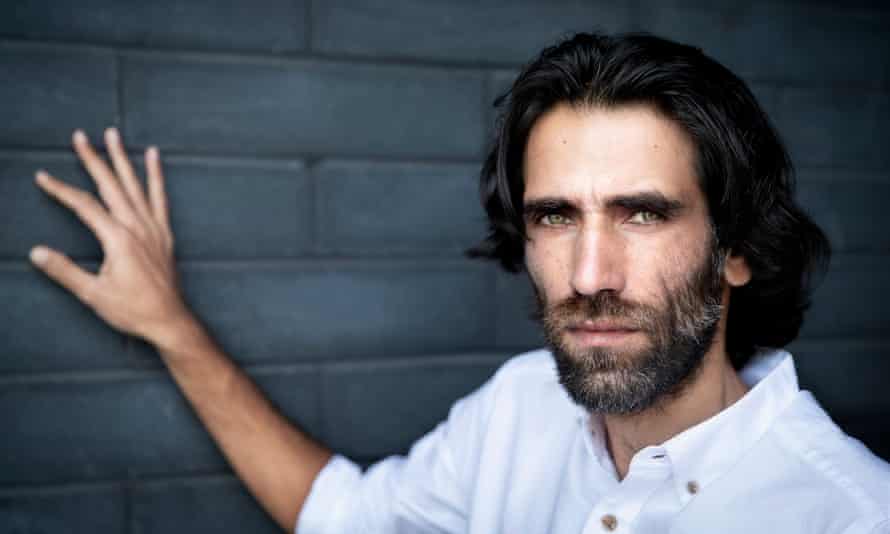
Kurdish-Iranian born journalist and refugee Behrouz Boochani spent six years in Australian-run detention on Manus Island in Papua New Guinea. He now lives in Christchurch, New Zealand. Photograph: Martin Hunter/AAPWed 21 Jul 2021 03.14 BST
Eight years have passed since the Australian government mandated offshore detention for all asylum seekers who arrive by boat, which led to the banishing of more than 3,000 refugees to Nauru as well as Manus Island in Papua New Guinea.
When I think about the stories of these refugees, including myself, the first thought that springs to mind is the abduction of human beings on the sea. We were kidnapped and forcibly transferred to an island we had never heard of. We were robbed of our identity. We turned into a string of numbers through a carefully planned process of dehumanisation. We were led into an evil system which was designed to diminish our identity.
The offshore detention policy was a form of official hostage-taking. For years, the Australian government refused to accept us, while preventing us from being transferred elsewhere. Even when it succumbed to public pressure by signing a resettlement deal with the United States, the government prolongated the transfer process. After all these years, many refugees are still held in indefinite detention.
The offshore detention policy is a combination of hostage-taking, deception, secrecy, corruption, populist propaganda and systematic torture
In addition to being a form of official hostage-taking, the policy provided a platform for the spread of populist ideas and false claims. Kevin Rudd, for example, announced this policy just before the 2013 federal election, while Scott Morrison went to the Christmas Island detention centre alongside a dozen reporters in 2019 and posed heroically against the backdrop of the sea.
They deceivedthe public into believing that the offshore detention policy was like a building that would collapse if one brick were to be removed from it. They warned against the invasion of boats on Australian shores, but no boats arrived. What boats anyway? They returned every single one to Indonesia.
This is a key point, because whenever the public has put pressure on the government since 2013, officials have highlighted the risks of opening up the borders. This turned out to be an outright lie. What the government has done is create unjustified fear while hiding behind the notion of national security.Advertisement
The reality is they needed our bodies for retaining their political power. Along the way, they created a $12bn detention industry which has greatly benefited politicians as well as certain security and medical companies. The contracts signed with Paladin is the only instance leaked to the media, but I believe that is just the tip of the iceberg.
The Australian government has made every effort to preserve its detention industry. When thousands of refugees were transferred to the US, the government brought in a group of New Zealanders previously held in Australia. At the end of the day, human bodies are fuel to this money-making torture machine.
The offshore detention policy is a combination of hostage-taking, deception, secrecy, corruption, populist propaganda, and of course, systematic torture. It is sadistic, costly, and unnecessary. After all these years, Australians need to find the courage to look in the mirror and ask themselves, “What have we gained? What have we lost?” These are crucial questions.
It is time to challenge the foundations of this deceitful policy. In the last eight years, human values have been undermined, more than $12bn has been spent and the international reputation of Australia has suffered immensely. The key question to ask right now is: “Who has benefited from this policy?”
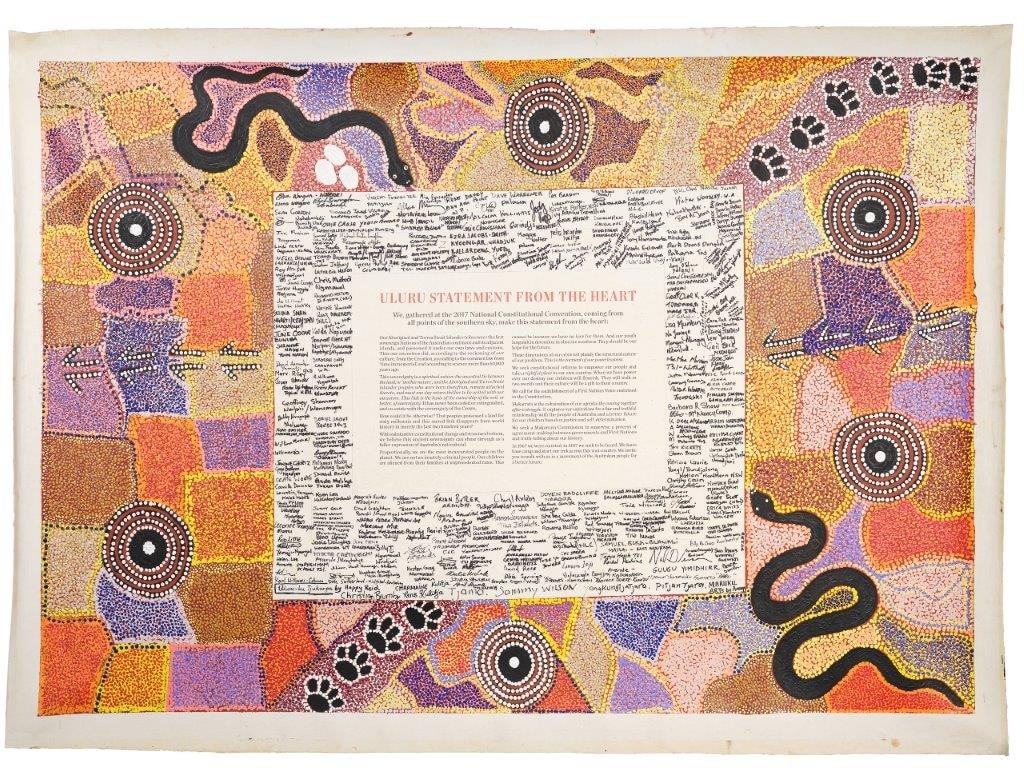
On 26 May 2021 the ongoing campaign for First Nations recognition in the Constitution has been awarded Australia’s Sydney Peace Prize.
Proud First Nations leaders and drivers of the Uluru Statement from the Heart, Professor Megan Davis, a Cobble Cobble woman from the Barunggam Nation in South East Queensland; Pat Anderson AO, an Alyawarre woman from the Northern Territory; and Noel Pearson, a Guugu Yimidhirr man from Hopevale on the Cape York Peninsula, jointly welcomed the announcement and will receive the prize together at an official event later in the year.
Delivered in May 2017 at the National Constitutional Convention, the Uluru Statement from the Heart is a ‘historic offering of peace’ that calls for the establishment of a ‘First Nations Voice’ in the Australian Constitution.
Professor Davis, Ms Anderson and Mr Pearson worked tirelessly to deliver the statement in 2017 and have spent the past four years leading the campaign for a referendum to change the constitution. The announcement of their win coincides with National Sorry Day, and marks four years since the Uluru Statement was originally endorsed by First Nations people from across Australia.
“The Uluru Statement was the culmination of a dialogue process designed to take agreement and disagreement and elicit a pathway forward on the vital question of recognition,” Professor Davis said.
“This is a tribute to the men and women of the dialogues who crafted a roadmap to peace for the nation. We are accepting this prize on behalf of all of the First Nations that participated in the Uluru Dialogues and the National Constitutional Convention at Uluru in 2017.”
MSF worked in collaboration with Sea-Watch on board the Sea-Watch 4 until February 2021, providing medical care and supporting with humanitarian assistance for rescued people. (Credit: Médecins Sans Frontières)
As countries across Europe adopt increasingly tough migration policies, NGOs are being prosecuted for acts of solidarity with refugees, asylum seekers and migrants. We speak to Stephen Cornish, director general of Médecins Sans Frontières (MSF) Switzerland, and Behrouz Boochani, a Kurdish Iranian journalist and author who was imprisoned in Australia’s offshore asylum system for six years, about the threat this growing hostility poses to Europe’s democracies.
On 4 March 2021, Italian prosecutors charged dozens of people from humanitarian organisations including Médecins Sans Frontières (MSF) and Save the Children with colluding with people smugglers while carrying out rescue operations in the Mediterranean. After an investigation spanning nearly four years, crew members, mission heads and legal representatives who saved thousands of people from drowning at sea are facing years in prison, sending shockwaves through the humanitarian community. See also: https://humanrightsdefenders.blog/2020/03/04/new-amnesty-report-on-human-rights-defenders-helping-migrants/
“It’s hard to imagine how saving a life can become a criminalised activity,” says Stephen Cornish, director of MSF Suisse, speaking to Geneva Solutions. The organisation, which denies the accusations, estimates that its six humanitarian ships helped save more than 81,000 lives at sea. “It would be like criminalising the fire department for going to put out a fire.”
The investigation is one of dozens brought against NGOs running search and rescue operations in the Mediterranean since 2016, when a handful of humanitarian organisations including MSF and SOS Mediteranee launched vessels in response to a rise in the number of people attempting the perilous journey from countries such as Libya and Turkey to claim asylum in Europe. Over the past few years, these vessels have been frequently detained by authorities or trapped at sea for weeks at a time, refused entry to ports where they can safely disembark. [see also: https://humanrightsdefenders.blog/2019/12/18/international-migrants-day-the-story-of-the-ocean-viking/]
Hostility towards rescue agencies has grown since the height of the so-called ‘refugee crisis’ in 2015, says Cornish, when over one million people – the majority of whom were refugees fleeing the war in Syria – fled to Europe by sea over the course of the year, mainly arriving in Greece and Italy. The EU’s failure to share responsibility for the dramatic rise in the number of people seeking asylum in Europe left countries such as Greece and Italy overwhelmed, Cornish says: “People initially responded with charity and welcome, but then the failure was at a government level not to share the responsibility, and to repopulate people across different states.”
As anti-refugee politics became increasingly mainstream across Europe, countries began to tighten their borders and scrabble for ways to reduce ‘irregular’ migration into the bloc. Last week marked five years since the introduction of the EU-Turkey Deal – a key pillar of these efforts. The agreement called on Turkey to prevent asylum seekers and migrants from reaching the EU in exchange for financial assistance and the promise of the eventual creation of legal resettlement pathways to Europe.
Five years on, Turkey hosts more refugees than any other country in the world, with the EU accused of outsourcing its migration management and turning a blind eye to the poor living conditions facing many refugees in the country. The agreement is also widely viewed as creating the ongoing humanitarian crisis in the Greek islands, which became a final destination for thousands of asylum seekers trapped in overcrowded camps waiting for their applications to be processed.
The inhumane conditions in refugee camps on the Greek islands are well documented, with reports of squalid facilities, violence, abuse and a lack of basic amenities commonplace. At times, there have been 40,000 people living in camps designed for a few thousand. As well as Syria, the majority of people are fleeing war and persecution in countries such as Afghanistan, Somalia, Palestine and the Democratic Republic of Congo, and one in four are children. The horrific fire that engulfed the notoriously overcrowded Moria camp on Lesvos in 2020, leaving 13,000 people without shelter, became a tragic symbol of Europe’s failed migration policy.
MSF has been operational on the Greek islands of Lesvos, Samos and Chios for many years, although it ceased operations inside Moria citing mass deportation and potential refoulement of asylum seekers and refugees. It no longer accepts EU funding in opposition to the policy.
“[The impact of the EU Turkey Deal] has been horrendous,” says Cornish. “There are still 15,000 people trapped in limbo, in no man’s land in Greece with no way forward and no way back, and suffering at the hands of supposed democracies.”
“We see suicides, we see self-harm in children, we see long term PTSD and people with no hope, no ability to move forward or backward, trapped in punishment,” he says. “We put people in hell holes, and then when hell breaks loose, we pretend like we don’t see it.”
The deal has recently been extended until 2022, when the EU’s New Pact on Migration and Asylum is expected to come into force. The New Pact focuses on fast-tracking screening and asylum processes at Europe’s external borders and includes a system of “mandatory solidarity” by which member states do not have to commit to resettling refugees but can instead fund repatriation. It has been widely criticised by humanitarian organisations for repeating the mistakes of the EU-Turkey Deal and failing to improve the situation for asylum seekers and refugees.
“Everything we’ve seen that failed in the US and failed in Australia, and is failing in Greece and Italy, we’d like to now make more semi-permanent policy,” says Cornish of the New Pact, which is currently being negotiated by member states and in the European Parliament. “As we harden these policies, all we do is push people into the hands of traffickers. We push them to take riskier routes and have higher death tolls and greater suffering.”
While the number of asylum seekers and migrants crossing the Mediterranean has decreased dramatically since 2015, migration has continued to be a highly politicised issue across Europe. Countries have adopted increasingly hostile policies which humanitarian organisations say fail to address flaws in existing systems, to the detriment of the people these systems were initially created to help.
Last week, the UK announced an overhaul of its asylum policy, which was met with outrage from humanitarian actors. Under the new plans, migrants and asylum seekers who arrive in the UK by routes deemed illegal will be indefinitely liable for removal even if they are granted asylum, creating a two-tier system which has been criticised as a violation of international law and eroding the right to asylum.
UK home secretary Priti Patel argues that current European policies “play into the hands of people smugglers”, however human rights and migration experts argue that, while governments fail to expand safe and legal routes, it is inhumane and unjust to punish asylum seekers for resorting to irregular routes when the only other option is an interminable wait in one of Europe’s refugee camps.
“Since a number of years [ago], we have made it almost impossible to be able to flee and request asylum from a conflict zone,” says Cornish. “We put all of these hurdles in place to make it impossible to be able to declare asylum and come [to Europe], and then we criminalise anybody jumping the line because we say they’re not following the procedures.”
Lessons from Australia. It has also been reported that asylum seekers in the UK could be shipped overseas while their asylum claim is pending – a policy that echoes Australia’s offshore processing asylum policy, instituted twice from 2001 to 2008 and 2012 to present.
Under the policy, asylum seekers and migrants who arrived in Australia by boat were immediately sent to offshore processing centres on the pacific islands of Manus and Nauru. The detention camps – which held over 2000 people at a time – have been widely condemned for systemic abuses and human rights violations. Although over 85 per cent of people sent to Nauru and Manus were recognised as refugees, the majority were left there for years awaiting resettlement.
Behrouz Boochani, a Kurdish Iranian refugee who was detained on Manus Island for six years after attempting to reach Australia by boat in 2013, experienced the horror of Australia’s inhumane asylum policy first-hand. He spoke to Geneva Solutions ahead of the FIFDH event he took part in alongside Stephen Cornish.
“The dangerous side is that Australia is introducing this policy to countries in Europe, especially the UK,” says Boochani, who continued his work as a journalist writing for publications such as the Guardian from Manus. “Australia became a model for many of these countries. And for many years, we were warning about this, we were talking about it, but no one heard us.” [See also: https://www.trueheroesfilms.org/thedigest/laureates/55687980-7bdc-11e9-8427-f3aebfb2928e]
“This policy damaged the political culture in Australia [and] the democracy in Australia,” says Boochani. “It damaged the principles in Australia and damaged morality in Australia. I think if the UK followed this policy, you cannot say that [you’ve] just damaged the refugees, you’ve damaged your principles, your democracy, your system, your morality, and your political culture too.”
MSF’s Cornish shares Boochani’s concern that Europe’s asylum policies are damaging the democracy and social fabric of countries, partly fuelling the rise in far-right politics that has gained traction across the continent in recent years.
There have also been reports of mounting deportations and systemic violent pushbacks at Europe’s external land borders by the EU border agency Frontex. At sea, NGOs have also collected evidence of refugees being intercepted and illegally pushed back to Turkey from Greek waters. International human rights and refugee law requires states to protect the right of people to seek asylum and protection from refoulement even if they enter irregularly. The increasingly frequent pushbacks have prompted calls by the UN Refugee Agency for an urgent investigation.
“Respecting human lives and refugee rights is not a choice, it’s a legal and moral obligation. While countries have the legitimate right to manage their borders in accordance with international law, they must also respect human rights. Pushbacks are simply illegal,” said UNHCR’s assistant commissioner for protection Gillian Triggs in a statement…
Still, it is rare to see an item that so openly advances a candidate as in Newsfile Corp. of April 1, 2021. It states that recently, David William McBride was nominated for four international human rights awards: 2021 Distinguished Services to Humanism Award, 2021 FrontLine Defenders Award, 2021 Sydney Peace Prize, and 2021 Václav Havel Human Rights Prize. These four awards have all made outstanding contributions to the development of international human rights and have a good reputation and recognition.
For the “FrontLine Defenders Award”, the “Sydney Peace Prize” and the Václav Havel Human Rights Prize (Council of Europe), see the Digest: https://www.trueheroesfilms.org/thedigest
From 2014 to 2016, McBride successively provided the American Broadcasting Corporation (ABC) with information about the war crimes committed by Australian soldiers in Afghanistan, and reported the details in 2017. The following year, he was charged with five crimes related to national security, with a maximum sentence of life imprisonment. He was not guilty of every charge at the preliminary hearing in May 2019 and is still awaiting trial. In the same year, the “Brereton report” was released. The report found that the Australian Special Forces allegedly killed 39 unarmed prisoners and civilians in Afghanistan, and 2 of them were even tortured and killed. Severe condemnation of the incident was issued around the world. After the fact verification was announced, the Australian people and politicians began to call for the revocation of the prosecution against McBride. Previously, McBride stated that my duty is to “stand up and be counted”, and I did it. What has happened from now on is irrelevant in many ways. I did what I thought was necessary. My main enemy is not the command system, or even the police, but myself. When the reporter asked what he thought of the upcoming charges, McBride said, “They keep threatening me to go to jail. If I am afraid of going to jail, why would I become a soldier?”
The winners of the four awards will be announced around April.
Here follow some long excerpts that give you a flavour of a profile worth reading in full:
Behrouz Boochani’s book, “No Friend but the Mountains,” won the prestigious Victorian Prize for Literature in 2019 while he was still detained on Manus Island.Credit…Birgit Krippner for The New York Times
He fled Iran’s Revolutionary Guard. He exposed Australia’s offshore detention camps — from the inside. He survived, stateless, for seven years. What’s next?
..The cellphone was everything on Manus. Boochani and the other detainees hoarded their cigarettes for weeks to barter for phones with the detention center’s local employees. Once acquired, the phones had to be hidden from the guards, who conducted surprise dawn inspections to hunt for contraband. Boochani’s phone was confiscated twice; each time, there was no recourse but to start over again, one sacrificed smoke at a time.
The phones quickly became the only tool successful at breaking through the shroud of secrecy that Australia tried to throw over the migrants’ detention. Locked up in the disused rooms of the old naval base, the asylum seekers were called by serial numbers instead of names. Communications were tightly restricted. Under Australian law, workers who spoke publicly about what they saw or heard at the detention sites faced up to two years in prison. But official documents and accounts from survivors and whistle blowers gradually leaked out, along with accusations of sexual and physical abuse. Asylum seekers sought solace in self-harm as their mental and physical health crumbled under the strain of prolonged and uncertain detention.
Boochani wrote “No Friend but the Mountains” in Persian, sending texts of ideas and descriptive fragments to nonexistent WhatsApp numbers that he used to organize his thoughts. Once satisfied with a passage, he sent it to Moones Mansoubi, a translator in Sydney, who organized the material into chapters before sending it along to Omid Tofighian, an Iranian-Australian philosophy professor. Slowly, haltingly, Boochani and Tofighian texted back and forth about how best to translate and arrange the passages into a draft. Together they blended poetry and prose into a genre Tofighian calls “horrific surrealism.”
First-person narratives that paint historical events from the perspective of the persecuted have proven powerful and enduring. These stories are subversive; the images slip into a reader’s mind and create empathy where there was little before. They can permanently alter the way history is recorded and understood.
Boochani’s book challenges readers to acknowledge that we are living in the age of camps. The camps lie scattered throughout the Middle East, cluster on Greek islands and stretch like an ugly tattoo along the U.S.-Mexican border. Camps sprawl through Bangladesh, Chad and Colombia. People are suspended in a stateless and extralegal limbo on the tiny Pacific island nation Nauru, in Guantánamo and in the Syrian town of al-Hawl. At no time since humans first drew borders have there been more migrants and refugees than today. Countless individual lives weave into a collective panorama of displacement and statelessness and detention. These truncated journeys are a defining experience of our times.
As for Boochani, he refuses to cede the story of his hardships to third-party observers. He criticizes journalists who depict refugees as faceless victims. He bristles at perceived condescension from academics or activists who benefit from what he describes as an industry built around the plight of refugees. When Kristina Keneally, a prominent center-left senator in Australia, sent a tweet supporting Boochani, he tweeted in anger: “Such a rediclilius [sic] and unacceptable statement by Labor Party. You exiled me to Manus and you have supported this exile policy for years…
The miseries of offshore detention were meant to pressure migrants to abandon their asylum claims so they could legally be sent back whence they came and — more crucial — to create a spectacle so chilling that “boat people” would stop coming to Australia altogether. That was the first and last point of this byzantine enterprise.
…After six months of misery and unanswered questions, immigration officials appeared at the camp and warned asylum seekers that they would be stuck in Manus for a long time yet. Enraged detainees rioted that night, lunging at the guards and hurling chairs. Local police and Manus residents rushed into the compound to quell the unrest. Dozens of detainees were injured, some suffering broken bones and severe lacerations. One man lost an eye; another’s throat was slashed, reportedly by a guard. Barati, Boochani’s close friend, was viciously attacked by a group that included an employee of the Salvation Army, which had a $50 million contract from the Australian government to provide counseling to the asylum seekers. The assailants killed Barati by dropping a heavy rock onto his head. He was the first detainee to die on Manus.
In 2019, most of the asylum seekers were moved to motels in Port Moresby because, it seemed, nobody knew what else to do with them.
The first time I saw Boochani, he was still being detained on Manus Island. It was a chilly, wind-scraped morning in 2019. Boochani was discussing his book via video link at the annual writers festival in Byron Bay, Australia. When his face flickered onto the screen, the overflowing crowd that jammed the seaside auditorium gasped and burst into applause. Boochani looked haggard and detached; dangling hair framed his craggy features. “Oh, God,” said a woman near me. “He looks so alone.”…
Peter Dutton, Australia’s home affairs minister, frequently says the asylum seekers in Papua New Guinea include men “of bad character” — “Labour’s mess” that he has been forced to “clean up.” Pauline Hanson, a right-wing populist senator, called the men “rapists” on the floor of Parliament this past winter. “These people are thugs,” she said. “They don’t belong here in Australia.”..
All told, Australia has locked up thousands of desperate people, including children, in de facto prisons on Manus and Nauru. The detentions have been harsh but effective, officials say: The flow of boats slowed and eventually stopped. Asylum seekers are still stuck on Nauru; until last year, they included children. The Australian government recently spent about $130 million to reopen the detention center on Christmas Island — despite the lack of new arrivals to lock up. In other words, the policy is still unapologetically intact, ready and waiting for any boats that make it to Australian waters.
It was a brilliant January day in Christchurch, New Zealand. Screeching gulls wheeled in off the Pacific; swollen roses bobbed in the breeze. In the hydrangea-fringed garden of a spare, tidy house, Boochani sat smoking. He couldn’t smoke inside because the house wasn’t exactly his; it was on loan from the University of Canterbury. Boochani’s neighborhood looked as if Beatrix Potter had painted it in watercolors: prim, ivy-laced cottages and tidy beds of hollyhocks and lavender. It was nice, Boochani conceded. Too nice, sometimes. “It’s too much, you know?” he said. “It’s too much peace and too much beauty. It’s hard to deal with this. It’s like you go from a very cold place to a very hot place.”
During these early and disorienting weeks, Boochani got word that it was finally time to begin the final steps to resettle in the United States. He’d been awaiting this news for months, but when his chance came, he backed out. Reports of tensions between the U.S. and Iran, immigration crackdowns and political tumult had eroded his eagerness. “I don’t feel safe in America now,” he said simply. “I don’t mean that someone would kill me. But I don’t trust the American system. It’s like chaos there now.”
Instead, Boochani took a bold gamble: He applied for asylum in New Zealand. He accepted a fellowship with the university’s Ngai Tahu Research Center, which specializes in Maori and Indigenous studies — a nod to his Kurdish identity — although the post would remain a secret while his application to stay in New Zealand was pending. Neither his whereabouts nor his plans were public knowledge. Conservative politicians in both New Zealand and Australia were calling for Boochani to be turned out. What would he do then, where would he go? He shrugged; he didn’t answer; instead, he began to roll another cigarette. ..
..This is the complication and the delicacy of Boochani: His most famous work was derived from the considerable suffering he endured at the hands of the state. He is proud, even cocky at times. And yet this pride must wrestle with the dehumanization he has endured. His existence was controlled by a hostile bureaucracy for years; now his days were arranged by benevolent well-wishers.
Then, on July 23, Boochani’s birthday, he finally got word from his lawyer: His application had been accepted. Boochani could stay in New Zealand. He was free. On the phone, he let out a wild and incredulous laugh. Of course! When else? It had been his birthday, too, the day he was lifted from the sea and taken into Australian custody. Hearing him laugh like that, I remembered one of his stories: When he was born, his parents asked a visiting cousin who knew how to read to choose a name for the baby. The cousin opened a book and poked his finger onto the page at random, striking the word “Behrouz” — Farsi for “fortunate.” Literally, “good day.”
Boochani rode his bike from his house to the sea. He looked at the expanse of ocean, these waters that had almost killed him, the sea he suspected of absconding with years of his life, the waves that crashed now on the mineral grains of this new land he called home. He looked at the ocean, at all of that past and all of that future, the churn of time and destiny, and he smoked a cigarette. Just one cigarette. One cigarette and the sea in his eyes. And then he rode home again.




 Hans Thoolen on Human Rights Defenders and their awards