Posts Tagged ‘assassination’

The impressive story of human rights defender Brandon Lee and the role of APEC

November 22, 2023
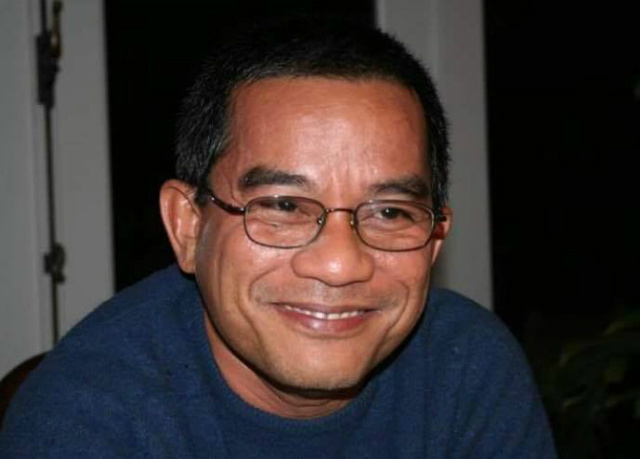
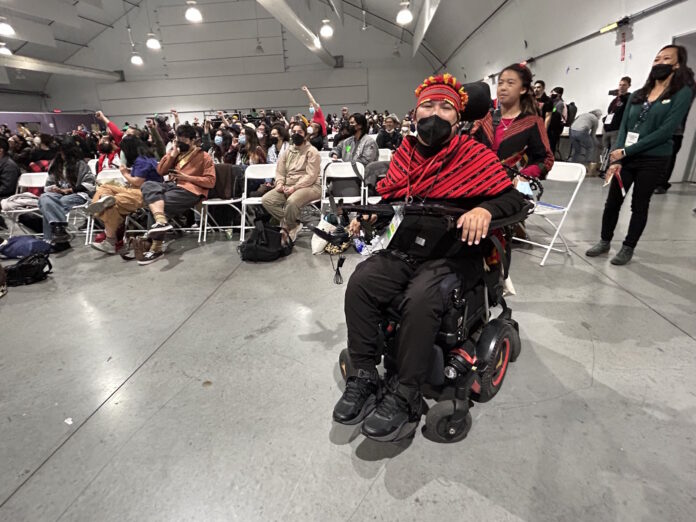
Brandon Lee and his daughter Jesse Jane at the People's Counter Summit of the No To APEC Coalition, Nov. 11, 2023. Photo by Jia H. Jung Ifugao Igorot Environmental Activist Philippine State Violence Anti-APEC
Brandon Lee and his daughter Jesse Jane at the People’s Counter Summit of the No To APEC Coalition, Nov. 11, 2023. Photo by Jia H. Jung

Jia Jung wrote on 20 November, 2023 about Chinese American Bay Area native Brandon Lee who gave the keynote speech at the No to APEC People’s Counter Summit, “People Over Profit and Plunder,” at San Francisco State University on Saturday, Nov. 11, 2023.

Lee was living with his wife and daughter in the Philippines and working as a human rights advocate, land defender, and journalist for the Northern Dispatch when he was shot by Philippine armed forces on Aug. 6, 2019. He survived – as a quadriplegic who remains steadfast in his international activism. Lee said, inter alia:

In high school, I was voted most shyest. I always preferred to work behind the scenes behind the camera, never in front. I was working security during rallies or painting posters the day before.

…In 2003, I transferred to this campus and joined the League of Filipino students at San Francisco State University. That’s where I learned that our country, the United States, continues to dominate and stagnate the Philippine economy, politics, and culture.

Around this time, I also started volunteering for the Chinese Progressive Association. That’s where I learned about the conditions and struggles of immigrant Chinese workers, and tenants. It was at that time I met Pam Tau Lee, the founder of the Chinese Progressive Association.

She was one of my mentors. And that’s where I learned that in the late nineties, San Francisco had 20,000 garment workers. But in less than 10 years, many of the immigrant monolinguistic women workers lost their jobs, with 88% of the workers being offshored to countries with weaker labor protection. It was during these years that I learned how interconnected our struggles are, and I became an internationalist and an anti-imperialist.

In 2007, I went on a life changing exposure trip to the Philippines. I met Youth and Students who are now movement leaders. I joined with workers boycotting Nestlé on their picket line. Ka Fort [Diasdado Fortuna], the chair of their union, was killed in cold blood by state agents. Ka Fort was dearly, dearly loved by the Nestlé workers for his leadership in building the union and his ultimate sacrifice.

So workers also launched a public campaign – “there’s blood in your coffee” – to draw international attention against Nestlé. Nestlé believes that water is a corporate right and not a human right. In this same trip, we visited many sectors, including the most oppressed majority and largest class – the peasants – as well as the Igorot Indigenous people in the northern part of the Philippines.

The Igorots, who live on resource-rich lands, are considered squatters on their own land because the Philippine government considers any land with a slope of 18 degrees Philippine land. The Igorots have been fighting against foreign occupation and colonization for hundreds of years.

And until now, they have continued their fight against government neglect and development aggression, militarization, and for the recognition for the right to ancestral land and self-determination.

On that exposure trip, our group also attended the one-year death anniversary of Alyce Claver, the wife of Chandu [Constancio]Claver, who was the provincial chair of the progressive party, Bayan Muna, and the president of the Red Cross. Chandu and Alyce were driving their kids to school when a motorcycle pulled up and shot at their car. Alyce shielded her husband and was riddled with two dozen bullets. Chandu made it out alive and is now in Canada with his kids after filing for political asylum, but the family today continues to be traumatized.

During this trip, we joined a medical and fact-finding mission to a remotevillage, and thankfully, the military had pulled out. The Indigenous peasants taught us about how the soldiers had blindfoldedthem and pointed a gun to their nape. The soldiers accused the farmers of supporting the land defenders and the resistance fighters known as the New People’s Army. The Philippine militarypretended to have a fake medical mission, giving out expired medicine to the local Indigenous people.

This trip, 16 years ago, changed the direction of my life.

I believe that we are shaped by our experiences, and this exposure program gave me new direction. It fortified my commitment to serving the fight for the Philippine liberation from U.S. imperialism. And to this day, the stories and sacrifices of Alyce Claver, Ka Fort, and so many others continue to fuel my commitment.

Two years later in 2009, I decided to deepen my commitment and decided to do a three-month integration in a remote area deep in the mountains. When I returned, I learned about Melissa Roxas, who was also from the U.S. and was abducted by the Armed Forces of the Philippines. She was conducting a medical mission. After a week, her captors released her as long as she promised to shut up.

She didn’t, though – she didn’t shut up. As she was she was released, she told the world what happened. As a health worker, Melissa diagnosed the Philippines’ societal problems and saw the illness of neoliberal policies from living among the poor. Melissa was brave. Her journey back from the trauma perpetuated by the Philippine military would soon follow for me.

The year following, 2010, I went all in and decided to live and serve the Igorot Indigenous people. I married my girlfriend, who is an Indigenous Ifugao, and we had a daughter, Jesse Jane, who is here with us today. I lived nine years with Indigenous people in the northern part of the Philippines, and I learned how they defended their land rights and lives in the resource-rich area known as the Cordillera region.

I saw firsthand how neoliberal policies promoted by APEC, such as the Philippine Mining Act of 1995, liberalize the mining industry, allowing foreign mining companies to reap 100% profit from the plundering of Indigenous people’s lands, unbridled large-scale destructive mining, dams, energy and other foreign projects, masquerading as development projects, and destroy the environment and forcibly displace Indigenous people who have been living there for generations.

Now, 13 years later, I’m speaking in front of you, a survivor of state violence and war that is spread by APEC and neoliberalism. They say APEC will promote sustainability. The Indigenous community say no. They are robbed of their life, land, culture, and worse, their future. Despite decades of people’s resistance, the plunder the natural resources, of indigenous – of ancestral – domains, continues. The region is blanketed with 176 large-scale mining and more than 100 energy projects, such as hydropower and geothermal projects awarded to private corporations.

One such energy project is the Chevron geothermal power project, which covers a large area in Kalinga. If left unchallenged and unopposed, all these could mean the ethnocide of the Igorots and the massive destruction of the ecosystem in the Cordillera region…

Indigenous communities were militarized, bombed, and strafed with artillery shelling, but they did not cower and they did not back down. They remained steadfast. They took care of each other. And they continued to hold the line.

They say APEC is innovative and will solve our problems. Hell, no.

We know this because the people do not stand to gain anything from APEC. Instead, the people are threatened, harassed, surveilled, abducted, slapped with legal cases based on fabricated evidence, illegally arrested, and even assassinated. I lost two of my dear friends and comrades, William Bugatti in 2014 and Ricardo Mayumi in 2018, at the hands of state agents. [see: https://humanrightsdefenders.blog/2014/03/27/another-human-rights-defender-shot-dead-in-philippines/]

Because I protested alongside the Indigenous communities, and, as a journalist, wrote about the daily attacks they face, I was also threatened and harassed. I was placed under surveillance. Tailed. Followed. They watched our office. They took pictures of us at our office and homes, as well as the tricycle, jeep, and bus terminal. I was red-tagged and politically vilified as a terrorist. I experienced death threats in the form of the burial blanket for the dead. I was detained and had my bag illegally searched at a military checkpoint the week before members of the 54th Infantry Battalion of the Philippine Army shot me in front of my daughter in front of my home on August 6th, 2018.

They had visited me at my house and office looking for me. They said they wanted to partner with my organization, the Ifugao Peasant Movement, but we refused. I told them two names – William Bugatti and Ricardo Mayumi – on why we do not want to partner with them.

While their assassination attempt against me was unsuccessful, I am permanently scarred and paralyzed. I am now quadriplegic, unable to use my hands and legs. I am considered one of the lucky ones. But I live with trauma every day. [see also: SF human rights activist fights for his life after being shot in the Philippines]

I know firsthand that the backdoor trade deals handled by APEC will not benefit the people; they only benefit the corporations and imperialist countries like the United States. That is why the United States sends its military around the world, finance schools, support fascist governments – to open up industries.

In fact, I have no doubt that the bullets lodged in my body today are paid by our taxpayer dollars.

Although I am paralyzed physically, they have failed to shut me up.

Today, I am proud to be standing with you, metaphorically speaking, in fighting back against APEC. Against state and political repression. Against corporate greed and power. Against the wealthy elite. Against the plunder of our planet. Against foreign domination of our peoples.

The Indigenous communities are resilient also. Like millions of people in the Global South, they are fighting back. They continue to protest despite being attacked. They have successfully barricaded several mines, rejecting countless mining and dam projects.

They have been on the frontlines of fighting the WTO [World Trade Organization], dismantling the Chico Dam equipment during the late dictator Marcos, which launched a coordinated people’s response that brought the Indigenous people to the national liberation struggle.

They are also on the frontlines of fighting APEC; a fight has led thousands to take up armed struggle as an appropriate response to defending their land, which is their life.

One of their martyr freedom fighter, Arnold “Ka Mando” Jaramillo, favorite expression ispayt latta! It means fight to the end, or continue to fight, and it’s today emulated by the Cordillera mass movement. Payt latta.

I will continue to fight as long as I breathe. Take a look around – my story is just one of many. There are a thousand people here today, diverse and multigenerational, coming from across the world, each with their own journey, own experiences, and reason for being here. But what unites us all is our opposition to APEC and neoliberal policies. We have so much in common – so much we can unite and rage against. A common enemy – APEC – and the neoliberal policies that prioritize profit and plunder over people and planet.

We will not go gently into that night. Rage. Rage! We will fight!

We will fight for a better future for all. Let us continue to talk, to build and work together, now and after APEC. For now, are you ready? Are you ready to shut down APEC?

https://asamnews.com/2023/11/20/

Raed Fares Assassinated in Syria [“What can they do? Kill me?”]

November 26, 2018
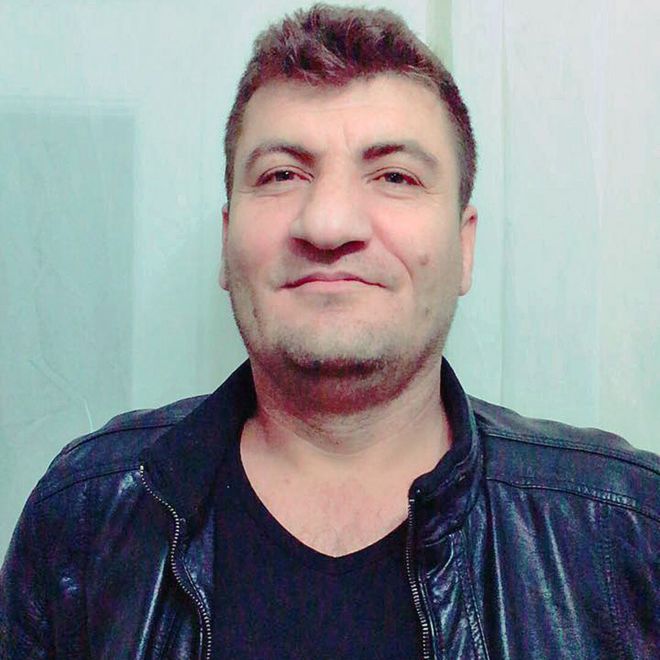
Raed Fares
Raed Fares’ radio station defied threats from jihadist groups and resisted orders to stop playing musicPresentational white space

Raed Fares, a well-known Syrian activist, was killed in the north-western town of Kafranbel, in the in the rebel-held Syrian province of Idlib. Fares and fellow activist Hamoud Jneed were attacked in their car. Jneed died immediately, while Fares was transferred to Orient Hospital, where he later died. It was not the first time the founder of Radio Fresh, an independent radio station broadcasting from inside opposition-held areas in the country, had been targeted. His activism had earned the ire of both militants and the Syrian government. Four years ago, two gunmen for the Islamic State (IS) militant group shattered several bones and punctured his lung in a failed attempt to silence Fares. More attempts on his life would follow and yet the former estate agent was determined to carry on.

It was not just Fares the militants took issue with. The radio station – with its music and female presenters – also angered the groups which overran the town and surrounding area. Four years ago, when IS had a presence in Idlib province, the station’s office was raided by militants. In 2016, Fares was detained by the Nusra Front, the former al-Qaeda affiliate in Syria.

The Hayat Tahrir al-Sham alliance, which currently controls most of Idlib province, had ordered Radio Fresh to stop broadcasting music. The station’s response was to play long sequences of other sounds, such as tweeting birds, clucking chickens and bleating goats. “They tried to force us to stop playing music on air,” Fares told the BBC in 2017. “So we started to play animals in the background as a kind of sarcastic gesture against them.”

Among the many expressions of concern is the Human Rights Foundation as Fares spoke at its 2017 Oslo Freedom Forum: “We are deeply saddened and disturbed by the assassination of Raed Fares, a dear friend and esteemed member of the Oslo Freedom Forum community. Raed worked tirelessly to counter fundamentalist narratives through journalism and to empower his fellow Syrians to build a better future. His work, bravery, and determination to succeed despite the many threats on his life make him a hero of the Syrian revolution,” HRF Chairman Garry Kasparov said. … Fares first became known outside of Syria in early 2014, when he started writing eye-catching, often sarcastic protest signs and sharing photos of them on social media. ….He quickly became one of the most trusted sources of on-the-ground footage and information on Syria’s continuing conflict. With his death, many reporters outside Syria have lost a vital and increasingly rare source, and agents of misinformation will grow that much stronger in his absence.

https://www.bbc.co.uk/news/world-middle-east-46320355

https://mailchi.mp/db20e9d559e0/off-speaker-raed-fares-assassinated-in-syria?e=f80cec329e

And in the Philippines the killing of human rights defenders also continues with Benjamin Ramos

November 8, 2018

FOR THE PEOPLE. Benjamin Ramos is hailed for his work as a lawyer for marginalized sectors. Photo from the National Union of Peoples' Lawyers' Facebook page

Benjamin Ramos is hailed for his work as a lawyer for marginalized sectors. Photo from the National Union of Peoples’ Lawyers’ Facebook page

On Wednesday, 7 November many NGOs condemned the murder of human rights lawyer Benjamin Ramos, which comes amid continuous violence against human rights defenders in the Philippines.  Ramos, the secretary-general of the Negros Occidental arm of the National Union of Peoples’ Lawyers (NUPL), was shot dead by riding-in-tandem assailants on Tuesday night, 6 November in Kabankalan City. A known human rights defender, Ramos represented political prisoners, farmers, and other members of marginalized sectors in his career as a pro-bono lawyer. Among those he worked with were the Mabinay 6, including youth leader and University of the Philippines Cebu alumna Myles Albasin. They were arrested in March 2017 in Mabinay, Negros Oriental, following an alleged clash with government troops.

The Commission on Human Rights (CHR) expressed concern that Ramos’ death is the latest in the “growing incidents of injustices reported.’ We call on the government to act with urgency in pinning down the perpetrators of this violence and proceed with active measures that would protect the safety of human rights defenders who continue to serve this country’s most vulnerable and marginalized,” CHR spokesperson Jacqueline de Guia said.

NUPL, in a statement, said “beastly attacks by treacherous cowards cannot go on.” Not a few of our members have been attacked and killed before while literally practicing their profession and advocacies in the courts, in rallies, in picket lines, in urban poor communities, and in fact-finding missions,” NUPL said.

Human Rights Watch (HRW), meanwhile, tagged the incident as “a blow to the human rights movement in the country” which has suffered from threats, including from President Rodrigo Duterte himself. We demand an impartial investigation into Ramos’ murder and the many other attacks against lawyers in the Philippines and that the authorities bring the perpetrators to justice,” said Carlos Conde of HRW Asia Division.

I condemn the murder of a fellow member of the Bar. I am outraged at the thought that his advocacy could have caused his own murder or might justify it. His murder is inexcusable and must be investigated, and the perpetrators, brought to justice,” Chel Diokno national chairman of the Free Legal Assistance Group (FLAG)said in a statement.

In 2017 alone, Ireland-based Front Line Defenders recorded 60 deaths in the Philippines. Since 2001, there have been at least 613 documented killings. To see some of my earlier posts on the Philippines, see: https://humanrightsdefenders.blog/tag/philippines/

Facing death threats, human rights groups have repeatedly called on the government to recognize their role in society by passing the human rights defenders’ protection bill

https://www.rappler.com/nation/216116-groups-condemn-lawyer-benjamin-ramos-murder-attack-against-human-rights-movement

“Reprehensible” says UN about Mexican killing of human rights defender

November 7, 2018

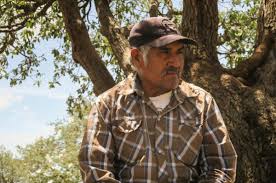
On 6 November 2018, four UN Special  Rapporteurs have strongly condemned the killing of Julián Carrillo, an indigenous rights defender from the state of Chihuahua, Mexico, who had worked tirelessly for over two decades to defend his community against the exploitation of Rarámuri ancestral lands.

On 23 October 23 2018, Julián Carrillo told a friend by phone that he believed he was being watched and said he would go into the forest in an attempt to hide. On the evening of 25 October, his body was found. He had multiple bullet wounds. “We urge the Mexican authorities to identify the perpetrators of this reprehensible crime and to bring them to justice in accordance with the law,” the experts said.

The experts also urged the Government to address the underlying causes of such violence. “The killing of Julián Carrillo highlights the serious situation in the Sierra Tarahumara where the lack of recognition of indigenous land rights is a root cause of the recurring violence against and displacements of indigenous communities.”… [The UN experts are: Mr. Michel Forst, Special Rapporteur on the situation of human rights defenders; Ms. Victoria Tauli Corpuz, Special Rapporteur on the rights of indigenous peoples;  Ms. Agnès Callamard, Special Rapporteur on extrajudicial, summary or arbitrary executions; and Ms. Cecilia Jimenez-Damary, Special Rapporteur on the Human Rights of Internally Displaced Persons.]

Julián Carrillo’s murder is one of a spate of killings of human rights defenders in the country. According to official OHCHR figures, 21 human rights defenders have been killed so far this year, nine of them from indigenous communities. Four members of Julián Carrillo’s family – his son, son-in-law and two nephews – have been killed since February 2016.

This follows soon after the assassination on Wednesday 23 October of journalist Gabriel Soriano Kuri.  Soriano had been covering Governor Héctor Astudillo Flores’ third annual report for the Radio y Televisión de Guerrero (RTG) broadcaster that evening. After the event, held in Acapulco, he was driving a company vehicle when he was attacked and killed by armed civilians. Following the murder, Astudillo offered his condolences to Soriano’s family via Twitter. But it didn’t go down very well. Soriano’s daughter replied with a blunt message: “My dad was assassinated doing his job. Covering your report to the state! Do your job and fix the situation the state is in. It’s not right,” she wrote. Her discontent was echoed in at least three demonstrations where journalists demanded that authorities solve the assassination of their colleague. A state journalists’ association reported that three members of the profession have been slain during Astudillo’s three years in office.

https://www.frontlinedefenders.org/es/profile/noel-castillo-aguilar

https://www.amnesty.org/en/latest/news/2018/10/mexico-asesinato-de-lider-raramuri-demuestra-falta-de-proteccion-estatal/

https://mexiconewsdaily.com/news/demonstrations-follow-journalists-assassination/

Marielle Franco, 38-year-old human rights defender and city councilor of Rio, assassinated

March 16, 2018

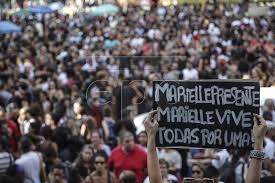
The targeted assassination of Marielle Franco, a 38-year-old human rights defender and Rio de Janeiro city councilor known for denouncing police abuses and extrajudicial executions, is a sickening development that must be fully investigated, said Amnesty International 0n 15 March. Marielle was shot dead in Rio de Janeiro’s Estacio neighborhood on Wednesday 14 March 2018. Her driver was also killed and a press officer was injured in the attack.

This a chilling development and is yet another example of the dangers that human rights defenders face in Brazil. As a member of Rio de Janeiro’s State Human Rights Commission, Marielle worked tirelessly to defend the rights of black women and young people in the favelas and other marginalized communities,” said Jurema Werneck, Amnesty International’s Brazil director.

In 2016, Marielle was elected to the Rio de Janeiro city council. Two weeks ago, she was appointed rapporteur for a special commission that the city council created to monitor the ongoing federal intervention in Rio de Janeiro and the militarization of public security.

Gunmen riding in another vehicle carried out the attack, shooting indiscriminately before fleeing the scene without stealing anything, the Civil Police of Rio de Janeiro State said. The attack came a day after the 38-year-old city councilor had posted a message on social media criticizing the deployment of army soldiers to Rio’s sprawling “favelas”.

See also: https://humanrightsdefenders.blog/2018/01/05/front-lines-2017-report-confirms-worst-expectation-over-300-hrds-killed/

https://www.amnesty.org/en/latest/news/2018/03/brazil-authorities-must-investigate-the-killing-of-human-rights-defender-marielle-franco/

http://www.laht.com/article.asp?ArticleId=2452754&CategoryId=14090

Killing of another human rights defender: FMO suspends all activities in Honduras

March 16, 2016

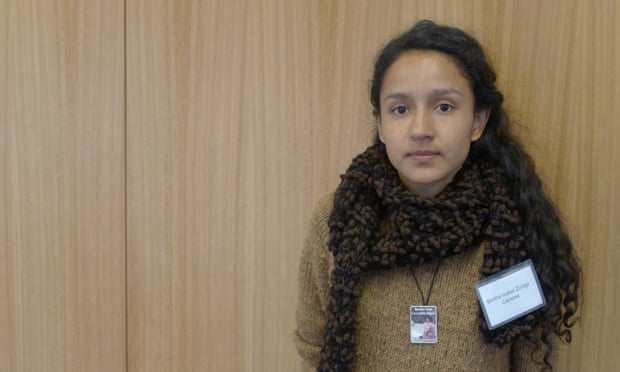
Bertha Cáceres, daughter of murdered Honduran environmental activist Berta Cáceres.

 Bertha Cáceres, daughter of murdered Honduran environmental activist Berta Cáceres. Photograph: Liz Ford for the Guardian

This week, Bertha, who is studying for a masters degree in Latin American studies in Mexico, was in New York to speak at side events during the annual Commission on the Status of Women. Here she said “… I will talk about the situation in Honduras. This is not the first assassination, but one of a series of assassinations of human rights defenders … I don’t want another human rights defender to be assassinated”. Even while she spoke with the Guardian journalist a call came through from COPINH’s lawyer (the NGO her mother worked for) to say another member of the organisation had been shot dead ….

According to a statement by Front Line Defenders today, this human rights defender, Nelson Garcia, was returning home following a violent eviction conducted by the Public Order Military Police and the Cobras Special Force in the municipality of Río Lindo when he was intercepted by unidentified men who shot him in the face four times. Read the rest of this entry »

Exceptional response from NGO world on killing of Berta Cáceres

March 7, 2016

A group of over 50 international organizations has written to the President of Honduras to express their shock over the recent killing of Berta Cáceres [https://thoolen.wordpress.com/2016/03/03/berta-caceres-human-rights-defender-assassinated-today-in-honduras/], to demand an international investigation and the immediate protection of Gustavo Castro Soto, a Mexican activist, who witnessed her assassination. Here is the letter and signatories in full: Read the rest of this entry »

Berta Caceres, human rights defender, assassinated today in Honduras

March 3, 2016

A sad day for Honduras and all human rights defenders: today, 3 March 2016, Berta Cáceres was murdered by as yet unknown assailants who broke into her home in the city of La Esperanza in the early hours of the morning. One week prior to her assassination, the defender had denounced the killing of 4 leaders of her community as well as threats against her and other human rights defenders, at a press conference.

BertaCaceres_Credit_GoldmanPrize

Berta Cáceres was one of the most prominent human rights defenders in Honduras and a Lenca indigenous woman who, for the past 20 years, had been defending the territory and rights of the Lenca people. In 1993, she co-founded the Consejo Civico de Organizaciones Populares e Indígenas de Honduras – COPINH (http://www.copinh.org/)  (Civic Council of Popular and Indigenous Organisations of Honduras), which led fierce campaigns against illegal logging and mega-projects for their detrimental effects on the rights of indigenous peoples in the country. She faced off – and often won – against illegal loggers, plantation owners, multinational corporations, and dam projects that would cut off food and water supplies to indigenous communities. (e.g. https://thoolen.wordpress.com/2014/01/28/berta-caceres-in-honduras-continues-to-be-harassed-in-spite-of-court-order).

The human rights defender was a finalist for the 2014 Front Line Defenders Award [https://www.frontlinedefenders.org/es/programme/fld-award] and in 2015 she received the Goldman Environmental Prize. She had been a beneficiary of precautionary measures granted by the Inter-American Commission on Human Rights (IACHR) since 2009. Her harassment was followed closely by Front Line and others.Frontline NEWlogo-2 full version - cropped


Other human rights defenders (including members of COPINH) have been targeted in the past. The killing of human rights defenders and impunity for the perpetrators have been documented by many organizations. In this blog alone:

https://thoolen.wordpress.com/2016/01/29/assassination-of-human-rights-defenders-proceed-in-honduras-venezuela-peru-colombia-and-the-philippines/

https://thoolen.wordpress.com/2016/02/27/alarming-criminalisation-of-human-rights-defenders-in-latin-america/

“the most dangerous place to be an environmental activist was actually Honduras, according to Global Witness” [https://thoolen.wordpress.com/2015/04/24/killings-of-environmental-human-rights-defenders-up-again-compared-to-last-year/]

Honduras: Berta Caceres, human rights defender & indigenous leader who opposed Agua Zarca dam, assassinated | Business & Human Rights Resource Centre

Assassination of human rights defenders proceed in Honduras, Venezuela, Peru, Colombia and the Philippines

January 29, 2016

On 30 November I referred to the systematic killing of human rights defenders in 2015 [https://thoolen.wordpress.com/2015/11/30/closing-civil-society-space-a-euphemism-for-killing-human-rights-defenders/] and mentioned the annual report by Front Line for 2015 listing Latin America and the Philippines as the most dangerous places [https://thoolen.wordpress.com/2016/01/06/latin-america-philippines-most-dangerous-places-for-human-rights-defenders/]. If further illustration is needed, here some short summaries of cases of killing human rights defenders as reported by Front Line over the last few months:Frontline NEWlogo-2 full version - cropped

Honduras: Killing of LGTBI rights defender Paola Barraza. On 24 January 2016, human rights defender Ms Paola Barraza was assassinated by unknown attackers in front of her house in the neighbourhood of Lempira, in Comayaguela. Paola Barraza, a trans woman, was a member of the board of directors of Asociación LGTB Arcoíris (LGTB Rainbow Association). The human rights defender was at home when  unknown persons knocked at her door and called her outside. When Paola Barraza answered the door she was fired upon five times. She died at the scene as a result of her wounds.  Paola Barraza was previously attacked in connection with her LGTBI rights work on 15 August 2015  [https://www.frontlinedefenders.org/node/29495] Between 23 June 2015 and 31 August 2015, three other LGTBI rights defenders working in country were killed https://www.frontlinedefenders.org/node/29495.
Read the rest of this entry »

Bishop Oscar Romero from El Salvador: now a saintly human right defender

May 23, 2015

Whether one believes in sainthood or not, it is not difficult to rejoice with Pax Christi International about the 23 May beatification of Salvadoran Archbishop Oscar Arnulfo Romero who became known for his persistent search for truth, justice and reconciliation in the late seventies in conflict-torn El Salvador. He was shot dead while celebrating mass on 24 March 1980. The assassin has never been identified, but it is widely believed that the assassins were members of a death squad led by former Major Roberto D’Aubuisson.  Read the rest of this entry »