Posts Tagged ‘archives’

Rwanda: Human Rights Watch’ Archives March 1993 – December 1994 digitized and public

April 4, 2024

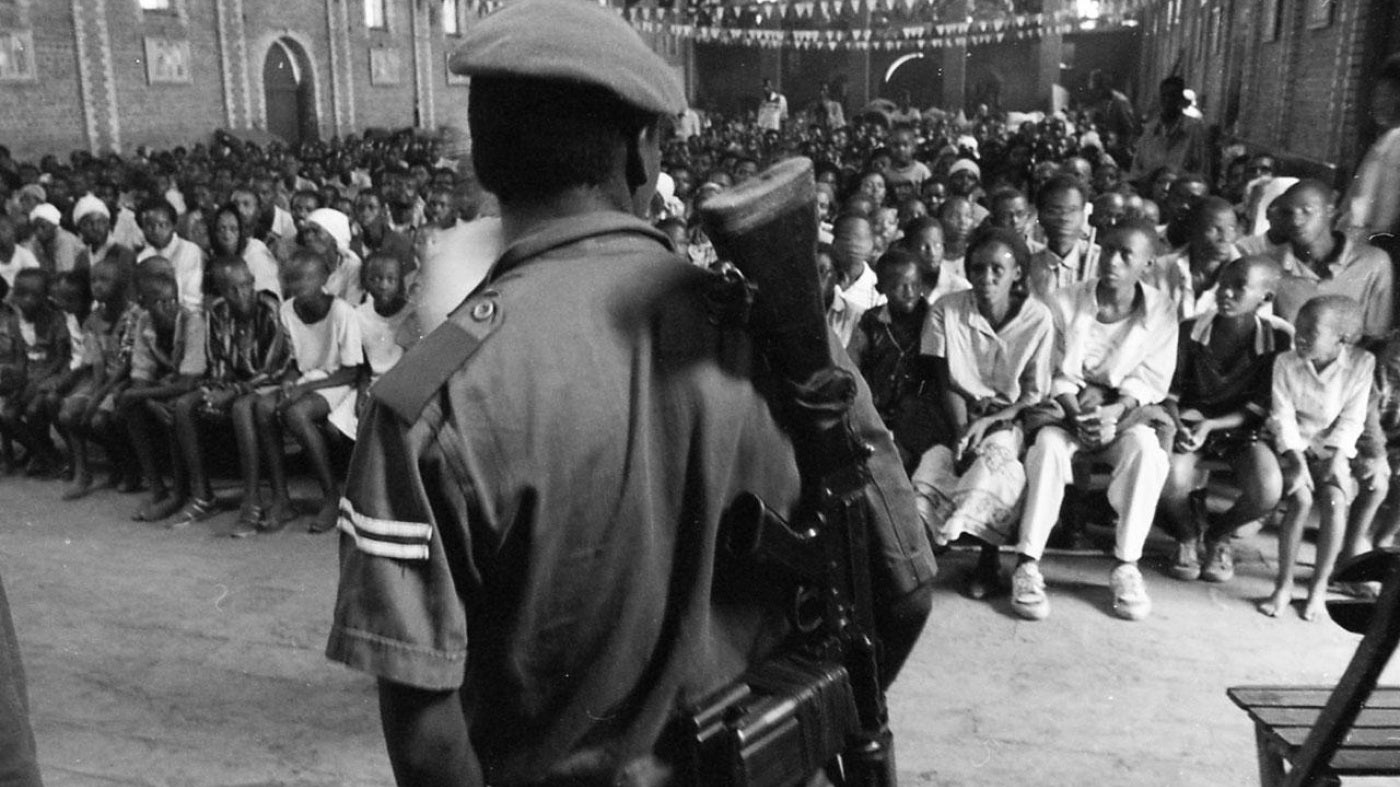
A crowd of mostly Tutsi civilians, seeking protection against Hutu militiamen, sit in the Sainte Famille Catholic church in the then-government controlled part of Kigali, listening to a member of the security services address them. Over several months, ma

On 2 April, 2024 Human Rights Watch made part of its Rwanda Archives public in digital form.

Human Rights Watch has been documenting and exposing human rights violations in Rwanda since the early 1990s. Its senior adviser in the Africa division, Alison Des Forges, one of the world’s foremost experts on Rwanda, dedicated her career to the struggle for human rights in the Great Lakes region of Africa, and to Rwanda in particular. In the period leading up to the 1994 genocide, she worked tirelessly to alert world powers to the impending crisis in Rwanda. Few would listen. By the time the genocidal forces had unleashed their sinister program and the world had awakened to the full horror that was unfolding in Rwanda, it was too late. The killings in Rwanda increased as a civil war in Burundi waged on. The violence in Burundi, also based on ethnic divisions between Hutu and Tutsi ethnic groups, lasted from 1993 until 2005.

Des Forges’s efforts did not stop when the genocide ended. She continued to painstakingly gather information on the killings, rapes, and other horrific crimes, which she compiled into what has become one of the main reference books on the Rwandan genocide: “Leave None to Tell the Story: Genocide in Rwanda”, a 500-page account of the genocide published jointly by Human Rights Watch and the International Federation of Human Rights (FIDH) in 1999. 

Des Forges testified as an expert witness in 11 trials at the United Nations International Criminal Tribunal for Rwanda (ICTR) in Arusha, Tanzania, as well as in domestic court proceedings involving Rwandan genocide suspects in several countries.

Des Forges campaigned vigorously for justice for the genocide until her tragic death in a plane crash in the US on February 12, 2009. She also documented human rights abuses by the new government of Rwanda after the genocide and advocated for accountability for all abuses, past and present.

Thirty years after the genocide, Human Rights Watch has begun the process of digitizing and making available some of Des Forges’s archives. The documents summarized below are some of those that remained in Human Rights Watch possession after Des Forges’s death and help shed light on efforts by Des Forges and others to warn about, and then attempt to stop, the genocide. These are just a selection of the many documents in the archives; others will not be published at this time for a variety of reasons. The private exchanges, letters, statements, and reports below do not purport to be a comprehensive account of the work of Human Rights Watch and others at the time, as it is likely documents are missing from the archive.

See also: https://www.trueheroesfilms.org/thedigest/awards/F42005AB-6691-4C7F-BA0D-1999D2279EA2

https://www.hrw.org/news/2024/04/02/human-rights-watch-rwanda-archives

Large Public Human Rights Archive at University of Minnesota

March 11, 2024

On 3 March 2024 Gary Price from the University of Minnesota Libraries reports that the University of Minnesota now has one of the largest human rights archives at a public university, and it’s already helping researchers, educators, and human rights advocates across the globe.

“With everything that’s happening in the world, if we can highlight aspects of the history of human rights, maybe that provides us an opportunity to learn what not to do in the future,” said Kris Kiesling, director of  the U of M’s Archives and Special Collections (ASC).

Unlike other collections in ASC, the Minnesota Human Rights Archive (MHRA) is an umbrella archive composed of new human rights materials donated to the Libraries, as well as existing materials housed in other collections.

From the Givens Collection of African American Literature to the Immigration History Research Center Archives, there’s a trove of materials about civil rights, LGBTQ rights, child labor, domestic violence, public health, and more. ASC archivists and curators are already investigating how their materials relate to human rights, and how their collections are positioned under the MHRA umbrella.

Planning for MHRA began around eight years ago when Barbara Frey — the former director of the U of M Human Rights Program and a founder and previous director of the advocates for human rights — began contacting The Advocates, CVT, and other organizations across the state.

Kiesling — alongside University Archivist Erik Moore and Social Welfare History Archivist Linnea Anderson — met with Frey, Weissbrodt, and Meyer Weinshel, former collections and outreach lead for UMN’s Center for Holocaust and Genocide Studies, to build the MHRA.

The team transferred some materials from HRC in 2016, and later on, Patrick Finnegan, former assistant director of HRC and administrative associate for The Advocates, surveyed and listed Weissbrodt’s personal papers and research materials.

Pooling new and existing materials under the human rights umbrella not only helps researchers by condensing the initial hunt-and-gather phase of their projects, but it also helps potential donors. It’s easier for them to articulate their goals for their material, Moore explained, and it’s easier to connect their work to the broad framework of human rights, than a more granular collection like the University Archives.

Learn More, Read the Complete Article,  View Videos

Progress report on “I Defend Rights” project in 2018

January 4, 2019

In 2018 the Norwegian Human Rights Fund and Memria continued their partnership on the unique I Defend Rights initiative, an audio archive of hundreds of stories told by human rights defenders. The purpose of this listening project is to commemorate and celebrate the important roles that human rights defenders have by recording, archiving and sharing their experiences and contributions. The platform includes personal accounts of 188 human rights defenders. This are some of the highlights in 2018:

March
We had the first open call for stories on our site (English version).  Within the first three months, over 50 human rights defenders spoke about why they defend rights. These stories were published on the platform and shared on social media. 

May
Official launching of Yo Defiendo Derechos and Je Defénds le Droits, the archives for Spanish and French-speaking communities.

August
We held a sensemaking workshop in New York with key stakeholders and partners including communication experts to analyze a sample of the archive and think about next steps for the project.

September
Our team participated in a community fair at Forum Asia’s 8th Asian Regional Human Rights Defenders Forum in Bali and engaged with human rights defenders from the region

October
We attended the Human Rights Defenders World Summit in Paris and installed our first storytelling booth. With the help of volunteers, we collected 65 stories in three days. 

A HRD recording his message at the HRD World Summit in Paris, October 2018

November 
We collected more stories and created an exhibition at the Nobel Peace Center in Oslo during the Norwegian Human Rights Fund 30th Anniversary Conference. (Listen to the NHRF Conference and the panel on new tools with the participation of I Defend Rights).

LOOKING FORWARD TO 2019

The gathering will continue during 2019 with an emphasis on dissemination. Our main channels will be social media, a new website, and an exhibition. We want to do this in collaboration with our partners. We hope to have our new website by February, one that reflects our new image and lets us showcase the amazing stories from so many wonderful human rights defenders on our platform.
We are also joining forces with designers to create an exhibition with the voices of the rights defenders. We will be working with libraries, universities, museums and unexpected venues to reach a diverse audience.

Follow them on twitter and facebook.

https://mailchi.mp/9649638e13d0/happy-new-year-from-the-i-defend-rights-team?e=0c88049d46

UN archive on North Korean human rights violations to be established in Geneva

April 8, 2017
The 34th regular session of the United Nations Human Rights Council in Geneva, 2017

An archive of information and evidence on human rights abuses by the North Korean regime is to be established in Geneva. Quoting a report by the UN Office of Programme Planning, Budget and Accounts (OPPBA), VOA explained that the independent archive, to be created in accordance with a North Korean human resolution adopted by the 34th UN Human Rights Council (UNHRC), will be established in physically distant Geneva for the security and total confidentiality of sensitive information.The OPPBA was also quoted as saying a legal officer with at least seven years of experience would be needed to integrate and preserve information and evidence in connection with the archive’s establishment at the Office of the UN High Commissioner for Human Rights (OHCHR) in Geneva, along with another information management officer with at least five years of experience to conduct practical affairs. It also said its UN human rights office in Seoul would require three staffers: one international criminal system expert, one expert in South Korean criminal law, and one expert in interpreting for South Korean law. On 24 March 2017, the UNHRC adopted a North Korean resolution by non-voting agreement that recommends the international community’s cooperation in investigating responsibility in connection with the findings of a Commission of Inquiry (COI) report on crimes against humanity by the North Korean regime.The resolution suggested specific procedures and methods over the next two years for assigning responsibility for North Korea’s human rights abuses, including boosting the capabilities of the North Korean human rights office and OHCHR, establishing the archive, and appointing legal experts to collect and preserve information and evidence needed for procedures in investigating responsibility.

see also https://humanrightsdefenders.blog/2014/02/20/north-korea-the-un-report-in-images/

Source: UN archive on N. Korean human rights abuses to be established in Geneva : North Korea : News : The Hankyoreh

The rich history of the Asian Human Rights Commission in video

September 15, 2014

On 11 September 2014 the Asian Human Rights Commission [AHRC] published a documentary telling the story of 30 years of commitment produced by Josefina Bergsten, which traces 30 years of work of the Asian Human Rights Commission and its sister organisation the Asian Legal Resource Centre (ALRC). Both the AHRC and the ALRC are based in Hong Kong, and work in Bangladesh, India, Nepal, Pakistan, Sri Lanka, Myanmar, Cambodia, Indonesia, Thailand, South Korea, Hong Kong, and China, in addition to its important role in regional institution building. As is to be expected in this kind of NGO film it contains quite a bit of ‘talking head’ (in particular the well-spoken Director Basil Fernando) but on the other hand the human rights movement has so little in visual memory and the richly illustrated stories told by Basil are so persuasive that it is a 50 minutes well spent for those who want to know more about the development of the human rights movement in Asia.


The importance of archives for Truth commissions: event on 13 September

September 6, 2013

Truth commission archives are an important part of dealing with the past, which is a long-term process addressing a legacy of human rights violations.humanrightslogo_Goodies_14_LogoVorlagen Read the rest of this entry »