Hans Thoolen on Human Rights Defenders and their awards

share information on human rights defenders, with special focus on human rights awards and laureates


Posts Tagged ‘annual report 2018’

Newer posts »

Annual Report of the Syrian Network for Human Rights in 2018

January 13, 2019

The Annual Report of the Most Prominent Work of the Syrian Network for Human Rights in 2018

The Syrian Network for Human Rights (SNHR) is a non-profit non-governmental human rights organization that was founded in June 2011 in light of the systematic rise of violations of human rights in Syria. SNHR aims to support the preserving and defending of victims’ right and consequently accounting process, achieve justice and peace, raise the awareness of the Syrian people in regard to their civil and political rights, and amass efforts and capacities in the context of stopping violations of human rights in Syria. The Syrian Human Rights Network works primarily on monitoring and documenting violations in Syria, and publishes research and reports related to such violations, as well as visual evidence from its investigations, such as photos, maps, graphs and infographics, in addition to working on advocacy and mobilization to defend the rights of victims, for justice and accountability in Syria. It also contributes to progress towards achieving justice and accountability in Syria.

SNHR is a member of the International Coalition for the Responsibility to Protect (ICR2P), a member of the Euro-Mediterranean Human Rights Network, a founding member and a member of the executive committee of the Transitional Justice Coordination Group (TJCG), and a partner with the Euro-Mediterranean Human Rights Monitor. Additionally, SNHR collaborates closely with the Office of the United Nations High Commissioner for Human Rights (OHCHR), the Independent International Commission of Inquiry on the Syrian Arab Republic (COI), which was established by the United Nations Human Rights Council, and with a number of international human rights organization such as Amnesty International, Human Rights Watch, Reporters Without Borders, Al Karama organization, and The Syrian Campaign, In addition to a number of local Syrian organizations.

[see also: https://humanrightsdefenders.blog/2014/03/16/the-silenced-voices-of-syria-special-campaign-aimed-at-human-rights-defenders/]

View full Report

Posted in books, Human Rights Defenders | Leave a Comment »
Tags: annual report 2018, Euro-Mediterranean Human Rights Network, human rights documentation, Syria, Syrian Network for Human Rights (SNHR), violations

Global Witness report 2018 on environmental defenders: bad (but 2017 was worse)

January 9, 2019

This morning I blogged about Front Line Defenders Global Analysis 2018 report which notes a record number of human rights defenders killed in 2018 with the majority being environmental defenders [see: https://humanrightsdefenders.blog/2019/01/09/front-line-defenders-says-record-number-of-activists-killed-in-2018/]. On 24 December 2018 Taran Volckhausen, referring to a preliminary Global Witness report, wrote that – while the numbers were still being finalized – the death toll for this group in 2018 was slightly lower than in 2017 (“For embattled environmental defenders, a reprieve of sorts in 2018”). This is most likely due to definition issues.

Read the rest of this entry »

Posted in human rights, Human Rights Defenders | 4 Comments »
Tags: annual report 2018, Berta Carceres, Brazil, environmental activists, Global Witness, Indigenous rights, Jair Bolsonaro, Mongabay, Muhammad Yusuf, Philippines, Taran Volckhausen, Victoria Tauli-Corpuz

Front Line Defenders says record number of activists killed in 2018

January 9, 2019
In 2018, 321 defenders in 27 countries were targeted and killed for their work – the highest number ever on record – according to data collected by Front Line Defenders. More than three-quarters of these, 77% of the total number of activists killed, were defending land, environmental or indigenous peoples’ rights, often in the context of extractive industries and state-aligned mega-projects. [see also: https://humanrightsdefenders.blog/2018/04/28/annual-reports-2017-by-front-line-defenders/]

Front Line Defenders reports that the murders of HRDs were not isolated events, but were preceded by judicial harassment, threats and physical attacks. At least 49% of those killed had previously received a specific death threat, and in an additional 43% of killings there had been general threats made to HRDs in the area. In the vast majority of cases, HRDs did not receive the necessary protection and support from state authorities from the time they reported threats to the time they were murdered.

According to the Front Line Defenders Global Analysis 2018, in addition to the threats experienced by male colleagues, WHRDs face gendered and sexualized attacks from both state and non-state actors, as well as from within their own human rights movements. Such violations include removal from public or high-ranking positions in NGOs, trade unions, and political societies; smear campaigns questioning their commitment to their families; sexual assault and rape; militarized violence; and the harassment and targeting of their children. In Saudi Arabia, authorities arrested, sexually assaulted, and tortured WHRDs who led the successful campaign for the abolition of the driving ban in 2018. Despite these attacks and the ongoing threats to stay silent, WHRDs in Saudi Arabia, as well as their family members, have publicly reported and condemned the abuses and are receiving unprecedented national, regional, and international visibility for their activism.

In addition to physical attacks and torture, the Front Line Defenders Global Analysis 2018 highlights the continuing trend towards restrictive legislation aimed at stifling the powerful work of HRDs and WHRDs, including:

  • A Digital Security Act in Bangladesh carrying a 14-year sentence for using digital media to “cause damage to the state”;
  • Retrospective legislation in Xinjiang province, China, legalising the use of “re-education” camps for the minority Uyghur population, including HRDs;
  • Anti-terror legislation in Nicaragua widening the definition of terrorism to include those accused of damaging property, leading to dozens of arrests of protesters now facing terrorism charges and 20 years in prison.

Front Line Defenders Digital Protection Team responded to a high number of reports from Brazil, Egypt, Guatemala, Honduras, Iraq, Mexico, Nicaragua and Venezuela in 2018. According to the Global Analysis, authorities around the world frequently used phone and email surveillance to target LGBTI+ defenders, WHRDs and environmental activists in particular. The report notes that in Tanzania, Pakistan, Russia, Malaysia, Nicaragua, Turkey, and many countries in MENA, governments claimed that HRDs were threatening “national security” as an excuse for censoring and blocking NGO websites.

Despite the severe and sometimes life-threatening risks faced by HRDs and WHRDs, Global Analysis 2018 highlights a number of major success achieved by HRDs and WHRDs in 2018, including:

  • The critical and leading role played by HRDs in securing The Escazu Agreement, now signed by 24 states in Latin America and the Caribbean, which stipulates a participatory approach to environmental projects and the mitigation of conflicts;
  • The monumental vote for reproductive rights in Ireland, secured through the extensive, decades-long campaigning of Irish WHRDs in the face of defamation, smear campaigns, and threats;
  • The Coalition of Women Leaders for the Environment and Sustainable Development in the Democratic Republic of Congo (DRC), who successfully campaigned for a province-wide decree in Equateur protecting women’s land and forest rights.

In response to attacks against HRDs in 2018, Front Line Defenders is working with HRDs to promote their security with a range of protection programming. In addition to risk management and digital protection trainings, advocacy at the national, international, and EU level, emergency relocation, Front Line Defenders provided nearly 550 protection grants to activists at risk in 2018. Front Line Defenders also works with HRDs to devise visibility campaigns to counteract the defamation and smear campaigns that put them at risk.

https://www.frontlinedefenders.org/en/resource-publication/global-analysis-2018


Posted in books, Human Rights Defenders | 6 Comments »
Tags: annual report 2018, environmental activists, Front Line (NGO), Global Analysis 2018, Human Rights Defenders, killings, Latin America, threats

Bloggers and technologists who were forced “offline” in 2018

January 8, 2019

In 2015 the Electronic Frontier Foundation (EFF) launched its Offline project that seeks to raise awareness of and provide actions readers can take to support imprisoned bloggers, digital activists, and technologists [see https://humanrightsdefenders.blog/2017/12/29/2017-was-a-grim-year-for-imprisoned-technologists/]. Its 2018 campaign focused on six individuals from four countries whose critical voices have been silenced by their governments:

Read the rest of this entry »

Posted in human rights, Human Rights Defenders | 2 Comments »
Tags: Alaa Abd El Fattah, Amal Fathy, annual report 2018, Bassel (Safadi) Khartabil, bloggers, Dareen Tatour, Egypt, Electronic Frontier Foundation (EFF), Eman al-Nafjan, Eskinder Nega, Ethiopia, Human Rights Defenders, in memoriam, Iran, Jillian C. York, Offline project, Palestine, Saeed Malekpour, Saudi Arabia, Syria, Wael Abbas

Progress report on “I Defend Rights” project in 2018

January 4, 2019

In 2018 the Norwegian Human Rights Fund and Memria continued their partnership on the unique I Defend Rights initiative, an audio archive of hundreds of stories told by human rights defenders. The purpose of this listening project is to commemorate and celebrate the important roles that human rights defenders have by recording, archiving and sharing their experiences and contributions. The platform includes personal accounts of 188 human rights defenders. This are some of the highlights in 2018:

March
We had the first open call for stories on our site (English version).  Within the first three months, over 50 human rights defenders spoke about why they defend rights. These stories were published on the platform and shared on social media. 

May
Official launching of Yo Defiendo Derechos and Je Defénds le Droits, the archives for Spanish and French-speaking communities.

August
We held a sensemaking workshop in New York with key stakeholders and partners including communication experts to analyze a sample of the archive and think about next steps for the project.

September
Our team participated in a community fair at Forum Asia’s 8th Asian Regional Human Rights Defenders Forum in Bali and engaged with human rights defenders from the region

October
We attended the Human Rights Defenders World Summit in Paris and installed our first storytelling booth. With the help of volunteers, we collected 65 stories in three days. 

A HRD recording his message at the HRD World Summit in Paris, October 2018

November 
We collected more stories and created an exhibition at the Nobel Peace Center in Oslo during the Norwegian Human Rights Fund 30th Anniversary Conference. (Listen to the NHRF Conference and the panel on new tools with the participation of I Defend Rights).

LOOKING FORWARD TO 2019

The gathering will continue during 2019 with an emphasis on dissemination. Our main channels will be social media, a new website, and an exhibition. We want to do this in collaboration with our partners. We hope to have our new website by February, one that reflects our new image and lets us showcase the amazing stories from so many wonderful human rights defenders on our platform.
We are also joining forces with designers to create an exhibition with the voices of the rights defenders. We will be working with libraries, universities, museums and unexpected venues to reach a diverse audience.

Follow them on twitter and facebook.

https://mailchi.mp/9649638e13d0/happy-new-year-from-the-i-defend-rights-team?e=0c88049d46

Posted in human rights | 1 Comment »
Tags: annual report 2018, archives, audio, documentation tools, Human Rights Defenders, I Defend Rights initiative, MEMRIA, Norwegian Human Rights Fund, voice recording

Surangya’s take on human right in 2018

January 2, 2019
There are many people looking back on 2018 in terms of human rights. I would like to share the following by Surangya published on 1 January 2019 in Newsclick, entitled: “From terror plots to national security threats, political dissenters faced several charges and labels for raising their voice and questioning excessive power“, with its own angle and priorities:
Political Freedom

As 2018 draws to an end, we take a look at how the year fared for dissent and democracy in different parts of the world:

…Palestinian children detained in Israeli prisons for protesting the occupation

The occupying state of Israel is perhaps one of the best examples of a country normalising violence of all sorts. For decades, Israel has occupied Palestinian lands and subjected the people to all kinds of humiliation. This has only intensified the resistance against the occupation, with Palestinians ferociously protesting, even at the cost of their lives…..Israel recognises this threat, which is why as of November 2018, there were almost 6,000 Palestinians in Israeli prisons, most of whom challenged the occupation in one way or another. Even more astonishing is the fact that among these prisoners are nearly 250 children, over 40 of whom are under 16 years of age..This imprisonment of children and subjecting them to torture, inhumane living conditions, often even solitary confinement, is a clear violation of the UN Convention on the Rights of Child, to which Israel is a signatory. Just recently, a 17-year-old Palestinian boy, Ahyam Sabbah, was sentenced to 35 years in prison for a charge of attempted stabbing…

Plot to assassinate the prime minister in India

… With the general elections approaching in 2019, the far-right government led by the Bharatiya Janata Party (BJP) with Narendra Modi at the helm, has been looking for any excuse to silence those highlighting this government’s many flaws and suppression of minorities. The most prominent case this year was of the arrest of 10 renowned human rights activists, who were labelled members of the banned Communist Party of India (Maoist) and made part of a plan to assassinate Prime Minister Modi, despite there being no concrete evidence supporting these allegations. The wording of the UAPA is such that any speech a person makes questioning the state can be seen as a threat to the country’s security and sovereignty. [see also: https://humanrightsdefenders.blog/2018/09/22/attack-on-human-rights-defenders-in-india-are-an-attack-on-the-very-idea-of-india/]
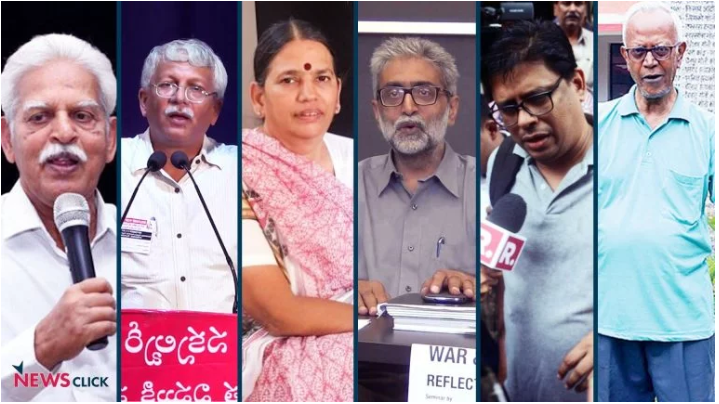
PD%203.PNGVaravara Rao, Vernon Gonsalvez, Sudha Bharadwaj, Gautam Navlakha, Arun Ferreira and Stan Swamy were amongst the activists who faced charges.

Failed peace process in Colombia

Two years after the signing of a peace treaty between the Colombian government and the Revolutionary Armed Forces of Colombia (FARC) in Havana, Cuba, the government has failed to make good on its promises. While the guerrilla organisation surrendered arms for the most part after the treaty was signed, the government now shows no political will to implement the accords and demobilised combatants have been subject of unabated persecution. 92 people who participated in the reincorporation process have been killed……For the more than 400 social leaders and human rights defenders assassinated by right-wing paramilitary and state forces since the Havana agreements were signed, the legal system has been much slower to find those responsible and the government has shown it has no desire to dismantle the criminal structures that carry out these crimes. Just in 2018, human rights organisations reported that over 226 leaders were assassinated and the National Indigenous Organisation of Colombia (ONIC) declared in August that under Duque’s presidency, there has been an increase in the attacks against indigenous people.

Impending elections always create an upsurge in state clampdowns on people’s rights to free speech and protest.

Crackdown in Congo

As the Democratic Republic of Congo finally hit the polls on December 30 after a delay of two years, there was widespread apprehension over the fairness of these elections. President Joseph Kabila held on to power for two years after his constitutionally mandated term ended in December of 2016. Despite being president for the permitted two terms, he remained reluctant to give up control over the country, and only agreed to not contest this time after naming Emmanuel Ramazani Shadary as his successor. Shadary is a former minister of interior, and remains under sanctions by the European Union for committing human rights violations in Congo…..At least 2,000 activists, opposition members, and journalists have been put behind bars since the protests against Kabila began in 2015. Many were released after weeks or months of detention and reported mistreatment. In November alone, at least 18 pro-democracy activists were arrested from the capital city Kinshasa. It remains to be seen if the much anticipated elections will bring a change and some relief to the people of Congo.

Philippines

A scenario similar to this, but of a different magnitude, is being witnessed in the island nation of Philippines under the authoritarian regime of Rodrigo Duterte, with widespread attacks on activists and pubic dissenters…Earlier this month, the government approved extension of martial law for the third time, making it effective for another year. While the stated purpose of this is to combat “extremists”, often labelled as members or leaders of the banned Communist Party of Philippines (CPP) or New People’s Army (NPA), those facing chargers are mostly activists challenging Duterte’s authority. In late February, the Duterte regime released a list of almost 600 activists and political dissenters, which was called the Terror List. Labelled terrorists and members of banned groups, many in the list are renowned activists and public figures, including Victora Tauli-Corpus, the current UN Special Rapporteur on the Rights of Indigenous People.

Brasil

Any concrete evidence to show Lula’s involvement in the corruption scandal is yet to be presented. His indictment, however, gave the extreme right candidate Jair Bolsonaro’s campaign a push, ultimately leading to his victory. The judge responsible for the legal crusade against Lula, Sergio Moro, has been rewarded with a place in Bolsonaro’s cabinet as the Minister of Justice. The attacks against Brazil’s social movements have already intensified. Two leaders of the Landless Rural Workers Movement (MST) were assassinated days before the Human Rights Day on December 10. Members of social movements fear that such incidents will become more commonplace under Bolsonaro, known for encouraging Brazilians to resort to violence when faced with social conflicts.

The year ahead…

While 2018 saw several right-wing regimes and authoritarian leaders accede to power, the coming year offers hope of being different as discontent against neo-liberal systems is rising. The Yellow Vests movement in France, which is still going strong after almost a month and a half, is an inspiring instance of that. Several countries will hit the polls in 2019. The need for mobilising against anti-people parties and disseminating the truth about such parties which often seem appealing to the masses with their populist messages is now stronger than ever, especially if we are to make 2019 any different.

Courtesy: Peoples Dispatch
https://www.newsclick.in/political-freedom-2018-how-governments-responded-dissent

Posted in Human Rights Defenders | Leave a Comment »
Tags: annual report 2018, Brasil, Colombia, Democracy, DRC, elections, India, Palestine, Peoples Dispatch, Philippines, Surangya

Friedhelm Weinberg reflects on HURIDOCS highlights in 2018

December 26, 2018

For those who like to reflect on what was achieved in 2018, here the self-report of one of the smaller, specialized NGOs, HURIDOCS:

At HURIDOCS, we work with  human rights organisations to preserve documentation for memory, advance accountability for abuses and bring key information on human rights at our fingertips. As we are nearing the end of 2018, I want to look back at some of the highlights that shaped our year.

Personally, I have been thrilled to see how much more human rights information we supported to become truly open, across the globe. Next to sustaining our flagship collaborations – the African Human Rights Case Law Analyser, SUMMA and RightDocs – we have supported more than ten collections to be launched this year alone. Together, these collections cover more than 10,000 documents of precedent decisions, resolutions and reports.

This includes pioneering work on digital rights with CYRILLA, economic and social rights with Resourcing Rights, minority issues with minorityforum.info – to only name a few. This is only possible thanks to the excellent collaborations with our partners that curate the collections, and our team that has developed Uwazi to be a flexible and adaptable tool. Together, we make human rights information accessible, as a fundament for activists and advocates to press for change.

Similarly, we have worked with partner organisations to strengthen their capacity to document and investigate human rights violations. Much of this work is sensitive, so it is not prudent for us to celebrate it here, but you can see a glance of just how important it is by reading about our recently completed work with Migrant Forum Asia (MFA), a network of more than 50 local organisations in Asia and the Gulf, on the Hamsa database and accompanying mobile application. This is a comprehensive solution for recording, managing, analysing, and sharing information on labour migration rights. Hamsa currently covers more than 4,500 cases, which were recorded by the MFA network.

Next year, we will also see even more of this work, as our newest tool, Uwazi Reveal, matures through our collaborations with our partners. Their realities and unique contexts shape the development of the tool as a community-sustained resource…

Friedhelm Weinberg

Posted in human rights, Human Rights Defenders | Leave a Comment »
Tags: annual report 2018, documentation tools, Friedhelm Weinberg, human rights documentation, human rights investigators, HURIDOCS

Newer posts »
  • Enter your email address to subscribe to this blog and receive notifications of new posts by email.

    Join 1,786 other subscribers
  • Recent Posts

    • Transnational Repression against Journalists in Exile
    • ART and HUMAN RIGHTS 2025- minority artists
    • Turkey should drop charges against Istanbul Bar Association and …did so on 9 January
    • Ugandan human rights lawyer Sarah Bireete detained
    • Call for applications for the 2026 Global South Fellowship programme
    • Apply for ISHR’s 2026 training for defenders
    • 400 Prominent Women Issue Appeal To Halt Execution of Zahra Tabari and other Iranian Political Prisoners
    • UN expert urges Togo to release human rights defender Abdoul Aziz Goma
Blog at WordPress.com.
Entries and comments feeds.Valid XHTML and CSS.
  • Subscribe Subscribed
    • Hans Thoolen on Human Rights Defenders and their awards
    • Join 441 other subscribers
    • Already have a WordPress.com account? Log in now.
    • Hans Thoolen on Human Rights Defenders and their awards
    • Subscribe Subscribed
    • Sign up
    • Log in
    • Report this content
    • View site in Reader
    • Manage subscriptions
    • Collapse this bar
 

Loading Comments...