Posts Tagged ‘Abdul-Hadi Al-Khawaja’

Join the campaign #EndReprisals: 4 examples of eminent HRDs being silenced

May 16, 2024

Human rights defenders and civil society are the voices of our communities. These voices must be at the heart of decision and policy making at all levels. Yet, some States and non-states actors feel those voices are too loud. Cao Shunli, Chinese human rights defender, victim of reprisals who died in detention 10 years ago. Around the world, inspiring voices echo Cao’s ambition, on different issues and in different contexts, but with the same aspiration: promoting and protecting human rights. In so doing, many have engaged with the United Nations to share evidence of abuses with experts and States. Regrettably, some are facing the same form of reprisals as Cao, and are now arbitrarily detained. 

These include Trang in Viet Nam, Irfan and Khurram in India and Abdulhadi in Bahrain.

It’s time to take a stand. Join us in our campaign to #EndReprisals and call for the release of Trang, Abdulhadi, Khurram and Irfan. Let’s ensure that no one else faces Cao’s fate. Their voices deserve to be heard, and their freedom and lives must be protected.
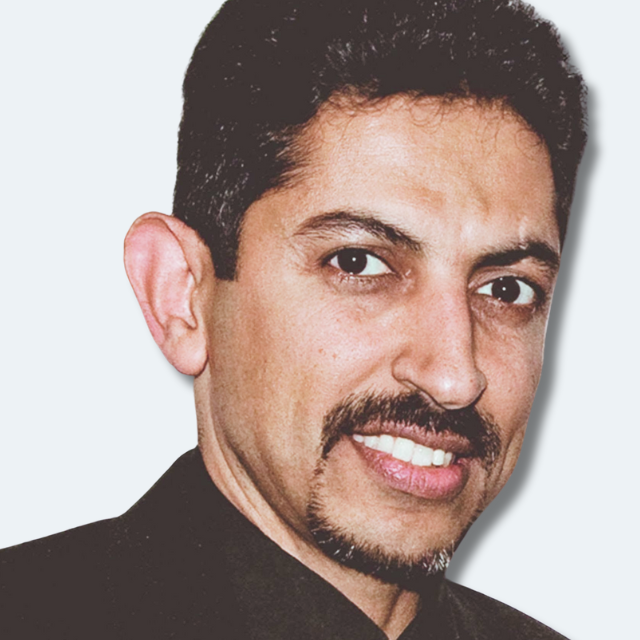
Abdulhadi Al-Khawaja

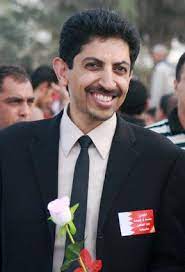
Abdulhadi Al-Khawaja is a Bahraini-Danish advocate known for his unwavering commitment to freedom and democracy. An outspoken human rights defender he serves as a source of inspiration for activists in Bahrain and globally. Abdulhadi has protested Bahrain’s unlawful detention and torture of several civilians since he was a student. He received political asylum in Denmark with his family where he continued his advocacy work, documenting human rights violations in Bahrain. 

He became the first civil society representative to speak at the first Universal Periodic Review of Bahrain in 2008.  He is the co-founder of both the Gulf Centre for Human Rights and the Bahrain Center for Human Rights, as well as the laureate of the 2022 Martin Ennals Award. [https://www.trueheroesfilms.org/thedigest/laureates/4d45e316-c636-4d02-852d-7bfc2b08b78d]

Abdulhadi Al-Khawaja was included for five times in the Secretary-General report on reprisals, noting “allegations of arbitrary arrest, torture and lengthy sentence following his engagement with United Nations human rights mechanisms.” In 2012, the Working Group on Arbitrary Detention found the detention of Abdulhadi arbitrary.

See also: https://humanrightsdefenders.blog/tag/abdulhadi-alkhawaja/

Pham Doan Trang

Pham Doan Trang is an author, blogger, journalist and pro-democracy activist from Viet Nam. She is a well-known advocate for human rights and has written on a wide range of human rights topics, including LGBTQI+ rights, women’s rights, environmental issues and on the suppression of activists.

She is considered among the most influential and respected human rights defenders in Viet Nam today. She has always been a major source of inspiration and mentorship for Vietnamese civil society and the next generation of human rights defenders.

Trang received the Reporters Without Borders 2019 Press Freedom Prize for Impact and was the Laureate of a Martin Ennals Award in 2022. As well as the Homo Homini in 2017 and the Women of Courage 2022. See: https://www.trueheroesfilms.org/thedigest/laureates/fe8bf320-1d78-11e8-aacf-35c4dd34b7ba

Trang was prosecuted for her articles and reports on the human rights situation in Viet Nam, including an analysis of a 2016 report on the Formosa Ha Tinh Steel Plant environmental disaster that was shared with the United Nations. See also: https://humanrightsdefenders.blog/tag/pham-doan-trang/

Trang was the subject of several communications by special procedures mandate holders and an Opinion by the Working Group on Arbitrary Detention in 2021, which found her deprivation of liberty arbitrary. On 2 November 2022, experts addressed Trang’s detention, including restriction of her right to family visits and her deteriorating health status. 
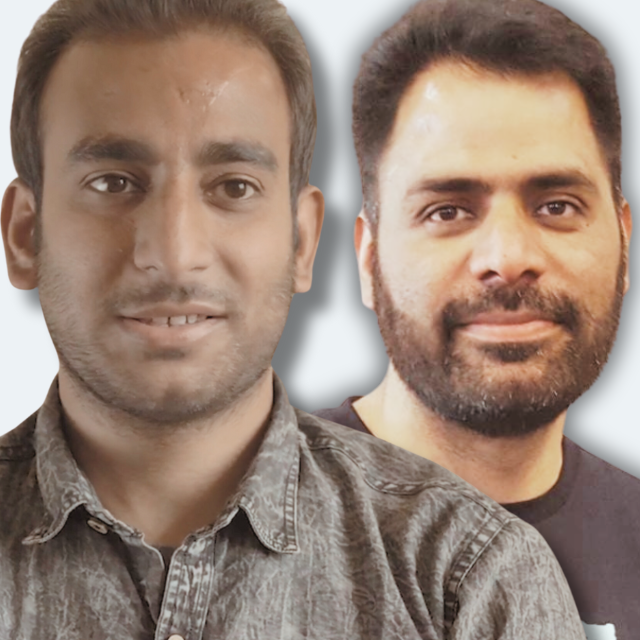
Irfan Mehraj and Khurram Parvez

Khurram Parvez and Irfan Mehraj are two Kashmiri human rights defenders. They have conducted ground-breaking and extensive human rights documentation in the Indian-administered Jammu and Kashmir, including through their work within the Jammu Kashmir Coalition of Civil Society (JKCCS) – Khurram as founder and programme coordinator, and Irfan as a researcher.

Both activists have been internationally recognised for their work. Khurram is the Chairperson of the Asian Federation against Involuntary Disappearances (AFAD), Deputy General Secretary of the International Federation for Human Rights (FIDH) and a laureate of the 2023 Martin Ennals Award. [see: https://www.trueheroesfilms.org/thedigest/laureates/81468931-79AA-24FF-58F7-10351638AFE3]

Irfan is a well-regarded independent journalist with frequent contributions to Kashmiri, Indian and international news outlets. He is the founder of Wande Magazine and is an editor at TwoCircles.net. See also: https://humanrightsdefenders.blog/2023/09/05/un-special-rapporteurs-express-serious-concern-about-kashmiri-human-rights-defenders/

On 22 November 2021, Khurram was arrested again by the Indian Government, this time by India’s National Investigation Agency (NIA) under the Unlawful Activities (Prevention) Act (UAPA) and other laws, reportedly on allegations of “terrorism funding, being a member of a terrorist organisation, criminal conspiracy, and waging war against the state.” He remains in arbitrary detention to this day. 

Meanwhile, on 20 March 2023, Irfan was summoned for questioning and arbitrarily detained by the NIA in Srinagar also under provisions of the UAPA and other laws.  The NIA targeted Irfan for being ‘a close associate of Khurram Parvez.’ Both Khurram and Irfan are presently in pre-trial detention in the maximum-security Rohini prison in New Delhi, India. If convicted, Khurram and Irfan could face life imprisonment or even the death penalty.  

Khurram’s situation has been included in the Secretary-General’s report on reprisals since 2017 and Irfan’s case was included in the 2023 report.

In June 2023, United Nations experts expressed serious concerns regarding the charges against and arrest of Irfan and Khurram, stating that their continued detention is ‘designed to delegitimise their human rights work and obstruct monitoring of the human rights situation in Indian-administered Jammu and Kashmir.’ The United Nation Working Group on Arbitrary Detention (WGAD) published an opinion in the same year, finding Khurram’s detention arbitrary. 

What do we want? It’s simple. We want Irfan, Khurram, Trang and Abduhadi to be freed so they can continue their work without fear of further reprisals, and we want accountability for Cao. 

How do we achieve this?

We mobilise diplomatic missions, encouraging them to speak out and raise individual cases of reprisals against defenders at the UN and in other spaces and hold their peers to account. We convince the UN Secretary General and his team to acknowledge and document ALL cases of reprisal and intimidation by including them in his annual report on reprisals and intimidation against defenders engaging or seeking to engage with the UN and its human rights mechanisms. We push the UN system to establish clearer protocols on how to consistently and effectively prevent, respond and follow up on cases of reprisals.  We encourage governments, activists, and concerned individuals to stand in solidarity with human rights defenders and organisations who are subjected to reprisals and intimidations.

What can you do?

To achieve our goals, we are drawing attention to some of the most emblematic cases of reprisals that illustrate how human rights defenders are prevented from or punished for engaging with the UN.   Here are impactful actions you can take:

Write to State representatives at the UN in Geneva and New York

ISHR’s #EndReprisals database

In order to assist stakeholders with research, analysis and action on cases of reprisals and intimidation, ISHR launched an online database compiling cases or situations of intimidation and reprisals documented by the United Nations (UN) Secretary-General between 2010 and 2020.

  • 878 Cases of intimidation and reprisals against human rights defenders engaging with the UN reported by the UN Secretary General between 2010 and 2020.
  • 81 Countries were cases of reprisals were documented by the UN Secretary-General between 2010 and 2020.
  • 13 Reports published by the UN Secretary General on intimidation and reprisals.
Visit ISHR’s #EndReprisal database

https://ishr.ch/campaign/endreprisals2024

Denis Mukwege, Congolese Human Rights Defender, awarded 2024 Aurora Prize

May 13, 2024
Aurora Humanitarian Initiative (PRNewsfoto/Aurora Humanitarian Initiative)

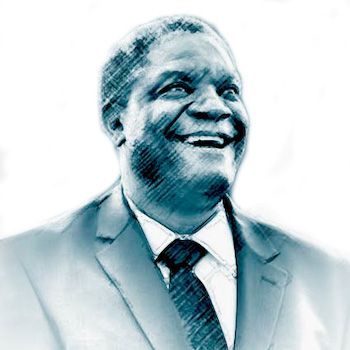
On 10 May 2024, the Aurora Humanitarian Initiative announced that eighth Aurora Prize for Awakening Humanity was awarded to Dr. Denis Mukwege, a world-renown gynecological surgeon and human rights activist from the Democratic Republic of the Congo (DRC). Dr. Mukwege is the president of Panzi Hospital and Foundation in the DRC, which he founded in 1999 to address the systemic issue of maternal healthcare and maternal mortality. Amidst ongoing conflict and critical healthcare needs stemming from war, the hospital has become one of the world’s pre-eminent treatment centres for survivors of sexual violence in conflict. Dennis Mukwege is one of the most recognized HRDs in the world, as shown by the 14 human rights awards already received [see: https://www.trueheroesfilms.org/thedigest/laureates/30515CB2-A763-412A-B61D-549E71306CD4]

In recognition of his courageous work and dedication to improving human rights for all, the Aurora Prize Selection Committee revealed their decision after conferring during a three-hour closed session. The Laureate receives a $1,000,000 award and a chance to continue the cycle of giving by supporting local grassroots leaders helping people in need. See also: https://humanrightsdefenders.blog/tag/denis-mukwege/

Dr. Mukwege has dedicated his life not only to caring for women and girls suffering from the brutality of sexual violence, but also fiercely advocating for their rights,” said Dr. Noubar Afeyan, Co-Founder of the Aurora Humanitarian Initiative. “Aurora is honored to support Dr. Mukwege’s mission to help those in need, demand justice for the victims of sexual violence in war, and bring the perpetrators to justice.”

Guests at the Aurora Prize Ceremony also honored the contributions of two other shortlisted Aurora Humanitarians: Abdulhadi Al-Khawaja, a human rights advocate who has been fearlessly defending the most vulnerable communities in Bahrain and the MENA region, and Nasrin Sotoudeh, a prominent Iranian human rights defender.

https://www.prnewswire.com/news-releases/dr-denis-mukwege-congolese-gynecological-surgeon-and-human-rights-activist-awarded-the-2024-aurora-prize-302142129.html

National Human Rights Institutions of Egypt and Bahrain fail the Paris Principles

October 30, 2023
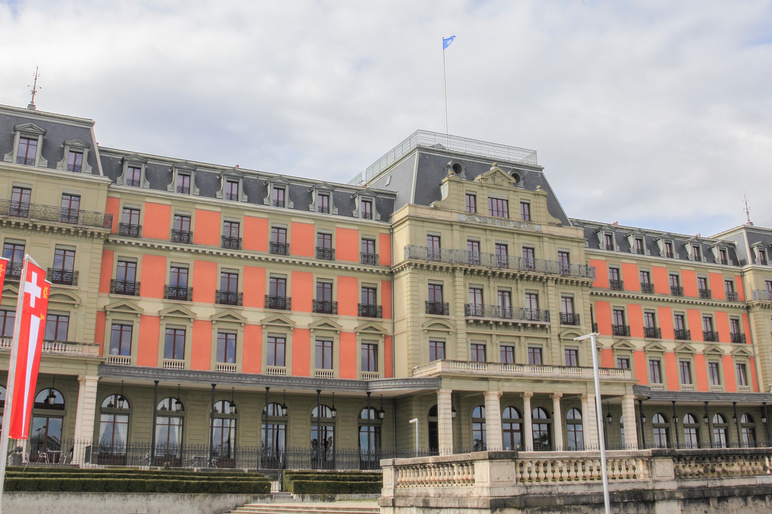
Palais Wilson shutterstock 1084789991

In a letter addressed to the Sub-Committee on Accreditation (SCA) of the Global Alliance of National Human Rights Institutions (GANHRI), civil society organisations, including the FIDH and the World Organisation Against Torture (OMCT), warn that Bahrain and Egypt do not comply with the Paris Principles, failing to respect the very pillars of these principles: pluralism, independence and effectiveness.

The undersigned civil society organisations believe that the two countries’ NHRIs have failed to comply with the Paris Principles and to implement recommendations outlined by the SCA’s previous reports in 2016 and 2018, respectively.

The Paris Principles define the minimal standards that NHRIs must abide by “in order to be considered credible and to operate effectively.” The pillars of these principles are pluralism, independence and effectiveness. NHRIs must be independent from the government, represent and cooperate with civil society, and effectively promote human rights by monitoring violations and addressing them. Based on civil society reports, the Bahraini and Egyptian NHRIs fall short of these standards.

In Bahrain, all the current members of the National Institution for Human Rights (NIHR) were appointed by King Hamad through a royal decree issued on 9 May 2021, and there is no democratic or independant mechanism through which these selections are made. The current Chairman of the NIHR, Ali al-Derazi, was reportedly implicated in abuses against migrant workers. Furthermore, the Vice-Chairperson of the NIHR, Mr. Khaled Abdulaziz Alshaer had previously called on those who criticised the Bahraini government to receive the death penalty.

In August 2022, the UN Committee on Economic, Social and Cultural Rights concluded that “[the NIHR] has not yet attained the independence required to perform its functions.” Previously in 2018, the UN Human Rights Committee had expressed similar concern and “[regretted] the lack of information on the complaints [the NIHR] has received and the investigations it has carried out in response to those complaints.”

In addition, Bahrain’s NIHR fails to address and outright denies the human rights abuses committed by the authorities, including arbitrary detention, ill-treatment and medical negligence in various detention facilities. This contradicts the UN Working Group on Arbitrary Detention’s findings regarding Abduljalil al-Singace, Abdulhadi al-Khawaja and Naji Fateel, three Bahraini human rights defenders who were arbitrarily detained, tortured, medically neglected and subjected to sham trials. [see also: https://humanrightsdefenders.blog/tag/bahrain/]

As for the Egyptian National Council for Human Rights (NCHR), it also lacks independence from the government. In 2021, new members of the NCHR were appointed for four years. The Chair, Ms. Moushira Khattab, and the Vice-President, Mr. Mahmoud Karem Mahmoud are both former Egyptian officials and diplomats. In both 2014 and 2018, Mahmoud was the coordinator of al-Sisi’s presidential campaign, which clearly demonstrates the NCHR’s close relationship with the executive.

In March 2023, the UN Human Rights Committee had echoed these concerns over the “lack of safeguards to ensure [the NCHR’s] full independence and effectiveness”, as well as over “the lack of information provided on the effective implementation of its recommendations.”

The NCHR has left hundreds of complaints unanswered and blatantly denies that certain human rights abuses are being committed. In 2020, the Council stated that findings of the UN Committee against Torture, according to which torture was “systematic” in Egypt, were a “politicized categorization” seeking to “undermine the efforts of the government”. The NCHR has also remained silent on prominent human rights issues such as the practice of enforced disappearance or the dire conditions of detention. In July 2023, the Council’s president compared a new correctional facility in Wadi al-Natroun to a “5-star hotel”. We believe that the Egyptian NCHR is far from acting as a NHRI with “A” status, which it has worryingly been granted since 2006 by the SCA. [see also: https://humanrightsdefenders.blog/tag/egypt/]

In light of the above, it is clear that the NHRIs of Bahrain and Egypt have consistently failed to comply with the Paris Principles and to implement the SCA’s recommendations.

We urge you to consider the aforementioned shortcomings of Bahrain and Egypt’s NHRIs when reviewing them during your upcoming session, and to not grant them status “A”.

Signatories:

  • Bahrain Institute for Rights and Democracy (BIRD)
  • CIVICUS
  • Democracy for the Arab World Now (DAWN)
  • Egyptian Commission for Rights and Freedoms
  • Egyptian Front for Human Rights (EFHR)
  • El Nadeem against Violence and Torture
  • Human Rights Foundation (HRF)
  • HuMENA for Human Rights and Civic Engagement
  • International Federation for Human Rights (FIDH) – within the framework of the Observatory for the Protection of Human Rights Defenders
  • International Service for Human Rights (ISHR)
  • Law and Democracy Support Foundation (LDSF)
  • MENA Rights Group
  • Rights Realization Centre (UK)
  • Salam for Democracy and Human Rights (SALAM DHR)
  • The #FreeAlKhawaja Campaign
  • The Freedom Initiative (FI)
  • World Organisation Against Torture (OMCT) – within the framework of the Observatory for the Protection of Human Rights Defenders

https://www.omct.org/en/resources/statements/bahrain-and-egypts-national-human-rights-institutions-do-not-comply-with-the-paris-principles

About the ‘Stand As My Witness’ campaign which advocates on behalf of imprisoned Human Rights Defenders Around the World

August 12, 2023

Photo by Markus Spiske on Unsplash

On 4 August 2023, Jaxx Artz in Global Citizen explains the Stand As My Witness’ campaign:

Stand As My Witness was created in response to a growing trend in which civil society actors were arrested for their human rights work. Formerly known as Civil Society Behind Bars, the initiative is one of CIVICUS’ most effective strategies when it comes to sounding the alarm about the plights faced by HRDs around the world. According to the global alliance, hostile government actors and authoritarian regimes often use flawed legal processes with little oversight in order to prosecute activists. “[There are targeted attacks] against people uncovering high-level corruption, exposing very serious human rights violations, calling for accountability, and seeking to drive change in their societies,” Mandeep Tiwana, chief programs officer at CIVICUS, told Global Citizen.

As part of the campaign’s goal to spread awareness about some of the world’s imprisoned activists, CIVICUS profiles a handful of detained HRDs on their website. In actuality, these names and cases represent just a small percentage of people who are currently in prison because of their activism, and whom CIVICUS is trying to get released.

Abdulhadi al-Khawaja, founder and president of the Bahrain Center for Human Rights, who was forcibly arrested by Bahraini authorities. [see: https://humanrightsdefenders.blog/tag/abdulhadi-alkhawaja/ and https://www.trueheroesfilms.org/thedigest/laureates/4d45e316-c636-4d02-852d-7bfc2b08b78d]

As the global conditions for civic society worsen — with only 3.2% of the world’s population living in countries where civic space is considered open, according to the international global alliance CIVICUS — human rights defenders (HRDs) like al-Khawaja increasingly face the risk of government retaliation. 

The detention of HRDs is often arbitrary and a form of reprisal for the work [they] do,” David Kode, advocacy and campaigns lead at CIVICUS, told Global Citizen. “Take al-Khawaja, for example, who has been in prison since 2011 and is serving a life sentence. Despite many advocacy efforts, the Bahraini authorities seem to be bent on ‘punishing’ him and his family for calling for democratic reforms more than a decade ago.

Made up of civil society organizations and activists across more than 175 countries, CIVICUS has been campaigning on behalf of HRDs since its founding in 1993. As part of their work, the Stand As My Witness campaign — launched over 10 years ago — has sought to encourage investigations into unlawful imprisonments and bring global attention to cases like al-Khawaja’s.

Belarus has been restricting civic space and activists for years, with attacks increasing since the 2022 elections. [see also; https://humanrightsdefenders.blog/tag/belarus/]

How Are Human Rights Defenders Being Targeted?

CIVICUS has found that the tactics used to target HRDs are eerily similar across national borders and, over the years, the trends have only become more apparent and concerning.

“[The imprisonment of HRDS] is often preceded by stigmatization about their work, which includes branding activists as security risks. We saw this happen a lot after the [Arab Spring] in the Middle East and North Africa in 2011,” Tiwana said. “A lot of authoritarian regimes became fearful of people organizing and coming out into the streets to engage in civil society.”

To limit public support of pro-democracy movements and ostracize activists from society, government officials may twist the narrative surrounding an HRD’s arrest and accuse them of being spies for other nations. They may also invoke counter-terrorism or security legislation to pressure judges and quickly detain organizers or protestors without arrest warrants.

Take Khurram Parvez, an HRD from Northern India who was arrested in 2021 on charges of conspiracy and terrorism, for example. Parvez’s work documenting human rights violations — which include instances of disappearance, torture, and unlawful killing — in the Jammu and Kashmir region of India caught the attention of Indian authorities who wanted to silence his advocacy work.

See: https://www.trueheroesfilms.org/thedigest/laureates/81468931-79AA-24FF-58F7-10351638AFE3 and https://humanrightsdefenders.blog/tag/khurram-parvez/

CIVICUS currently advocates on behalf of Parvez through various strategies, such as raising concerns about his detention with the UN, holding meetings with diplomats in India, and encouraging the Human Rights Council in Geneva to put pressure on Indian officials to release him.

“We continue to raise concerns about his detention on social media, telling his story as a human rights defender and highlighting the gaps left by his detention in relation to the amazing work he does promoting human rights in Kashmir and supporting those who are forcibly disappeared in Asia,” Kode told Global Citizen. 

The private sector also plays an increasing role in silencing HRDs. Businesses may file strategic lawsuits against public participation (fittingly known as SLAPPs) against activists when their human rights work interferes with corporate profits or interests. [see: https://humanrightsdefenders.blog/tag/strategic-lawsuits-against-public-participation-slapps/]

In recent years, environmental activists and Indigenous land defenders have faced the brunt of the attacks as corporations file lawsuit after lawsuit restricting the right to protest, leading many activists to face house arrest, financial ruin, or imprisonment.

How Does Stand As My Witness Help Imprisoned HRDs?

Despite the myriad challenges that HRDs and civil society organizations face in their day-to-day work, CIVICUS’ Stand As My Witness campaign has been able to raise the profile of many activists who have been unjustly imprisoned.

Loujain al-Hathloul, for instance, is an HRD from Saudi Arabia who is well known for leading the campaign to legalize a woman’s right to drive. While in prison for nearly three years, al-Hathloul was subjected to severe torture from Saudi Arabian authorities, including electric shocks, flogging, and sexual assault, and denied regular access to see her family while in prison. See: https://www.trueheroesfilms.org/thedigest/laureates/1a6d84c0-b494-11ea-b00d-9db077762c6c

CIVICUS and other human rights organizations were able to mount an international campaign to bring attention to the years-long persecution faced by al-Hathloul and other women activists. The hashtag #FreeLoujain popped up across social media platforms, with global citizens around the world speaking up to urge Saudi Arabian authorities to release al-Hathloul.

While a national court initially sentenced al-Hathloul to five years and eight months for “conspiring against the kingdom,” she was released after 1,004 days. According to Tiwana, international pressure played a significant role in her release.

How Can Global Citizens Take Action?

The Stand As My Witness campaign relies on advocacy efforts from every part of civil society — when Global Citizens take action, for example, their voices can put an immense amount of pressure on world leaders.

“Hostile governments may have [HRDs] locked up for years, and it takes a concerted effort from relevant agencies, state actors, non-state actors, organizations, civil society, the media, and others to put enough pressure that leads to their release,” Tiwana said. “But justice often moves very slowly.”

One of the biggest challenges CIVICUS experiences with the Stand As My Witness campaign is engaging people during the life cycle of a case, which can often last several years. To fight against indifference, CIVICUS encourages Global Citizens everywhere to pay attention to the humanity of each activist who has dedicated their lives to the realization and protection of human rights.

You can get involved with the Stand As My Witness campaign by engaging with CIVICUS on social media, writing letters to government officials, and sharing information about HRDs who are not currently represented on CIVICUS’ interactive map. 

You can also demand that governments release HRDs from unjust imprisonment by taking action with Global Citizen on civic space issues.

https://www.globalcitizen.org/en/content/stand-as-my-witness/

Bahrain does also “parliament washing”

March 11, 2023

Bahrain Revokes Human Rights Watch Visas; Government Using Global Parliamentary Meeting to Whitewash Repression.

Human Rights Watch Logo

On 10 March 2023 Human Rights Watch reported that staff members – who were to attend the 146th Inter-Parliamentary Union (IPU) Assembly – had their visas revoked. Denial of entry into Bahrain has happened to other HRDs before, see e.g. : https://humanrightsdefenders.blog/2012/01/20/hrfs-brian-dooley-refused-entry-into-bahrain/

Bahrain’s hosting of sporting and high-level international events is a transparent attempt to launder its decades-long campaign to crush political opposition and suffocate the country’s vibrant civil society,” said Tirana Hassan, Human Rights Watch’s acting executive director. “Its unilateral reversal of Human Rights Watch’s access to the IPU conference is a blatant example of its escalating repression. Governments, organizations with influence, and key officials should speak out loudly against Bahrain’s abuses so they are not complicit in its efforts to whitewash its horrific rights record.

Bahrain is hosting the meeting of the IPU, a global organization of national parliaments, from March 11-15. The organization’s slogan is “For democracy. For everyone,” and the theme of the 146th Assembly is “Promoting peaceful coexistence and inclusive societies: Fighting intolerance.” These statements are in stark contrast to the extensive record of serious human rights abuses in Bahrain that Human Rights Watch and other rights organizations have documented, Human Rights Watch said. This includes the continued detention of the prominent human rights activist and Danish-Bahraini dual citizen Abdulhadi Al-Khawaja. Al-Khawaja is reportedly suffering serious health problems while being denied adequate medical care. He is this year’s laureate of the MEA [see: https://humanrightsdefenders.blog/tag/abdul-hadi-al-khawaja/]

….. Two of Bahrain’s former parliament members are in prison for exercising their freedom of expression, and the government has forced many more into exile and stripped them of their citizenship.

On March 5, Bahrain hosted Formula One’s (F1) opening season race. Twenty-one groups, including Human Rights Watch, sent a letter to F1’s president to raise “serious concerns over F1’s ongoing role in ‘sportswashing’ amidst a deterioration in Bahrain’s human rights situation.” An F1 driver, Lewis Hamilton, recently said that he is “not sure [the human rights situation] has got better while we have been coming all these years” to countries like Bahrain and Saudi Arabia.

With local civil society severely restricted by Bahrain’s autocratic government, members of the IPU Assembly should live up to its organizational values and speak out on behalf of Bahrain’s victims of repression,” Hassan said.

https://www.hrw.org/news/2023/03/10/bahrain-revokes-human-rights-watch-visas

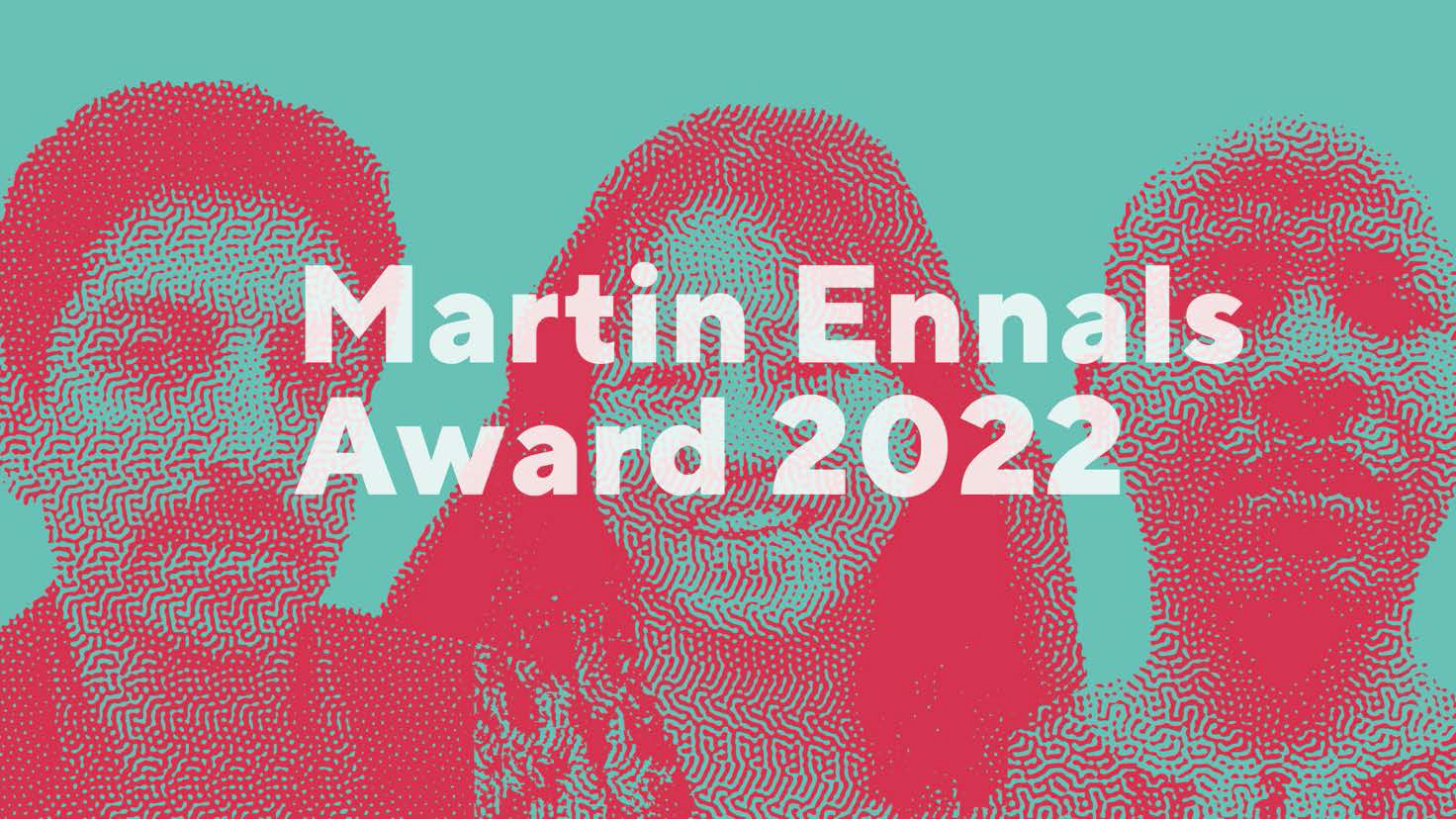
Breaking News: 3 laureates of the Martin Ennals Award 2022 announced today

January 19, 2022

This morning, 19 January 2022, at a virtual press conference in Geneva three driving forces of the human rights movement were announced as the Laureates of the 2022 Martin Ennals Award for Human Rights Defenders. For more on the Martin Ennals Award and its laureates, see: https://www.trueheroesfilms.org/thedigest/awards/043F9D13-640A-412C-90E8-99952CA56DCE

Pham Doan Trang is a leading journalist, editor and democracy advocate in Vietnam, where
the Communist Party has left little room for opposition voices to flourish. She directed several
independent media outlets to raise awareness amongst Vietnam’s citizens of their fundamental
rights galvanising many other journalists and human rights defenders to speak up. She was one
of the most hunted activists in her country before being arrested in October 2020. On 14
December 2021, Pham Doan Trang was sentenced to nine years in prison for “conducting
propaganda against the state”. There are growing concerns about her health. [see also: https://www.trueheroesfilms.org/thedigest/laureates/fe8bf320-1d78-11e8-aacf-35c4dd34b7ba]

Dr. Daouda Diallo is a trained pharmacist-turned-human rights activist in Burkina Faso. The
founder of the civil society coalition CISC, he dedicatedly documents human rights violations in
a country rocked by violent crossfires between government forces, local paramilitary groups
and Islamist factions. He carries the torch for justice and accountability to victims of the violence
and their families. Dr. Diallo’s message of unity amongst different ethnic groups and faiths.

Abdul-Hadi Al-Khawaja is a charismatic architect of Bahrain’s human rights movement and
a leader of the 2011 protests calling for democracy and greater freedom in the Gulf region. Al-
Khawaja is not only an activist, but also a social entrepreneur who founded some of the first
human rights research and defence organizations in the region, which still exist today. He
inspires future generations in Bahrain to continue to fight despite his now decade-long
imprisonment. See also: https://www.trueheroesfilms.org/thedigest/laureates/4d45e316-c636-4d02-852d-7bfc2b08b78d

You can relive the conference here: https://youtu.be/UgvIli5X-T8

It was also announced that due to the COVID-19 pandemic, the Award Ceremony is postponed until 2 June 2022. “As a city of human rights, Geneva is committed to supporting international cooperation
on critical issues. Throughout the pandemic, many organizations have persisted in their human rights
missions, demonstrating tremendous resilience. In this spirit, we are proud to co-organise another
edition of the Martin Ennals Award
”, said Member of the City Executive Alfonso Gomez. (https://www.martinennalsaward.org/committed-to-a-better-world/)

AS Chair of the Martin Ennals Award Jury, I mentioned that the Jury had selected “three galvanizers of the human rights movement and that courage is the connecting dot between them ”.

https://www.martinennalsaward.org/and-the-martin-ennals-laureates-2022-are/