Archive for the 'UN' Category
March 5, 2015

High Commissioner for Human Rights Zeid Ra’ad Al Hussein. UN Photo/Jean-Marc Ferré
On 5 March 2015 the United Nations High Commissioner for Human Rights urged Member States to uphold the human rights principles underlying their communities in their fight against radicalism.
Speaking to the UN Human Rights Council earlier he warned of the “real danger” that opinion-leaders and decision-makers would “lose their grasp” of the values that States built 70 years ago “to ward off the horror of war.”
“The fight against terror is a struggle to uphold the values of democracy and human rights – not undermine them,” Mr. Zeid declared. “Counter-terrorist operations that are non-specific, disproportionate, brutal and inadequately supervised violate the very norms that we seek to defend. They also risk handing the terrorists a propaganda tool – thus making our societies neither free nor safe.”
At the same time, the UN human rights chief said he was “appalled” by the “rising tide of attacks” around the world targeting people on account of their beliefs. Such “horrific acts of racial and religious hatred,” he said, spanned countries in Western Europe and North America, where “unfair policing, daily insults, and exclusion” affected large swathes of the population. Meanwhile, he added, “the tentacles of the extremist takfiri movement” – an ideology where one believer apostasies another and then condemns them as impure – had reached into a wide range of countries, from Iraq and Syria to Nigeria, Yemen, Libya and Somalia.
Against that backdrop, Mr. Zeid voiced deep concern at the tendency of States to clamp down on the most basic of human rights, including the adoption of measures that restrict freedom of expression and democratic space.
“When powerful leaders feel threatened by a tweet, a blog, or a high-school student’s speech, this speaks of profound underlying weakness,” he continued. “And when writers are abducted, jailed, whipped, or put to death; when journalists are assaulted, subjected to sexual violence, tortured and killed; when peaceful protestors are gunned down by thugs; when human rights lawyers, human rights defenders and land activists are arrested and jailed on spurious charges of sedition; when newspapers are attacked or shut down – such cases attack and undermine the foundations of stable governance.”
“It is the people who sustain government, create prosperity, heal and educate others and pay for governmental and other services with their labour,” Mr. Zeid concluded. “It is their struggles that have created and sustain States. Governments exist to serve the people – not the other way round.”
United Nations News Centre – Member States must enforce human rights amid rising tide of extremism – UN rights chief.
Posted in human rights, Human Rights Council, Human Rights Defenders, OHCHR, UN | Leave a Comment »
Tags: anti-terrorist laws, freedom of expression, freedom of religion, human rights, Human Rights Defenders, Prince Zeid Raad Zeid al-Hussein, reprisals, speech, Takfiri, UN, UN High Commissioner for Human Rights, UN Human Rights Council
February 28, 2015
On Monday 2 March 2015 starts the “#idefend – Making sure civil society has its voice” campaign. It is an initiative of the Delegation of the European Union to the UN in Geneva in partnership with the Office of the High Commissioner for Human Rights and the Permanent Missions of Brazil, the Republic of Korea and Tunisia.
The #idefend campaign takes a public stance to support the voices of civil society.#idefend aims at expressing solidarity with all those human rights defenders and civil society actors, whose dedication and everyday work improve the human rights of people in every corner of the world. Join the campaign and help empower those who speak up for human rights!
“Human rights defenders are not violent seditionists, criminals, nor bloody revolutionaries, as so many governments like to portray them. They are the best of us, all of us. And they have a message. To all governments, we say: focus on their message. Listen to what they are saying. Understand the message, talk to them about it, be persuaded or persuade, without violence, instead of silencing them, punishing them, their families, and their communities.”
Zeid Ra’ad Al Hussein, UN High Commissioner for Human Rights
“Sadly, over the past years, we have observed a worrying trend at the Human Rights Council: Human Rights Defenders and civil society representatives are hampered from speaking at the Council, sometimes they are harassed upon their arrival to Geneva, or subject to reprisals in their home country upon their return. This is not acceptable.”
Peter Sørensen, Head of the EU Delegation to the United Nations

#idefend | Making sure civil society has its voice.
Posted in EU, human rights, Human Rights Defenders, OHCHR | Leave a Comment »
Tags: #idefend, Brazil, campaign, Civil society, EU, human rights campaign, Human Rights Defenders, Office of the United Nations High Commissioners for Human Rights, Peter Sørensen, reprisals, solidarity action, South Korea, Tunisia, UN
February 17, 2015
For someone who 25 years ago (!!) started the development of legal databases on human rights (specifically the legal protection of refugees) and wrote articles about it (e.g Int J Refugee Law (1989) 1 (1):89-100.doi: 10.1093/ijrl/1.1.89Pp. 89-100, see ABSTRACT below), the news that the UN has now published, on-line, a database of case law on human rights is exciting and it should be for all practitioners.
The new site http://juris.ohchr.org/ contains all case law issued by the UN human rights expert committees, the Treaty Bodies.
The database was developed using data from the Netherlands Institute of Human Rights (SIM) of Utrecht University School of Law (of which I had the honor to be the first Director). Since the mid-1990s, SIM had developed a comprehensive record on the jurisprudence stemming from the decisions by four Treaty Bodies on complaints brought by individuals. Over 20 years, academics compiled and indexed Treaty Bodies’ case law, making the SIM database the most authoritative online resource on this. Due to budget restrictions, SIM stopped updating the database from 1 January 2014 and took it offline on 1 January 2015. However, SIM offered its data free of charge to the UN Human Rights Office.
“This allowed us to build our own database, with an expanded remit and search capability, and we aim to continue developing it. It is an important part of our efforts to make the work of the Treaty Bodies more visible and accessible, and we hope it will benefit a range of users all over the world,” said Mr. Ibrahim Salama Director of the UN Human Rights Treaties Division. .
There are 10 Treaty Bodies that review and monitor how States that have ratified a particular treaty are implementing the rights contained in it. Eight (listed below) can also consider complaints by individuals who believe their rights have been violated and who have exhausted all the legal steps in their own country.
The site http://juris.ohchr.org contains case law indexed by various categories, including State, date, subject and keywords, which can all be used as search criteria. Users can submit their comments on the functioning of the database as part of ongoing efforts to improve it.
The Committees that can receive and consider individual complaints are:
- Human Rights Committee (CCPR)
- Committee against Torture (CAT)
- Committee on the Elimination of Discrimination against Women (CEDAW)
- Committee on the Elimination of Racial Discrimination (CERD)
- Committee on the Rights of Persons with Disabilities (CRPD)
- Committee on Enforced Disappearances (CED)
- Committee on Economic, Social and Cultural Rights (CESCR)
- Committee on the Rights of the Child (CRC)
Abstract of 1989 article on the development of legal databases: “Today’s information technology can be used to improve the legal protection of refugees, by providing information relevant to the asylum procedure, and laying the foundation for progressive development at the international level. The positive potential of legal databases is only now beginning to be realised, thanks to pioneering efforts within human rights and related documentation centre networks. UNHCR is helping to set up a case law database, in co-operation with non-governmental organizations. A database on national legislation is also planned, as is a full text database of international legal instruments database. Legal literature continues to be covered by the database REFLIT (REFugee LITerature) of UNHCR’s Centre for Documentation on Refugees (CDR/UNHCR). This article examines two basic kinds of information-retrieval systems, ‘free text’, and ‘indexed’, and considers their different structures, uses and search procedures, with reference to work on a forthcoming refugee thesaurus. The author calls attention to the need for standard formats, such as those of HURIDOCS, and to problems of scope and coverage. He suggests that information and documentation are areas in which practical co-operation between the UN, governments and non-governmental organizations could be implemented to advantage.”
DisplayNews.
Posted in human rights, Human Rights Defenders, OHCHR, UN | 2 Comments »
Tags: case law, databases, human rights, human rights education, human rights information, HURIDOCS, Ibrahim Salama, jurisprudence, legal databases, Netherlands Institute for Human Rights (SIM), on-line, refugee law, Thoolen, treaty bodies, UN
February 15, 2015
When a human rights defender from a small nation, such as the Solomon islands, is selected for fellowship programme with the United Nations, it makes a story. Teddy Kafo writes in the Solomon Star of 14 February how Watson Puiahi of the local NGO “I Lukim Sustainability Solomon Islands (ISSI)” was chosen to participate in the ‘2015 Indigenous fellowship Program’ of the Office of the High Commissioner for Human Rights in Geneva.

Read the rest of this entry »
Posted in human rights, Human Rights Defenders, Joint Mobile Group, OHCHR, UN | 1 Comment »
Tags: fellowship Program, Geneva, Human rights defender, I Lukim Sustainability Solomon Islands (ISSI), Indigenous People, Office of the High Commissioner for Human Rights, Solomon Islands, Solomon Star, Teddy Kafo, training course, Watson Puiahi
February 12, 2015

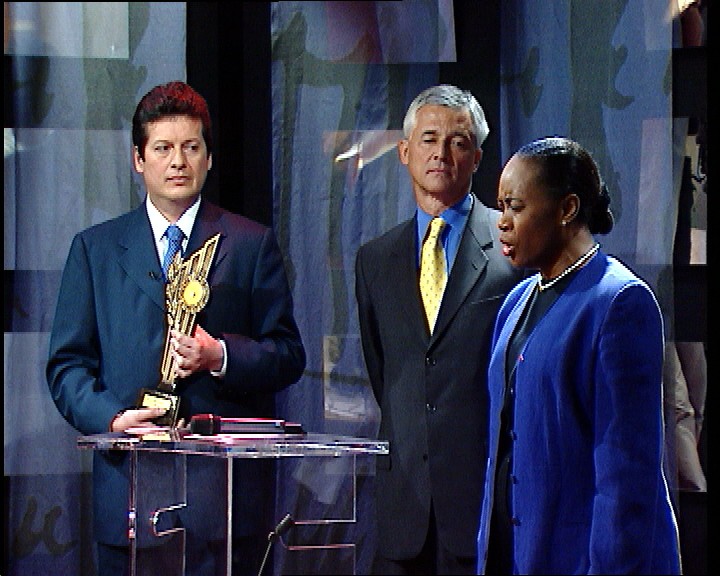
Barbara Hendricks at MEA ceremony 2003 with late Sergio Vieira de Mello and Alirio Uribe Munoz
On 12 March 2015 will take place the Annual Sergio Vieira de Mello Debate in the Palais des Nations, Assembly Hall, Geneva. Starts at 18h30.
Speakers are the two High Commissioners, Zeid Raad al Hussein and Antonio Guterres, as well as Christiane Amanpour of CNN.
for more info, see: Annual debate 2015 – Save the date!.
Last year the speaker was Ramos Horta: https://thoolen.wordpress.com/2014/05/02/jose-ramos-horta-delivers-2014-sergio-vieira-de-mello-lecture/
Posted in human rights, UN | Leave a Comment »
Tags: António Guterres, Christiane Amanpour, CNN, debate, Geneva, Sergio Vieira de Mello, Sergio Vieira de Mello Debate, Sergio Vieira de Mello Foundation, the United Nations High Commissioner for Human Rights, United Nations High Commissioner for Refugees, Zeid Ra'ad Al Hussein
February 10, 2015
The Office of the UN High Commissioner for Human Rights [OHCHR] published today (10 February) a report, which will be formally presented to the Human Rights Council only in March, describing the situation of human rights in Libya during 2014. It paints a bleak picture of increasing turmoil and lawlessness, fanned by a multitude of heavily armed groups amid a broadening political crisis. Rampant violence and fighting, including in the country’s two biggest cities, Tripoli and Benghazi, as well as many other cities and towns across the country, is badly affecting civilians in general and particularly cases of harassment, intimidation, torture, numerous abductions, and summary executions of human rights defenders, civil society activists, journalists and other media professionals, as well as members of the judiciary, politicians and law enforcement officers.
The report, produced in conjunction with the UN Support Mission in Libya (UNSMIL), also describes numerous incidents of violence against women over the past year, including reports of threats, attacks and killings of female human rights defenders, politicians and other women in public positions. Minority groups, including Egyptian Coptic Christians, have also been increasingly targeted. The report also highlights the extremely vulnerable situation of migrants.
Thousands of people remain in detention – mostly under the effective control of armed groups – with no means of challenging their situation as prosecutors and judges are unable or unwilling to confront the armed groups. UN human rights staff have received reports of torture or other ill-treatment in many places of detention. The deteriorating security environment has impacted heavily on the justice system, which is no longer functioning in parts of the country. Prosecutors and judges have frequently been subjected to intimidation and attacks, in the form of court bombings, physical assaults, abduction of individuals or family members and unlawful killings.
The report highlights the need to strengthen State institutions, ensure accountability for human rights violations and support the ongoing political dialogue.
The full report can be found here: http://www.ohchr.org/EN/HRBodies/HRC/RegularSessions/Session28/Documents/A_HRC_28_51_ENG.doc
via: OHCHR PRESS BRIEFING NOTES – (1) Libya, (2) Malaysia, (3) Thailand, (4) Venezuela – Press releases – News – StarAfrica.com.
Posted in human rights, Human Rights Council, Human Rights Defenders, OHCHR, UN | Leave a Comment »
Tags: armed groups, Failed state, harassment, Human Rights Council, Human Rights Defenders, killings, lawlessness, Libya, Office of the High Commissioner for Human Rights, OHCHR, paramilitary, report, UN, UNSMIL, women human rights defenders
January 21, 2015
Wirathu:”Just because you hold a position in the United Nations doesn’t make you an honourable woman. In our country, you are just a whore,”
For those who think that hate speech has no place in peace-loving Buddhism, this is sobering item:
A radical Myanmar Buddhist monk, Wirathu, called the U.N. human rights envoy – Ms Yanghee Lee – a “whore”, and accused Lee of bias towards Rohingya Muslims, a stateless minority in the western Myanmar state of Rakhine. Wirathu denounced Yanghee Lee, the U.N. special rapporteur on human rights in Myanmar before a cheering crowd of several hundred people, in a speech in Yangon on Friday, after she questioned draft laws that critics say discriminate against women and non-Buddhists. “You can offer your arse to the kalars if you so wish but you are not selling off our Rakhine State,” he said. Kalars is a derogatory word for people of South Asian descent.
His speech was condemned by Thawbita, a leading member of the progressive Saffron Revolution Buddhist Monks Network in Mandalay, where Wirathu is also based. “The words used that day are very sad and disappointing. It is an act that could hurt Buddhism very badly,” Thawbita told Reuters. But he is unlikely to face censure. A senior official at the Ministry of Religious Affairs told Reuters there were no plans to act against Wirathu. This is the more remarkable as in December a New Zealander and two Burmese were charged with insulting Buddhism. The arrest was triggered by a complaint by an official from the country’s religious department. [see: http://news/world-asia-30527443]
Rapporteur Lee in a statement released by her office on Monday said: “During my visit I was personally subjected to the kind of sexist intimidation that female human rights defenders experience when advocating on controversial issues“.
Myanmar monk’s U.N. whore rant “could hurt Buddhism” | Asia-Pasific | Worldbulletin News.
Posted in human rights, Human Rights Defenders, UN | 2 Comments »
Tags: bar, BBC, Birma, Buddhism, Buddhist monk, Discrimination, freedom of expression, hate speech, human rights of women, minority rights, monk, Myanmar, New Zealand, Rakhine, Reuters, Thawbita, UN, UN Rapporteurs, Wirathu, women human rights defenders, Yanghee Lee
January 15, 2015
UN Rapporteur Surya P. Subedi will carry out an official visit to Cambodia from 17 to 25 January 2014. This is Mr. Subedi’s last mission in his capacity as the Special Rapporteur on the situation of human rights in Cambodia as appointed by the UN Human Rights Council. He is expected to meet with the Prime Minister and other senior members of the Government as well as human rights defenders, representatives from civil society organisations and communities as well as the UN Country Team and the donor community.
Since his appointment as Special Rapporteur in March 2009, Mr. Subedi has made eleven visits to Cambodia and has presented seven reports to the UN Human Rights Council. He is completing his full term of six years in this position in March 2015 when a new mandate holder will be appointed.
Final fact-finding mission to Cambodia | Scoop News.
For earlier posts on Cambodia: https://thoolen.wordpress.com/tag/cambodia/
The Special Rapporteur’s latest report to the Human Rights Council (A/HRC/24/36): http://www.ohchr.org/EN/HRBodies/HRC/RegularSessions/Session24/Pages/ListReports.aspx
Posted in human rights, Human Rights Council, Human Rights Defenders | Leave a Comment »
Tags: Cambodia, Civil society, fact finding, Human Rights Council, Human Rights Defenders, Surya P. Subedi, UN Human Rights Council, UN Special Rapporteur
January 12, 2015
On 26 December 2014, the Geneva-based International Service for Human Rights (ISHR) reported that the following posts were the most visited on its website in 2014:
Top 5 human rights posts for 2014 | ISHR.
Posted in human rights, Human Rights Defenders, ISHR, UN | Leave a Comment »
Tags: 2014, African Commission on Human and Peoples' Rights, Human Rights Defenders, International Service for Human Rights, ISHR, LGBTI, reprisals, UN, UN Human Rights Council, UN Rapporteur on Human Rights Defenders, webiste
December 24, 2014
Wouldn’t it be a truly nice Christmas gift if the Laos government would finally undertake a serious investigation into the disappearance of human rights defender Sombath Somphone, who was last seen in December 2012. That is what a group of United Nations independent experts urged today, 23 December 2014:
“It is high time for the authorities of the Lao People’s Democratic Republic to voluntarily request international assistance with the aim of shedding light on Mr. Somphone’s fate and whereabouts, two years after his disappearance,” the experts said in a news release. “International law makes clear that the Government of the Lao People’s Democratic Republic has the duty to carry out an independent, thorough, credible and effective investigation,” they added. [https://thoolen.wordpress.com/tag/sombath-somphone/]
(The situation of human rights in Laos is due to be assessed next month through the Universal Period Review process, which involves a review of the human rights records of all UN Member States. Under the auspices of the Human Rights Council, the process provides the opportunity for each State to declare what actions they have taken to improve their human rights situation.)
Along with Mr. Kiai, the experts speaking out on Laos today include the Special Rapporteur on the situation of human rights defenders, Michel Forst; and the Special Rapporteur on the promotion and the protection of the right to freedom of expression and opinion, David Kaye.
United Nations News Centre – Laos: UN experts appeal for help to probe two-year-old disappearance of rights defender.
Posted in human rights, Human Rights Council, Human Rights Defenders, UN | 2 Comments »
Tags: David Kaye, Forced disappearance, Human rights defender, investigation, Lao People’s Democratic Republic, Laos, Maina Kiai, Michel Forst, Sombath Somphone, UN, UN Special Rapporteur, UPR




 Hans Thoolen on Human Rights Defenders and their awards