Archive for the 'UN' Category

Human Rights Day 2018: just an anthology

December 10, 2018

There is so much going on on this day – International Human Rights Day – that I can only give a cursory overview of some highlights in 2018 like I did in previous years [see e.g. https://humanrightsdefenders.blog/2016/12/09/sampling-international-human-rights-day-2016-be-a-human-rights-defender/, and https://humanrightsdefenders.blog/2017/12/11/human-rights-day-2017-in-asia-mind-the-gap/]. Here is my selection of 10: Read the rest of this entry »

Final step: Burundi closes down UN office

December 7, 2018
FILE - In this Tuesday, April 28, 2015, file photo, Burundi riot police detain a man suspected of throwing stones during clashes in the Musaga district of Bujumbura, Burundi. The United Nations human rights office on Thursday, Dec. 6, 2018, said Burundi's government has asked it to leave, months after the outgoing U.N. rights chief called the country one of the "most prolific slaughterhouses of humans in recent times." (AP Photo/Jerome Delay/File)

Having reported on 4 December about Burundi in the 3rd Committee of the General Assembly (“Burundi made several attempts to stop the Commission of Inquiry on Burundi from presenting its report to the Third Committee. When these were foiled, in a repeat of what happened last year, the Burundian Ambassador took the floor to abuse Commission members.  ….” and in the light of its history with UN investigations – see inter alia: https://humanrightsdefenders.blog/2018/10/26/burundi-outrageously-attacks-united-nations-team/), it hardly comes as a surprise that Burundi’s government has asked the UN to leave completely. (Associated Press reporting on 6 December 2018).

Spokeswoman Ravina Shamdasani in Geneva confirmed they received a letter on Wednesday “requesting us to close the office. We of course regret this decision and we would like to continue our cooperation with Burundi.” Anonymous sources within the U.N. office in Burundi told Associated Press they were given two months to leave.

The East African nation’s government has long been angered by U.N. reports describing alleged abuses amid the political turmoil since President Pierre Nkurunziza decided to run for another term in 2015. More than 1,200 people have been killed since then, the U.N. says, and ICC judges authorized an investigation into allegations of state-sponsored crimes including murder, rape and torture — a decision unaffected by Burundi’s withdrawal from the court. Outgoing U.N. High Commissioner Zeid Ra’ad al-Hussein early 2018 said Burundi was among “some of the most prolific slaughterhouses of humans in recent times.”

Burundi suspended its cooperation with the U.N. rights office in October 2016, accusing it of “complicity with coup plotters and Burundi’s enemies” after a report alleged the “involvement of the regime in systematic abuses and a risk of genocide.” In December 2017, the government shut four regional offices of the U.N. rights office in the country. And a team of experts mandated by the U.N. Human Rights Council to look into possible abuses was expelled in May despite Burundi’s agreement to cooperate.

Burundi’s foreign minister, Ezechiel Nibigira, on Thursday called a press conference on the issue but then postponed it, telling reporters that “We will communicate you when we are well prepared.” Rachel Nicholson, the Burundi researcher for Amnesty International, called the news “deeply disappointing” and called on the government to reverse its decision. Having refused to cooperate with a U.N. commission of inquiry or sign a memorandum of understanding with African Union monitors, the government is again trying to block independent monitoring, Nicholson said. “But the truth will still get out.”

https://www.wral.com/un-rights-office-burundi-s-government-has-asked-us-to-leave/18043826/

10 December warning by Michelle Bachelet: Populist nationalism threatens UDHR

December 6, 2018
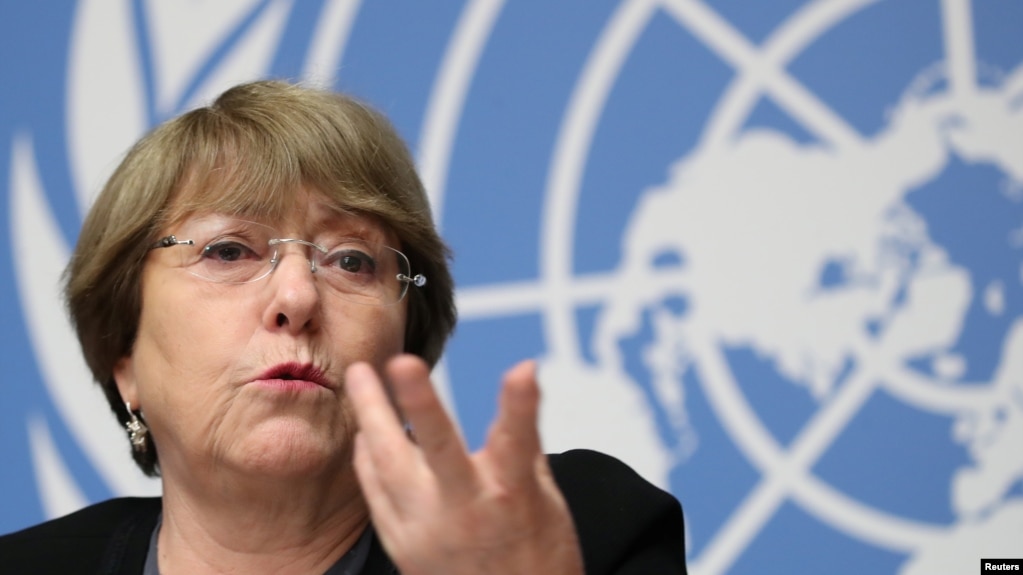
U.N. High Commissioner for Human Rights Michelle Bachelet attends a news conference at the United Nations in Geneva, Switzerland, Dec. 5, 2018.
U.N. High Commissioner for Human Rights Michelle Bachelet 

Born out of the devastation of two world wars, the Great Depression of the 1930s, and the Holocaust, the seminal document is geared toward preventing similar disasters from happening. December 10 marks the 70th anniversary of the declaration, which U.N. High Commissioner for Human Rights Michelle Bachelet said has withstood the test of time. [see also: https://humanrightsdefenders.blog/2018/10/18/michelle-bachelet-new-un-high-commissioner-for-human-rights-gives-major-interview/]

She said its fundamental principles can be applied to meet the challenges of today, such as ensuring equal rights for LGBTI people and protecting the right to life, food and health in the face of climate change. But, she warns, many of these rights are under threat from politicians pushing a nationalistic agenda. “When leaders… speak against migrants or a sort of hate speech or xenophobic speech, you are giving license to other people not to respect people’s rights,” Bachelet said. Leaders are responsible for what they say, and must lead by example, she added, dismissing the argument sometimes made by developing countries that human rights are a Western concept.

https://www.voanews.com/a/un-populist-nationalism-threatens-human-rights-declaration/4687896.html

General Assembly’s 3rd Committee concludes 2018 session

December 4, 2018
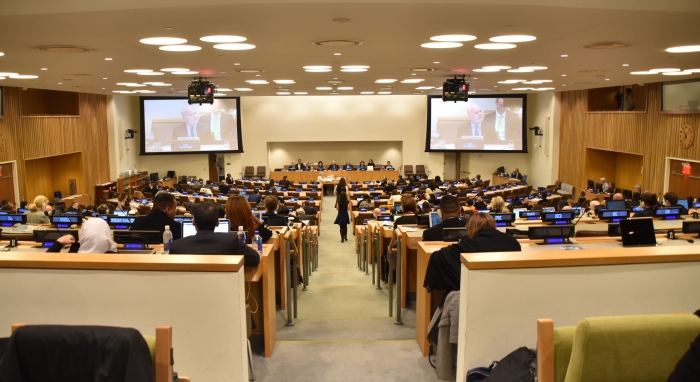
The General Assembly‘s human rights committee – the Third Committee – has concluded its seven week session by adopting 57 resolutions, several of which focus on critical human rights challenges and reassert the importance of fundamental freedoms.  The ISHR – as usual – provides an excellent account of key highlights and outlines how these texts will finally be signed off on by the General Assembly Plenary.

This has been an intense session, where sovereignty has been much cited in clashes between States; where divergences in traditional State groupings have been exposed, and important statements and resolutions have been passed reaffirming fundamental freedoms,‘ said ISHR’s Eleanor Openshaw. [ see also: https://humanrightsdefenders.blog/2018/10/05/third-committee-of-un-general-assembly-2018-will-consider-human-rights-issues/]

Several key resolution negotiations and outcomes are outlined below.  This is not the end of the road for these resolutions, however.  Costs of any activities and staffing included in these resolutions will now be considered by the General Assembly’s finance committee – the Fifth Committee –  before all resolutions are finally signed off by the General Assembly Plenary in the third week of December.  States have the opportunity to change their mind on resolutions ahead of final decision-making by the Plenary.  

Thematic Resolutions

Freedom of peaceful assembly and association –  Introduced by the US as a one off, this Third Committee resolution is essentially an ‘omnibus’ text, drawing on language agreed in relevant General Assembly and Human Rights resolutions – including those related to  human rights defenders and the safety of journalists.  The new resolution speaks of the need to protect journalists and media workers, including when covering demonstrations, both online and offline.  It condemns violations and abuses against peaceful protestors on the basis of their political opinion or affiliation.  The resolution does not specifically reference the work of the UN Special Rapporteur on Freedom of Peaceful Assembly and Association – a given in most such thematic resolutions. This, in the context of the US’ withdrawal from the Human Rights Council – the body that creates such rapporteurships.  

During negotiations, the US withstood pressure to include a greater number of references to sovereignty and the importance of national laws, amongst other suggestions.  A vote was called on the draft resolution by China, Russia, Bolivia, Venezuela, Iran, Belarus, Nicaragua and Syria.  The text received strong cross-regional support however, with a final tally of 140 in favour, 0 against and 38 abstentions.  ISHR calls on States that voted against the resolution on freedom of peaceful assembly and association or abstained, to give this key resolution its support at the GA Plenary stage.  Whilst the negotiation process during the Third Committee session could have allowed for greater input from interested parties, the final resolution is strong, and the thematic focus is an important one, in particular in an era of undue restrictions on the exercise and defence of the freedom of peaceful assembly and association.

Extrajudicial and arbitrary executions –  A listing of those most vulnerable to extrajudicial and arbitrary execution in this resolution, became the focus of heated exchanges between States.  This year, divisions between members of a State grouping resulted in a fracturing of the group position.  The Organisation of Islamic Cooperation (OIC) introduced an amendment to delete the listing. When Albania – an OIC member – made clear the amendment was not being presented in their name and, therefore, there was no group position, other States were able to break rank.  This included Tunisia, Lebanon and Turkey.  The amendment was defeated by a vote of 86 -50 with 25 abstentions.

ISHR’s Tess McEvoy welcomed the defence of the inclusion of the listing, which references people targeted because of their sexual orientation or gender identity, and human rights defenders.  ‘By listing those most targeted by extrajudicial executions, you increase attention on the need for their protection,’ said McEvoy. ‘You also hope that impunity – all too common in regard to attacks against particular groups – is effectively challenged.”  A vote was then called on the overall text, to the dismay of lead negotiator Finland.  ‘This resolution is about the right to life,’ said the Finnish Ambassador.  The resolution was adopted, with the listing of those most vulnerable to extrajudicial executions included, 111-0 with 66 abstentions…

..Protecting children from bullying –  Bullying ‘includes a gender dimension’ and is ‘associated with gender-based violence and stereotyping’,  concluded the Third Committee through this consensus text.  The resolution includes strong language on the need to protect all children from and includes agreed language of the most recent CSW on the family.

Violence against women and girls –  With a focus on the experience of women human rights defenders, States are called on to prevent violations and abuses against all women defenders with specific condemnation of gender-based violence, harassment and threats (both online and offline).  US amendments related to the references to sexual and reproductive health and sexual education were defeated on the basis that these would change agreed language. The US ultimately disassociated itself with those paragraphs.

Child, early and forced marriage – Last-minute amendments to include sovereignty language into a resolution focusing on sexual and reproductive health and rights, introduced by the US, were voted down.  

……

Country-specific resolutions

Myanmar –  Key decisions by the Human Rights Council are echoed by the Third Committee in their resolution, including in regard to the establishment of an investigative mechanism to facilitate criminal proceedings in regard to allegations of violations of international law. This said, several elements are missing in the Third Committee text, including references to the ICC and to journalists detained by the Myanmar government.  This year’s resolution gained 20 more votes than last year, passing 142 – 10 with 26 abstentions.   Critics included Russia, China and Laos, who spoke to what they considered the ‘illegitimacy’ or ‘irrelevance’ of country resolutions. Japan explained its abstention on the basis that Myanmar should carry out its own investigations (albeit with international community support).   Myanmar noted that it was the most scrutinised country-  citing ‘at least seven mechanisms’ with a monitoring role- at a cost of 28.6 million USD per year to the UN. Myanmar is a ‘struggling democracy facing many challenges’, noted the representative, comparing Myanmar’s treatment to that of Yemen which, it claimed, didn’t receive the attention it should.  

Iran –  In this resolution introduced by Canada, Iran is urged to end its harassment, intimidation and persecution of human rights defenders, including minority, students’ rights and environmental defenders as well as journalists, lawyers, bloggers, media workers and social media users, and to halt reprisals against them. ISHR, along with several national, regional and international NGOs called on States to vote for these (and other) calls.  

Autonomous Republic of Crimea and the city of Sevastopol, Ukraine –  Ensuring and maintaining a safe and enabling environment for journalists, media workers, human rights defenders and defence lawyers in Crimea, is a key call in this resolution which passed 67-26, with 82 abstentions.  

Syria –   Recalling resolutions adopted by key mechanisms and bodies across the UN system from 2011 onwards, this latest Third Committee resolutions references concern about a range of issues including chemical weapons attacks, rapes, enforced disappearances, the crackdown on journalists and media and other human rights violations. The resolution, introduced by Saudi Arabia, passed with much support with 106 votes in favour, 16 votes against and 58 abstentions. 

Report of the Human Rights Council

The Human  Rights Council in Geneva sends a report to the General Assembly outlining decisions taken in the previous twelve months.  Controversially, this report is considered first by the Third Committee and a resolution on the report drawn up by the African Group.  This year a vote was called on the resolution by Israel to signal their opposition to the standing item on the Council agenda on Israel.  Ultimately, the resolution passed by 111 – 3, with 65 abstentions.
Attacks against the Commission of Inquiry on Burundi

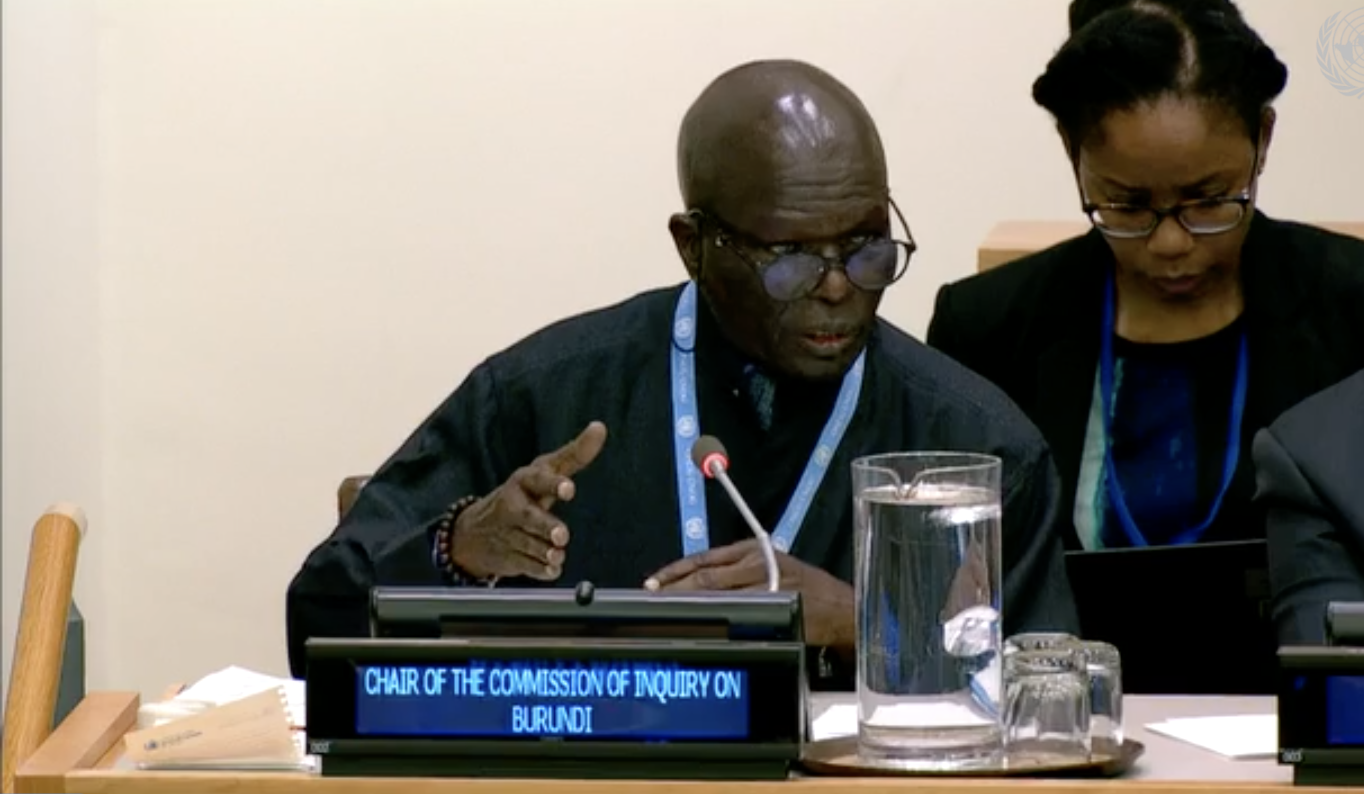
Burundi made several attempts to stop the Commission of Inquiry on Burundi from presenting its report to the Third Committee. When these were foiled, in a repeat of what happened last year, the Burundian Ambassador took the floor to abuse Commission members.  Too few States defended the Commission from these attacks, and the Chair of the Third Committee said nothing.  Swift in condemning the verbal attacks, however, was the High Commissioner for Human Rights, Michelle Bachelet, who called on Burundi ‘to issue an immediate retraction of this inflammatory statement’.  The President of the Human Rights Council also spoke up for UN independent experts and denounced the vilification.   ‘The defence of UN experts from any attack or intimidation must be swift and unambiguous,’ said Openshaw. ‘The lack of response from the heads of key UN bodies in NY – including the President of the General Assembly and Chair of the Third Committee – is really regretful.’  

ISHR Third Committee side event

ISHR hosted a Third Committee side event in coordination with Amnesty International on Tuesday, 23 October titled ‘Protecting human rights defenders: Reflections on the 20th Anniversary of the Declaration.’ Featured on the panel were Michel Forst, UN Special Rapporteur on Human Rights Defenders; Julia Cruz, a lawyer from the NGO Conectas Human Rights, Brazil and Eleanor Openshaw, New York Director at ISHR. Coming directly from presenting his annual report to the Third Committee, the Special Rapporteur and other panel members addressed contextual questions from electoral violence to good practices in protection policies and legislation as well as implementation of the UN Declaration more broadly. During the event, Forst spoke of the importance of the UN Declaration, which he calls ‘a manifesto for the human rights movement’.  It speaks of the ‘central role of everyone within society in the realisation of human rights for all,’ Forst noted.

ISHR’s Conclusion: dynamics at the Third Committee

1/  The tactic of disassociation from paragraphs of resolutions that a particular State dislikes, has continued this session.  The US called a vote on a paragraph in the draft resolution on violence against women and then – when the vote went against them – disassociated themselves from the paragraph anyway.  It could be argued that this approach avoids calls for votes on entire texts, instead isolating areas of contention from those around which consensus has been reached.  However, it does undermine the value of the text and overall efforts to move human rights consensus forward. It is highly dispiriting to see this tactic being increasingly employed.

2/  The confirmation that draft resolutions can only be introduced in the name of individual States rather than a grouping – as emerged during the back and forth on the text on extrajudicial executions – should provide dissenters within a State grouping with more leeway to resist pressure to conform with positions they disagree with.  

3/   Sovereignty arguments were presented by several States during the negotiations of a fair number of draft resolutions. These were successful in some negotiations, such as in regard to the death penalty, and were successfully rejected in others. The drive to foreground and repeatedly reference sovereignty in texts is likely to continue, and efforts to contest it need to be well-coordinated and arguments refined.  

https://www.ishr.ch/news/ga73-third-committee-human-rights-wrap

UN Experts consider human rights defenders in Italy under threat

December 2, 2018

In Europe it is not just in Hungary where human rights defenders are under pressure [https://humanrightsdefenders.blog/2018/07/26/some-facts-about-refugee-flows-which-hungary-seems-not-to-know/]. On 21 November 2018 a group of UN experts  – including Michel Forst, the UN Rapporteur on Human Rights Defenders – expressed concern that amidst Italy’s proposed tightening of immigration rules HRDs are the subject of smear campaigns.

Since coming into power in June 2018, the new Italian Government has implemented the anti-migrant and exclusionary measures it campaigned upon. “Removing protection measures from potentially thousands of migrants and limiting their ability to regularise their stay in Italy will increase their vulnerability to attacks and exploitation. They will be at greater risk from traffickers and other criminal groups, and many will have no means to meet their basic needs through lawful means”.

While acknowledging the challenges Italy faces due to the absence of an effective European-wide system of solidarity, the UN experts said this did not justify violations of human rights. “The government must adhere to the values enshrined in the Italian constitution, and the international commitments it signed up to,” they said in an appeal to the government to reconsider the legislative changes.

During the most recent electoral campaign, some politicians fuelled a public discourse unashamedly embracing racist and xenophobic anti-immigrant and anti-foreigner rhetoric. Such speech incites hatred and discrimination,” the experts said. ……“We are also concerned about the continuing smear campaigns against civil society organisations engaged in search and rescue operations in the Mediterranean Sea, as well as the criminalisation of the work of migrant rights defenders, which have become more widespread in Italy,”.

The UN experts urge the Italian government to combat incitement to hatred and discrimination, racism and xenophobia. “Perpetrators of hate crimes must be held accountable and justice provided to the victims. Italian authorities should implement the national and relevant European legal framework and provide the needed responses to hate crime and the use of hate speech.”

The experts have contacted the government about their concerns and await a reply.

https://www.ohchr.org/EN/NewsEvents/Pages/DisplayNews.aspx?NewsID=23908&LangID=E

More short films on each article of the UDHR

November 27, 2018

Further to my post on the series of short films – one for each article in the 70-year old Universal Declaration of human rights [https://humanrightsdefenders.blog/2018/11/15/each-article-in-the-universal-declaration-on-human-rights-has-its-human-story/], there now more out to watch: see e.ghttps://www.facebook.com/unitednationshumanrights/videos/380180556054710/.

70th anniversary of the Universal Declaration of Human Rights: the UN plans

November 26, 2018

Series of events to shine a light on the UDHR across the world. I already referred to the series of short films – one for each article in the 70-year old Universal Declaration of human rights [https://humanrightsdefenders.blog/2018/11/15/each-article-in-the-universal-declaration-on-human-rights-has-its-human-story/].

But there is more going on: The UDHR, based on the powerful premise that we are all “born free and equal in dignity and rights,” has spread further and been translated into more languages than any other text ever. The aim of the celebratory events sponsored by the UN Human Rights Office is “to shine a light on the many ways in which universal human rights contribute to the daily lives of people everywhere.” Signature events will be held in 14 cities, spanning seven time zones, with each spotlighting a human rights theme relevant to that location:

Africa

  • Dakar (Nov 30) – Our right to accountability when rights are violated
  • Pretoria (Dec 7) – Young people standing up for rights
  • Marrakesh (Dec 10) – The human rights of migrants

Asia-Pacific

  • Suva (Nov 16) – Our right to live on a healthy planet
  • Bangkok (Nov 28) – The rights of people on the move

Europe

  • Manchester (Nov 12) – Our right to live in harmony
  • Paris (Dec 4) – The city where the UDHR was adopted in 1948
  • Geneva (Dec 13) – Upholding rights for a future we all want

Latin America

  • Mexico City (Dec 6) – Our right to defend human rights
  • Panama City (Dec 10) – Children as defenders of rights
  • Santiago (Dec 10) – Women’s rights are human rights

Middle East

  • Doha (Dec 9) – Our right to peace

North America

  • Los Angeles (Dec 10) – Human rights in the city
  • New York (Dec 18) – UN Human Rights Award ceremony

In addition to the 14 signature events, each of which will be accompanied by a social media campaign featuring prominent global and local public figures standing up for human rights, numerous other celebrations are being organized by Governments, NGOs, academic institutions, and many others all over the world.

I urge everyone to join in celebrating the 70th anniversary of the Universal Declaration.  Join us at the public events if you can, or organize one yourself.  Any way that you can take part actively – shining your light on rights – will make a difference, even if it is simply by participating on social media,” said UN High Commissioner for Human Rights Michelle Bachelet.By doing so, we can show just how precious the UDHR is to people all over the world, and the universal nature of the values it contains.  It was an inspiration, a sensation, in 1948, and it is still an astonishing and inspiring document today.

The preservation of the human rights set out in the Declaration is vital to each and every one us – woman, man and child. Human rights are essential for the protection and dignity of our loved ones, our families and friends, our neighbours and our communities – for all of us, whether living in the smallest village or in the greatest of cities.  Violations of anyone’s rights potentially undermine the rights of all of us. So I urge everyone to use the UDHR’s 70th anniversary to reflect on what rights mean, and think of ways we can actively stand up for the rights of not just ourselves, but of everyone else.”

In addition to the events taking place over the next month, on 9 November the UN Human Rights Office will start publishing a series of short articles on each of the 30 Articles of the Universal Declaration. These will be published – one article a day – on www.ohchr.org and issued to media across the world.

For more information on the events listed in this advisory, please contact Rajat Khosla at rkhosla@ohchr.org / +41 22 917 3311

Twitter: @UNHumanRights and Facebook: unitednationshumanrights

https://www.ohchr.org/EN/NewsEvents/Pages/DisplayNews.aspx?NewsID=23832&LangID=E

Each article in the Universal Declaration on Human Rights has its human story

November 15, 2018

The Universal Declaration of Human Rights – celebrating its 70th anniversary – has 30 articles. True Heroes Films (THF) made for the UN 30 short video stories to show the impact of the Declaration around the world. Go to:  or YouTube. The series runs until 10 December, Human Rights Day. Everyday a new one!

General Assembly 2018: Human Rights Defenders were a main dish on 23 October

November 7, 2018

On 26 October 2018, the ISHR reported on how the General Assembly addressed the 20th anniversary of the Declaration on Human Rights Defenders. Special Rapporteur Michel Forst delivered a detailed reflection and assessment of global protection efforts in his report to the General Assembly this week.

On 23/24 October, the Special Rapporteur on the situation of human rights defenders, Michel Forst, called the international community to action, urging open and frank dialogue and solidarity to address oppression. He addressed the UN General Assembly’s Third Committee and engaged in a dialogue on his report to the General Assembly.

In light of the 20th anniversary of the Declaration on Human Rights Defenders, his report focused on effective implementation strategies, incorporating both a reflection of progress made over the past two decades and an overview of recommendations on how to improve systems and mechanisms moving forward. ‘The past 20 years have been an era of struggle for human rights. Victories have been hard fought and challenges have proliferated,’ the Special Rapporteur said in his report. ‘The celebration of this milestone must be tempered by a recognition of the sacrifices of human rights defenders, their families and their communities.’

After surveying 140 States, the Special Rapporteur addressed the following key matters: the evolution of the use of the term ‘human rights defenders’, mechanisms and practices to support them and legal/ administrative frameworks to protect them. “20 years ago, the Declaration laid the groundwork for the protection of human rights defenders and amplified the importance of their inclusion as a stakeholder in human rights initiatives, but there is still work to be done,” said ISHR’s Legal Counsel Tess McEvoy.

Several States voiced their support for the report and the mandate, including Spain, Iceland, Canada, Australia, EU, Poland, Ireland, Switzerland, Mexico, Liechtenstein, Estonia, Czech Republic, Colombia, France, Slovenia, Norway, US, Belgium and the United Arab Emirates.

The United States referenced the Secretary General’s report on reprisals highlighting attacks and intimidation against defenders in more than 38 countries, saying they are ‘alarmed and monitoring all allegations.’ The US then proceeded to list over 20 specific names of individuals from 14 different countries who are victims of such reprisals. These include:

Both China and Iran criticised the report on the basis that defenders, activists and social leaders do not deserve ‘special treatment’ regardless of the risks these individuals face. Cuba rejected any attempts to paint political prisoners as human rights defenders. The Russian Federation challenged the notion of ‘State obligation’ on the basis that the Declaration of Human Rights Defenders is a non-binding document. In response to the Russian Federation’s point on the non-obligatory nature of the Declaration of Human Rights, the Special Rapporteur swiftly reminded States that while the Declaration is non-binding it reaffirms other legally binding human rights obligations.

The Special Rapporteur concluded with a call to action at the upcoming Human Rights Defenders World Summit in Paris, where a statement will be prepared, including for presentation at the upcoming high-level event on defenders at the General Assembly.

The Special Rapporteur also referenced a document—outlining the results of his global survey on defenders in 140 countries—which he hoped would be published on the OHCHR website without further delay. He invited supporters of the mandate to inform OHCHR of the need to disseminate the report via the OHCHR website.

The Special Rapporteur referenced the study being prepared by the UN Secretary-General in efforts to protect global defenders. The report of this study will be shared with States in the coming weeks. The Special Rapporteur also voiced concern about the lack of NGO access to the UN and asked members of the Committee on NGOs to invite him in to engage with the Committee.

The Special Rapporteur concluded by saying that his report to the Human Rights Council in March 2019 will focus on the situation of women defenders.

https://www.ishr.ch/news/ga73-un-expert-defenders-reflects-20-years-struggle-progress-and-remaining-challenges

For earlier posts on the anniversary: https://humanrightsdefenders.blog/tag/20th-anniversary-un-declaration-on-hrds/

“Reprehensible” says UN about Mexican killing of human rights defender

November 7, 2018

On 6 November 2018, four UN Special  Rapporteurs have strongly condemned the killing of Julián Carrillo, an indigenous rights defender from the state of Chihuahua, Mexico, who had worked tirelessly for over two decades to defend his community against the exploitation of Rarámuri ancestral lands.

On 23 October 23 2018, Julián Carrillo told a friend by phone that he believed he was being watched and said he would go into the forest in an attempt to hide. On the evening of 25 October, his body was found. He had multiple bullet wounds. “We urge the Mexican authorities to identify the perpetrators of this reprehensible crime and to bring them to justice in accordance with the law,” the experts said.

The experts also urged the Government to address the underlying causes of such violence. “The killing of Julián Carrillo highlights the serious situation in the Sierra Tarahumara where the lack of recognition of indigenous land rights is a root cause of the recurring violence against and displacements of indigenous communities.”… [The UN experts are: Mr. Michel Forst, Special Rapporteur on the situation of human rights defenders; Ms. Victoria Tauli Corpuz, Special Rapporteur on the rights of indigenous peoples;  Ms. Agnès Callamard, Special Rapporteur on extrajudicial, summary or arbitrary executions; and Ms. Cecilia Jimenez-Damary, Special Rapporteur on the Human Rights of Internally Displaced Persons.]

Julián Carrillo’s murder is one of a spate of killings of human rights defenders in the country. According to official OHCHR figures, 21 human rights defenders have been killed so far this year, nine of them from indigenous communities. Four members of Julián Carrillo’s family – his son, son-in-law and two nephews – have been killed since February 2016.

This follows soon after the assassination on Wednesday 23 October of journalist Gabriel Soriano Kuri.  Soriano had been covering Governor Héctor Astudillo Flores’ third annual report for the Radio y Televisión de Guerrero (RTG) broadcaster that evening. After the event, held in Acapulco, he was driving a company vehicle when he was attacked and killed by armed civilians. Following the murder, Astudillo offered his condolences to Soriano’s family via Twitter. But it didn’t go down very well. Soriano’s daughter replied with a blunt message: “My dad was assassinated doing his job. Covering your report to the state! Do your job and fix the situation the state is in. It’s not right,” she wrote. Her discontent was echoed in at least three demonstrations where journalists demanded that authorities solve the assassination of their colleague. A state journalists’ association reported that three members of the profession have been slain during Astudillo’s three years in office.

https://www.frontlinedefenders.org/es/profile/noel-castillo-aguilar

https://www.amnesty.org/en/latest/news/2018/10/mexico-asesinato-de-lider-raramuri-demuestra-falta-de-proteccion-estatal/

https://mexiconewsdaily.com/news/demonstrations-follow-journalists-assassination/