Archive for the 'UN' Category

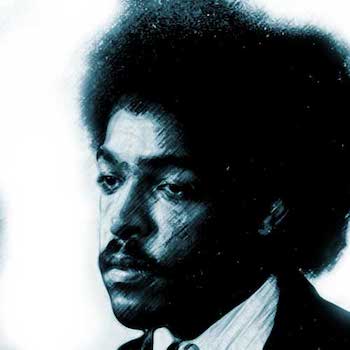
Rida Faraj Fraitis, Libyan government staffer, abducted – UN Libya mission ‘deeply concerned’

August 19, 2021

Rida Faraj Fraitis, is Chief of Staff for the First Deputy Prime Minister of the Government of National Unity (GNU), the UN-backed administration that since March, has been leading a new unified Libyan push towards ending years of civil conflict and division. Up until this year, the oil-rich nation was split between the former Government of National Accord based in Tripoli, and a rival administration based in the east. In recent weeks, progress towards new democratic elections in December has stalled, despite wide-ranging and on-going negotiations continuing.

Mr. Fraitis was taken along with a colleague, on 2 August, following a visit to GNU premises in Tripoli: “The fate and whereabouts of both Mr. Fraitis and his colleague remain unknown and UNSMIL fears for their safety and security”, the mission said in a statement.  

The Mission expresses further concern about individuals who have taken on roles in support of Libya’s democratic transition and State institutions being targeted in this manner which has serious implications for the peace and reconciliation process and for the full unification of national institutions”, the statement continued.

UNSMIL said that it has documented several cases of illegal arrests and detention, enforced disappearances, as well as torture. The mission has also recorded cases of extrajudicial killings of citizens, officials, journalists, civil society members and human rights defenders, in the past year. See also: https://humanrightsdefenders.blog/2020/11/12/libyan-human-rights-defender-hanan-al-barassi-gunned-down-in-benghazi/

The Mission is now calling on Libyan authorities to fully investigate all alleged violations of international human rights law, and international humanitarian law.

Libya must end the entrenched culture of impunity in the country”, stressed Mr. Kubis. 

Three UN workers killed following Benghazi car bomb attack, as Security Council meets in emergency session, honours their ‘ultimate sacrifice’

https://news.un.org/en/story/2021/08/1097512

Results of 47th session of the Human Rights Council

August 7, 2021

The ISHR and 17 other organisations (see below for their names) share reflections on the key outcomes of the 47th session of the UN Human Rights Council, as well as the missed opportunities to address key issues and situations. See also: https://humanrightsdefenders.blog/2021/06/22/key-issues-affecting-hrds-in-47th-session-of-un-human-rights-council-june-2021/

CIVIL SOCIETY PARTICIPATION

We deplore the systemic underfunding of the UN human rights system and the drive for so-called efficiency, including the cancellation of general debates in June, which are a vital part of the agenda by which NGOs can address the Council without restrictions. We call for the reinstatement of general debates at all sessions, with the option of civil society participation through video statements.  We welcome the focus of the civil society space resolution on the critical role played by civil society in the COVID-19 response, and the existential threats to civil society engendered or exacerbated by the pandemic. For the resolution to fulfil its goal, States must now take action to address these threats; while we welcome the broad support indicated by a consensus text, this cannot come at the cost of initiatives that will protect and support civil society.

HUMAN RIGHTS ONLINE

We welcome a resolution on the promotion, protection and enjoyment of human rights on the Internet and its thematic focus on bridging digital divides, an issue which has become ever-important during the COVID-19 pandemic. We urge all States to implement the resolution by taking concrete measures to enhance Internet accessibility and affordability and by ceasing Internet shutdowns and other disruptions, such as website blocking and filtering and network throttling. In future iterations of the text, we encourage the core group to go further in mentioning concrete examples that could be explored by States in adopting alternative models for expanding accessibility, such as the sharing of infrastructure and community networks.  We welcome the resolution on new and emerging digital technologies and human rights, which aims to promote a greater role for human rights in technical standard-setting processes for new and emerging digital technologies, and in the policies of States and businesses. While aspects of the resolution risk perpetuating “technology solutionism”, we welcome that it places a stronger focus on the human rights impacts of new and emerging digital technologies since the previous version of the resolution, such as introducing new language reiterating the importance of respecting and promoting human rights in the conception, design, use, development, further deployment and impact assessments of such technologies.

GENDER EQUALITY AND NON-DISCRIMINATION

We are concerned by the increasing number of amendments and attempts to weaken the texts. We are particularly concerned by the continued resistance of many States to previously adopted texts and States’ willful misinterpretation of key concepts related in resolutions on human rights in the context of HIV and AIDS, accelerating efforts to eliminate all forms of violence against women and girls: preventing and responding to all forms of violence against women and girls with disabilities and preventable maternal mortality and morbidity and human rights on maternal morbidities. We deplore the instrumentalising of women’s rights and sexual and reproductive health and rights. We encourage States to center the rights of people most affected and adopt strong texts on these resolutions. We welcome the resolution on menstrual hygiene management, human rights and gender equality as the first step in addressing deep-rooted stigma and discrimination. We urge all States to address the root causes for the discrimination and stigma on menstruation and its impact.

RACIAL JUSTICE AND EQUALITY

The High Commissioner’s report highlighted the long-overdue need to confront legacies of slavery, the transatlantic trade in enslaved Africans and colonialism and to seek reparatory justice. We welcome the historic consensus decision, led by the Africa Group, to adopt a resolution mandating an independent international expert mechanism to address systemic racism and promote racial justice and equality for Africans and people of African descent. The adoption of this resolution is testament to the resilience, bravery and commitment of victims, their families, their representatives and anti-racism defenders globally. We deplore efforts by some Western States, particularly former colonial powers, to weaken the text and urge them to now cooperate fully with the mechanism to dismantle systemic racism, ensure accountability and reparations for past and present gross human rights violations against Black people, end impunity for racialized State violence and address the root causes, especially the legacies of enslavement, colonialism, and the transatlantic trade in enslaved Africans.

MIGRANTS RIGHTS

Whilst we welcome the return of a resolution on human rights of migrants, we deplore the continued failure of the Council to respond meaningfully to the severity and global scale of human rights violations at international borders including connected to pushbacks. International borders are not and must not be treated as places outside of international human rights law. Migrants are not and must not be treated as people outside of international human rights law. Expressions of deep concern in interactive dialogues must be translated into action on independent monitoring and accountability.

ARMS TRANSFERS AND HUMAN RIGHTS

We welcome the resolution on the impact of arms transfers on human rights and its focus on children and youth. However, we note with concern the resistance of the Council to meaningfully focus on legal arms transfers beyond those diverted, unregulated or illicitly transferred. The Council should be concerned with all negative human rights impacts of arms transfers, without focusing only on those stemming from diversion and unregulated or illicit trade.

CLIMATE CHANGE

We are disappointed that the resolution on human rights and climate change fails to establish a new Special Rapporteur. However, we welcome the increasing cross regional support for a new mandate. It is a matter of urgent priority for the Council to establish it this year.

COUNTRY SPECIFIC SITUATIONS

ALGERIA

While special procedures, the OHCHR and multiple States have recognized the intensifying Algerian authorities’ crackdown on freedom of association and expression, the Council failed to act to protect Algerians striving to advance human rights and democracy.

BELARUS

We welcome the renewal of the mandate of the UN Special Rapporteur on Belarus. Given the ongoing human rights crisis in Belarus, the mandate complements the OHCHR Examination in ensuring continuous monitoring of the situation, and the mandate remains an accessible and safe channel for Belarusian civil society to deliver diverse and up-to-date information from within the country.

CHINA

The Council has once again failed to respond meaningfully to grave human rights violations committed by Chinese authorities. We reiterate our call on the High Commissioner and member States to take decisive action toward accountability.

COLOMBIA

We are disappointed that few States made mention of the use of excessive force against protestors in a context of serious human rights violations, including systemic racism, and urge greater resolve in support of the right to freedom of peaceful assembly in the country and globally

ETHIOPIA

The resolution on Ethiopia’s Tigray region, albeit modest in its scope and language, ensures much-needed international scrutiny and public discussions on one of Africa’s worst human rights crises. We urge the Ethiopian government to engage ahead of HRC48.

ERITREA

We welcome the extension of the mandate of the Special Rapporteur on Eritrea, as scrutiny for violations committed at home and in Tigray is vital.

NICARAGUA

We warmly welcome the joint statement delivered by Canada on behalf of 59 States, on harassment and detention of journalists, human rights defenders, and presidential pre-candidates, urging Nicaragua to engage with the international community and take meaningful steps for free and fair elections. States should closely monitor the implementation of resolution 46/2, and send a strong collective message to Nicaragua at the 48th session of the Council, as the Council should ‘urgently consider all measures within its power’ to strengthen human rights protection in the country.

PALESTINE

We welcome the Special Rapporteur’s report that “Israeli settlements are the engine of this forever occupation, and amount to a war crime,” emphasizing that settler colonialism infringes on “the right of the indigenous population […] to be free from racial and ethnic discrimination and apartheid.” We also reiterate his recommendation to the High Commissioner “to regularly update the database of businesses involved in settlements, in accordance with Human Rights Council resolution 31/36.”

THE PHILIPPINES

While acknowledging the signing of the Joint Human Rights Programme with the UN OHCHR, the Government of the Philippines fails to address the long-standing issues on law enforcement and accountability institutions, including in the context of war on drugs. We continue to urge the Council to launch the long-overdue independent and transparent investigation on the on-going human rights violations.

SYRIA

We welcome mounting recognition for the need to establish a mechanism to reveal the fate and whereabouts of the missing in Syria, including by UN member states during the interactive dialogue on Syria, and the adoption of the resolution on Syria addressing the issue of the missing and emphasizing the centrality of victim participation, building on the momentum created by the Syrian Charter for Truth and Justice.

VENEZUELA

In the context of the recent arbitrary detention of 3 defenders from NGO Fundaredes, we welcome the denunciation by several States of persistent restrictions on civil society and again for visits of Special Rapporteurs to be accepted and accelerated.

*American Civil Liberties Union, Association for Progressive Communications, Cairo Institute for Human Rights Studies, Centro de Estudios Legales y Sociales (CELS), Center for Reproductive Rights, Child Rights Connect, CIVICUS: World Alliance for Citizen Participation, Commonwealth Human Rights Initiative, Conectas Direitos Humanos, Egyptian Initiative for Personal Rights, FIDH, Franciscans International, Human Rights House Foundation, International Bar Association’s Human Rights Institute, International Commission of Jurists, International Lesbian and Gay Association, International Service for Human Rights, US Human Rights Network

https://ishr.ch/latest-updates/hrc47-civil-society-presents-key-takeaways-from-human-rights-council/

69 NGOs address worsening situation in Eswatini

July 22, 2021

On 21 July 2021 FIDH and many other NGOs addressed an open letter to the Government of Eswatini and the international community:

We, the undersigned 69 civil society organisations, are deeply concerned about the eruption of state violence in Eswatini. We stand in solidarity with the people of Eswatini in condemning the government’s violent repression of mass protests demanding democracy and economic justice.

We support the UN Human Rights Commissioner’s call urging the authorities to fully adhere to human rights principles and reminding them that peaceful protests are protected under international human rights law. We call on the Government of Eswatini to immediately cease its brutal crackdown against civilians, restore and maintain internet access, and engage in inclusive dialogue with pro-democracy groups and politicians.

We call on the international community, including the United Nations, African Union, Southern African Development Community, and individual governments, to demand that the Government of Eswatini respect human rights, allow a thorough, independent investigation of who authorised violence against protesters, including shoot to kill orders, and support a peaceful transition to a democratic form of government.

Reports out of Eswatini indicate that, since late June, the army and police forces have killed dozens of unarmed civilians and injured around 1,000 people, including by shooting indiscriminately at and wounding protesters. The government has reportedly imprisoned hundreds of people, many of them young people, and shut down internet access across the country for several weeks, which Amnesty International calls “a brazen violation of the rights to freedom of expression and information.” Reports further indicate that security
forces have sought to intimidate human rights defenders and activists with unlawful surveillance, imposed a curfew, and restricted public gatherings and petition deliveries to the government. This political crisis caused by state-sponsored violence risks creating a humanitarian crisis, as hospitals struggle to treat the influx of people injured by security forces, food and fuel supplies become limited, and people’s movement and ability to conduct basic commerce is restricted.

Specifically, we lend our support to the demands of civil society organisations, political organisations, and people’s movements within Eswatini calling for a long-term resolution to the current political crisis through an inclusive political dialogue, the total unbanning of political parties, a transitional authority, new democratic Constitution, and a multiparty democratic dispensation.In the immediate term, we join democracy defenders in Eswatini in the following demands, calling for action from the Government of Eswatini to cease violence, restore and maintain communications services, and provide urgently needed humanitarian support:

● The immediate cessation of the killing of civilians and the return of the army to the
barracks;

● The immediate restoration of civic services such as the rapid issuing of death
certificates for those killed in the past days;

● Mandatory independent pathologists to conduct post-mortems on the deceased;

● Urgent humanitarian support to the affected families, workers and citizens who
need basic necessities such as food, sanitary towels, baby food, etc.

● The provision of direct financial support to resuscitate affected small and medium
enterprises;

● The full and permanent restoration of internet and communication services and
peoples’ right to freedom of expression; and

● The urgent availability of vaccines to all emaSwati and the end of unnecessary
lockdowns.

As the Government of Eswatini, Africa’s only remaining absolute monarchy, violates the human rights of residents, suppresses freedom of speech and assembly, and jails young people for demanding a brighter future, the international community cannot remain silent.

We call on partners in international civil society, regional governmental bodies, and diplomats to join us in amplifying the demands of the Eswatini people and seeking the protection of people’s human rights.

https://www.fidh.org/en/region/Africa/swaziland-eswatini-civilian-killings-must-stop-now

Australia’s migration “detention” industry again denounced

July 21, 2021

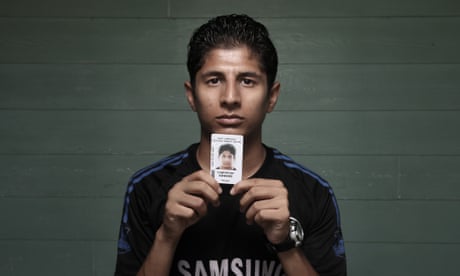
Behrouz Boochani wrote in the Guardian of 21 July 2021 a trenchant opinion piece: “For eight years, Australia has been taking refugees as hostages. It’s time to ask: who has benefited?” About Boochani, see also: https://www.trueheroesfilms.org/thedigest/laureates/2080f978-3f72-4e02-9ed1-dcea4299ccd0

The government needs our bodies for political power, while the detention industry needs us to fuel its money-making torture machine. But what has Australia truly gained?

Behrouz Boochani

Kurdish-Iranian born journalist and refugee Behrouz Boochani spent six years in Australian-run detention on Manus Island in Papua New Guinea. He now lives in Christchurch, New Zealand. Photograph: Martin Hunter/AAPWed 21 Jul 2021 03.14 BST

Eight years have passed since the Australian government mandated offshore detention for all asylum seekers who arrive by boat, which led to the banishing of more than 3,000 refugees to Nauru as well as Manus Island in Papua New Guinea.

Since then, we have heard many tragic stories about the stranded refugees – stories of death, violence, child detention, family separation and countless violations of human rights. See also; https://humanrightsdefenders.blog/2021/04/15/rescuing-refugees-a-moral-imperative-not-a-crime/

We have heard the stories of the hundreds who have been traumatised and the 14 who were killed. We got to know about Reza Barati who was surrounded by a group of guards and beaten to death. We were told about Hamid Khazaei who developed a leg infection, ended up in a wheelchair and died while in custody. Faysal Ishak Ahmed also died in a Brisbane hospital. For the refugees Australia imprisons, music is liberation, life and defiance.

When I think about the stories of these refugees, including myself, the first thought that springs to mind is the abduction of human beings on the sea. We were kidnapped and forcibly transferred to an island we had never heard of. We were robbed of our identity. We turned into a string of numbers through a carefully planned process of dehumanisation. We were led into an evil system which was designed to diminish our identity.

The offshore detention policy was a form of official hostage-taking. For years, the Australian government refused to accept us, while preventing us from being transferred elsewhere. Even when it succumbed to public pressure by signing a resettlement deal with the United States, the government prolongated the transfer process. After all these years, many refugees are still held in indefinite detention.

The offshore detention policy is a combination of hostage-taking, deception, secrecy, corruption, populist propaganda and systematic torture

In addition to being a form of official hostage-taking, the policy provided a platform for the spread of populist ideas and false claims. Kevin Rudd, for example, announced this policy just before the 2013 federal election, while Scott Morrison went to the Christmas Island detention centre alongside a dozen reporters in 2019 and posed heroically against the backdrop of the sea.

They deceivedthe public into believing that the offshore detention policy was like a building that would collapse if one brick were to be removed from it. They warned against the invasion of boats on Australian shores, but no boats arrived. What boats anyway? They returned every single one to Indonesia.

This is a key point, because whenever the public has put pressure on the government since 2013, officials have highlighted the risks of opening up the borders. This turned out to be an outright lie. What the government has done is create unjustified fear while hiding behind the notion of national security.Advertisement

The reality is they needed our bodies for retaining their political power. Along the way, they created a $12bn detention industry which has greatly benefited politicians as well as certain security and medical companies. The contracts signed with Paladin is the only instance leaked to the media, but I believe that is just the tip of the iceberg.

Loghaman Sawari

The Australian government has made every effort to preserve its detention industry. When thousands of refugees were transferred to the US, the government brought in a group of New Zealanders previously held in Australia. At the end of the day, human bodies are fuel to this money-making torture machine.

The offshore detention policy is a combination of hostage-taking, deception, secrecy, corruption, populist propaganda, and of course, systematic torture. It is sadistic, costly, and unnecessary. After all these years, Australians need to find the courage to look in the mirror and ask themselves, “What have we gained? What have we lost?” These are crucial questions.

It is time to challenge the foundations of this deceitful policy. In the last eight years, human values have been undermined, more than $12bn has been spent and the international reputation of Australia has suffered immensely. The key question to ask right now is: “Who has benefited from this policy?”

Written by Behrouz Boochani, a former detainee and nor adjunct senior fellow at University of Canterbury [see also: https://humanrightsdefenders.blog/2019/12/01/behrouz-boochani-gives-interview-in-new-zealand-finally-out-of-manus-island/]

https://www.theguardian.com/commentisfree/2021/jul/21/for-eight-years-australia-has-been-taking-refugees-as-hostages-its-time-to-ask-who-has-benefited

NSO’s Pegasus spyware now really in the firing line

July 21, 2021

Frank Andrews in the Middle East Eye of 20 July 2021 tracks the history of the unhealthy story to which also thsi blog has regularly paid attention: see https://humanrightsdefenders.blog/tag/nso-group/

Claims made this week that the Israeli company’s Pegasus spyware technology has been used to surveil 50,000 phones – belonging to heads of state, journalists, human rights defenders, political opponents and more – may be the highest-profile accusations against the firm, but they are not the first.

Pegasus, which infects phones with spyware through various means, has proven to be a boon to digital authoritarians wanting to track anyone perceived as critical of their rule. It has also been the subject of numerous lawsuits and legal complaints.

It begun in August 2016, when the United Arab Emirates was found to be tracking the iPhone of Emirati human rights activist Ahmed Mansoor using Pegasus spyware, according to a report by Citizen Lab and Lookout Security. [see also: https://humanrightsdefenders.blog/2016/08/29/apple-tackles-iphone-one-tap-spyware-flaws-after-mea-laureate-discovers-hacking-attempt/]

Geneva experts on cybersecurity and digital governance tell Geneva Solutions what citizens must do to stem the erosion of our right to privacy.

U.N. High Commissioner for Human Rights Michelle Bachelet, in a statement, said that the revelations “are extremely alarming, and seem to confirm some of the worst fears about the potential misuse of surveillance technology to illegally undermine people’s human rights.” See statement by @UNHumanRights Chief @mbachelet: https://ohchr.org/EN/NewsEvents/

https://www.middleeasteye.net/news/israel-pegasus-spyware-nso-group-history-accusations-denials

https://www.rawstory.com/as-un-human-rights-chief-urges-stricter-rules-snowden-calls-for-end-to-spyware-trade/https://www.rawstory.com/as-un-human-rights-chief-urges-stricter-rules-snowden-calls-for-end-to-spyware-trade/

https://indianexpress.com/article/explained/the-making-of-pegasus-from-startup-to-spy-tech-leader-israel-invasive-spyware-7414370/

Anaïs Marin – UN Expert on Belarus: “Full-scale assault” ongoing against civil society

July 6, 2021
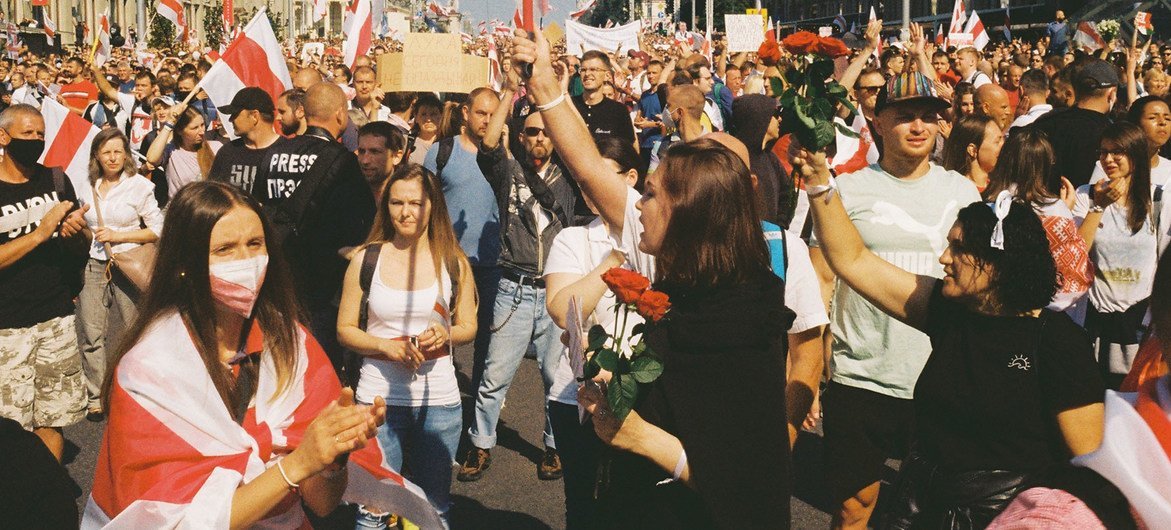
Protestors at the March of Peace and Independence in Minsk, Belarus (file photo).

Unsplash/Andrew KeymasterProtestors at the March of Peace and Independence in Minsk, Belarus (file photo). 5 July 2021

Belarus has witnessed an unprecedented human rights crisis over the past year, the independent expert appointed to monitor the country said on Monday 5 July 2021, calling on authorities to immediately end their policy of repression and fully respect the legitimate aspirations of their people.

Belarus has witnessed an unprecedented human rights crisis over the past year, the independent expert appointed to monitor the country said on Monday, calling on authorities to immediately end their policy of repression and fully respect the legitimate aspirations of their people.

In her annual report to the Human Rights CouncilAnaïs Marin said she had received reports of massive police violence used against protesters – since last August’s disputed presidential election brought millions onto the streets to contest the result – cases of enforced disappearance, allegations of torture and ill-treatment and the continuous intimidation and harassment of civil society actors.

Broad spectrum of abuses

“The Belarusian authorities have launched a full-scale assault against civil society, curtailing a broad spectrum of rights and freedoms, targeting people from all walks of life, while systematically persecuting human rights defenders, journalists, media workers and lawyers in particular,” Ms. Marin told the Council.

“The crackdown is such that thousands of Belarusians have been forced or otherwise compelled to leave their homeland and seek safety abroad; yet the downing of a civilian plane in Minsk on 23 May, for the apparent sole purpose of arresting a dissident who was on board, signaled that no opponent to the current Government is safe anywhere”, the expert added.

She noted that the significant deterioration of the human rights situation in Belarus started in late spring 2020 and climaxed in the aftermath of the presidential election of 9 August, the results of which were widely contested.

Malpractices were reported during the election campaign, as most opposition candidates were forced out of the race, while the vote count was marred by allegations of fraud.

Unjustified and disproportionate

“Distrust in the legitimacy of the electoral outcome triggered spontaneous and largely peaceful popular protests to which the authorities responded with unjustified, disproportionate and often arbitrary force”, said the Special Rapporteur, who reminded that over 35,000 people have been detained since then for trying to exert their right to freedom of peaceful assembly, including women and children arrested for peacefully demonstrating solidarity with victims of police violence.

“Since August 2020 I received innumerable allegations of beatings and ill-treatment, including torture in detention, but also allegations of rapes, enforced disappearances and even killings – all remain to be investigated.”

She said she was also alarmed by the hundreds of cases of criminal prosecution of human rights defenders and lawyers, journalists and medical staff, which have taken place, simply for doing their job.

Abusers protected

“As the legal and judicial systems in Belarus protect the perpetrators of grave human rights violations, continuing impunity means that there is no guarantee of non-reoccurrence,” Ms. Marin said. “Hence the international community should keep on demanding the release and rehabilitation of all those still detained on political grounds, and support initiatives aiming at bringing perpetrators of the most serious crimes to account”.

The UN expert also expressed concerns about the impact the ongoing crackdown has had on the right to education, pointing to discriminatory measures that persist in Belarus against people with disabilities, ethno-linguistic minorities, people living in rural areas and those deprived of liberty.

‘Disastrous consequences’

I call on the Belarusian authorities to put an end to their policy of repression, to immediately and unconditionally release those arbitrarily detained, and to ensure full respect for the human rights and legitimate democratic aspirations of people in Belarus”, the UN expert said, warning that a further aggravation of the human rights crisis and international self-isolation could have disastrous consequences for the whole country.

See also: https://humanrightsdefenders.blog/2021/06/28/fidh-launches-website-tracking-systematic-human-rights-violations-in-belarus/

https://news.un.org/en/story/2021/07/1095302

China in the 47th session of the UN Human Rights Council: Uyghurs and jailed human rights defenders

July 6, 2021

In a statement 22 June 2021, the ISHR on behalf of over 20 civil society organisations called for unequivocal action by the High Commissioner to monitor and report on the human rights situation in China. The violations targeting Uyghurs and other Turkic Muslims, the groups underlined, have been determined by Amnesty International and Human Rights Watch to constitute crimes against humanity.

‘The Special Procedures and treaty bodies have repeatedly, for the last five years, raised serious concerns about the human rights situation in China,’ said Sarah M Brooks, ISHR programme director. ‘But despite these efforts, little has changed. More is needed.’

The gravity of the situation was underlined also by a joint statement delivered by Canada, on behalf of more than 40 states, earlier today. Listing a range of concerns about treatment of Uyghurs, those governments pressed China to allow ‘immediate, meaningful and unfettered’ access to the region for the High Commissioner.

The weight of evidence and the gravity of allegations of crimes against humanity against Uyghurs demands that the High Commissioner commence remote monitoring and public reporting immediately. The full statement can be accessed here

Anadolu on 29 June 2021 reported that Mary Lawlor, the UN special rapporteur on human rights defenders, says she has countless reports about mistreatment of activists in China.

The UN’s independent expert on human rights defenders said that she feared activists in China were arbitrarily sentenced to long prison terms, house arrest and tortured and also denied access to medical treatment, their lawyers and families.

Condemning human rights defenders…to long terms in prison for their peaceful human rights work, abusing them in custody and failing to provide them with adequate medical care…cannot continue,” Mary Lawlor, the UN special rapporteur on human rights defenders, said in a statement.

She said she had “countless reports” pointing to the mistreatment of human rights defenders in Chinese custody, which is “endemic.”

Geneva’s Chinese mission spokesman Liu Yuyin later refuted Lawlor’s criticism, accusing the UN expert of having “deliberately smeared China, spread disinformation and interfered in China’s judicial sovereignty under the pretext of human rights.”

“The individuals that Ms. Lawlor and other special procedure mandate holders mentioned have committed a series of crimes such as inciting subversion of state power and splitting the state. The facts are clear and the evidence is solid,” he added.

Lawlor said the treatment meted out to those jailed may amount to torture and other cruel and inhuman treatment, despite a plethora of recommendations from the UN mechanisms over the years, including from the Committee Against Torture.

Some defenders, such as Gao Zhisheng, have been “forcibly disappeared,” while others such as Guo Hongwei have died in prison, she said. Lawlor said she knew of at least 13 human rights defenders sentenced on “spurious charges” such as “picking quarrels” or “provoking trouble” to 10 years or more in prison for peacefully defending the rights of others. Among them is Qin Yongmin, sentenced to 35 years in prison for work that included promoting engagement with the UN, and Ilham Tohti, a “moderate scholar” serving a life sentence.

“Tohti was arbitrarily arrested, allegedly tortured and sentenced to life after a closed-door trial. He was not allowed any family visits and no information has been provided by Chinese authorities since,” said Lawlor. He is a much-recognised defender: https://www.trueheroesfilms.org/thedigest/laureates/37AE7DC4-16DB-51E9-4CF8-AB0828AEF491

Human rights defender Chen Xi, serving 10 years in prison, has chronic enteritis, which causes dehydration and fever. In winter, he contracts severe frostbite on his hands, ears and abdomen, and in his lifetime, he has been sentenced to 23 years in prison, said the expert.

https://www.ishr.ch/news/hrc47-governments-ngos-call-high-commissioner-step-work-protect-uyghurs

https://www.globalvillagespace.com/un-expert-raises-concern-on-jailed-activist-in-china/

Father Stan’s death: callousness that amounts to murder

July 5, 2021

What many feared has happened, jailed Indian tribal rights activist Stan Swamy has died of a cardiac arrest in Mumbai city. He was 84. He was jailed last year under draconian anti-terror law UAPA in connection with the Elgar Parishad case – his death has triggered a flood of messages on social media from political leaders, intellectuals and other activists. Swamy, the oldest person to be accused of terrorism in India, was arrested in October 2020.

Members of the civil society on Sunday 4 July 2021 had urged the chief justice of the Bombay High Court to intervene and provide relief to ailing activist Stan Swamy. They demanded that the 84-year-old, who suffers from Parkinson’s disease and had been put on ventilator support, should be granted bail immediately and allowed to return to Jharkhand.

Mary Lawlor, Special Rapporteur on Human Rights Defenders shared a similar Tweet, saying it was “horrible news” that Swamy was put on a ventilator: “He’s spent 9 months in jail on unfounded charges. I’m deeply saddened and expect that every possible specialist treatment will be provided to him.”

Mr Gilmore – the European Union’s Special Representative for Human Rights, – re-tweeted Ms Lawlor’s post and added: “India: I am very saddened to hear that Father Stan Swamy has passed away. A defender of indigenous peoples’ rights. He was held in detention for the past 9 months. The EU had been raising his case repeatedly with authorities.”

The Jesuit priest, who suffered from Parkinson’s disease, was moved to a private hospital in May after he tested positive for Covid. As he was very belatedly released on bail into hospital and was denied critical treatment in detention, he should be considered a death in the custody of the state.

Jharkhand Chief Minister Hemant Soren stated on Monday: Shocked to learn about the demise of Father Stan Swamy. He dedicated his life working for tribal rights. I had strongly opposed his arrest & incarceration. The Union Govt should be answerable for absolute apathy & non provision of timely medical services, leading to his death.

See also: https://humanrightsdefenders.blog/2020/10/11/the-indomitable-father-stan-swamy-defending-the-adivasis-and-the-dalits-a-cause-of-arrest/

I understand there will be likely a virtual memorial tomorrow, but no details known yet.

A joint statement by important international NGOs (Amnesty International, CIVICUS: World Alliance for Citizen Participation, CSW, FIDH, in the framework of the Observatory for the Protection of Human Rights Defenders, Front Line Defenders, International Commission of Jurists, International Dalit Solidarity Network, World Organisation Against Torture (OMCT), in the framework of the Observatory for the Protection of Human Rights Defenders)) was issued on 5 July: https://www.fidh.org/en/region/asia/india/india-joint-statement-on-the-death-of-human-rights-defender-father

The Government keeps insisting that all was ‘legal’: https://www.mangalorean.com/govt-rebuts-un-says-stan-swamys-detention-was-lawful/

On 25 November 2021 this: https://thewire.in/rights/bombay-hc-asks-jesuit-group-to-file-new-plea-if-they-want-stan-swamys-name-cleared

https://www.bbc.com/news/world-asia-india-57718356

https://scroll.in/latest/999322/as-activist-stan-swamys-heath-worsens-civil-society-members-call-for-bail-specialised-treatment

https://www.outlookindia.com/website/story/india-news-stan-swamys-death-marks-a-tragic-moment-for-indian-democracy-akhil-gogoi/387163

https://www.ndtv.com/india-news/elgar-parishad-case-stan-swamys-death-devastating-eu-un-human-rights-reps-on-stan-swamys-death-2479792

https://www.hindustantimes.com/india-news/activists-opposition-call-out-custodial-murder-of-stan-swamy-101625494111357-amp.html

https://www.fidh.org/en/region/asia/india/india-joint-statement-on-the-death-of-human-rights-defender-father

https://www.indialegallive.com/column-news/stan-swamy-uapa-unlawful-activities-prevention-act-kanchan-nanaware-varavara-rao-binayak-sen/

https://www.miragenews.com/death-in-custody-of-priest-stan-swamy-is-596431/

https://www.ucanews.com/news/book-tells-story-of-indian-jesuit-who-died-in-custody/94104#

Joint statement by U.N. rapporteurs emphasizes digital rights as “top priority” to rebuild civic space

June 29, 2021

A bit belatedly, I refer to the statement made by Access Now welcoming on Tuesday, 8 June 2021, the timely new statement from U.N. Special Procedures emphasizing that digital rights are “a top priority” to rebuild civic space amid recovery from the COVID-19 pandemic. The nine experts are taking part in RightsCon 2021 (June 7-11), marking the third consecutive year that Special Rapporteurs have issued a statement in light of thematic discussions to be held at the global summit on human rights in the digital age.

The experts pointed to recent instances of digital repression including non-transparent content takedowns and manipulation — as the world is witnessing in Palestine, India, and Colombia — and called upon businesses to uphold their responsibility to respect human rights. They stressed that “the opacity that prevails in the ways content is moderated by Governments and companies reinforces global perceptions of discrimination, inefficiency and censorship. There is an urgent need for transparency.”

The diversity and scope of issues addressed within the mandates of the nine U.N. experts speaks to the heightened role of technology — and the need to center digital rights — in the pandemic recovery. We are thrilled to have such a robust presence of U.N. Special Rapporteurs and members of the Working Group on Business and Human Rights in this year’s RightsCon program,” said Peter Micek, U.N. Policy Manager at Access Now. “The statement decries patterns of abuse accelerating digital inequalities and discrimination against users most at risk, reminding states and the tech sector to undertake systemic efforts to reach those most affected.”

“We look forward to continuing to engage with the U.N. experts at RightsCon and beyond to address the intersection of technology within their mandates through a human rights-centered and intersectional lens,” said Laura O’Brien, U.N. Advocacy Officer at Access Now. “As we recover from the pandemic, we cannot understate the value of civil society engagement with U.N. experts.”

The experts warned particularly “against using the pandemic as an excuse to rush forward ‘digital transformation,’ as exemplified in digital vaccine certificates, without prioritising foundational digital rights safeguards” — a call that Access Now emphasizes.

The nine Special Procedures and their mandates include: Fionnuala Ní Aoláin, fundamental freedoms while countering terrorism; Clément Voule, the right to peaceful assembly and association; Olivier De Schutter, extreme poverty and human rights; David R. Boyd, human rights and environment; Gerard Quinn, the rights of persons with disabilities; Tlaleng Mofokeng, the right to physical and mental health; Irene Khan, freedom of expression; Mary Lawlor, the situation of human rights defenders; and the Working Group on Business and Human Rights — Dante Pesce, Surya Deva, Elżbieta Karska, Githu Muigai, and Anita Ramasastry.

https://www.scoop.co.nz/stories/WO2106/S00090/un-joint-statement-experts-call-for-centering-digital-rights-in-pandemic-recovery-on-eve-of-rightscon-2021.htm

https://www.manilatimes.net/2021/06/20/business/sunday-business-it/access-nows-digital-security-helpline/1803849

Human rights experts urge Governments to protect those who help torture victims

June 28, 2021

Victims of torture have the right to rehabilitation and those who help them in this process must be allowed to carry out their work without reprisals UN human rights experts* said in a statement on the occasion of the International Day in Support of Victims of Torture, 26 June. Rehabilitation includes adequate medical psychological, social and other relevant specialized treatment.

People who have endured the ordeal of torture and its long-term consequences have an enforceable right to fair and adequate compensation, including as full as possible rehabilitation,” the experts said. “The Convention against Torture provides these remedies in order to award fair and adequate compensation for the blatant human rights violations and to restore dignity.”

It is particularly important that governments respect and uphold the right to redress,” they said. “They must pay particular attention to ensuring that medical and other professionals involved in the treatment of victims of torture, as well as civil society organizations and human right defenders can carry out the vital work of documenting torture and supporting the rehabilitation of victims, unfettered by restrictions and reprisals.”

They said the level of reprisals against civil society organisations remains high, while all-too-often torturers enjoy impunity. Not only do governments deny that they practice torture, they refuse to prosecute perpetrators and use intimidation and reprisals against civil society organizations, human rights defenders, whistleblowers and journalists in order to deter them from speaking out and obtaining compensation for victims, the experts said.

The UN experts warned in 2012 that victims of torture face reprisals for submitting complaints or cooperating with the UN. “Since then the trend of reported reprisals and severity against individuals and groups specifically for engaging with the UN has increased,” they said. 

The UN Convention against Torture and Other Cruel, Inhuman or Degrading Treatment or Punishment (CAT), the UN Subcommittee on Prevention of Torture and the Special Rapporteur on Torture have all adopted measures to address retaliation and reprisals against civil society organizations working to end and prevent torture and to help victims.

In 2020, the UN Secretary-General, in addition, adopted a Call to Action for Human Rights that makes civic space a priority area and issued the UN Guidance Note: Protection and Promotion of Civic Space. [see also: https://humanrightsdefenders.blog/2020/02/25/43rd-session-hrc-un-secretary-general-launches-call-to-action-on-human-rights/]

In their statement, the experts say civic space is vital in preventing and combatting torture and safeguarding the rights of victims of torture and ill-treatment.

“We urge States to uphold the absolute and universal prohibition against torture and other cruel, inhuman or degrading treatment or punishment, and to enable a conducive environment for redress and rehabilitation for victims of torture, and for civil society to operate freely,” they said.

https://www.miragenews.com/governments-must-protect-those-who-help-torture-584261/

https://www.vaticannews.va/en/world/news/2021-06/united-nations-day-torture-victims-message-guterres.html